

Metal sheets and roofing
When is thinner steel roofing a false economy?
The cheapest roofing sheet may cost more to install if it needs extra supports. Choose the steel thickness alongside the profile, fixings and support layout. A sheet that is too thin for the job may require changes to the structure or be more easily damaged in use. Check whether the quoted thickness refers to the steel core or includes the protective coatings. The choice depends on wind and snow loads, the shape of the profile, support spacing, the number of spans and how the sheet is fixed. Even a small roof can be highly exposed, particularly at corners and edges.
In this guide
Is there one sheet thickness for every roof?
One T18 range, for example, comes in thicknesses from 0.5 to 0.7 mm. The thinnest sheet in that range will not suit every roof slope. Use the data for the exact cross-section. Assigning 0.5 mm to garages and 0.7 mm to industrial buildings overlooks differences in their supporting structures.
How do sheet thickness and profile depth work together?
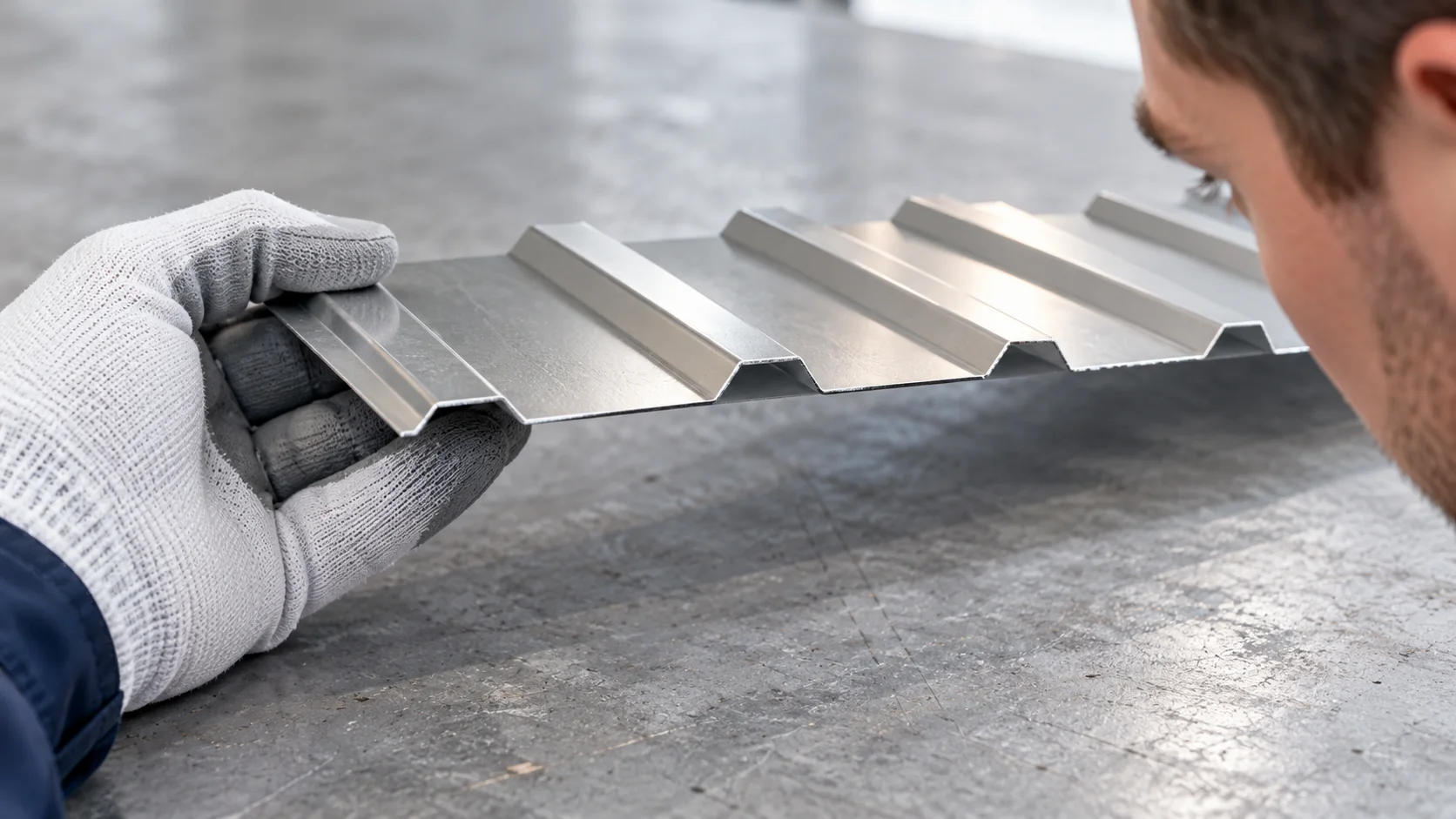
Forming a flat sheet into a profile changes its stiffness. A shallow profile and a deeper one of the same steel thickness can therefore carry different loads. Flange widths and the shape of the stiffening ribs also matter. Consult the load tables for the specific profile. Even profiles with similar names can have different capacities.
Increasing the nominal thickness from 0.5 to 0.7 mm adds 40%. You cannot increase the distance between supports by the same percentage on that basis. Load capacity and deflection depend on the entire cross-section and the support and loading conditions. Compare the relevant design data before changing the spacing.
What should you check on an existing roof structure?
When reroofing, measure the actual spans and bearing widths. Check metalwork for corrosion and inspect the timber and connections. The previous covering may have had different support requirements. Assess the layout again, even if the old roof survived several winters. Its past performance does not establish that every replacement sheet will work.
Thicker steel cannot repair a rotten batten or a weak purlin connection. The supports may need alteration, or a different profile may be more economical. Compare the installed cost. Extra framing and the labour to fit it can use up the saving on a thinner sheet.

Which thickness does the quotation specify?
Ask whether the quoted figure is the steel core thickness or the finished thickness including the protective layers. These layers protect the steel and do not count towards its load-bearing thickness. Request a precise product designation and the specification for the batch to be delivered. “About half a millimetre” is too vague.
A thickness check needs a suitable instrument, a suitable measuring point and a clear definition of the dimension being checked. A rib can be harder to measure than a flat section. A single calliper reading across the coating does not verify conformity. Use the tolerances and method specified for the product.
How does thickness affect handling and maintenance?
A long, thin sheet can kink permanently if carried incorrectly. Provide suitable support, enough people or appropriate lifting equipment. Even a thicker sheet can be damaged if lifted by one end. Plan transport and installation around the dimensions and weight of each sheet.
Plan a safe route to chimneys and rooftop equipment for maintenance. Treating the covering as a general working platform can damage sheets of any thickness. A misplaced foot, a dropped tool or an unsuitable fixing can all leave damage. Provide compatible access equipment and plan how inspections will take place.
When is a thicker sheet worth the extra cost?
First rule out sheets that fail the technical requirements. For the remaining options, add the cost of supports, fixings and transport to the sheet price. Where two systems meet the design requirements, ease of installation and future maintenance may decide which is better value.
Keep the thickness, steel grade, profile and coating on file. Years later, you may need all four to replace a damaged section. Matching the colour alone is insufficient. The most economical specification meets the roof requirements while avoiding unnecessary work.
Frequently asked questions
Does thicker steel always resist corrosion better?
Thickness alone cannot tell you that. The metallic protective layer, coating, exposure and condition of edges and joints all matter.
Can I judge the thickness by flexing a sample by hand?
That test is unreliable. The profile shape, sample size and how you hold it all affect how stiff it feels. Look for a clearly specified thickness and use the appropriate measurement method if it needs checking.
7 branches. Materials closer to your project.

Free quote
Materials for your project


You may also find useful…
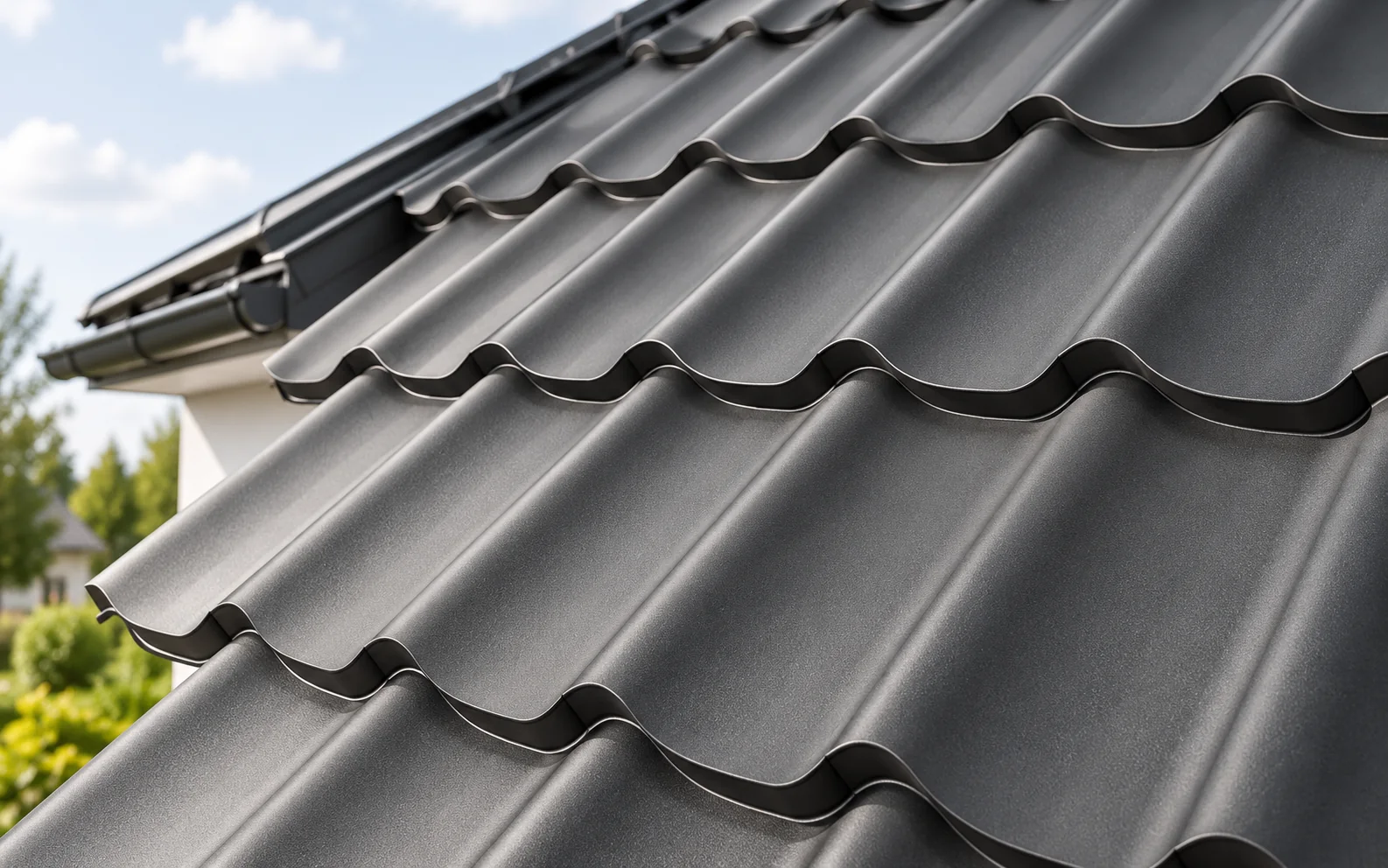
The fine roof pattern depends on the geometry of the pressings, not just on the sheet size. Modular tile-effect metal roofing can…
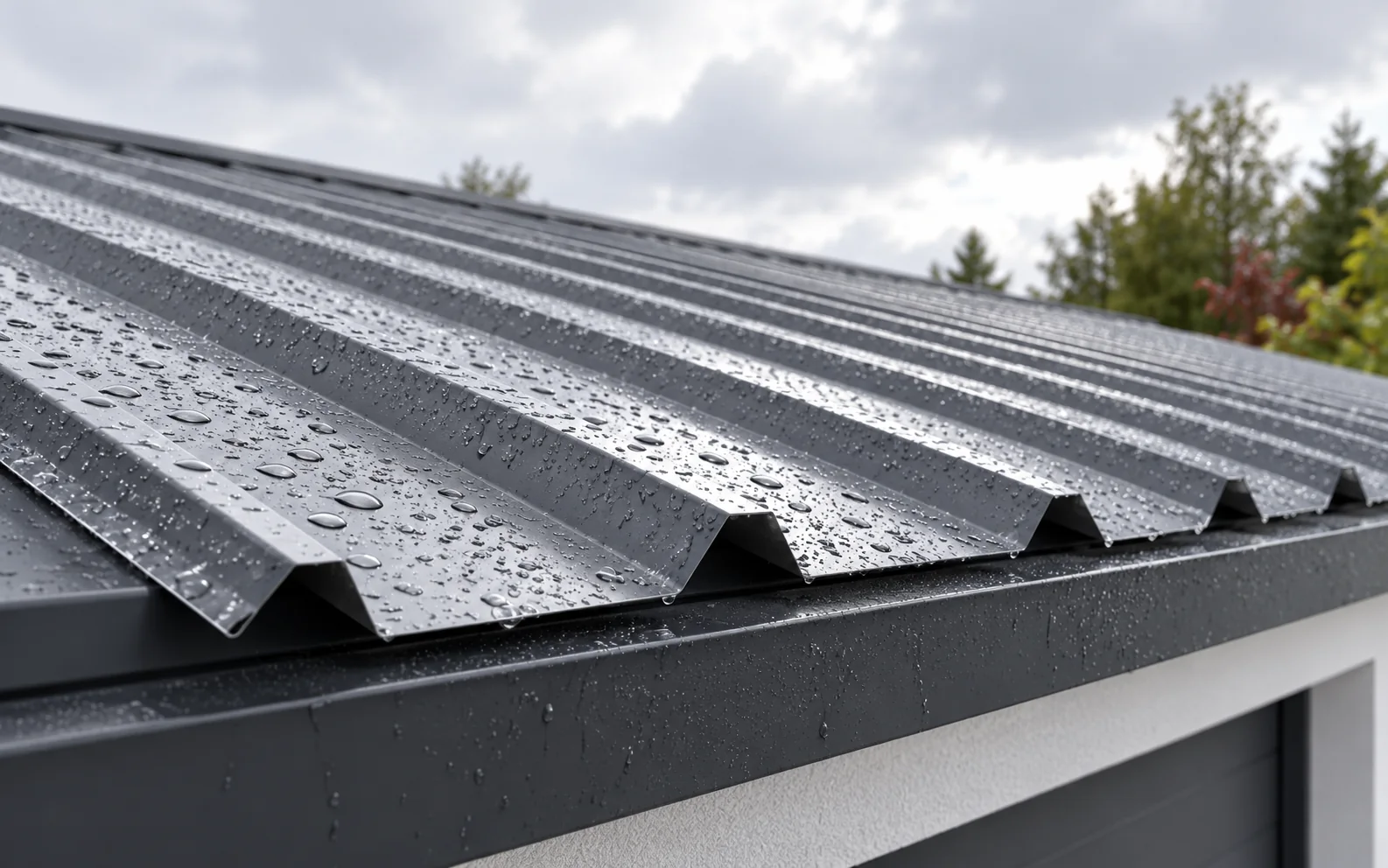
To assess a trapezoidal steel roof, look at the condition of the coating, cut edges, fixings and flashings. Faded colour may be…
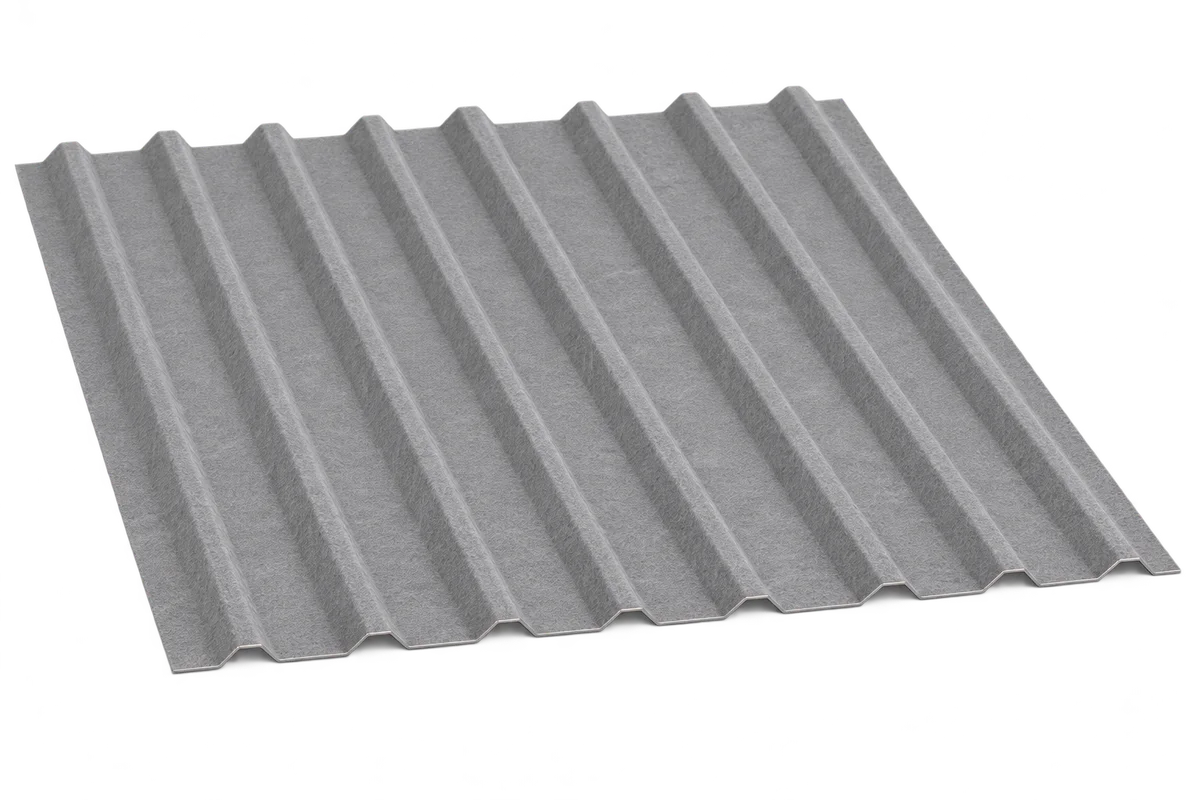
Trapezoidal steel roofing with anti-condensation fleece can retain some condensate beneath the sheet and later release moisture to the air when drying…
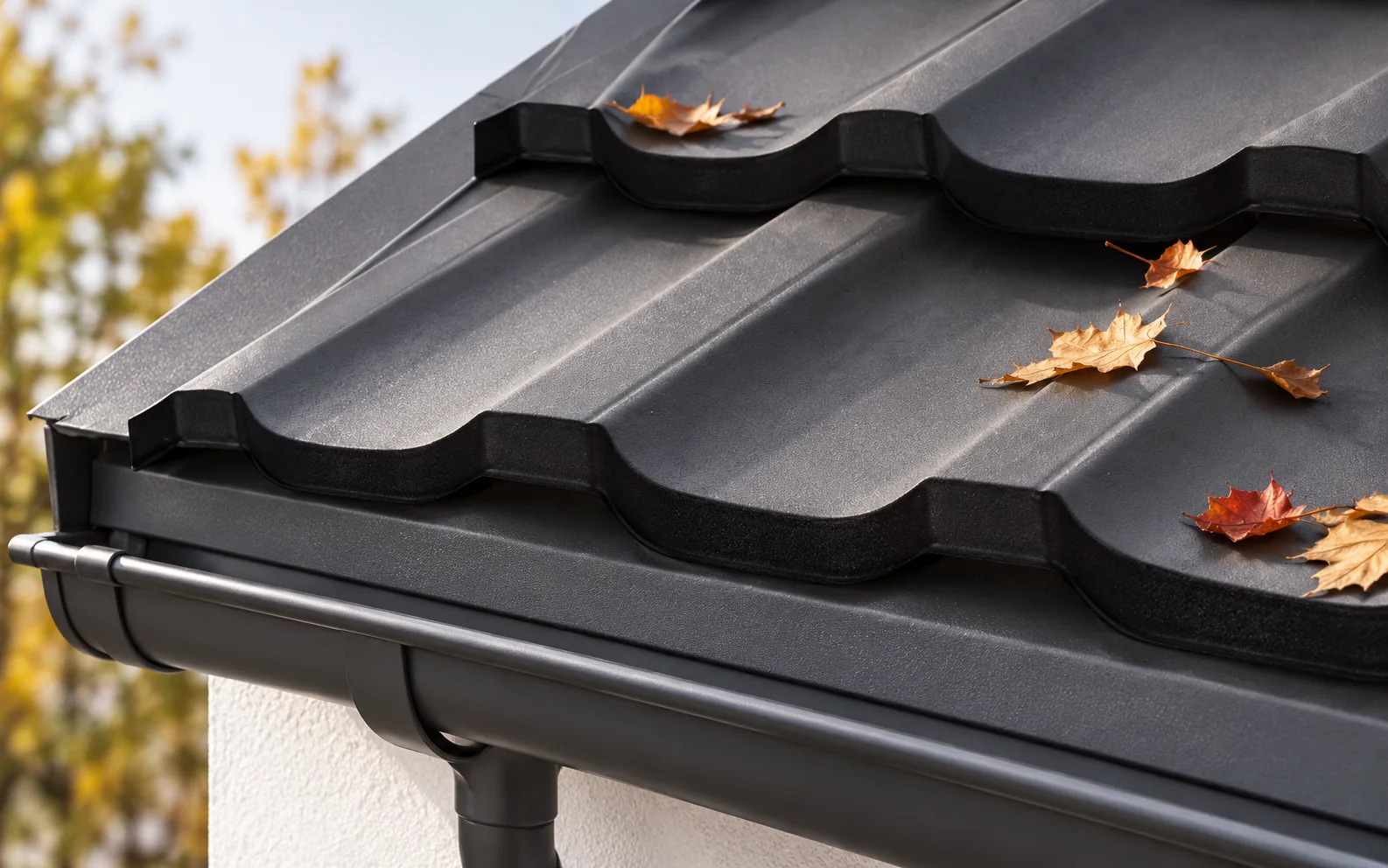
Green growth on the sheet metal must first be identified and then removed using a method that is safe for the coating.…
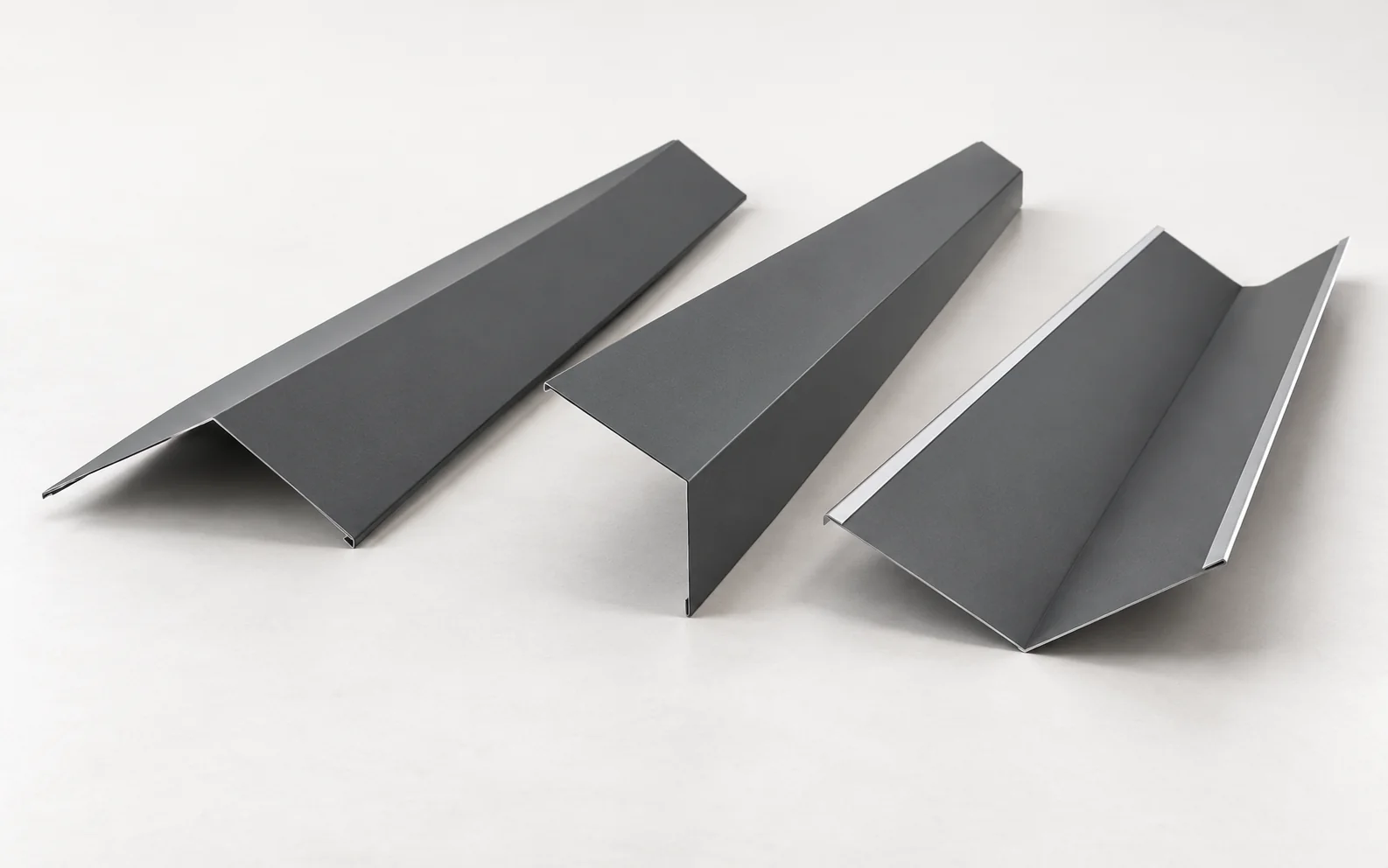
Roof flashings channel water where the covering alone is not enough. They protect edges, junctions between roof slopes, the chimney and the…
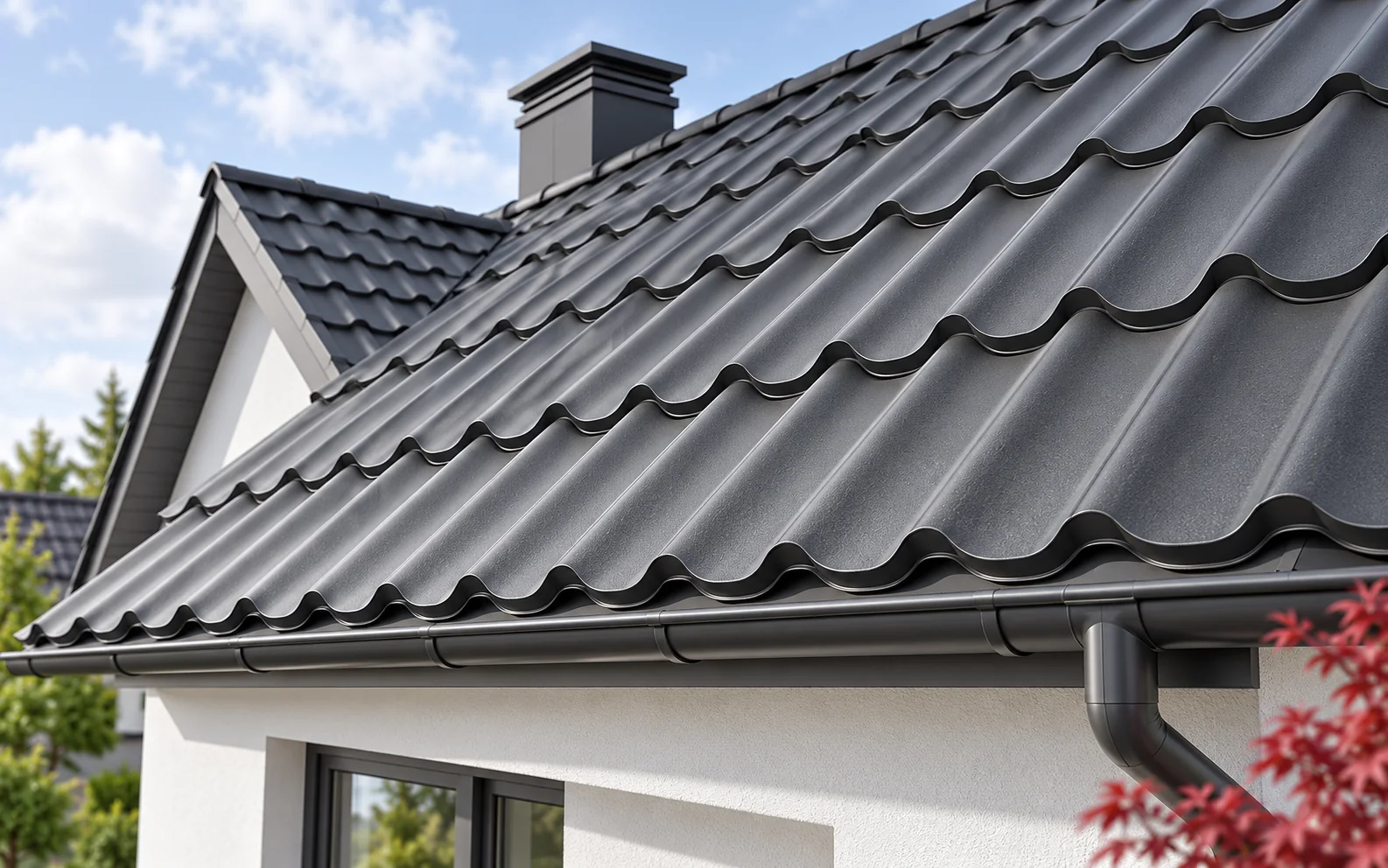
A coherent roof results from proportion, colour and detail, not from a seasonal trend label. Modular tile-effect metal roofing, cut sheets and…
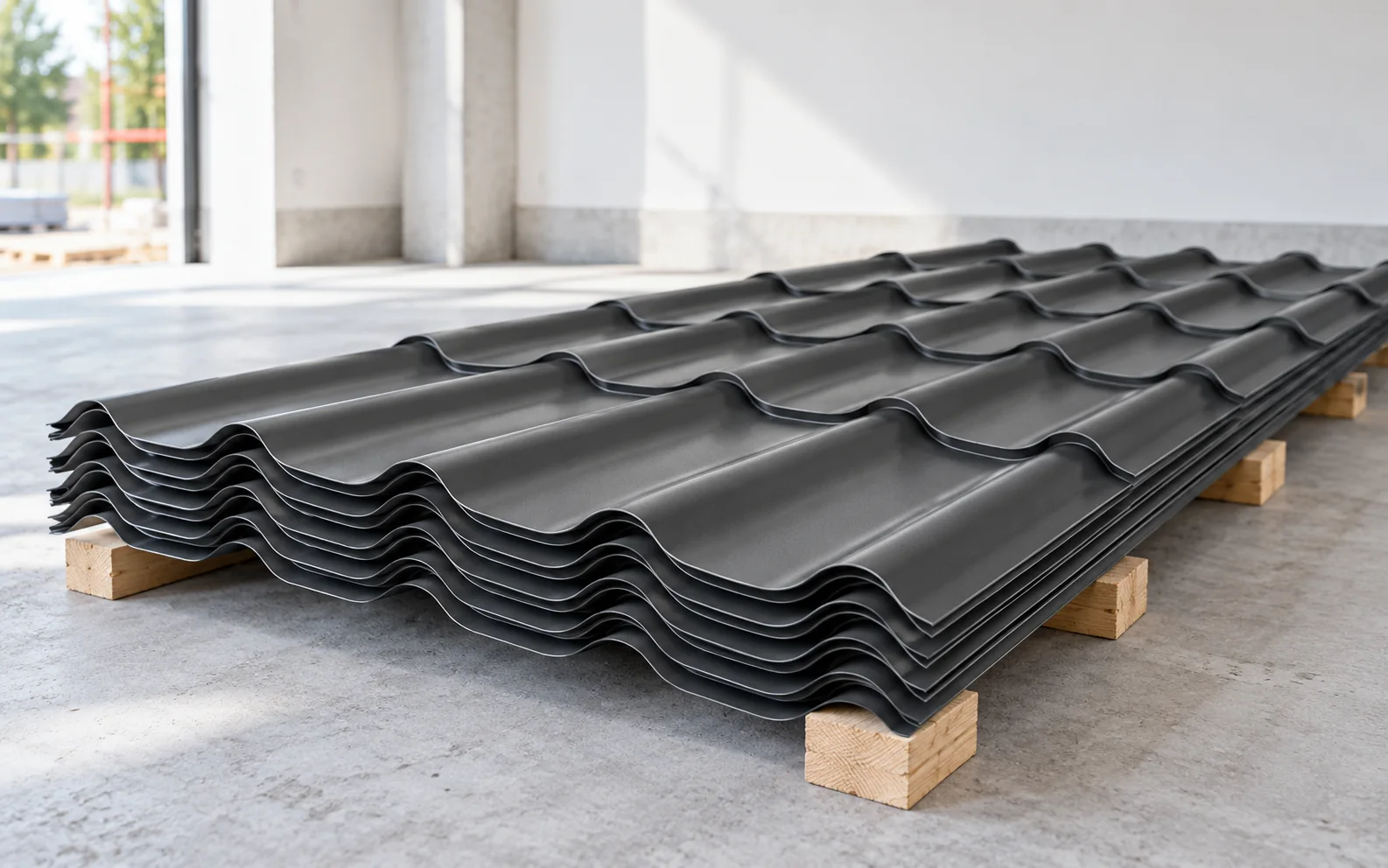
Tile-effect metal roofing must be protected from water trapped between the sheets, from scratching and from deformation. The transport packaging is no…
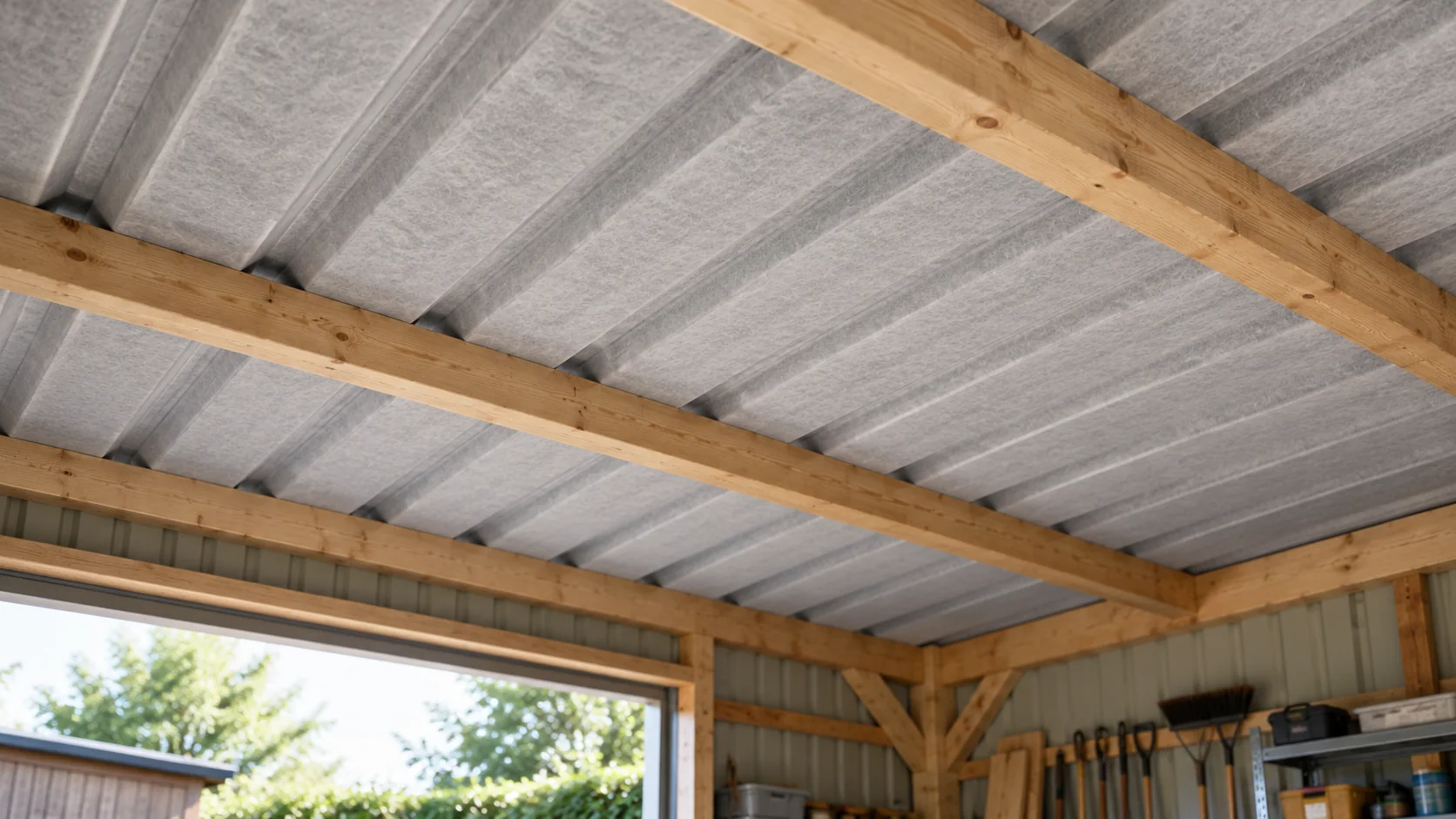
Anti-condensation fleece can reduce dripping from the underside of an uninsulated metal roof if it has time to dry between periods of…