

Roofing and energy
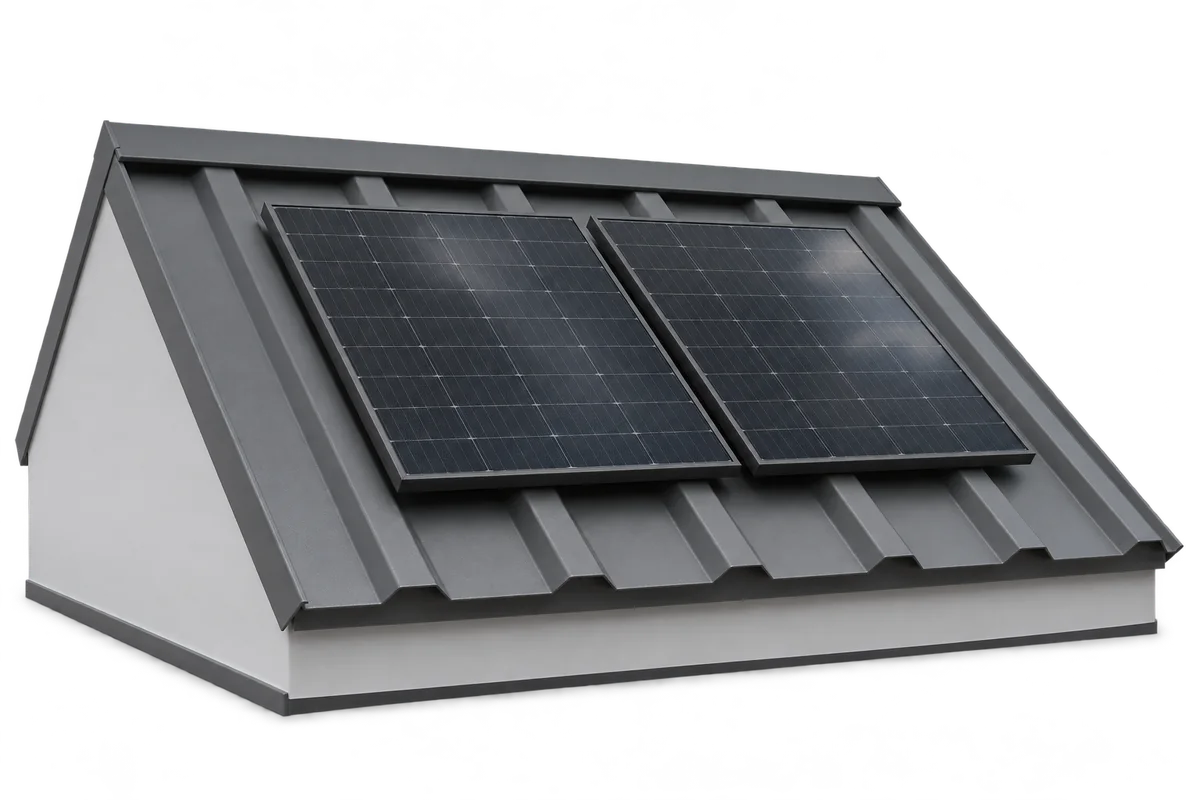
How are solar panels fixed to a metal or sandwich panel roof?
The fixings for a photovoltaic array must suit the specific roof and the loads it will carry. Metal tile roofing, trapezoidal sheets and sandwich panels each require different details. Trace the load path from the modules to the building structure. Watertightness and protection of the coating matter just as much as load capacity. You cannot choose a suitable mounting kit by looking at the covering alone. Identify the roof type, condition, thickness, support spacing and substrate. Include structural drawings and details of past alterations. On older roofs, also check the existing fixings and look for corrosion. Room for modules does not necessarily mean the roof has spare load capacity.
In this guide
What roof information do you need?
The design accounts for the weight of the system, snow and wind. Loads near edges and corners can differ from those in the middle of the roof. Do not determine the number of fixing points from roof area alone. Check the resistance of the components and the connections along the full load path.
How are fixings detailed on metal tile roofing?
In many systems the fixing passes through the covering into a suitable structural member. Its position and the required anchorage depth have to be established, and the penetration sealed correctly. The tile profile affects how the fitting sits and how it is supported. Use a detail intended for that application.
Do not crush a rib to make an unsuitable mounting foot fit. Deformation can interfere with drainage and compromise the seal. Allow for thermal movement of the sheet. The installation must preserve the function of the covering without introducing stresses the roof was not designed for.
What matters with T18 and T35 trapezoidal sheets?
Some systems fix directly to suitable trapezoidal sheets. Whether this is permissible depends on the sheet geometry, thickness and material, among other factors. Check the existing sheet-to-support fixings as well. The designation T18 or T35 alone does not identify a single cross-section or set of properties.
Select fasteners and rails using the design calculations and the mounting system instructions. Pay particular attention to fixing positions on the profile and the required seals. Do not copy the spacing from another building without checking the conditions. Similar-looking sheets may differ in thickness, steel grade, crown width and support spacing.
Why assess a sandwich panel separately?
A sandwich panel works through the interaction of the two faces bonded to the core. A concentrated load at a bracket acts differently from a load spread over the roof. Fixing solely to the outer face is an option only where the assembly has been shown to suit the particular panel and conditions. Its resemblance to trapezoidal sheet does not establish this.
Other details transfer forces into the supporting structure. These also need correct sealing and protection against local crushing. Obtain confirmation from both the panel manufacturer and the mounting system manufacturer that the selected assembly is compatible. Check technical requirements and warranty conditions before drilling the first hole.
How do you keep the roof watertight and accessible for maintenance?
Select gaskets for the materials, geometry and exposure. Too little or too much compression can compromise the joint. Remove drilling swarf and repair any damage to the coating according to the instructions. Route cables so that they cannot rub against sharp edges or lie in drainage paths.
Maintain access to chimneys, roof hatches, drains and equipment. Arrange the modules to allow later cleaning and inspection of fixings. Plan how part of the array can be removed safely if the roof needs repair. Covering an important joint completely can turn a minor fault into a difficult repair.
Check that metals in contact are compatible. The fastener, bracket and coating should form a combination approved for the environment. Incompatible materials can promote corrosion. The system documentation should identify any separating layers and seals required.
What should be handed over after installation?
At handover, obtain a fixing layout, records of the components used and photographs of the connections. Check that the work matches the agreed design. The electrical installation requires separate measurements and acceptance by qualified personnel. A roofing guide does not replace an installation design, just as an electrical design alone does not establish the capacity of the roof covering.
Keep the roof and installation warranty conditions together with the inspection schedule. After severe weather, the flashings and existing sheet fixings may also need checking. A properly designed PV array should work with the roof for years. That depends on assessing the whole assembly and documenting the choice of components, not simply buying rails that fit.