Sandwich panels
How to clean ceilings safely in livestock buildings
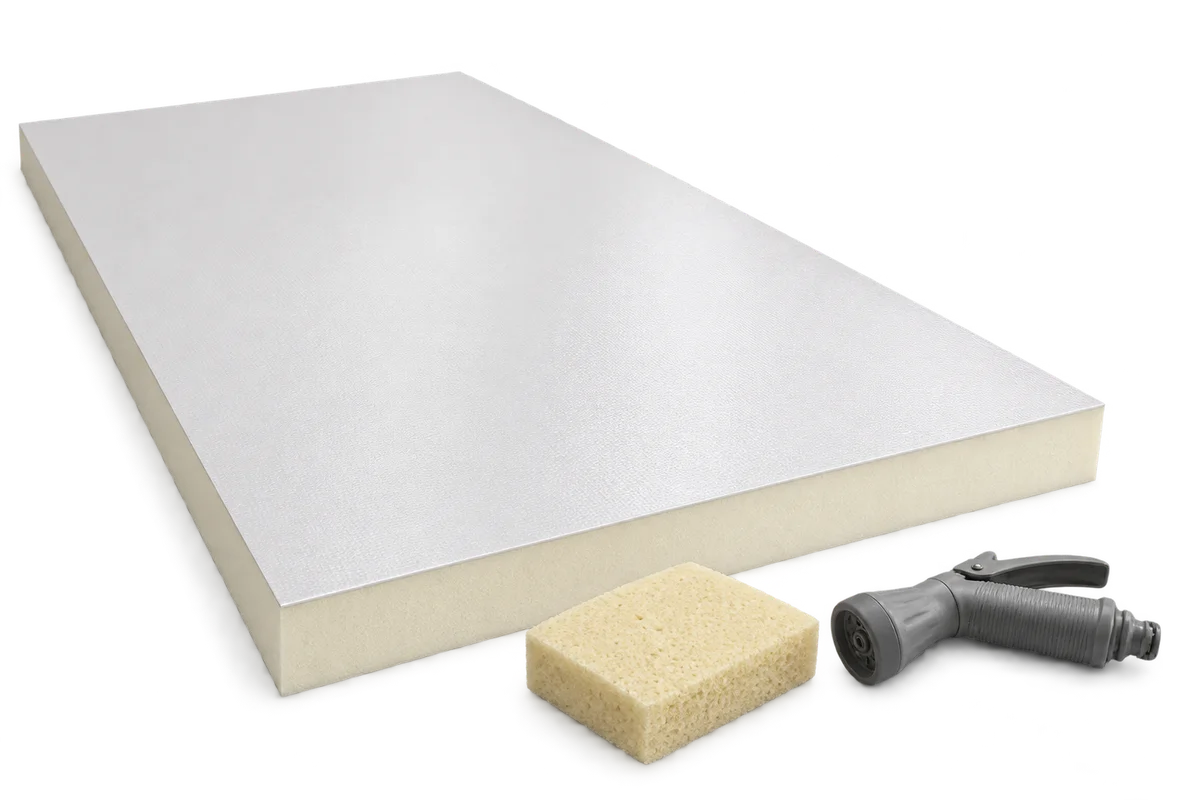
Ceilings in livestock buildings are exposed to moisture, dirt and repeated cleaning. Choose the washing method for the actual facing, the condition of the joints and the manufacturer’s instructions. A PIR core alone gives no indication of the permitted water pressure. Identify the exact product before starting. A thin foil-faced PIR board, a ceiling lining with a glass-fibre-reinforced laminate and a steel-faced sandwich panel can all require different treatment. Check the permitted water settings, nozzles and cleaning agents. The steps below cover preparation, washing and inspection after drying so you can protect the insulation as you work.
In this guide
Identify the ceiling facing
A similar-looking ceiling in the next building may have different cleaning instructions.
The core provides most of the thermal insulation. The outer facing takes the force of cleaning. Damaging it can allow water and dirt to enter. Inspect trims, fasteners and seals around penetrations as well. Even a durable facing cannot keep an open joint watertight. Assess the whole ceiling, including the edges of the boards.
Prepare the room and inspect the joints
Schedule cleaning around farm operations and the hygiene procedures for the livestock or products concerned. Remove or protect water-sensitive equipment. Have a suitably qualified person isolate or protect electrical installations. Arrange safe access to the ceiling. A ceiling lining is not a working platform and must not be used to stand on with washing equipment.
Before using water, look for cracks, loose facings, exposed core and leaking trims. Repair damaged areas by a method approved for the product. First remove loose deposits without scratching the surface or raising unnecessary dust. This preparation can make gentle cleaning effective even where dirt has accumulated.
Match the pressure to the product
The pressure washer’s maximum rating is not the recommended working pressure. Nozzle type, distance and lance angle also affect the impact on the facing. Limits can differ substantially between boards. Obtain clear instructions for the exact product before starting. Never determine the limit by increasing the pressure until damage occurs.
For some agricultural ceiling linings with aluminium foil or laminate facings, the manufacturer prohibits rotary nozzles even where ordinary pressure washing is allowed. Observe that restriction. Keep concentrated jets away from joints, edges and penetrations. Where the instructions allow it, test the specified method on a small area first and check the surface before continuing.
Check that the cleaning agent suits the facing
A cleaner that removes farm dirt effectively may attack a particular coating. Check its composition, dilution, temperature and contact time. Choose a product approved for the surface and the building’s use. Follow both the cleaning agent and panel instructions. Do not improvise mixtures or increase the concentration in the hope of improving the result.
Cleaning removes soiling, while disinfection has a different purpose. If the hygiene procedure calls for both, follow its sequence and specified conditions. Remove residues as directed, usually by rinsing thoroughly. Keep cleaning chemicals from collecting in panel joints. Dried residues can hide the condition of the coating and make further intensive cleaning necessary.
Keep water out from behind the lining
Watch the wall junctions, hangers and light fittings as you work. Water should run across the facing and drain away. Keep it from being driven behind trims or into an exposed core. The low water absorption of PIR foam does not make a joint watertight. Moisture can remain hidden behind a lining. If a joint leaks, stop washing that area and correct the leak.
Allow the room to dry in accordance with the production process. Ventilation carries away the moisture released during cleaning. Check drains and places where water could pool. Before returning livestock or bringing products back, observe the requirements for the chemicals used and the farm’s hygiene procedure.
Inspect the dry ceiling and record the settings
Inspect the facing in good light. Look for blisters, scratches, lifting edges and changes in the seals. Use a compatible repair method instead of covering defects with an unverified tape. Record the cleaning agent, concentration and machine settings. These details help you repeat a suitable method and investigate any change in the surface later.
When specifying a new ceiling, include the intended cleaning method. PIR can reduce insulation thickness and weight, but the facing must suit the building environment. A light, smooth surface makes dirt easier to spot. Durability also depends on the joints and on how the ceiling is maintained. Inspect regularly, repair damage and keep up the hygiene routine.