

Roof coverings
Coated steel and titanium zinc: how do the sheets differ?
Coated steel and titanium-zinc sheet are different materials, although both can be used to form a metal roof. The first relies on a system of protective layers over a steel core. The second is a zinc alloy and develops a patina. The choice should take into account the desired appearance, the installation method, the substrate and the cost of the complete covering. No. Titanium-zinc sheet is a zinc-based material with alloying additions. It does not have a steel core coated with a thin layer of zinc. Steel tile-effect sheeting or trapezoidal steel sheet is constructed differently. The distinction matters for flashings, surface protection and how the material behaves over time. A similar grey colour does not mean the same properties. Coated steel can imitate a particular shade, but that does not turn it into titanium-zinc.
In this article
Is titanium-zinc a type of galvanised steel?
No. Titanium-zinc sheet is a zinc-based material with alloying additions. It does not have a steel core coated with a thin layer of zinc. Steel tile-effect sheeting or trapezoidal steel sheet is constructed differently. The distinction matters for flashings, surface protection and how the material behaves over time.
A similar grey colour does not mean the same properties. Coated steel can imitate a particular shade, but it does not thereby become titanium-zinc. When comparing offers, the actual material must be established. A colour name or the term metal roof is often too general to assess the scope of the order.
How does a titanium-zinc surface change?
On exposed material, a protective patina forms under the influence of weather conditions. Its appearance may depend on the surroundings, the orientation of the surface and time. Variants prepared at the factory with a surface treatment are also available. However, one should not expect the natural surface to look like a uniform paint coating for years.
Patina is not a reason to abandon correct details. Permanent moisture, incompatible material contacts and substrate errors can cause problems. Not every stain is a correct stage of ageing. Doubts must be assessed taking into account the type of finish and the conditions in which the change appeared.
What does coated steel offer in popular profiles?
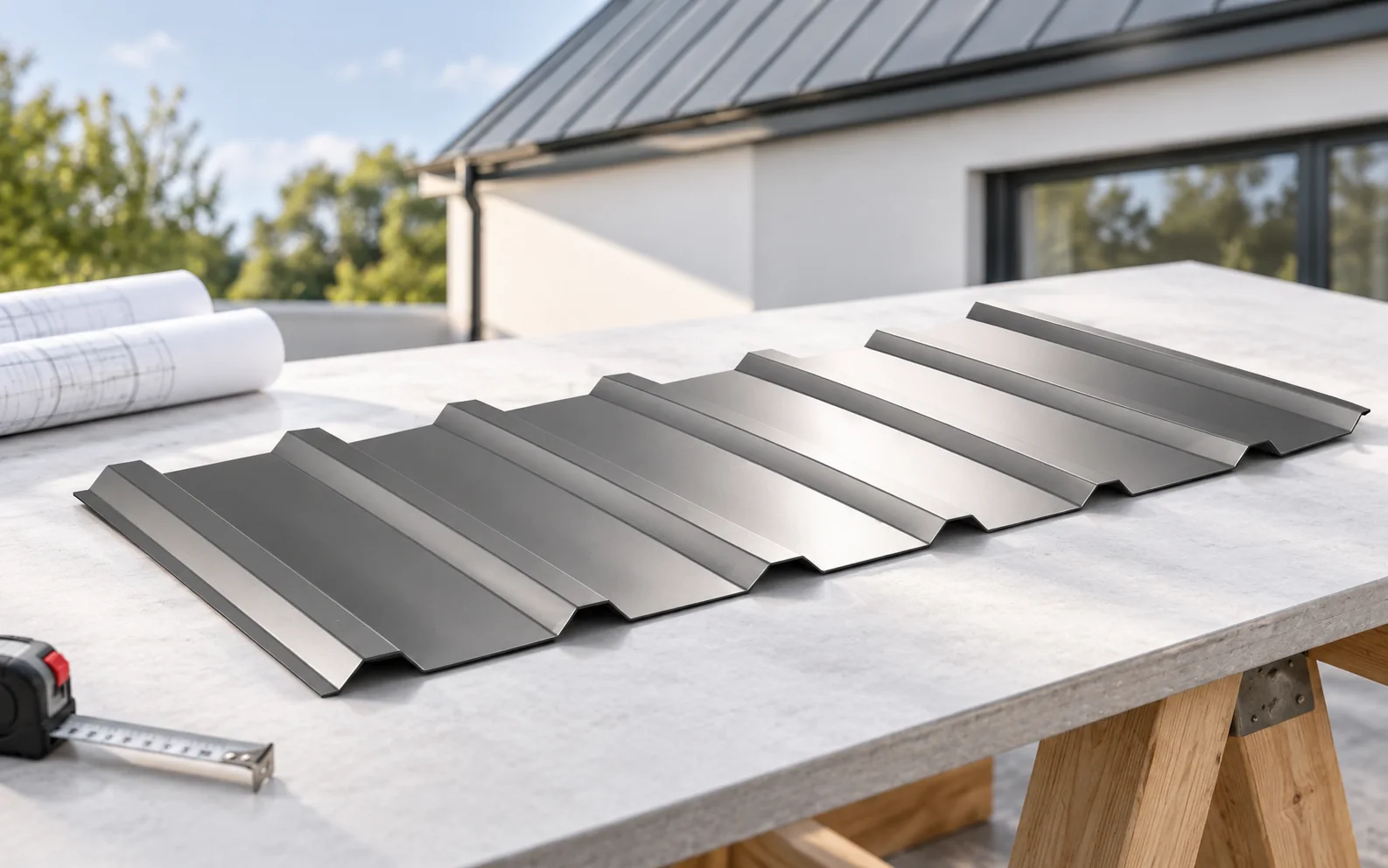
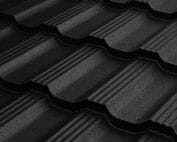
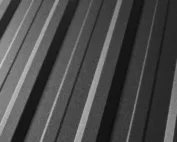
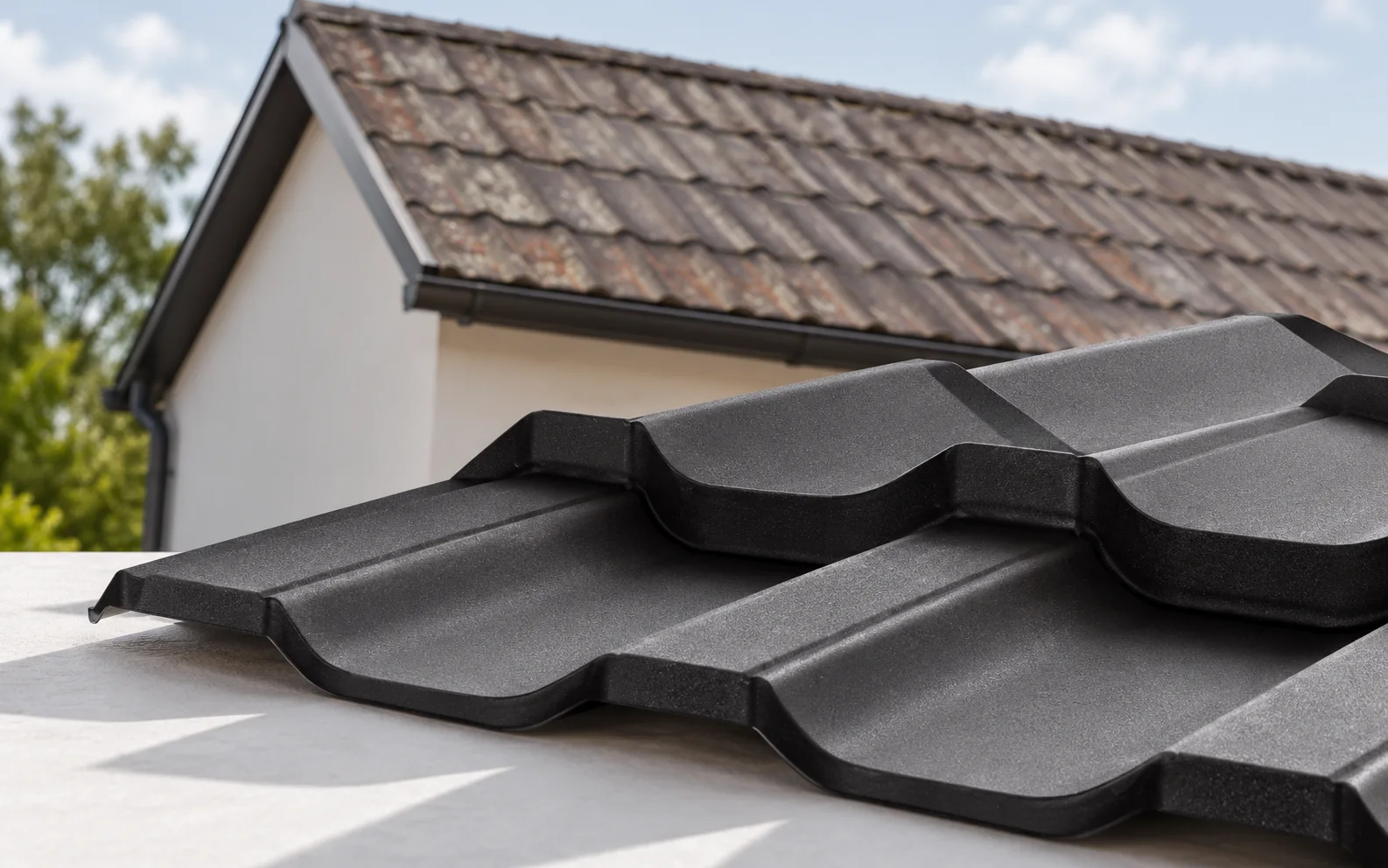
T18, T35 and tile-effect metal roofing provide a ready-made geometry and a defined surface colour. The format can be selected to suit the roof shape, from long sheets to smaller modules. The choice of coating allows environmental requirements to be taken into account. The parameters always relate to a specific variant, not to the entire category of steel roof coverings.
If the rhythm of tiles is desired, cut or modular tile-effect metal roofing can directly match this assumption. Trapezoidal steel sheet creates a different, more linear pattern. These solutions should not be compared with titanium-zinc solely by colour. The form of the covering and the way the edges are finished are also important.
What differences are there in installation?
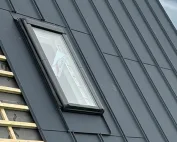
Titanium-zinc sheet is used in systems with their own rules for forming and joining. It requires a suitable substrate and allowance for thermal movement. The processing conditions depend on the product and the temperature. Carrying out the work requires knowledge of the specific technique, not only experience with screwing down trapezoidal steel sheet.
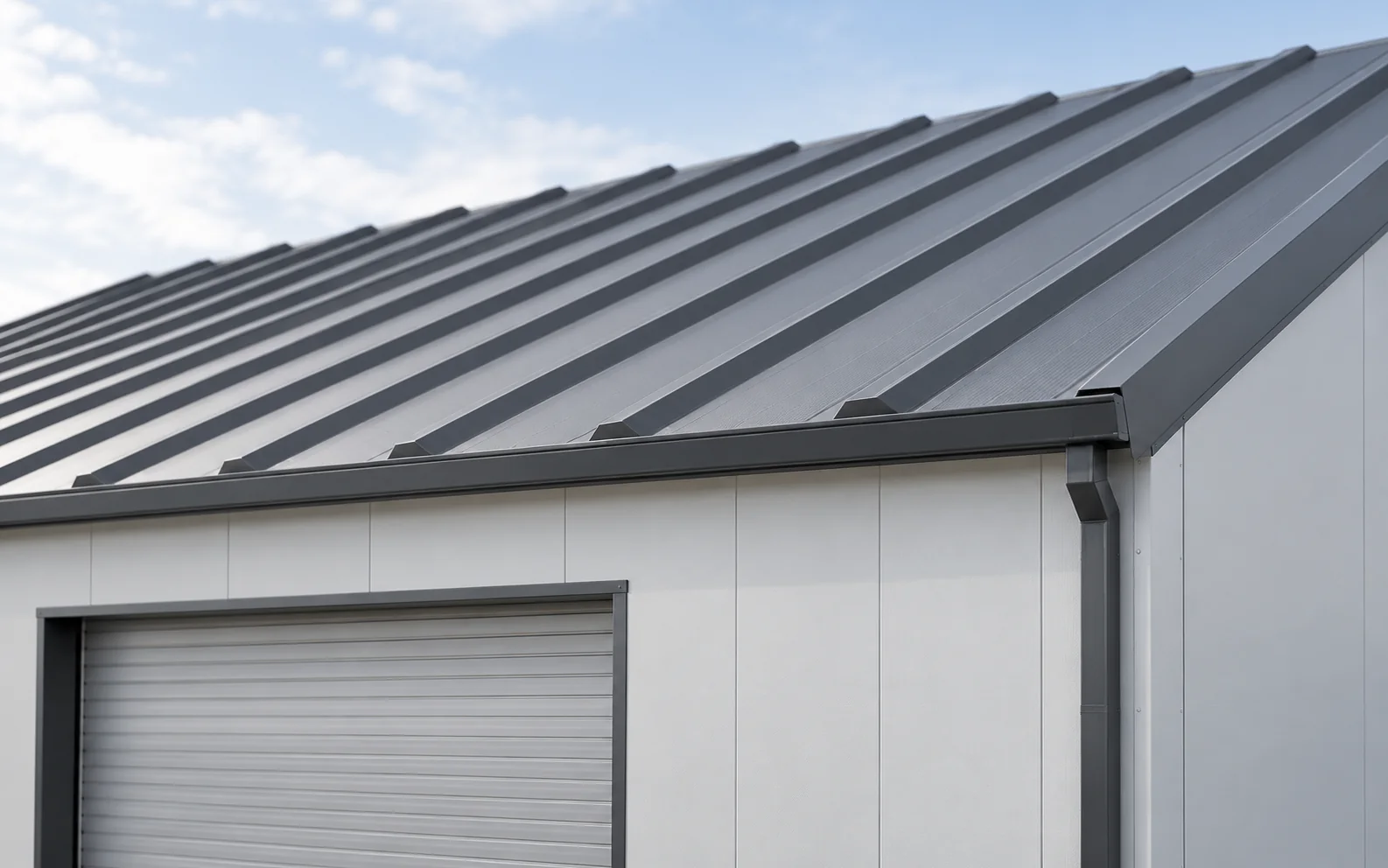
In steel profiles, part of the shape is ready after production. The requirements for supports, laps and fixing still apply. Details cannot be transferred between materials without checking compatibility. A visually similar standing seam made from different metals may also require different installation solutions.

Why are the substrate and moisture so important?
In titanium-zinc solutions, conditions on the underside must be taken into particular account. The documentation specifies requirements for ventilation, separating layers or additional protection. Permanent moisture in an unsuitable assembly can impair durability. The material should not automatically be laid on any wood-based panel.
Coated steel also requires moisture control under the covering. The membrane, insulation and ventilation must form a coherent system. Neither of the compared materials provides thermal insulation for the room on its own. The comfort and risk of condensation are determined by the entire building envelope, not by the external sheet metal alone.
How should contact with other materials be taken into account?
With metals, direct contact and water running off adjacent surfaces are important. The titanium-zinc documentation indicates materials that are compatible and incompatible with the given solution. Construction products and wood must also be taken into account. An incidental separating layer is not a universal way of eliminating every risk.
A steel covering also needs suitable fasteners and flashings. The selection should cover the entire set of materials, not just the sheet. During work, surfaces must be protected from mortar, filings and aggressive agents. Soiling or foreign particles can cause marks unrelated to a manufacturing defect in the sheet.
How can costs and the expected effect be compared?
The price package should include the substrate, material, flashings and labour. The price per metre of sheet alone does not describe a finished roof. With titanium-zinc, the scope of specialist flashing work is important. With steel profiles, costs change with format, waste and accessories. Current offers are needed for the same geometry.
The choice is worth basing on the expected ageing and the style of the building. Someone who wants a naturally changing surface may assess patina differently from a person expecting a specific colour. Tile-effect metal roofing or trapezoidal steel sheet, in turn, may better suit the planned budget and method of installation. Every variant requires correct execution.
Advice before ordering
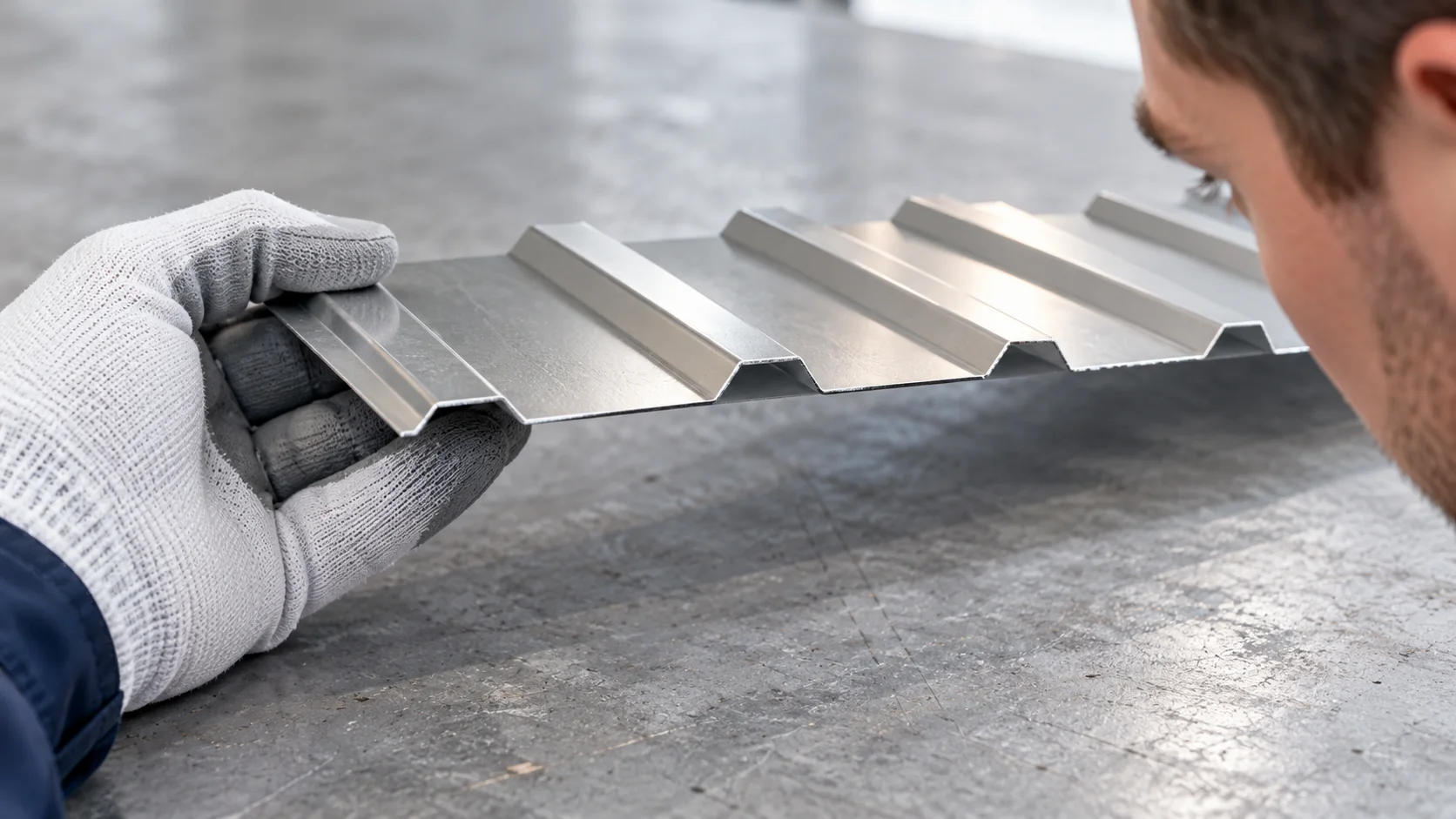
Ask for samples of the actual materials, not just similar grey colours from a swatch. Establish whether you are looking at coated steel or a zinc alloy. Also ask how the surface is intended to change in use.
What is worth remembering?
Titanium-zinc and coated steel differ in construction, appearance over time and execution requirements. T18, T35 and tile-effect metal roofing are distinct solutions that should be compared as complete roofs. A good decision combines the desired aesthetics with a correct substrate and a realistic cost estimate.
7 branches. Materials closer to your project.

Free quote
Materials for your project

You may also find useful…
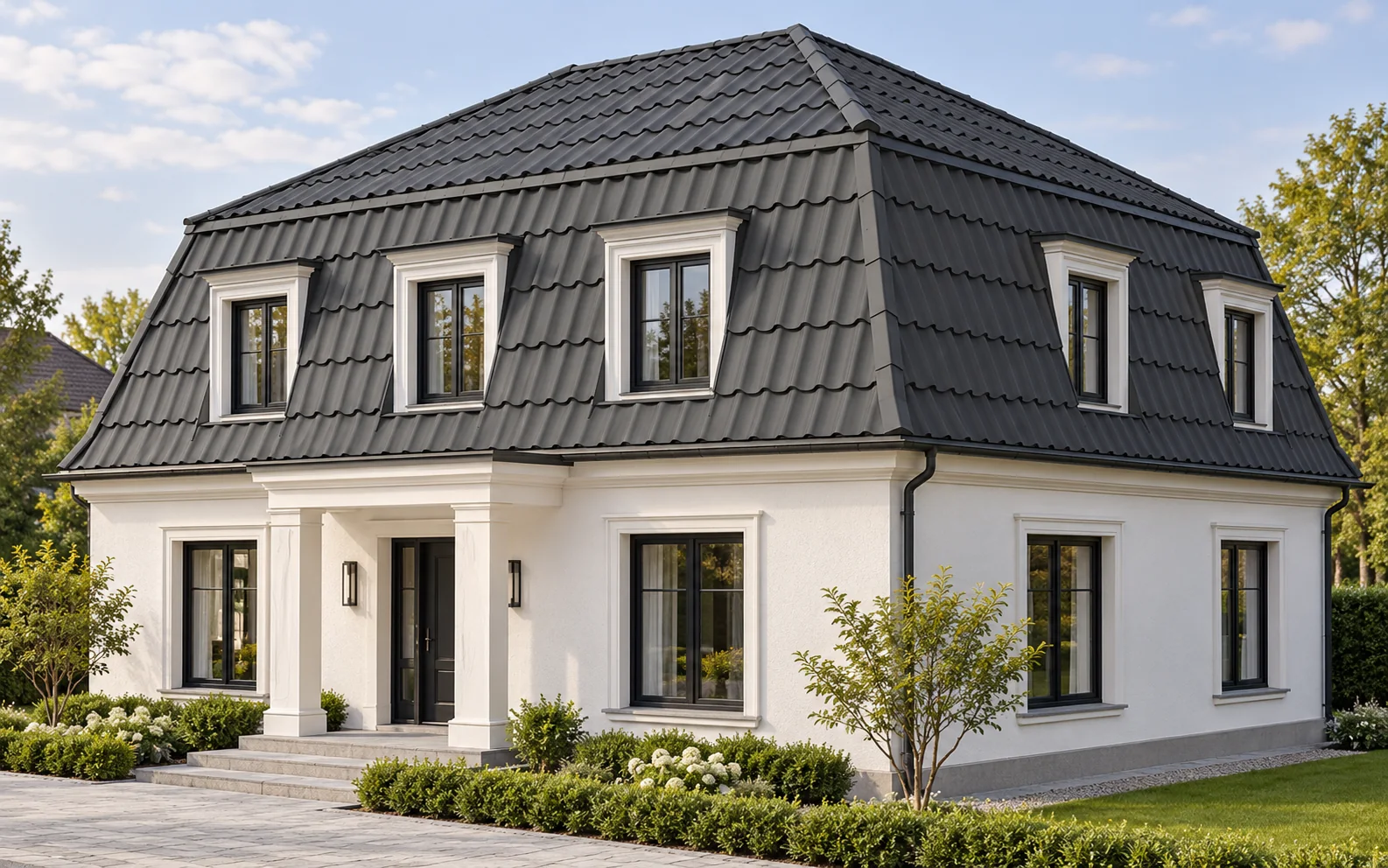
A mansard roof has a slope that is broken into a lower and an upper section with different pitches. The covering must…
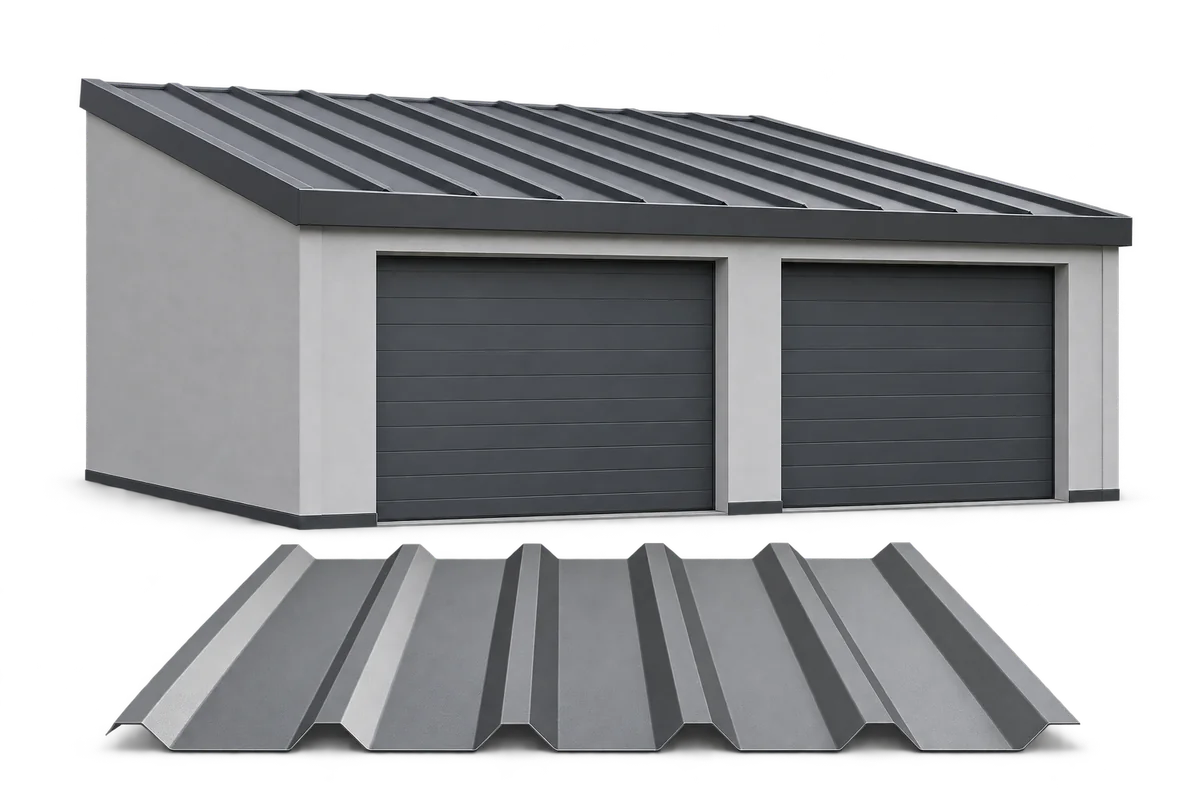
A garage clad with trapezoidal steel sheets benefits from an interior layout before openings and service routes are fixed. A car, shelving…
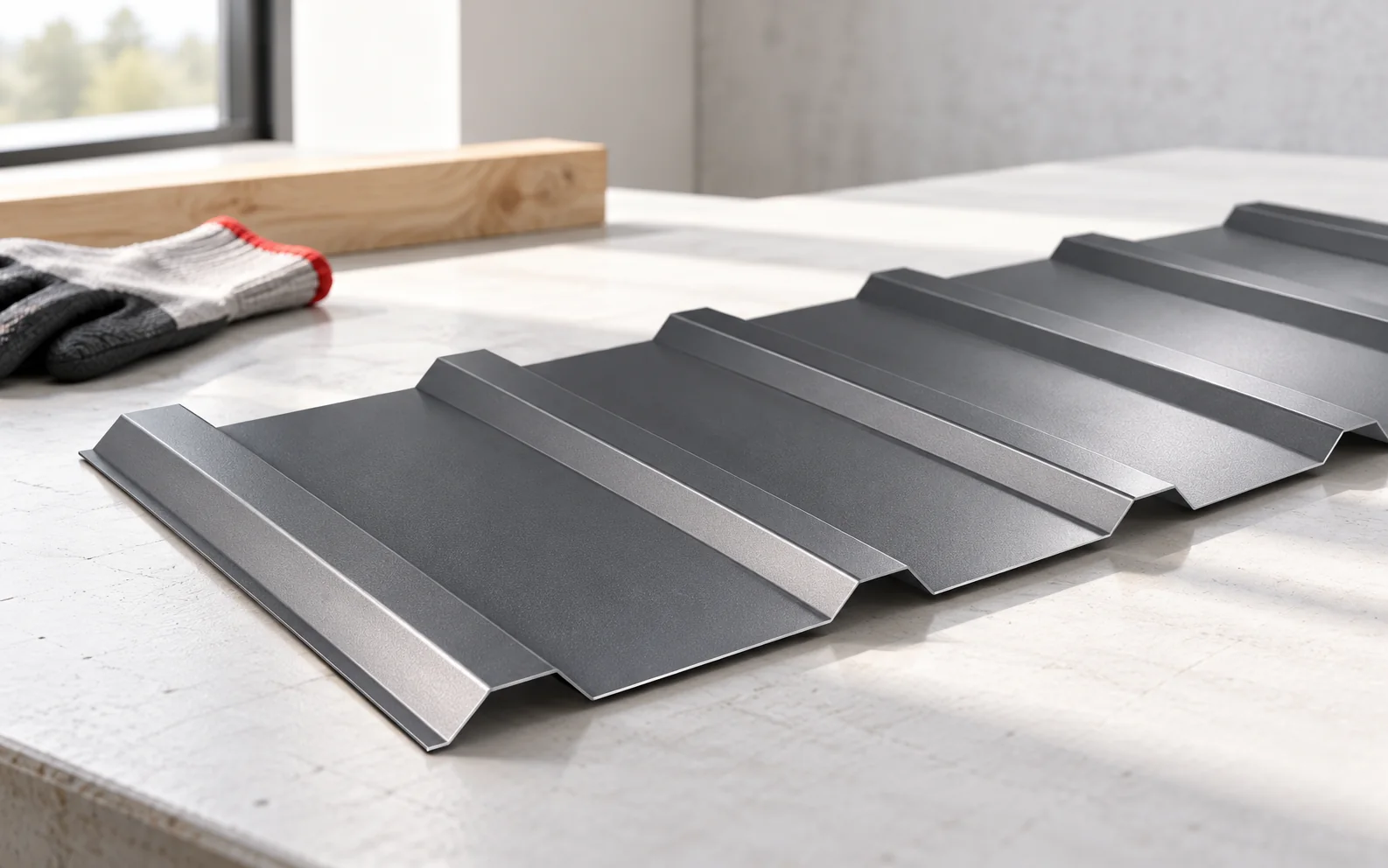
The metal soffit is a finishing element that conceals the underside of the eaves and gives the roof a neat appearance. Its…
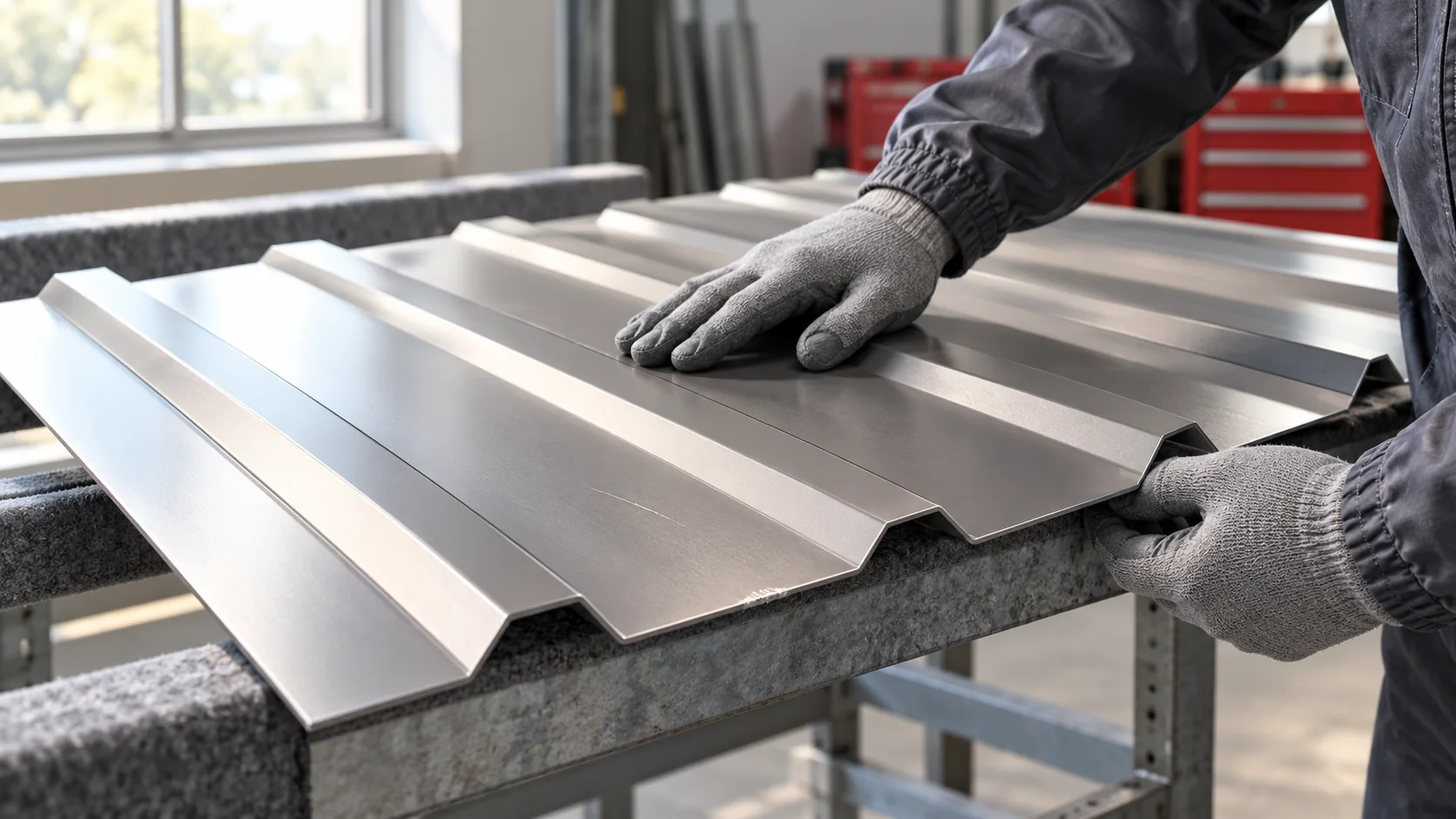
Second-quality trapezoidal steel sheets can be discounted for very different reasons. Before comparing prices, find out why the particular sheets were downgraded.…
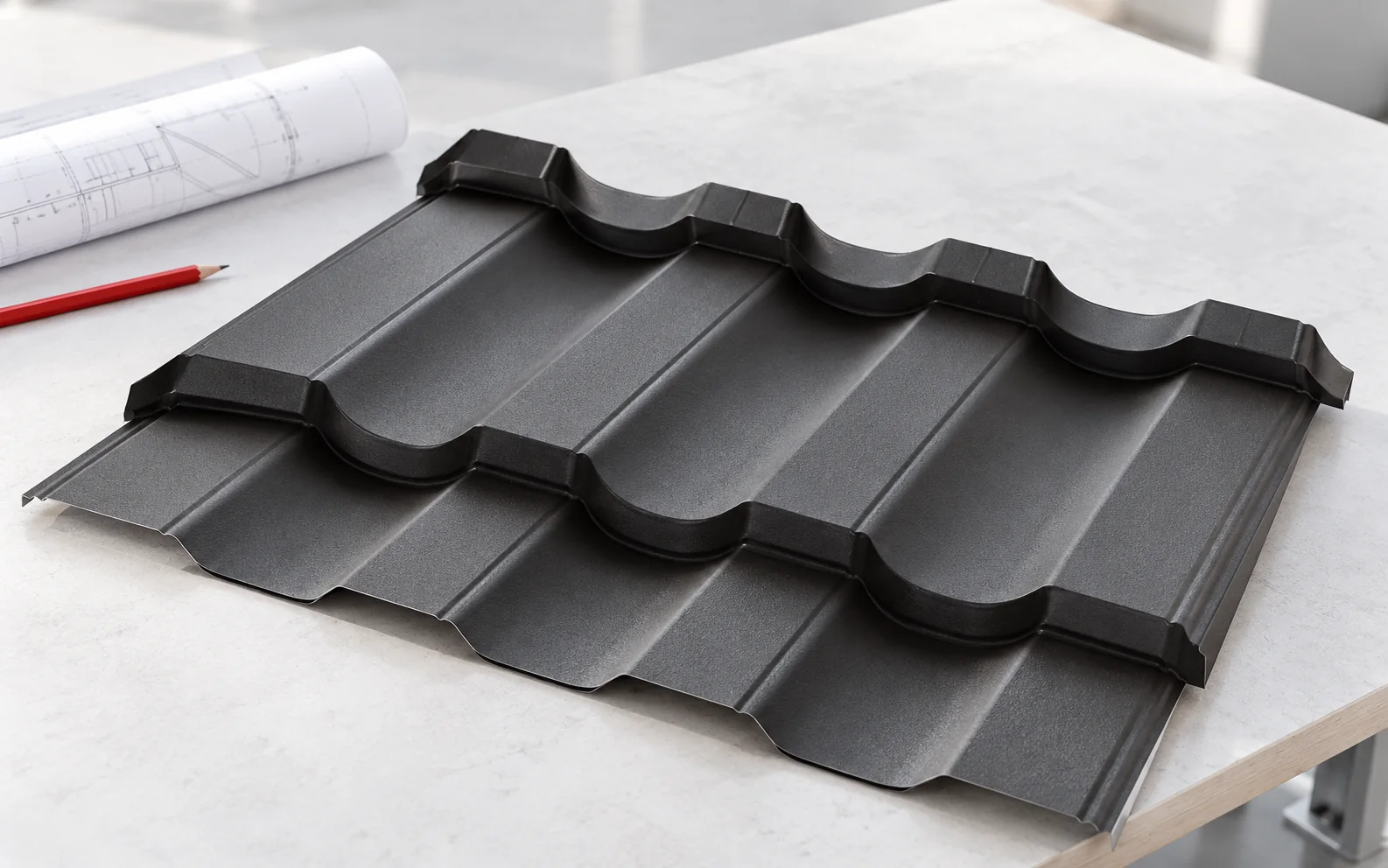
The coating of a tile-effect metal roof determines its corrosion protection, how long its appearance lasts and how resistant its surface is.…
The decision depends on the extent of the damage, the condition of the structure and the cause of the problem. A single…
Energy efficiency depends on the insulation of the entire building envelope, its airtightness and how the building is used. Sheet metal mainly…
The cheapest roofing sheet may cost more to install if it needs extra supports. Choose the steel thickness alongside the profile, fixings…