

PIR insulation
How the IKO enertherm ALU TG joint affects insulation continuity
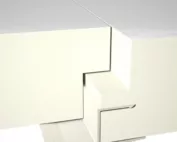
After ALU TG has been laid, the regular field looks tight. At the perimeter, however, cut pieces without the full factory profile appear. It is precisely this strip that may require additional attention when the aim is to limit losses. A good result in the middle of the surface should not be taken as proof that every termination is correct. The starting point is insulation joined by a factory tongue and groove. Here the particular limitation is the absence of the factory profile at the edges after cutting. The design must allow full boards and cut pieces to be joined without gaps in the layer, not merely fit another sheet. The point requiring attention is the edge of a cut piece without the preserved factory tongue.
In this article
First the limitation, then the thickness
A row plan marking the edges left after cutting is necessary, because when looking only at the flat field, not all the heights are visible. Before buying IKO enertherm ALU TG, this fragment must first be established, before the thickness is adopted as an assumption for further works.
The right product and the scope of its data
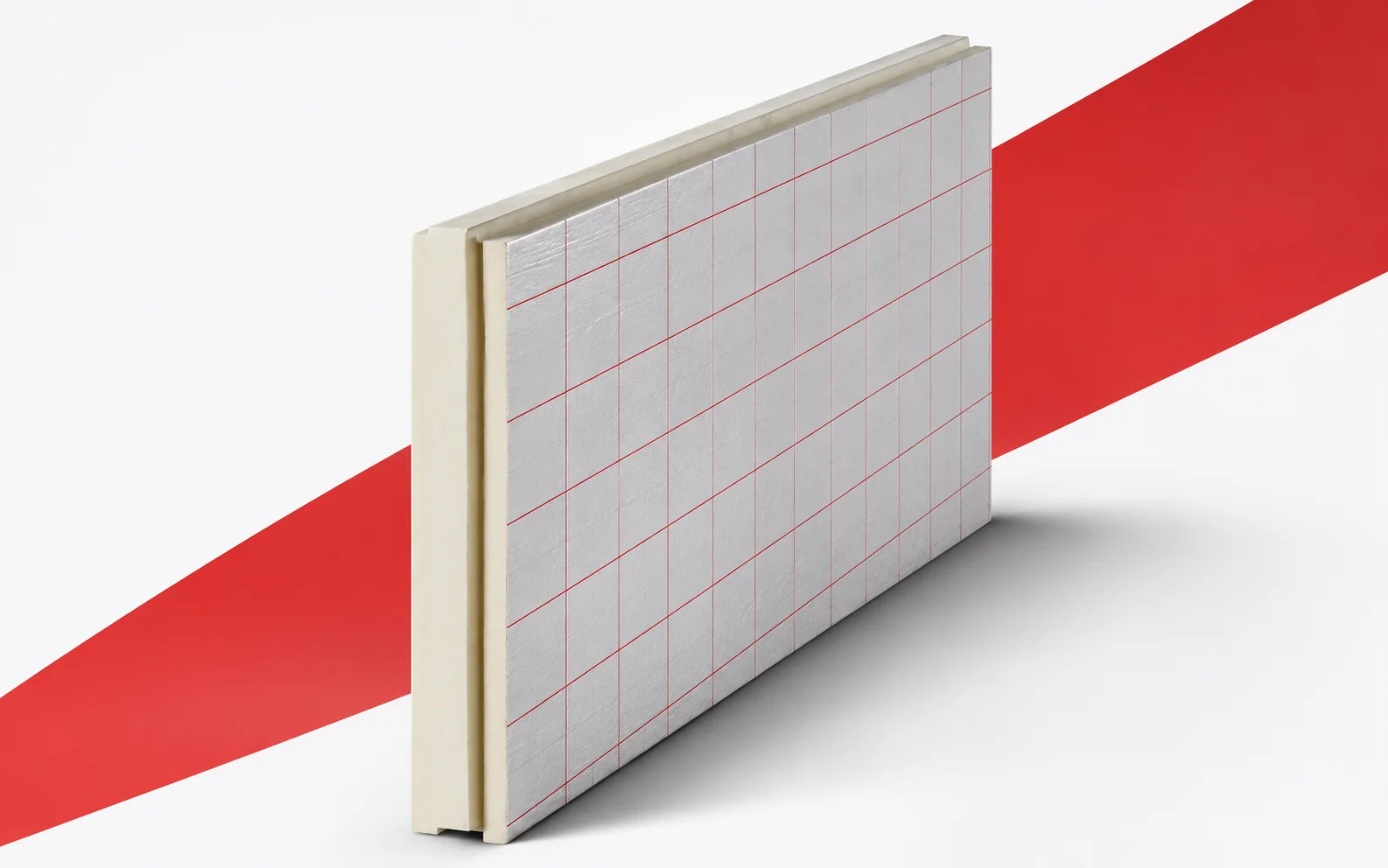
The IKO enertherm ALU TG PIR board has an aluminium laminate and a tongue-and-groove edge. For the family the declared lambda is 0.022 W/(m·K), and the compression level is at least 175 kPa. The reaction to fire of this product is F; B-s2,d0 relates to a specific end use. The TG profile is neither a structural connection nor a standalone waterproofing. On a cut fragment the factory shape of the edge is lost. The scope for assessing IKO PIR boards here is insulation joined with the factory tongue and groove. When checking an order, the term polyurethane boards does not replace the full name IKO enertherm ALU TG. The core of IKO enertherm ALU TG is PIR-type polyurethane foam; the properties of the complete board also include its facings.
What the figures show in this case
Cutting an IKO enertherm ALU TG board removes the factory profile along the cut edge. When selecting a board from the catalogue, consider the depth of insulation and the cut joint separately. For an illustrative R of 4.00 m²K/W, a conductivity of λ = 0.022 W/(m·K) gives a thickness of about 88.0 mm. Assuming λ = 0.036 solely for comparison, the same product of R and λ gives 144.0 mm. The calculation shows the space needed for a given resistance. It describes neither the cut joint nor the properties of all competing boards.
In the example concerning IKO enertherm ALU TG, the figures describe only the specified part of the task. Their use makes sense together with a measurement that covers the width of the last strip and the position of the joint terminations. The property relevant to the comparison is the tongue-and-groove profile in the ALU TG variant. In this arrangement, the points where the factory profile is lost must also be marked on the drawing. Only then does the row plan marking the edges remaining after cutting allow the result to be related to the actual section. The energy calculation should retain the same scope also when comparing with another thickness of IKO enertherm ALU TG.
Two directions for improvement
The first direction is to change the width of the first row for a more favourable final cut. The second is to keep the full first row and treat the perimeter separately. The scope of both measures depends on how important the edge of a cut piece without the preserved factory tongue is. In the variant with IKO enertherm ALU TG, the cost of the entire surface should not be increased before the local limitation has been identified. A pitfall would be to regard every cut piece as an element with a complete factory joint, even if the result for the main field looks favourable. The comparison is only complete when the cutting plan with laying direction and termination details also covers the differences caused by changing the variant.
A joint that must preserve the effect
The design should clearly specify the tongue-and-groove profile with intact and matched edges. In the description of IKO enertherm ALU TG, it is worth separating its geometry from the tightness of the other layers. The product surface is formed by the aluminium laminate of the ALU TG variant, but its presence does not automatically solve the entire detail. What is needed for checking is a description of the fit of the tongue into the groove and the sealing of the perimeter. A further stage will be the finish laid after acceptance of the joints, so the error should not be shifted onto the installer of the next layer. It is worth recording at acceptance how the edge of a cut piece without the preserved factory tongue was executed and why this method was chosen.
The cost of achieving the same function
The price for IKO enertherm ALU TG should relate to the completed task, not to a single favourable parameter. The calculation should include the cutting plan with laying direction and termination details. A separate cost may arise from the need for a level substrate without forcing the joint position by force. It is also worth pricing the work on the detail described as the edge of a cut piece without the preserved factory tongue. The differences should be explained by the coordinator of cutting and laying of ALU TG, so that the saving does not result from removing a necessary layer. Polyurethane insulation compared in this way corresponds to the actual effect that insulation joined by a factory tongue and groove is to provide.
The condition for a justified decision
The selection can be regarded as orderly when it has been possible to make the connections of full boards and cut pieces without gaps in the layer. For IKO enertherm ALU TG, this means combining the material data with the solution for the perimeter and the other layers. The document to be kept is the row plan marking the edges remaining after cutting. It should be accompanied by a description of the fit of the tongue into the groove and the sealing of the perimeter, so that a later renovation does not begin with guessing the product. There is no need to add a promise of a quick payback without a building balance. If the absence of the factory profile at the edges after cutting changes, it is necessary to return to the comparison instead of copying the earlier thickness. Polyurethane insulation has a specific purpose here: to make the connections of full boards and cut pieces without gaps in the layer.
7 branches. Materials closer to your project.

Free quote
Materials for your project


You may also find useful…
The properties of swissporPIR Alu must be preserved along the entire route from delivery to the closing of the layers. The condition…
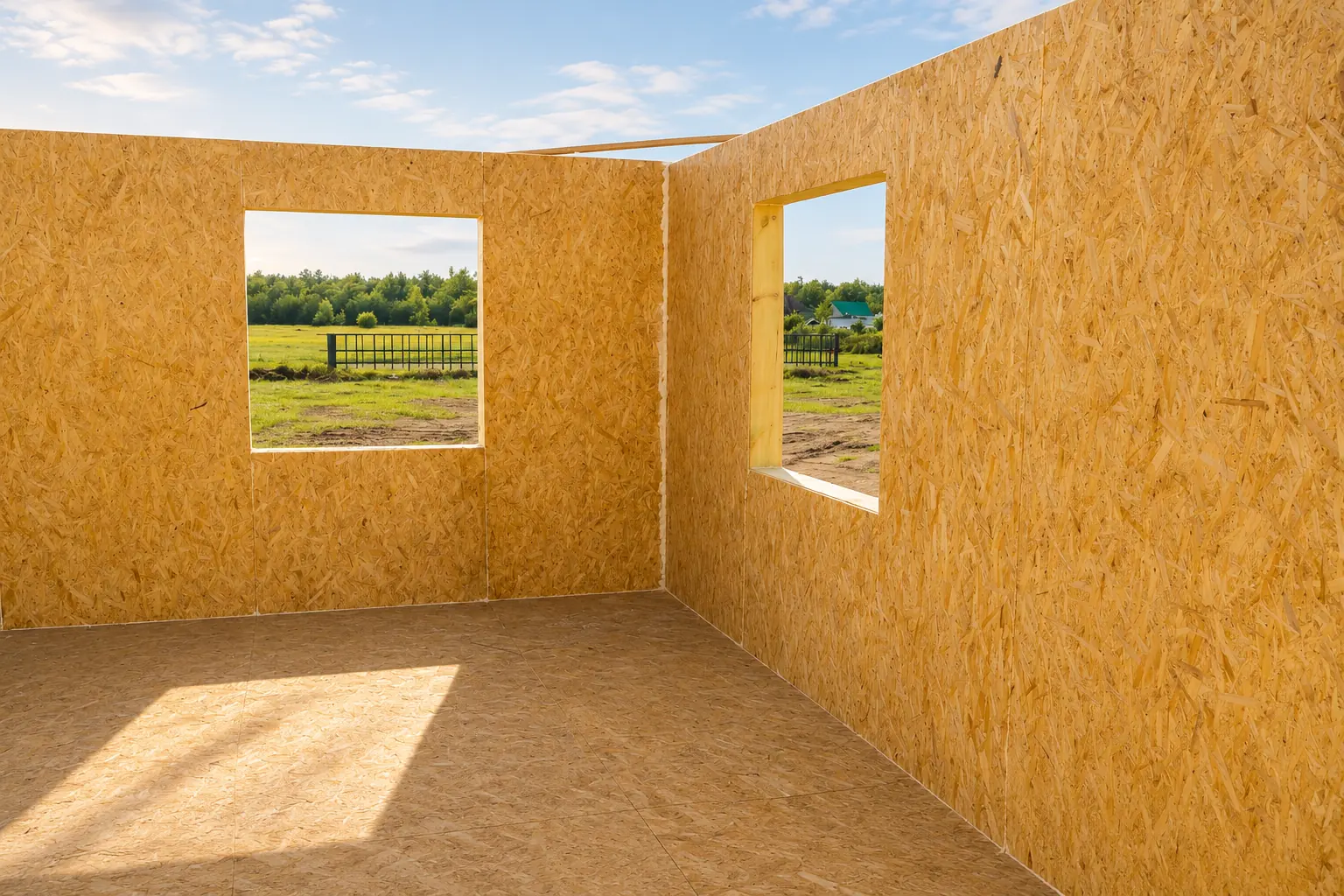
SIP panels make it easier to build an airtight building envelope, provided their joints are correctly executed. Limiting incidental air leakage helps…
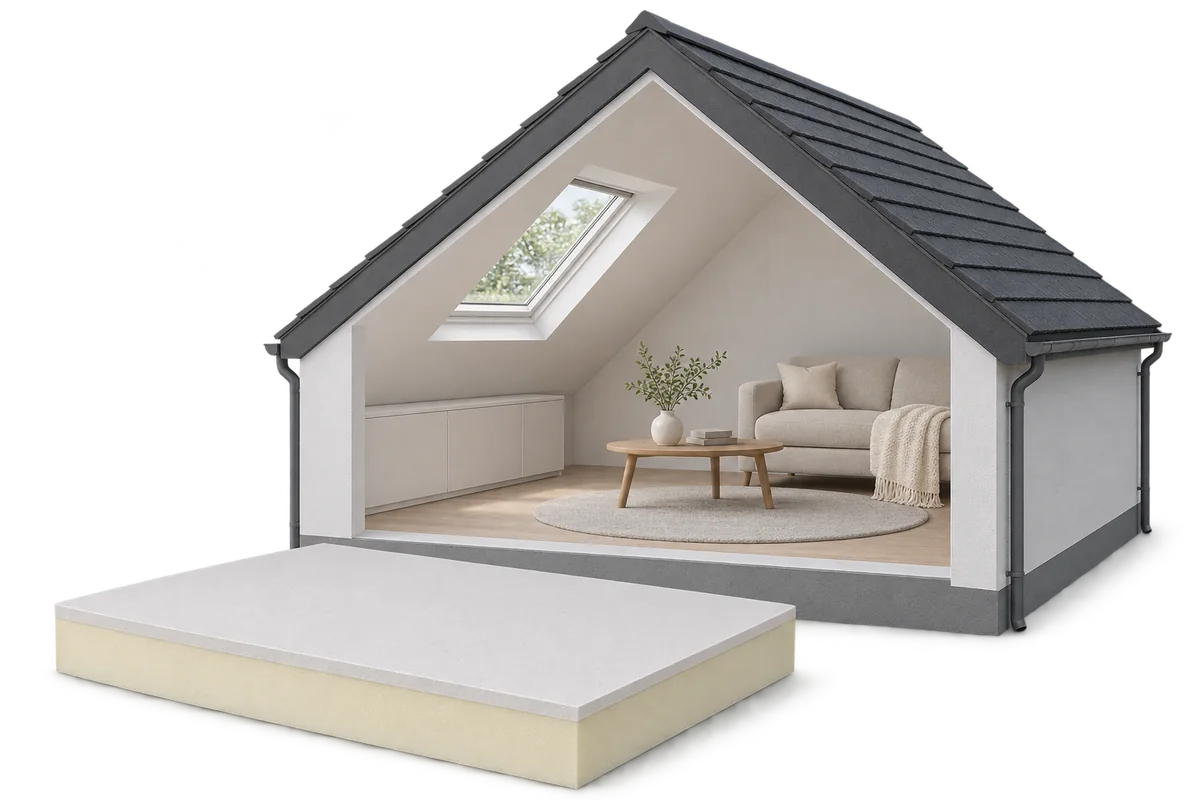
Adding PIR insulated plasterboard beneath a roof can combine extra insulation with a finished lining to the slopes. First, however, assess the…
It helps to separate a year-round timber house project into three outcomes: a delivered structure, a weather-protected building and a home ready…
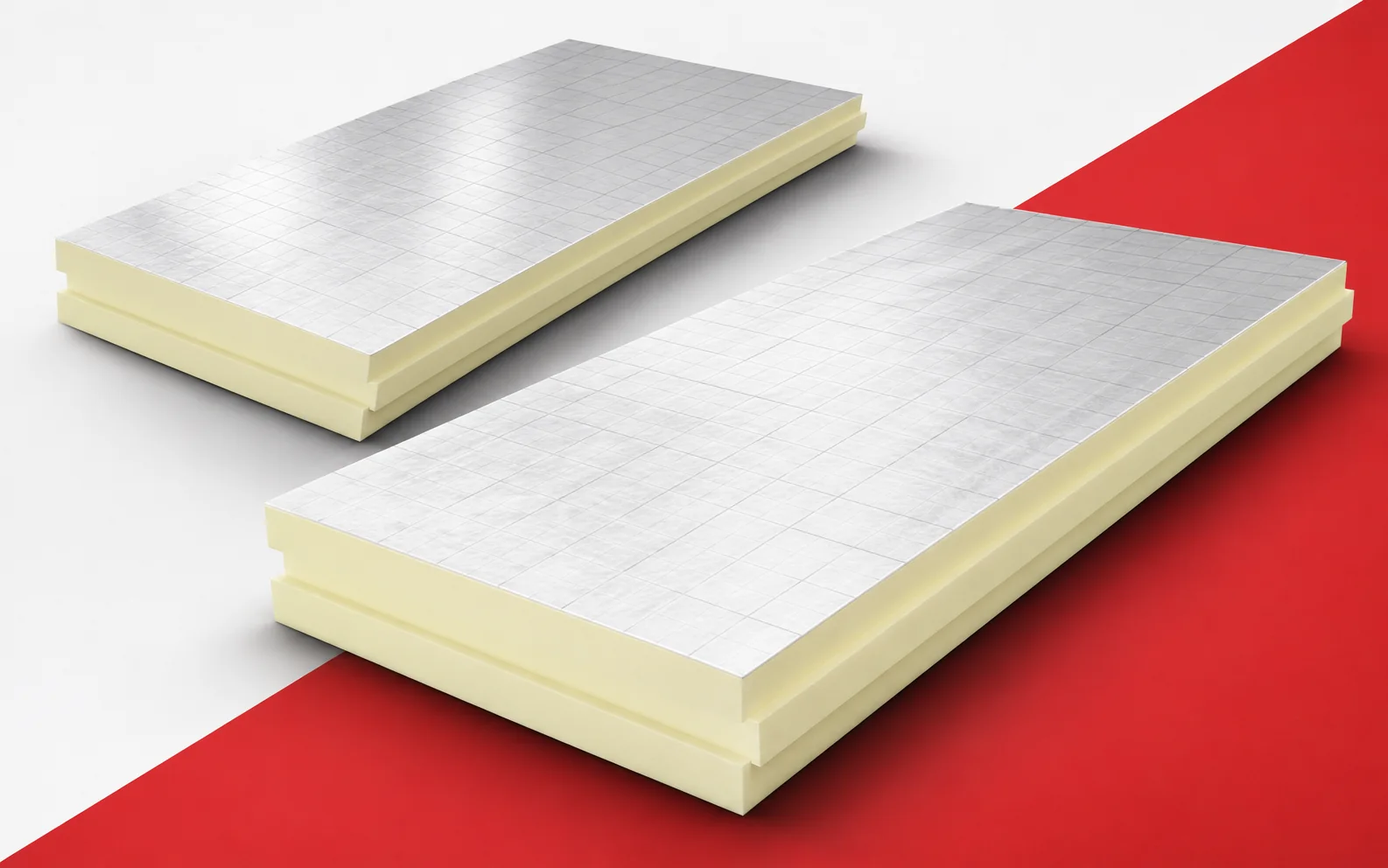
Lambda helps compare materials, but it does not explain the whole energy balance of a house. When describing PIR boards, it is…
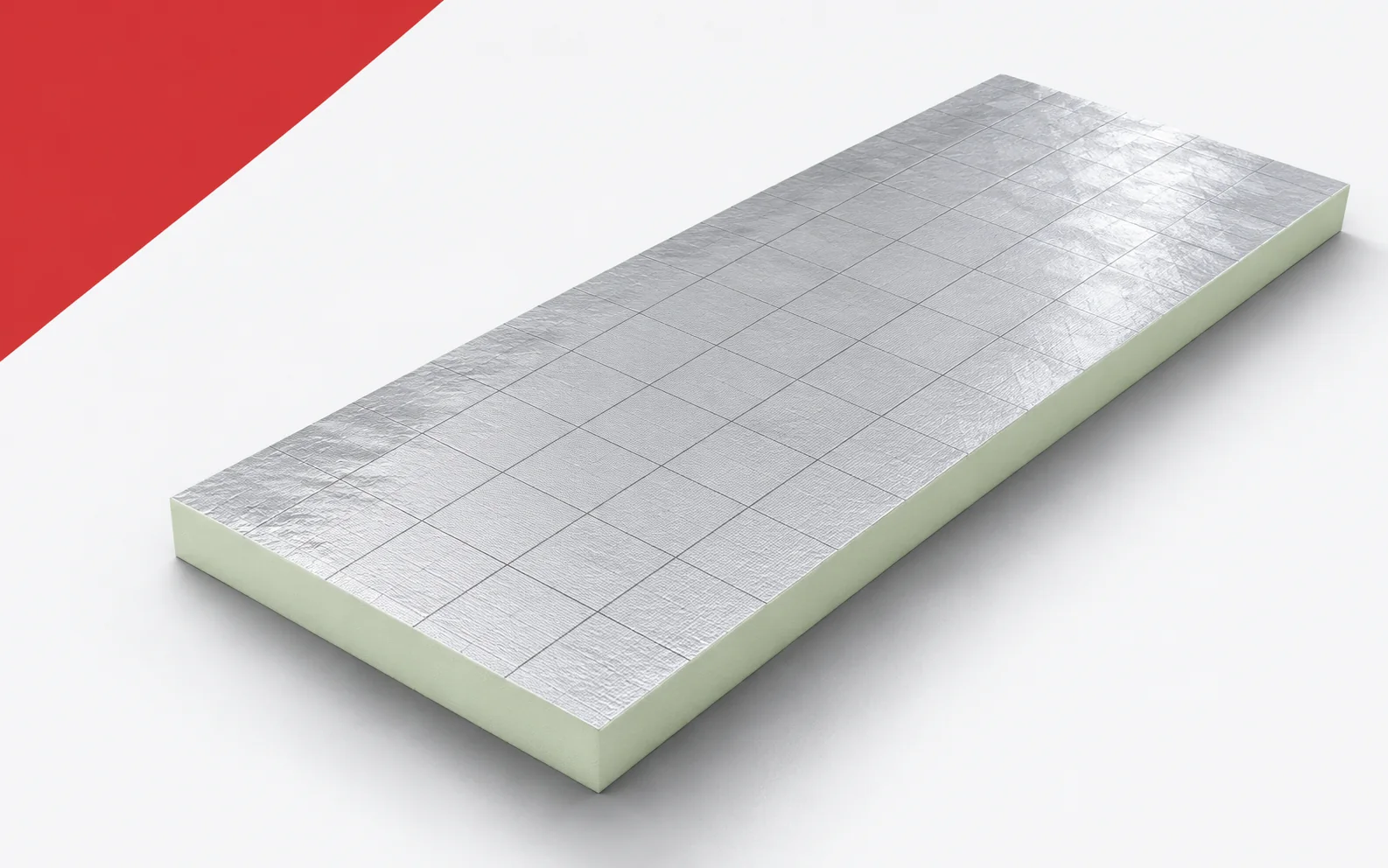
Utherm Floor LE is useful where the required thermal resistance must fit beneath a fixed floor level. However, the available height is…
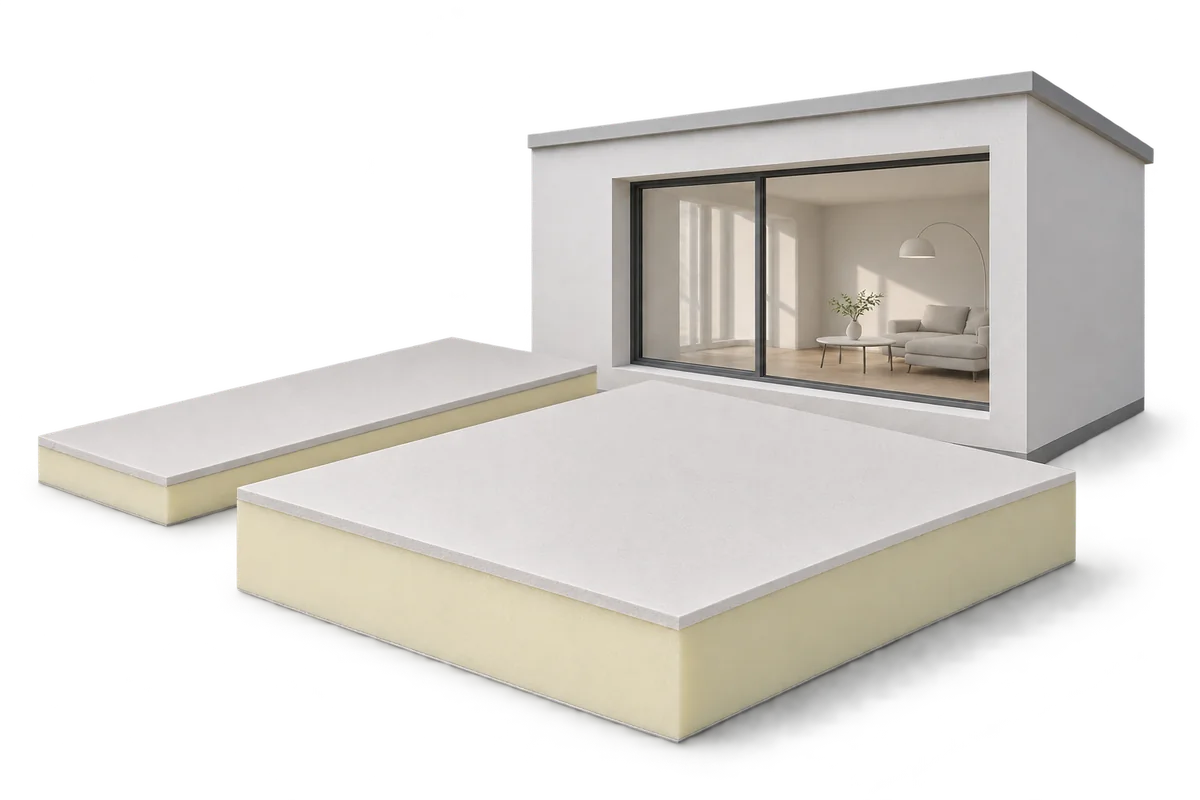
Slim internal insulation should be judged by the space occupied by the whole lining, rather than the core alone. PIR with suitable…
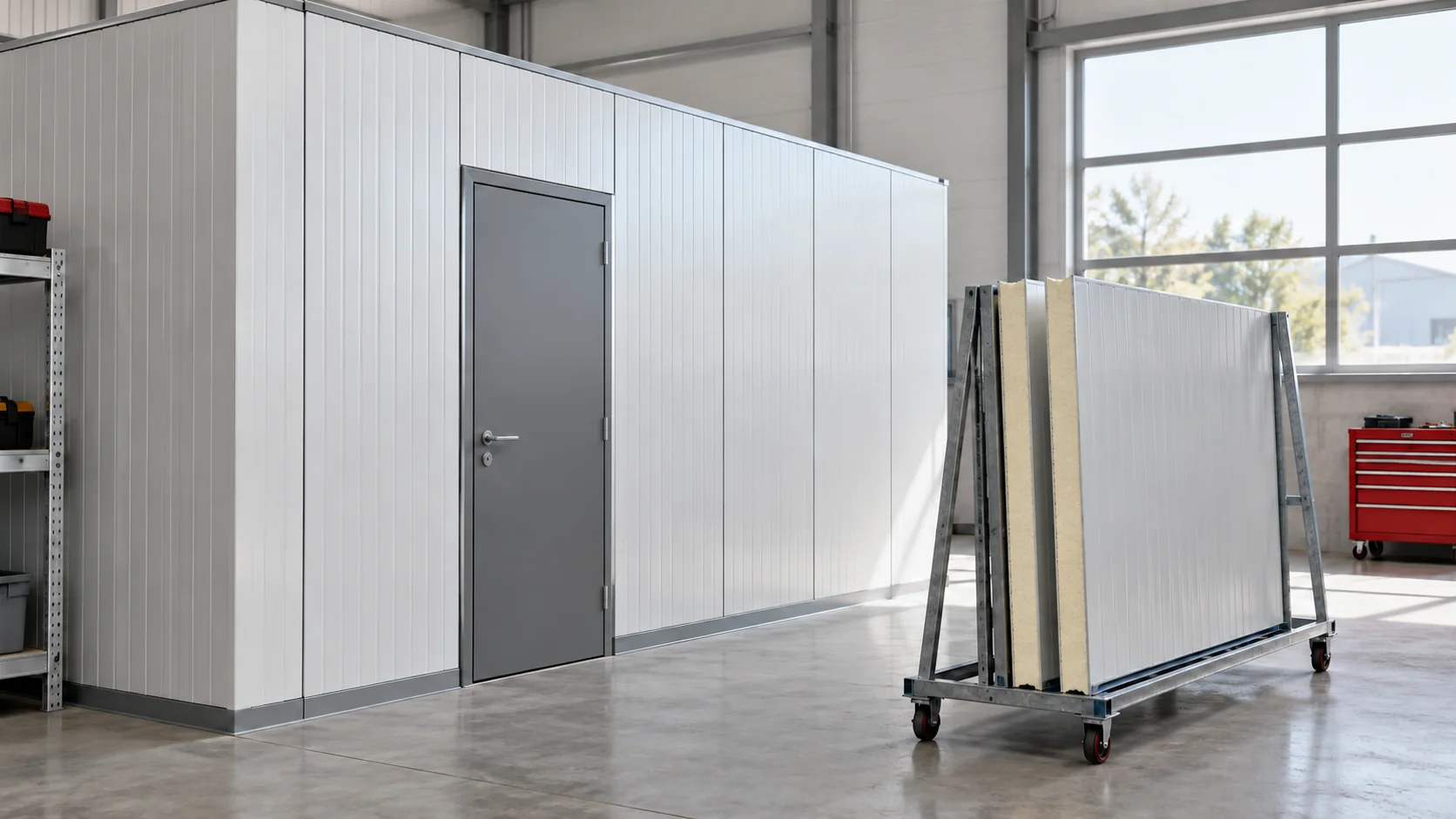
A short white PIR panel can be useful for lining a small room or replacing part of a wall. But 2,480 mm…