

Roofs and roof coverings
How to choose a roof colour that will suit your home for years
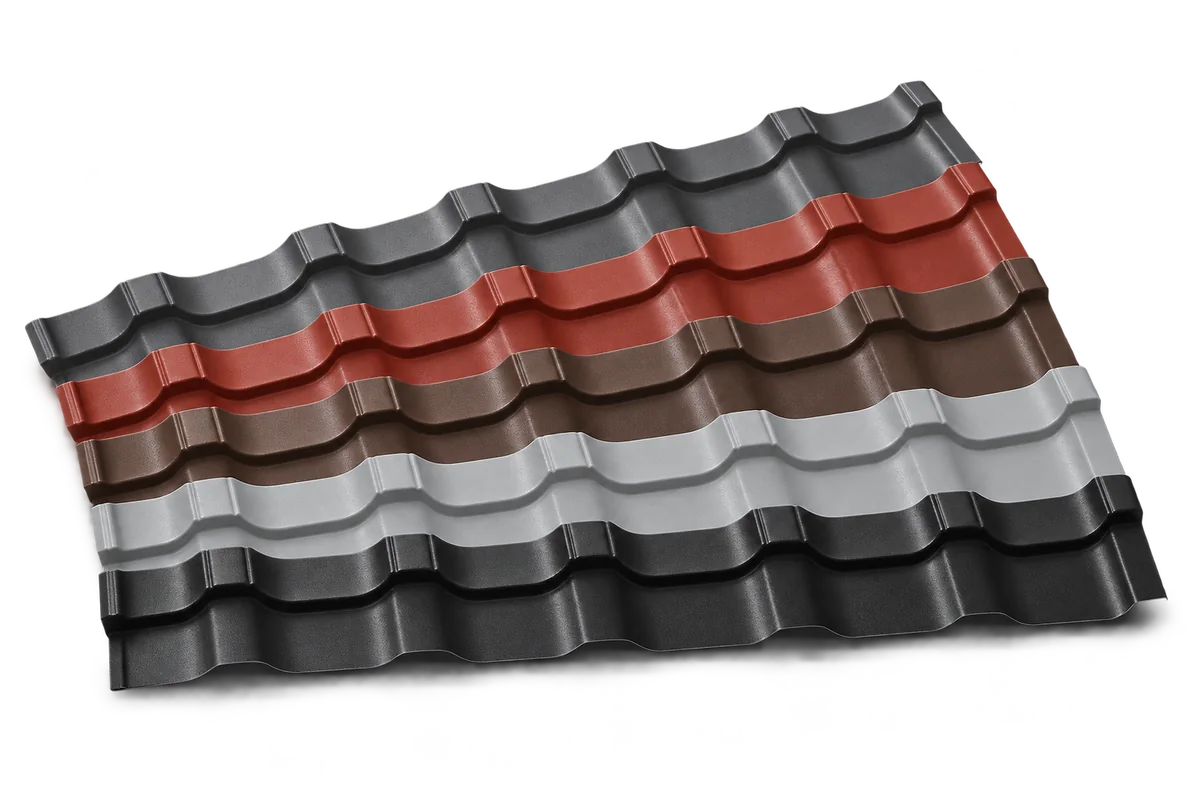
Start with the shape of the house, the façade materials and the setting. Charcoal, grey, brown and red can all work well in the right combination. The profile of a metal sheet, the gloss level and the light change how a colour looks. Coating quality is a separate consideration. Take a large sample outside and hold it alongside the other materials planned for the house. A steep roof covers much of the view and its colour can dominate the façade. On a low roof, flashings, gutters and soffits may be more prominent. Look at the house from the places where you will usually see it.
In this guide
Start with the size of the roof and the character of the house
A small swatch cannot show how much of the house each material will occupy. Step back and view the roof from farther down the street. A detail that stands out at arm’s length may barely register when you see the whole building.
Tile-effect steel roofing creates a pattern of horizontal rows. The ribs of T18 or T35 trapezoidal steel sheets run down the slope. Deep ribs cast shadows that can make a colour look darker than it does on a flat part of the sheet. Narrow down the covering type and profile depth before comparing shades.
How do the roof, façade and window frames work together?
Charcoal and grey can sit comfortably alongside pale render, brick or timber. Reds and browns often suit a warmer palette. The materials need not match exactly: a few related tones can give a more balanced appearance than trying to reproduce one colour on every surface.
Set samples of the roof covering, render, window frame and cladding side by side. Add the gutter and garage door colours. Look at warm and cool undertones as well as the strength of the contrast. Decide which material should draw the eye: several competing accents can make the façade look busy.
Why does the setting matter?
Neighbouring houses, planting and paving form the backdrop to the building. Consider them especially where homes stand close together. Check the project drawings and any local requirements for the appearance of the roof before ordering a full batch in your chosen colour.
The surroundings also affect how the roof weathers. Dust, leaves and dirt show up more on some surfaces than others. All colours still require cleaning and periodic inspection. Select the coating for the exposure and allow for maintenance when designing the roof.
Matt or gloss: comparing samples in daylight
A matt finish scatters reflections differently from a glossy one. In sunshine the difference may be striking even with similar colour codes. View samples in daylight, in shade and at an angle close to the proposed roof pitch. Neither a phone screen nor a printed catalogue reliably reproduces the appearance of a whole roof slope.
Light falling across broad, flat sections can reveal slight waviness. Colour and finish affect how visible it is, but the substrate and installation still need to be correct. If you want a calm, even appearance, look at completed roofs and compare sheet profiles in person. A photograph taken in different light may give quite another impression.
Will a dark roof make the loft hot?
In the sun, a dark surface usually gets hotter than a comparable light one. The temperature in a loft bedroom also depends on the roof build-up, insulation, ventilation and windows. External shading of the glazing can still matter with a light-coloured roof. Night-time ventilation and when occupants open the windows also affect comfort.
On sandwich panels, colour also affects thermal movement of the metal facings. The manufacturer’s instructions may limit panel lengths or specify installation conditions for dark colours. Conventional sheet roofing also needs room for the movement allowed for in its design. Check the technical requirements when selecting the finish.
How can you keep the finish consistent across an order?
A colour code does not specify the coating type, texture or resistance to the local environment. Samples with similar codes can therefore look different. Record the complete specification in the order and agree the finish for accessories. Order the sheets and flashings together where possible, allowing for differences between batches. Even the description “matt” covers several textures. Identify the finish by an approved sample.
Before fitting the sheets, check the delivery in natural light and compare the labels with the order. Resolve unexpected differences in shade before joining those sheets to the rest of the roof. Samples are worth taking time over, since the colour will be on the house for years. A combination chosen for the particular building is likely to age better than a shade picked solely because it is in fashion.