

Construction and design
Modular metal roof tiles or sheets cut to length: which suits your roof?
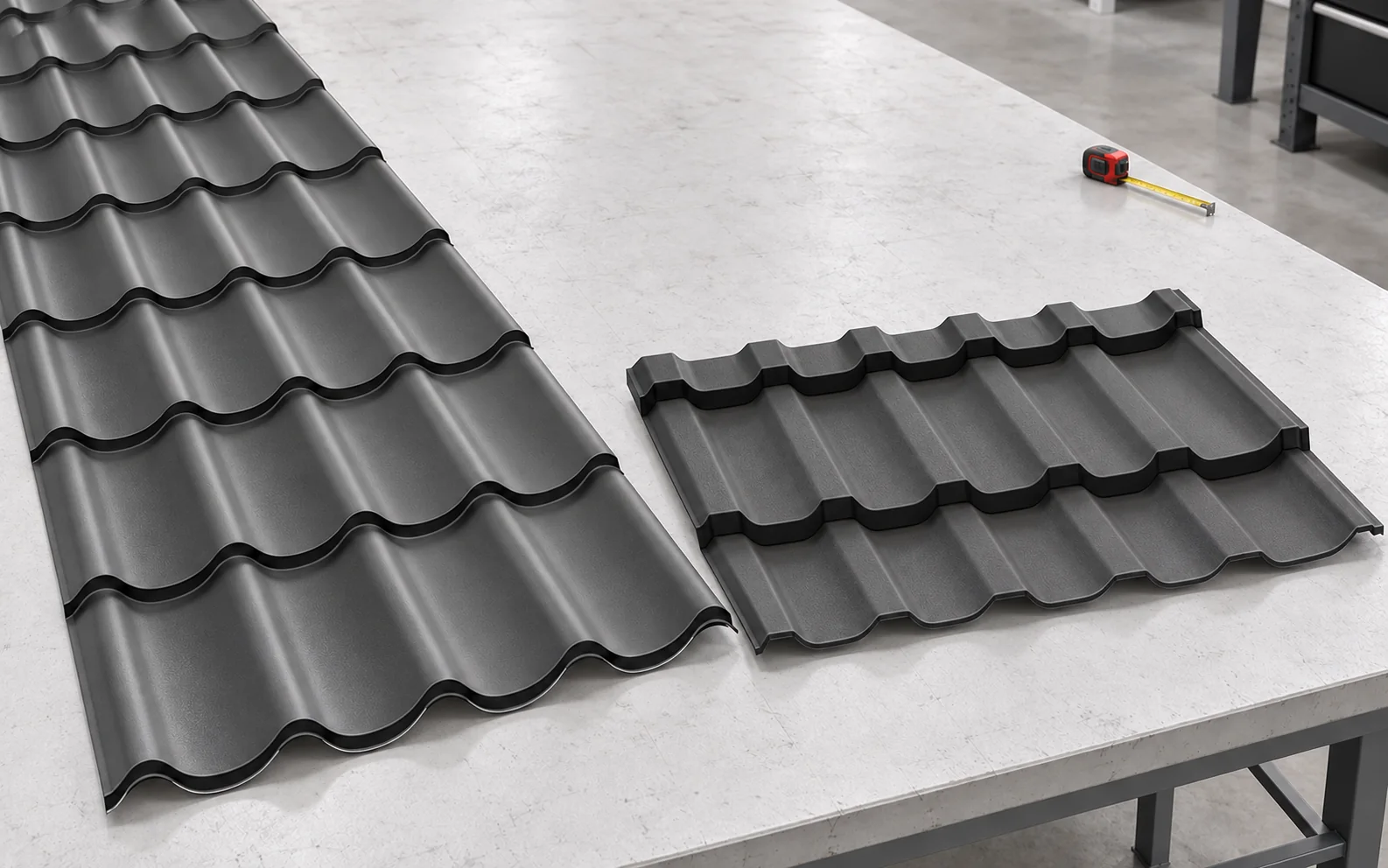
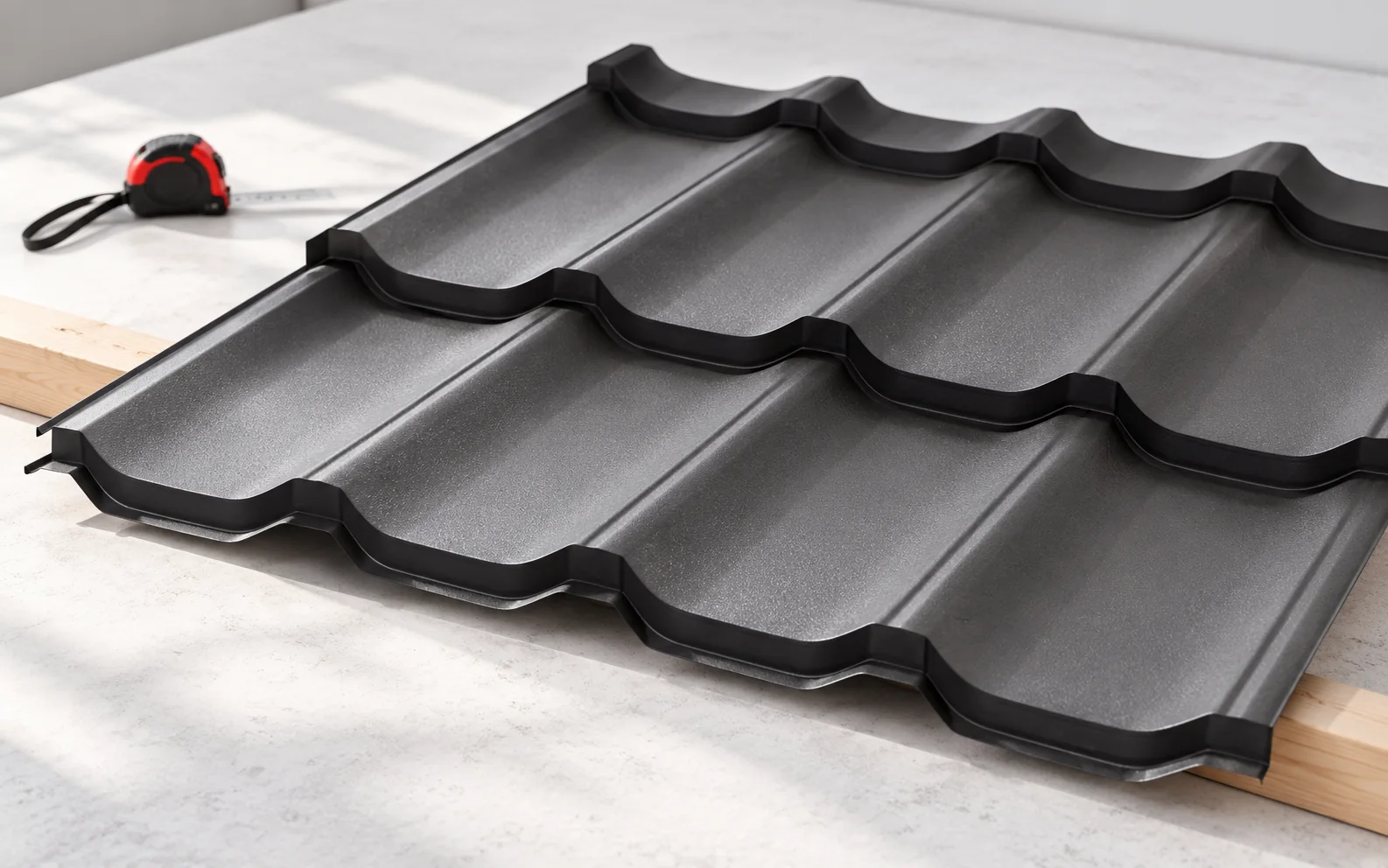
Cut-to-size tile-effect metal roofing makes good use of a simple roof slope, while small modules make transport and work on a complicated roof easier. Neither variant guarantees the lowest cost in every situation. You have to compare the cutting layout, the way the material is delivered and the complete set of accessories for the same project. A cut-to-size sheet is given a length matched to the order within the technological limits of the given profile. It still has a fixed rhythm of pressings and defined rules for laps. It is not an arbitrary rectangle that can be cut anywhere without restriction. The measurement must take its geometry into account. Modular tile-effect metal roofing is supplied in repeatable, smaller elements. Each has a defined coverage area and method of connection.
In this article
What is the difference between a sheet and a module?
A cut-to-size sheet is given a length matched to the order within the technological limits of the given profile. It still has a fixed rhythm of pressings and defined rules for laps. It is not an arbitrary rectangle that can be cut anywhere without restriction. The measurement must take its geometry into account.
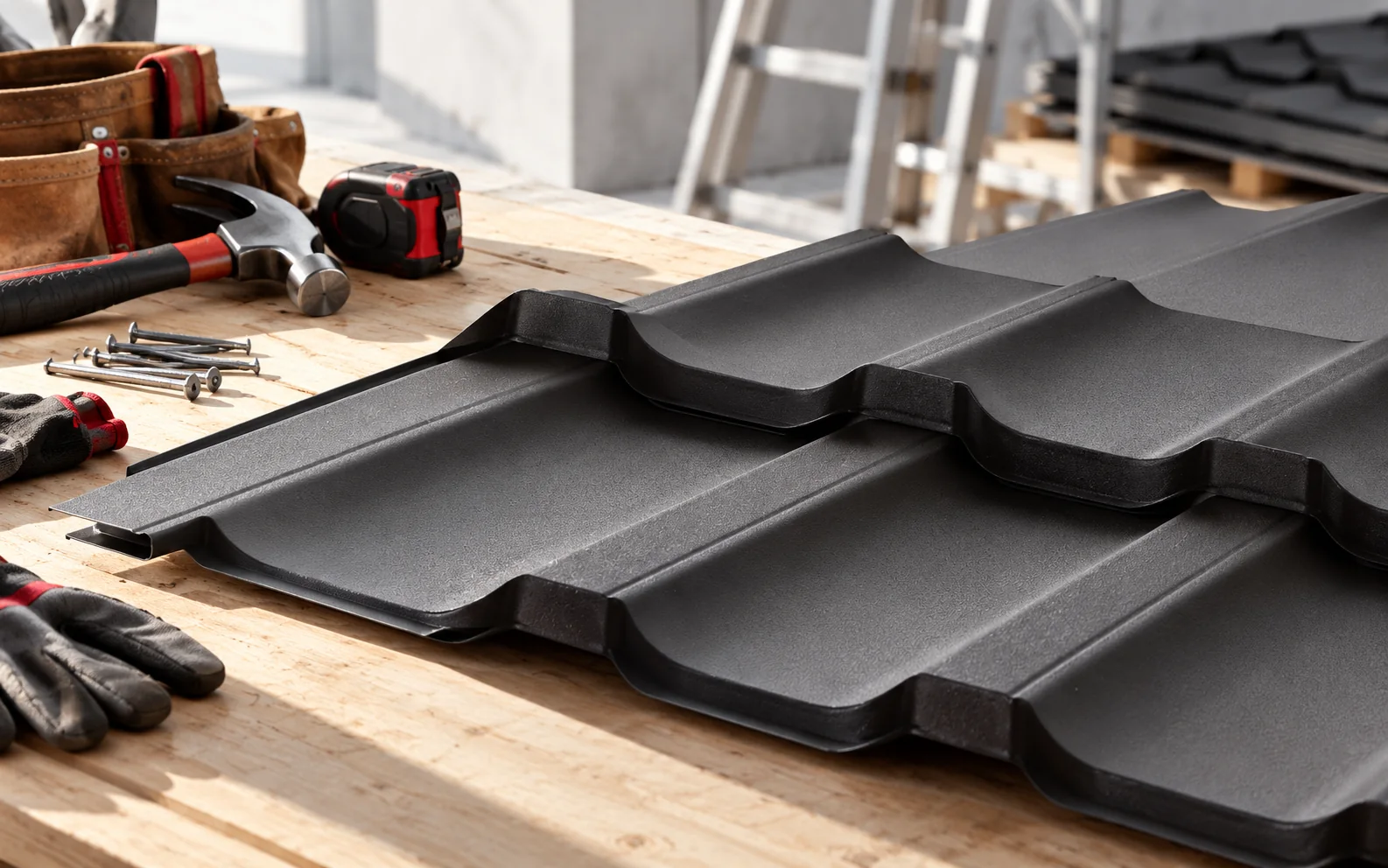
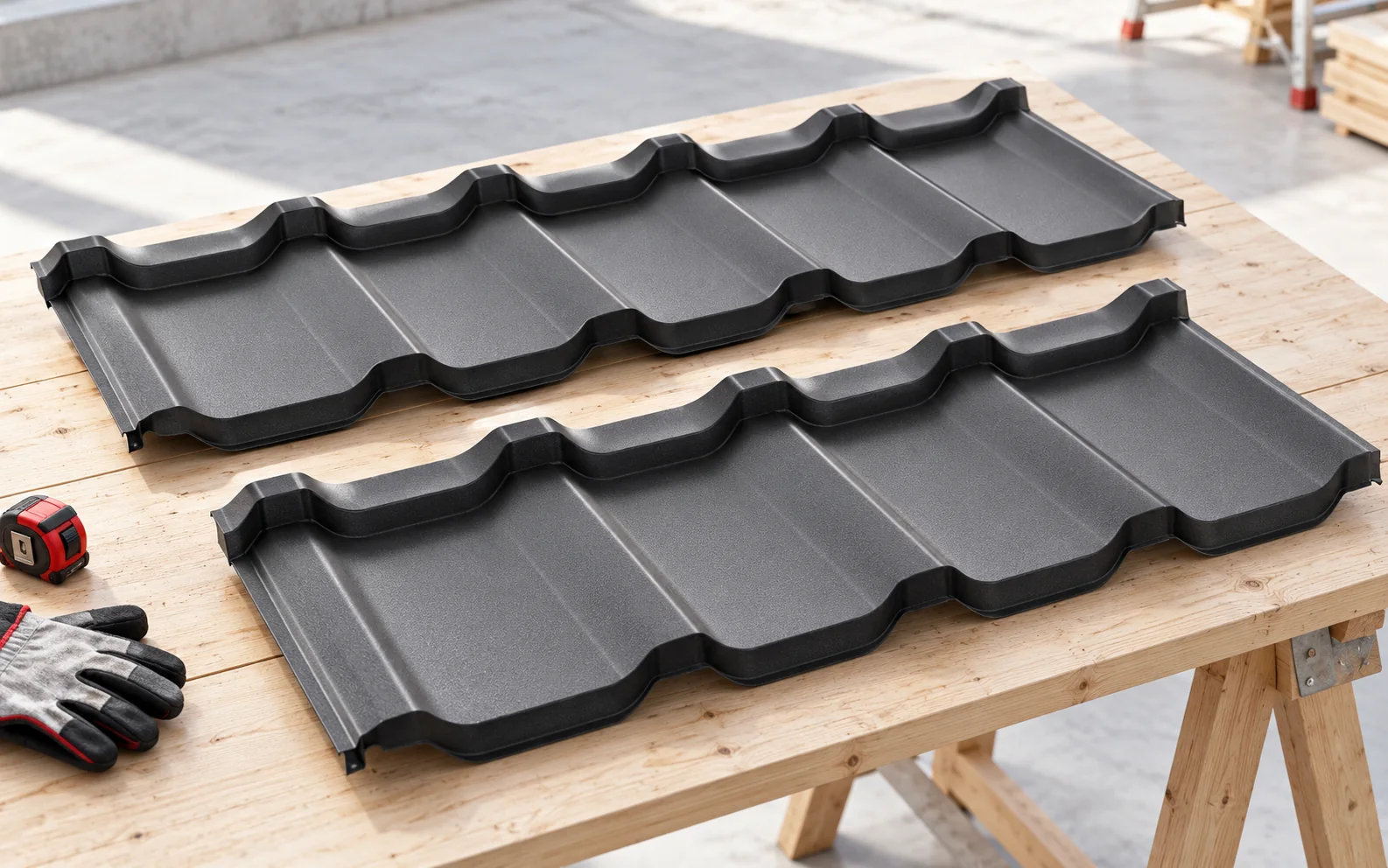
Modular tile-effect metal roofing is supplied in repeatable, smaller elements. Each has a defined coverage area and method of connection. This makes it easier to count packs and move material, but it does not remove the need for a laying plan. Additional joints must be made in accordance with the instructions.
When do long sheets use their advantages?
They offer the most benefit on wide, simple roof slopes without numerous obstacles. The length can be matched to the section from eaves to ridge and transverse joints reduced. The cutting layout is then clear, and the proportion of offcuts is sometimes small. The condition remains a precise check of dimensions after the structure has been built.
However, the long element must reach the site and get safely onto the roof. Narrow access, cables over the plot or a lack of space for unloading can change the calculation. The cost and organisation of transport are worth knowing before accepting an offer, especially for renovation in dense built-up areas.
Where does a small module make work easier?
Modules are convenient at roof valleys, dormers and intersecting roof slopes. A smaller element is easier to position next to an obstacle and to pass into a confined space. A sheet damaged during installation then means a smaller one-off loss of material. Care is still needed at all edges.
However, a complete absence of waste should not be promised. The diagonal of a valley cuts through a defined part of a module, and the cut-off fragment may have an unsuitable lap. The saving must be demonstrated on a drawn roof slope. Assessing it solely by the size of a single pack leads to an overly optimistic order.
How does the organisation of installation change?
With long sheets, the number of people, the way they are gripped and protection against bending are important. With modules, the importance of repeatable positioning of successive rows and the accuracy of connections increases. An error in the first row can grow and make it difficult to achieve an aesthetic finish at the ridge or gable edge.
In both systems, the geometry of the substructure must be checked. The pressings are not intended to straighten a curved roof structure. The batten spacing results from the specific profile, and the eaves zone may require a separate solution. The spacing and screw pattern from a previously laid product must not be transferred automatically.

Does more joining mean more leaks?
The number of joints alone does not determine tightness. What matters is their construction, correct laying, roof pitch and the conditions for water drainage. A modular system can work correctly despite many connections. One badly made lap in large sheets can, by contrast, cause a lasting problem.
A distinction must be made between fasteners that fix the covering to the battens and those that join adjacent elements. They perform different tasks. A single universal number of screws per metre does not replace them. Edge and corner zones may require additional fixing resulting from wind load and the roof design.
How can the costs of both variants be compared fairly?
For sheets, check the effective width, the ordered lengths and the assumed waste. For modules, count the actual number of pieces and their coverage area. The price per total metre and the price per effective metre are not the same. Only after equalising the units does the comparison become clear.
Add an identical scope of flashings, ventilation, fasteners and delivery to both offers. Ask the contractor for the labour cost for the specific profile. Cheap sheet metal may require more cutting or more difficult handling. A more expensive module will not recoup that difference if a simple roof does not use its logistical advantages.
What will matter after construction is finished?
Keep the designation of the profile and coating and a small reserve provided for in the order. A later purchase of a similar colour may not give an identical shade. For repair, the availability of the correct shape also matters. A module has a handy size, but its replacement still depends on access to the laps and fastenings.
A future roof window or installation is worth allowing for in advance. Making an opening is not simply swapping one sheet for another. Flashings, support and sealing of the layers under the covering are needed. That is why a plan for later changes is sometimes more important than a small difference in the initial price.
Tip before ordering
For a roof with valleys, ask for the layout of both variants on the same drawing. Mark the sheet lengths, the number of modules and the places where cuts are made. Such a plan shows the real material difference better than a general percentage saving.
What is worth remembering?
On a simple roof, cut sheets can be very economical. With a difficult layout and limited access, modules often make organisation easier. Base the decision on a specific comparison of material and labour, taking transport into account.
7 branches. Materials closer to your project.

Free quote
Materials for your project


You may also find useful…
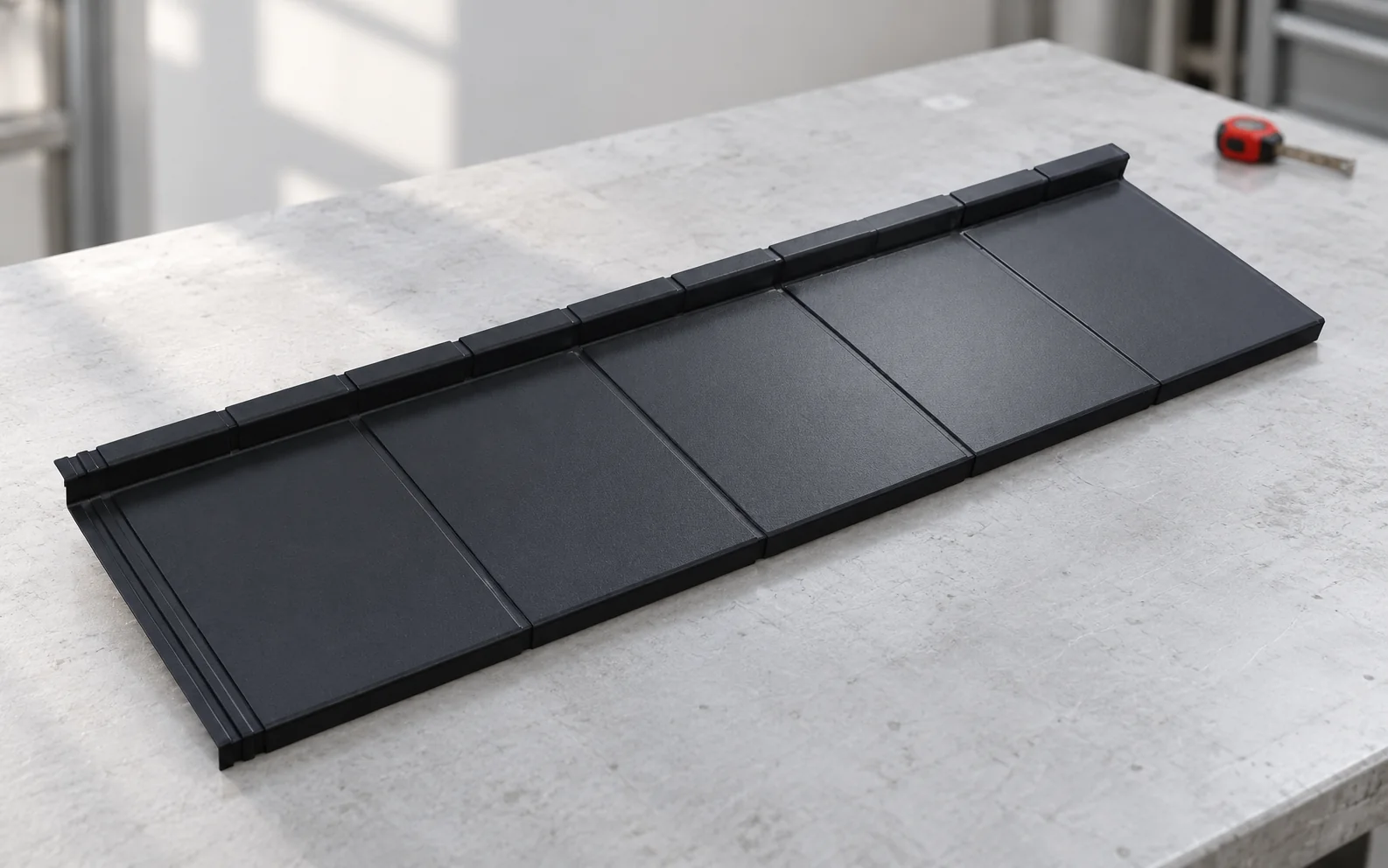
A single-course metal roofing panel covers one row of the tile pattern. Short panels are easier to deliver through a narrow entrance…
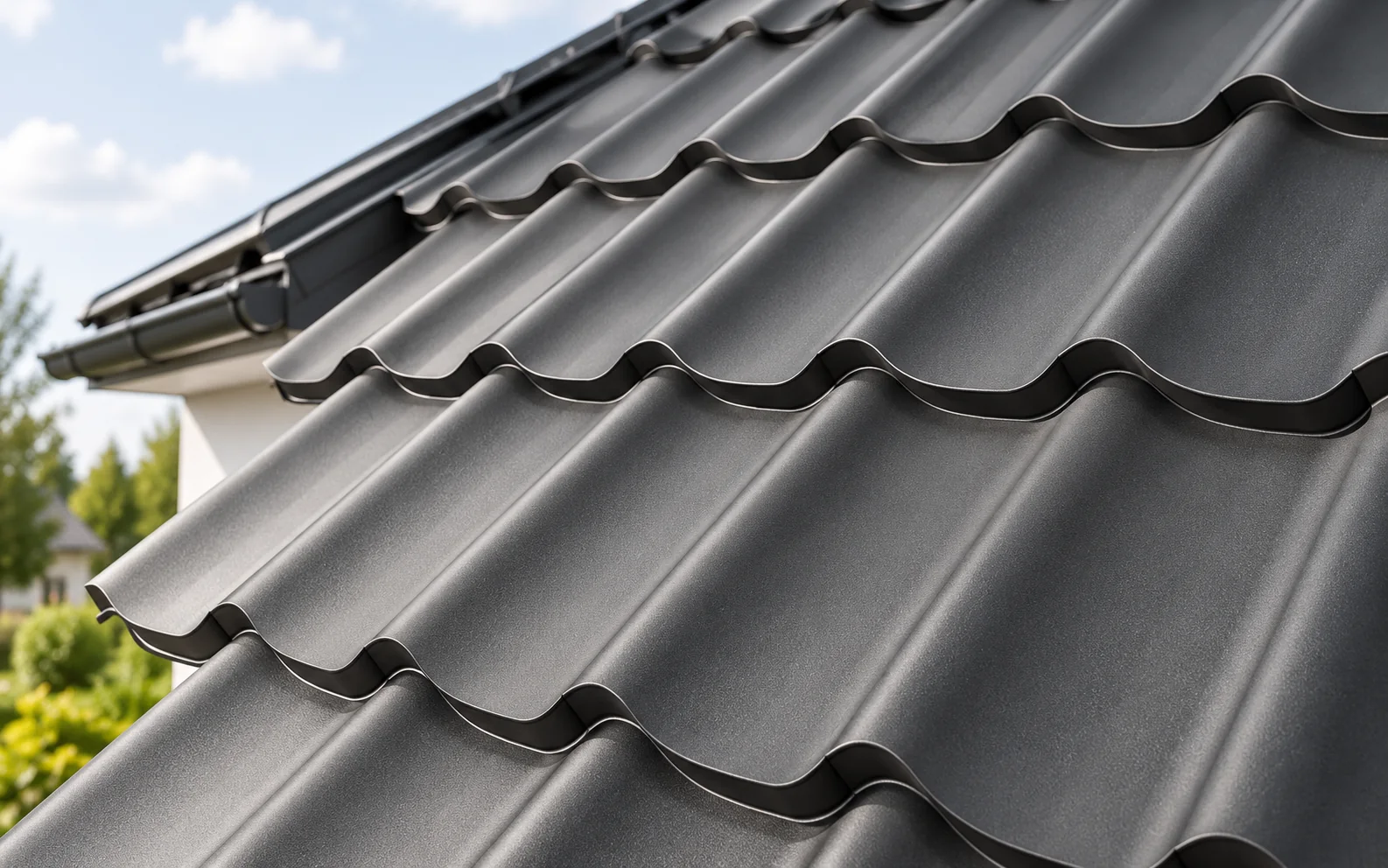
The fine roof pattern depends on the geometry of the pressings, not just on the sheet size. Modular tile-effect metal roofing can…
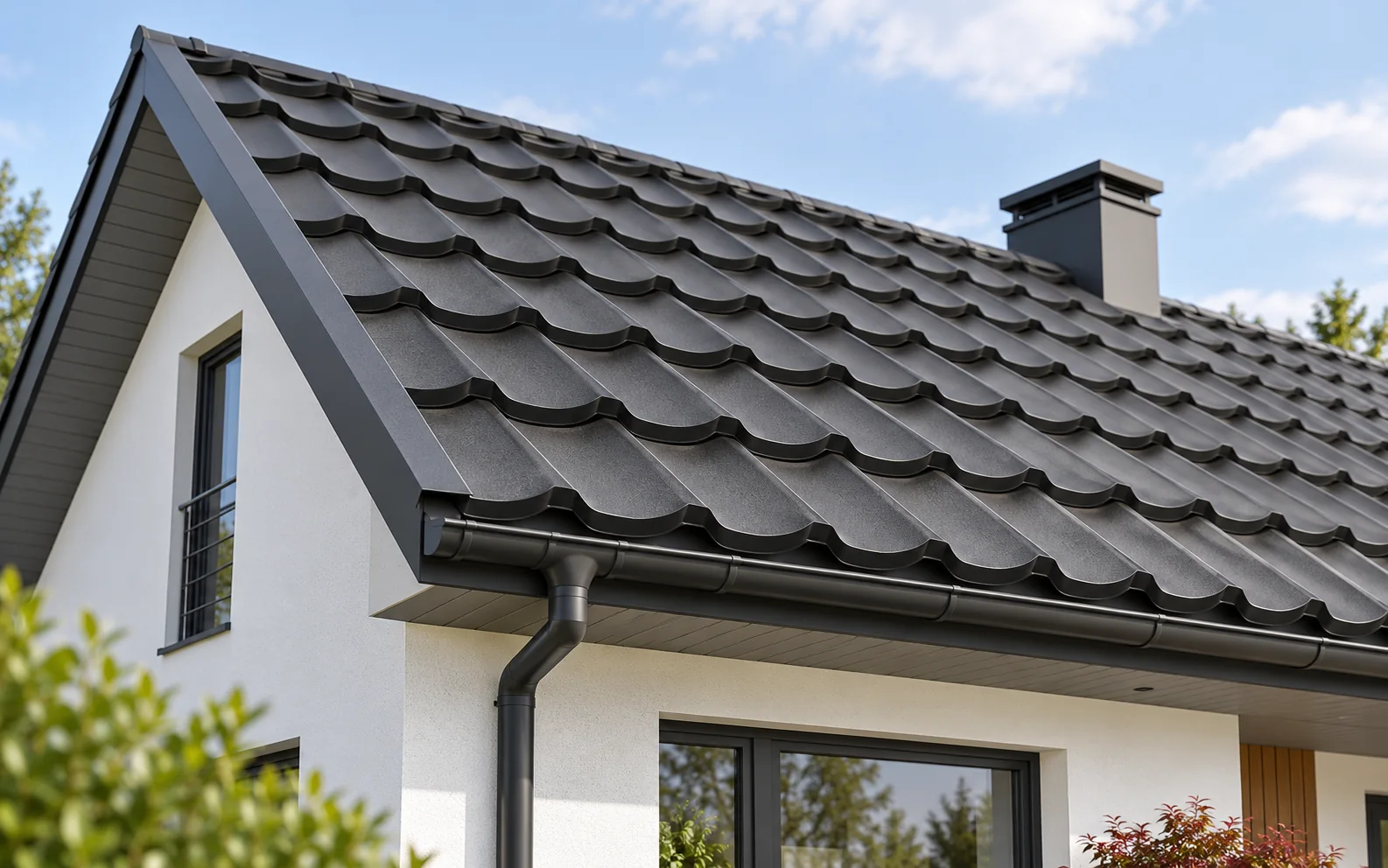
A gable roof, a mono-pitch roof, a hipped roof, a multi-pitched roof and a flat roof each affect the interior and the…
A good roofer is best judged by comparable completed projects, familiarity with the chosen system and the way the quote is prepared.…
A coherent roof results from proportion, colour and detail, not from a seasonal trend label. Modular tile-effect metal roofing, cut sheets and…
A pitched roof lends itself to a simple material layout and clear water drainage. It can be covered with cut-to-size tile-effect metal…
Installation of modular metal roof tiles begins with a level substructure, the correct layer sequence and a properly formed eaves zone. Only…
A single-module and a two-module panel are best compared on the plan of the same roof, entering for each variant the number…