

Roof panels
Oil canning in standing seam roofing: causes and ways to make it less visible
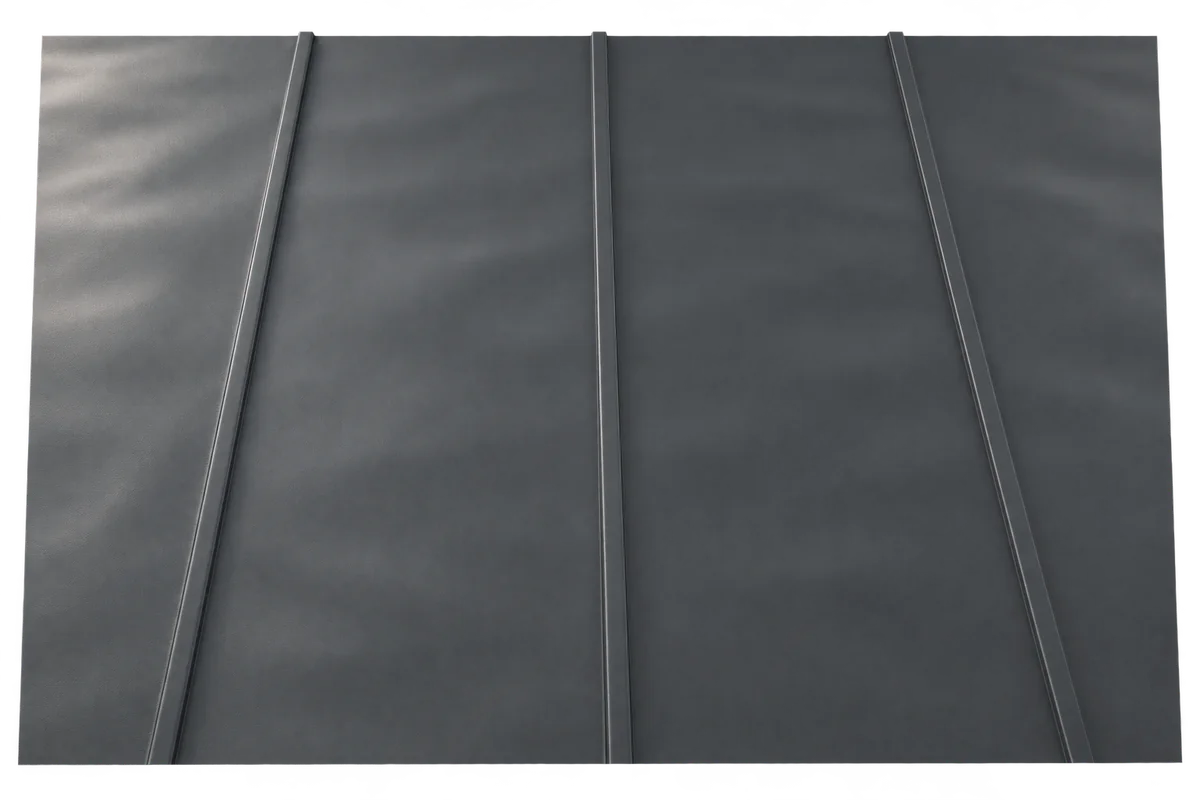
Slight ripples in the flat part of a metal roof panel may only show up in strong sunlight. Residual stress in the metal, the supporting surface, the fixings and thermal movement all play a part. A slight wave does not necessarily mean the roof leaks, but not every irregularity is harmless. Discuss the expected appearance before ordering: panel choice and careful installation do more than attempts to flatten an installed sheet. Small deviations from a flat surface catch reflected light at certain angles. The same roof can look different in morning sun and under cloud. This visual effect is often called oil canning.
In this article
What can you see on the panel surface?
The same effect can appear on metal façades.
Distinguish slight waviness from a permanent crease, coating damage or an open seam. Ask the installer to inspect the latter signs. A single close-up is a poor basis for judging the whole roof. Photograph the area from different directions and in different light. If the appearance changes with temperature, note the time and weather to help establish the cause.
Where do stresses in the sheet come from?
Sheet metal is rolled, coiled, uncoiled and formed. Each stage can leave residual stresses. The width of the flat section and the metal thickness also matter. A long panel expands and contracts as its temperature changes. If it cannot move as intended, it may buckle between fixings.
No single choice can guarantee a perfectly flat appearance on every metal roof. You can, however, limit the factors that make waves more pronounced by matching material, support and installation method. Thicker sheet will not level crooked battens, and even a perfectly level support will not remove a crease caused during transport.
Why does the supporting surface need to be level?
Uneven battens can raise a panel locally or pull it down. Closing the seams between adjacent panels transfers the stress across the surface. Before laying the sheets, check the plane of the supports, alignment of the eaves and squareness of the roof slope. Make corrections while the structure is still exposed.
Use the support specified in the panel instructions. One system may need continuous decking; another may allow battens at specified centres. A separation layer may also be required beneath the metal. Choose the build-up for the system, since each layer affects support, friction and moisture drainage. Check the timber is stable and that fastener heads do not protrude from the decking.
How do fixings affect the roof’s appearance?
In systems with slotted fixing holes, screw position and clamping pressure must allow the movement specified by the manufacturer. Observe the designated fixing zones. Overtightening can pull in the sheet; a screw driven at an angle can obstruct both sliding and closure of the next panel.
Check penetrations, flashings and accessories in particular. An extra bracket should not restrain panel movement unless the system detail calls for it. Do not loosen screws across a finished roof to correct ripples. First have the fixing arrangement checked, including the points that hold the covering in position.
Which choices make ripples less noticeable?
Narrower flat sections and longitudinal ribs can make slight waviness less noticeable. Finish matters too: high-gloss surfaces usually reveal reflections more strongly than matt ones. Look at an installed roof over a sizeable area, since a small colour sample cannot show how the whole slope catches the light.
Colour affects how hot the surface gets but does not by itself resolve stresses. An underlay may offer damping in a particular system without guaranteeing a flat surface. Check the specific panel design, sheet thickness and installation documentation. Distinguish intentional factory-formed ribs from waves observed after installation; the latter need to be assessed on the actual roof.
What should you agree before ordering and check at delivery?
Before ordering, agree the appearance, panel lengths, profiling and support conditions with the installer. Ask which installation instructions will apply. At unloading, inspect edges and sheets for bends and creases. Record any damage before installation while its location and extent can still be seen clearly.
If ripples appear after laying, have the supports, fixing points and freedom of movement at the joints checked. The installer should distinguish a visual effect from a workmanship defect. Do not hammer the panels flat or pull them down with extra screws: this can worsen the appearance and compromise watertightness.