

PIR insulation
Where roof details interrupt insulation with SOPREMA PIR boards
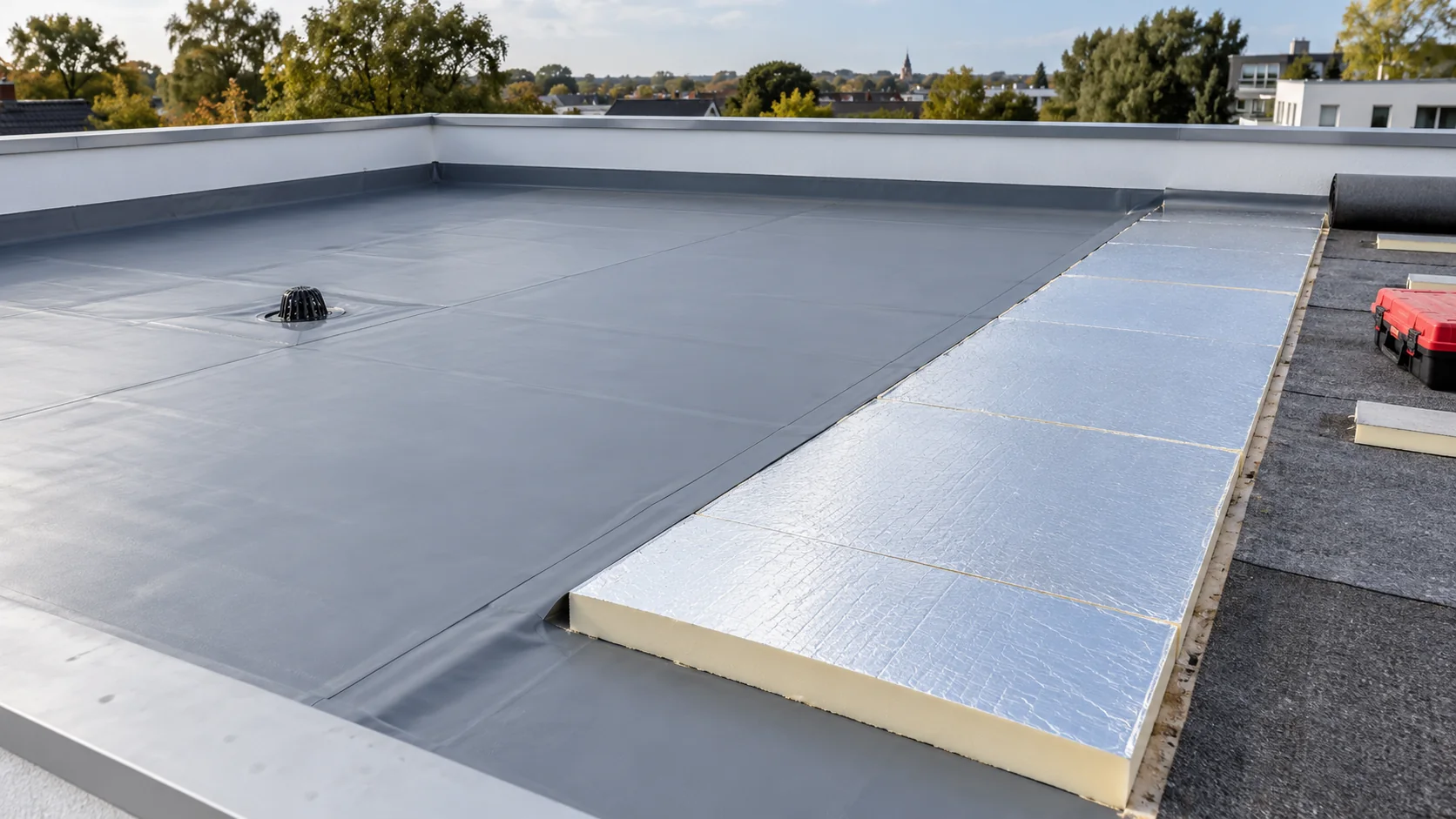
In the example roof, EFYOS BLUE A has already been installed at the correct thickness, but the vapour control layer has been left with an unresolved termination at the rooflight. The client asks whether another layer of PIR will improve the situation. First, the loss through conduction must be separated from the effects of a leaky junction. These are two problems requiring different measures. The starting point is a complete roof with vapour control layer, insulation and covering. Here, a particular constraint is access to the seal after the subsequent layers have been laid. The design must allow thermal continuity, airtightness and rain protection to be maintained separately, rather than merely accommodating another board. The point requiring attention is the junction between the vapour control layer and the rooflight upstand.
In this article
Constraint first, then thickness
A skylight detail will be required, in which each protective layer is drawn as a separate line — after all, we cannot read all the heights from the flat field view alone. If the purchase of EFYOS BLUE A is planned, it is worth establishing this part at the beginning, before the adopted thickness starts to condition the remaining works.
The right product and the scope of its data
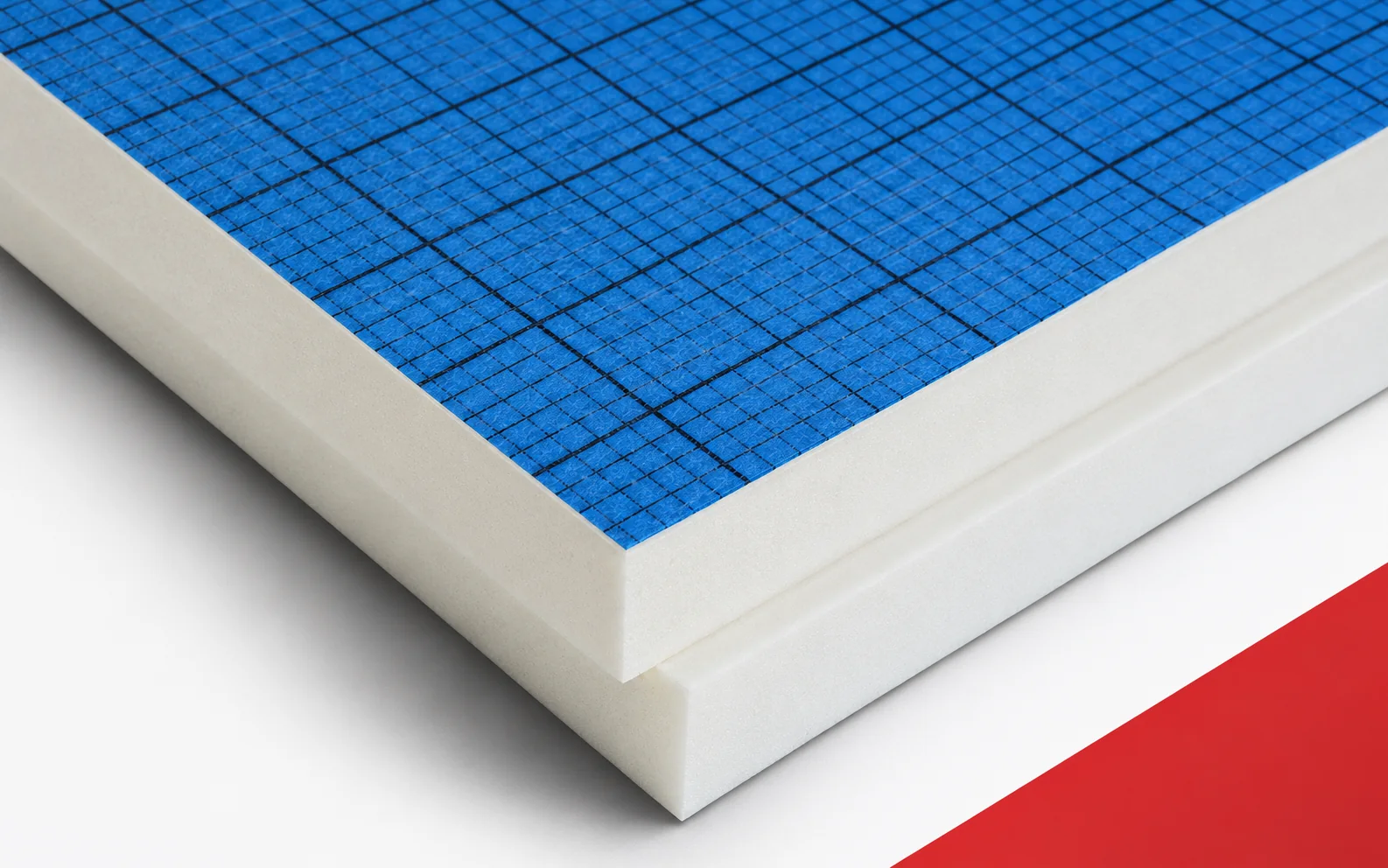
Here the thermal layer is EFYOS BLUE A, with a PIR core and aluminium facings. Its λD is 0.022 W/(m·K), the compression level is CS(10/Y)120, and the reaction to fire is E. These data concern a specific product. On their own they do not identify the adhesive, covering, vapour barrier or the classification of the finished roof covering. Each of these components must be assigned its own task in the roof design. PIR SOPREMA boards should be assessed here for the scope that is a complete roof with vapour barrier, insulation and covering. The term polyurethane boards does not replace the full name EFYOS BLUE A when checking an order. In EFYOS BLUE A the core is PIR-type polyurethane foam; the properties of the complete board also include its facings.
What the figures mean in this case
Consider two measures: increasing the thickness of EFYOS BLUE A in the field and repairing the interrupted junction at the rooflight. The first changes the insulation resistance over a given area. The second concerns the path of air or moisture, depending on which layer is defective. These effects should not be added together as a single improvement in lambda. A separate assessment of both locations is needed, followed by a comparison of their impact on the building. A justified decision may include one or both measures.
In the example concerning EFYOS BLUE A, the figures describe only the specified part of the task. Their use makes sense together with a measurement that covers the position of all layers at the base of the rooflight. The property relevant for comparison is the board’s aluminium facing with a lambda of 0.022 W/(m·K). In this build-up, each layer must also be traced from the roof field to its termination at the vertical upstand. Only then does the rooflight detail with a separate line for each protective layer allow the result to be related to the actual section. The energy calculation should retain the same scope also when comparing with a different thickness of EFYOS BLUE A.
Two directions for improvement
The first direction is repairing the missing junction at the rooflight. The second is increasing the thickness in the central field of the roof slope. The scope of both measures depends on how important the junction between the vapour control layer and the rooflight upstand is. In the variant with EFYOS BLUE A, the cost of the entire area should not be increased before the local constraint has been identified. A trap would be to regard the film on a single board as the airtight vapour control layer of the whole roof, even if the result for the main field looks favourable. The comparison is only complete when a single schedule of materials linked to the section and details also covers the differences caused by changing the variant.
A junction that must preserve the effect
The design should clearly specify the junction of the insulation boards that does not replace the sealing of the vapour control layer. In the description of EFYOS BLUE A, it is worth separating its geometry from the airtightness of the other layers. The surface of the product is formed by the aluminium facing of EFYOS BLUE A, but its presence does not automatically resolve the entire detail. A set of photographs of the continuous junctions before they are covered is needed for verification. The next stage will be the covering with the rooflight flashing, so the error should not be passed on to the installer of the next layer. It is worth recording at handover how the junction between the vapour control layer and the rooflight upstand was made and why this particular method was chosen.
The cost of achieving the same function
The price for EFYOS BLUE A should relate to the completed task, not to a single favourable parameter. The calculation should include a single schedule of materials linked to the section and details. A separate cost may arise because a substrate prepared for fixing the entire roof assembly is needed. The work on the detail described as the junction between the vapour control layer and the rooflight upstand should also be priced. The differences should be explained by the coordinator responsible for executing all roof layers, so that the saving does not result from removing a necessary layer. Polyurethane insulation compared in this way corresponds to the real effect that the complete roof with vapour control layer, insulation and covering is intended to achieve.
Condition for a justified decision
The selection can be regarded as properly organised when thermal continuity, airtightness and rain protection have been maintained separately. For EFYOS BLUE A, this means combining the material data with the solution for the perimeter and the other layers. The document to retain is the rooflight detail with a separate line for each protective layer. It should be accompanied by a set of photographs of the continuous junctions before they are covered, so that a later refurbishment does not begin with guessing the product. There is no need to add a promise of a quick payback without a whole-building balance. If access to the seal changes after the subsequent layers have been laid, it is necessary to return to the comparison instead of copying the earlier thickness. Polyurethane insulation has a specific purpose here: to maintain thermal continuity, airtightness and rain protection separately.
7 branches. Materials closer to your project.

Free quote
Materials for your project
You may also find useful…
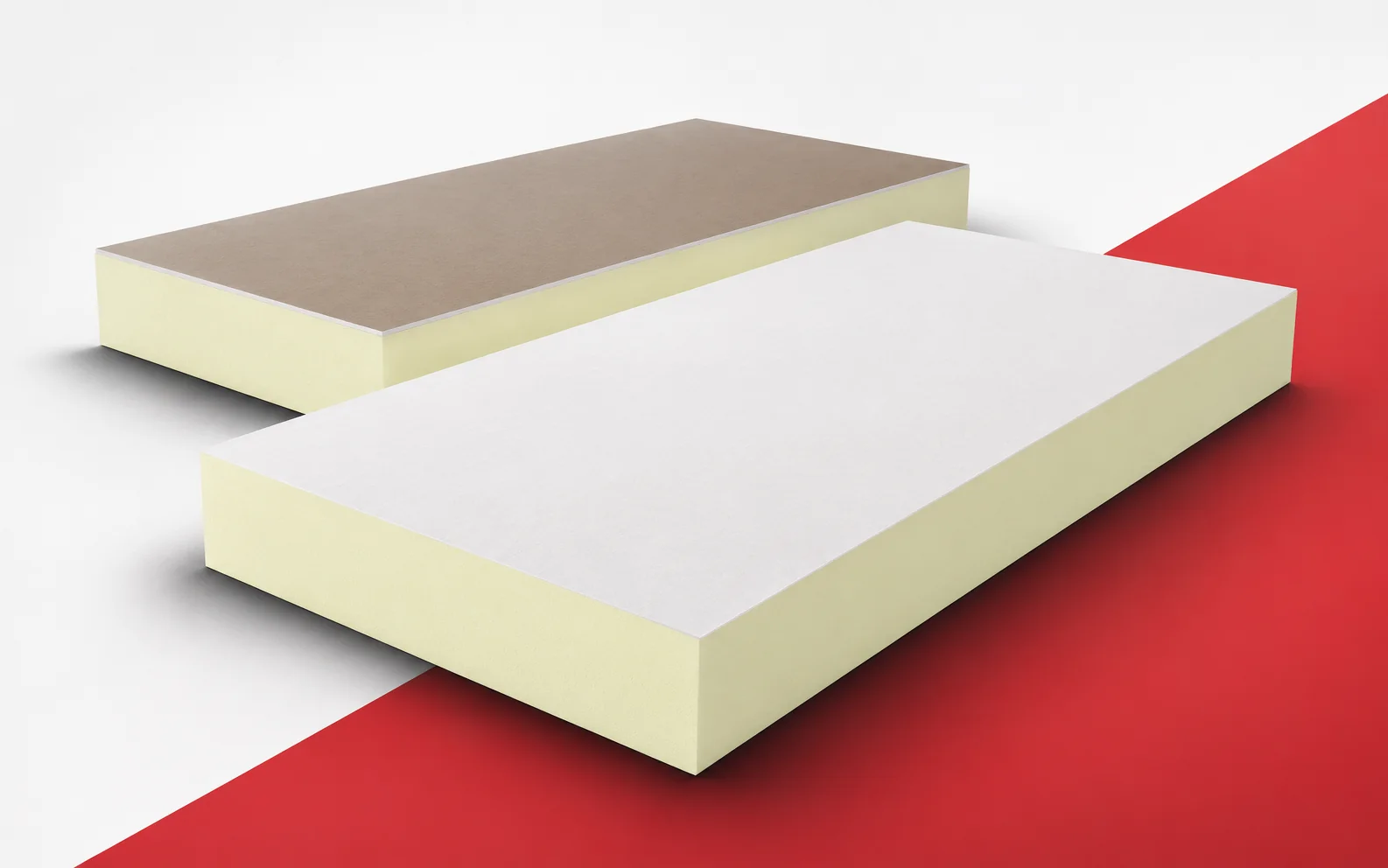
In a small room, the thickness of the insulation directly affects the usable space. termPIR AL GK combines insulation with a finishing…
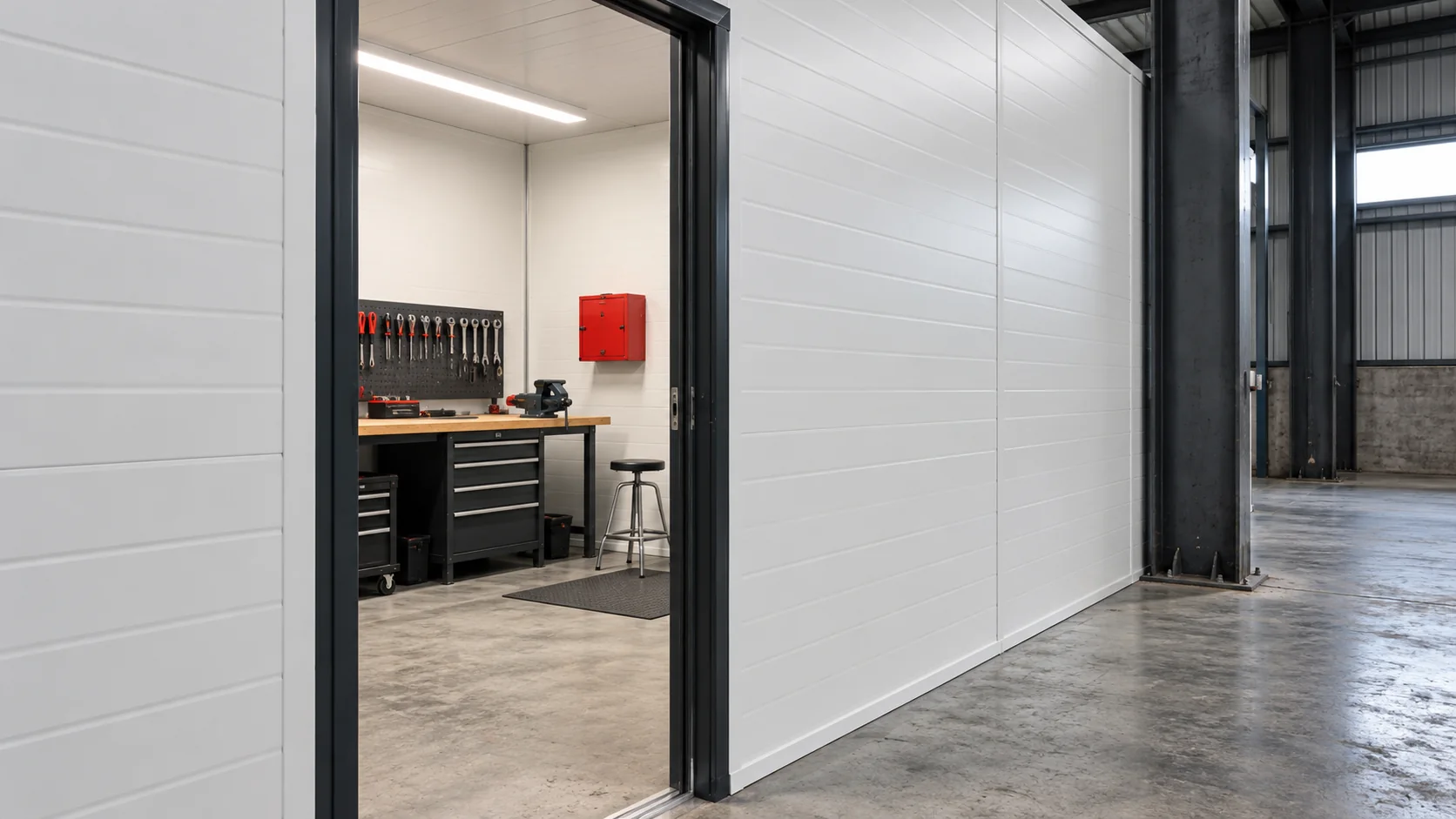
When converting an unheated warehouse to regular winter use, first decide which parts of the building need heating. Keeping a separate workshop…
It helps to separate a year-round timber house project into three outcomes: a delivered structure, a weather-protected building and a home ready…
Different insulation materials can work together in one building element when each solves a specific problem. PIR can keep the build-up thin,…
A low floor build-up may leave limited space for insulation. Recticel Eurofloor achieves substantial thermal resistance with a thin board. Before selecting…
In a floor with underfloor heating, the client is comparing two thicknesses of KR ALU. The aim is to reduce the flow…
Flat-roof insulation selection starts with the position of the waterproofing. In a conventional warm roof it protects the insulation from above; in…
In a small house, a few centimetres of wall thickness can change the layout of the interior. SIP panels with a polyurethane…