

Roofs and roof coverings
How to clean a roof safely and protect its coating
Before cleaning a roof, identify the covering, assess its condition and work out how the team can reach it safely. Only then choose tools and a cleaner. A concentrated water jet, a stiff brush or an unsuitable chemical can damage coated steel. Check the manufacturer’s instructions for the particular finish and inspect the covering once it is dry. Record the type and age of the roof and have the installation documents and warranty conditions to hand. Leaves and organic growth need different treatment from soot or construction residue. Look closely at stains before trying to remove them. They may be signs of corrosion, damage to the finish or water escaping through a failed joint.
In this guide
What should you check before booking a roof clean?
Inspect gutters, valleys, flashings and fixings. Where parts are loose or joints are open, establish what repairs are needed before cleaning. Pressurised water can penetrate a joint that has remained dry in ordinary rain. Directing water at suspect areas during cleaning is an unreliable way to test for leaks.
How can the team reach the roof safely?
Wet metal roofing is slippery, and detergents further reduce grip. Plan a safe working position and fall protection. The choice of platform, access lift or other equipment depends on the building. Before anyone steps onto the covering, establish where it can carry loads, where the rooflights are and which access routes are safe.
Do not plan the work around an improvised ladder or use a gutter as a handhold. A gutter is not a fall protection anchor. Protect the area below from falling objects and dirty runoff. Electrical installations and photovoltaic modules need particular consideration. Agree the scope with a team trained to work around that equipment.
How should you choose a brush and cleaning agent?
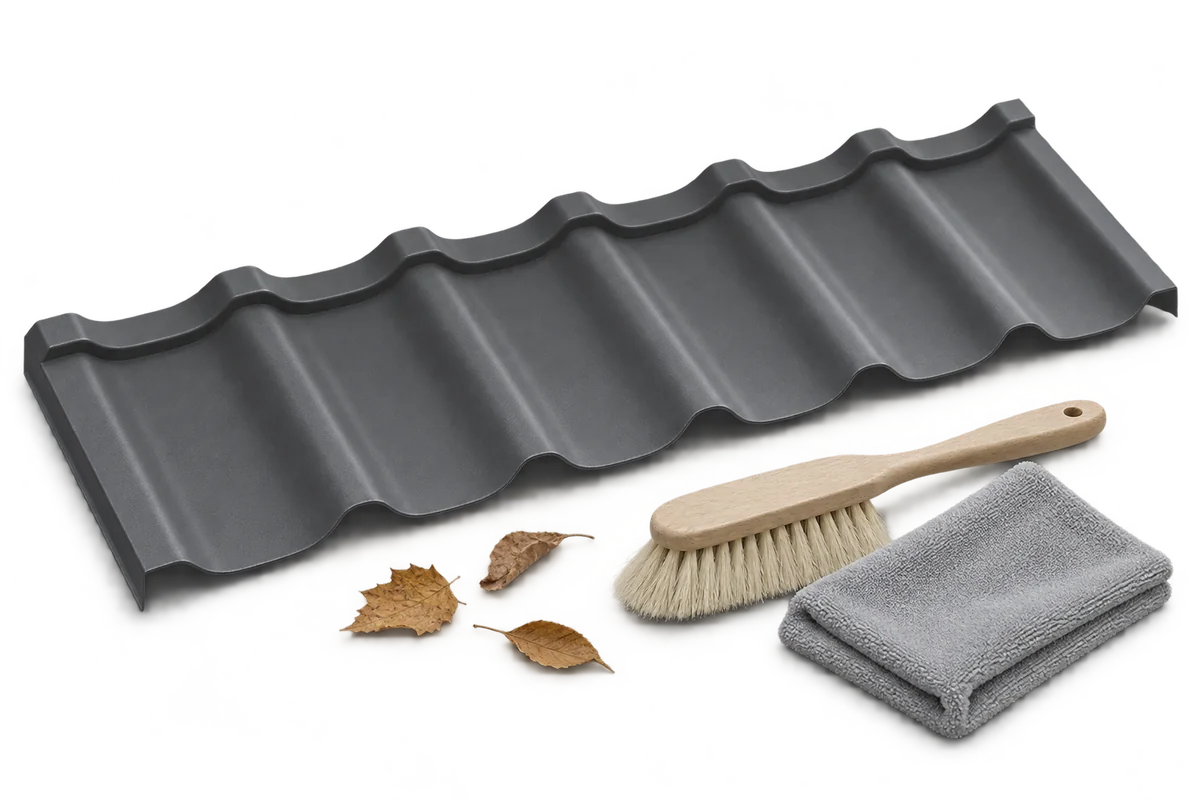
Start with the gentlest method approved for the finish. Lift loose leaves and branches away without dragging sharp debris across the metal. Water and a soft brush are often sufficient for ordinary dirt. Select any detergent to suit the deposit and the care instructions for the covering.
Do not mix cleaners or choose a strong product simply because it promises quick results. Solvents and strongly acidic or alkaline products can damage the finish. Test the cleaner in an inconspicuous spot if its instructions call for it. Follow the specified dilution and contact time and rinse thoroughly.
Trace where the wash water will go. Some cleaners are unsuitable for discharge into a rainwater tank or onto plants. Follow the product instructions when planning how to contain the runoff and collect debris. This helps protect the rainwater system and the area around the building.
Can a pressure washer be used?
Check the roof covering manufacturer’s instructions before using a pressure washer. The permitted settings depend on the finish. Alongside pressure, the nozzle, distance and angle determine how the jet strikes the surface. A powerful, concentrated jet can damage the coating or seals and force water beneath an overlap.
Rinse in the direction the roof sheds water and avoid forcing water under joints or flashings. Take particular care around chimneys, roof windows and service penetrations. A method that worked on another roof should be used here only if the relevant instructions permit it.
How do metal roof tiles and sandwich panels differ?
Dirt can collect around the pressed steps and joints in metal roof tiles. On trapezoidal sheets, pay attention to the troughs and overlaps. A sandwich panel also has an insulating core and a joint between its facings. Keep water away from exposed edges, cuts and faulty joints where it could enter the panel.
For each of these products, identify the actual surface coating. Safe access also depends on the profile and the position of the supports. A worker carrying equipment applies a concentrated load. Decide how to reach the dirty areas before cleaning starts.
What should be checked after cleaning?
Check gutters and outlets for debris washed down from the roof. Once dry, inspect the finish, edges and flashings. Use the repair material specified for the system to touch up local damage. Repainting an entire roof requires a separate assessment of the coating system.
Record the date, cleaner used and any defects found. Set the next inspection or cleaning date to suit the surroundings and the maintenance instructions. Roofs near trees or in dusty areas can need more frequent checks. With regular inspections, dirt can often be removed while a gentle method still suffices.