

Choosing sandwich panels
Mineral wool or PIR: which sandwich panel core suits your building?
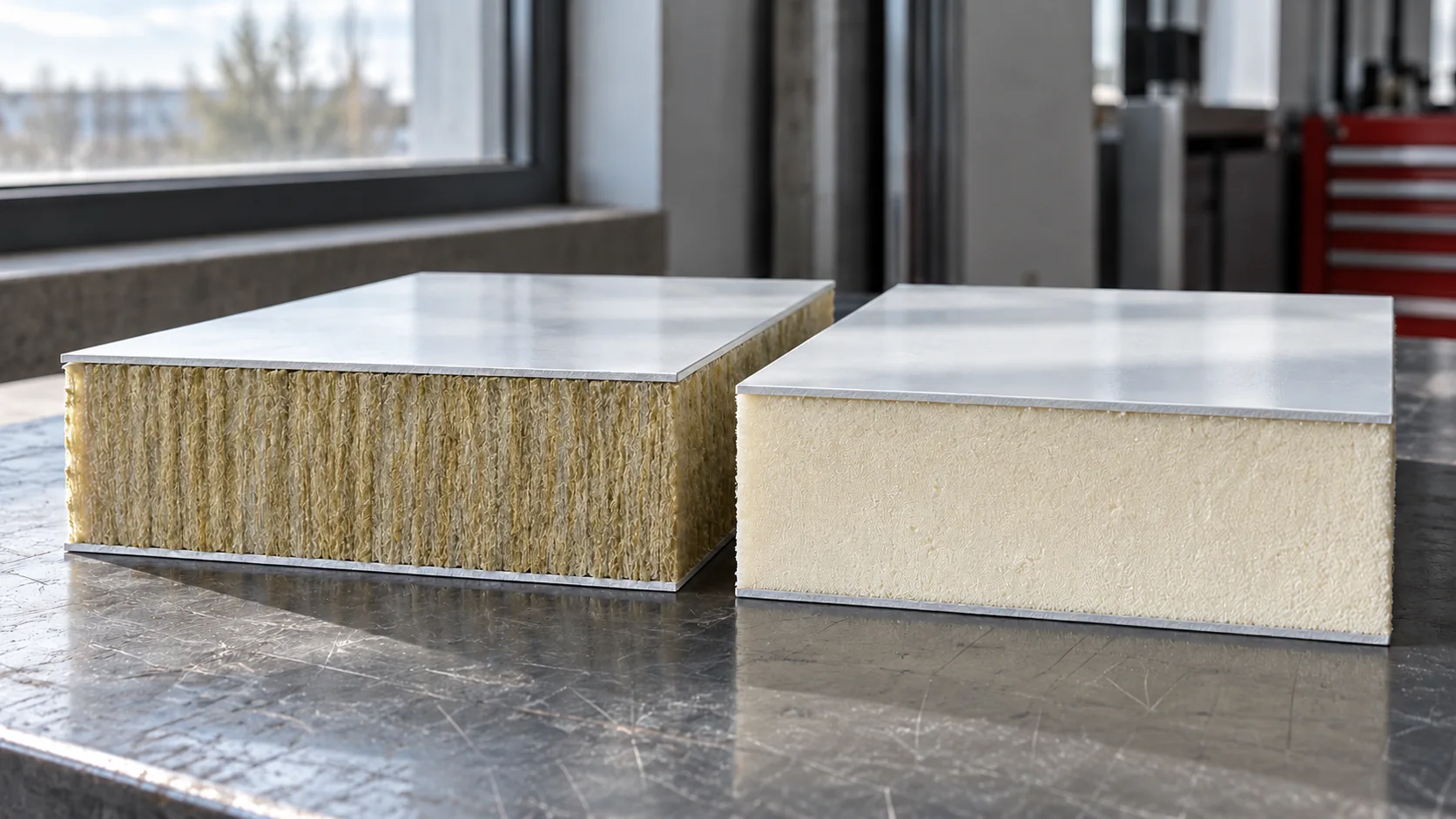
Start with what the wall or roof has to do before comparing panel prices and thicknesses. PIR is a rigid foam with a fine cellular structure; a mineral wool core consists of strips of wool arranged in a defined direction. In both cases the core works together with the facings. How well the finished wall or roof performs also depends on the joints, supports and workmanship at junctions. Use the manufacturer’s documentation for the steel-faced panel you intend to install. Figures for a piece of insulation on its own cannot tell you how the complete panel will perform.
In this guide
Compare finished panels for the same application
First decide whether the panel is for an external wall, an internal partition or a roof. Panels for these applications have different profiles and restrictions on their use. A wall panel and a roof panel are not interchangeable simply because they have the same core.
Where space is tight, PIR may be an option
Selected PIR cores have a thermal conductivity (λ) of around 0.021–0.022 W/(m·K), compared with around 0.038–0.040 W/(m·K) for some mineral wool cores used in panels. These figures refer to particular material families. They illustrate why layers of different thicknesses can provide similar thermal resistance.
Base your choice on the U-value of the complete panel. In a refurbishment, a thinner wall may make it easier to connect to an existing window or preserve the clear width of a passage. Check for air leakage and thermal bridges at junctions too. Even a high-performance core cannot compensate for a poorly sealed joint at the base of the wall.
When fire performance points towards mineral wool
Many mineral wool panels have a declared reaction-to-fire classification of A2-s1,d0. For PIR panels the class depends on the product type, thickness and construction; they cannot all be described as non-combustible. For either type, check the fire resistance of the complete wall or roof separately.
The design may call for a particular core or allow several alternatives. Check the supports, spans, fixings and joints in the proposed assembly. A better reaction-to-fire classification for one material does not establish that the whole assembly achieves the required EI or REI rating.
Panel weight matters for refurbishment and maintenance
A mineral wool panel is often heavier than a PIR panel of similar geometry. Compare the actual panel thicknesses and facings in the specification. A lighter panel can be easier to handle on a confined site, but reducing the size of structural members still requires calculations.
Panels with similar U-values can differ in thickness. Compare the weight and length of each complete element, the lifting equipment needed and the access available should a panel need replacing. The name of the core alone is no basis for predicting a shorter installation time.

Look beyond the core when assessing noise and moisture
Acoustic test results apply to specific panels. A mineral wool panel does not necessarily provide better sound insulation than every PIR panel. Solid and perforated facings also differ in sound absorption. To address reverberation, assess the room; to limit noise transmission, assess the entire wall or roof, including its openings.
Protect panel edges and seal joints with either type of core. Gaps can let humid air reach cold areas within the building envelope. In rooms washed down frequently, the choice of core cannot replace ventilation, a suitable surface coating or a properly detailed junction.
One building can use both core types
Different parts of a building can serve different purposes. You need not specify the same core for every wall and the roof. If you combine panels, verify that their geometry is compatible and that the transition meets both the thermal needs and the fire requirements.
Do not join panels on thickness alone: cover widths, joint profiles and facings may differ. Before ordering, establish how the systems will meet and whether a damaged panel could later be replaced without dismantling a large section of the envelope.
Compare costs and upkeep on the same basis
Compare options that meet the same requirements. Alongside the panel price, include the supporting structure, accessories, installation and the cost of access for cleaning and repairs. Allow from the start for any extra thickness or special junction that one option requires.
In a hall kept at a constant temperature, the energy balance will matter. For a partition enclosing a plant area, fire resistance may be the deciding factor. Choose the core that meets the needs of that part of the building in an assembly that can be maintained throughout its service life.
Frequently asked questions
Does PIR always insulate better than mineral wool?
Some PIR cores have a lower thermal conductivity, but compare the U-values of the finished panels at their specified thicknesses. Junctions and airtightness also affect the thermal performance of the complete wall.
Can mineral wool be replaced with PIR without revising the design?
Do not assume a direct substitution is possible. Check the fire, thermal and mechanical performance as well as the joints. Similar-looking panels are not proof that two assemblies are equivalent.
7 branches. Materials closer to your project.

Free quote
Materials for your project
You may also find useful…
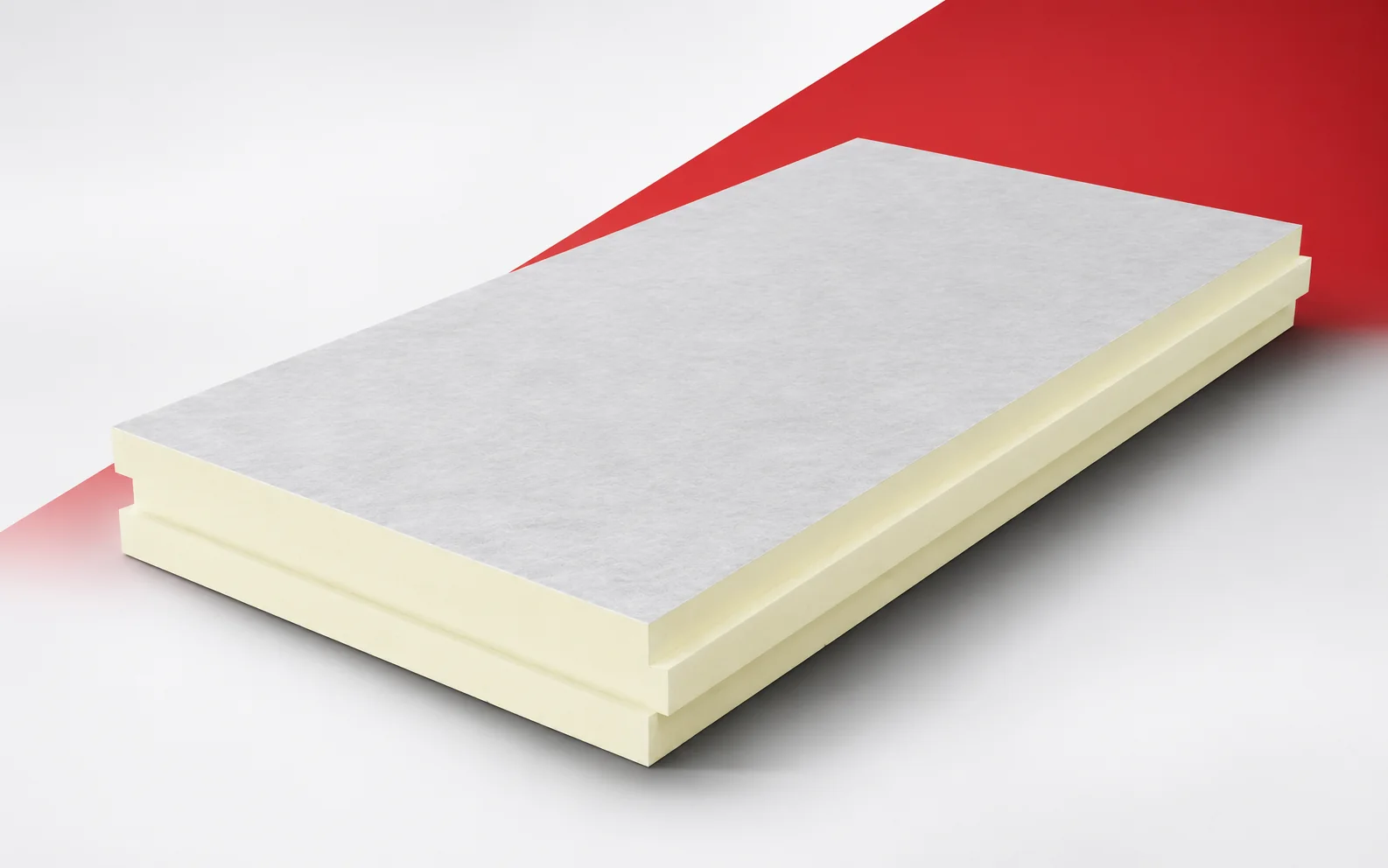
In an efficient roof, the insulation must work together with the layers that protect it. termPIR WS uses a glass fleece facing.…
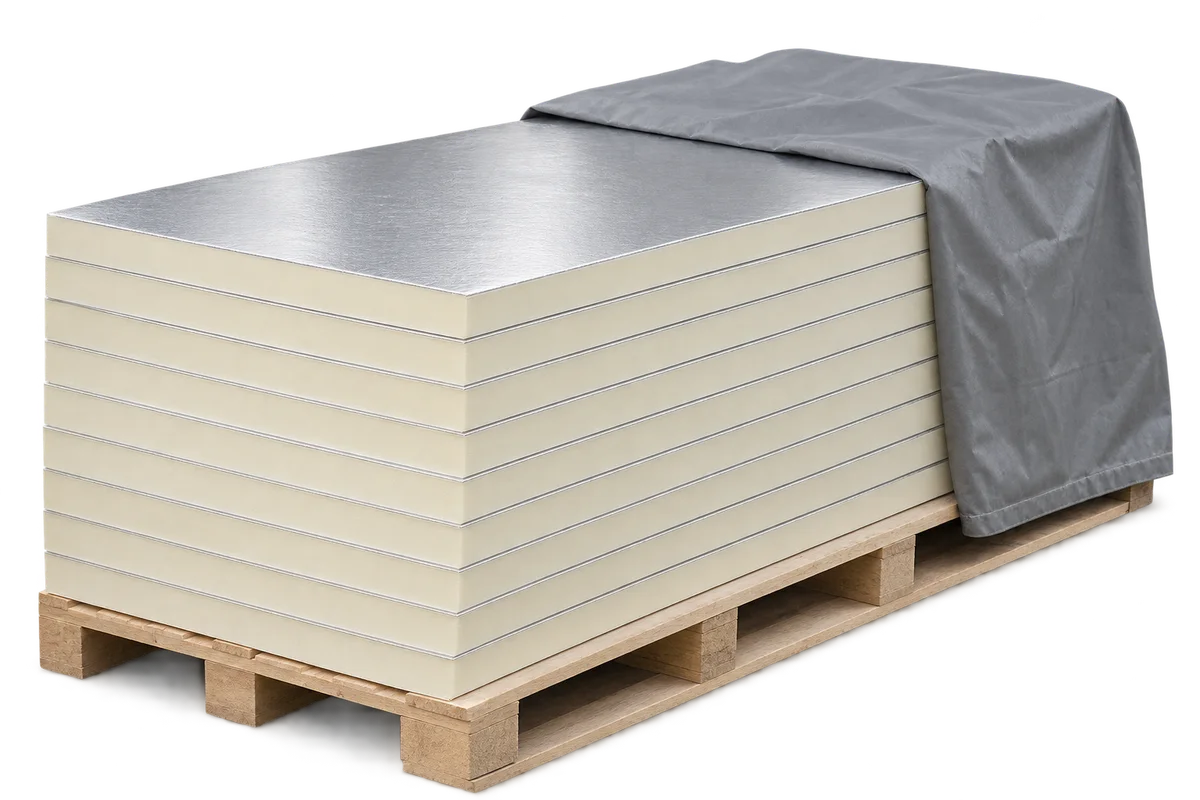
The durability of insulation depends on the material, the conditions in which it works and how the details are executed. A good…
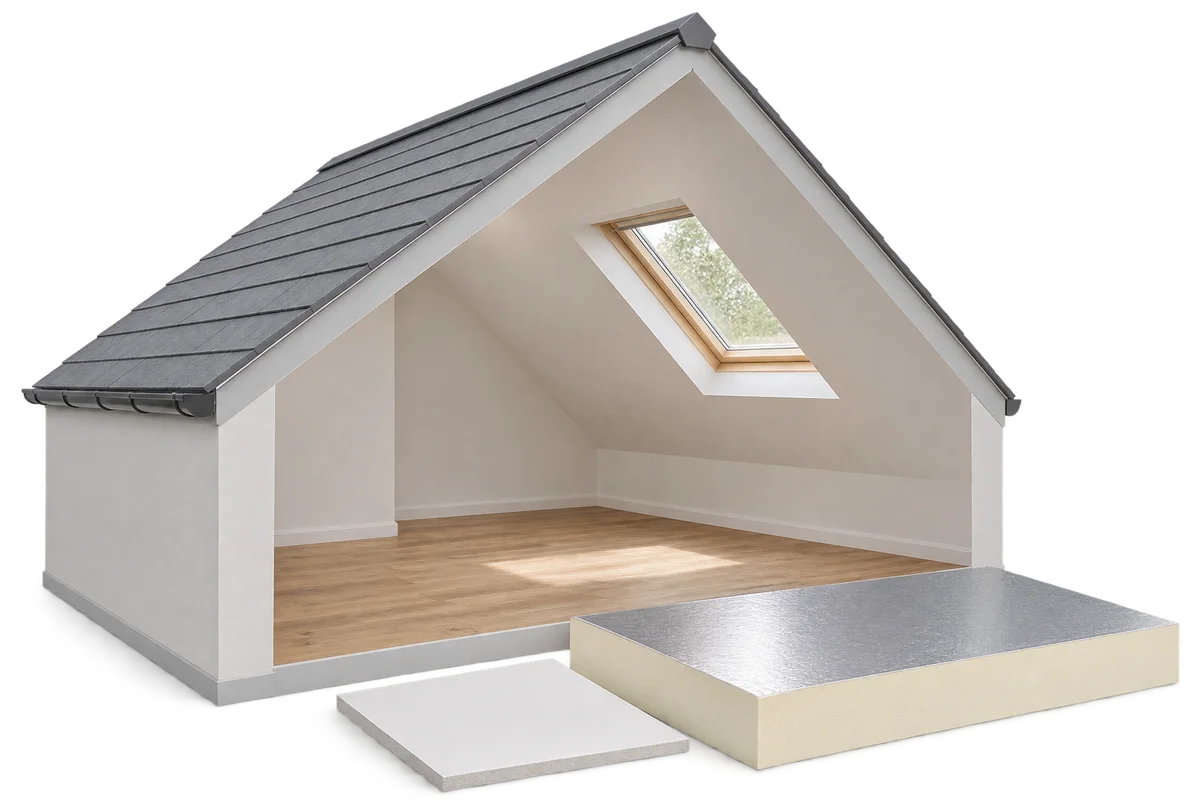
Installation routes in the attic must be agreed with the insulation of the sloped ceiling and the arrangement of the airtight layers…
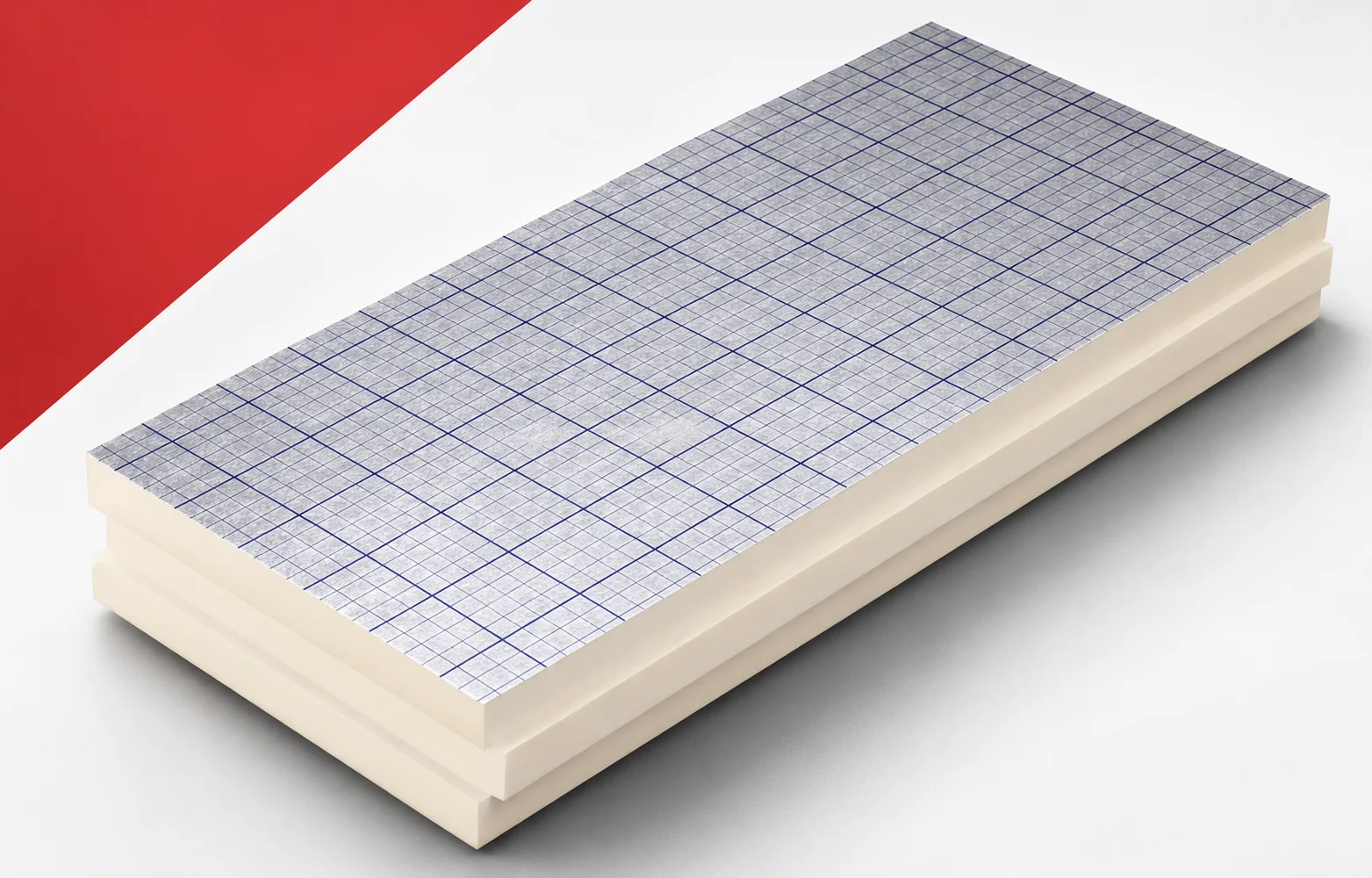
swissporPIR Alu can help achieve the required thermal resistance within a limited construction thickness. The benefit is particularly evident where every centimetre…
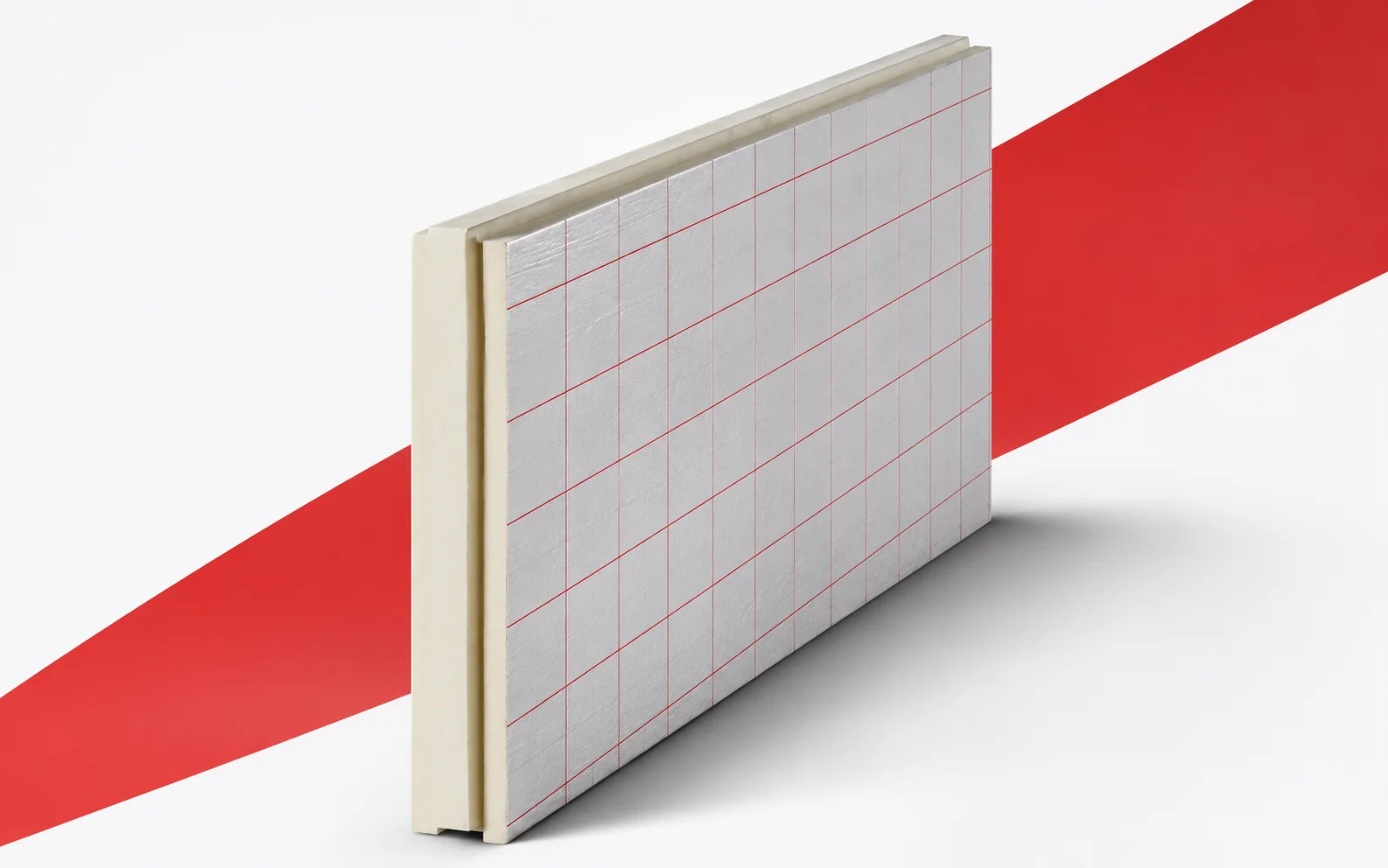
After ALU TG has been laid, the regular field looks tight. At the perimeter, however, cut pieces without the full factory profile…
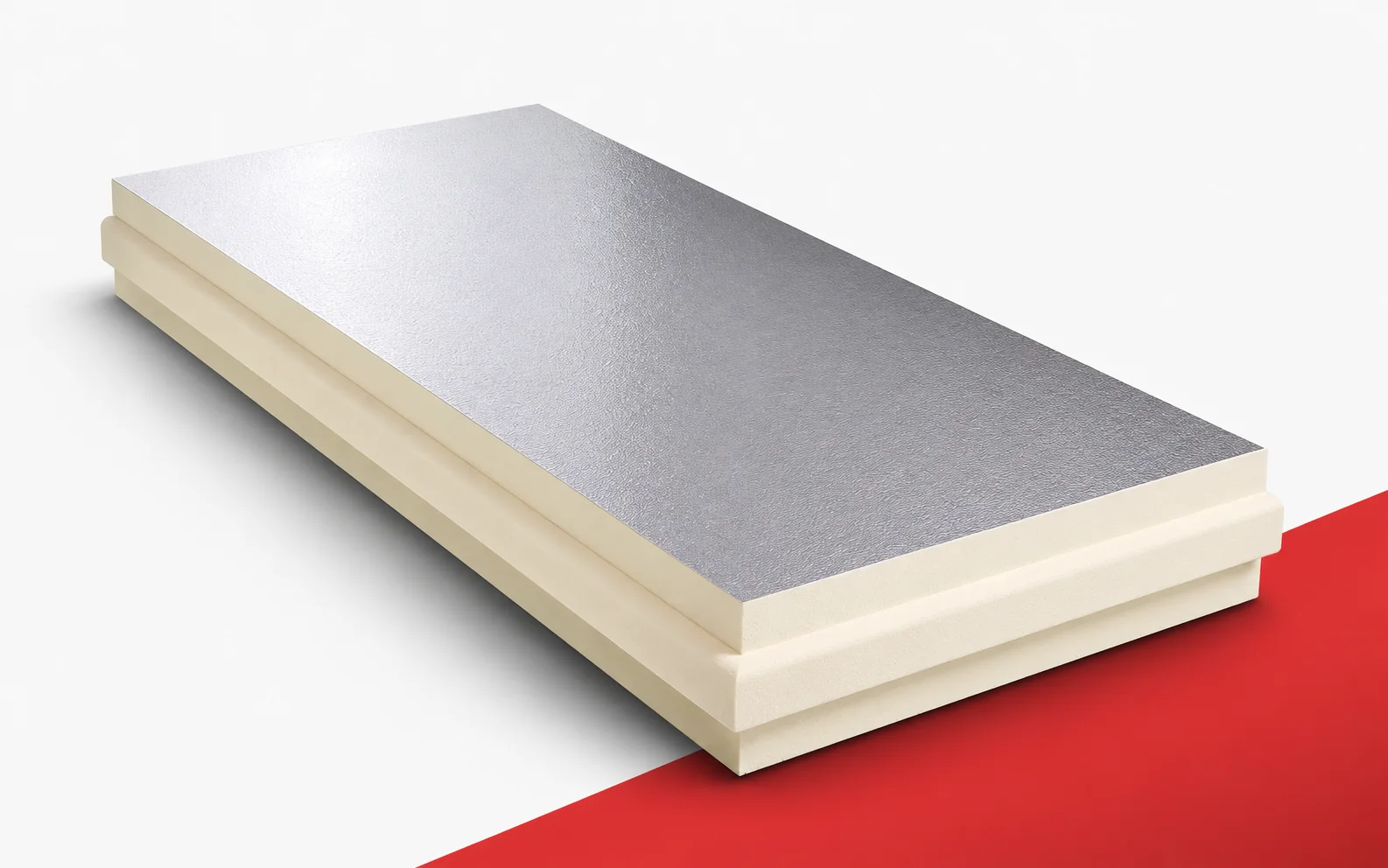
Insulation above the rafters can form a continuous layer outside the timber frame of the roof slope. Recticel Powerroof is intended for…
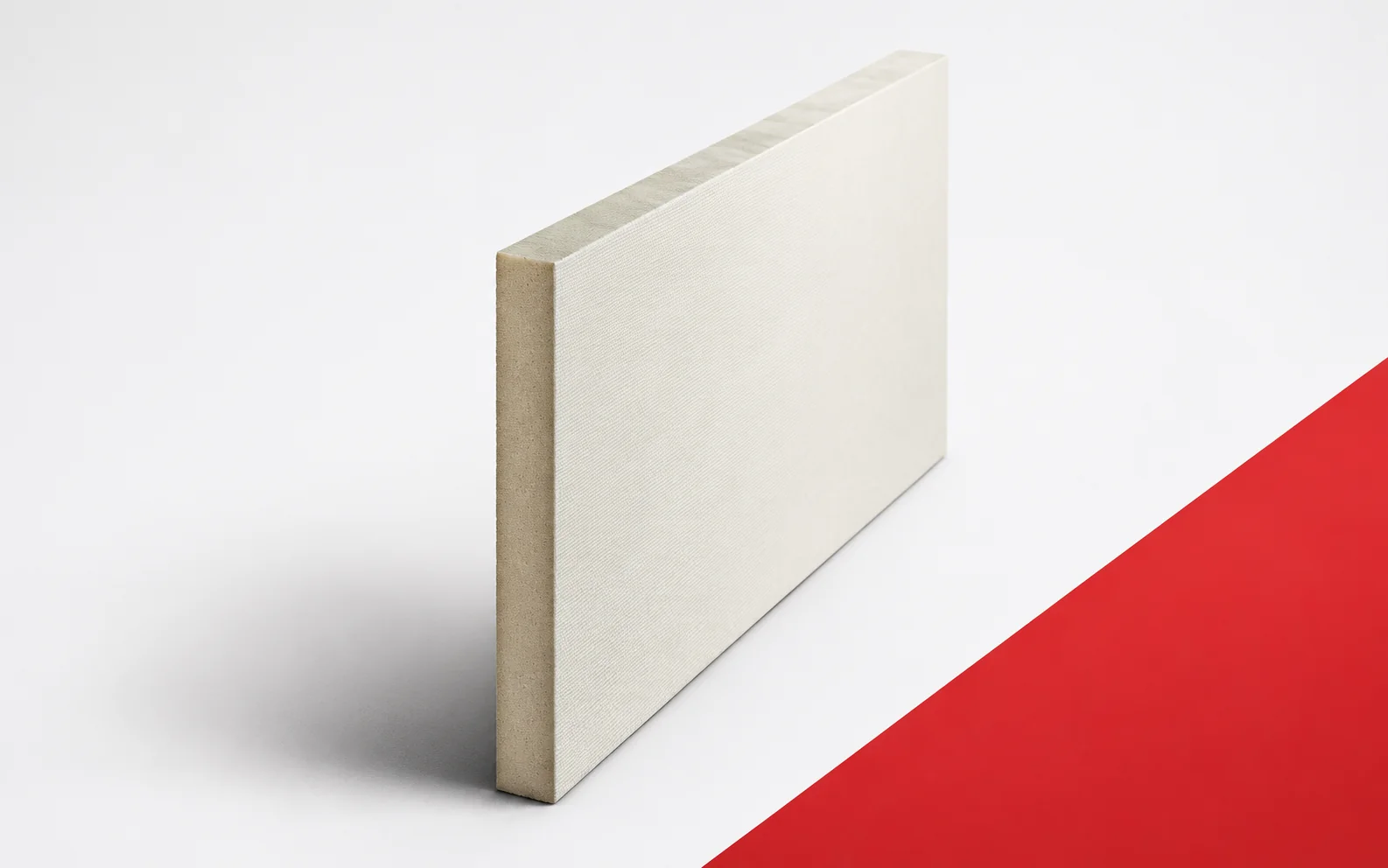
For MG, a change of thickness from 100 to 120 mm is being considered. This also means moving into a different lambda…
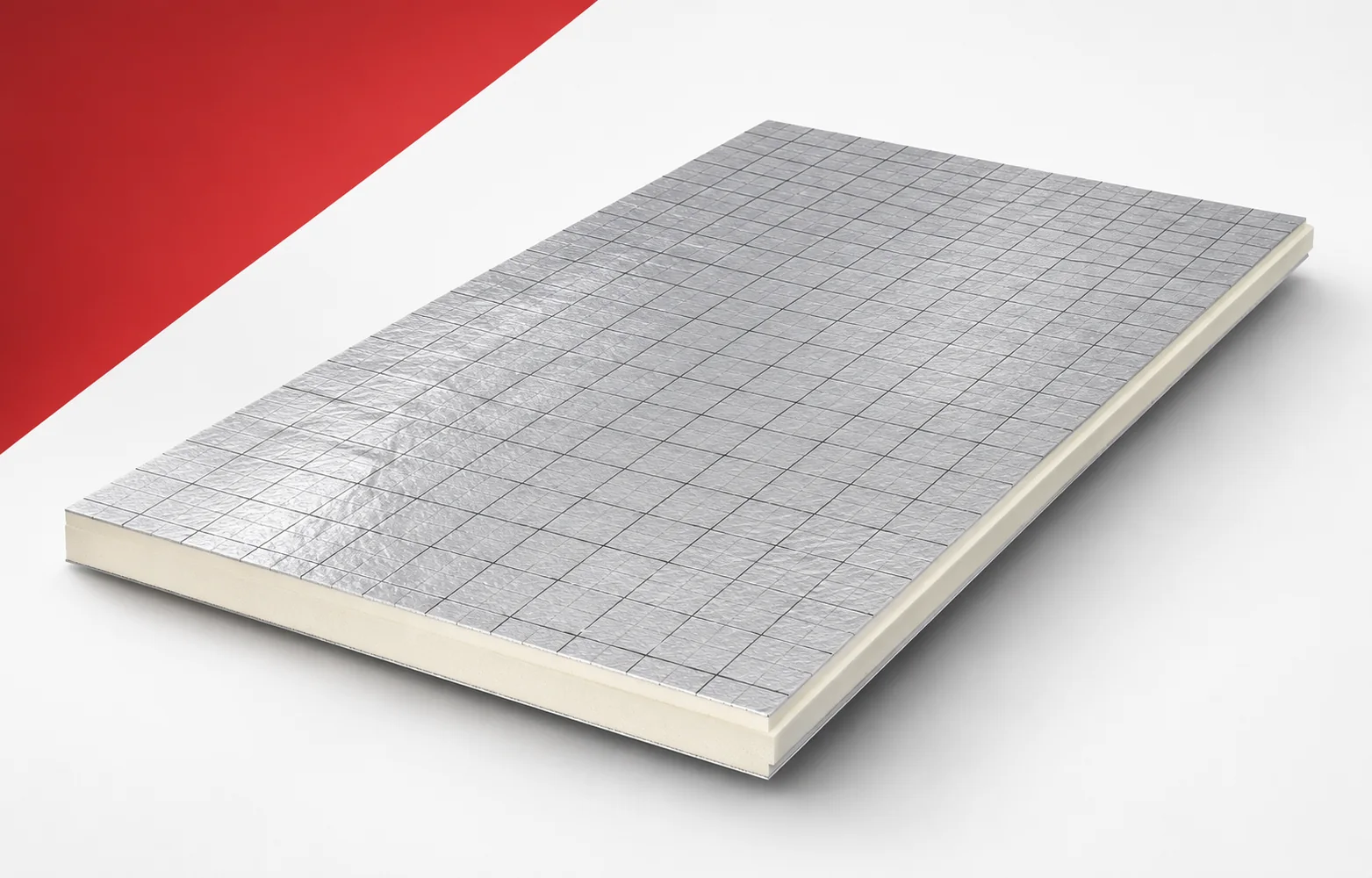
IDELCO α-therm SARKING allows insulation to be installed above the timber roof structure. This position helps preserve attic space and limit interruptions…