

Roof coverings
How does chimney flashing work and what determines its watertightness?
The answer to the question of flashing watertightness begins with understanding that a chimney interrupts the continuity of the roof slope and becomes an obstacle to the water flowing down. Rain falls both on the covering and on the chimney walls, and snow may accumulate behind the obstacle, while wind drives precipitation towards the joints. The detail must therefore work together with the covering, the chimney walls and the underlay, taking into account the height of the sheet profile, the direction of flow and the relative movement of the components. A strip of sealant alone will not replace a correct solution.
In this article
Why is a chimney a demanding part of the roof?
A chimney interrupts the continuity of the roof slope and creates an obstacle to water. Rain runs down the covering and down its walls. Snow can accumulate behind the chimney, and wind can drive precipitation towards the joints. The flashing must take these phenomena into account instead of merely covering the visible gap between the wall and the sheet.
The roof structure and the chimney may move to different degrees. Temperature, humidity and the behaviour of the building influence this. A connection that is too rigid is prone to leaking. A good detail maintains protection against water even when adjacent components do not behave identically.
What parts make up the flashing?
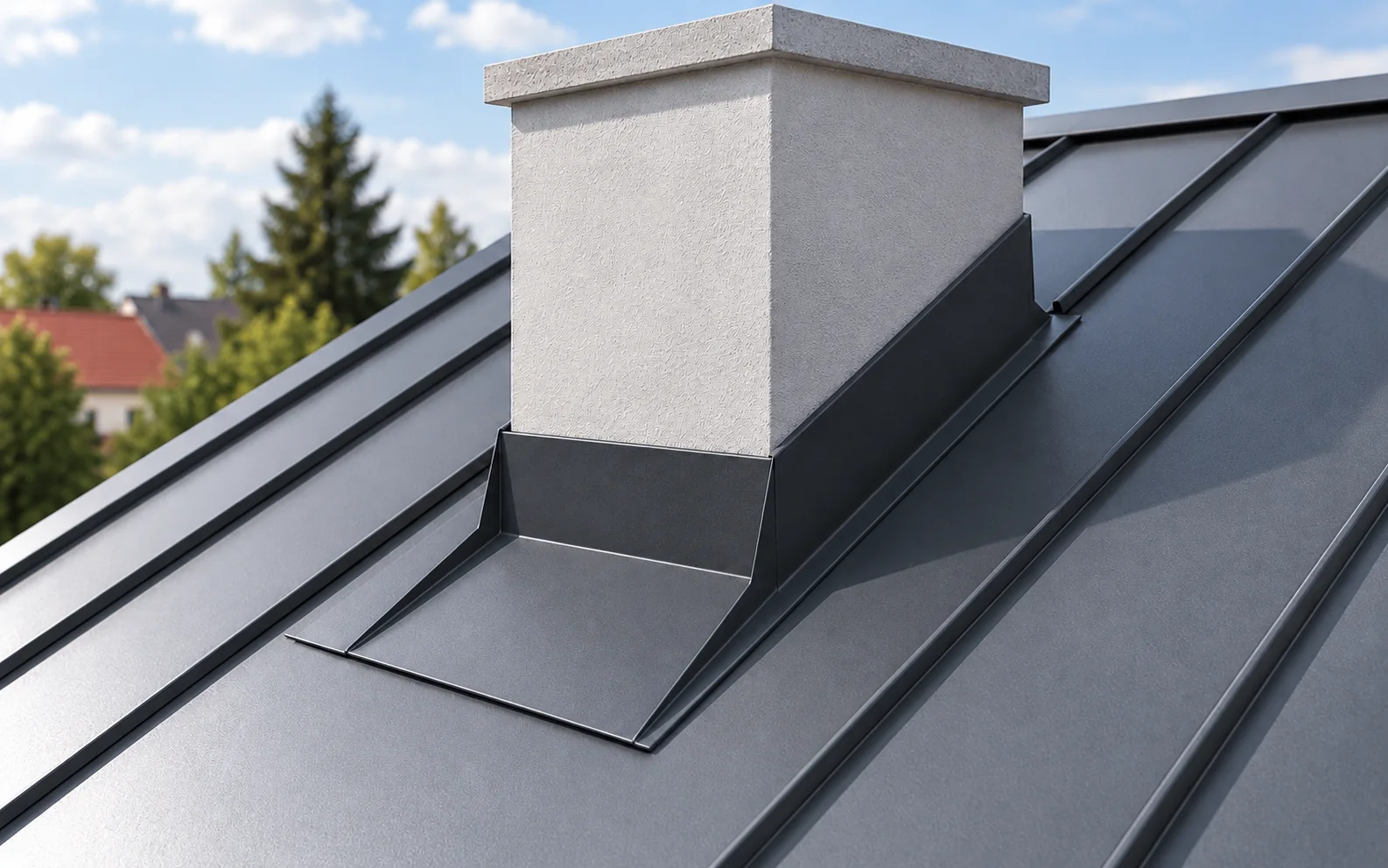
A typical solution distinguishes a front section, side sections and a rear section. Each has a different relationship to the direction of water flow. A correct finish at the chimney wall is also needed. The exact shape depends on the covering, the roof pitch, the width of the obstacle and the chosen construction method.
With a wide chimney, the design may provide additional water diversion on the ridge side. Such a solution should not be copied without checking the geometry. The most important thing is to ensure a drainage path without pockets that trap water and debris. The height of the visible apron alone does not describe the watertightness of the whole system.
How do you match the detail to the sheet profile?
Trapezoidal sheet and tile-effect metal roofing form an uneven surface. The flashing must work together with the ribs and laps of the covering. A high profile requires a different shaping from a flat surface. Correctness cannot be guaranteed by pressing a universal component firmly onto any sheet.
Before installation, the order in which the parts are laid must be established. Water should reach the surface intended to drain it. An incorrectly reversed lap can direct it under the covering. An additional layer of sealant does not remove such a geometric defect and is not a good substitute for correct installation.
What happens beneath the visible sheet?
The underlay also needs a connection at the chimney. Its task is to drain water that may find its way under the covering in a controlled manner. Leaving an accidentally cut membrane creates a weak point. This stage must be resolved before the area is closed with external flashings.
The chimney system’s requirements regarding adjacent materials and distances must be maintained. No gap may be filled with just any foam, insulation or tape. Protection against rain must not compromise fire safety rules. The details depend on the type of chimney and its purpose.

How do you finish the flashing at the chimney wall?
The top edge should limit water running behind the sheet. The method may include a cover strip or another solution intended for the substrate. Durable fixing and proper sealing of the joint are what matter. Simply gluing sheet to brittle render does not provide a reliable connection.
Before installation, the condition of the chimney surface must be assessed. Cracked render, leaking joints or a faulty cap can admit water independently of the flashing at the roof slope. In such a case, repairing the apron alone will not solve the whole problem. The diagnosis should also cover the part projecting above the roof.
When can tape or sealant help?
The sealing material should be compatible with the substrate, the sheet coating and the exposure conditions. Surface preparation and the approved method of use are important. Not every product may remain exposed to the sun. Its parameters must be checked in the documentation rather than judged by the colour of the packaging.
Tapes and sealants can supplement a correct detail, but should not take over its entire function. Extensive smearing of a leak often makes later repair more difficult. If water stands behind the chimney, the drainage must be improved. If the flashing cracks due to movement, the method of connection needs to be changed.
How do you identify a problem and accept a repair?
A leak at the chimney may appear during rain from a particular direction or during a thaw. Such observations help to establish the cause. The position of the stain inside does not always indicate the exact point of leakage. Water can travel along the membrane or structural components.
At acceptance, the continuity of the flashings, the arrangement of laps, the drainage and the condition of the coating are checked. Photographs of the layers before they are covered are very useful. The close inspection should be organised by a team with safe access. Going up onto the roof slope oneself after rain is not a proper method of inspection.
Advice before ordering
When reporting a leak, note whether it occurred after rain, strong wind or snow melt. Attach a photograph of the whole chimney and of the position of the stain. Such information helps to distinguish a flashing problem from a leak in the upper parts of the chimney.
What is worth remembering?
Watertight flashing requires a correct water path and a connection of all roof layers. First the geometry and condition of the chimney must be identified, and only then should repair materials be selected. Sealant helps within the intended detail, but does not replace correctly executed flashings.
7 branches. Materials closer to your project.

Free quote
Materials for your project






You may also find useful…
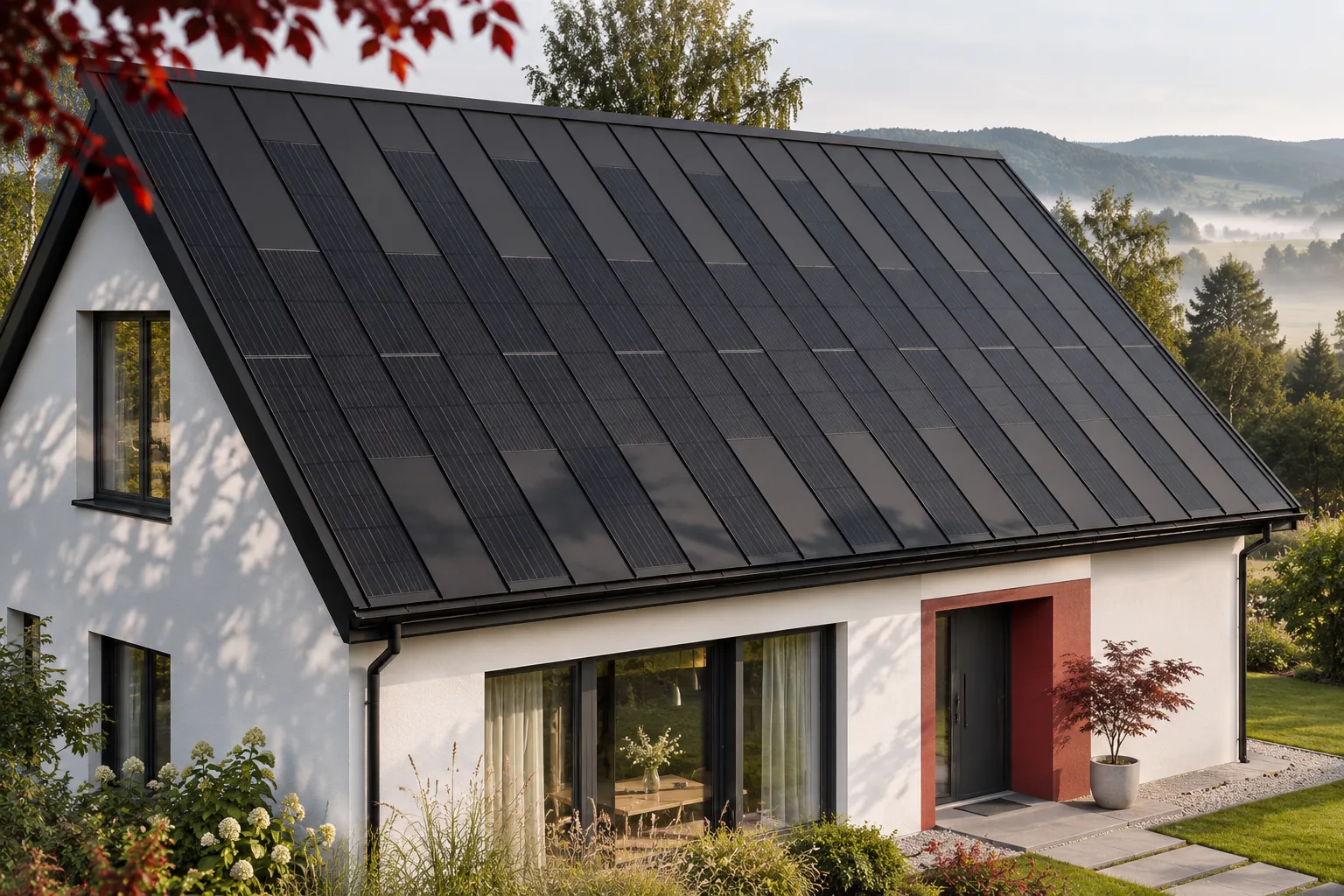
A photovoltaic roof can serve two functions in one system: it covers the building and generates electricity. It makes the most sense…
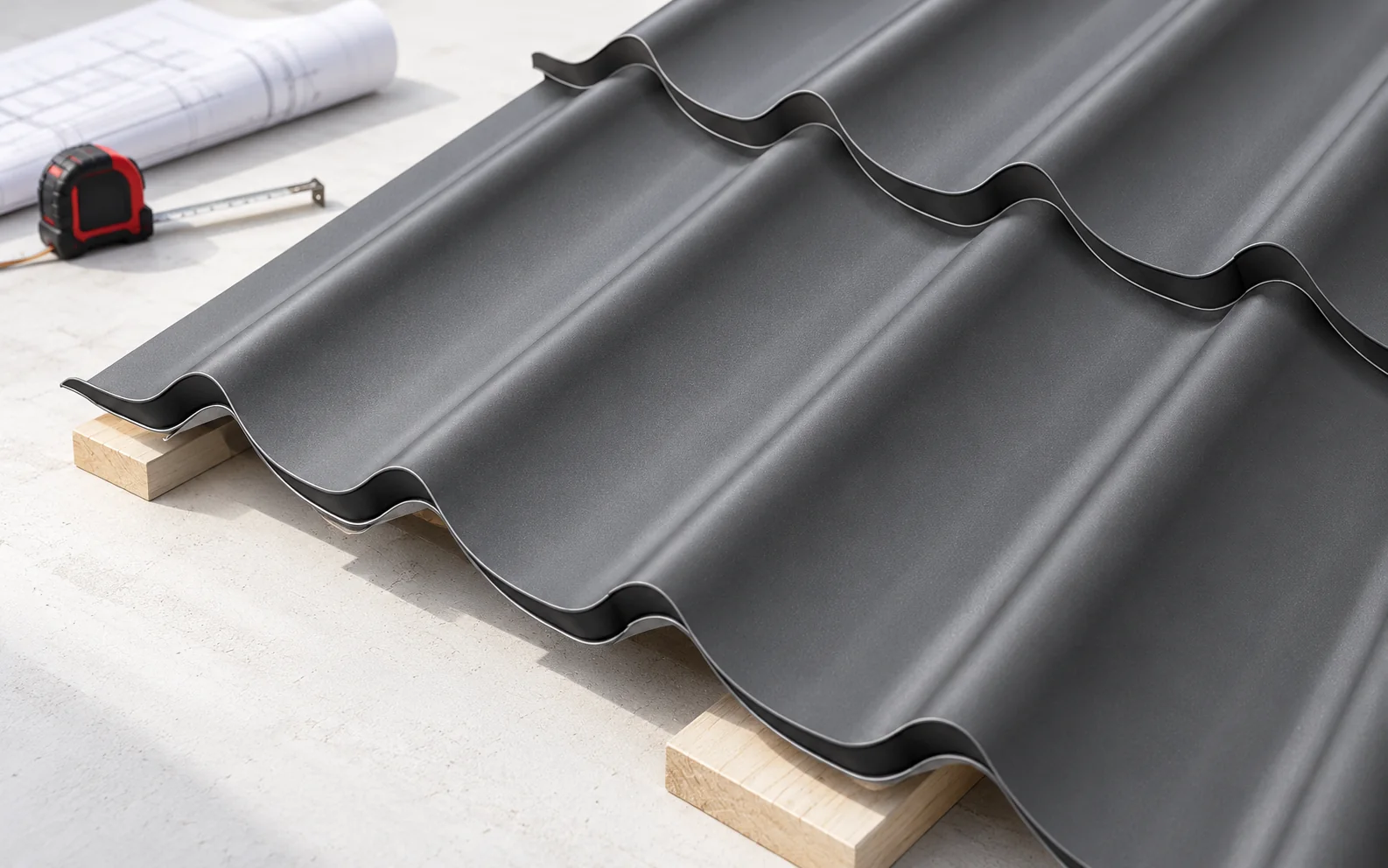
The cost of a roof depends on the complete assembly. Compare quotations for the same roof geometry and scope of work, taking…
An integrated photovoltaic roof can be a strong selling point for a house, but it does not guarantee a predetermined increase in…
A steel roof with integrated photovoltaics can be an interesting alternative to heavier coverings combined with a separate installation. Its mass must…
In the example roof, EFYOS BLUE A has already been installed at the correct thickness, but the vapour control layer has been…
Correct installation of trapezoidal steel sheet on a roof depends on the material matching the design, on preparation of the supports and…
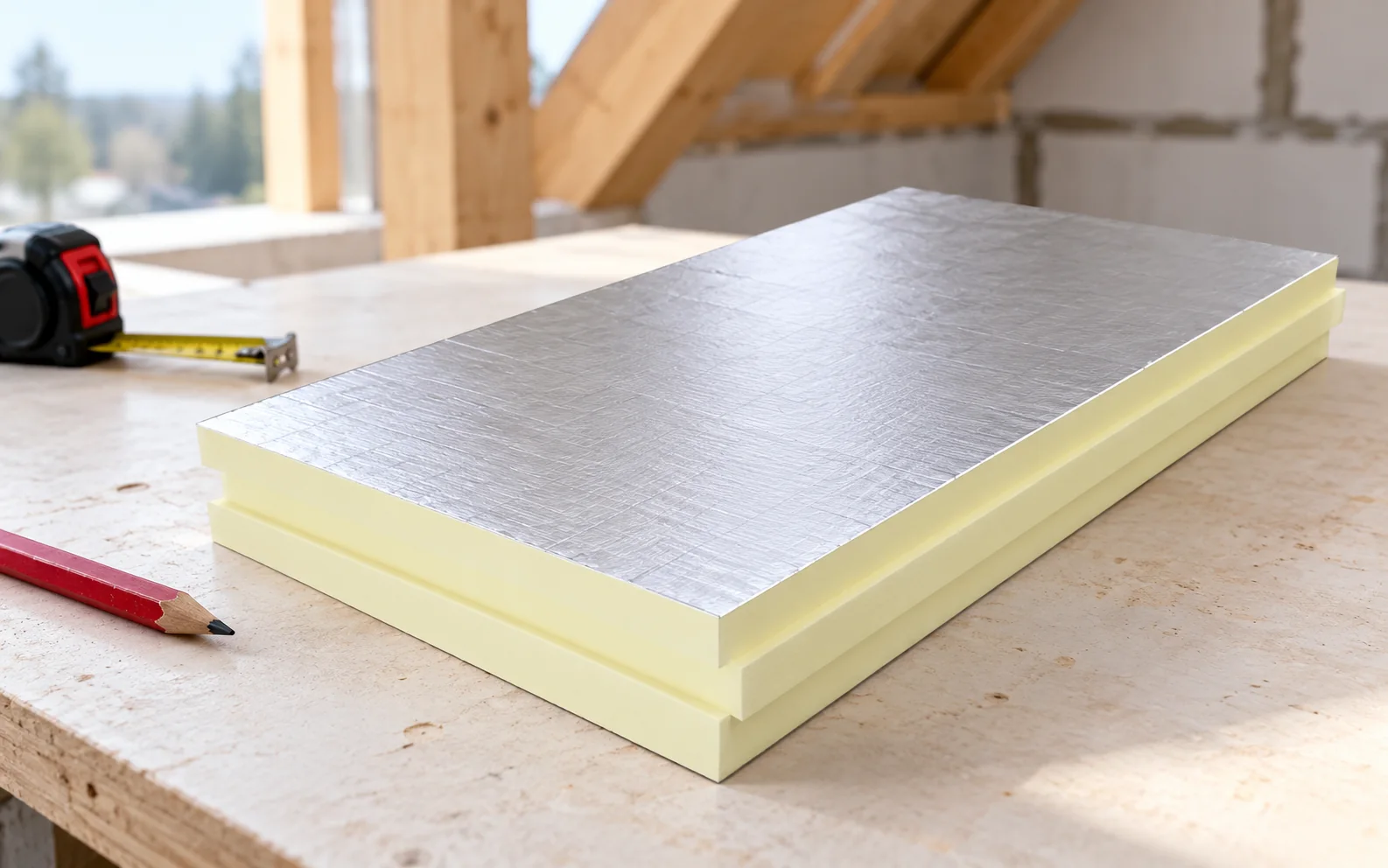
Insulating around the wall plate requires connecting the roof insulation with the wall insulation in such a way that no thermal bridge…
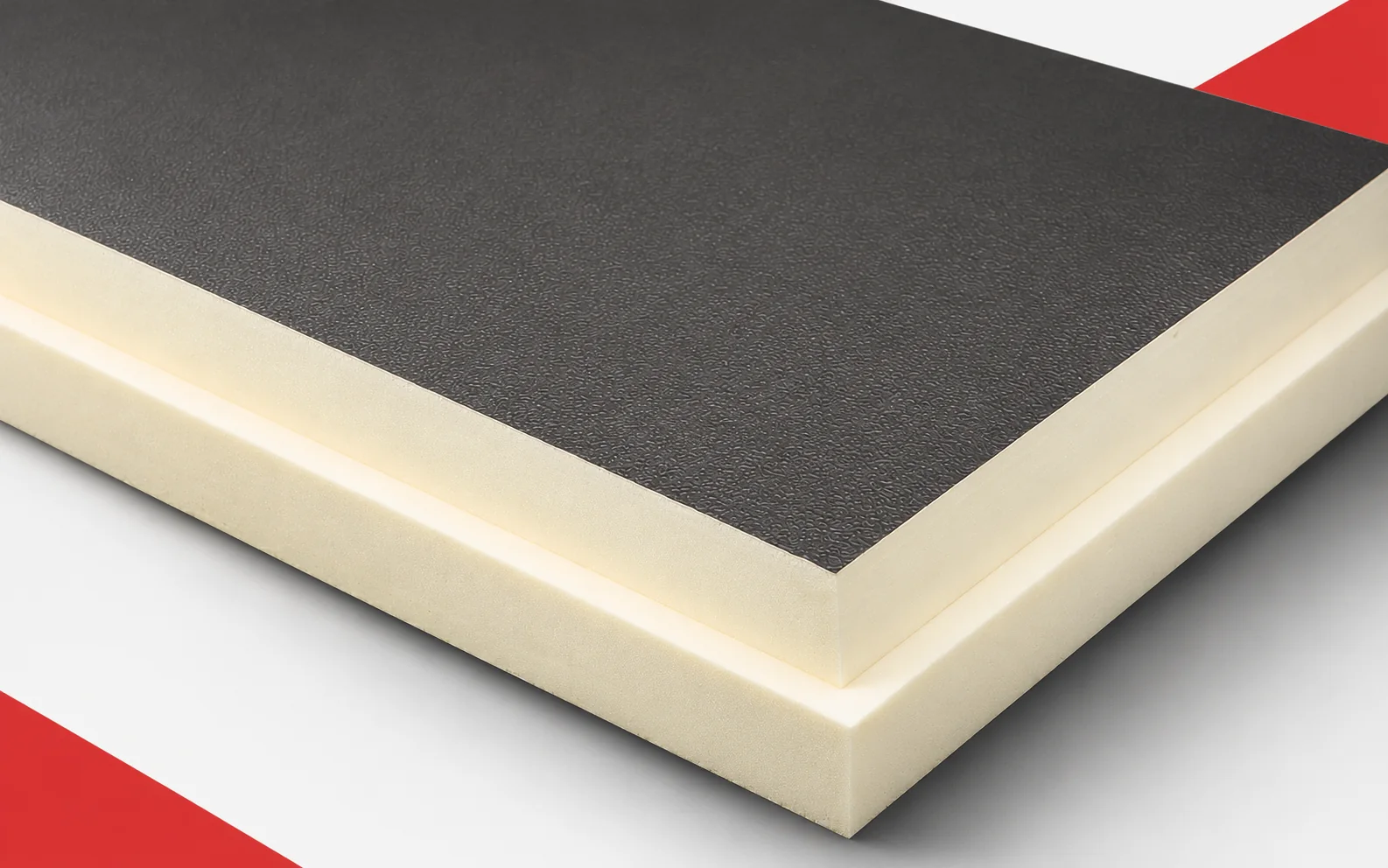
On a rectangular roof area, the large FA format makes it easier to plan a regular layout. The thermal effect, however, depends…