

Roof and energy
Does a solar roof increase the value of a home?
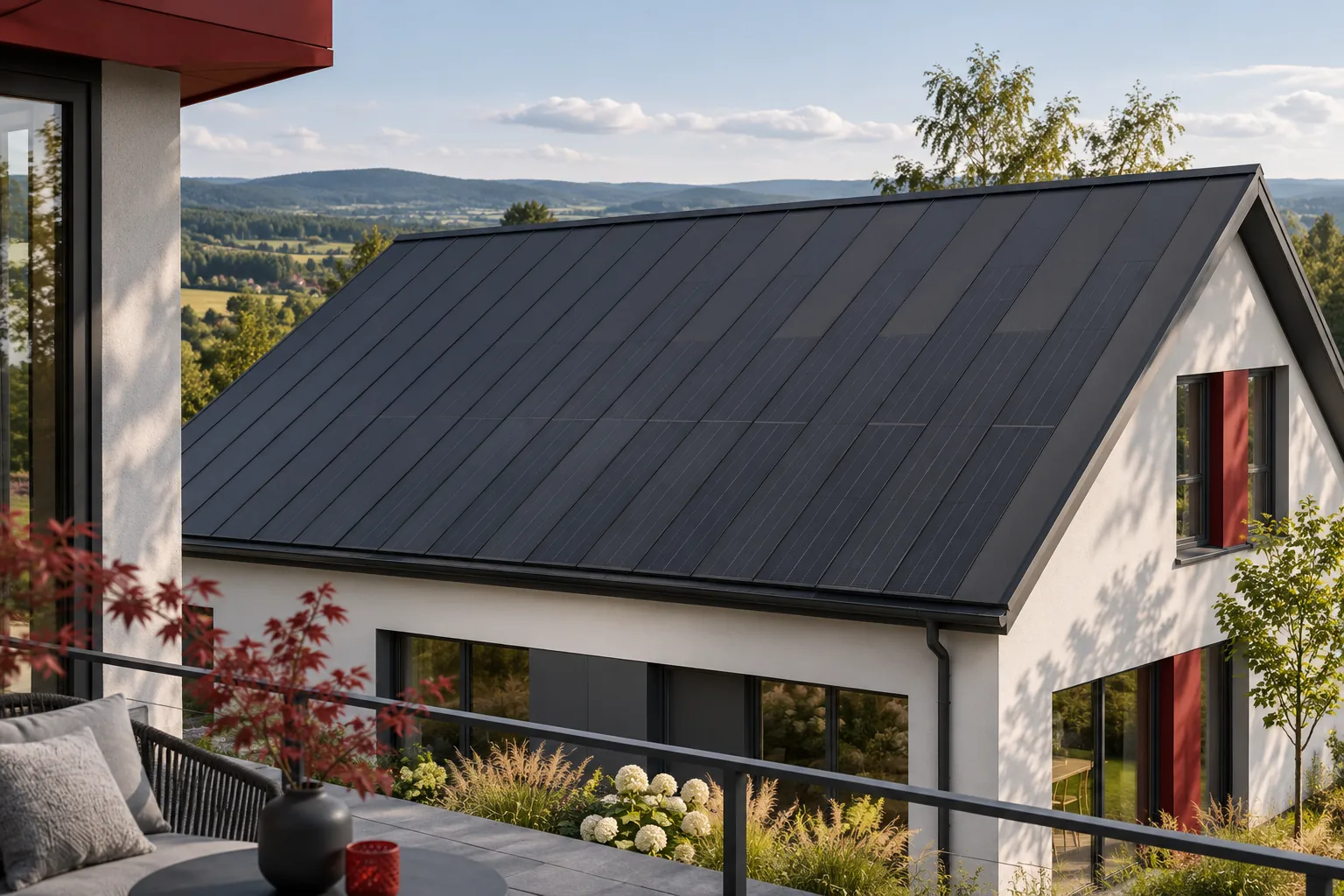
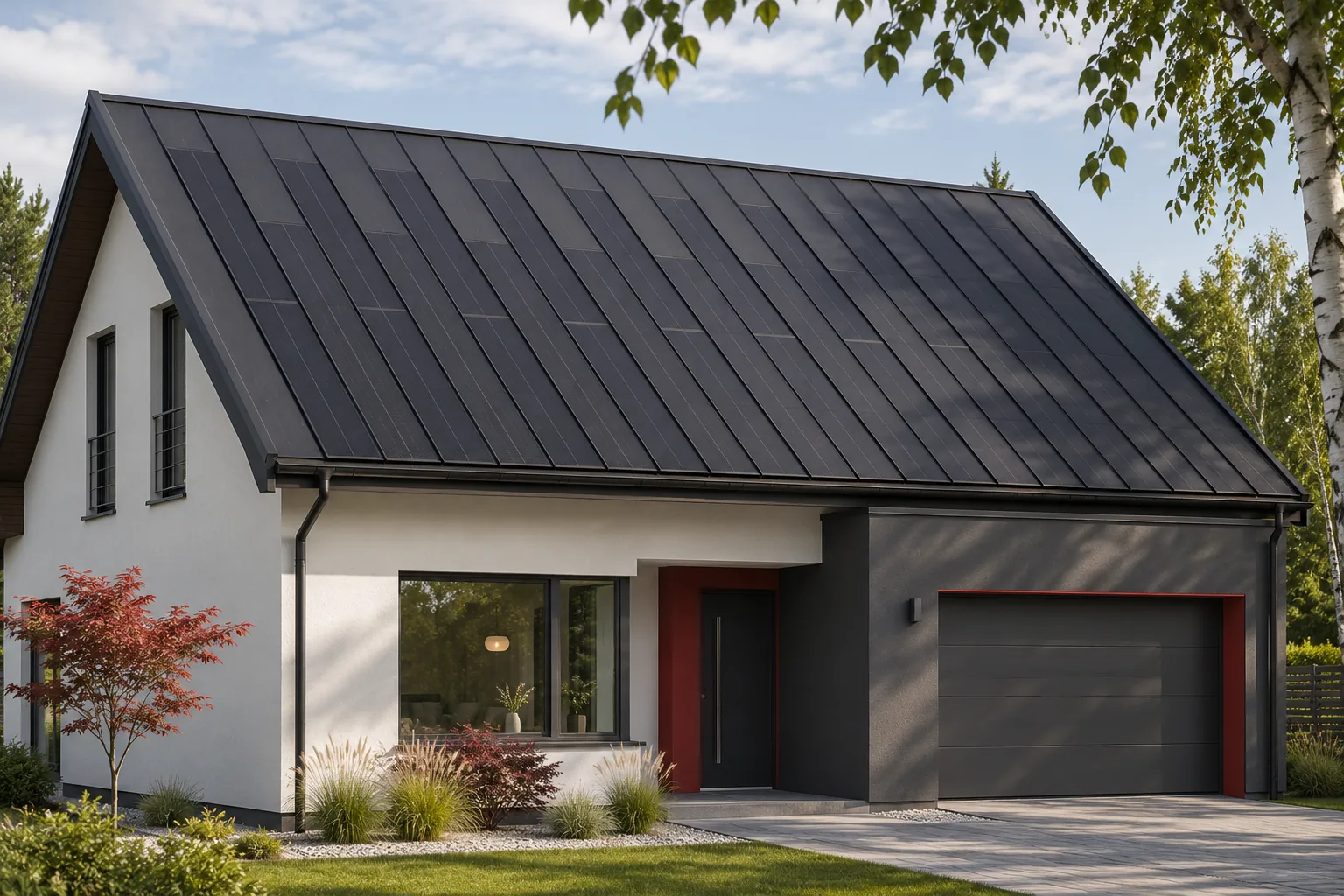
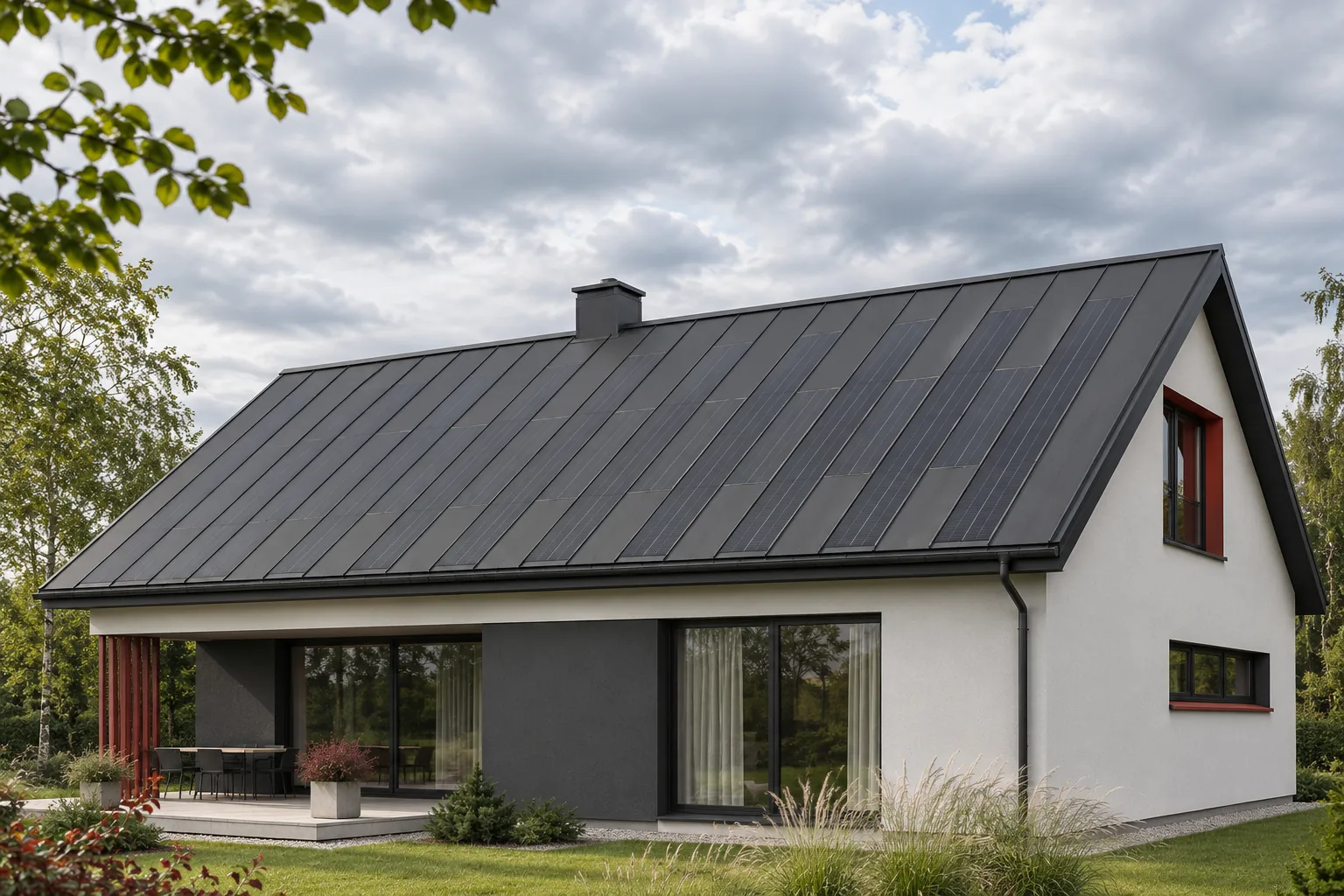
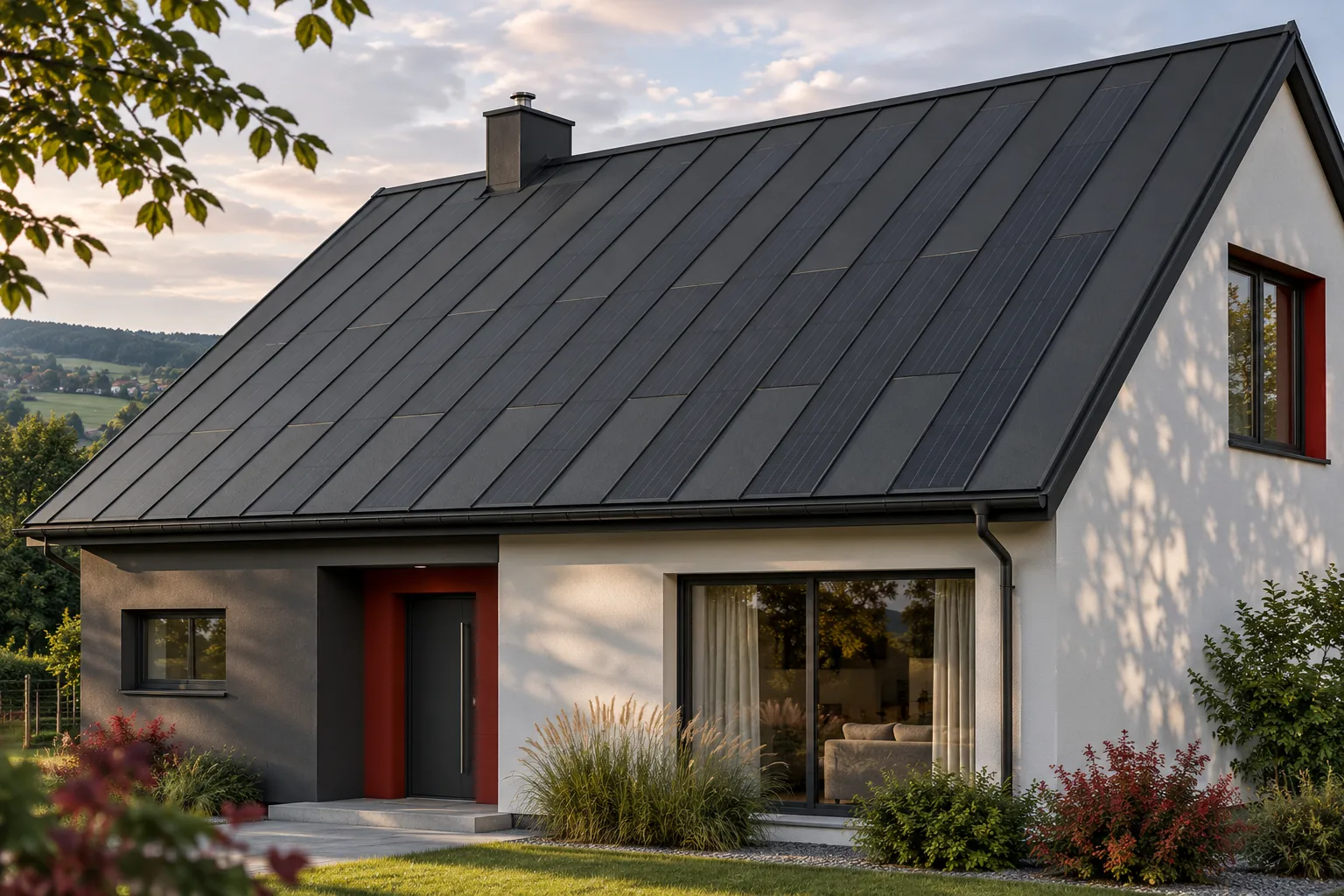
An integrated photovoltaic roof can be a strong selling point for a house, but it does not guarantee a predetermined increase in the sale price. A buyer assesses the building’s appearance, running costs, technical condition and the risk of future repairs. A coherent energy-producing covering addresses some of these needs. Its value is easier to demonstrate when the owner has performance measurements, documentation and clear servicing terms. A high purchase price for the system alone is not enough. The roof is an important part of the house’s architecture. A separate structure with modules can clearly alter its proportions. An integrated covering allows active and passive sections to be planned in a single rhythm. In a system of steel panels the effect can be particularly calm if the divisions and flashings have been refined from the outset.
In this article
What does a potential buyer see at first glance?
The aesthetic assessment, however, remains individual. One buyer will appreciate a smooth dark roof slope, while another will choose the traditional look of a tile. There is no basis for attributing the same percentage premium to every integration. What matters is the roof’s fit with the whole building and the quality of workmanship, visible also on closer inspection.
How can the benefit in running costs be demonstrated?
The most convincing evidence is actual data from the installation’s operation and the building’s consumption. It is worth showing generation over several periods and how the energy is used. Kilowatt-hours alone do not yet describe the savings, because the times of consumption and the billing conditions matter. The effect of the roof must also be separated from other changes, such as a new heating system.
A buyer may use the house differently from the previous owner. Different working hours or a larger number of appliances will change the result. Measurements are therefore evidence of past operation, not a promise of identical bills. Presenting this data honestly increases its credibility and makes the installation easier to assess during property negotiations.
Why is the condition of the covering just as important as generation?
A photovoltaic roof must still fulfil its basic structural function. A buyer will ask about watertightness, flashings and the condition of the layers beneath the covering. Good electricity generation does not compensate for leaks or difficult access for repairs. It is therefore worth documenting both the electrical inspections and the servicing of the roof components.
The age of the individual components also matters. Modules, the inverter and the covering may have different warranty periods and rates of wear. The whole system should not be presented as a single device with one end-of-life date. Reliable information allows the buyer to estimate future obligations and to distinguish a well-maintained system from an unclear retrofit.
Which documents help at the point of sale?
Useful documents include the detailed design, the electrical schematic, the layout plan and the acceptance records. These are supplemented by product data sheets, warranty terms and a history of repairs. It is worth retaining access to the monitoring and explaining how it is to be handed over. The new owner should know whom to contact about a problem and which inspections are required.
Also check the conditions for transferring warranty rights. Do not automatically assume that every clause works identically after a change of owner. The procedure may require notification or an update of data. At the point of sale it is also important to put in order the documents relating to the grid connection and energy billing, in line with the property’s current situation.
Does the investment cost come back in the house price?
There is no simple relationship between the amount spent and the increase in the sale price. The property market takes many features into account, including location, the layout of the house and its general condition. Even valuable equipment may be only one of several arguments. One should therefore not buy a roof solely on the promise of fully recovering the outlay on sale.
It is better to assess the benefit from use over the planned period of residence. A coherent appearance, one’s own energy and well-organised servicing can have value right now. Any premium at the point of sale is an additional, uncertain effect. This approach gives a calmer decision than treating the technology as a guaranteed way of increasing the value of one’s assets.
How can the system’s future appeal be safeguarded?
Choose a solution with clear documentation and a described repair procedure. Keep performance data, installation photographs and confirmation of inspections. Avoid unauthorised changes that make later servicing more difficult. If the installation has been extended, update the schematics and the equipment list so that the new owner does not have to reconstruct the history from guesswork.
A well-maintained roof is easier to assess than a system described only in slogans. It is precisely this transparency that can strengthen the argument for its value. The integrated form provides a good starting point, because it combines architecture and energy. Ultimately, however, what counts is the quality of the whole house and the confirmed condition of the solution that the next user is to take over.
Participants in the photovoltaic roof market include Wienerberger Wevolt, ML System, LUMA Solar, Dyaqua, MDM NT (MyRoof), Tesla, SunRoof, Electrotile, EDILIANS and SolRoof.
7 branches. Materials closer to your project.

- SEROCK — Dzierżenin 34 E
- BŁONIE — ul. Sochaczewska 138A
- RADOM — ul. Grobickiego 8
- ŁÓDŹ — Natolin 8
- OLSZTYN — Barczewo, ul. Prosta 9
- WROCŁAW — ul. Jerzmanowska 10C
- GORZÓW WLKP. — ul. Zielona 33/34
Free quote
Materials for your project

You may also find useful…
The price of one square metre of a solar roof does not answer the question of profitability. That figure may include both…
Shade on a roof is not a fixed patch. It moves with the sun and changes in length over the course of…
An electric car can use the energy generated by an integrated photovoltaic roof. Much, however, depends on when it is parked at…
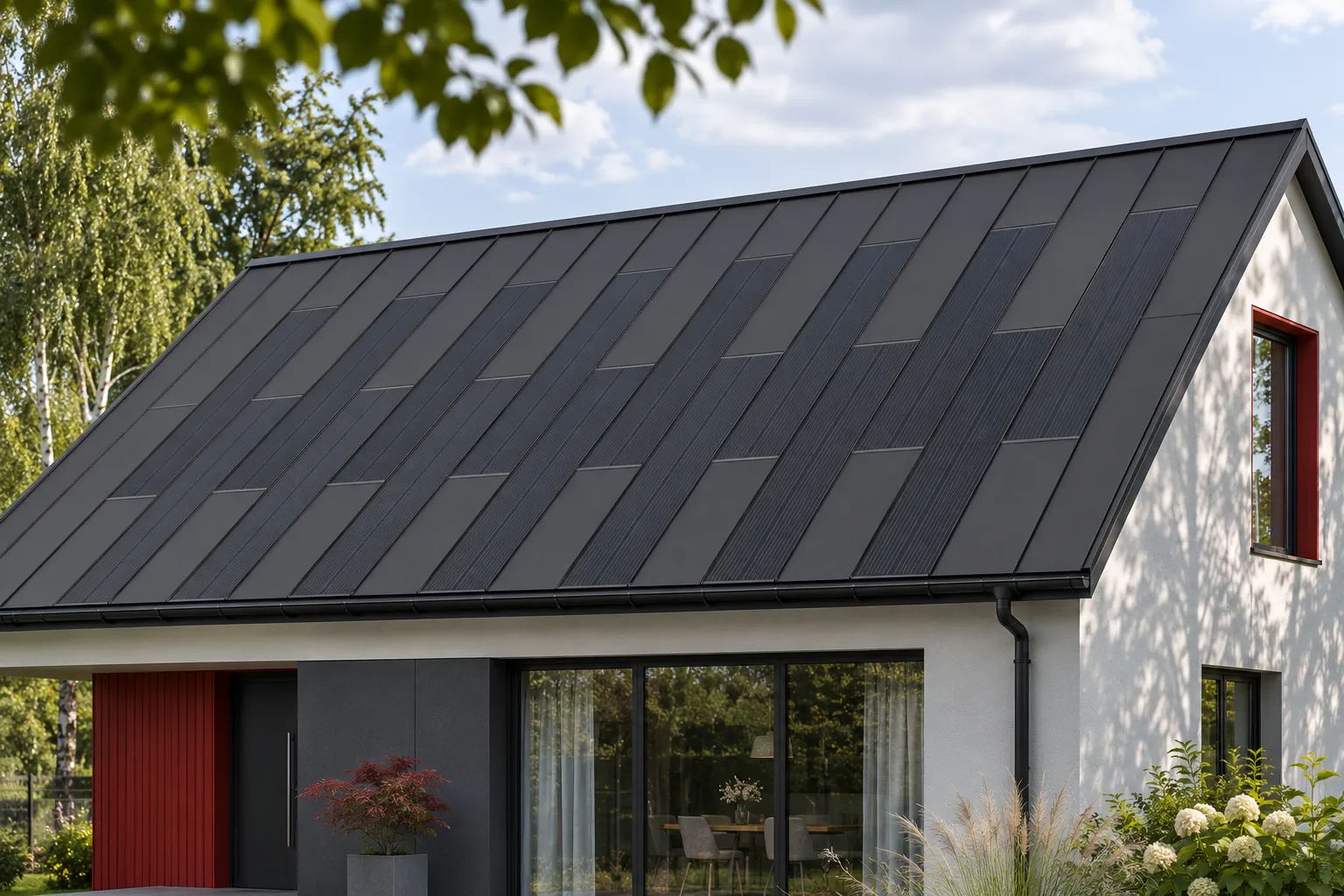
Not every section of an integrated roof has to contain cells. The active part produces energy, while passive elements complete the covering.…
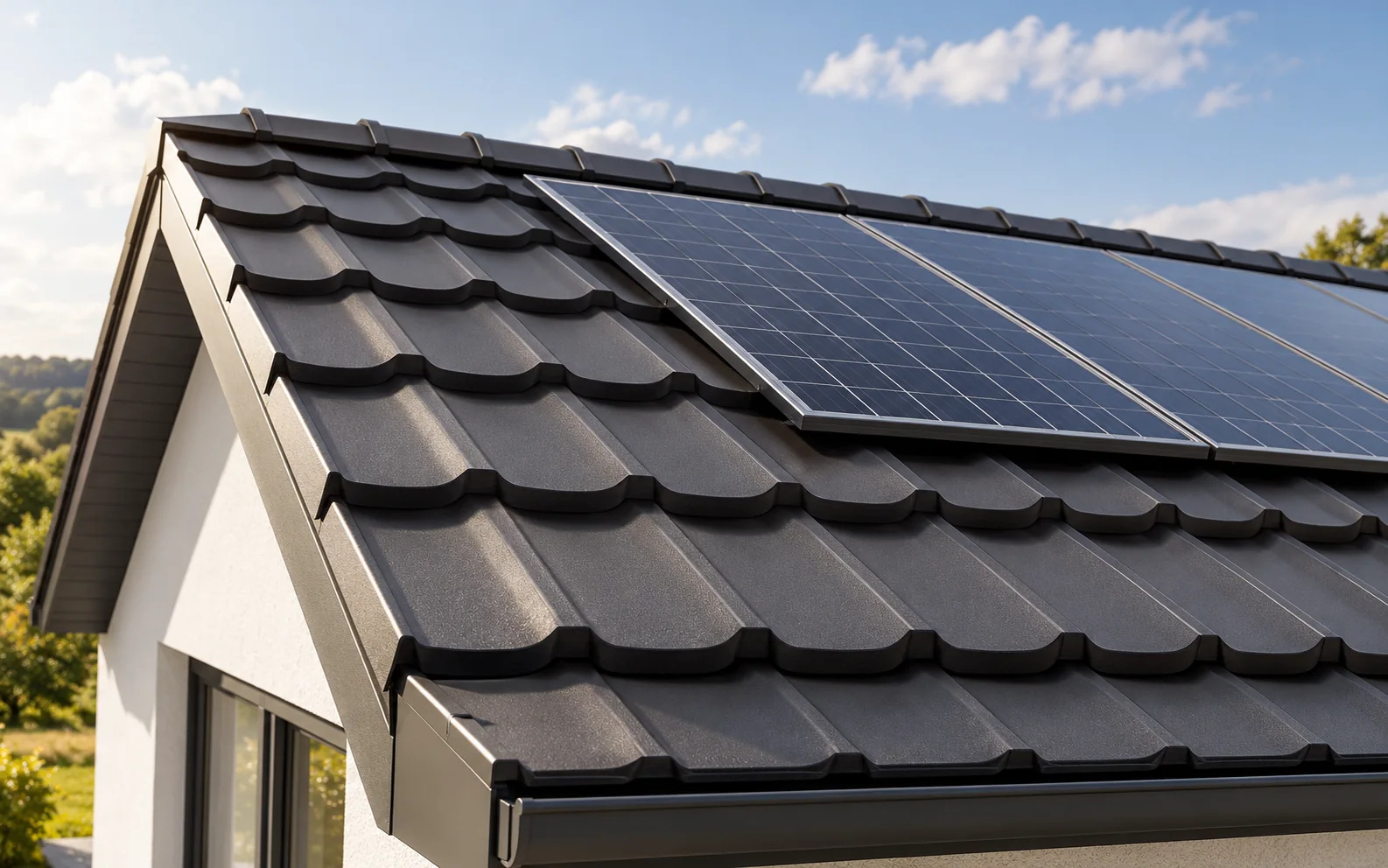
Photovoltaic panels on an existing metal roof require fixings that have been verified for exactly the sheet or sandwich panel installed on…
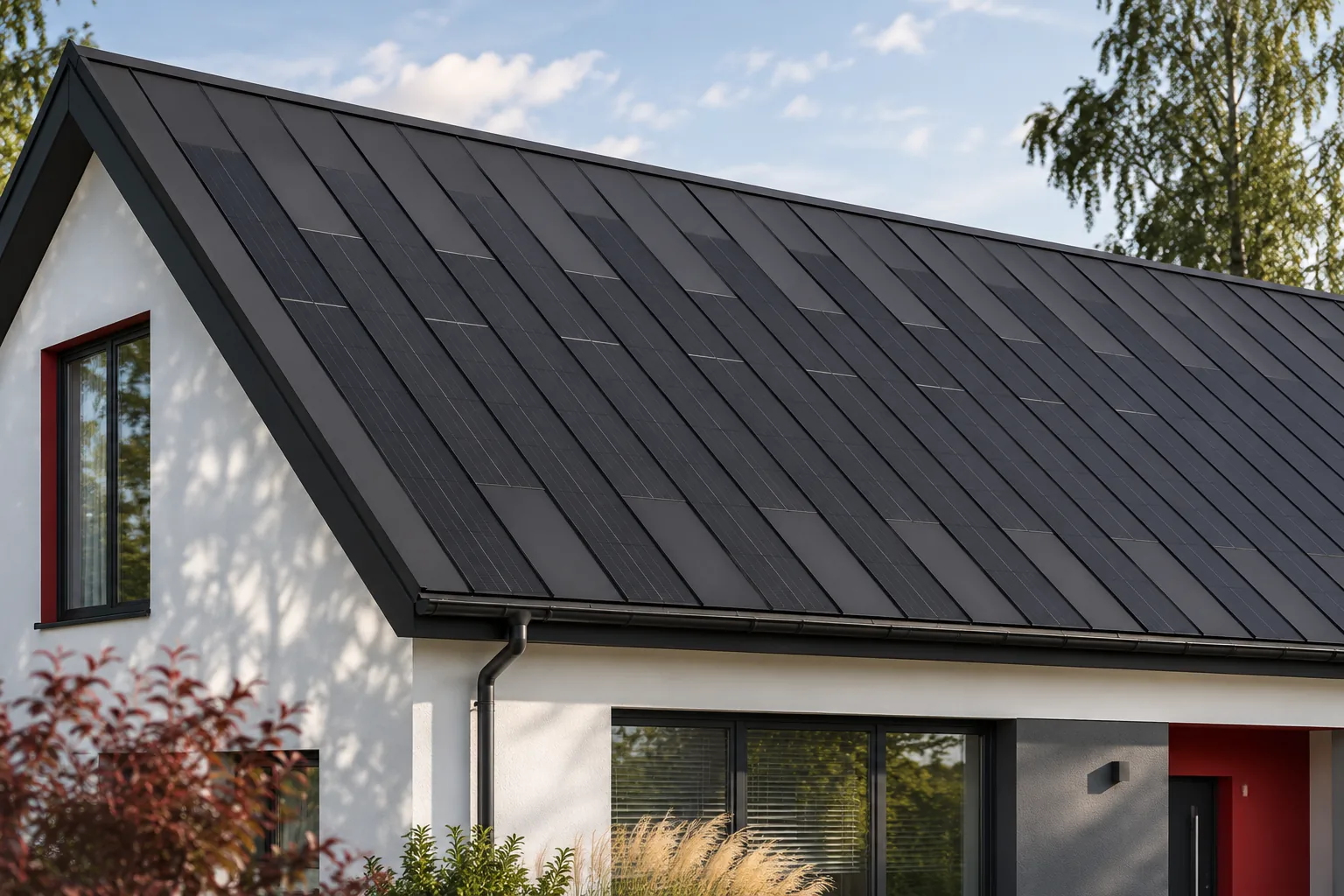
In an integrated photovoltaic roof, a single system performs both the covering and the energy-generation function. This can avoid some of the…
Photovoltaics can generate energy even under a cloudy sky, because it also uses diffuse light. Production will, however, depend on the amount…
An energy storage system is not a prerequisite for a grid-connected photovoltaic roof. It can, however, help to use part of the…