

Installation and details
How to store metal roof tiles before installation
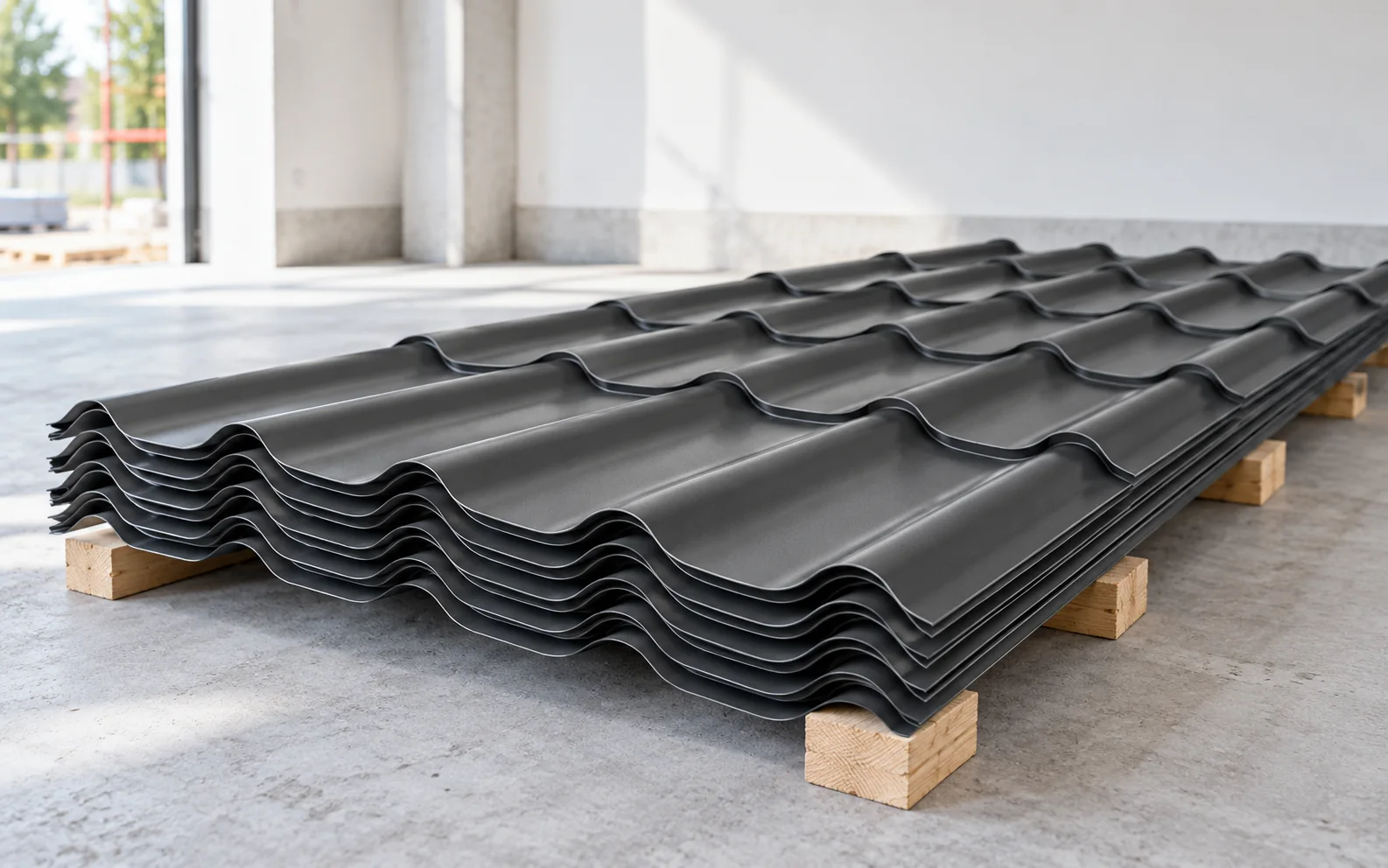
Tile-effect metal roofing must be protected from water trapped between the sheets, from scratching and from deformation. The transport packaging is no substitute for a dry store. It is safest to schedule delivery close to the installation date, and to check the unpacking method and the permissible storage time in the instructions for the purchased product. The pack should be placed on stable, level ground and on supports matching its length. Do not place it directly on the ground. Moisture from the ground and uneven support can damage the sheet metal even before the first cut. The location must allow safe unloading without dragging the sheets. Choose a space sheltered from precipitation, with the possibility of air exchange. Avoid proximity to fresh mortar, dusty materials and chemical substances.
In this article
Where should the delivery area be prepared?
The pack should be placed on stable, level ground and on supports matching its length. Do not place it directly on the ground. Moisture from the ground and uneven support can damage the sheet metal even before the first cut. The location must allow safe unloading without dragging the sheets.
Choose a space sheltered from precipitation, with the possibility of air exchange. Avoid proximity to fresh mortar, dusty materials and chemical substances. During masonry work, the sheet metal can easily be splashed. Dried mortar is not ordinary dust that can always be removed without a trace.
Why can a closed pack become damp?
Water gets between the sheets through precipitation, damaged packaging or condensation of vapour. In a tight stack it dries slowly. A tight cover over a wet pack can therefore make the situation worse. From the outside the sheet metal looks dry, while moisture remains in places of contact that are invisible without separating the sheets.
Prolonged dampness encourages damage to the protective layers. One should not wait until the day of installation to react. If the delivery is wet, the method of separating and drying the elements specified by the manufacturer must be used. Simply moving the whole pack under a roof may not be enough.
What should be done after receiving the goods?
Check the condition of the packaging, the number of elements and the order markings. Inspect the accessible edges for bends and signs of impact. It is worth documenting transport damage with photographs during unloading. Keep the labels, as they help later to determine the coating variant and the material batch.
Determine whether the pack is to be unpacked immediately or may wait in the form in which it was received. The instructions for the specific product decide the permissible storage time and conditions. Do not copy the time limit from another tile-effect metal roofing product. Different packaging and protections may require different handling.
How should long sheets be carried?
A long sheet needs an appropriate number of people and support during lifting. Gripping only by the ends can lead to permanent bending. Sheets must not be dragged over one another, because fine sand between them acts as an abrasive. Gloves should be clean and protect against sharp edges.
The way of gripping depends on the profile, length and the supplier’s recommendations. Do not lift the whole stack with random straps without proper supports. Unloading by crane or forklift must be planned before the vehicle arrives. Particularly long elements require space for manoeuvring, not just a free patch of yard.

Can the protective film be left on until the end of construction?
The film on the surface serves a specific stage of transport and installation. Prolonged exposure to the sun can make it difficult to remove. One should not assume that the longer it remains on the sheet metal, the better it will protect the coating. The deadline for removing the film follows from the documentation for the specific sheet.
Do not close fragments of film under overlaps or flashings. They can trap dirt and make it difficult to finish the joint. Remove it under the conditions recommended for the given product. If adhesive remains on the surface, do not immediately reach for a strong solvent. First establish the permitted cleaning method.
How does storing modules differ?
Smaller modules are easier to carry, but they are not resistant to crushing or point loads. Do not treat a pallet of tile-effect metal roofing as a table for tools or a base for other materials. The stack height and the method of support must correspond to the packaging. The edges of the interlocking joints must be protected in particular.
Also secure opened packs against strong wind. A single light element can be lifted off. Do not press it down with random weights that dent the profiling. The storage location should allow individual modules to be taken without scattering the whole batch on wet ground.
What should be done if installation is delayed?
Extending storage requires a reassessment of the conditions. Check that the cover does not leak, that no water stands under the pack and that the support has not settled. After a change in weather, look inside the packaging in accordance with the instructions. Protection that is good for one day does not have to be sufficient for several weeks.
If deposits, discolouration or damage to the paint have occurred, report them before laying the sheet metal. Do not aggressively polish the entire surface and do not paint over the problem blindly. Laying damaged sheets on the roof can make it difficult to assess the cause and to replace them. The material should first be inspected and classified.
A tip before ordering
On receipt, photograph the label, the packaging and the storage location. Record the delivery date and the film removal date specified for this batch. This simple information makes control easier if construction is delayed by several weeks.
What is worth remembering?
The greatest threat to stored sheet metal is long-standing moisture and incorrect carrying. A dry, well-ventilated store and correct support are more important than wrapping the pack tightly in another layer of film.
7 branches. Materials closer to your project.

Free quote
Materials for your project
You may also find useful…
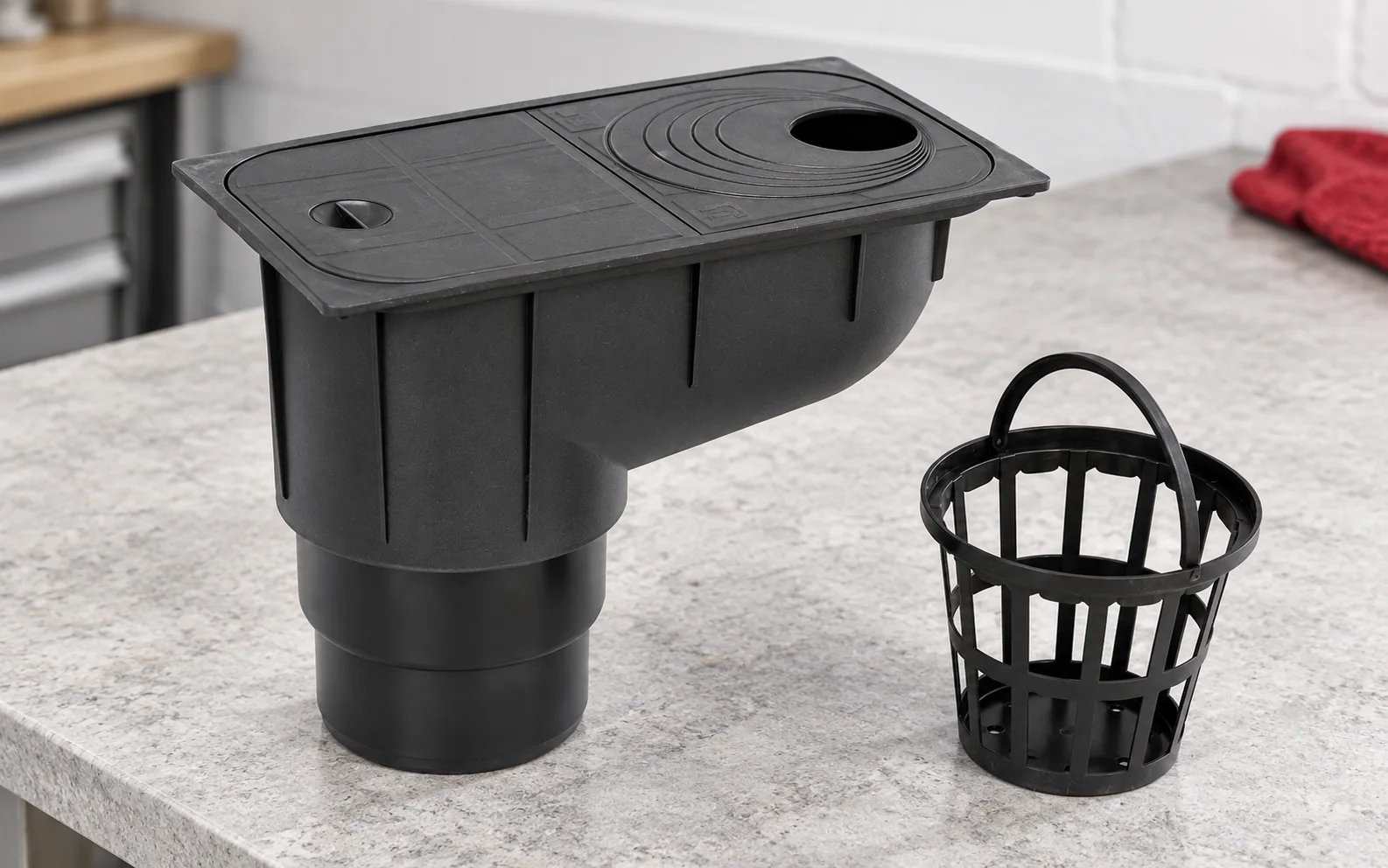
A rainwater gully (downpipe leaf catcher) is usually installed at the lower end of the downpipe so that its basket captures leaves…
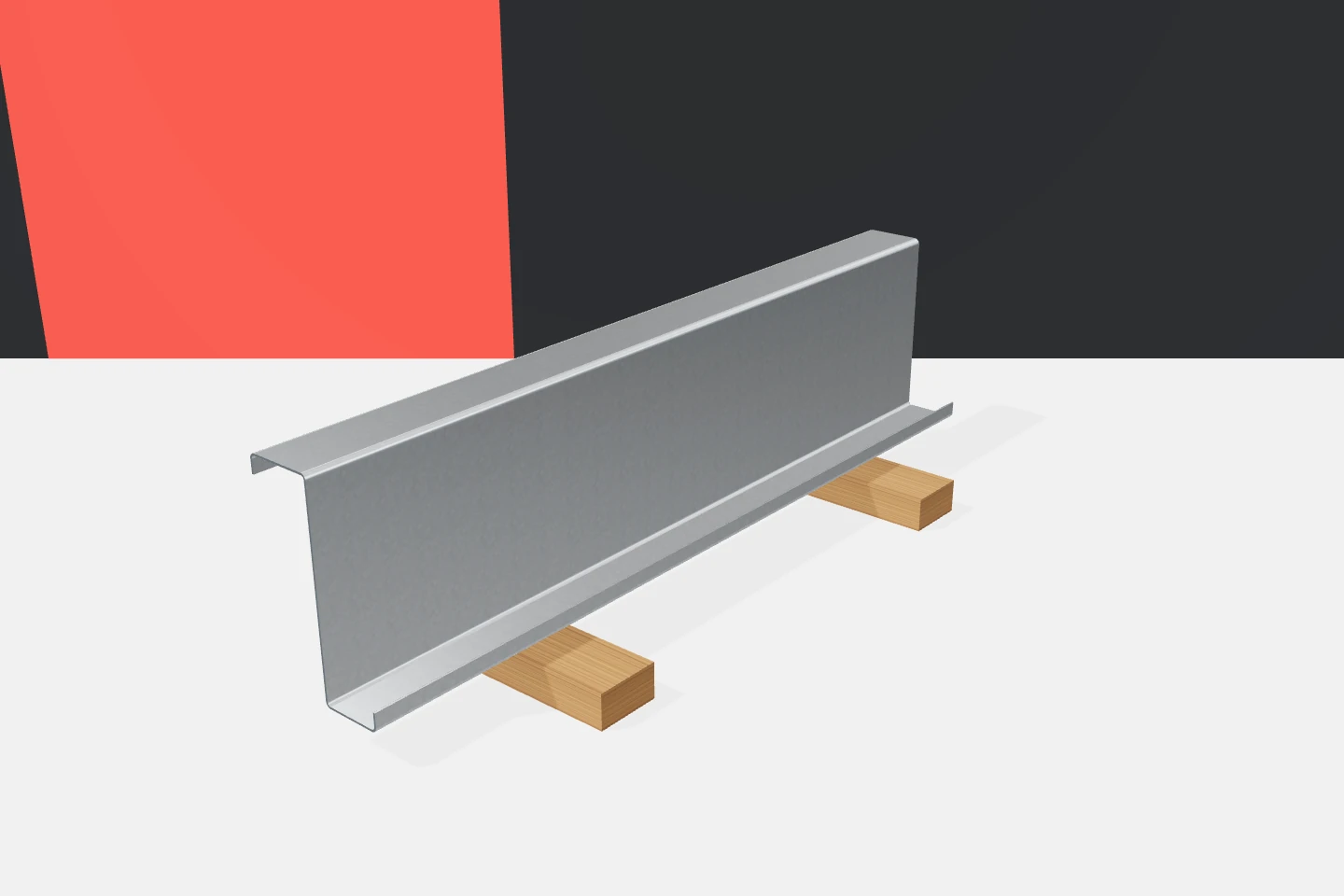
Smooth installation starts before the first beam is lifted. The structural layout, the marking of elements and the required connections must be…
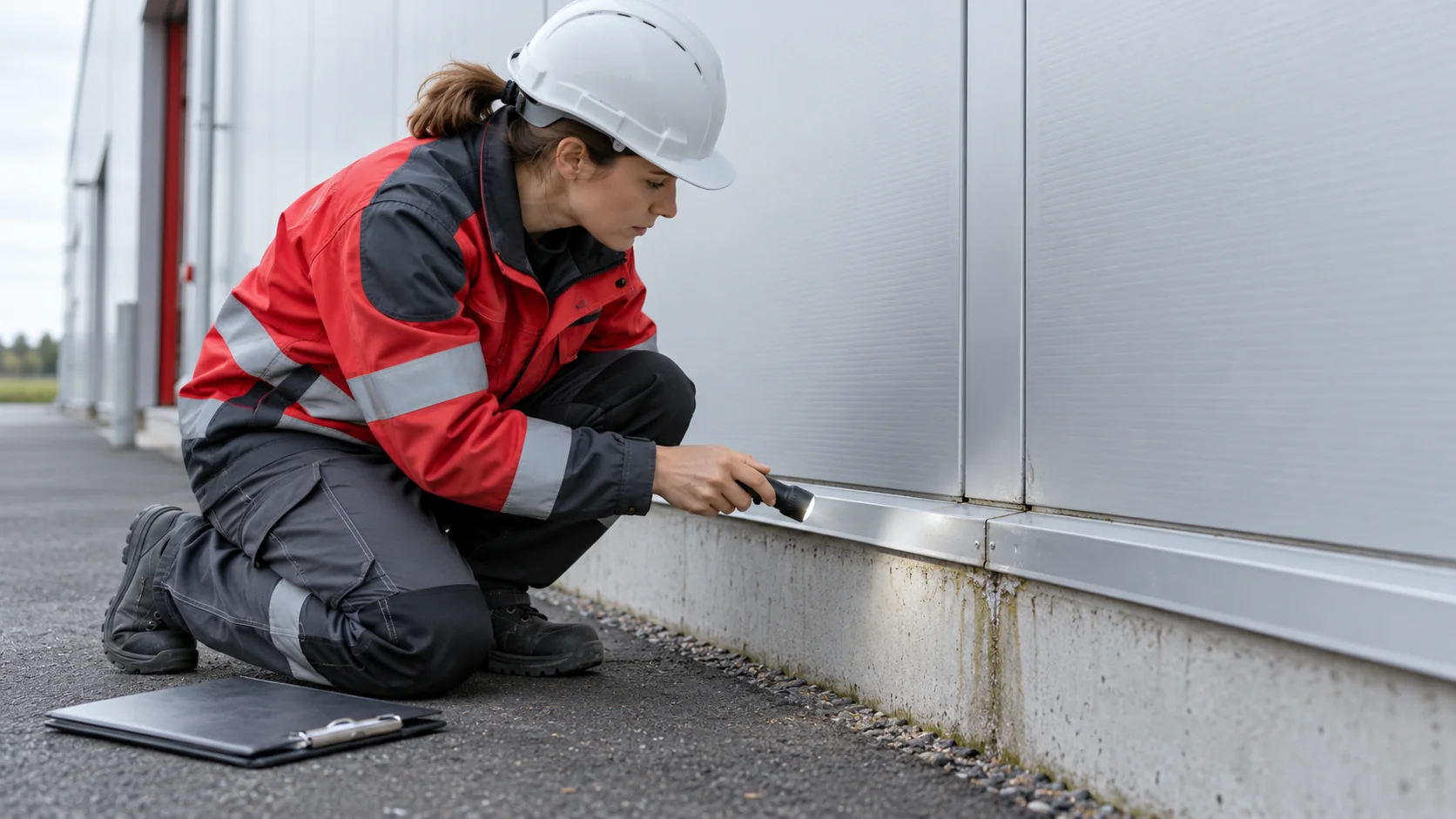
The first heavy rain, a spell of frost or a thorough washdown can reveal faults that were invisible when a sandwich panel…
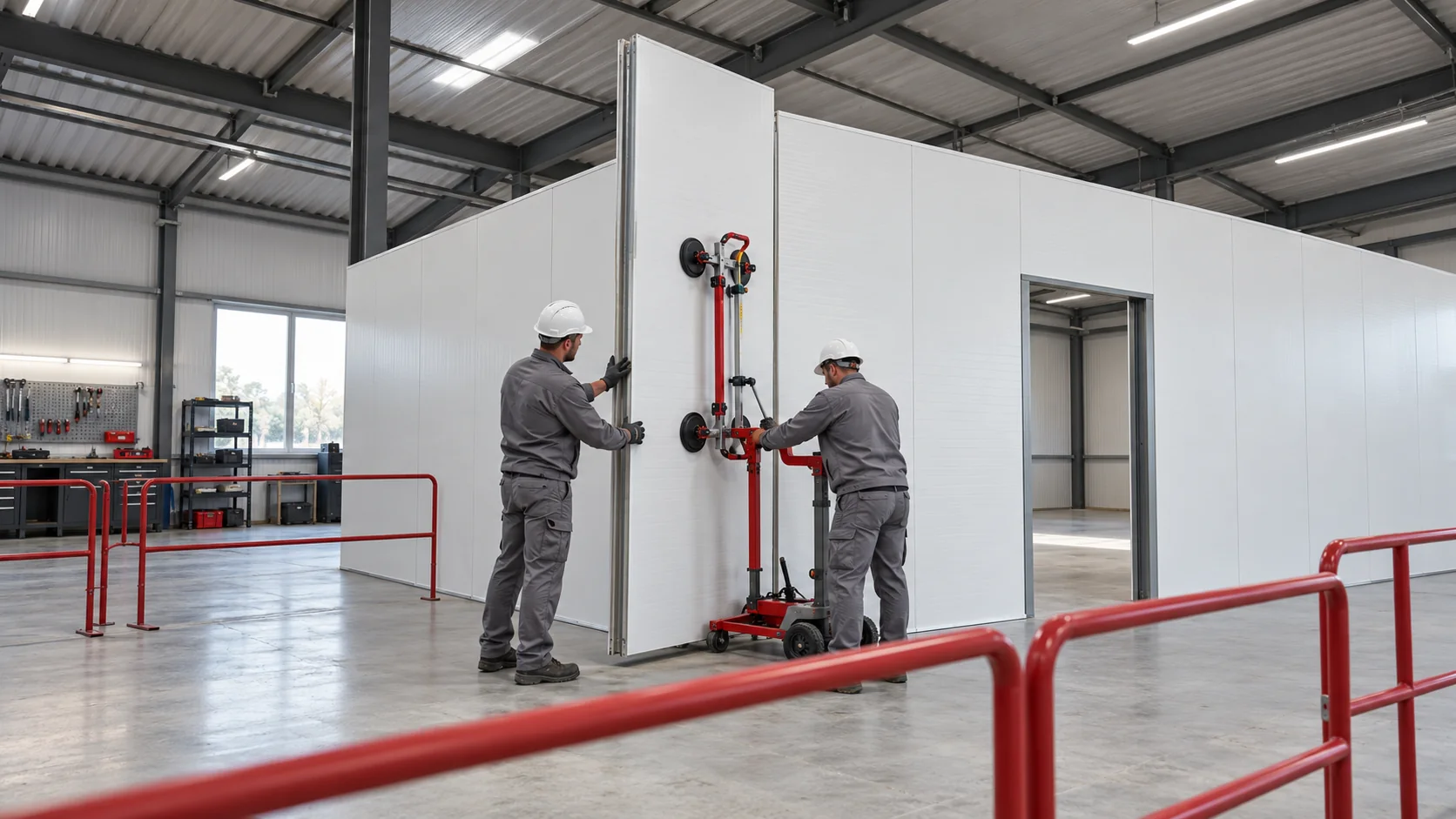
Plan the corners, openings and service penetrations before measuring for sandwich panels. Agree who will erect the frame, fit the panels, install…
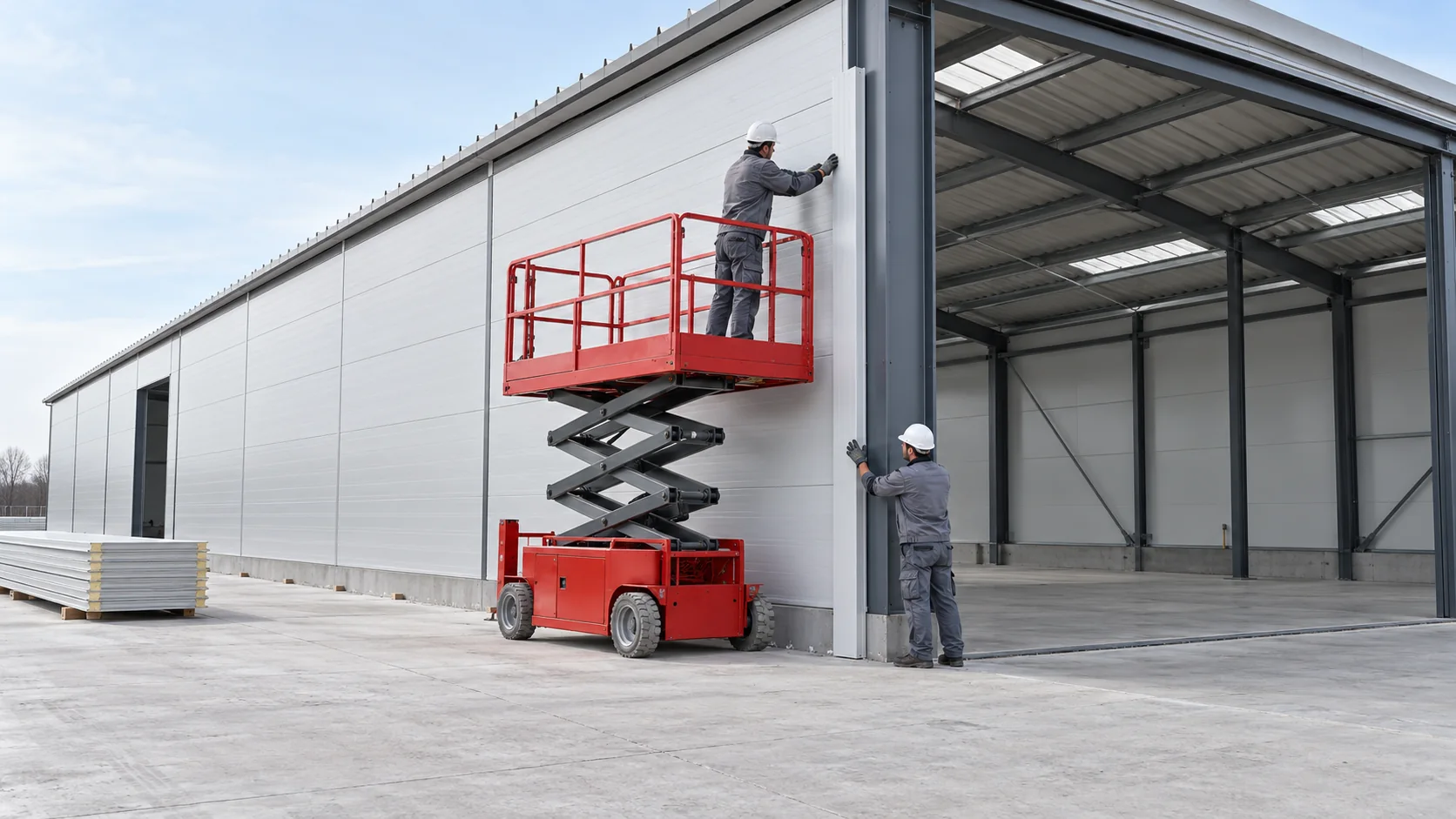
A rate per square metre for installing sandwich panels means little until you know which jobs it covers. One contractor may quote…
Before the roof panels arrive, check the purlin positions, bearing widths, alignment and roof pitch. Confirm the support spacing against the design…
Effective roof drainage starts with identifying which roof slopes, valleys and dormers will deliver water to each gutter run, not with the…
Installation of modular metal roof tiles begins with a level substructure, the correct layer sequence and a properly formed eaves zone. Only…