

Installation and details
Sizing gutters for a metal roof: from roof area to outlet
Gutters are selected primarily on the basis of the volume of water coming off the roof and the options for draining it away. The type of sheet metal affects the eaves detail but does not replace a performance calculation. The roof slope area, the arrangement of the outlets, the system material and access for cleaning must all be taken into account. The colour is best chosen once these conditions have been established. The dimensions of the roof slope, its pitch and the run of the eaves are required. A roof with the same area may direct water into one long gutter or into several shorter sections. What matters is the area from which water reaches a particular outlet. The floor plan of the house does not describe this sufficiently. The selection should take into account the rainfall intensity appropriate to the calculation adopted and the layout of the building.
In this article
What data should the selection start from?
The dimensions of the roof slope, its pitch and the run of the eaves are needed. A roof of the same area may direct water into one long gutter or into several shorter sections. What matters is the area from which water reaches a particular outlet. The floor plan of the house does not describe this sufficiently.
The selection should take into account the rainfall intensity appropriate to the calculation adopted and the layout of the building. A manufacturer’s calculator can help if you enter the data correctly. A result from a neighbouring house should not be transferred without checking. A different gutter length and downpipe position can change the flow conditions.
Why is the position of the downpipe just as important as its size?
An outlet at the end of a section collects water differently from an outlet located closer to the middle. Corners, joints and local narrowings also matter. Enlarging the gutter alone does not fix every unfavourable geometry. Sometimes an additional outlet or a different division of the drained area is more sensible.
The downpipe must be led to a suitable water intake. It should not end in such a way that it constantly floods the foundation or a passageway. How rainwater is managed further must be established in the site development plan. A tank, a drainage installation and the terrain each have their limitations, which affect the whole system.
Steel or plastic?
Steel can provide a consistent appearance with the metal covering and good rigidity of the components. It requires appropriate corrosion protection and preservation of the coating during installation. PVC does not corrode like steel, but has different thermal expansion and its own requirements for jointing. Both materials require correct support.
Do not choose solely on the basis of a general opinion about durability. Check the documentation for the specific system, the environment and the availability of parts. The possibility of repair after local damage is also important. Gutters and connectors from two seemingly similar systems do not necessarily fit each other.
How do you match the shape to the building?
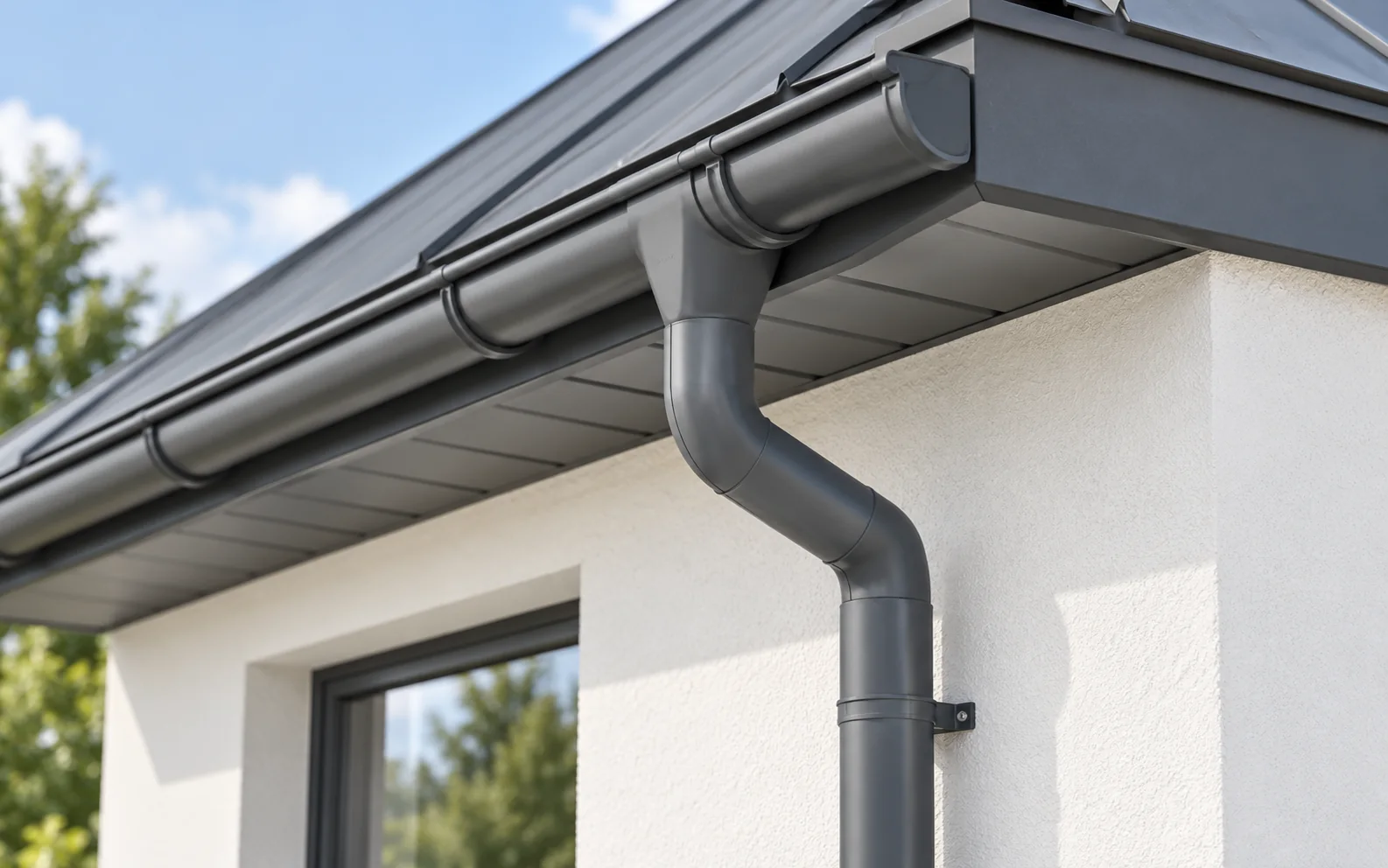
A half-round gutter gives a gentler line, while a square one emphasises the eaves more strongly. Both can suit trapezoidal steel sheet and tile-effect metal roofing. The shape must, however, be set against the required performance. A nominal size does not always mean a comparable cross-section or the same method of water discharge.
If you are considering a concealed system, take it into account before the façade is completed. Space, insulation, inspection access and safe discharge of excess water are needed. The cladding alone improves appearance but does not resolve these issues. In a renovation, a simple external system can reduce the scope of rebuilding.

What needs to be resolved at the eaves?
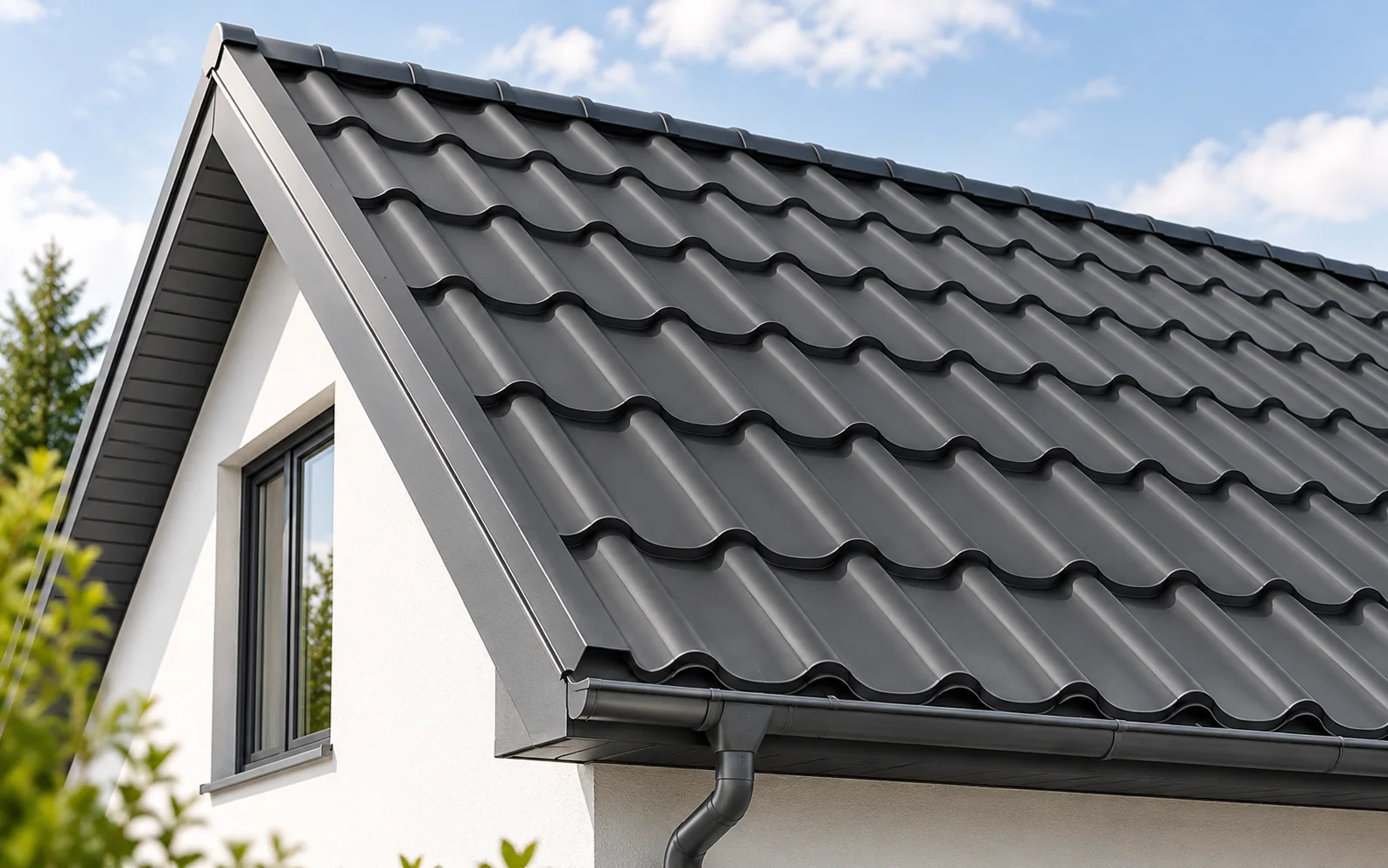
The edge of the sheet metal, the gutter apron and the gutter should work together. Water must not bypass the gutter or run onto the fascia board. The position of the covering is established for a specific profile. The start of tile-effect metal roofing looks different from the end of trapezoidal sheet or a standing-seam panel.
Water from the underlay must also be drained away and the ventilation inlet kept clear. It must not be covered by the gutter or flashing without a substitute solution in accordance with the design. A good eaves detail serves both drainage and air flow. Assessing these functions separately often leads to conflicts.
How do you plan cleaning and winter operation?
A roof among trees requires leaves and seeds to be taken into account. Guards can reduce some of the debris but do not create a maintenance-free system. Gutters and outlets must be checked periodically. Access to them should be possible without leaning out dangerously and without loading components that are not intended for it.
Accumulated snow and ice can load the drainage system. Where necessary, appropriately designed snow guards are used. The gutter is not a device for retaining sliding snow. A heating system, if any, also requires dimensioning and does not replace clear flow or correct installation.
What should a complete quote contain?
In addition to gutter sections and downpipes, include brackets, clamps, outlets, bends, corners, end caps and connectors. A concealed system adds further cladding and inspection components. The quantities should follow from the building drawing. Only then can two quotes with a similar scope be compared.
Also check the transport price, colour availability and the method of connecting to the existing drainage. When replacing a section, do not assume compatibility on the basis of a photograph. It is worth keeping a record of the system and size. This way, a later purchase of a small connector does not become a search for a random equivalent.
A tip before ordering
Prepare a sketch with the lengths of all eaves and mark the planned downpipe positions. Note where the water from each downpipe is to go. Without this information, even a well-chosen diameter will not ensure efficient drainage of the whole building.
What is worth remembering?
Gutters for a metal roof are chosen as a complete system from the roof slope to the water intake. Performance, the position of the outlets and the eaves detail take precedence over shape. Once these are established, it is easier to choose a material and colour to suit the building.
7 branches. Materials closer to your project.

Free quote
Materials for your project



You may also find useful…
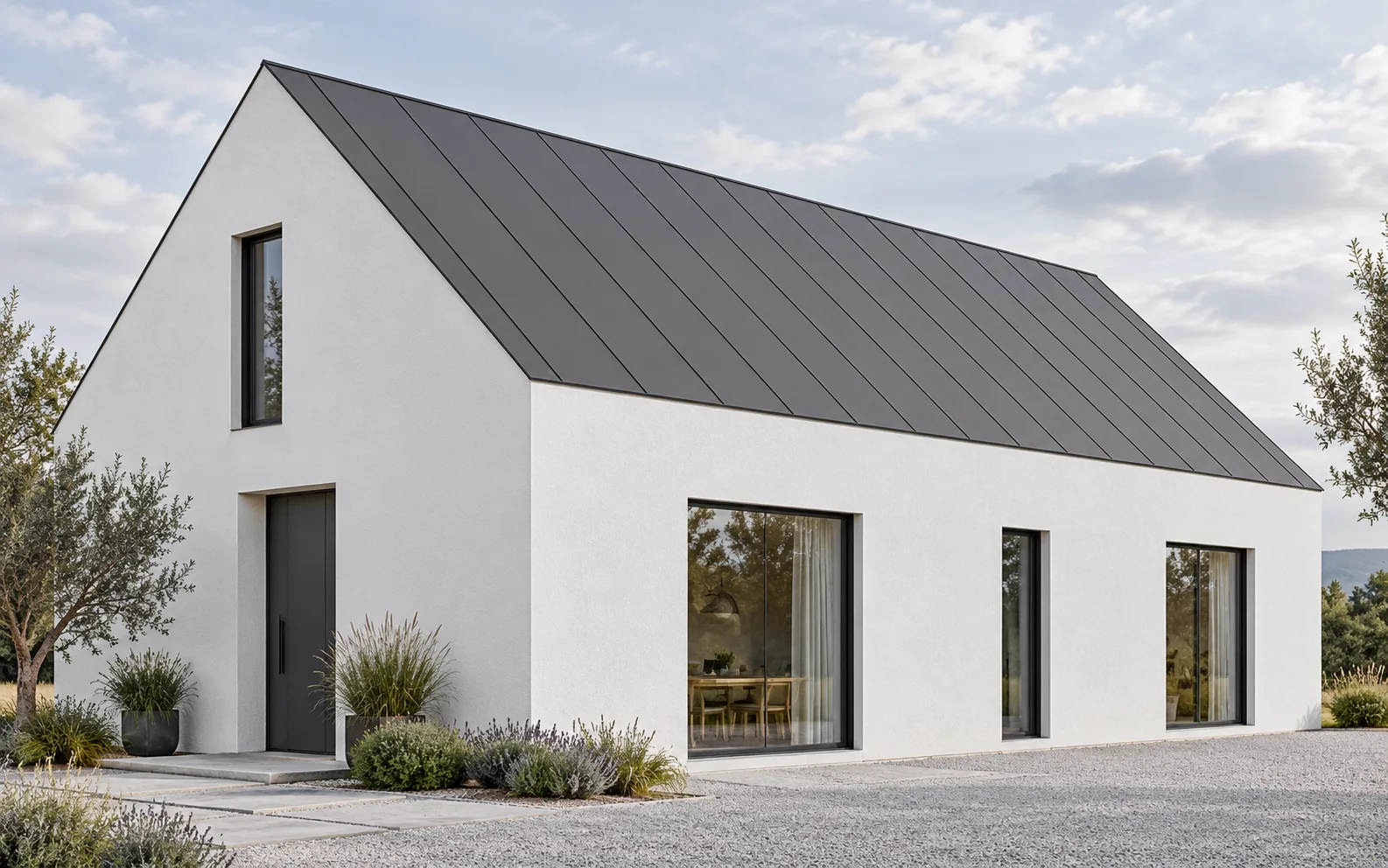
A roof without eaves creates a compact volume but places greater demands on the detail at the wall. Drainage, insulation and any…
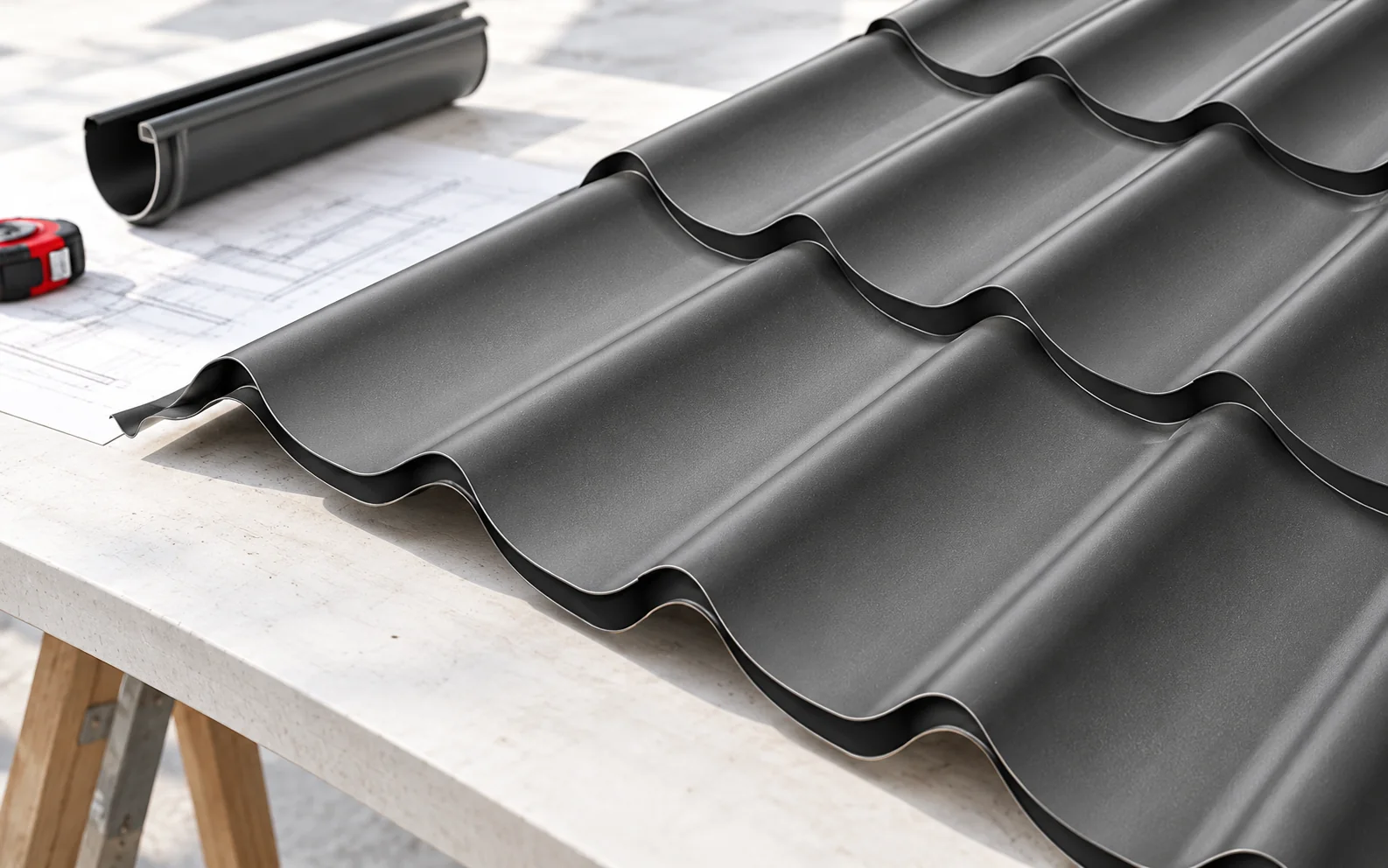
Effective roof drainage starts with identifying which roof slopes, valleys and dormers will deliver water to each gutter run, not with the…
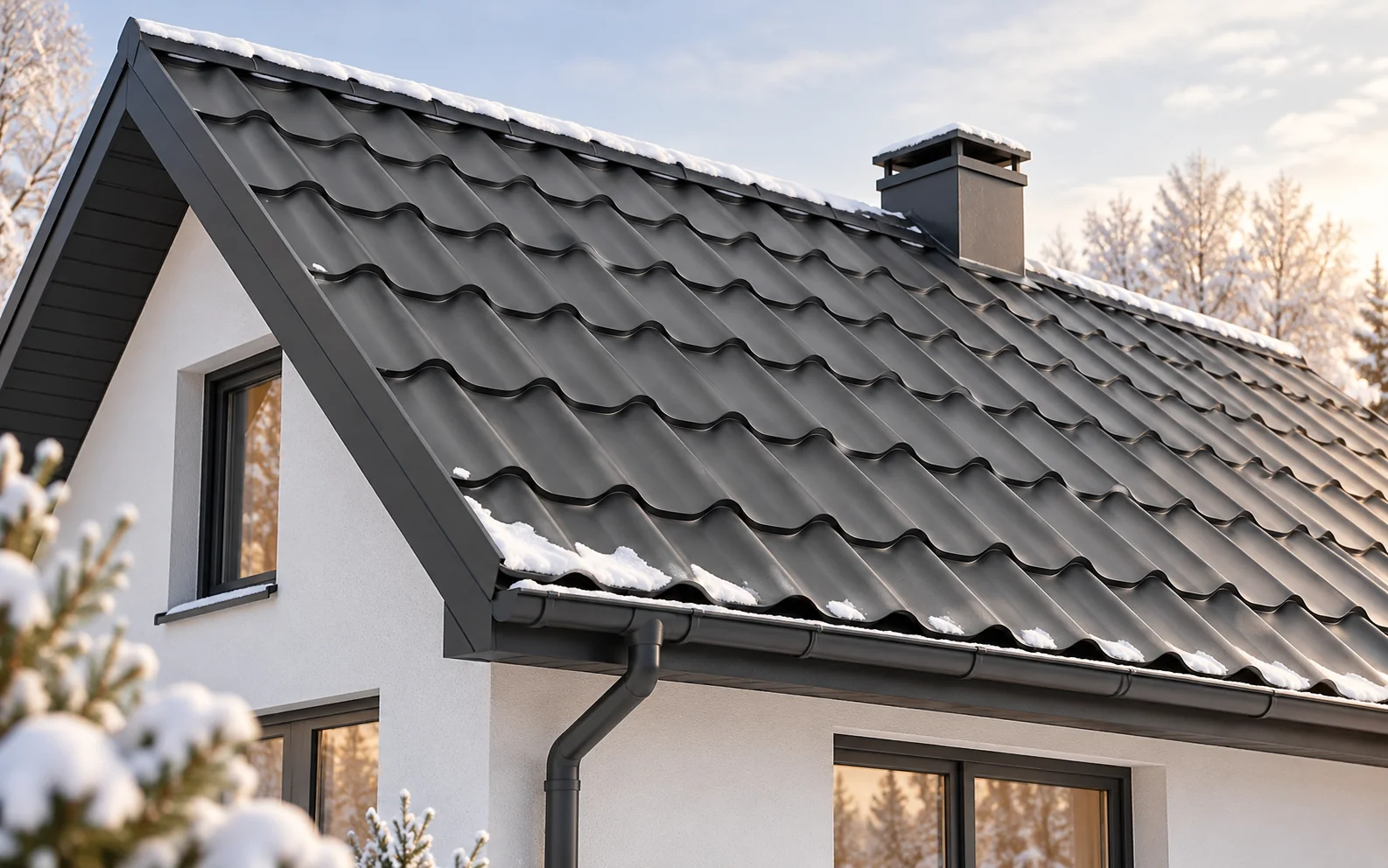
Preparing a roof for winter covers three areas: drainage, the safety of components and moisture control beneath the covering. The response to…
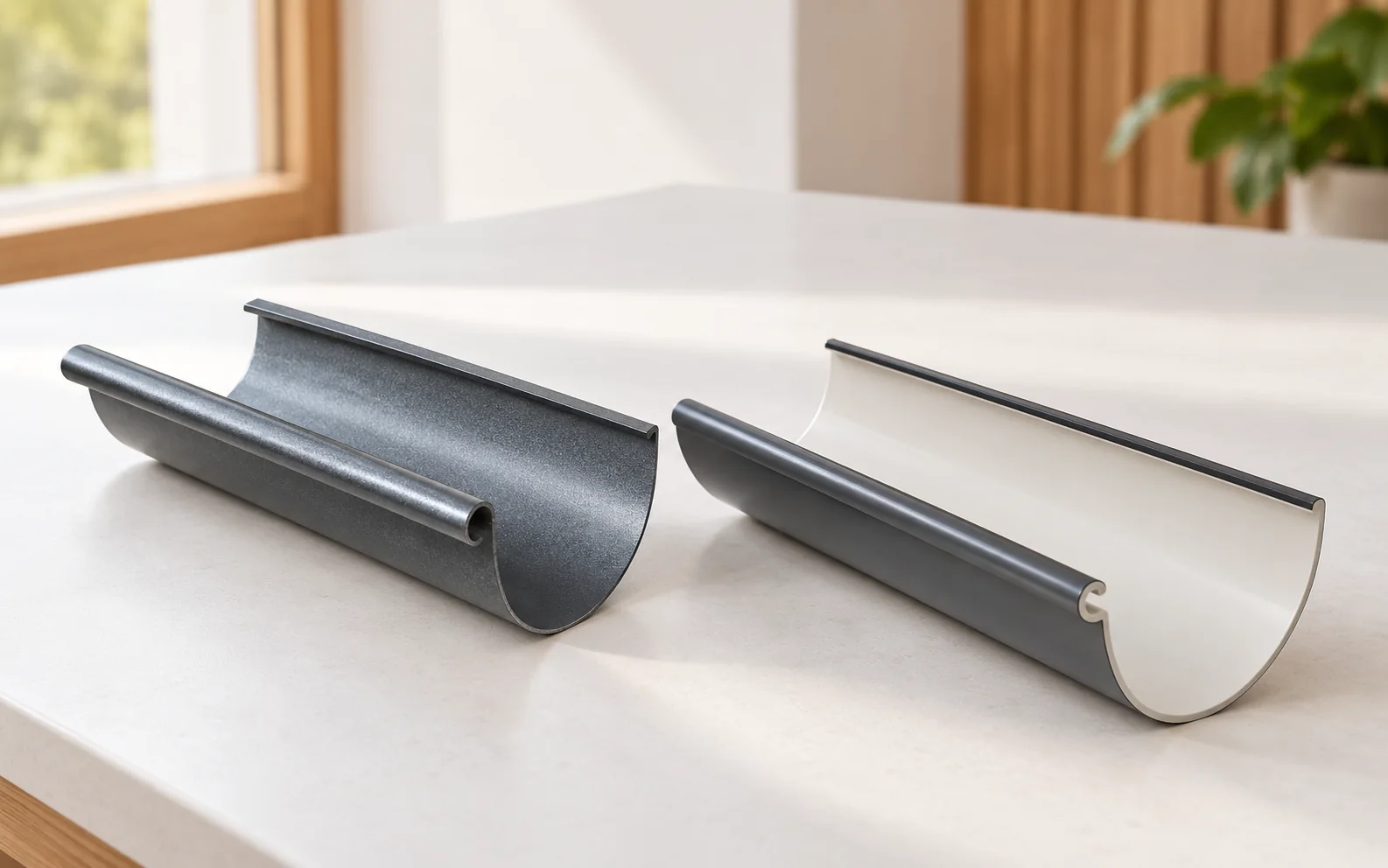
Steel and PVC gutters can drain a roof correctly if they are selected as a complete system. They differ in rigidity, thermal…
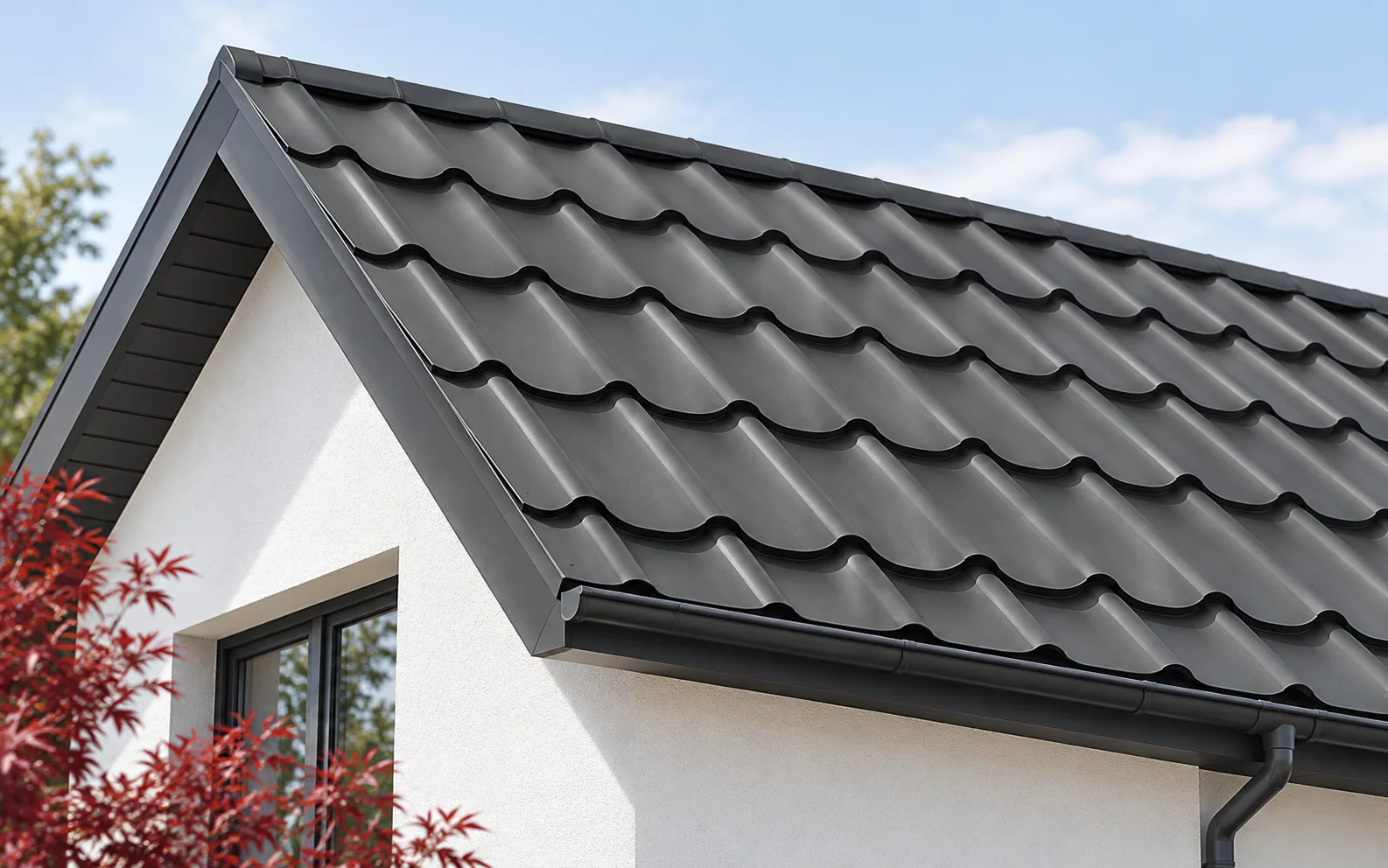
It is worth deciding the roof colour in parallel with the façade, joinery and rainwater system, because a large roof slope, matt…

Snow guards and snow fences serve different purposes. Point elements help to distribute and slow down the sliding mass, while linear barriers…
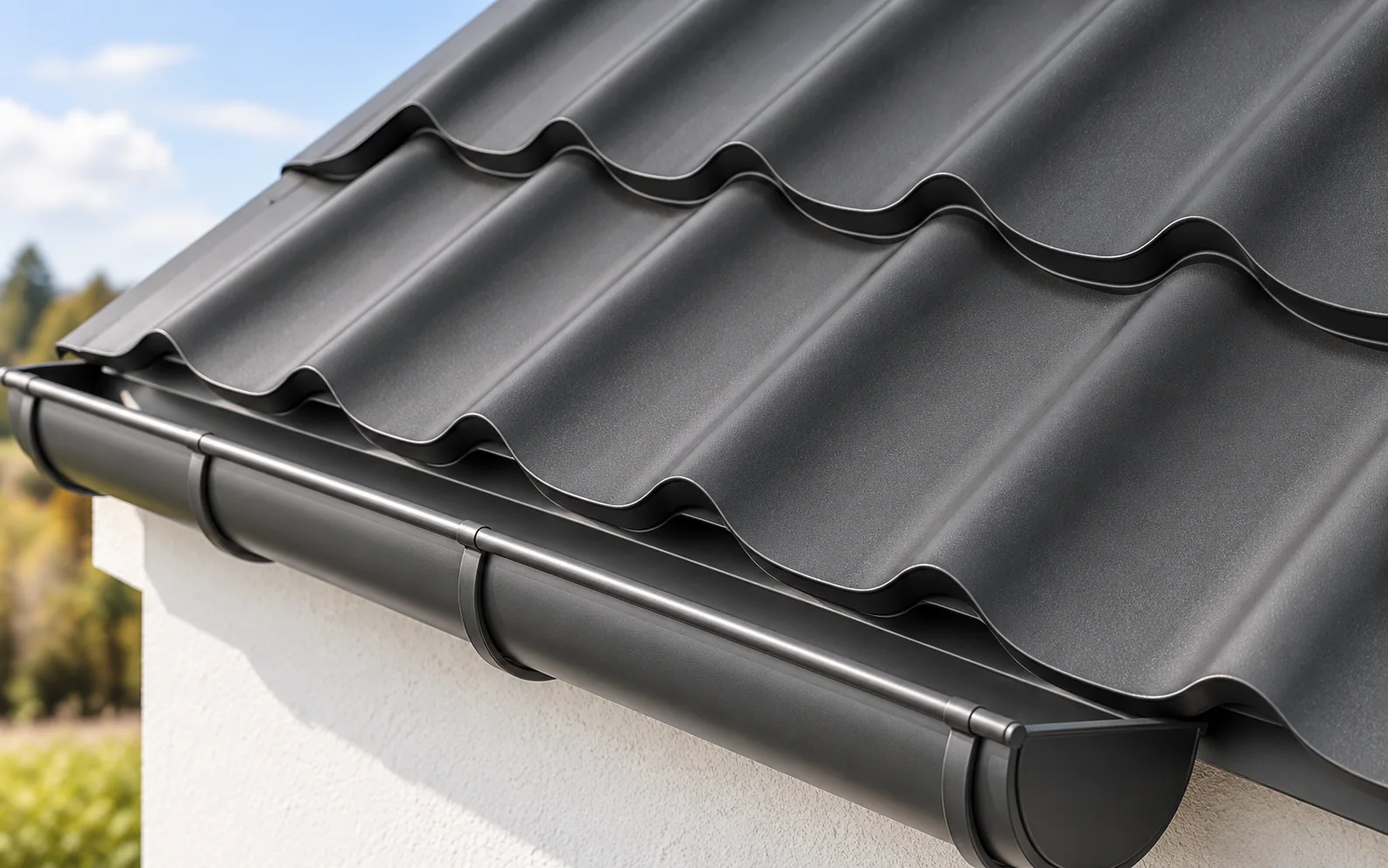
Vacuuming can effectively remove leaves, but it does not confirm that the entire drainage system is clear. Before winter, the connections, brackets,…
To budget for a roof in 2026, mark on the drawings where the quotation starts and ends. Installing a covering on an…