

Prices and purchasing
Metal roofing or another covering: how to compare the full cost
The cost of a roof depends on the complete assembly. Compare quotations for the same roof geometry and scope of work, taking account of effective cover, waste, the substrate, flashings, labour and delivery. Sheet metal can be economical, but the unit shown in the price list matters. A supplier may quote per square metre of total sheet area, per square metre of cover or per module. Overlaps consume material without increasing the area covered. Start by putting all rates on the same basis. In the worked example, the sheet costs €11.57 excluding VAT per square metre of total sheet area.
In this article
What exactly does the quoted price cover?
A price list may quote a rate per gross square metre, per effective square metre or per module. These are different units. Part of the sheet is lost at the factory and does not increase the covered area. The price of the material alone also does not automatically include accessories, transport or labour. The data must be standardised first.
Assume a net sheet price of €11.57 per square metre of total sheet area. A sheet with an overall width of 1.17 m and a cover width of 1.10 m costs approximately €12.31 excluding VAT per square metre of cover. The calculation is 11.57 × 1.17 ÷ 1.10. It excludes end laps, waste and tax. These figures illustrate the calculation and are not a sales offer.
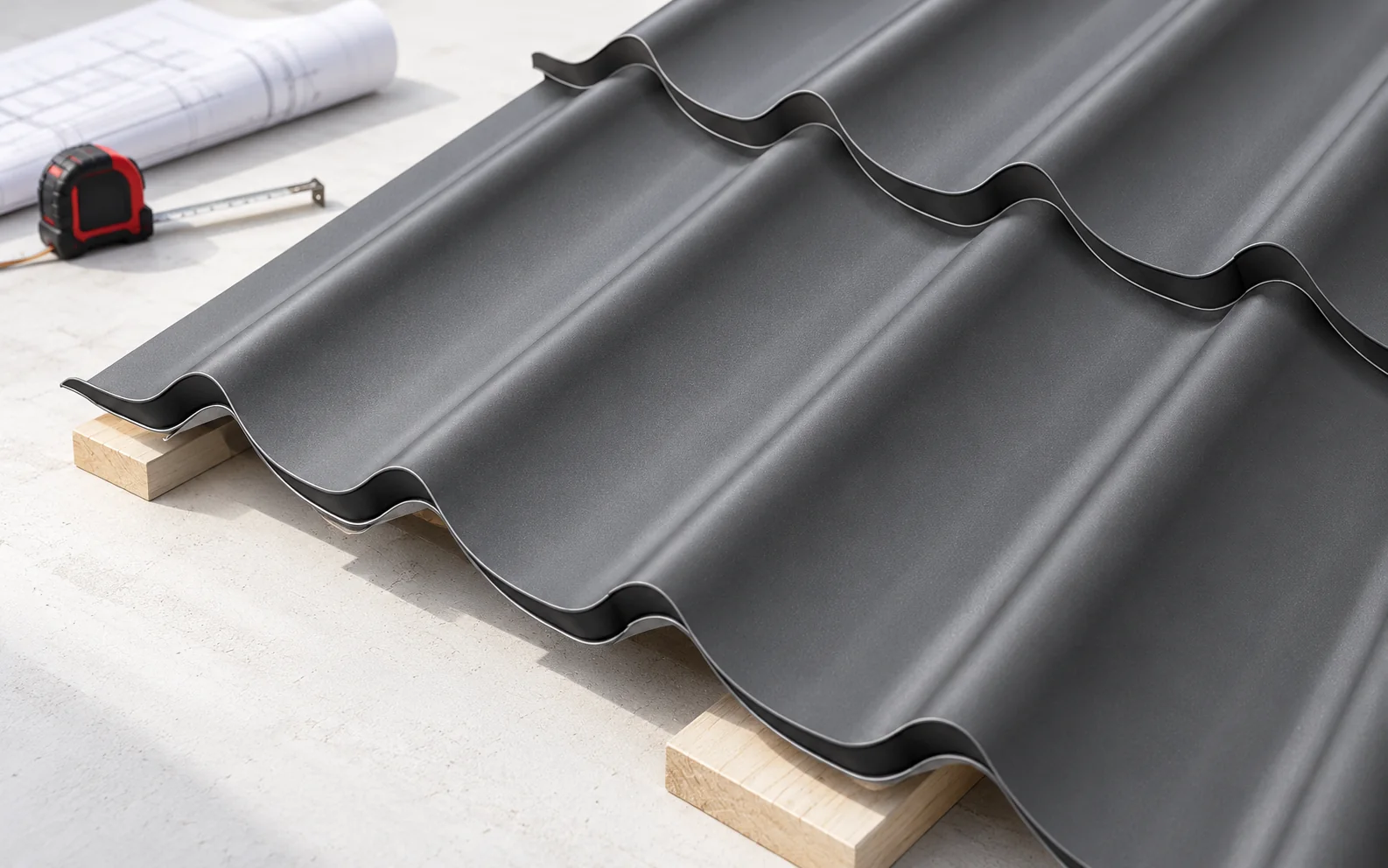
How to compare trapezoidal sheet with tile-effect metal roofing?
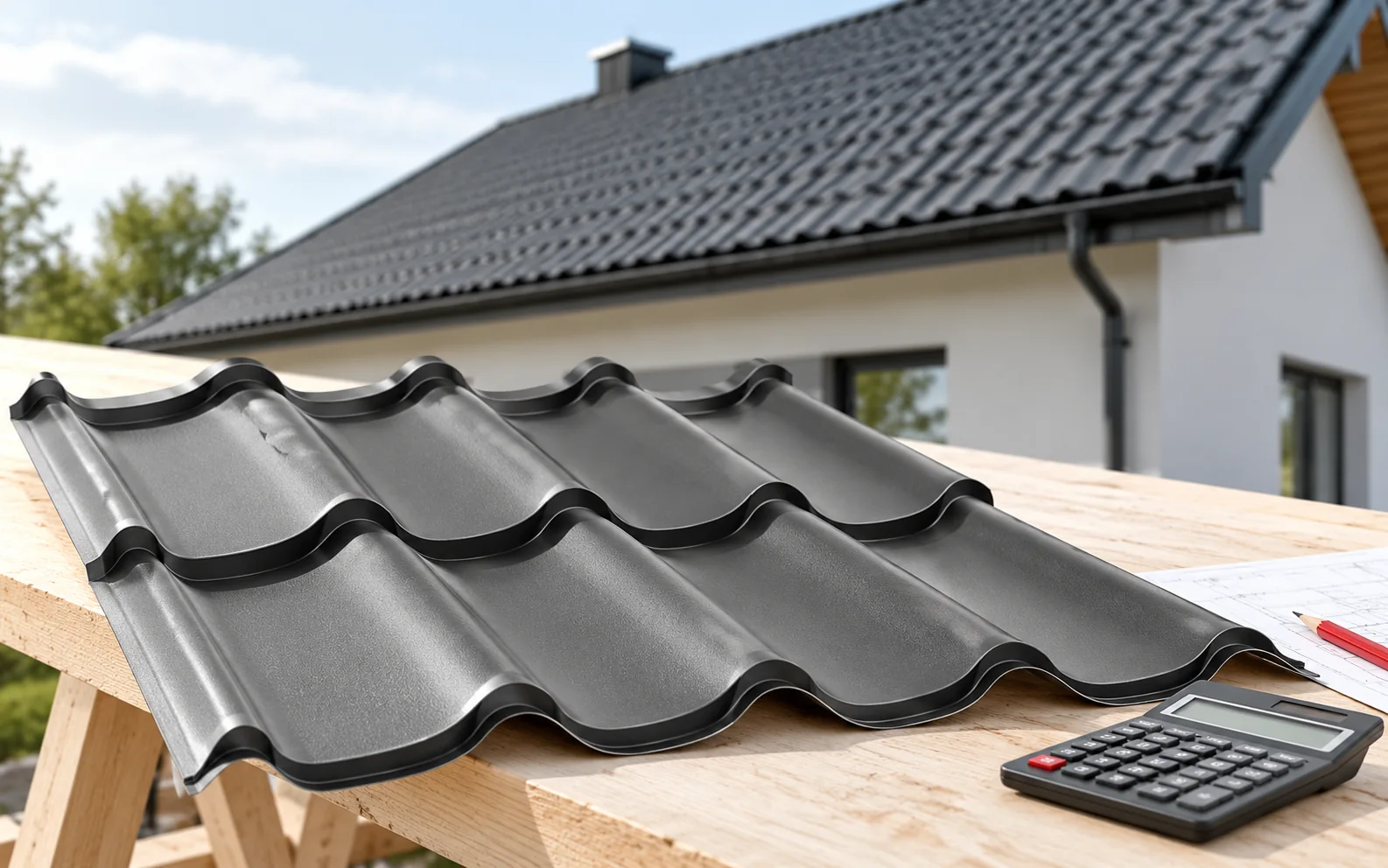
Trapezoidal sheet T18 or T35 and tile-effect metal roofing may differ in steel thickness, coating and coverage width. Comparing the cheapest thin sheet with a better-protected material says little about the cost of an equivalent solution. In both variants, suitability for the roof and the environmental conditions must be checked.
The supporting structure also matters. A different profile may require a different support spacing, but this must not be determined on the basis of the rib height alone. Loads and documentation are taken into account. A saving on the sheet may be partly offset by the cost of the substrate, fasteners or more labour-intensive details.
When does the sheet format affect the bill?
Tile-effect metal roofing cut to size can reduce the number of joints on a simple roof slope. However, long sheets require suitable transport and handling. On a complex roof, part of the ordered area ends up as offcuts. What matters is the cutting plan, not the roof slope area simply copied into the order.
Modules are more convenient where there are many changes of direction and can make it easier to manage components. This does not mean zero waste. Laps, cutting and restrictions on the use of cut-off pieces add up. The best comparison is two complete schedules for the same roof, prepared with the specific formats in mind.
How to compare metal with clay or concrete tiles?
Compare a complete system with the required parameters, including the correct edge and ventilation elements. Standard tiles may have an attractive price, while special pieces account for a different share of the costs. With metal, flashings, fasteners and accessories play a similar role. A comparison of two prices for the main material alone is incomplete.
The weight of the covering and the condition of the structure are important. In a renovation, a change to a heavier variant may require assessment and reinforcement. Lighter metal sheeting also does not exempt you from checking the roof structure and fastenings. Whether additional expense arises depends on the actual building, not on a general promise of savings.

What changes with standing seam or bituminous covering?
Comparing other technologies requires taking the appropriate substrate into account. Standing seam panels may have different requirements regarding flatness, separating layers and detailing. Bituminous covering also requires a designated supporting and base layer arrangement. A low price for the outer layer does not describe the entire build-up.
Likewise, a roof sandwich panel should not be compared directly with a single sheet of metal. The panel comprises metal facings and an insulating core, but requires matched supports, connections and flashings. Both variants must be brought to comparable thermal, fire and service requirements before the cost difference can be assessed.
Which items are most easily overlooked?
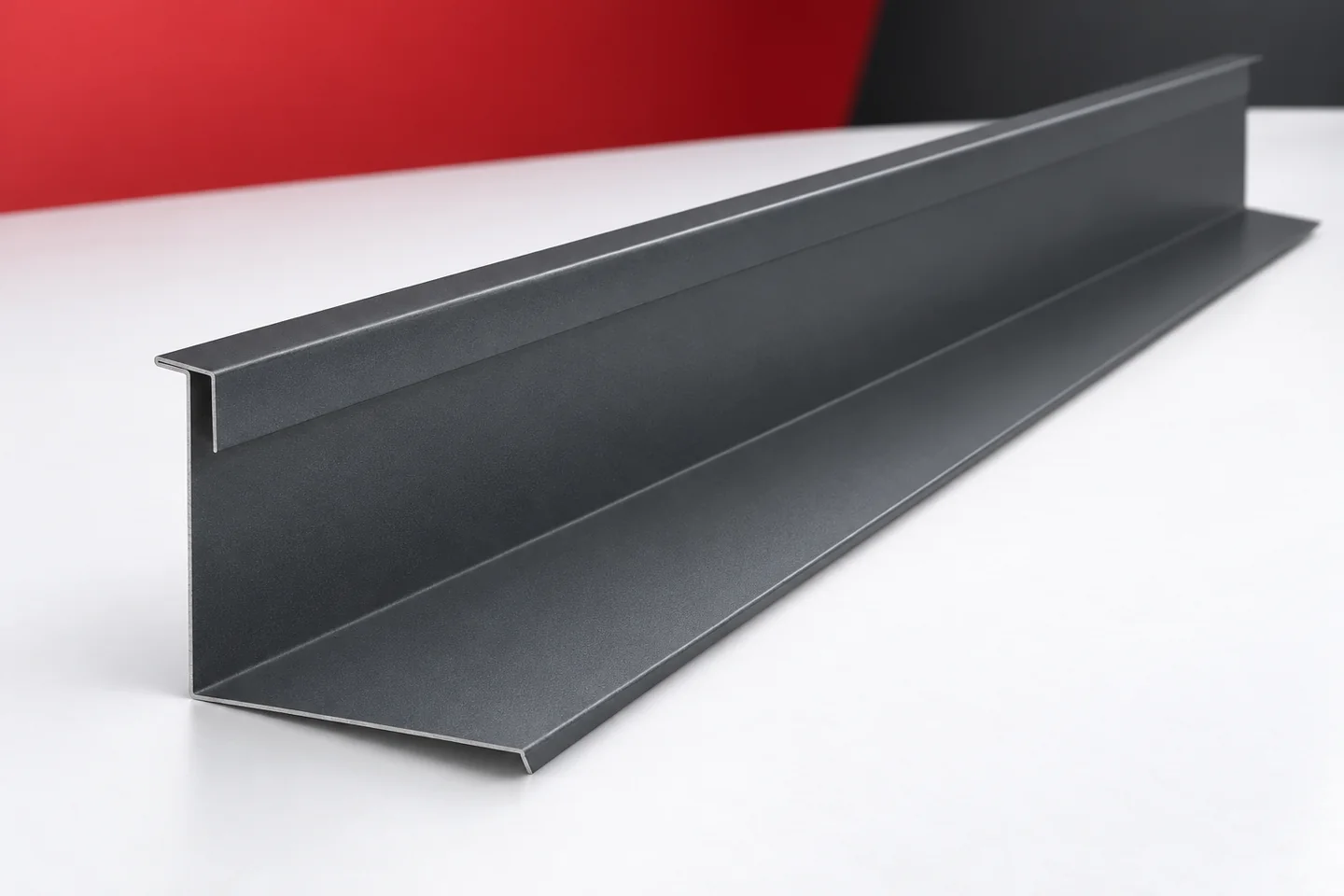
For the comparison, enter chimney and valley flashings, gutters, service penetrations and the required snow guards and service access. Add transport, unloading and the equipment needed for the work. The installation quote should state clearly whether it includes the supporting structure and the initial covering. Otherwise the offers do not share a common basis.
In a renovation, dismantling, waste disposal and possible repairs to the exposed structure are added. A temporary way of protecting the interior from rain may also be needed. Such costs do not disappear after buying a cheaper covering. It is good to keep them as separate items so that it is clear where the final sum comes from.
Is it worth also calculating the costs of later use?
Take into account access for inspections, cleaning and the possibility of replacing an element. The type of coating should suit the building’s surroundings. The cheapest variant that is unsuitable for the environment may require earlier intervention. On the other hand, a more expensive coating does not remove the consequences of faulty installation and neglected details.
Do not divide the price by the number of warranty years as if it were a certain roof replacement date. The terms of protection may cover different phenomena, and durability depends on use. The decision is best based on a full quote and realistic requirements. A price list with a date and a clearly stated unit helps to check the calculation, but does not replace an offer for the building.
Tip before ordering
Prepare a single table: covering, offcuts, substrate, accessories, installation, transport and renovation of existing layers. In each column, enter the same scope and either net or gross prices. An empty field should not automatically mean zero cost.
What is worth remembering?
Metal sheeting can provide a favourable cost for roof construction, especially with a well-chosen format and simple geometry. However, the choice should be based on the total of the entire system. Only uniform units, scope of work and requirements allow coverings to be compared fairly.
7 branches. Materials closer to your project.

Free quote
Materials for your project


You may also find useful…
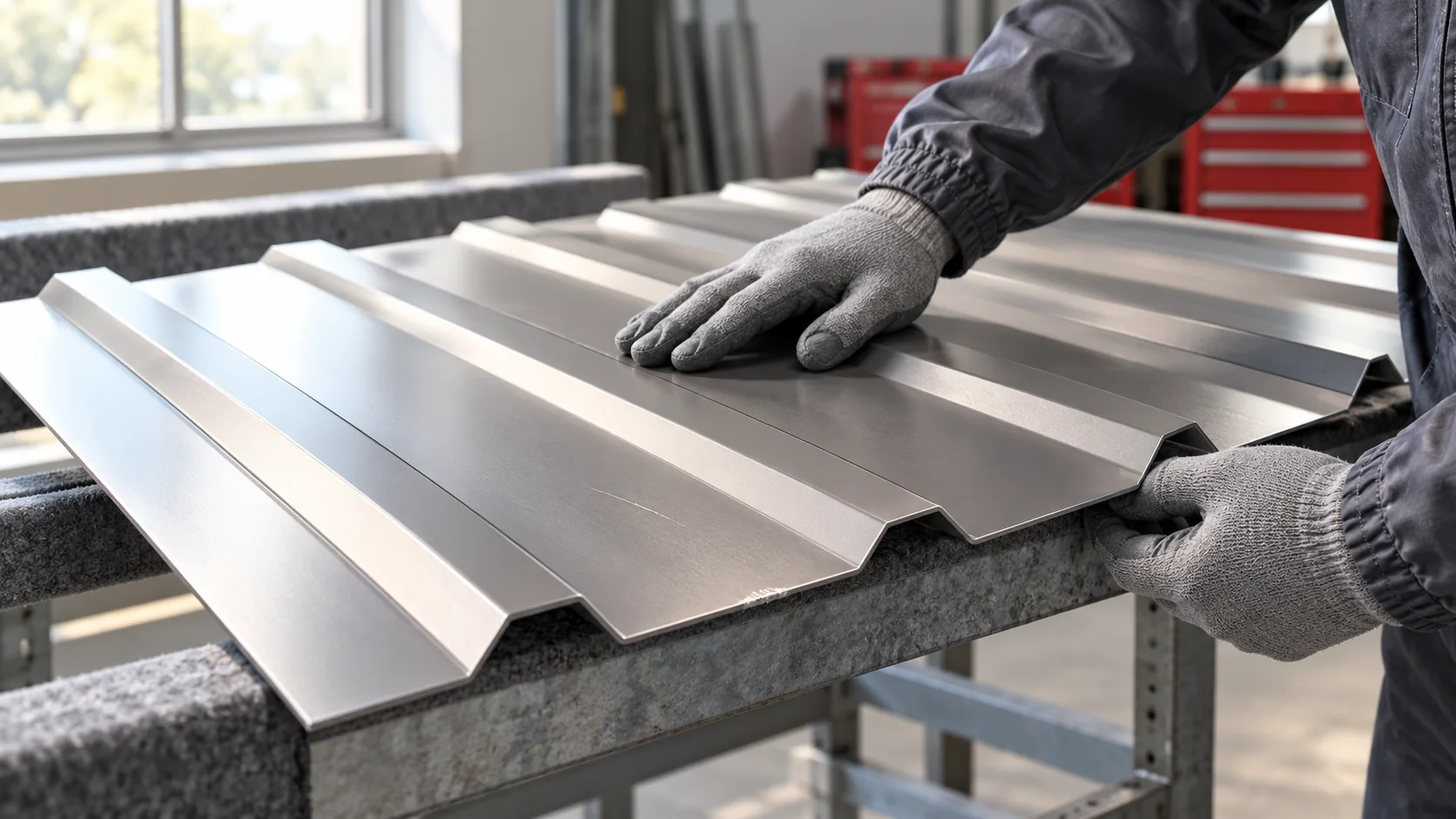
Second-quality trapezoidal steel sheets can be discounted for very different reasons. Before comparing prices, find out why the particular sheets were downgraded.…
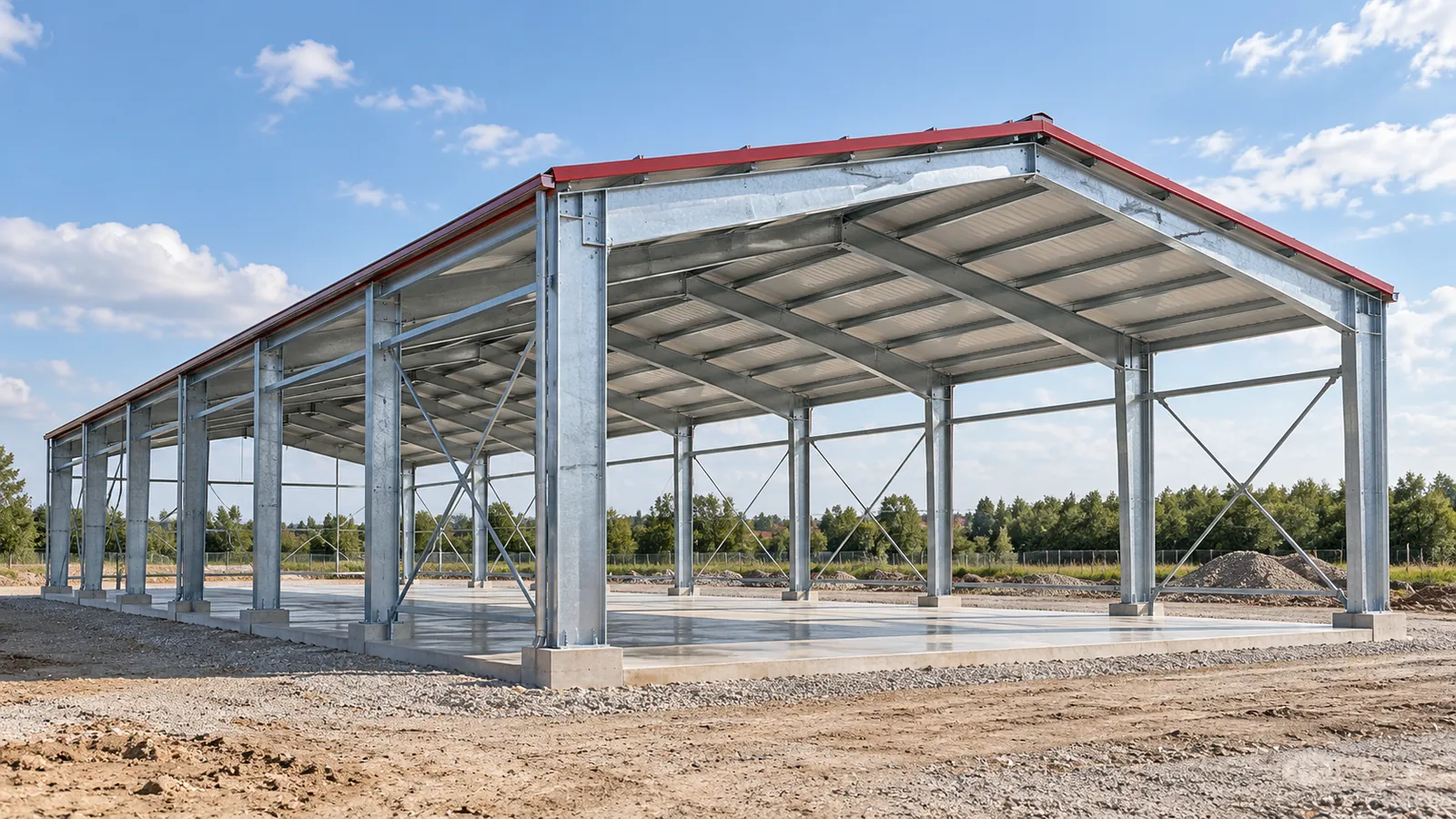
A quote for a steel hall can look attractive until work outside its scope has to be added. Neither the weight of…
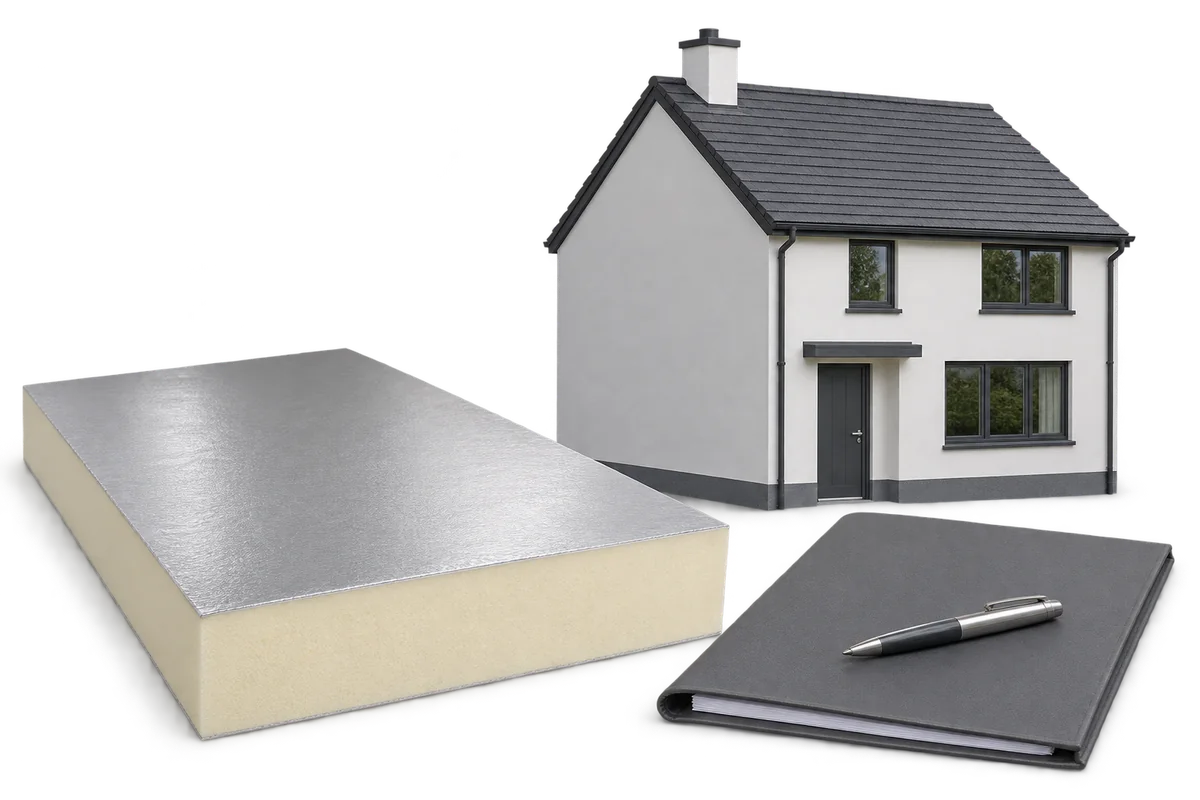
Funding for home insulation requires alignment between the building’s needs, scheme documents and the work actually completed. Buying PIR board does not…
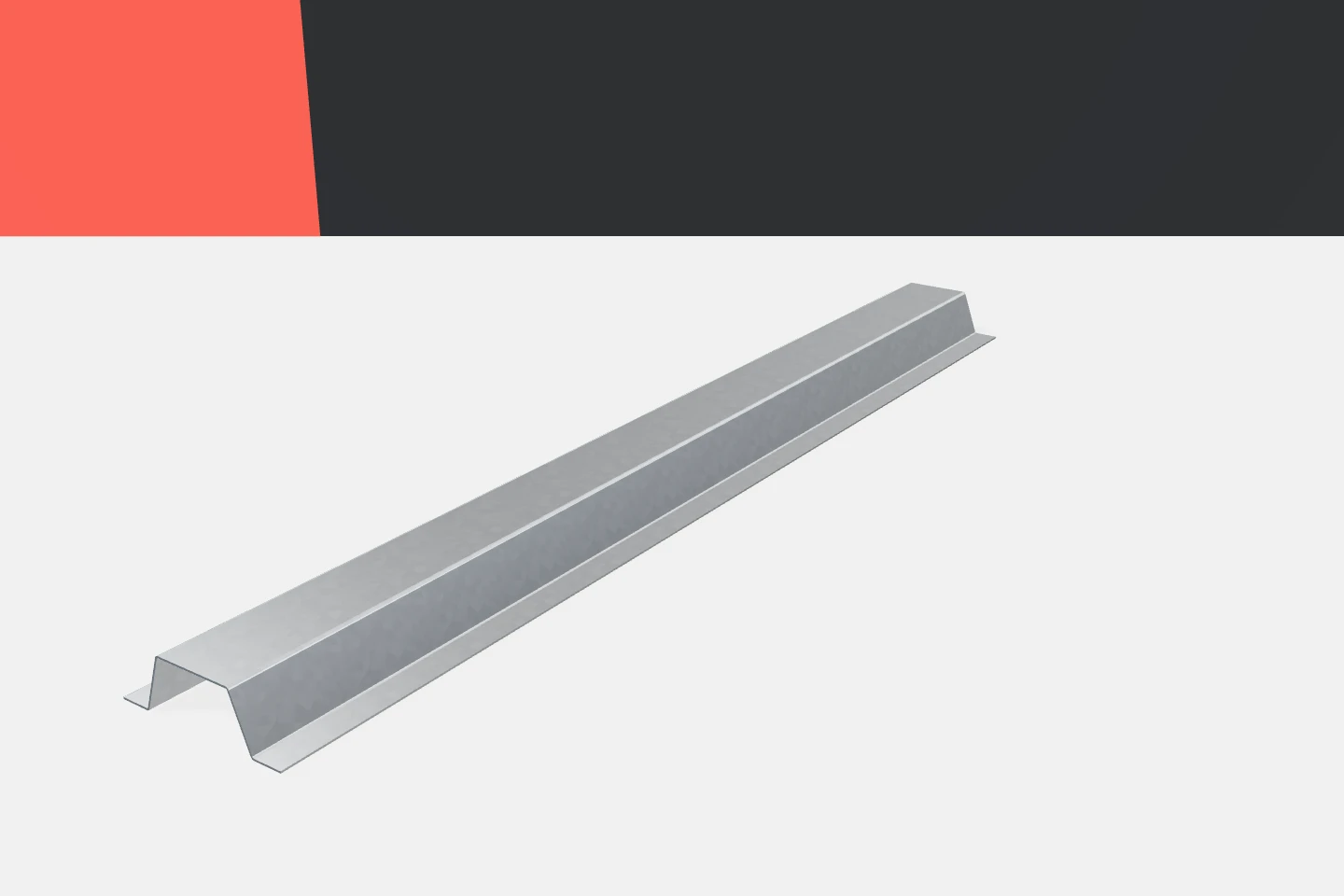
The omega profile can simplify the construction of a frame for a covering or cladding. However, it has its own geometry and…
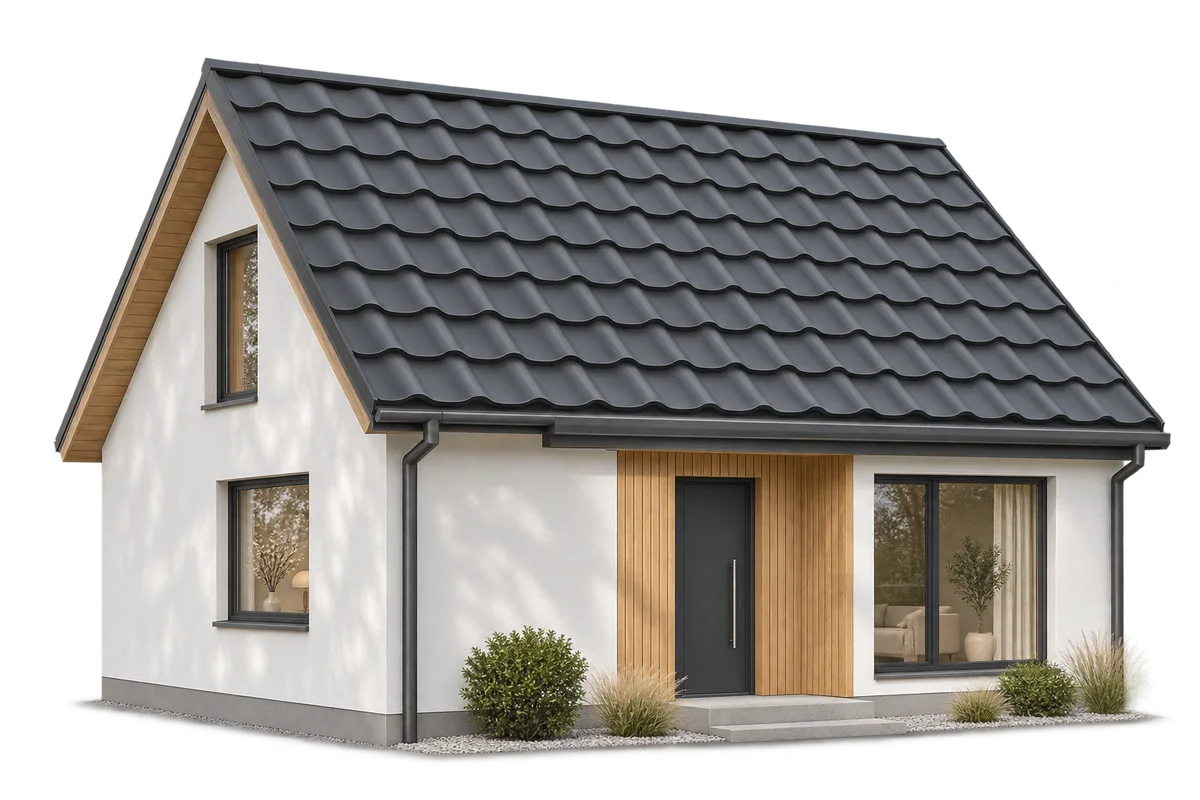
Metal roof designs are most useful when compared on the same house drawing, including edges, gutters and roof openings. Changing only the…
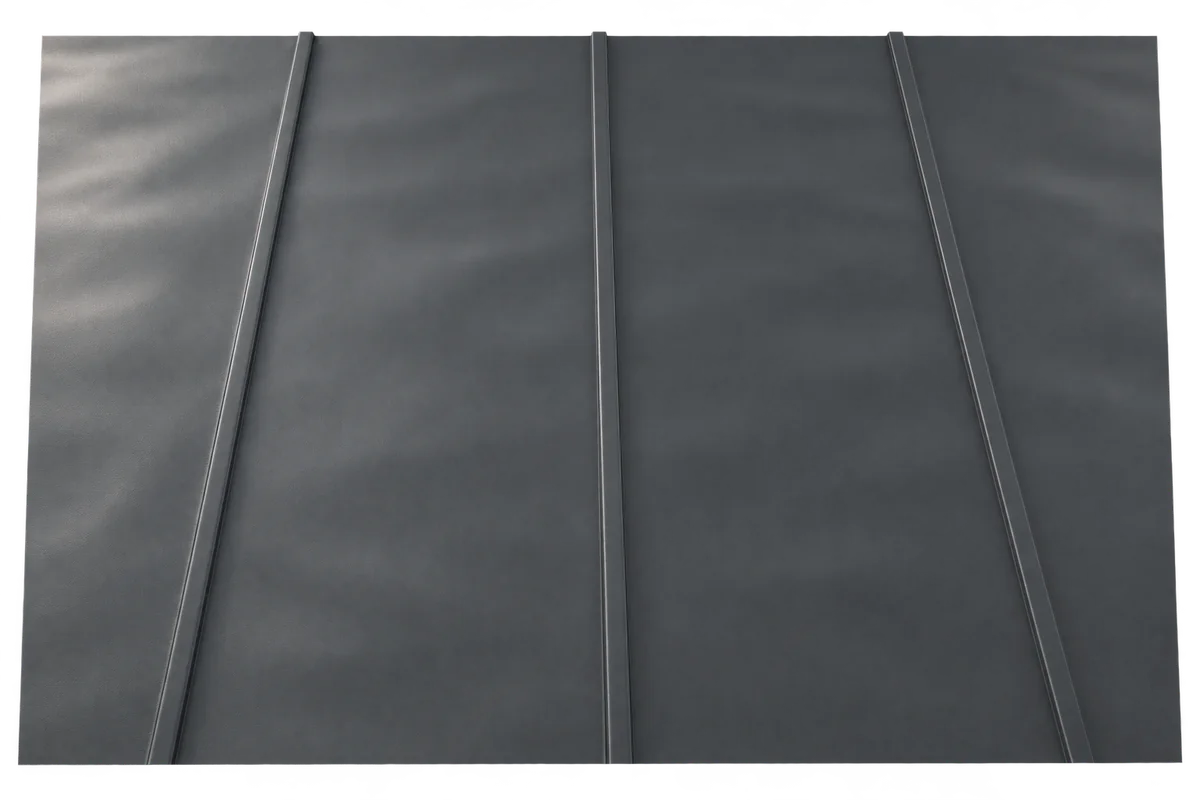
Waviness visible between standing seams should be located and described under known viewing conditions before it is attributed to material or installation.…
To compare tile-effect steel roofing prices, convert the panel price into a price per square metre of installed cover. You need the…
Chimney flashings are ordered for a specific roof penetration. The dimensions of the chimney, the pitch of the roof slope, the profile…