

Flashings
Checking a delivery of flashings before work starts on site
Receiving flashings requires more than counting packages. Shapes, lengths, material and surface condition must be checked. A mistake noticed before installation is easier to explain than a problem discovered on a finished roof. A well-organised acceptance also protects delicate, long profiles from damage during unloading and storage. Approved drawings, a schedule of sections and the material specification are needed for acceptance. Each item should have a name or number. Ridge caps, barge flashings and gutter aprons are easily confused when similar packages are given a cursory glance. Starter profiles are often less visible in the set, although without them proper installation cannot begin.
In this article
Prepare the list before the delivery arrives
Mark chimney flashings and unusual flashings separately. Where there are several different cross-sections, the number on the package should correspond to the number on the drawing. It is worth planning a storage location in line with the sequence of work. This means the team does not have to move items repeatedly, which increases the risk of scratches and mistakes.
Count pieces, not just metres
A matching total length of the delivery does not always mean the order matches. Ten short sections do not automatically replace five long ones. The number of joints, the amount of overlaps and the cutting plan change. For left-hand and right-hand components, check the proportions of both versions. Substituting one for the other may be impossible.
Compare the overall and effective length if both appear in the documentation. Also inspect the ends prepared at the works. A cut or fold at the end may determine where a given component fits. A well-marked delivery helps install the correct flashing without improvising with snips on the roof.
Check the cross-section from the face of the profile
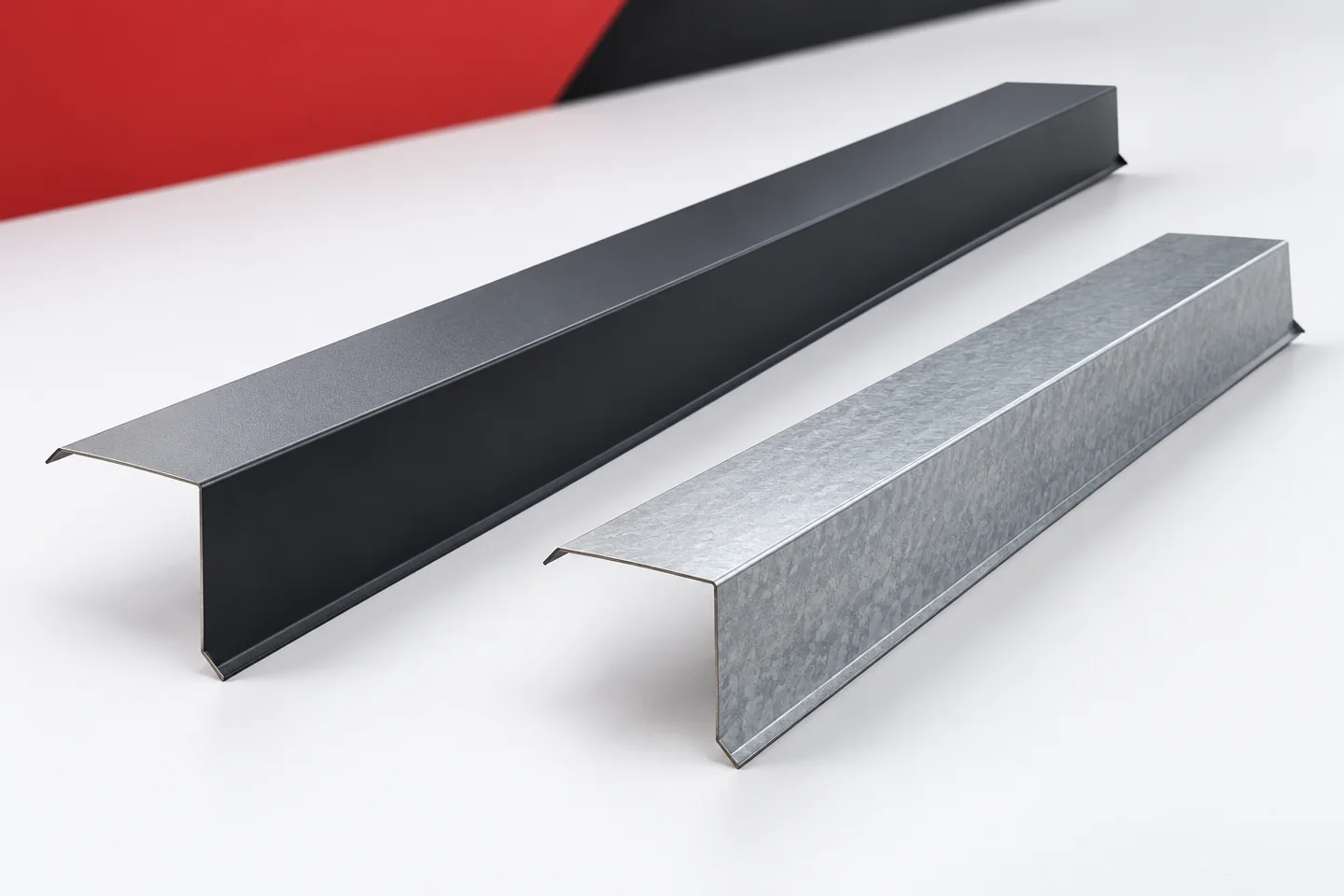
From above, two components may look identical. Only the view from the end reveals the height of the legs, the direction of the bends and the difference in angle. Barge flashings must match the edge of the roof slope, and gutter aprons the intended eaves. With starter profiles, a small difference may make it difficult to engage the covering.
Take measurements on a safely supported section, without stretching it or pressing it forcibly. Do not correct the entire batch yourself before the non-conformity has been clarified. If the order concerned unusual flashings, compare them with the last approved version of the sketch. An older printout may lead to a correct delivery being assessed incorrectly.
Inspect the protective layers and edges
Check colour-coated sheets for scratches, dents and abrasion marks. On galvanised and aluminium-zinc sheets, the surface condition is also important. Pay attention to contact points between sections in the package, corners and folds. Pressure from packaging or shifting of components may leave marks that are difficult to see in poor light.
Compare the material with the delivery documents. Do not identify the type of coating solely by the colour of the metal. The colour code on a colour-coated sheet does not describe the full specification. For a larger batch, inspect samples from several packages under similar lighting. This allows differences in finish to be detected before the flashings are laid on one visible edge.


Unloading should not deform components
Long ridge caps and wide covers are susceptible to damage during incorrect handling. Support them so that they do not buckle under their own weight. Do not slide a single component over the sharp edge of an adjacent sheet. The way of gripping and the number of people are matched to the length and rigidity of the profile.
The storage location should protect the material from uncontrolled moisture and dirt. Do not leave wet, tightly stacked components without checking the storage recommendations. Protective film also has specified conditions and a duration for being left in place. It is not permanent protection for the entire construction period, nor a functional coating.
Establish how to handle a noticed non-conformity
Damage or an incorrect dimension is worth documenting before installation. Record the item number, the number of pieces and the nature of the problem. A photograph of the entire profile and a close-up of the fault make clarification easier. The statement that “the flashings are wrong” alone does not allow it to be determined whether the issue is transport, material or geometry.
Do not install parts whose conformity remains unexplained. This also applies to chimney flashings, where the wrong orientation of the apron may change the drainage path. A minor scratch and severe deformation do not require identical handling. The possibility of repairing the coating is assessed according to the material recommendations, without masking the problem with random paint.
Complete the inspection after installation
Receiving the delivery does not replace the assessment of the completed details. On the roof, joints, fixings and the continuity of the water path must be checked. Gutter aprons must work with the gutter, barge flashings with the edge of the roof slope, and starter profiles with the start of the covering. Swarf, cuttings and film residues must be removed in accordance with the material requirements.
Keep a schedule of the flashings used and information about the coating. For later repair, it will be easier to order the correct component and select an approved maintenance method. Careful acceptance does not guarantee the absence of every future fault. It does, however, allow specific non-conformities to be detected before they become a costly part of the finished roof.
Questions and answers
Can a film-coated component have a damaged coating?
Yes. The film limits some risks, but it does not protect against every abrasion mark and dent. Acceptance should also cover edges and points of pressure.
Should a profile that does not fit be bent immediately?
First it must be compared with the drawing and the cause of the difference established. Changing it yourself may damage the coating or make the non-conformity harder to clarify.
7 branches. Materials closer to your project.

Free quote
Materials for your project

You may also find useful…
An older-house alteration needs a plan for conditions that cannot be seen during the first inspection. Removing finishes may reveal unexpected supports,…
Funding for home insulation requires alignment between the building’s needs, scheme documents and the work actually completed. Buying PIR board does not…
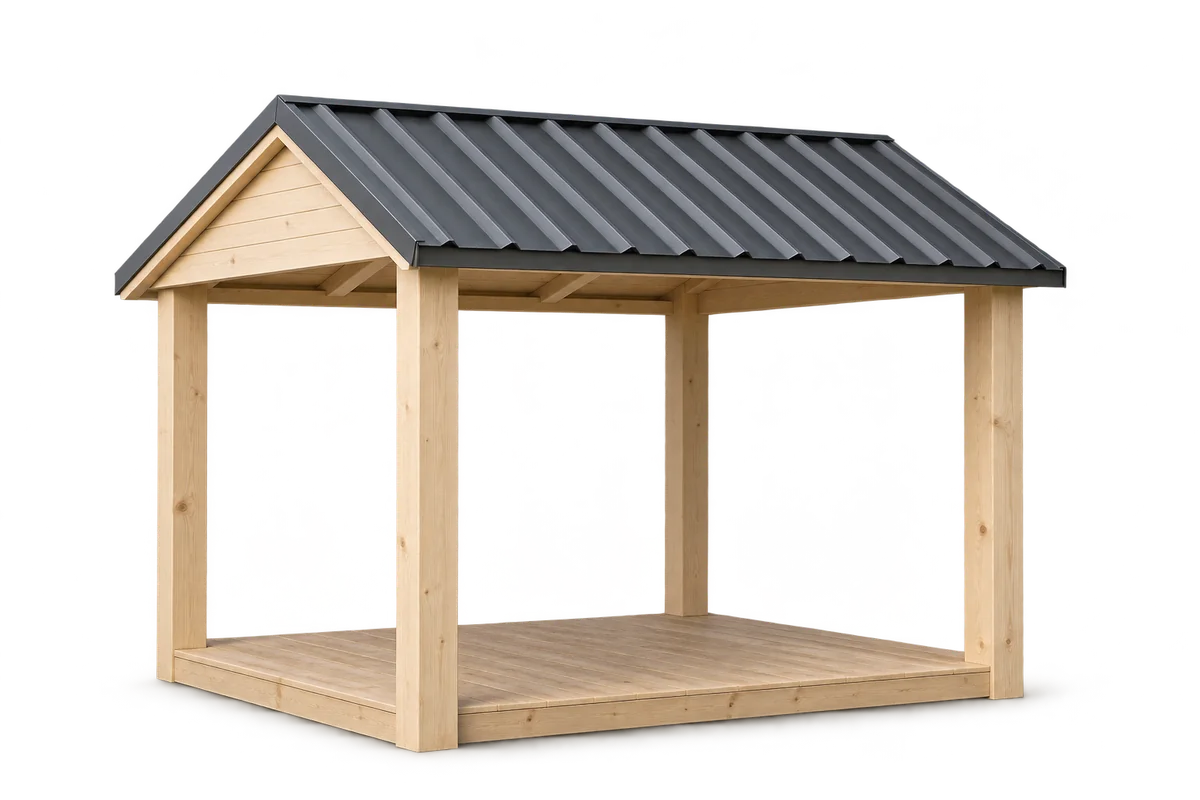
Plan a garden gazebo as a space for everyday use, not merely a roofed rectangle in a visualisation. Before buying a kit,…

Two tile-effect steel sheets can look identical from the road yet differ in steel grade, core thickness, metallic coating and surface finish.…
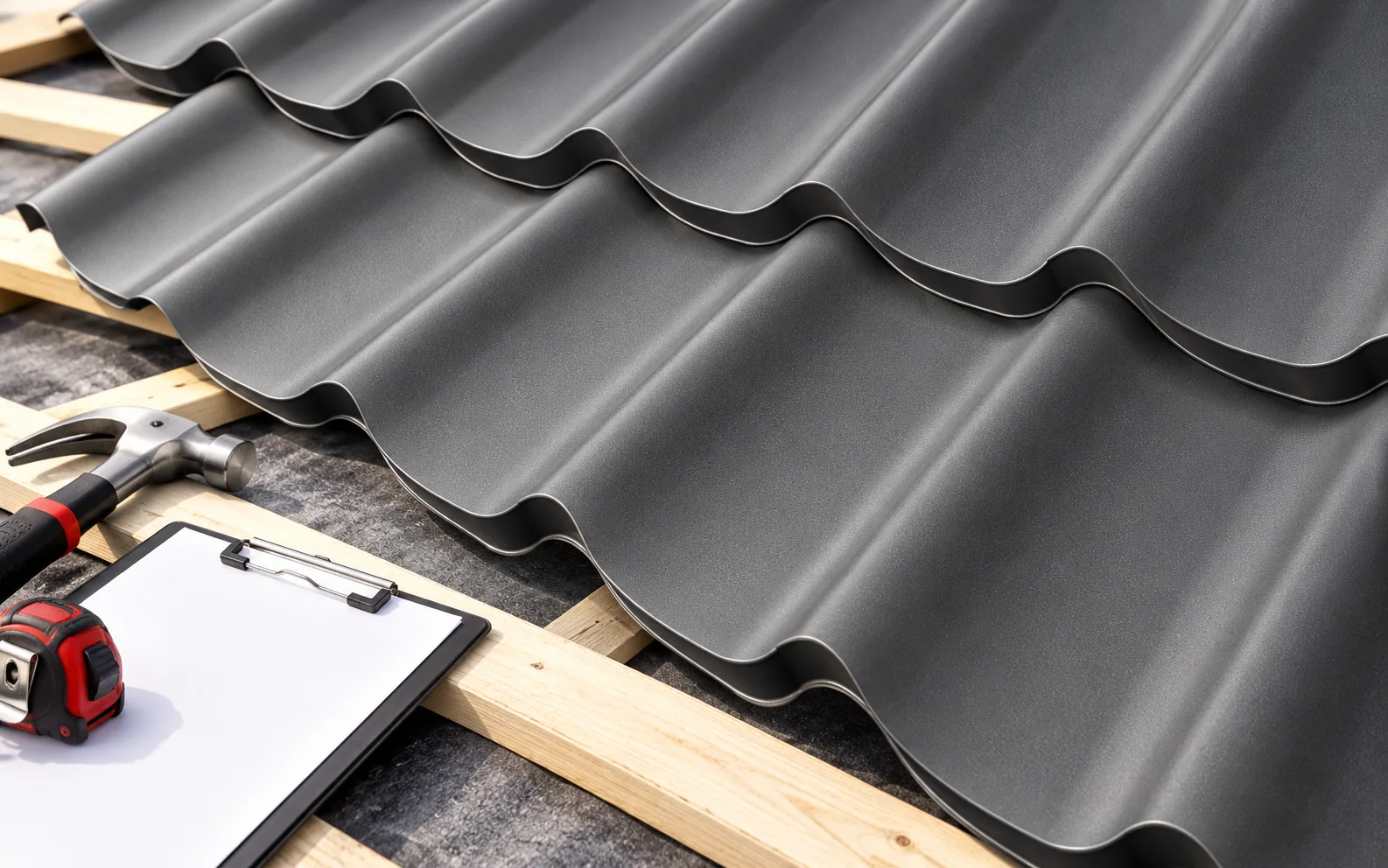
To estimate the labour cost of laying metal sheeting on a roof, start from a complete bill of quantities, not from the…
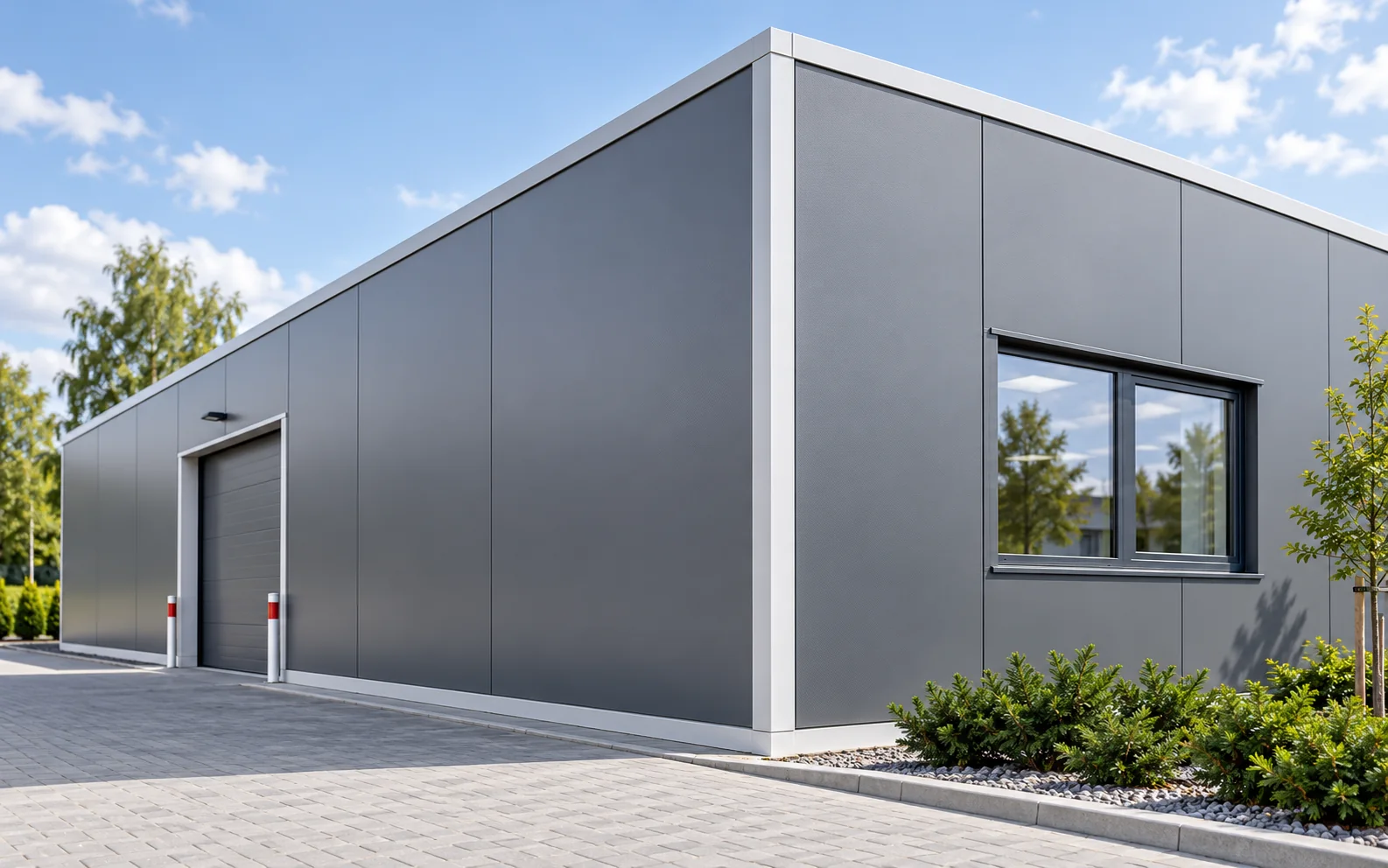
Repetitive elements, a digital design and well-chosen insulation can shorten some of the work and reduce the number of improvised details. Sandwich…

Repeated gutter overflow calls for inspection of the full water route, from the roof edge to the receiving point at ground level.…
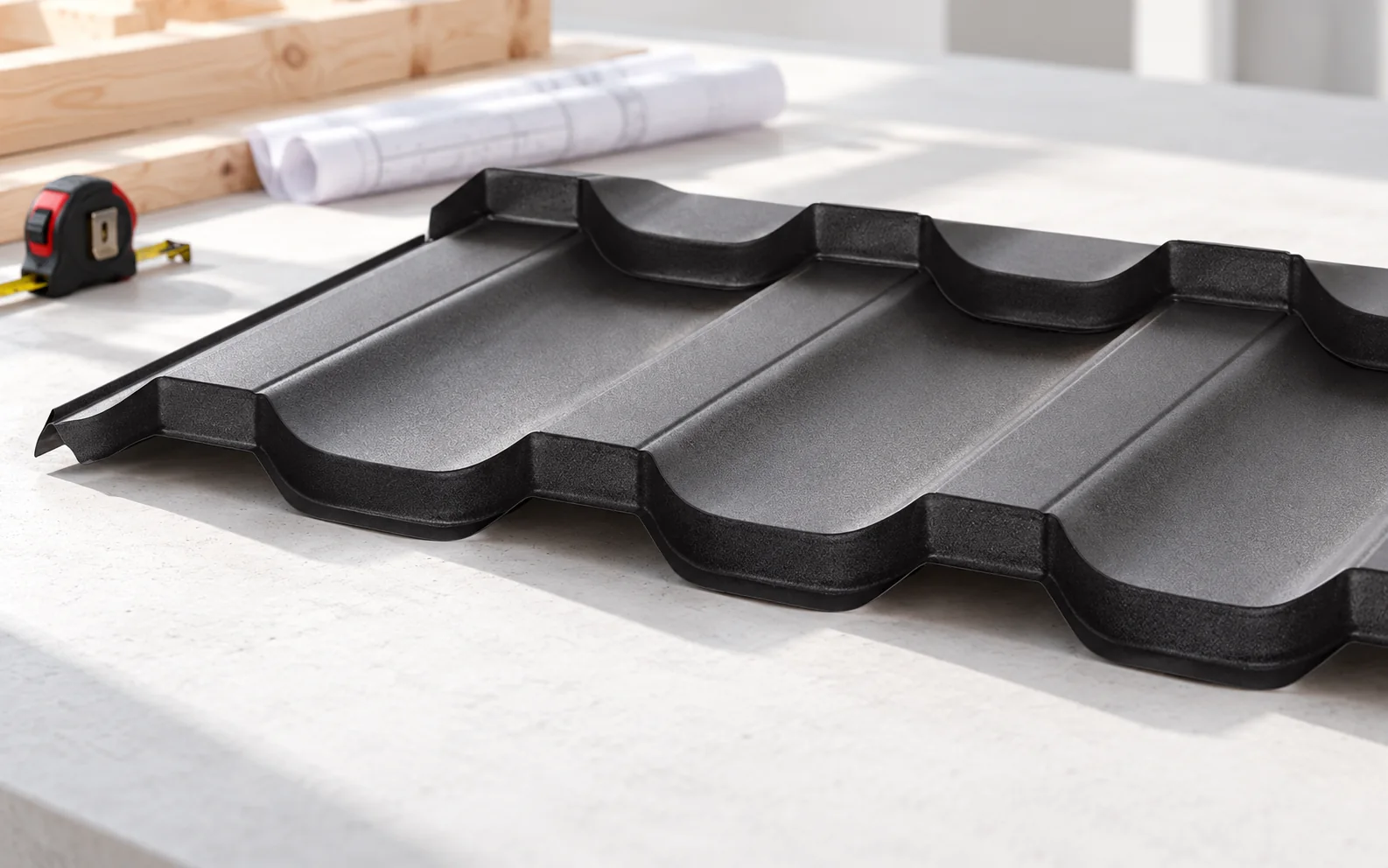
Rafter sizes are determined by structural calculations, in which span, spacing, type of support, timber class and loads govern the cross-section; the…