

Flashings
What determines the price of custom sheet metal flashings?
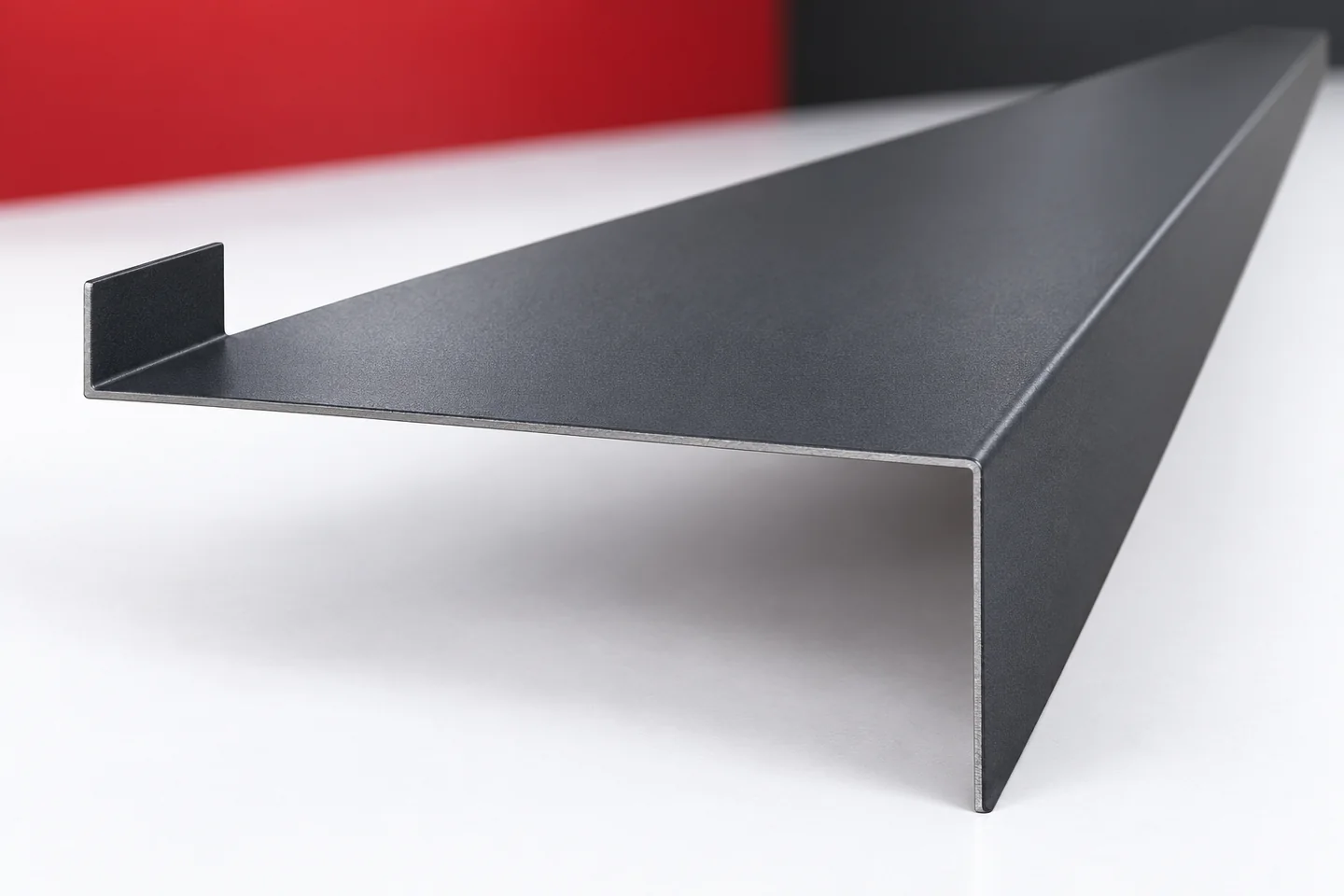
Bespoke flashings do not have a single universal price per metre. The cost depends on the amount of sheet metal, the cross-section, the length of the sections and the scope of fabrication. A well-prepared sketch allows the element to be priced without guesswork. It also helps to check whether the bends can be made with the chosen technology and whether the finished profile will fit the building. The first step is to describe the shape as seen from the face of the element. The dimensions of the legs, the angles, the hems and the offsets show what flashing is to be produced. The width of the visible part alone does not indicate how much material will be used. A long, narrow profile with many bends may require more work than a wider element with a simple cross-section.
In this article
The price starts with the cross-section
Add the length and the number of pieces to the drawing. Mark the units and establish whether the dimensions refer to the inner side, the outer side or another agreed datum. With tight fits, this difference matters. Bespoke flashings should be given consecutive numbers so that each order item has an unambiguous drawing.
The developed width is not an arbitrary sum of lines
Before bending, the profile is formed from a flat strip. The width of this strip is called the developed width. Determining it precisely takes account of the material thickness, the radii and the bending technology. That is why the sum of the outer dimensions of the legs is not always the correct dimension for cutting. The final developed width should be established by the flashing manufacturer.
This quantity affects the consumption of sheet and production waste. Several profiles with similar dimensions may nest differently on a sheet. This does not mean that the detail should be changed solely to suit the width of the available sheet. It is, however, possible to check a rational cutting layout without altering the function or the required dimensions of the element.
The number of bends is only part of the difficulty
Two cross-sections with the same number of bends do not have to cost the same. Tool access, the sequence of operations and the distance between bend lines all matter. Very narrow legs or almost closed shapes can be more difficult to produce. Not every drawing can be achieved on every folding machine or press.
For a complex detail, it is worth confirming feasibility before buying material. A trial section allows the shape and fit to be assessed. This is how bespoke flashings are produced for corners, surrounds, roof slope junctions or old walls. A sample is particularly useful when the element has to work with an existing lock or a narrow gap.
The choice of sheet metal changes the scope of fabrication
Galvanised, aluzinc and colour-coated sheets have different protective layers. Each material must be bent in accordance with its requirements. Thickness, permissible radius and surface protection during work are all important. It should not be assumed that a profile proven in one sheet will behave identically in another.
State the material and the type of finish in the enquiry. Mark the side of the coating that will be visible after installation. This is important for chimney flashings, gutter aprons and elements viewed from below. Unusual geometry can reverse the apparently obvious side of the sheet. A drawing with a simple arrow marked ‘outer side’ prevents such a mistake.

Additional operations must be listed separately
Holes, perforation, cut-outs and prepared ends increase the scope of work. If they are not shown on the drawing, the quotation may not include them. Also establish whether mirror-image pairs are required. Left and right barge boards or surrounds for opposite corners may require different versions of the same apparent profile.
Do not assign a structural task to an ordinary flashing without appropriate documentation. Starter profiles, supports and covers may look similar but perform different functions. If the element is to carry a load, design requirements are needed. The price of bending does not confirm load-bearing capacity, and a name given by the client does not replace verification.
The length of the section also affects logistics
The maximum production length is a capability of a particular workshop. It does not mean it is the best choice for every site. Long flashings require appropriate packaging, transport and lifting. Wide profiles are easily deformed. A shorter division may be more practical if the joints have been correctly designed.
Before pricing, establish the delivery location and the unloading conditions. Plan the installation sequence, especially when the flashings will be installed at height. Ridge caps or parapet covers may have a similar length but completely different rigidity when being handled. Logistics are part of the fabrication cost, even when they do not appear in the first column of the price list.
Compare approved drawings and the same scope
The clearest quotation states the drawing number, material, quantity and scope of operations. It should also specify the basis of settlement and the delivery conditions. If one price covers only bending while another also includes the sheet metal and the preparation of ends, they are not comparable rates. It is worth clarifying this difference before making a decision.
Bespoke flashings are best ordered after checking the actual dimensions of the building. The approved drawing should bear a date or a version number. This ensures that a later correction does not mix up two sets of agreements. The benefit of made-to-measure production lies in fitting the detail and reducing rework, not in a promise of any shape at one fixed price.
Questions and answers
Is a photo of the flashing with a tape measure sufficient?
A photo helps to understand the location, but a clear cross-section, angles, length and coating orientation are needed for production. The perspective of a photo can distort dimensions.
Does the developed width have to be calculated independently?
The dimensions of the finished cross-section can be supplied. The final developed width should take account of the production technology, so it is worth leaving its confirmation to the flashing manufacturer.
7 branches. Materials closer to your project.

Free quote
Materials for your project
You may also find useful…
An external window sill is a detail that takes over the water running down the glass and must discharge it beyond the…
An order for trapezoidal steel sheets for a garage should start with a drawing of each wall and roof slope, showing rib…
In a roof sandwich panel, “fibreglass” can refer to an inner facing made from glass-reinforced plastic (GRP). A panel of this type…
A roof with 200 m² of sloping surface can require more than 200 m² of trapezoidal steel sheet. The quantity depends on…
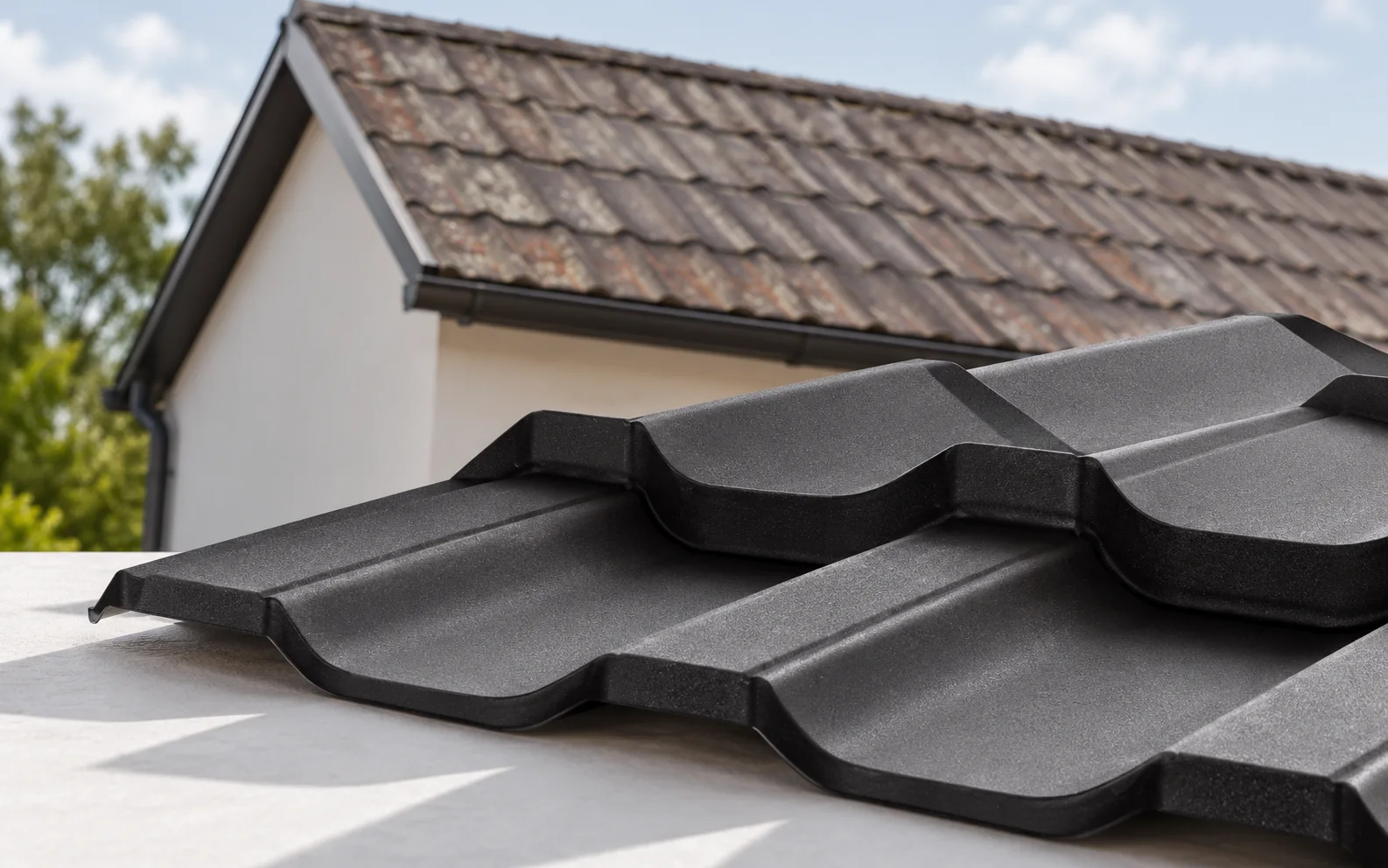
The decision depends on the extent of the damage, the condition of the structure and the cause of the problem. A single…
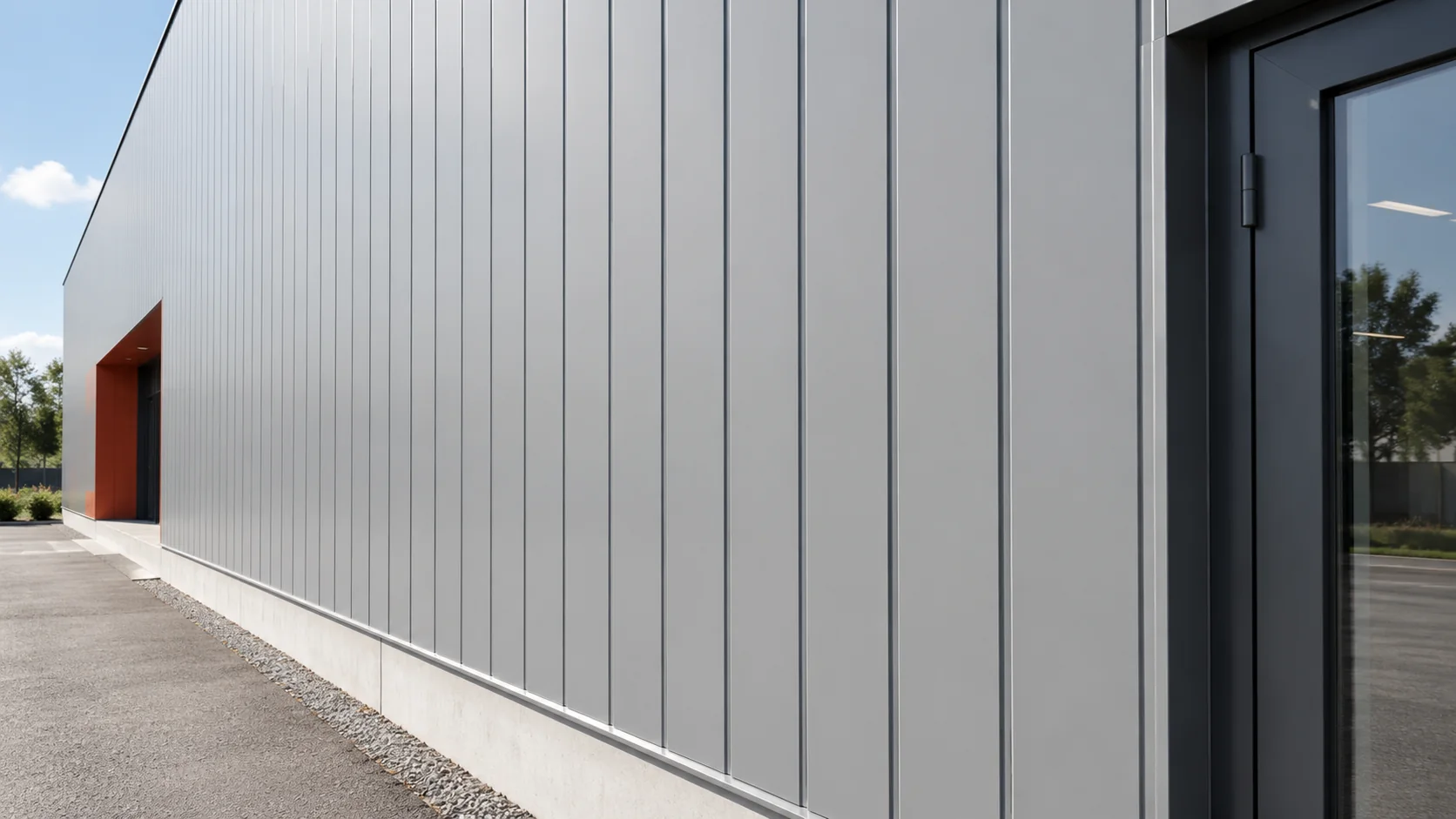
T8 sheet gives the walls of a small workshop or outbuilding a fine ribbed finish. Its service life depends partly on how…
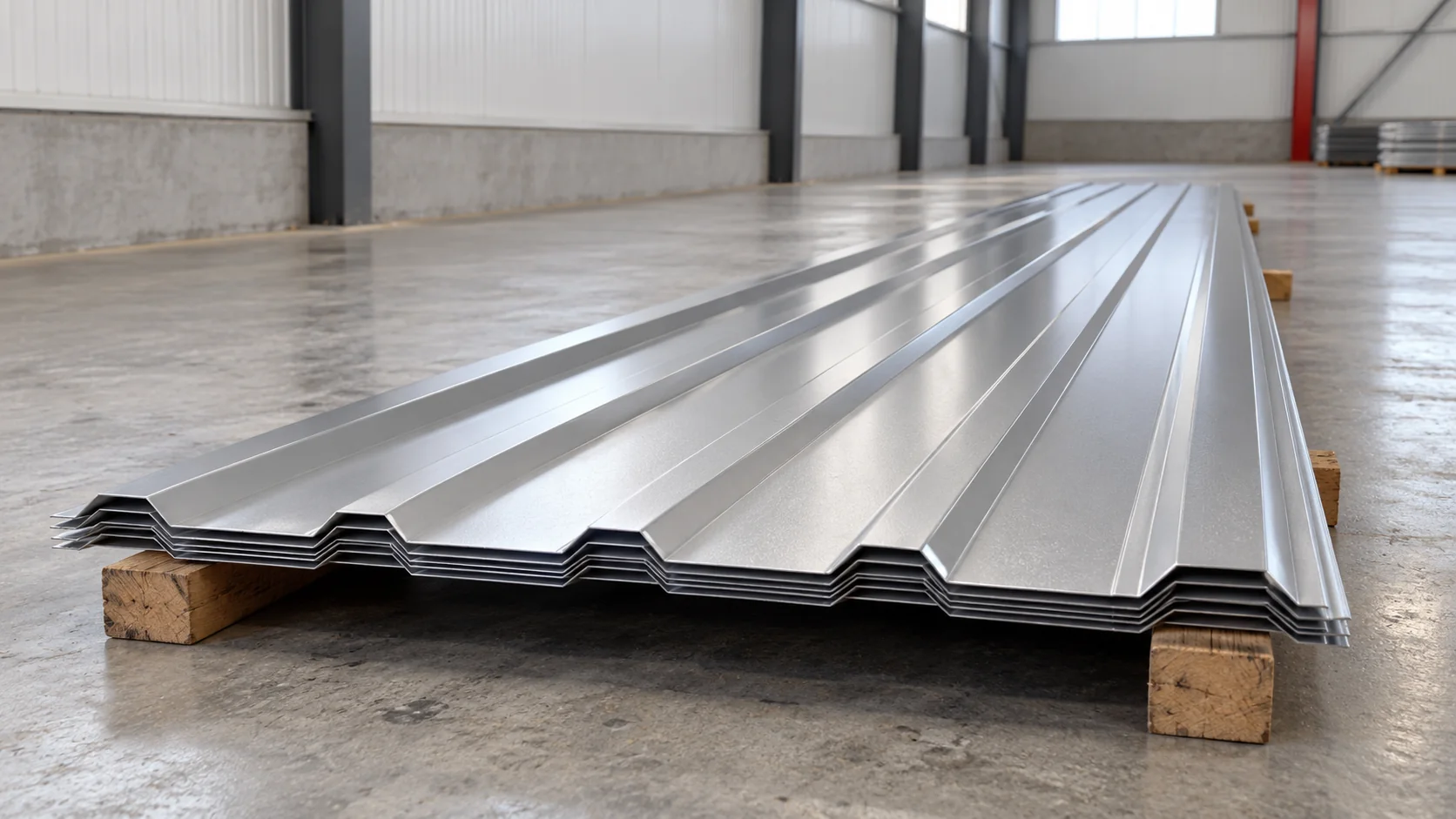
Before comparing roofing quotations, establish what “100 metres of sheet” means. It could refer to 100 linear metres of a particular profile,…
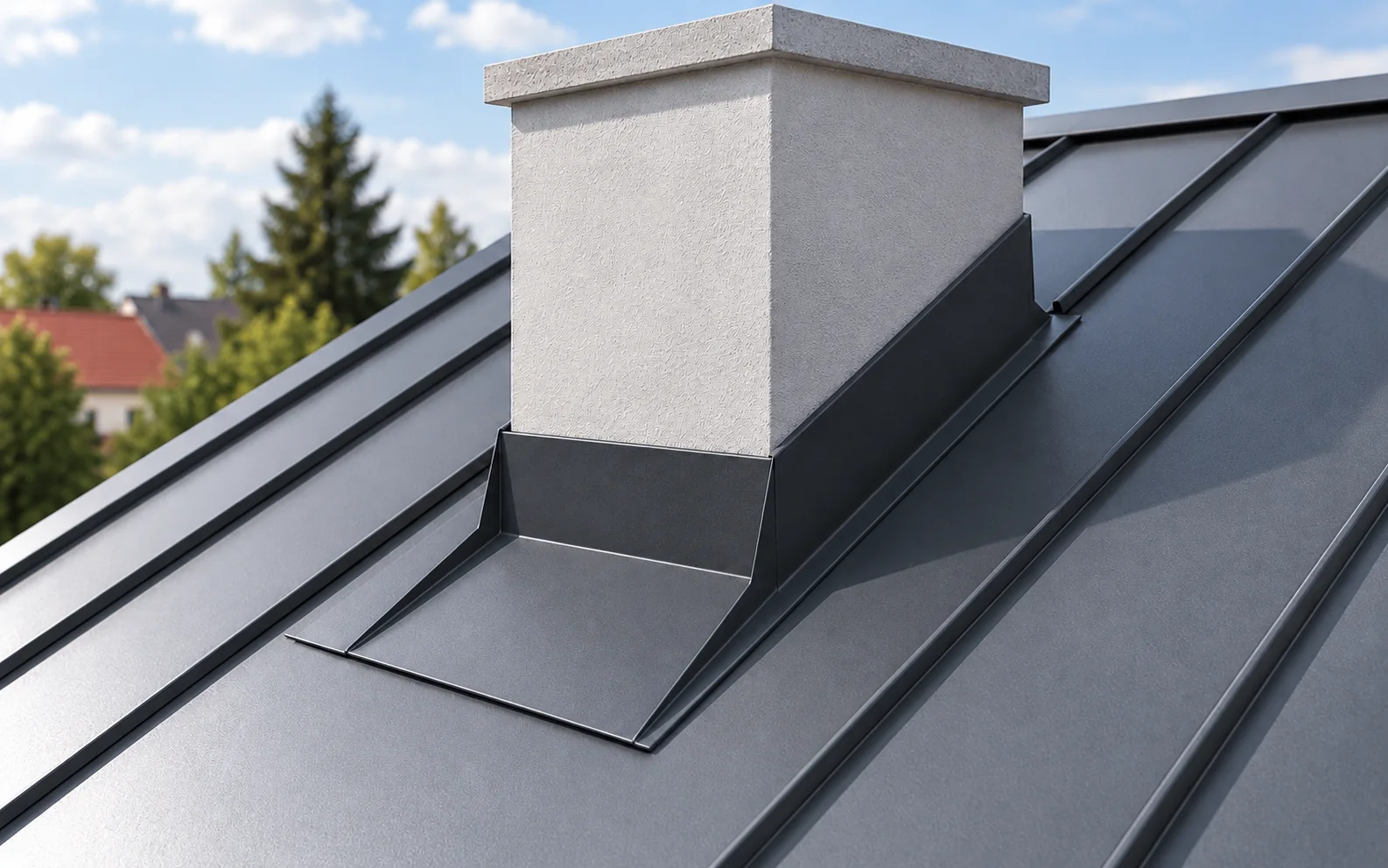
The answer to the question of flashing watertightness begins with understanding that a chimney interrupts the continuity of the roof slope and…