

PIR insulation
Eurothane G: how to add internal insulation and preserve floor space
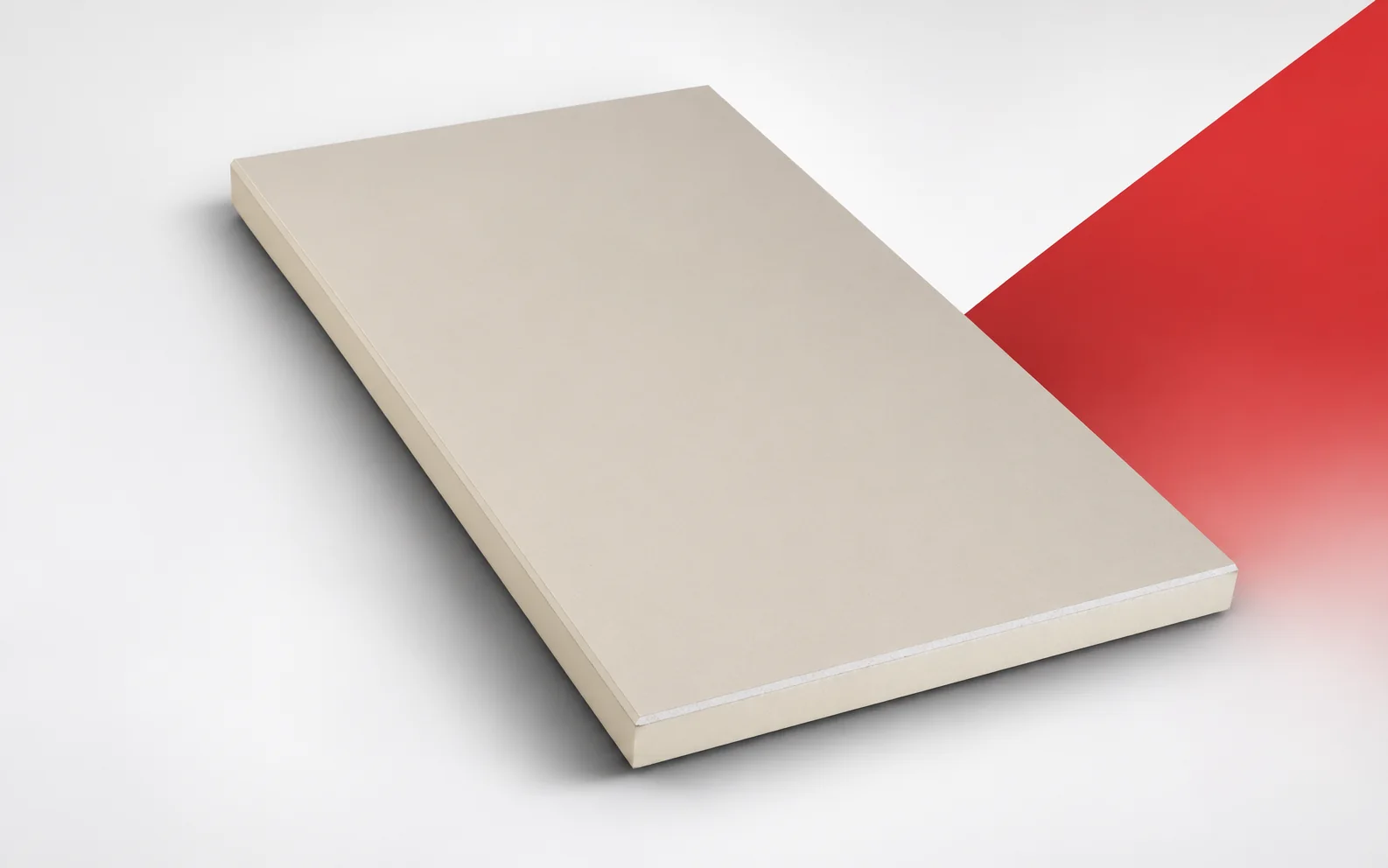
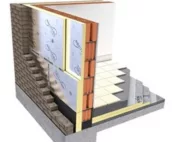
Internal insulation takes up part of the space, so it is worth comparing complete wall build-ups. Eurothane G combines PIR and a plasterboard facing. However, its suitability also depends on the condition of the masonry and on the possibility of maintaining continuity of the insulation at the details. Recticel Eurothane G consists of a PIR board covered on both sides with a gas-tight facing and 12.5 mm plasterboard. It is intended for suitable internal insulation applications. PIR boards are worth assessing through a specific spatial problem, so consider an internal wall lining combining Eurothane G PIR with 12.5 mm plasterboard. The masonry under Eurothane G must be prepared in accordance with its condition and the requirements of the new build-up, because space savings must be assessed together with the geometry of the detail.
In this article
What is responsible for the material’s performance
Changing lambda alone is not enough, because the factory-bonded layers do not replace an assessment of the surface to which they are to be fixed. The solution should allow the composite to be matched to the existing partition and to the intended use of the interior. As a starting point for comparing variants, record the condition of the masonry, the function of the room and the points where the new lining meets adjacent partitions.
How to compare the thermal effect
The lambda value of 0.022 W/(m·K) given in the Eurothane G data applies solely to the insulation component made of PIR. In the calculations, the plasterboard facing must not be treated as another layer of the PIR core, because its thickness is not included in this characteristic.
When comparing polyurethane boards, take into account the difference between the total thickness of Eurothane G and the thickness of the PIR insulating part. In the Eurothane G calculation, lambda 0.022 refers to the PIR part and does not include the plaster facing, so that the comparison relates to the same thermal effect. The result must be read with care, since treating plaster and foam alike would overstate the thermal resistance of the composite. The calculation is meant to help compare the insulation effect with the actual loss of space in the room. In the energy summary, show the parameters of the PIR part, the share of the plaster facing and the actual resistance of the whole product variant, so that it is clear what exactly has changed between solutions.
With Eurothane G, the space balance is worth preparing for the whole room. Changing the line of one wall can affect the width of the passage, the arrangement of furniture and access to the window. The thickness of the PIR alone does not show these consequences. The plaster facing and the actual method of installation must also be taken into account. Such a measurement makes it possible to assess whether the thermal benefit has been achieved with acceptable occupation of the interior.
Where the advantage can be lost
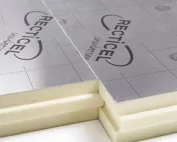
Eurothane G comes in a format of 2600 × 1200 mm. The edges of the PIR component are straight, while the longer sides of the plasterboard boards are chamfered to allow joints to be made.
Check the bevelled long edges of the plasterboard and the straight edge of the Eurothane G insulating core, because continuous polyurethane insulation also requires correct terminations. The plaster joint and the PIR core connection must be planned as two elements of the same junction, because losses at junctions must be assessed together with the main insulation field. A good connection does not arise automatically, since a correct joint on the visible surface does not automatically prove a correct PIR junction. The layout of elements should allow the 2600 × 1200 mm panels to be planned with regard to the two functions of their joint. On the detail drawing, show the position of the joints, the close fitting of the insulating part and the route of services at the planned cuts; this record will make later inspection of the work easier.
Durability of the system and moisture conditions
When Eurothane G is used as internal insulation, it alters the thermal conditions of the existing wall. Because the facings are gas-tight, the continuity of joints must be designed and an assessment made of whether the wall can dry out.
When assessing the durability of the thermal effect, take into account masonry insulated from the inside whose outer side remains in its existing condition. Before closing the wall with Eurothane G, the source of moisture and the wall’s ability to dry out must be established if the insulation is to perform under the conditions assumed in the design. Polyurethane foam does not replace protective layers: a source of water in the wall may still be active despite a dry and even new plaster surface. The planned protection measures should make it possible to remove the cause of dampness and to check the ability to dry out before the wall is closed. Before covering, assess traces of leaks, the ventilation of the room and the detail where the insulation meets the floor and ceiling, because later repair may require opening the finished partition.
Strength and fire properties
For Eurothane G, B-s1,d0 is stated for a specific end-use application. This is not proof that the PIR foam is non-combustible, nor does it automatically confer fire resistance on the entire partition.
The thickness limitation does not exempt you from checking other requirements, so analyse the plan for heavy fixings passing through the composite Eurothane G facing. The load of heavy equipment must be transferred through the lining to a suitable substrate, even when the choice of board was determined mainly by its low lambda. A separate assessment is needed because class B-s1,d0 relates to a specific application and does not describe the load-bearing capacity of suspended lining. Only a complete set of data will allow the fixing of equipment to be designed independently of the material’s fire assessment. Alongside the thermal results, state the type of anchors, the route of services and the documentation of the conditions of use of the composite in the given interior; this way the comparison will not omit the conditions of use.
When the solution is cost-effective
The offer for Eurothane G should state the thickness of the PIR component and the full scope of finishing works. Fixing materials, joint execution and solutions at door and window reveals must also be agreed.
Polyurethane board insulation should have its effect and scope of work calculated; include a wall quotation covering Eurothane G together with preparation, fixing and finishing of reveals. The Eurothane G offer should also cover reveals, the perimeter of the lining and work at services, so that the cost relates to one comparable result. The price of the material is only part of the decision, since additional cost may arise from substrate repair and many short terminations at openings. The final summary should allow variants leading to an equally complete and functional internal lining to be compared. Ask for the scope of jointing, perimeter connections, masonry repair and relocation of existing service points, so that any supplement has a stated technical justification.
7 branches. Materials closer to your project.

Free quote
Materials for your project
You may also find useful…
The price per square metre of a board does not yet tell us what effect we will achieve in the building. It…
When replacing a roof, compare complete roof panels with two facings and a profile designed for roofing. The PIR or EPS core…
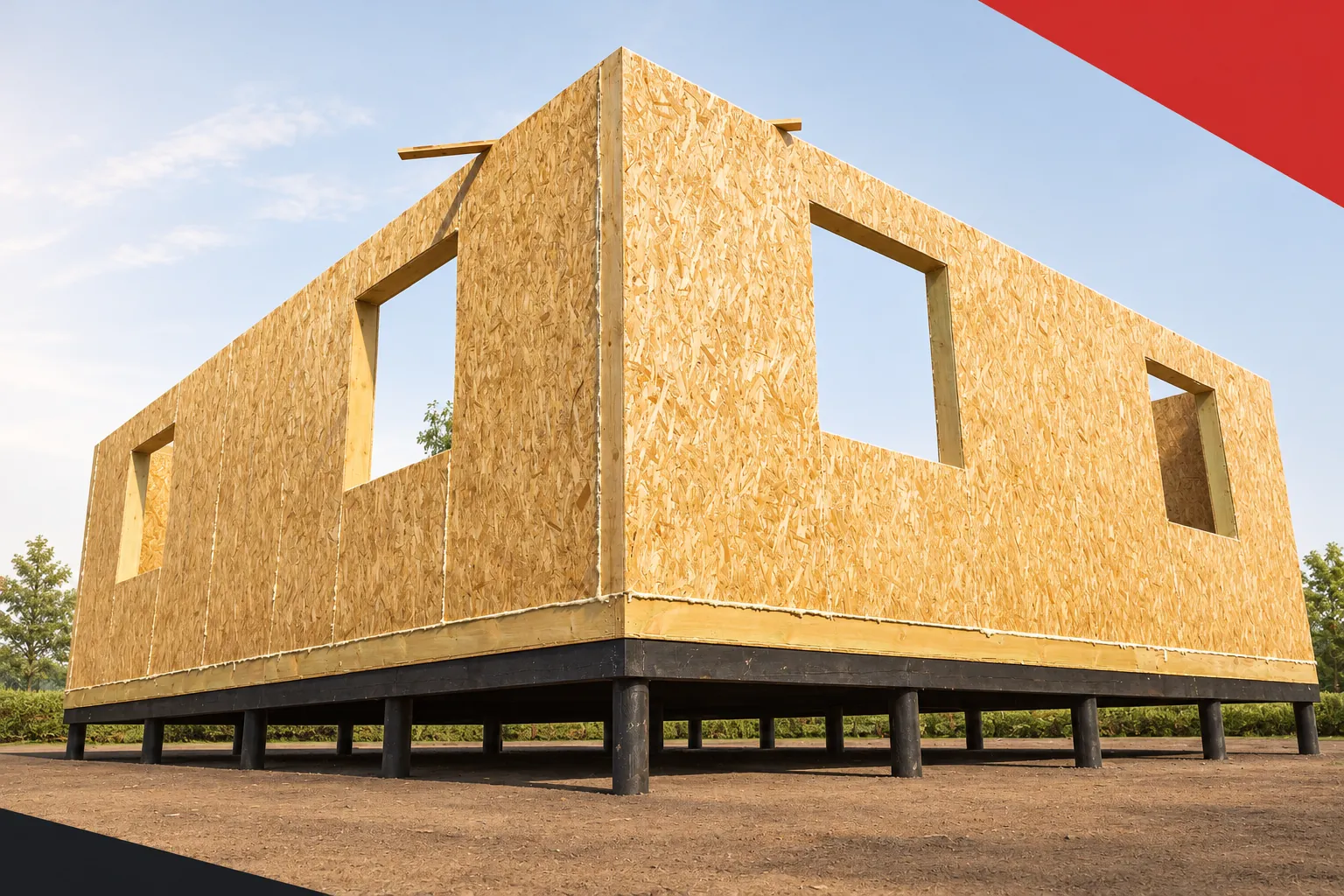
Good insulation helps maintain comfort both in freezing cold and in heat. SIP panels with a polyurethane core limit the flow of…
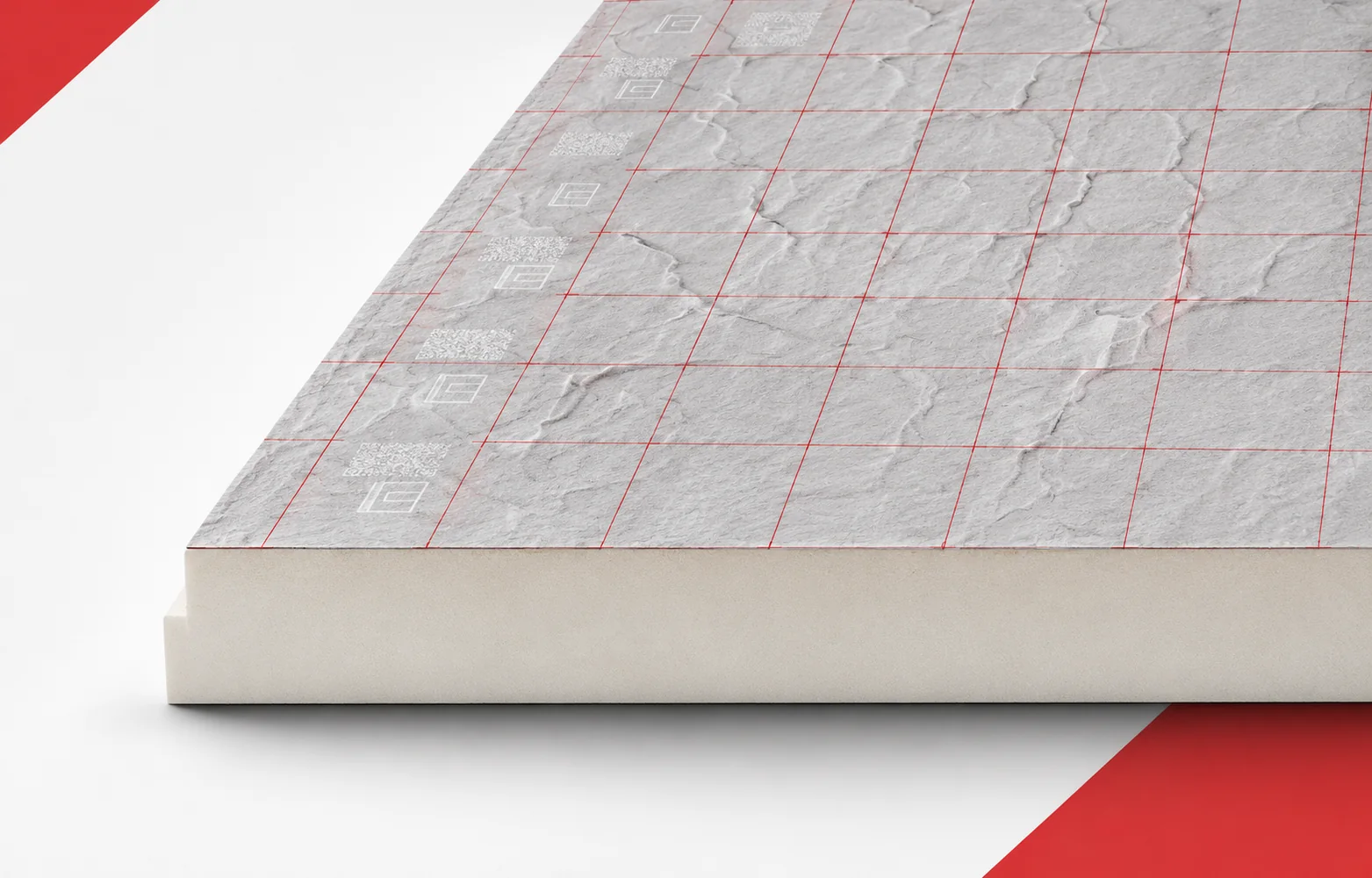
On a flat roof, thermal resistance matters, but so does the height available at parapets and outlets. Thermano Deck allows a relatively…
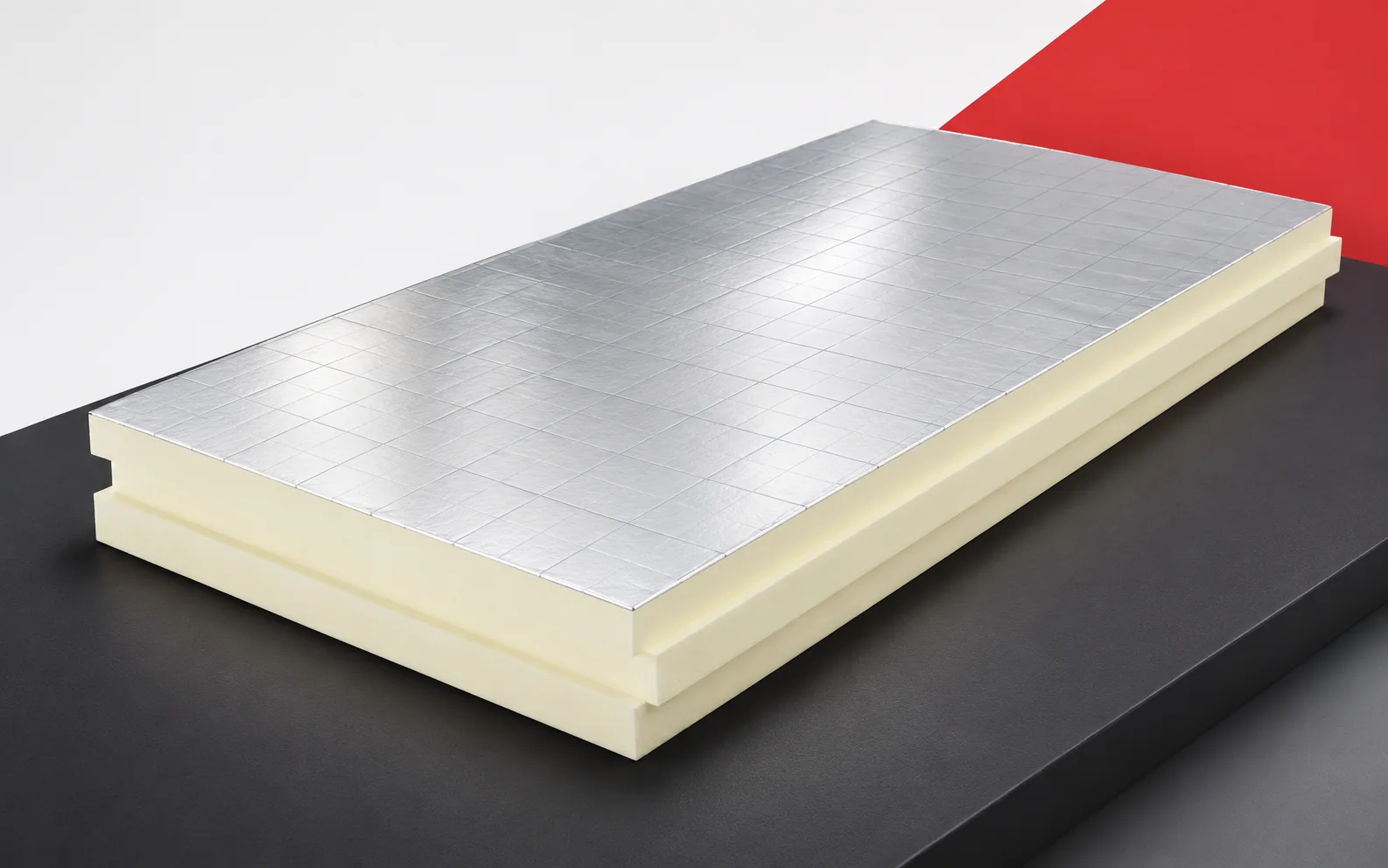
On a flat roof, a good lambda value must go hand in hand with correct drainage. PIR boards can reduce the height…
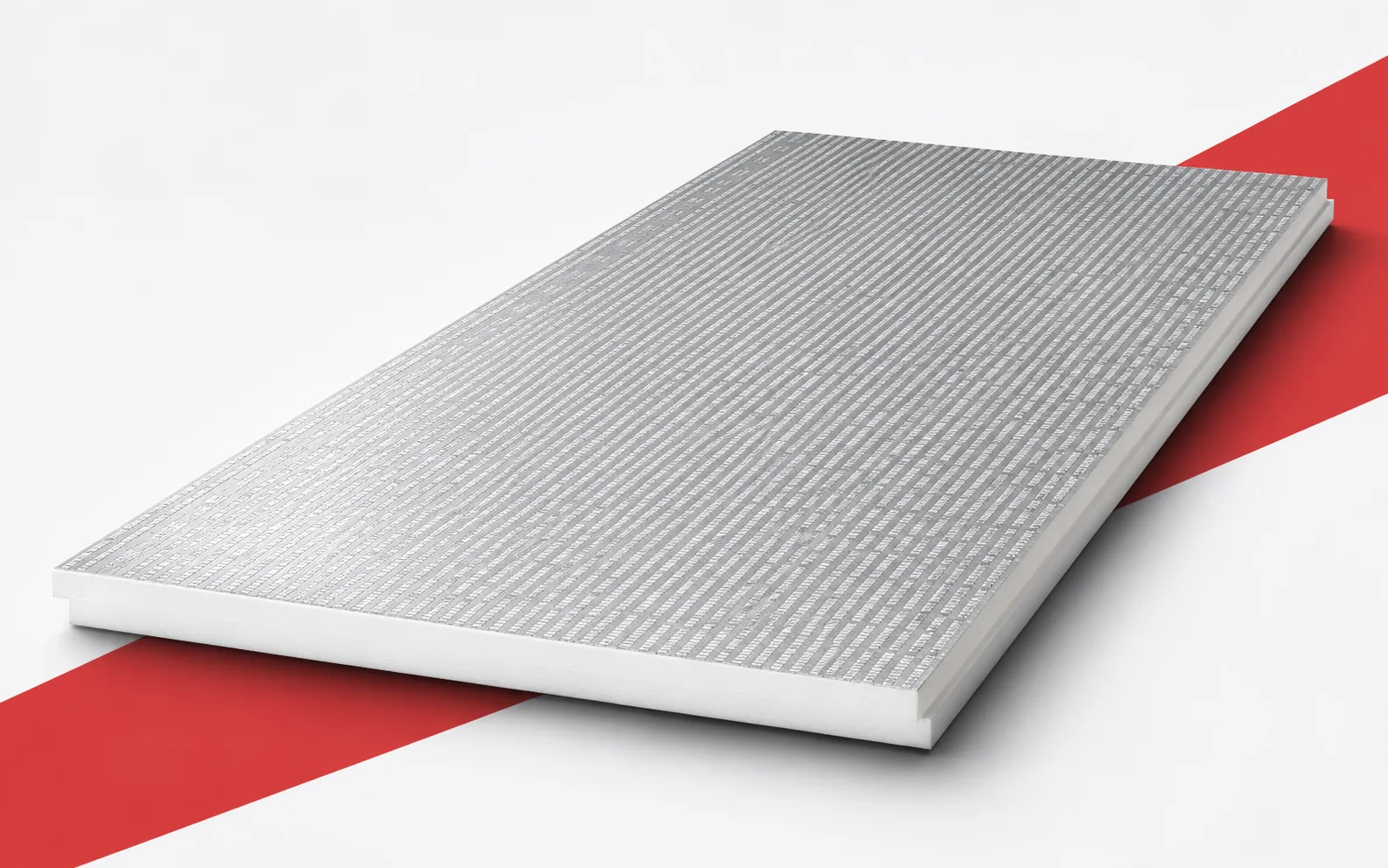
Selecting roof insulation requires reconciling several characteristics. Thermano Roof combines a PIR core with enhanced mechanical properties. When assessing the benefits, however,…
In a small house, a few centimetres of wall thickness can change the layout of the interior. SIP panels with a polyurethane…
A low floor build-up may leave limited space for insulation. Recticel Eurofloor achieves substantial thermal resistance with a thin board. Before selecting…