

Expert guides
Ecoprofil’s expert guides help you plan an order for sandwich panels, PIR insulation or sheet metal. The cost of a finished roof, insulation layer or industrial building envelope depends on coverage, cutting losses, accessories and transport as well as the unit price. Learn how to prepare a quantity schedule, read basic specifications and compare offers for your project. The guides also cover second-grade stock, delivery inspections and preparation for installation. Start with the question you need to resolve, then check the individual product in the shop. Use the worked examples for planning and confirm the final specification against the project drawings and product documentation.
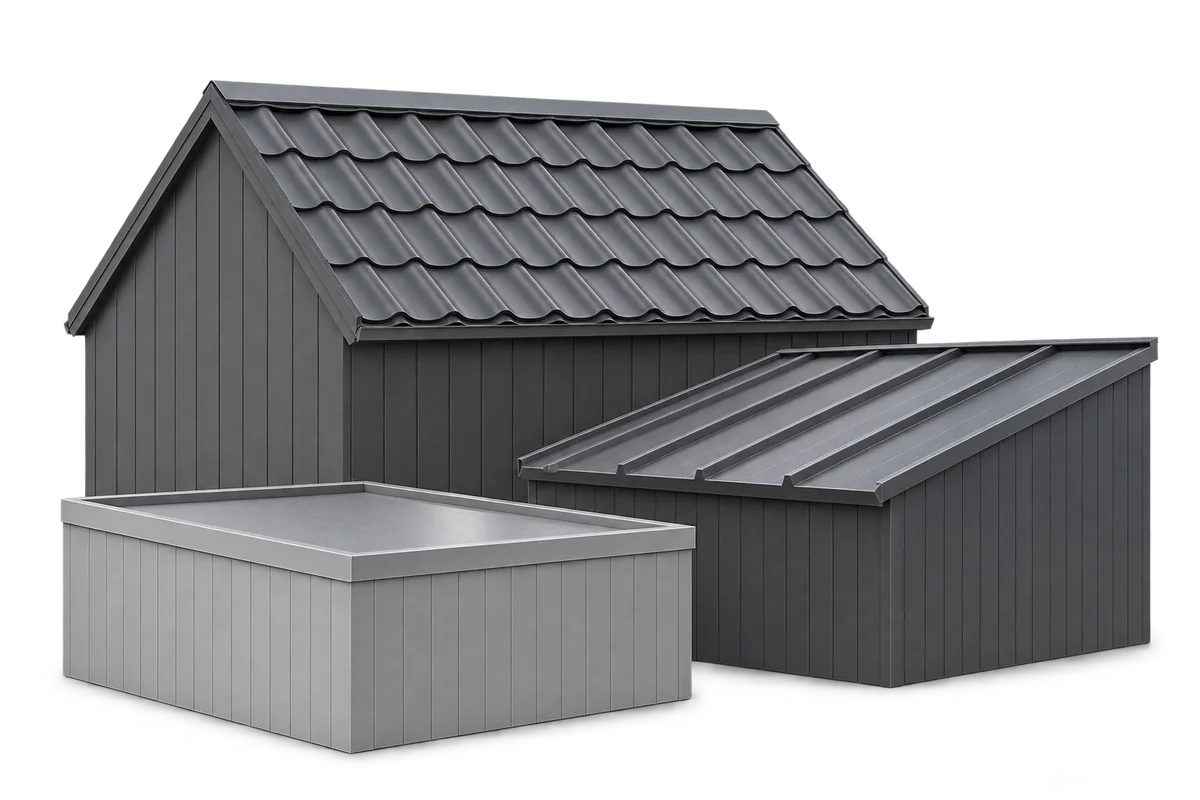
Designing a modern metal roof with clean lines and practical details
The proportions of a roof, the rhythm of its joints and the finish at its edges shape its appearance. Modular metal roof tiles, sheets cut to length and trapezoidal steel profiles each offer different ways to achieve a clean design. Choose a covering that suits the building and its technical requirements before settling on a colour. Eaves without an overhang, concealed gutters and shallow profiles work best when drainage, ventilation and maintenance access are resolved in the drawings. Fewer valleys, dormers and changes of slope usually mean fewer bespoke flashings and simplify sheet layout and insulation continuity. Cost and thermal performance also depend on the wall junctions, insulation and workmanship.
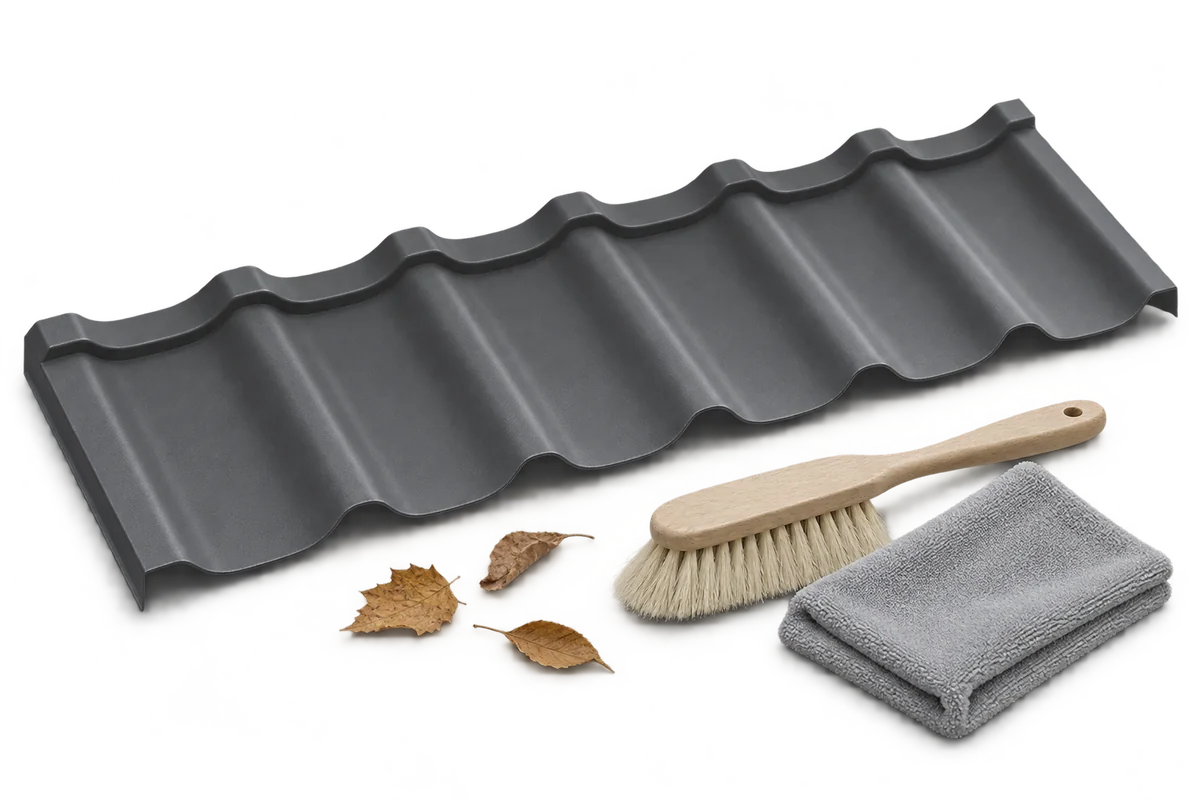
How to clean a roof safely and protect its coating
Before cleaning a roof, identify the covering, assess its condition and work out how the team can reach it safely. Only then choose tools and a cleaner. A concentrated water jet, a stiff brush or an unsuitable chemical can damage coated steel. Check the manufacturer's instructions for the particular finish and inspect the covering once it is dry. Record the type and age of the roof and have the installation documents and warranty conditions to hand. Leaves and organic growth need different treatment from soot or construction residue. Look closely at stains before trying to remove them. They may be signs of corrosion, damage to the finish or water escaping through a failed joint.
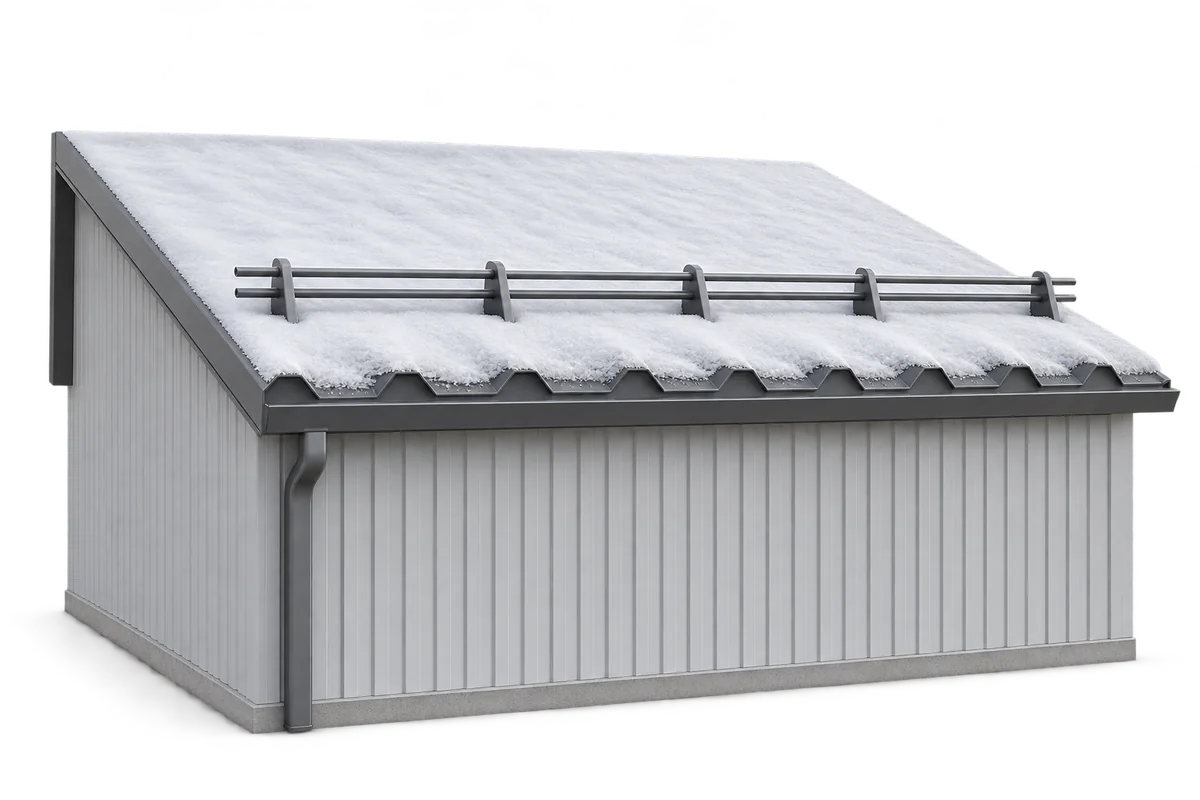
Snow on the roof: how to prepare for winter loads
Snow depth alone does not tell you when a roof needs clearing. What matters is the weight and distribution of the snow and the load the particular roof can carry. Before anyone goes onto it, have the building assessed and plan the work. Unplanned access can put both people and the structure at risk. When building a roof, plan its drainage, maintenance access, safety equipment and inspection points. Fresh dry snow, wet snow and ice have different densities, so layers of the same depth can weigh very different amounts. Wind can also cause snow to drift. One measurement at an accessible point may miss a heavy accumulation against a parapet, at a change in roof level or next to a taller building.
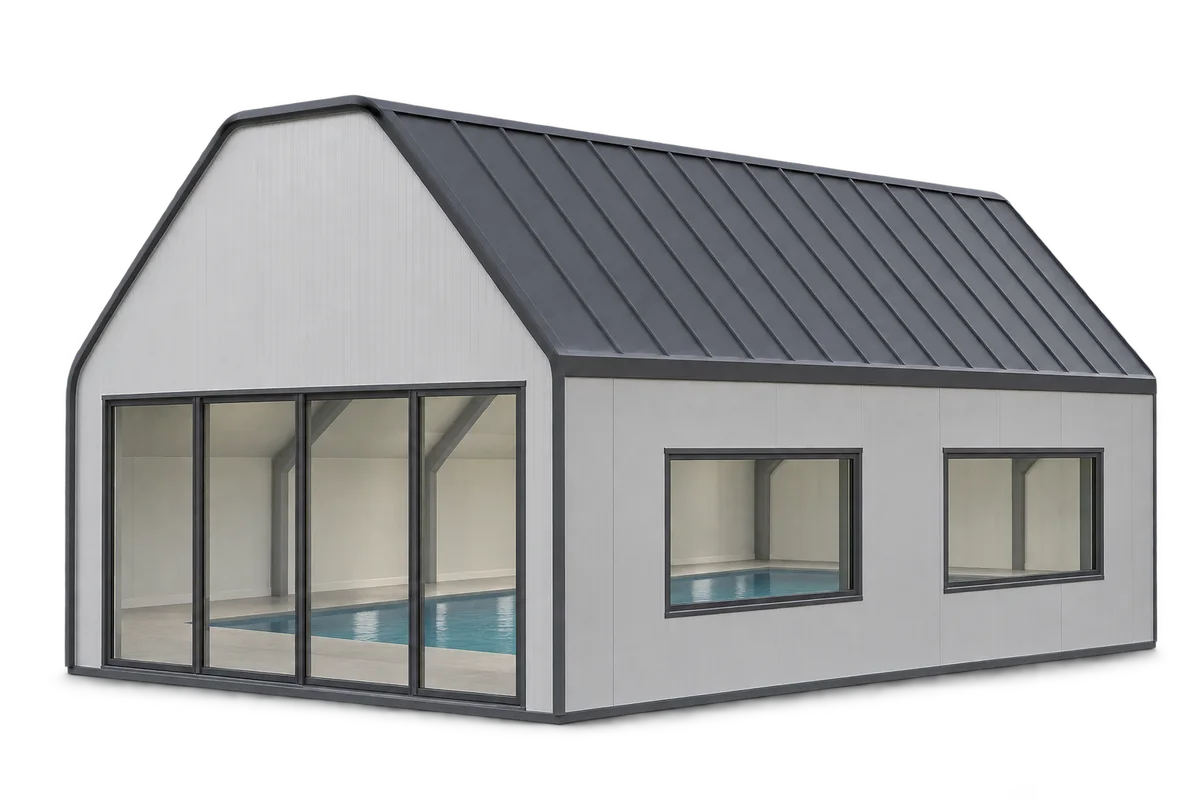
Designing a swimming pool roof to limit condensation and corrosion
A roof over a heated pool has to withstand warm, humid air and the chemicals used to treat the water. Specify the facings, fixings and seals for those conditions. PIR insulation can reduce heat loss, but the roof also needs corrosion protection and the building needs ventilation. Assess the whole assembly, from the internal lining to the drainage, before deciding on a core thickness. A seasonal cover for an outdoor pool and a heated indoor pool are different design tasks. For an indoor pool, establish the air temperature, humidity and pattern of use. The exposed water surface, number of swimmers and periods when the pool is closed all affect the load on the building services and conditions at the roof.
How to choose a building contractor and what to agree before work starts
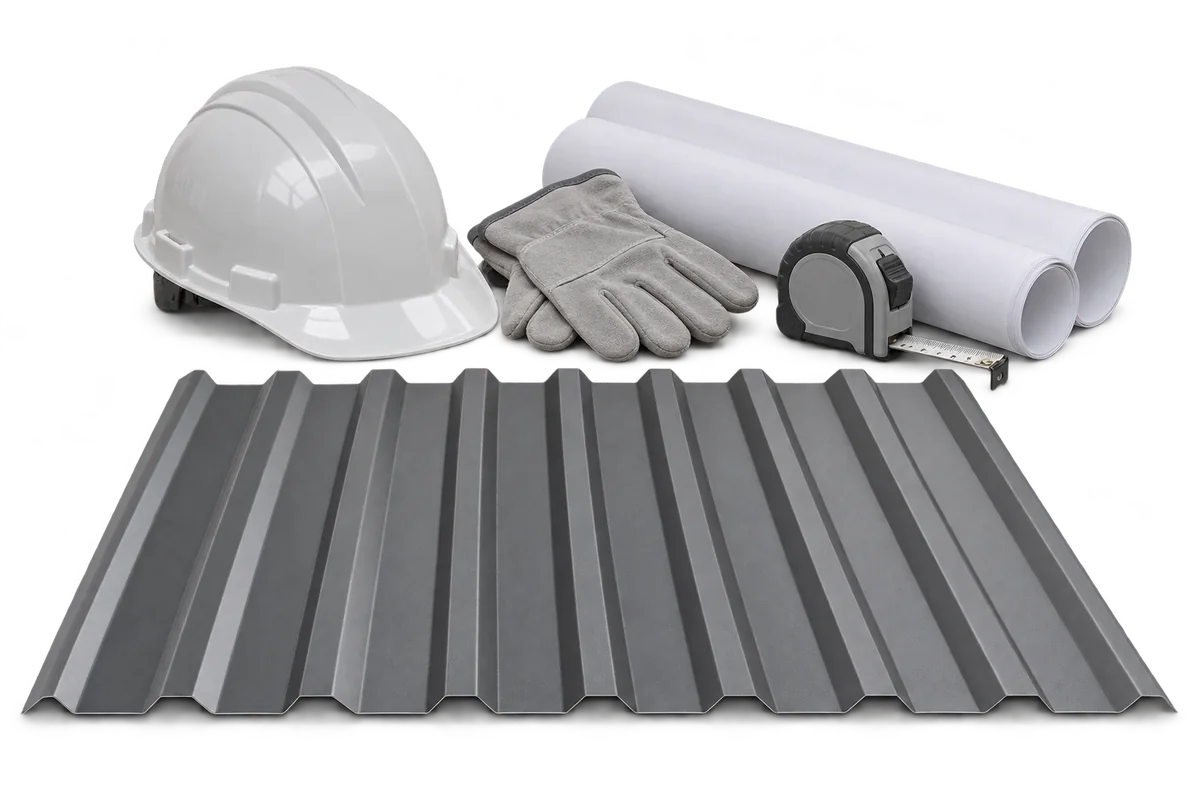
A good contractor can explain how they will build to your design, define exactly what their quote covers and show how each stage will be inspected. A low price or an early finish date tells you little on its own. Before you commit, compare similar jobs, agree on the materials and decide who is responsible where trades meet. On a roof, for example, the carpenter, roofer and insulation installer may all work on the same detail. Ask to see earlier projects that used your construction method. A sandwich panel roof differs from timber rafters clad in metal roof tiles, and above-rafter PIR insulation requires specific fixings and detailing. Ask for photographs taken before the work was covered up: a finished roof or façade hides many of its joints.
Choosing waterproofing and insulation for different types of flat roof
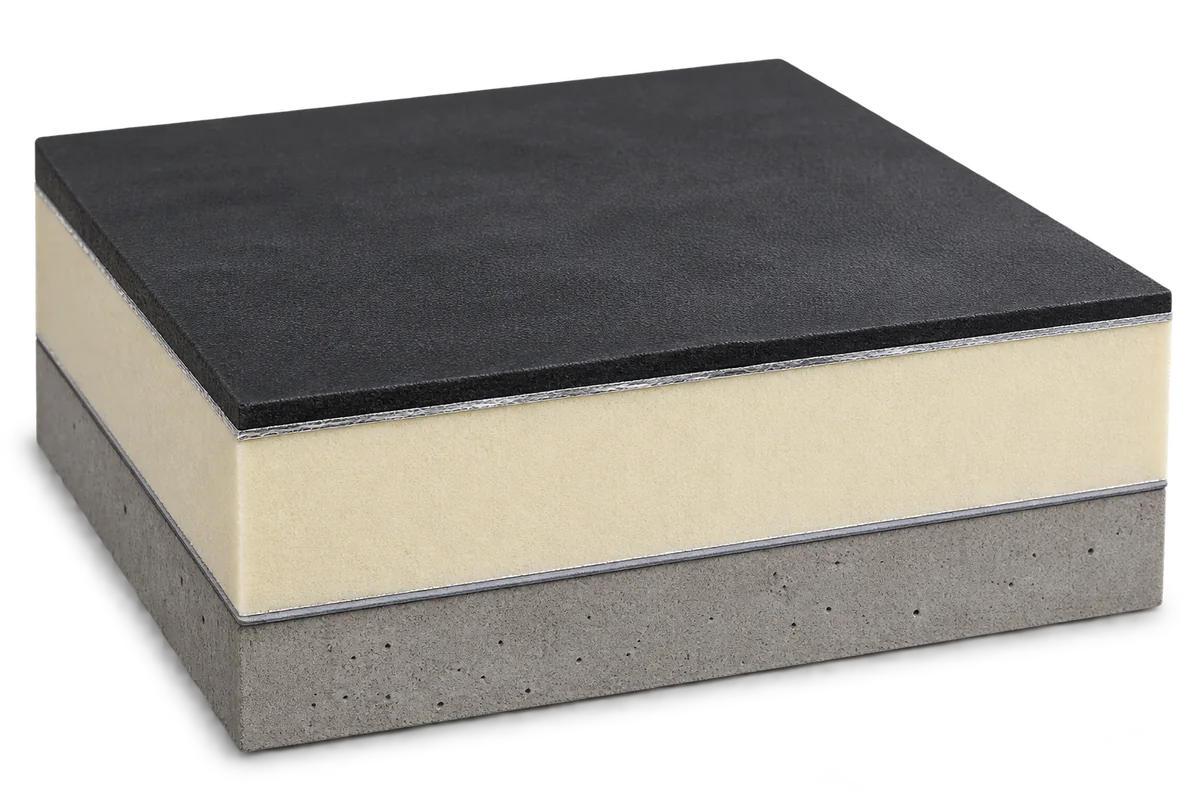
Choose the waterproofing and insulation for a flat roof together. The deck, layer order, fixing method and intended use determine which combinations will work. PIR can deliver the required thermal resistance in a relatively thin layer. The roof still needs its own waterproofing, and the suitability of the insulation depends on its position. On a conventional warm roof the insulation sits beneath the waterproofing. The waterproof layer can be exposed to the weather or covered with a protective finish. The insulation must support it, suit the fixings and have a facing compatible with the method used to install the covering.