

Fibre-cement roof coverings
How to order fibre cement sheets and reduce waste
A good order starts with the layout of the sheets on the roof slope. Fibre-cement slates are available in various formats, but not every format will be equally economical on a given roof. Waste also arises from incorrect measuring, damaged corners and poorly chosen accessories. Asbestos-free fibre cement should therefore be ordered only after checking the roof geometry and the installation conditions. The building’s footprint alone is not enough to determine the number of slates. The floor area under the roof differs from the area of the sloping roof surface. The calculation requires the edge lengths, the pitch and the actual shape of the roof. The planned eaves and wall junctions will also be relevant. On a building being renovated, it is worth checking both diagonals and the widths at several points.
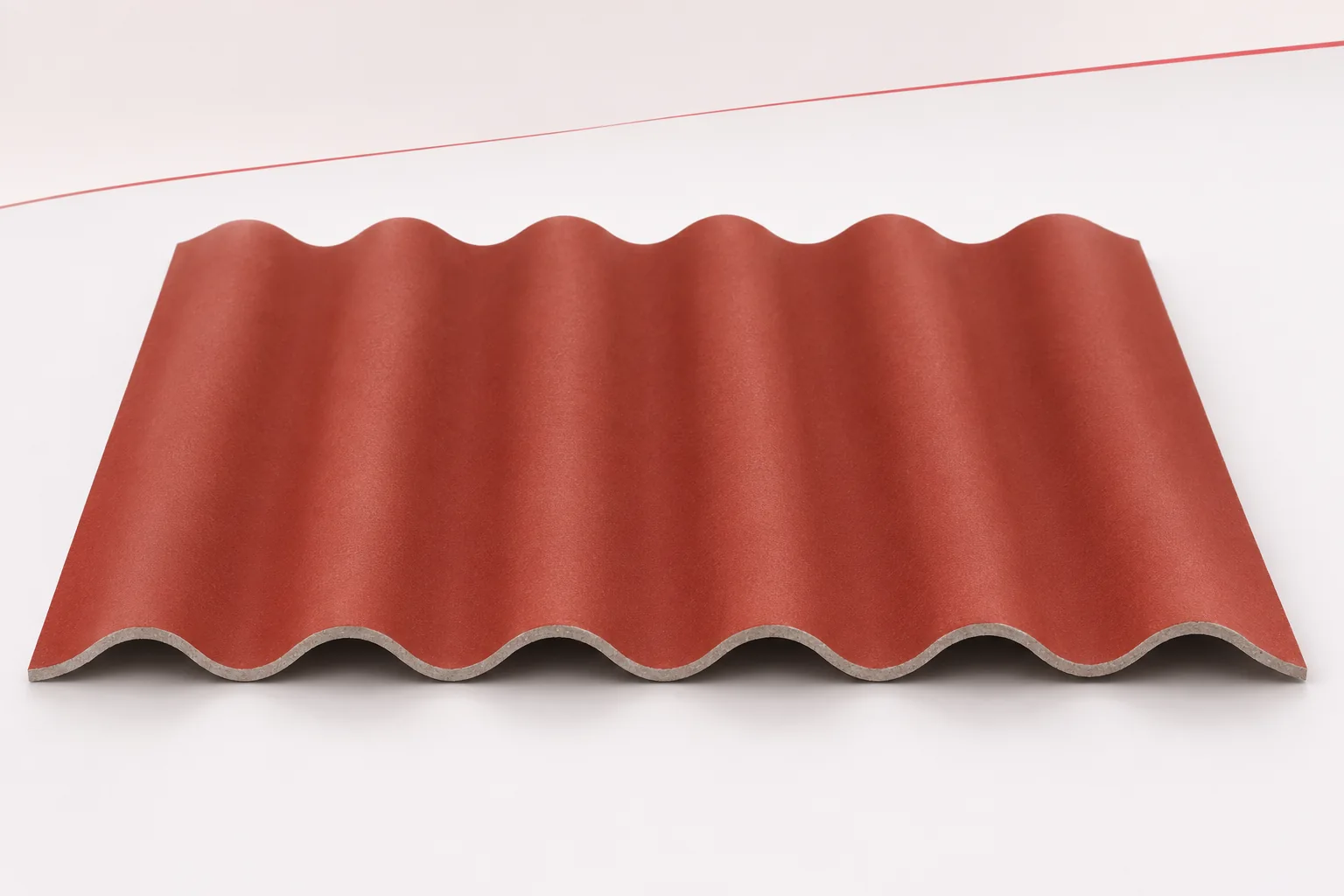
In this article
Measure the roof slope, not the building footprint
A roof may deviate from a rectangle even though it looks regular from the ground. Fibre-cement slates are laid to installation lines, so an uneven substrate should not be concealed by randomly increasing the laps. The problem with the structure must first be identified. Enter the dimensions on a sketch, marking the side of measurement. This will make it possible to distinguish the length of the roof slope from the distance between supports and will reduce errors when preparing a quotation.
Draw out the full courses and the edge details
Once the working dimensions of the chosen profile have been established, the number of slates per course and the number of courses can be planned. Consider the start and end of the roof slope, the ridge, the valleys and the penetrations separately. Edge slates are not always prepared in the same way as elements in the middle of the roof. A version with factory-made holes or corners may have a defined laying direction. Fibre-cement slates must be assigned to specific locations before their number is entered in the order. A simple sketch makes it possible to spot a narrow strip of cut material or an unfavourable joint that would remain invisible in a list of metres alone.
Match the length to the supports
A longer sheet is not automatically a better way to reduce waste. It must suit the arrangement of the supports and the conditions permitted for the given product. Reducing the number of laps can be an advantage, but it does not justify changing the purlin spacing without checking. Asbestos-free fibre cement remains a material sensitive to inadequate support and point loading. The choice of length also affects the handling and lifting of the slates onto the roof. Where access is difficult, an apparent saving in material may be lost through damage during manual transport. It is worth agreeing the format with the crew before delivery.
A cut piece does not always become a spare
A remaining piece can be used only if it retains the required shape, support, fixings and lap arrangement. Not every cut piece is suitable for the termination of the adjacent course. Nor should factory-prepared elements be turned around if the instructions specify a particular orientation. Fibre-cement slates are meant to form a sealed system, not an arrangement of random offcuts. On the cutting plan it is worth marking which pieces can be given a specific use. The rest must be counted as waste. Such a balance is more reliable than assuming that every sheet will be fully used.
Base the allowance on risk
A fixed percentage allowance for all roofs says little. A simple canopy and a multi-slope roof have a different cutting layout and a different risk of damage. The availability of later deliveries, the size of the elements and the method of unloading also matter. The allowance should be justified, not arbitrary. Agree with the contractor how many slates are needed for installation, how many for the expected cuts and how many will remain for a possible repair. Fibre-cement slates stored for the future require suitable conditions. An excessive number of sheets left without cover is not a saving, even if they were bought more cheaply.
Assemble the accessories with the same care
The absence of the right fitting may force a change of detail on the roof itself. Include in the order the ridge elements, edge trims, fasteners and sealants required by the system. Their quantity is determined from the lengths of the junctions and the method of installation, not only from the area of the roof slope. Also check whether the rooflight elements have a matching profile. Asbestos-free fibre cement and a translucent sheet may look similar in section, but they behave differently and have different rules for support. A complete list reduces emergency purchases and the temptation to replace a missing part with whatever happens to be on site.
Limit losses between delivery and installation
Prepare the unloading area close to the work but away from the path of machinery. The ground should be level, and the way the pack is supported should follow the instructions. The cover must protect against water and allow ventilation as recommended for the product. Do not drag the slates over one another and do not allow heavy objects to be placed on the corners. It is worth inspecting the fibre-cement slates on receipt, before damage is attributed to the roofing work. Photographs of the pack and labels help to clarify mistakes. Well-planned logistics often save more material than a risky reduction of the allowance.
Before ordering, prepare a drawing of the roof slope with the slate courses, a list of accessories and an unloading plan. Check every saving for compliance with the support arrangement and the installation instructions.
7 branches. Materials closer to your project.

Free quote
Materials for your project
You may also find useful…
Roof maintenance should not begin with a breakdown. Fibre cement sheets need checks on the joints, the drainage and the places where…
A durable material can help to limit expenditure, but it does not guarantee a cheap roof. Fibre-cement sheets have to be bought,…
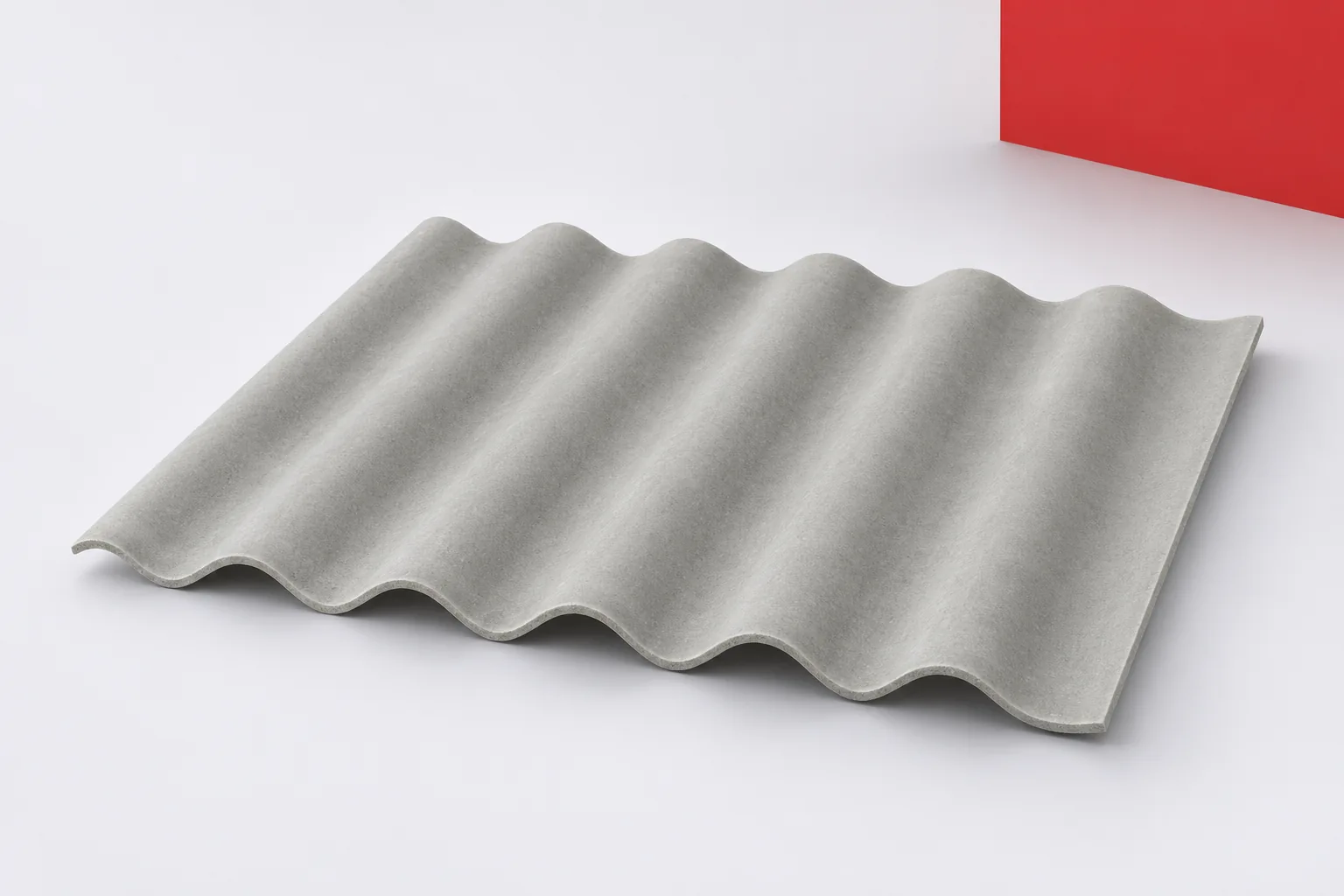
The NT marking appears in the documentation and labelling of modern fibre-cement products. It helps identify asbestos-free technology, but it must be…
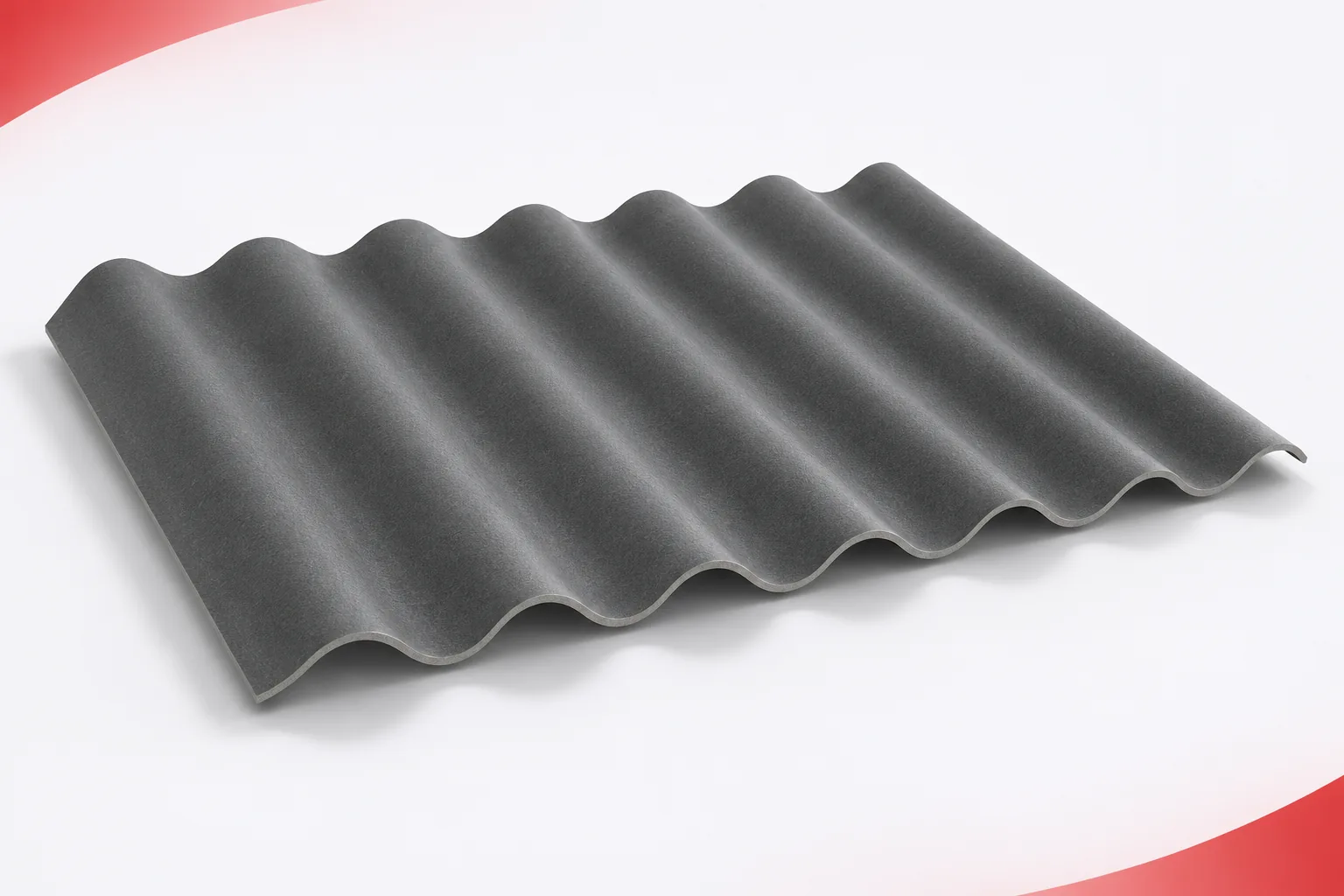
Asbestos-free fibre cement is often chosen with a view to a durable roof and fewer frequent renovations. That is a sensible direction,…
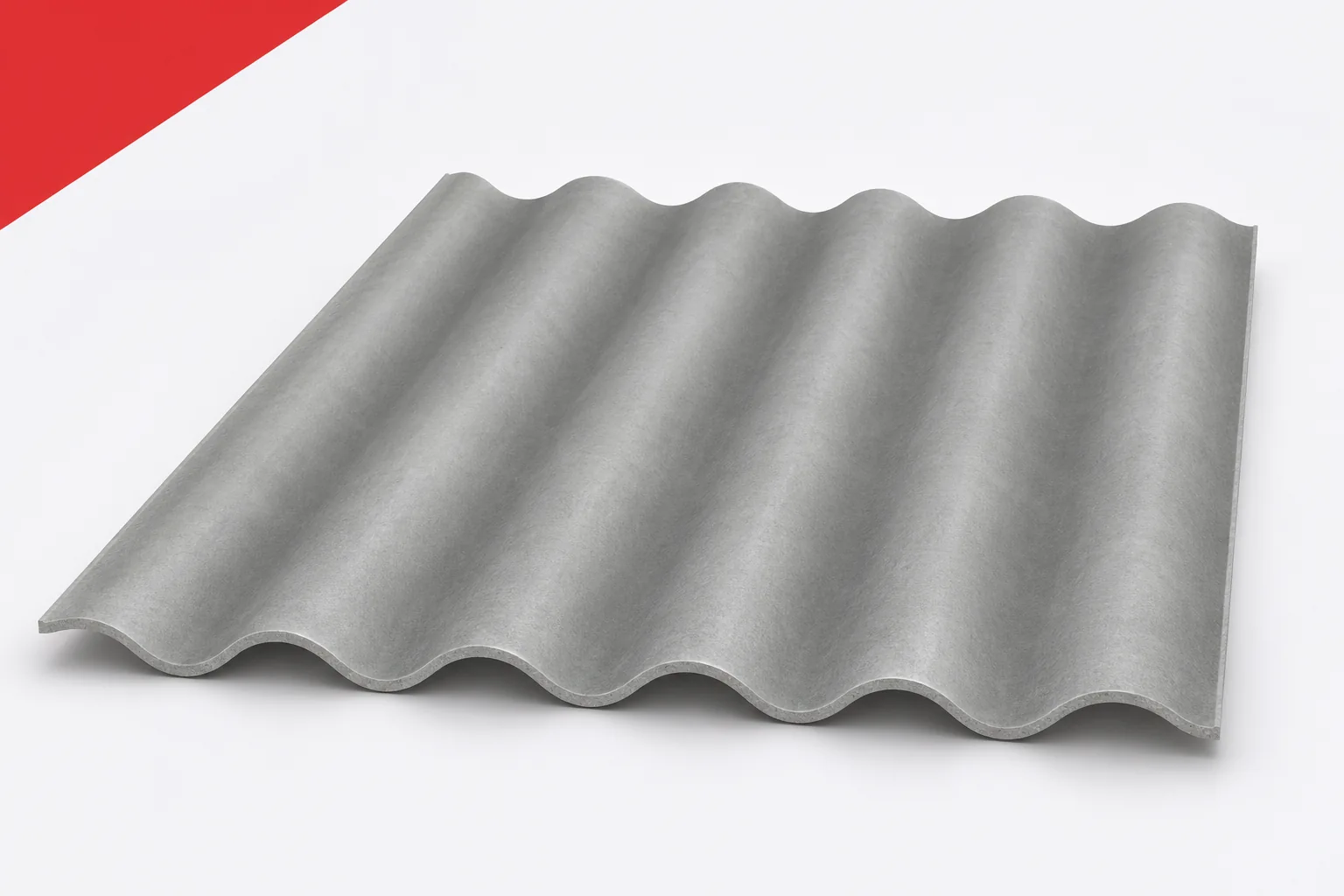
When a carport is demolished or a farm building is converted, the question arises of giving the roofing a second life. Fibre…
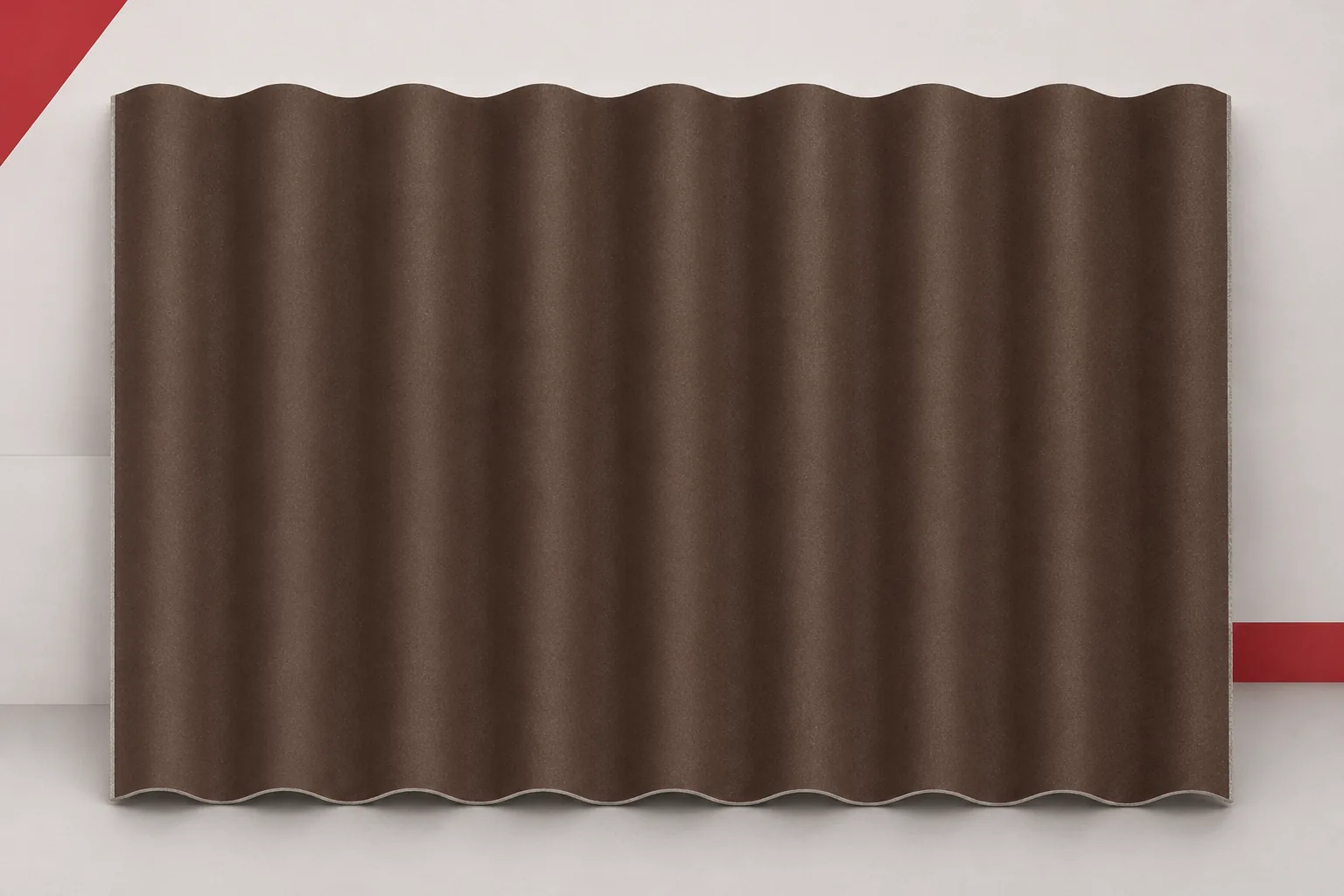
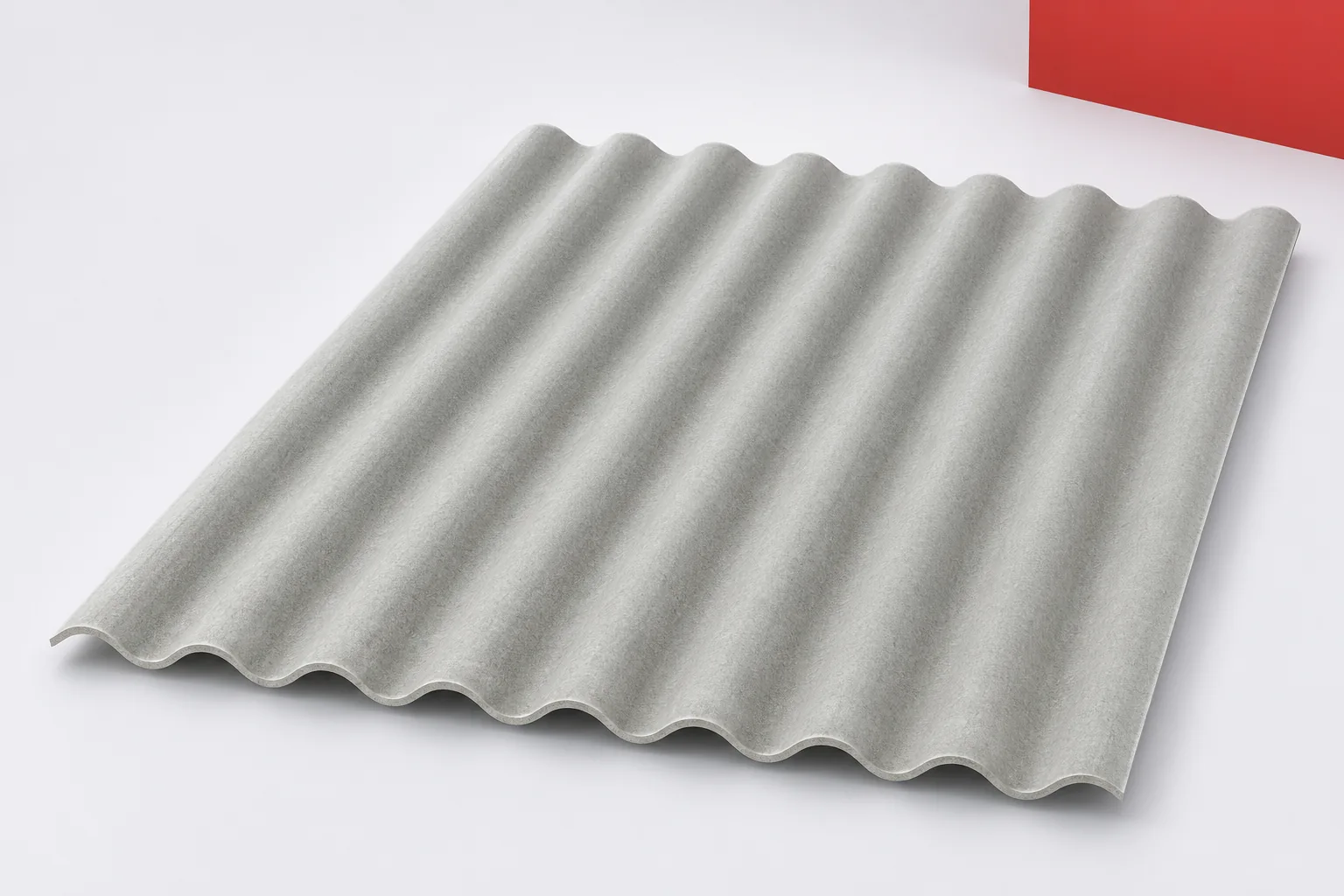
The grey corrugated sheet has a distinct wave pattern and a calm, mineral appearance. It does not have to imitate a roof…
A roof over firewood should limit rain penetration and allow free air exchange around the stack. A tight roof surface alone does…
A small garden shelter does not need a complicated form, but it does need a properly designed roof. Fibre-cement sheets can give…