

Insulation and sandwich panels
Roof insulation: comparing PIR, mineral wool, EPS and XPS
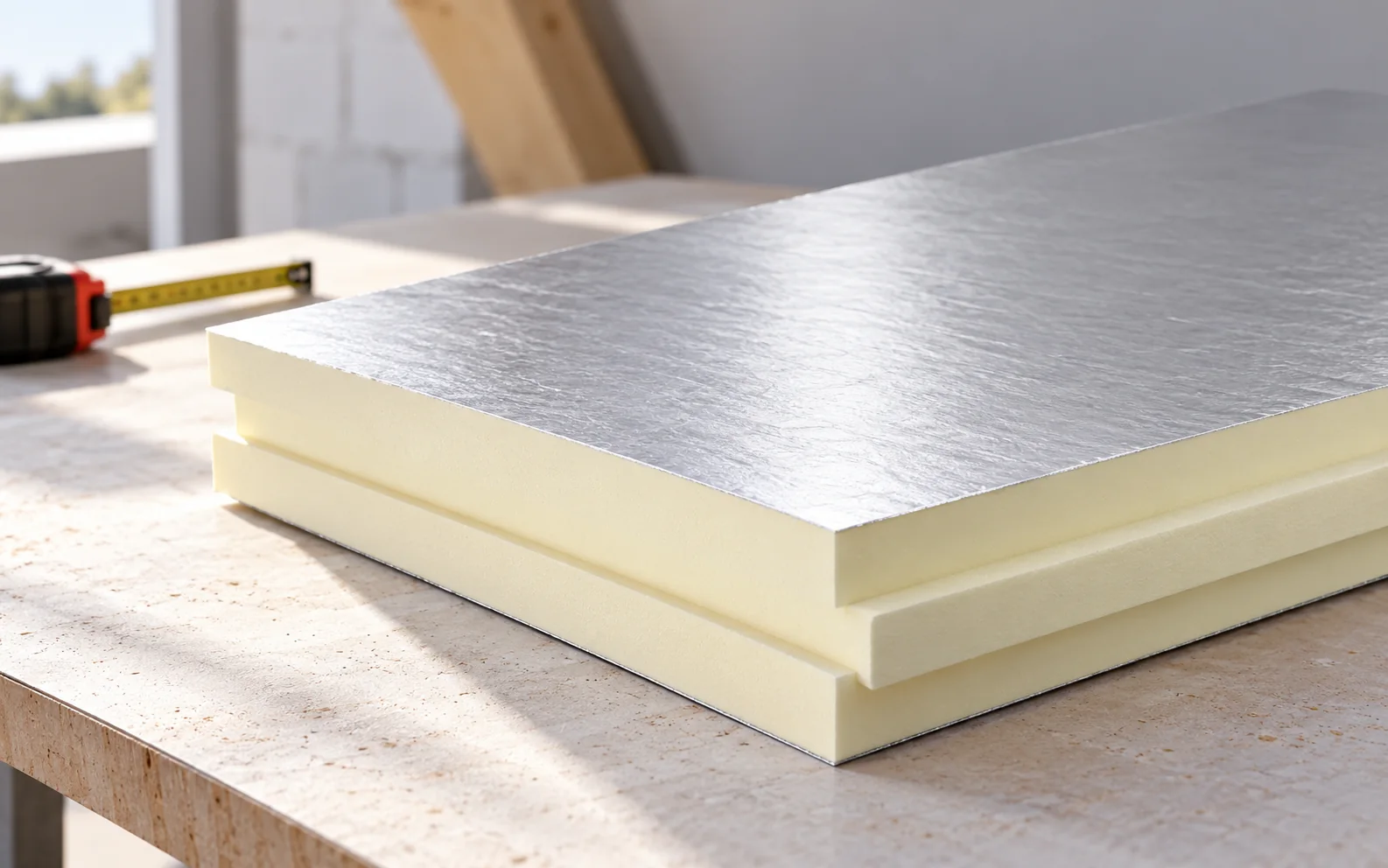
Select roof insulation for the layer arrangement, available height and loads. PIR often achieves the required thermal resistance at a smaller thickness. Mineral wool offers fire and acoustic advantages, while EPS and XPS suit other requirements. Compare specific variants rather than material names alone. Lambda describes a material’s thermal conductivity. A lower value permits similar resistance with a thinner layer. Use the selected product’s declaration. Values vary within an insulation group and sometimes with thickness too. Do not compare the lambda of one board with a U-value for the whole roof.
In this article
What does thermal conductivity really tell you?
Lambda describes a material’s thermal conductivity. A lower value permits similar thermal resistance with a thinner layer. Take figures from the selected product’s declaration. Values vary within an insulation family and sometimes also change with thickness.
Do not compare a board’s lambda with a whole-roof U-value: these are different quantities. Rafters, fixings and joints affect the final result. A good material specification cannot repair gaps in the insulation. Compare products alongside a section through the complete element.
How much space can PIR save?
Consider only the resistance of a homogeneous layer. With 100 mm PIR and conductivity of 0.022 W/(mK), it is approximately 4.55 m²K/W. A material at 0.031 needs around 141 mm for a similar result; at 0.038, around 173 mm. This is a comparison calculation, not a finished roof specification.
The difference may matter in a low attic, at a parapet or terrace threshold. Check the height of the full build-up, however. Battens or a separating layer may use some of the insulation space saved. Not every calculated thickness is available as a standard board either.
When might mineral wool be more suitable?
Mineral wool is useful in assemblies with demanding fire requirements. Flexible types fit readily between rafters. An appropriate mineral-wool construction can also reduce sound transmission effectively. Assess acoustics for the whole roof, including the internal lining.
Do not transfer a complete sandwich panel’s fire classification to the PIR core alone. Nor should you assume all mineral wool has identical density and load capacity. A soft mat between rafters and a rigid board beneath waterproofing serve different purposes. A substitution requires checking the intended application.
Where do EPS and XPS work well?
EPS comes in grades with different thermal and strength properties. It can be an economical flat-roof component when selected for the anticipated loads and roof covering. A façade board is not automatically suitable beneath a loaded roof or floor layer.
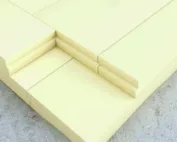
XPS is used where moisture contact and compression matter, among other applications. In some inverted-roof assemblies, insulation lies above the waterproofing. Such systems have their own drainage and ballast requirements. Do not arbitrarily replace XPS with PIR solely for its lower conductivity.
How should compression performance be compared?
CS(10) describes stress at a specified deformation during testing. It does not authorise loading a board at that stress for years. Terraces, roof equipment and access routes require consideration of sustained loads and their distribution.
PIR declared at 120 kPa at 10% deformation is not inherently stronger than XPS with a higher declared value. On pitched roofs, fixings extending into rafters also have a separate role. Insulation cannot independently replace the structural support for roofing and installations.
Does low water absorption provide enough protection from water?
No. Thermal insulation does not replace waterproofing. Even a low-absorption material must be stored and installed according to its instructions. Water in joints, beneath facings or between layers can impair the whole assembly. Enclosing wet boards makes drying harder.
Water-vapour resistance matters too. Aluminium-faced PIR differs from mineral wool in this respect. Selecting the internal layer and assessing outward drying requires consideration of the entire roof. Saying a material breathes does not adequately describe these relationships.
How can costs be compared fairly?
Compare materials at similar thermal resistance and for the same application. Then add fixings, tapes, adhesives, detailing and labour. Comparing the price per cubic metre can mislead when required thicknesses differ. Comparing a bare material with a complete system has the same problem.
Check pack sizes and coverage after allowing for edge profiles. On a small roof, full-pack purchasing can change the cost difference. Allowance should follow the cutting layout. Do not pay for excess merely because two offers used different area calculations.
Before you order
Prepare a table with five items: required layer resistance, thickness, application, load resistance and full installation cost. Compare PIR, EPS, XPS and mineral wool within that table. This avoids choosing on one attractive parameter alone.
Key points to remember
PIR has a clear advantage where strong insulation performance in a thin layer matters. The other materials have strengths of their own. The best choice meets the requirements of the whole roof and delivers a predictable result after installation.
7 branches. Materials closer to your project.

Free quote
Materials for your project
You may also find useful…
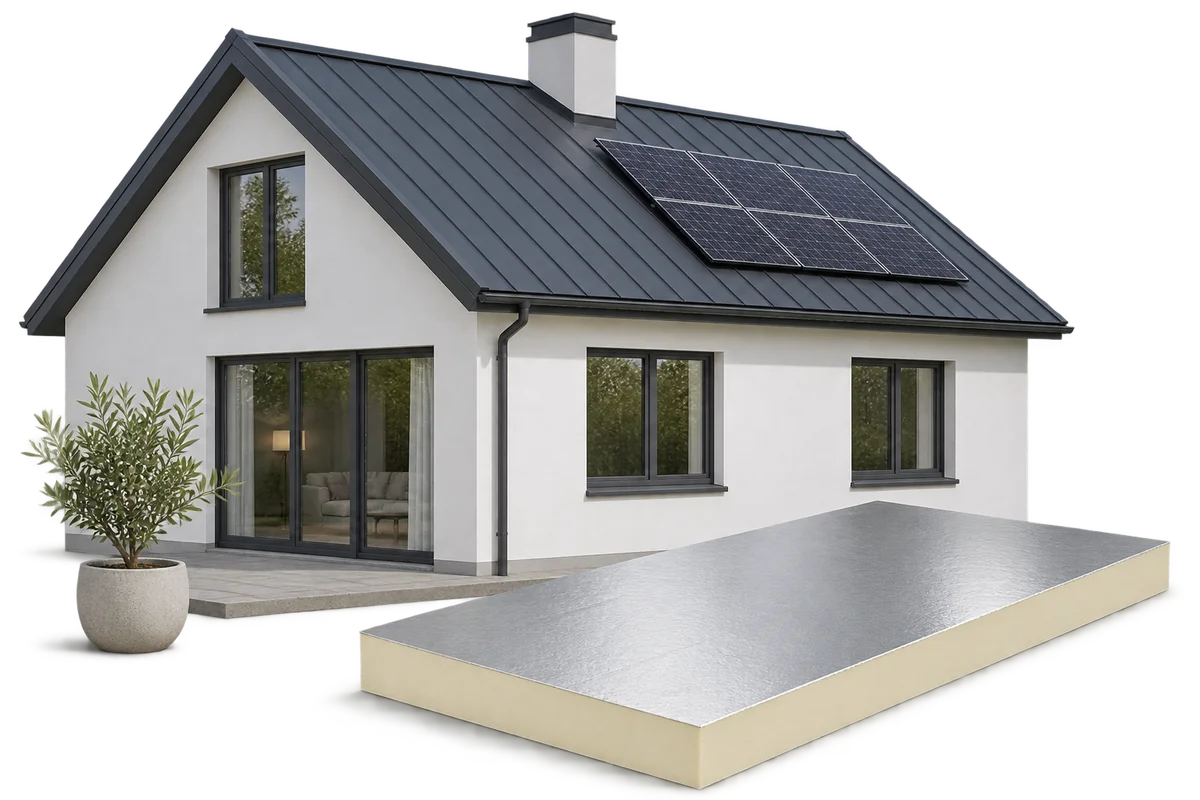
The bill of materials for an energy-efficient house should link every delivery item to the building envelope component and detail shown in…
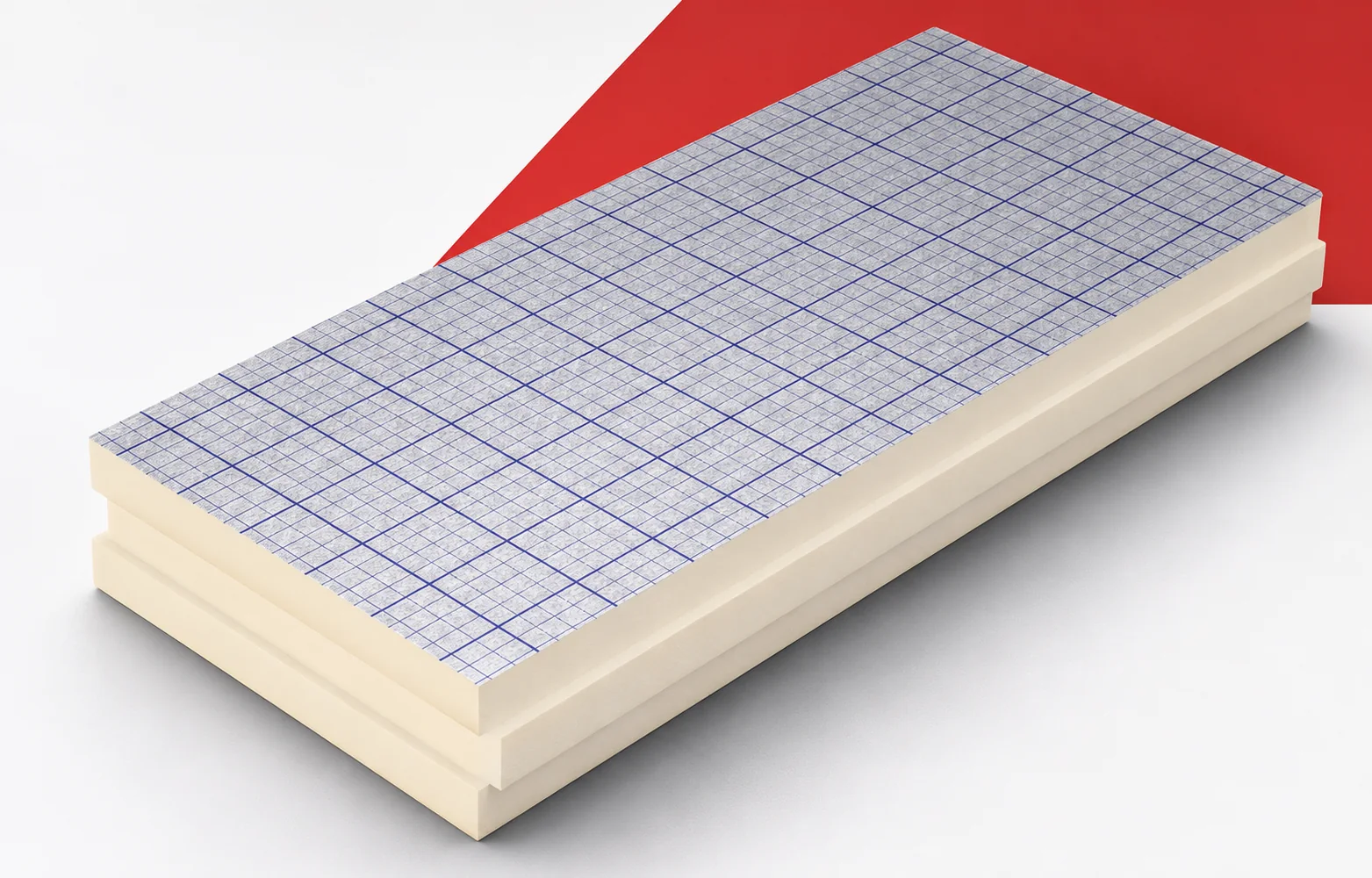
The properties of swissporPIR Alu must be preserved along the entire route from delivery to the closing of the layers. The condition…
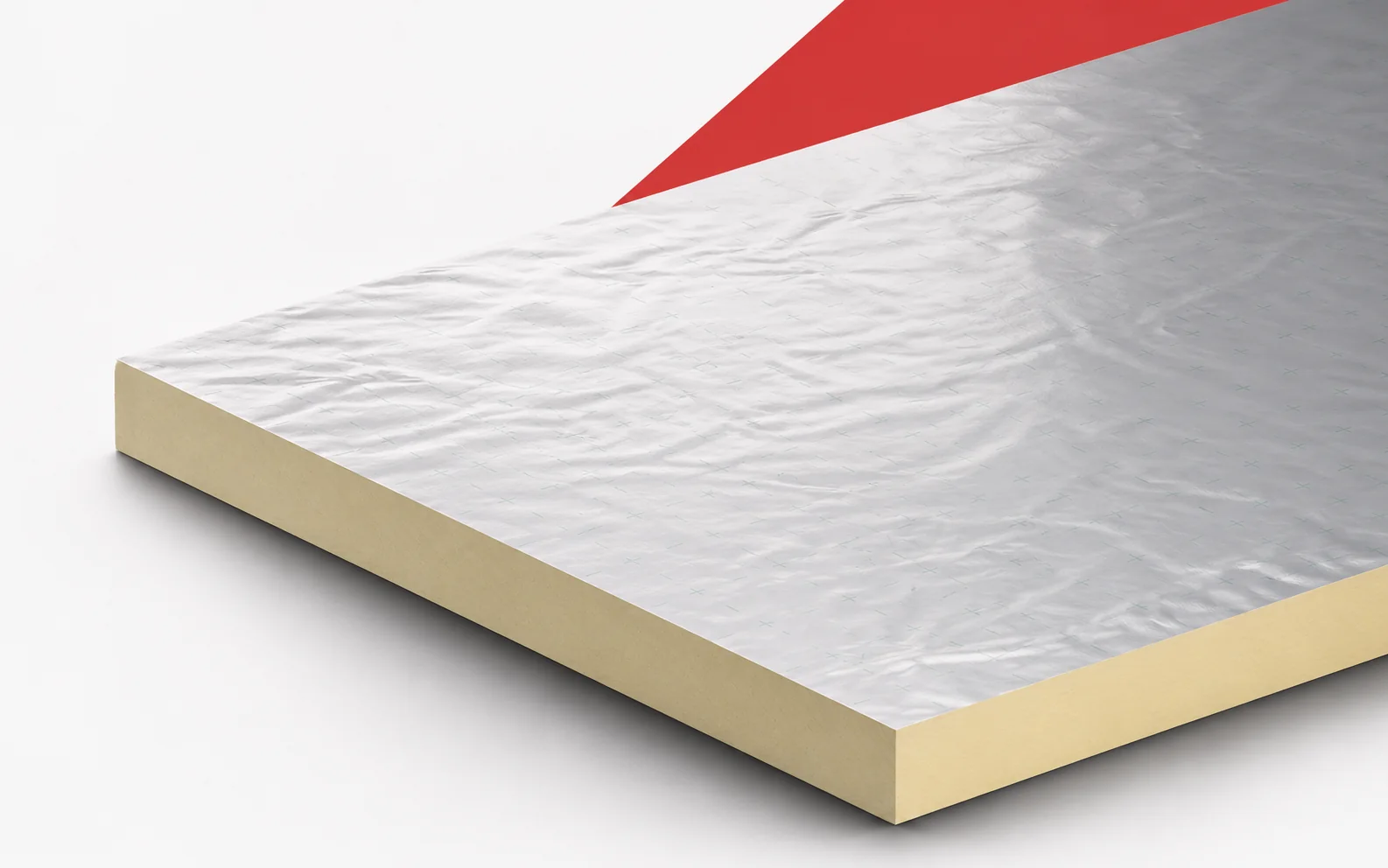
Therma TF70 helps when floor insulation has to be considered within a limited available height. The benefit of the lambda value must,…
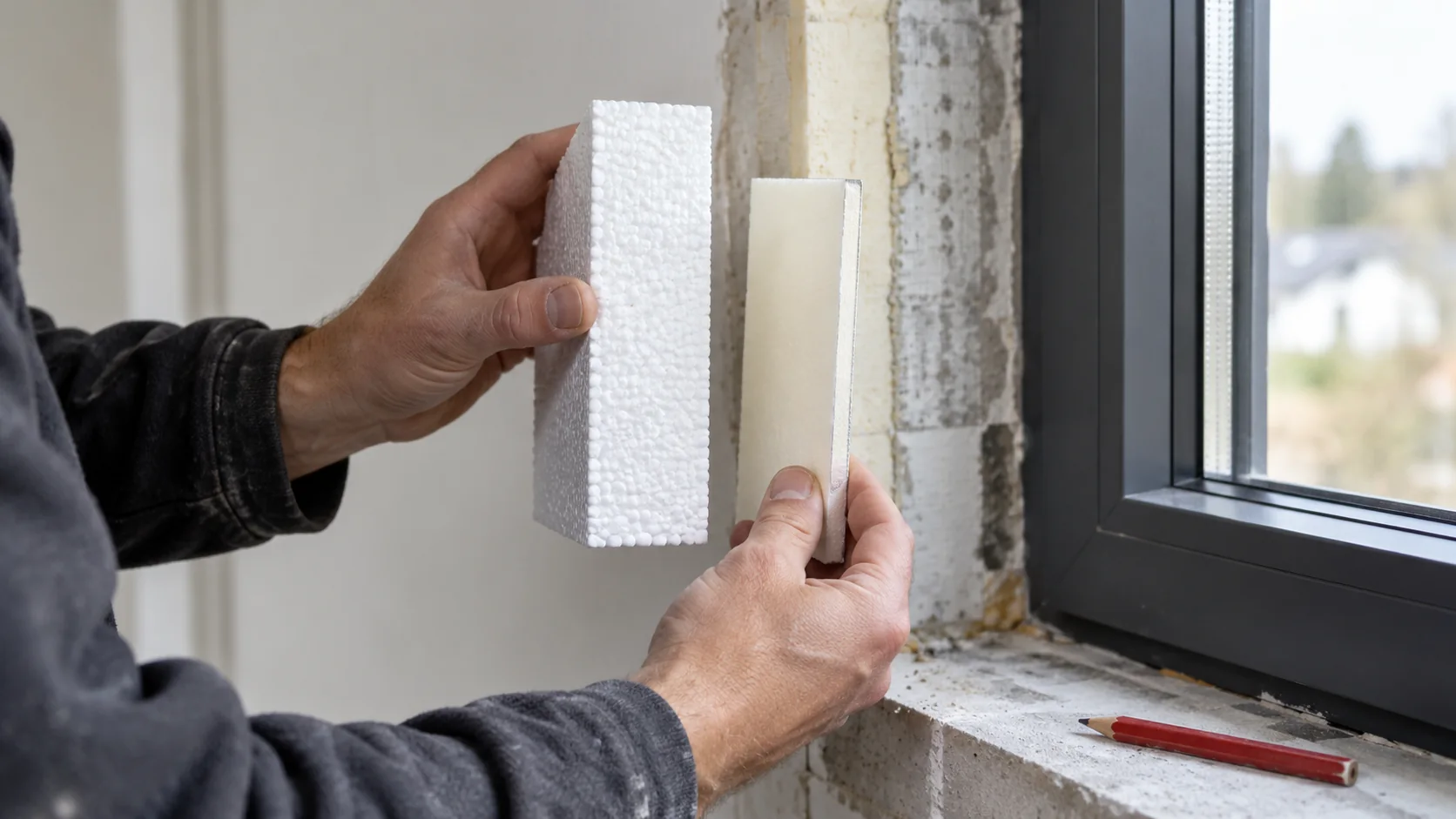
To compare PIR and expanded polystyrene (EPS), use the thermal resistance of each layer. The thickness needed depends on the thermal conductivity…
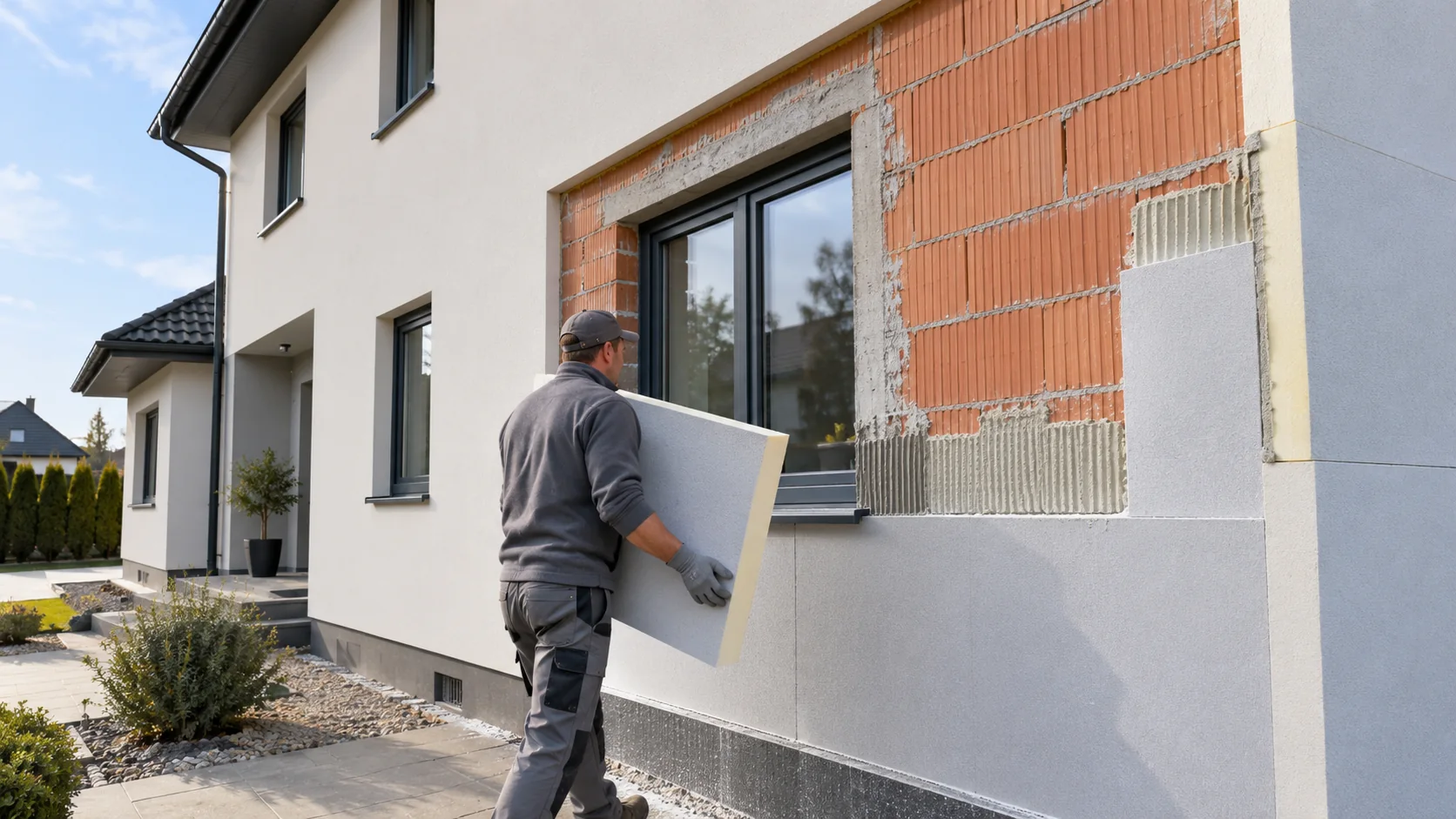
Two houses built with hollow clay blocks may need different insulation. Wall thickness, mortar, ring beams and previous repairs can differ. Space…
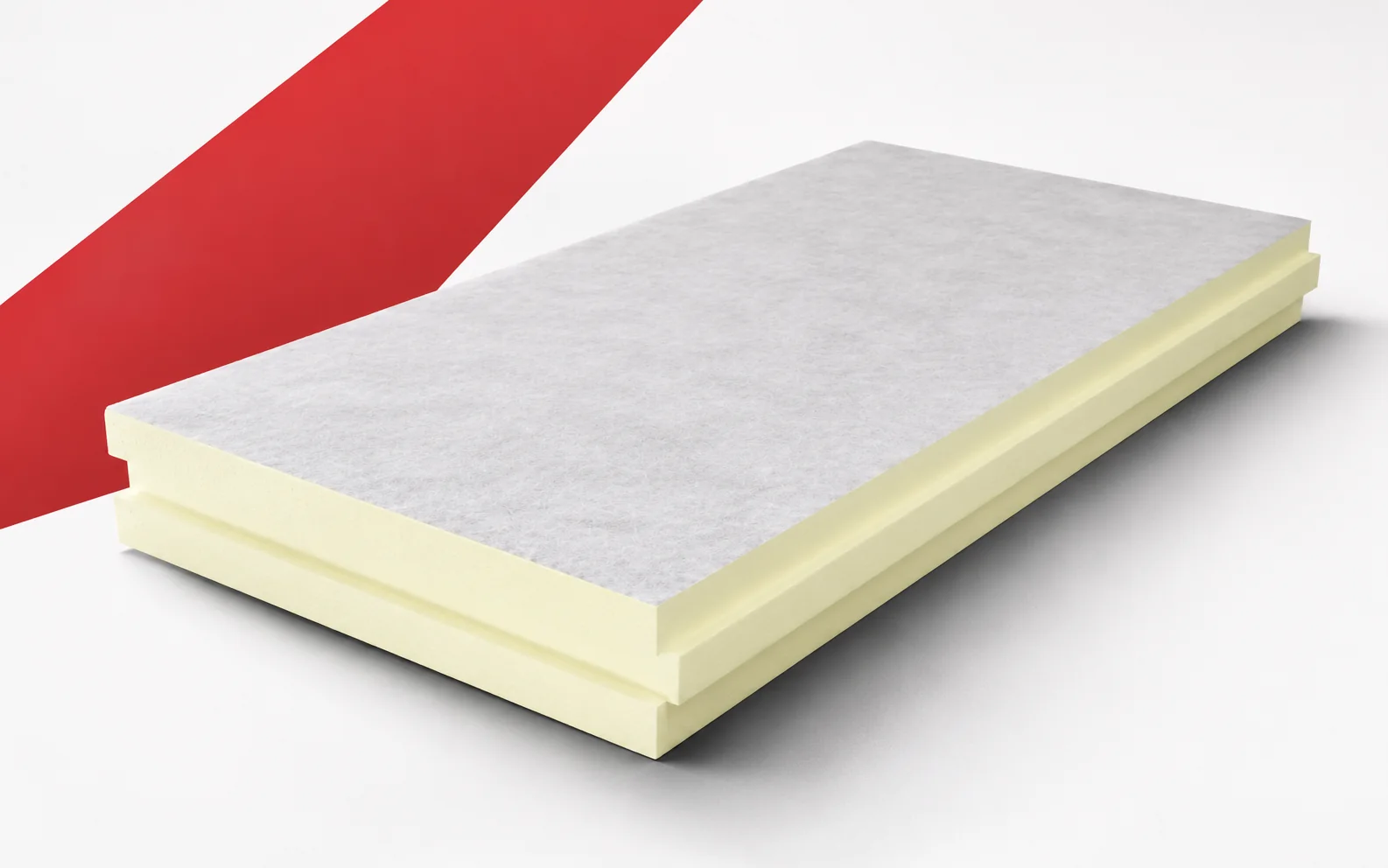
On a façade, the insulation thickness affects the reveals, sills and the position of details. termPIR ETX allows PIR insulation to be…
Two ALU TAP fields are to direct water to separate outlets. Their heights meet at a shared boundary. The energy-based choice of…
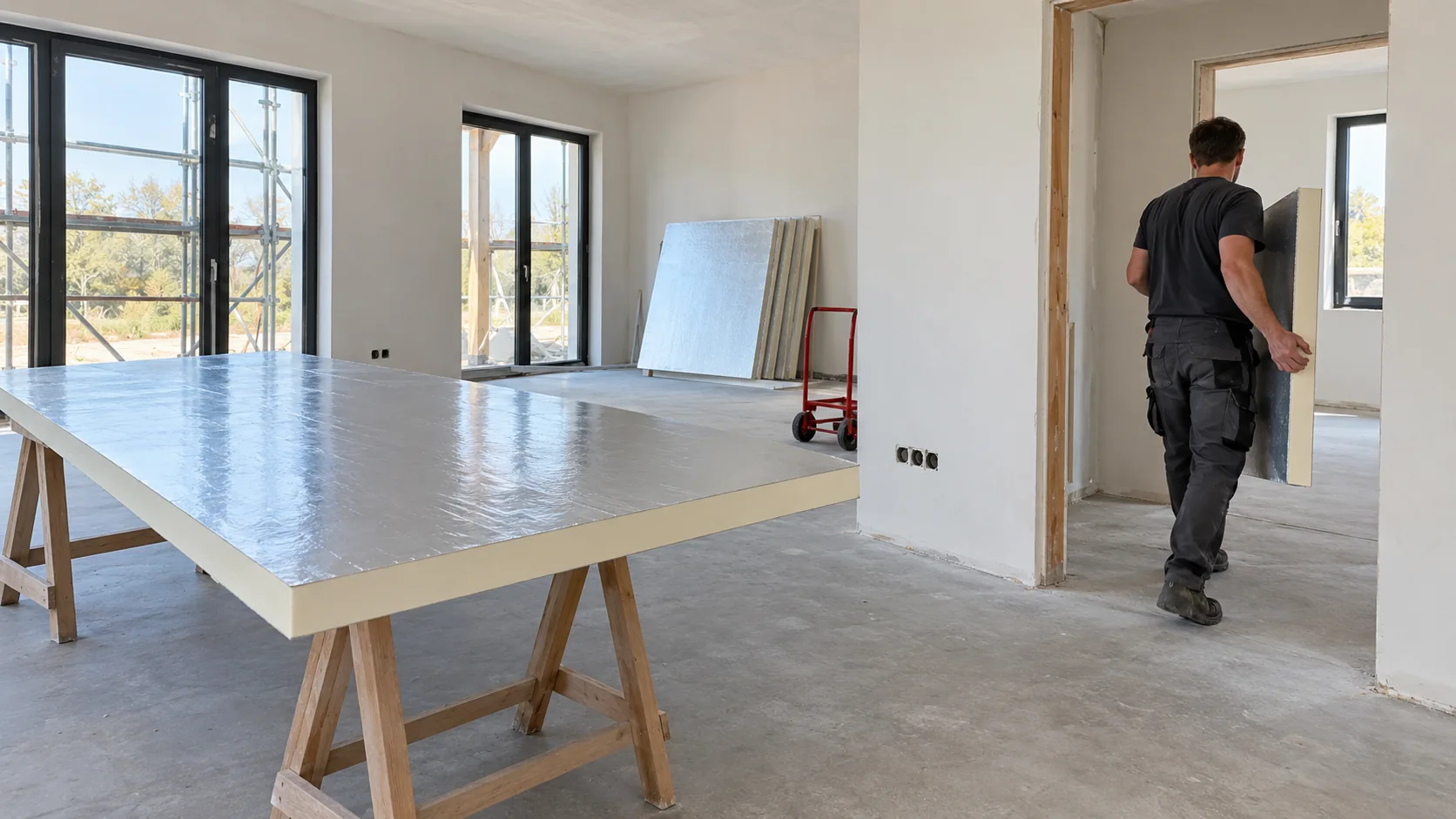
Large PIR boards cover an uninterrupted surface quickly. Smaller boards are easier to manoeuvre in a flat or around openings on a…