

PIR insulation
termPIR ETX on façades: when thinner insulation under render is suitable
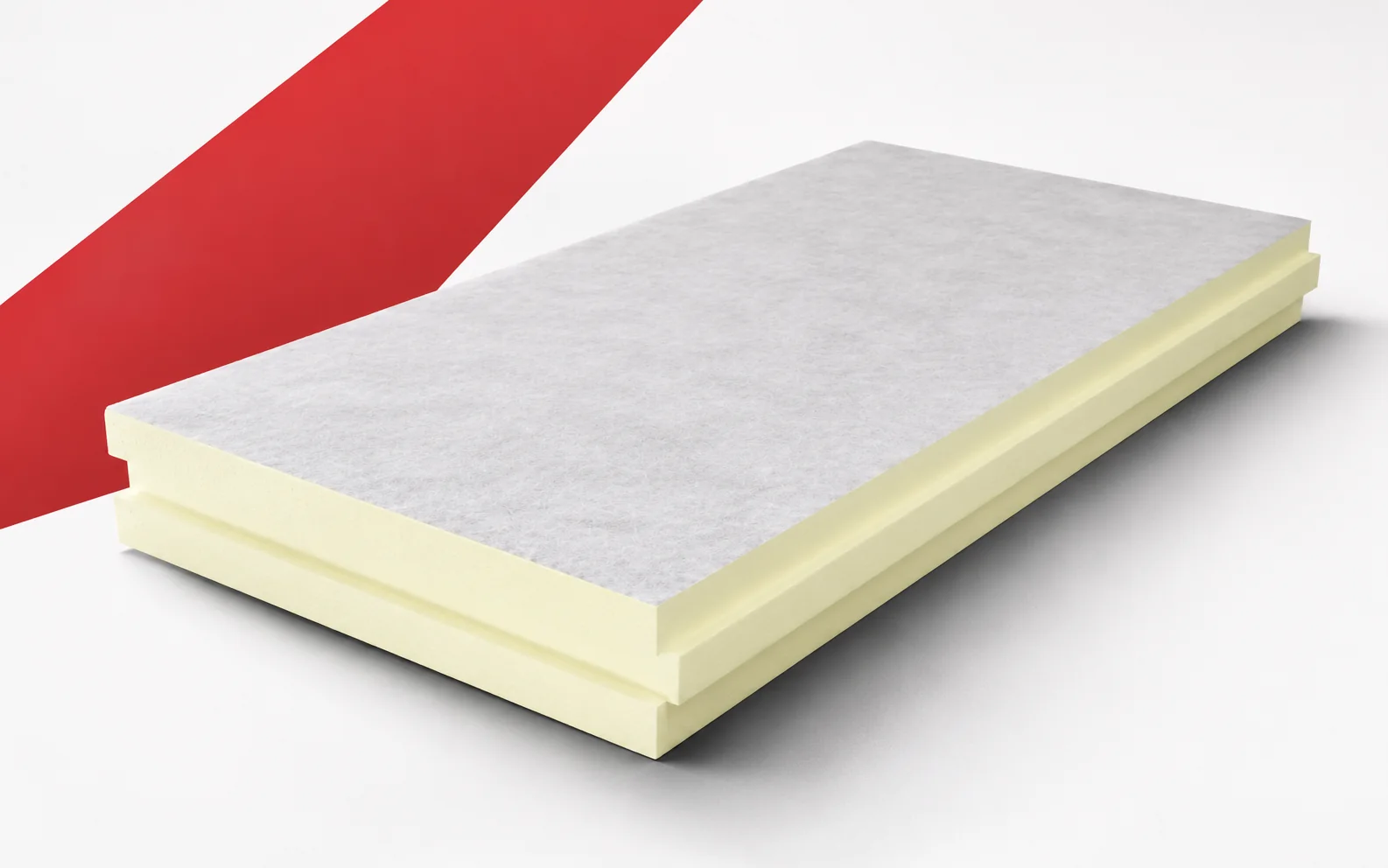
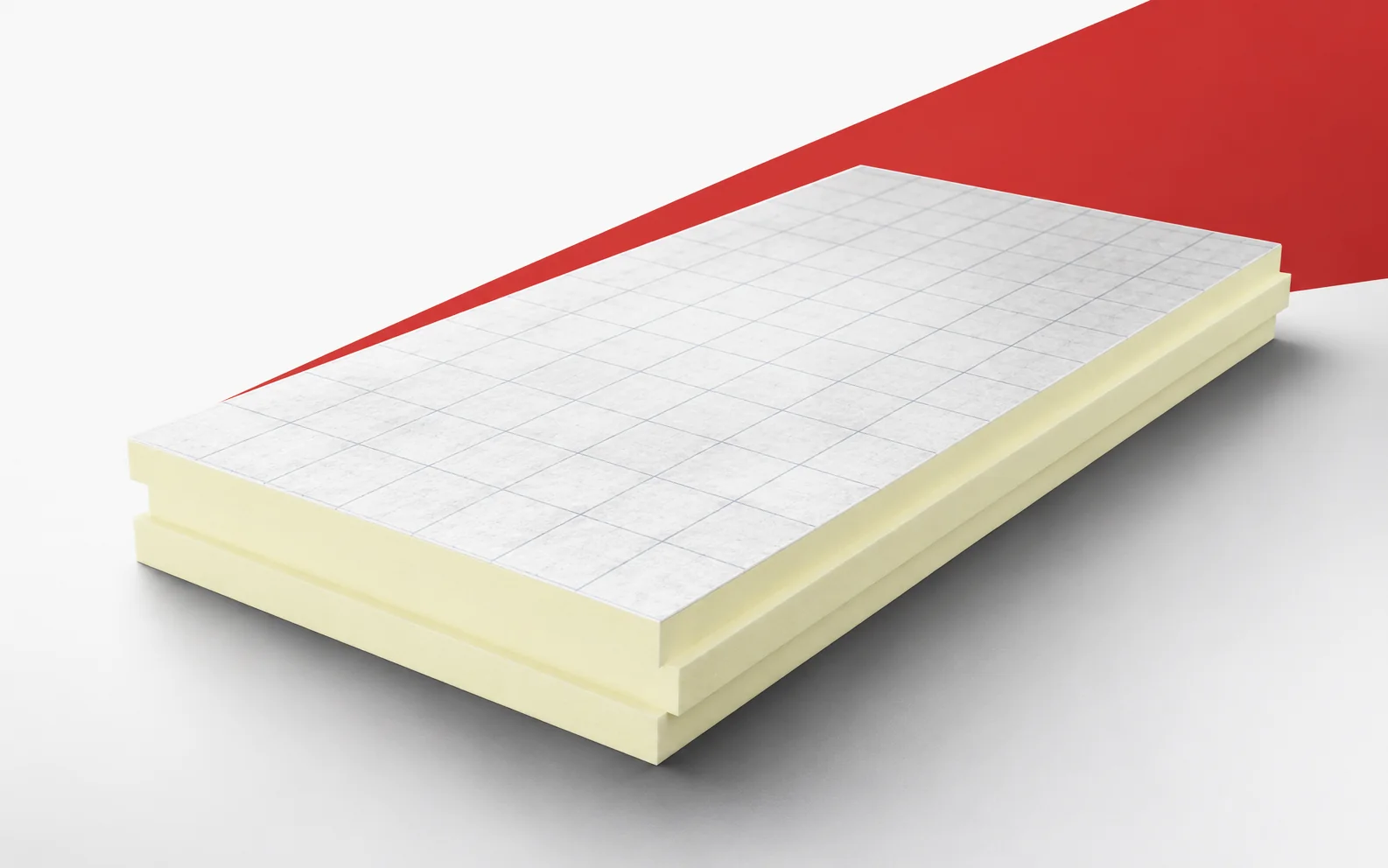
On a façade, the insulation thickness affects the reveals, sills and the position of details. termPIR ETX allows PIR insulation to be used in a system with a render finish. The benefit must be assessed together with the lambda of the specific thickness and the requirements of the complete system. termPIR ETX is a PIR board with a vapour-permeable glass fleece facing. The manufacturer intends it for two-layer walls in an ETICS system. PIR boards are best assessed through a specific spatial problem, so consider a façade where the limited width of the reveal makes thick insulation difficult. The insulation at the window frame must remain continuous with the boards laid on the full wall, because saving space must be assessed together with the geometry of the detail.
In this article
What determines how the material performs
Changing the lambda alone is not enough, because a board with a glass fleece requires the correct set of façade layers. The solution should allow the insulation to remain continuous at the window without inadvertently substituting the product’s facing. As a starting point for comparing variants, record the name of the complete ETICS system and its scope of application on the selected substrate.
How to compare the thermal effect
The thermal conductivity of termPIR ETX is not uniform and depends on the board thickness. For products thinner than 80 mm, lambda is 0.027 W/(m·K); in the range from 80 mm to less than 120 mm it reaches 0.026 W/(m·K); and at thicknesses from 120 to 250 mm it falls to 0.025 W/(m·K).
When comparing polyurethane boards, take account of the change in thickness across the 80 and 120 mm thresholds given in the termPIR ETX data sheet. The lambda of termPIR ETX should be read for the thickness actually used in the given section of façade, so that the comparison relates to the same thermal effect. The result must be read with care, since applying 0.025 to a thinner board would overstate the calculated resistance of its layer. The calculation is intended to help compare façade solutions on the basis of parameters specific to each thickness. In the energy schedule, show the thickness of each section at the full wall, the reveal and other constrictions, so that it is clear what exactly changed between the solutions.
In a façade with deep window recesses, the largest wall area need not be the most difficult section. The narrow reveal may prove to be the problem. The thickness of termPIR ETX is then selected separately for the field and for the termination at the frame. The two sections should not automatically be calculated with the same lambda if they fall into different thickness ranges. Ultimately what matters is the continuity of the connection, not solely the favourable result for the wide, opening-free wall.
Continuity at joints and terminations
According to the termPIR ETX instructions, the print on the board must face the wall. Individual boards should be laid so that they form a single even plane and their joints are offset from one another.
Check the orientation of the print on the board and the production date visible on the delivery marking, because continuous polyurethane insulation also requires correct terminations. The start date of installation must be tied to the required monthly interval from production, because losses at joints must be assessed together with the main insulation field. A good connection does not arise automatically, since an excessively early start of work does not become correct merely because the material is already on the scaffold. The layout of elements should allow delivery to be planned in advance and the marked side to face the wall. On the detail drawing, show the production date, the readiness of the substrate and how the joints between rows are offset; this record will make later inspection of the work easier.
Protecting the insulation against water and leakage
Beneath termPIR ETX, the substrate must be dry, load-bearing, even and clean. If efflorescence, loose paint or remnants of weak plaster are present, an assessment of the substrate condition is necessary before the boards are bonded.
When assessing the durability of the thermal effect, include old render that looks sound but may be detaching from the masonry. Before bonding, weak layers must be removed and the condition of the substrate under the new insulation checked, if the insulation is to perform under the conditions assumed in the design. Polyurethane foam does not replace protective layers: the durability of the bond also depends on the layer left beneath the adhesive. The specified protections should allow weak areas to be removed and the cause of moisture established before the façade is covered. Before covering, assess the results of the substrate survey, traces of efflorescence and areas needing repair before installation, because later repair may require opening up the finished assembly.
Strength and fire properties
TermPIR ETX has a declared compressive strength of CS(10/Y)120. The reaction-to-fire class of the product itself is F at thicknesses of 20–49 mm, while it is E in the thickness range of 50–250 mm.
A thickness limitation does not exempt you from checking other requirements, so analyse the building corner area, where fixing must correspond to the conditions of the specific façade. Fasteners must be selected for the type of masonry, the façade zone and the requirements of the adopted system, even when the choice of board was determined mainly by its low lambda. A separate assessment is needed because the board’s compression parameter does not state the required number or type of anchors. Only the complete set of data will allow the assessment of the product, the fixing and the behaviour of the complete insulation during a fire to be separated. Alongside the thermal results, include the fixing layout design and the conformity of the reinforced layer with the adopted system; this way the comparison will not omit the service conditions.
When the solution is worthwhile
Before allowing for the groove, the standard size of termPIR ETX is 600 × 1200 mm. When purchasing, one should choose a coordinated ETICS system rather than a collection of random components.
Polyurethane board insulation should have a calculated effect and scope of works; include cuts at window corners, sills and the top termination of the insulated wall. The bill of quantities must include trims and terminations in addition to the board area on the wall itself, so that the cost relates to one comparable result. The material price is only part of the decision, since saving on an omitted trim can lead to water ingress behind the finished layers. The final schedule should allow the insulation to be priced as a closed and properly finished system rather than mere board bonding. Ask for the scope of trims, reinforcing materials, fixing and preparatory works, so that any additional charge has a stated technical justification.
7 branches. Materials closer to your project.

Free quote
Materials for your project


You may also find useful…
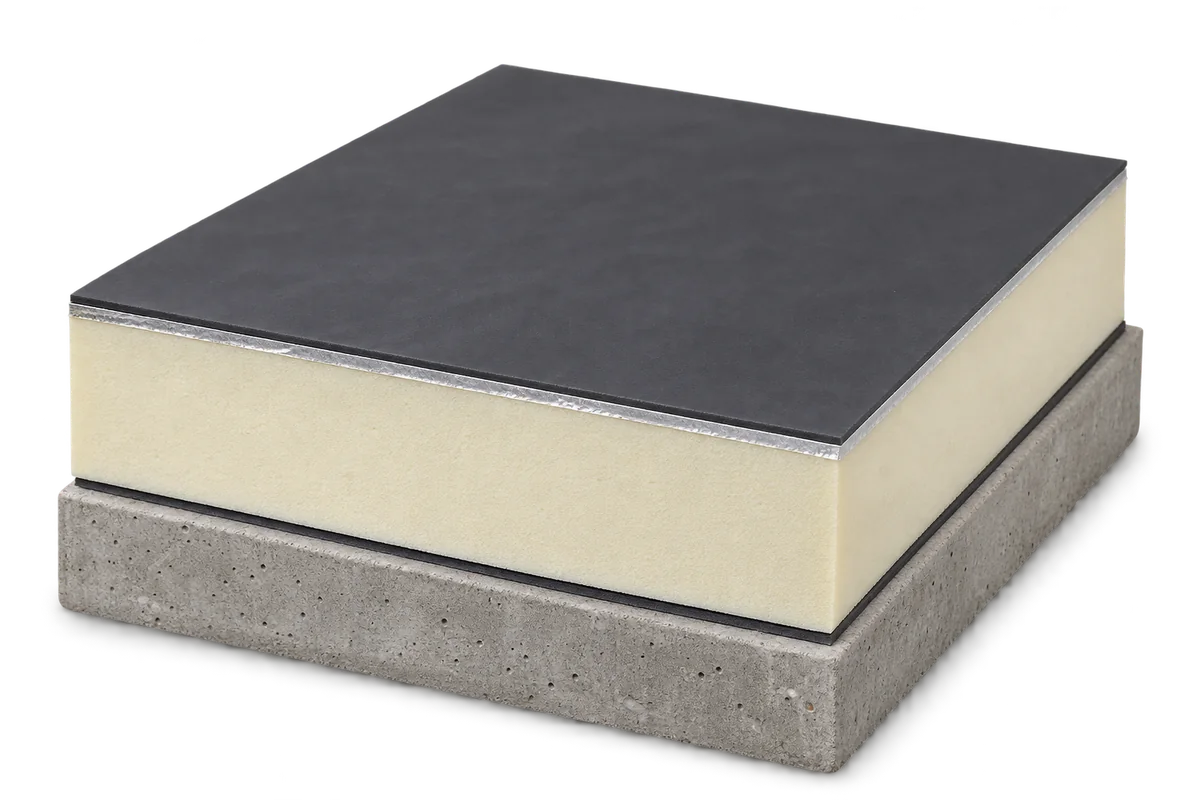
A flat-roof section should explain layer order, functions and connections at edges and openings. A list saying “concrete, PIR, membrane” is not…
A potato-store refurbishment should begin with a plan for checking the store before loading, rather than with insulation thickness. New insulation and…
IDELCO α-therm ROOF makes it possible to aim for high thermal resistance where roof height is limited. The choice of thickness should,…
An aluminium facing on a PIR board can greatly restrict water vapour diffusion. The performance of the finished wall depends on how…
Selecting roof insulation requires reconciling several characteristics. Thermano Roof combines a PIR core with enhanced mechanical properties. When assessing the benefits, however,…

Start with when the building will be heated and what temperature it needs to reach. A garage housing a wet car has…
The life of insulation depends on the product, its service conditions and how the installer forms the junctions. Before adding insulation, repair…
A very low lambda is most useful where there is no room for the layers. termPIR MAX 19 AL has a declared…