

XPS insulation
Thin XPS insulation: what can you do when space is limited?
Every centimetre can matter when renovating a house. Door levels, room height or the width of a passage may limit the space available for insulation. Thin XPS can help with some of these details, but it does not remove the need for thermal calculations. Extruded polystyrene must be assessed together with the other layers. The aim is to achieve the best practical result within the available space without compromising the durability of the construction. Start by measuring the distance between the substrate and the intended finished surface. It must accommodate not only XPS, but also levelling layers, waterproofing, screed and the final covering. Space already occupied by another layer cannot also be counted as available for insulation.
In this guide
Measure the space for the complete build-up
Measure at several points, because an existing floor is rarely perfectly level.
The same approach applies to a window reveal or plinth. Check the final position of the finish, how far it covers the frame and access to drainage. Extruded polystyrene must not block drainage openings. These measurements establish whether the difficulty lies in board thickness or in the proposed construction as a whole.
Less thickness means limited thermal resistance
The thermal resistance of a homogeneous layer can initially be calculated as thickness d divided by thermal conductivity λ. In an illustrative calculation, a board 0.03 m thick with a thermal conductivity of 0.033 W/(m·K) gives approximately 0.91 m²K/W. At 0.06 m and the same conductivity, the result rises to about 1.82 m²K/W. These figures illustrate the relationship; they do not specify a particular product.
This comparison shows why thin XPS does not automatically replace a much thicker insulation layer. A small improvement in thermal conductivity will not compensate for a substantial reduction in thickness. The calculated resistance of one layer is also not the U-value of the complete building element. A ground-bearing floor requires an assessment appropriate to that type of construction.
Check the properties of the thin board itself
Products within one range may have different properties at different thicknesses. This can apply to thermal conductivity, strength and available edge profiles. Data for a thick XPS board should not be carried over to a thin version. Even a number in the product name need not indicate the same compressive stress level for every size.
The commonly used name Styrodur does not resolve any of these questions. Established XPS manufacturers include Austrotherm, swisspor and Ravago. When comparing their ranges, specify the same thickness and intended application. Extruded polystyrene for a thin layer should be assessed using the documentation for the exact item, rather than a general description of the whole category.
Do not reduce floor layers without a suitable design
When floor height is limited, it is easy to focus only on the insulation. Yet the screed or another load-distributing layer also determines load-bearing performance and how the finish behaves. Its thickness must not be reduced arbitrarily to make room for more XPS. The floor build-up needs to be designed for the loads, heating arrangement and proposed covering.
A thin XPS board needs even support just as a thick one does. Voids beneath it can impair floor performance. If the material changes, its long-term deformation must be checked again. Hardness felt under a fingertip does not measure how a floor will behave over years beneath furniture or equipment.
Assess a narrow junction as a local detail
At a window reveal or floor slab edge, a thin insulation layer can reduce a thermal bridge. Its effect depends on the geometry of the junction, however. XPS placed on an easily accessible area will not necessarily improve the coldest point. Heat flows in more than one direction around a corner, so a simple calculation for a flat wall may be insufficient.
Extruded polystyrene should connect with the adjoining insulation as shown in the construction detail. Areas receiving render need a suitable surface and compatibility with the system. Simply bonding a smooth XPS board to masonry does not create an acceptable substrate for any mortar or finish.
Do not improve warmth at the expense of moisture performance
Changing the layers affects temperatures and water vapour transport. Internal insulation requires particular care. Thin XPS can raise the temperature of the visible surface while also changing conditions within the existing masonry. Selection requires an understanding of its moisture condition and how the room is used.
Low water absorption does not remove water from a wall. Extruded polystyrene is no substitute for repairing leaks or providing ventilation. A wet substrate should not be covered merely to finish the renovation sooner. A sound solution addresses junctions with floors, internal walls and services, rather than only the middle of the insulated surface.
Compare several solutions before ordering
Sometimes a better result comes from changing the floor level, rebuilding a threshold or choosing another insulation material with suitable properties. In other cases, thin XPS is a justified compromise in a small area. The decision should follow from measurements, calculations and installation conditions. No single thickness suits every renovation.
Include the properties of the exact XPS board selected for the design in the order. Also agree acceptable installation tolerances and how the substrate will be checked. Limited space demands careful workmanship. The benefit of a lower thermal conductivity can easily be lost if a thin layer contains gaps, damage or uneven joints.
7 branches. Materials closer to your project.

Free quote
Materials for your project
You may also find useful…
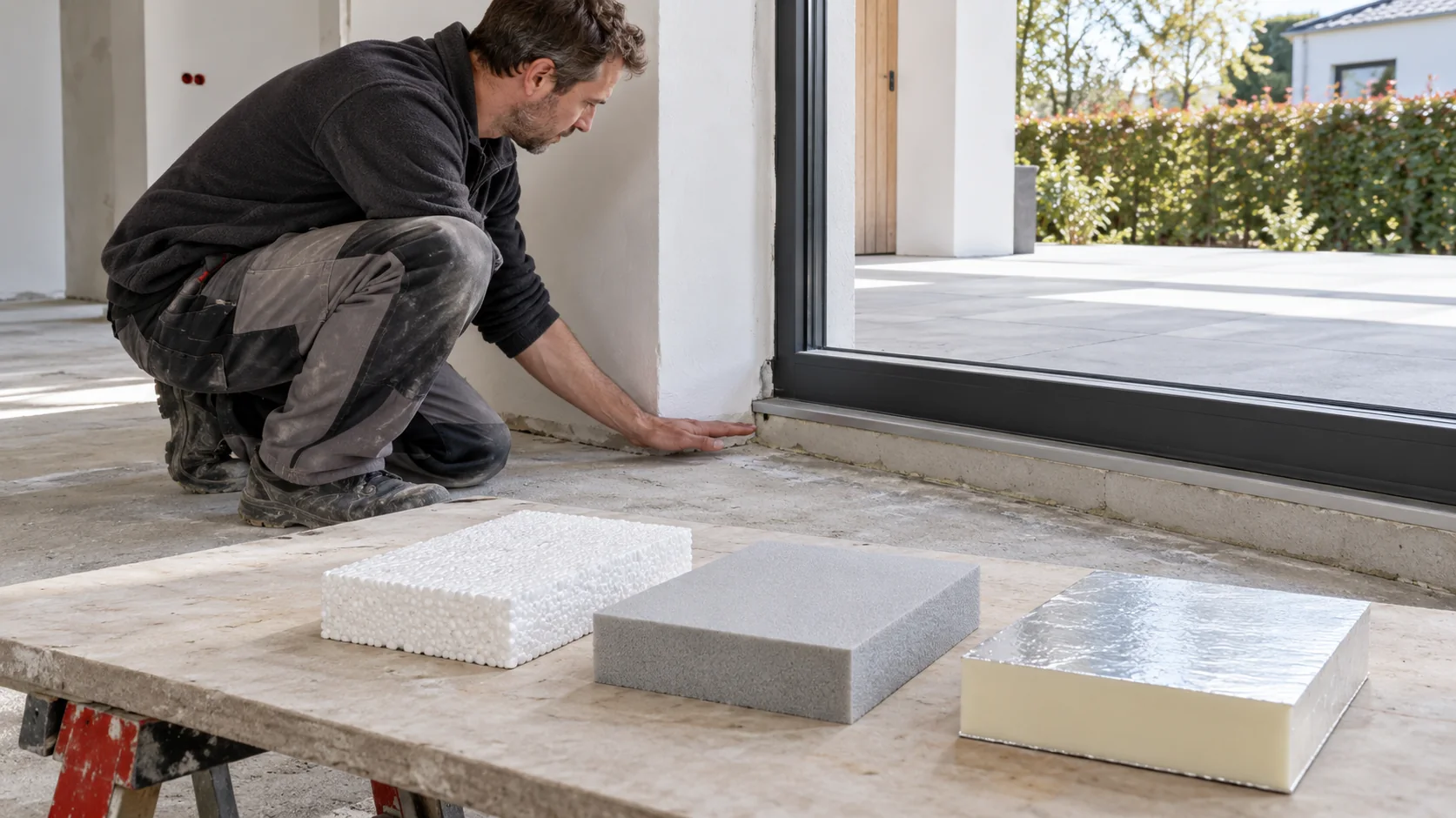
No single insulation material is best throughout a house. On a façade the render system matters, in a floor the loading, and…
A home with a low heating demand needs insulation layers that connect properly. Board thickness alone does not determine the result. XPS…
Two XPS offers may look alike while covering different thicknesses and specifications. A cheaper pack does not show which layer will reduce…
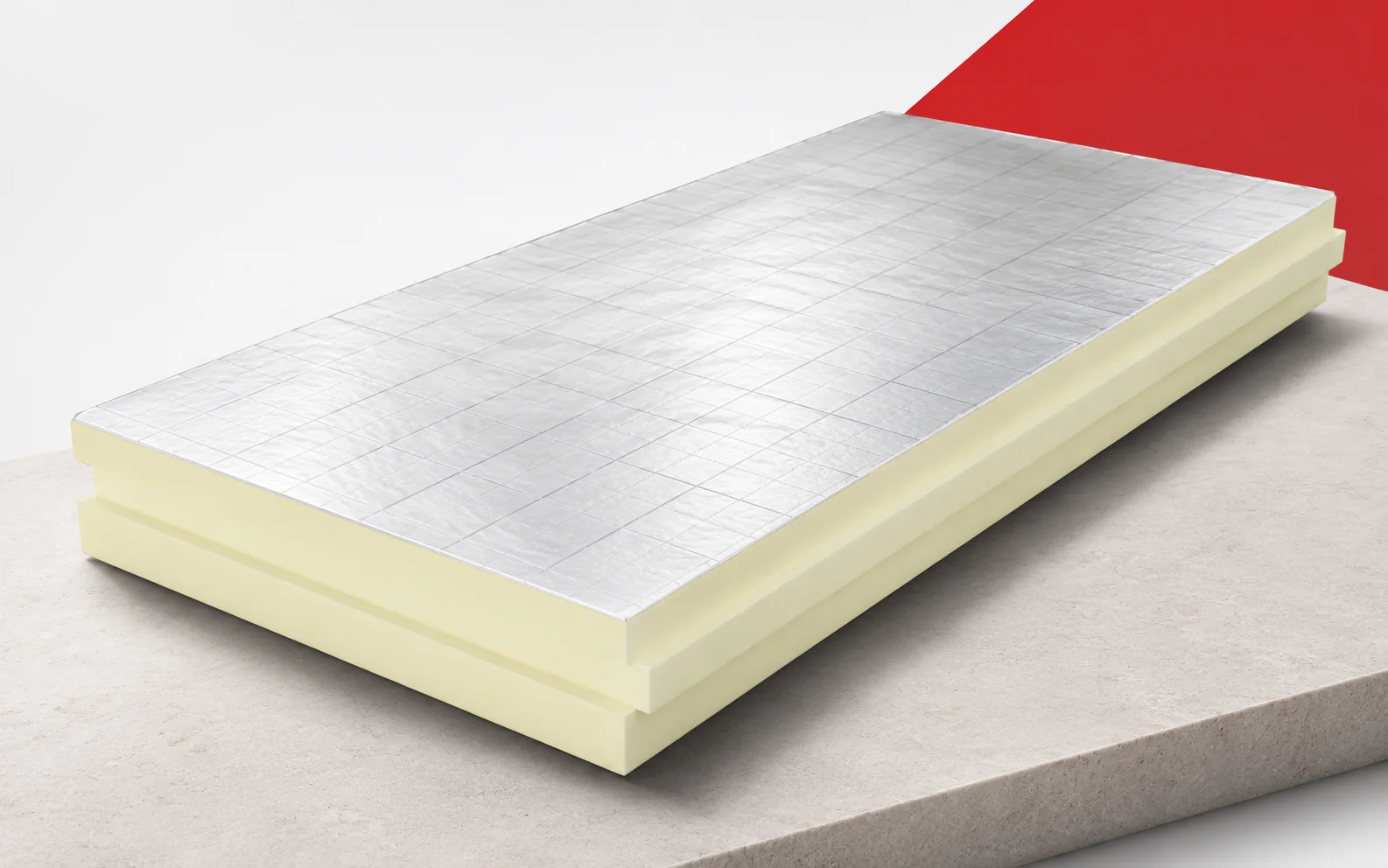
Begin a PIR versus XPS comparison with the installation location. A thin layer offering high thermal resistance can be valuable where space…
XPS is sometimes presented as simply a better form of polystyrene insulation. That comparison overlooks where it will be used. Extruded and…
XPS is lightweight, so even a small amount of waste takes up considerable space. Renovation leaves whole boards, clean offcuts and pieces…
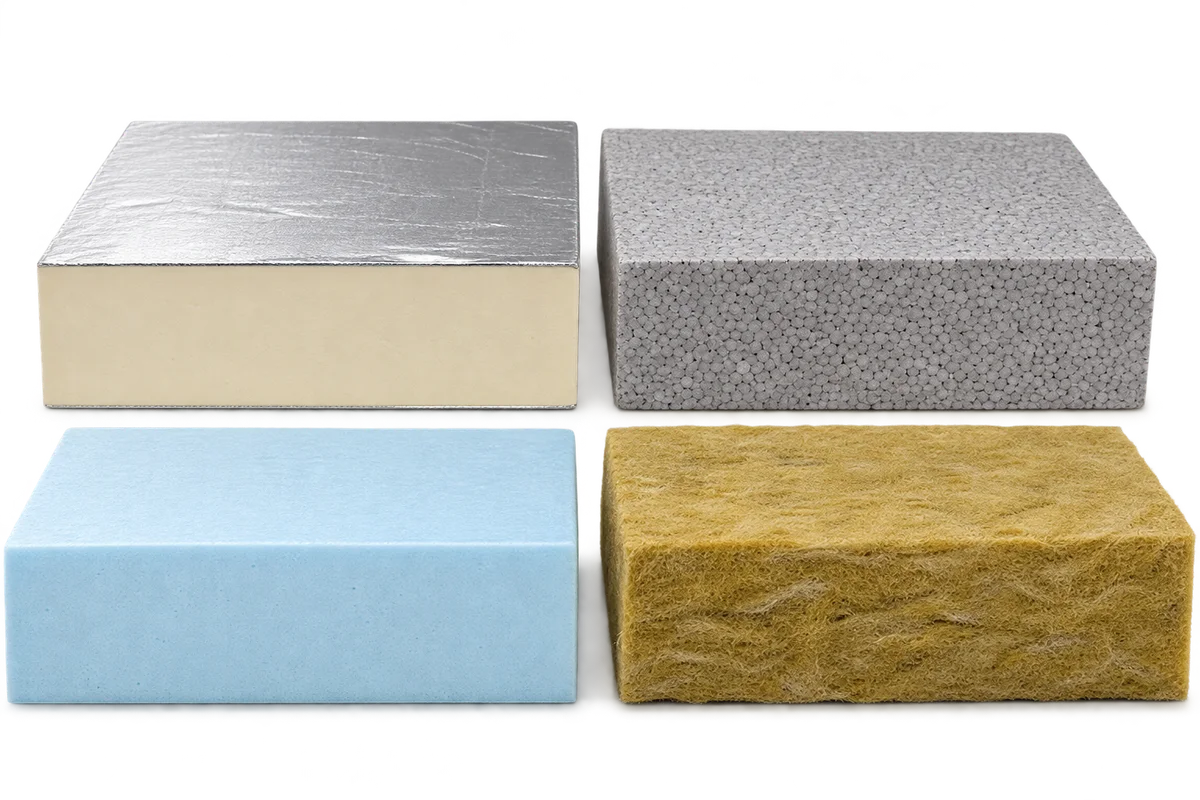
Insulation has a different job in each part of a house. PIR is useful where thickness is limited. EPS comes in grades…
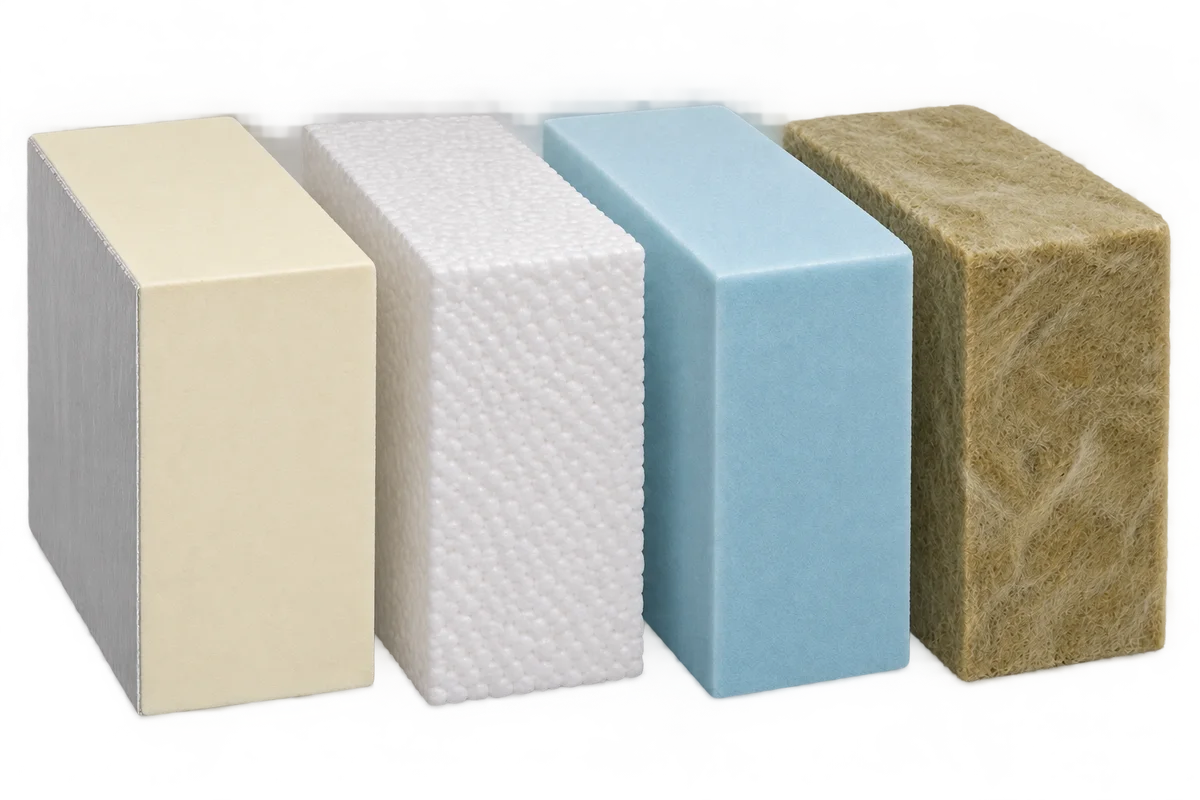
A schedule of the layers of a building envelope with PIR boards and a second insulating material makes sense only if each…