

Insulation and energy renovation
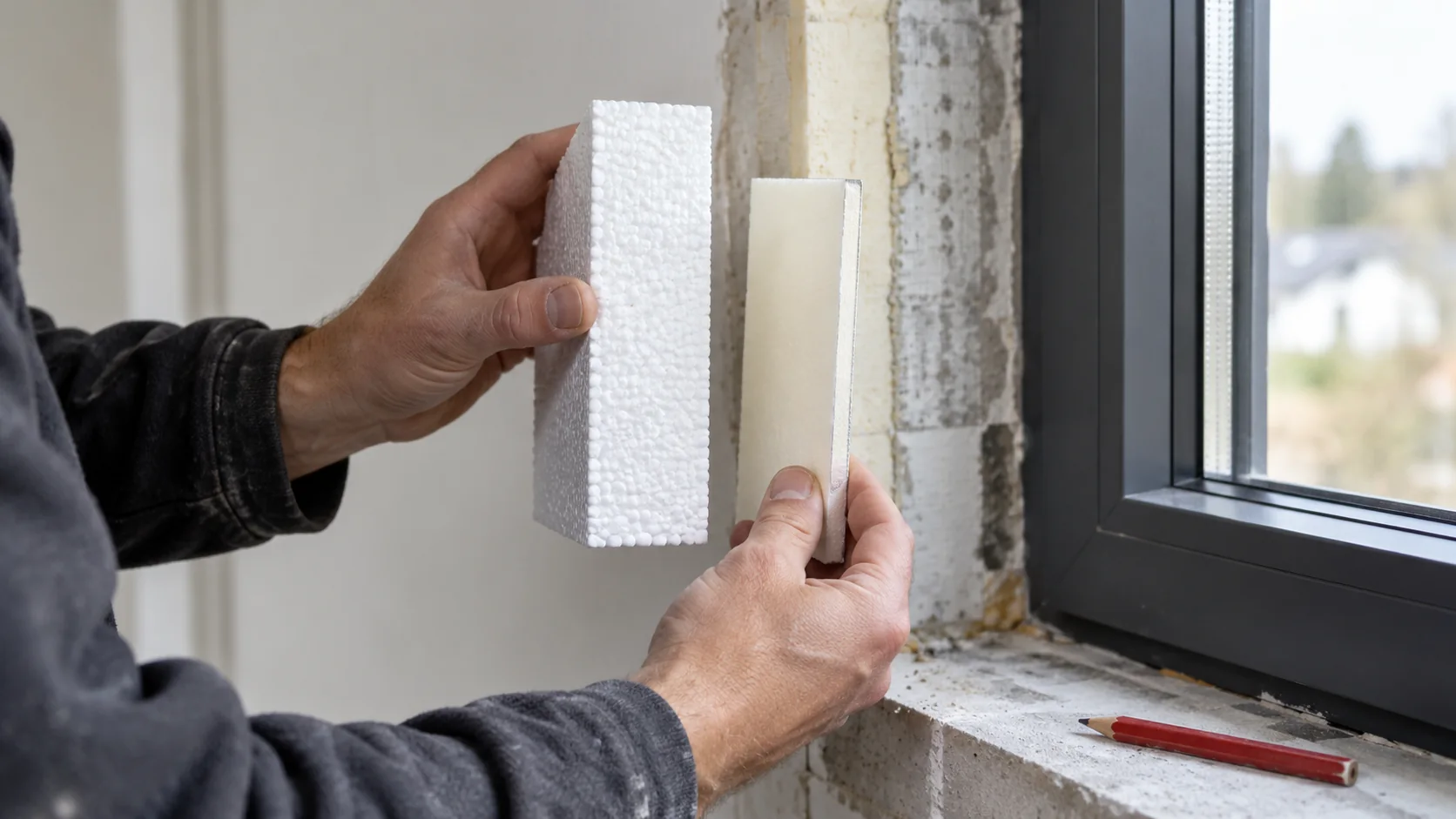
How much PIR insulation gives the same thermal resistance as EPS?
To compare PIR and expanded polystyrene (EPS), use the thermal resistance of each layer. The thickness needed depends on the thermal conductivity of the specific board. This calculation is especially useful where space is tight at eaves, window reveals or inside a room. First establish the application. Rendered façades, floors, roofs and internal insulation systems place different demands on the material. A board with low conductivity may be unsuitable for the proposed construction. Before comparing thicknesses, check that both products can do the same job. An aluminium-faced PIR board and a façade-grade EPS board may require quite different finishes and fixings.
In this article
Compare boards for the same application
Layers with the same thermal resistance have a similar effect on heat flow. Load capacity, water absorption, fire performance and vapour permeability can still differ. Check each property required by the design before substituting one insulation material for another, even if the R-value stays the same.
Calculate the equivalent thickness
For a homogeneous layer, R = d/λ. To keep R constant, multiply the original thickness by the new material’s conductivity and divide by the original conductivity. In symbols, d(new) = d(original) × λ(new) / λ(original). The two thicknesses can use the same unit in this comparison. When calculating R itself, enter thickness in metres.
For example, 20 cm of EPS with an assumed λ of 0.036 W/(m·K) gives an R-value of about 5.56 m²K/W. Approximately 12.2 cm of insulation at λ = 0.022 or 14.4 cm at λ = 0.026 gives the same resistance. These thicknesses apply to the conductivities in this example. Other PIR and EPS grades require their own calculation.
A calculated thickness such as 12.2 cm may be unavailable as a standard board. Select an available size and recalculate its resistance. Rounding down lowers R and falls short of the original target. Also check whether the product’s declared conductivity changes with thickness.
See how the EPS grade changes the result
At λ = 0.031, a 20 cm EPS layer gives about 6.45 m²K/W. Matching it at λ = 0.022 now takes roughly 14.2 cm. Although the EPS thickness in the two examples is identical, its thermal resistance differs. A claim that PIR needs just half the thickness would be misleading here.
| Material assumed | Thickness | Calculated R-value |
|---|---|---|
| EPS, λ 0.036 | 20 cm | 5.56 m²K/W |
| EPS, λ 0.031 | 20 cm | 6.45 m²K/W |
| PIR, λ 0.022 | 12 cm | 5.45 m²K/W |
The figures compare individual layers. They exclude whole-wall corrections and the rounding used in a specific product’s declared thermal resistance.

Check conductivity for the actual facing and thickness
PIR facings matter when selecting conductivity data. A particular foil-faced board may declare λ = 0.022 W/(m·K). Boards designed to receive render may have values of 0.025–0.027, depending on grade and thickness. Use the figure for the board actually specified.
If the calculated thickness is unavailable, use the data for an available board and check the result again. Simply rounding down to fit beneath a sill could reduce performance below the target. The junction detail or insulation system may need changing. Confirm the required performance before resolving the space constraint.
What equal R-values tell you about the wall
The U-value accounts for the resistance of every layer and the relevant surface resistances. Fixings and gaps in insulation may require corrections. Window reveals, lintels and floor junctions also need assessment. Revisit them if a substitution changes the construction at these points.
For internal insulation, also consider vapour resistance. An aluminium facing can greatly restrict inward drying. Two layers with identical thermal resistance can behave differently when the wall gets wet. A thickness comparison alone cannot resolve this question.
Work out what the space saving is worth
Thinner insulation may allow the existing flashings to stay or leave more usable room inside. Elsewhere, there may be little benefit if the eaves need rebuilding anyway. Compare the full cost of systems that provide a similar thermal result, allowing for the thickness each system actually needs.
Add insulation, fixing, finishing and alterations around openings. The total shows whether a slimmer system is economical. To compare environmental impacts, use comparable product declarations and a stated service life. Conductivity alone cannot establish an environmental advantage.
Questions and answers
Can 10 cm of PIR replace 20 cm of EPS?
It depends on conductivity. For PIR at λ = 0.022 and EPS at λ = 0.036, 10 cm of PIR matches about 16.4 cm of EPS in layer resistance. Different conductivities give a different result.
With equal thermal resistance, should I always choose the thinner board?
Choose it only if it suits the application and the complete assembly. Compare moisture conditions, loads, fire requirements and finishing costs. Space saved is one part of that decision.
7 branches. Materials closer to your project.

Free quote
Materials for your project
You may also find useful…
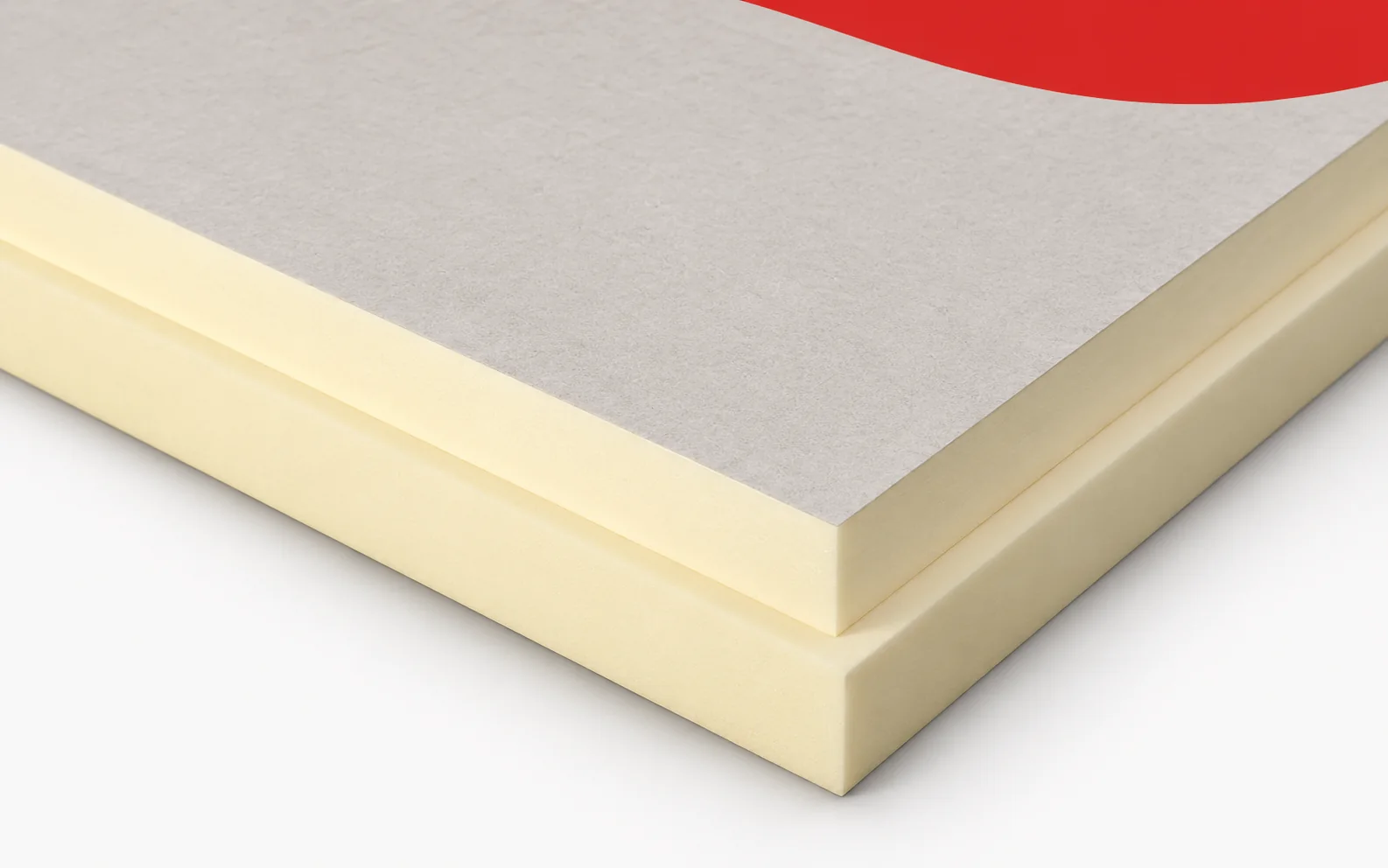
The same PIR thickness appears in two quotes, but one board has an aluminium facing and the other a mineral fleece. The…
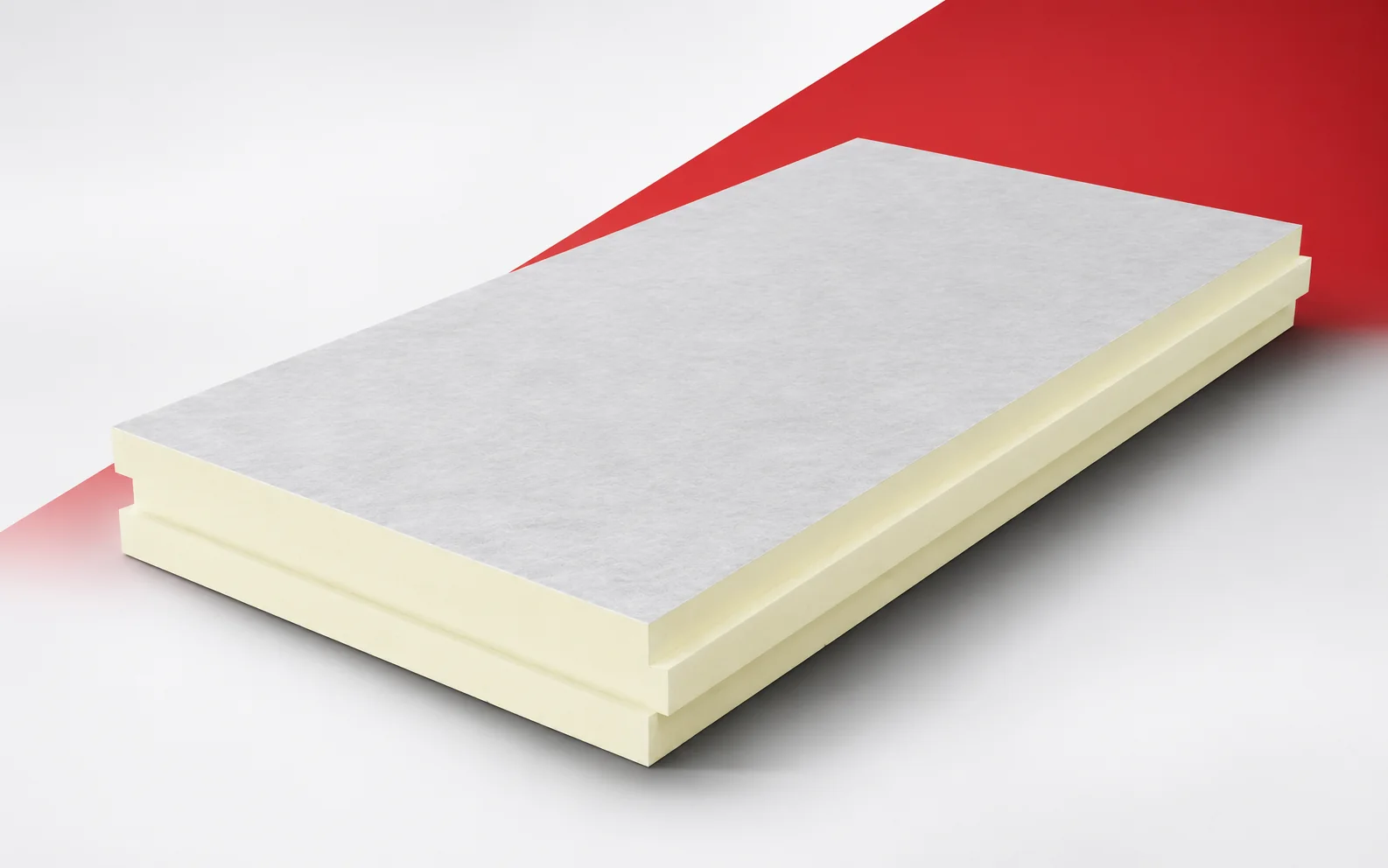
In an efficient roof, the insulation must work together with the layers that protect it. termPIR WS uses a glass fleece facing.…
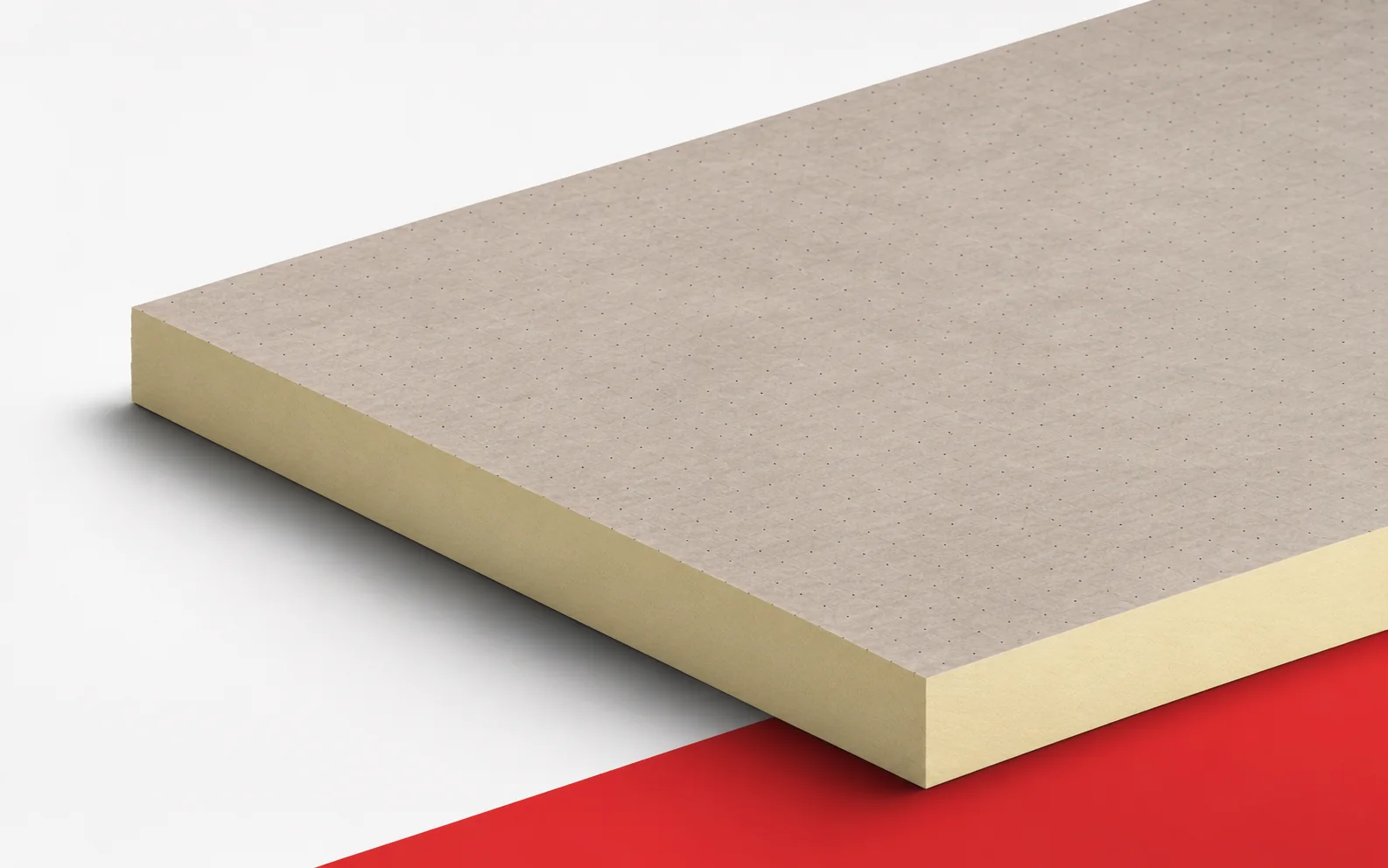
Therma TR27 shows why a single lambda value cannot be attributed to all PIR boards. Choosing the thickness must go hand in…
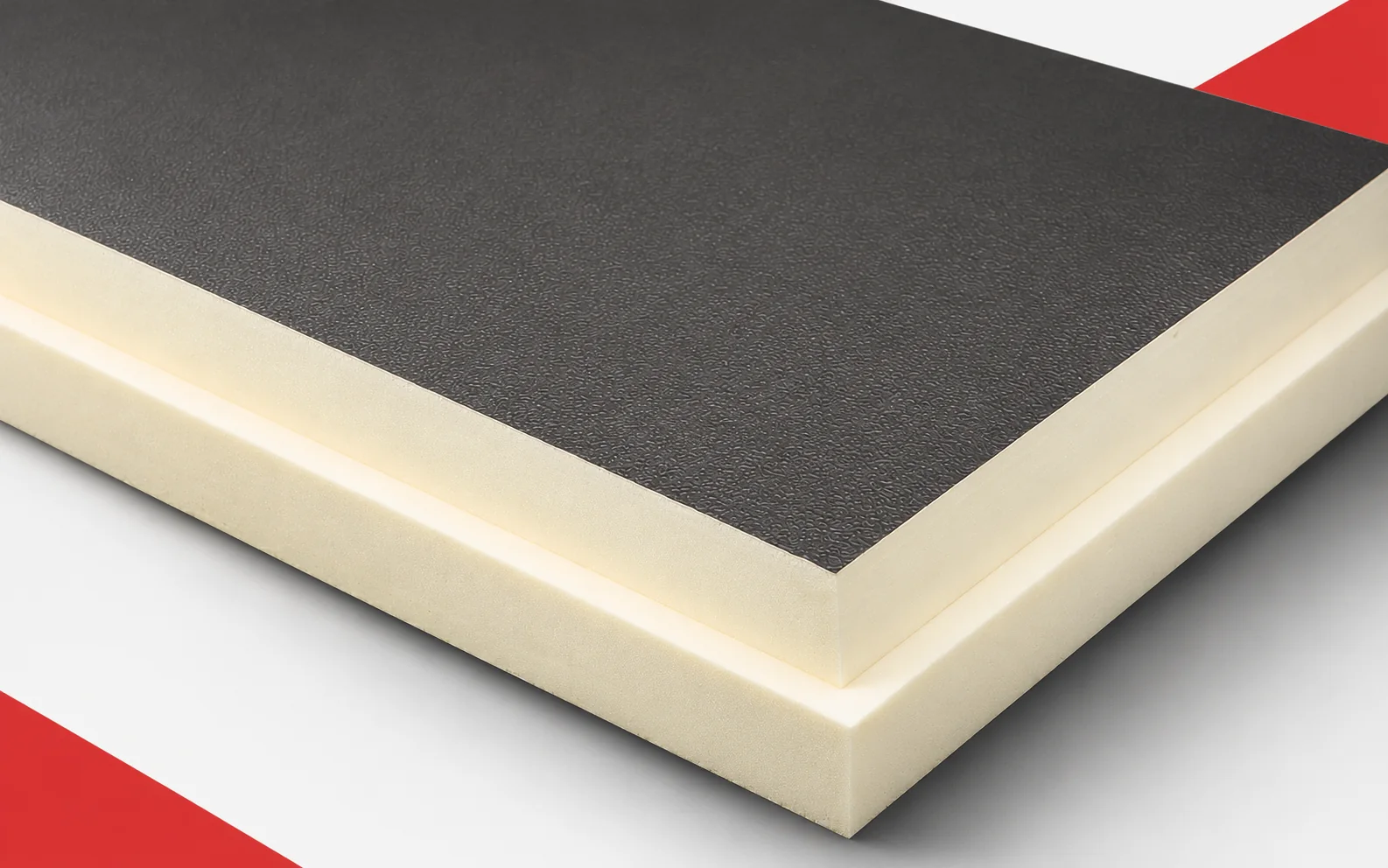
On a rectangular roof area, the large FA format makes it easier to plan a regular layout. The thermal effect, however, depends…
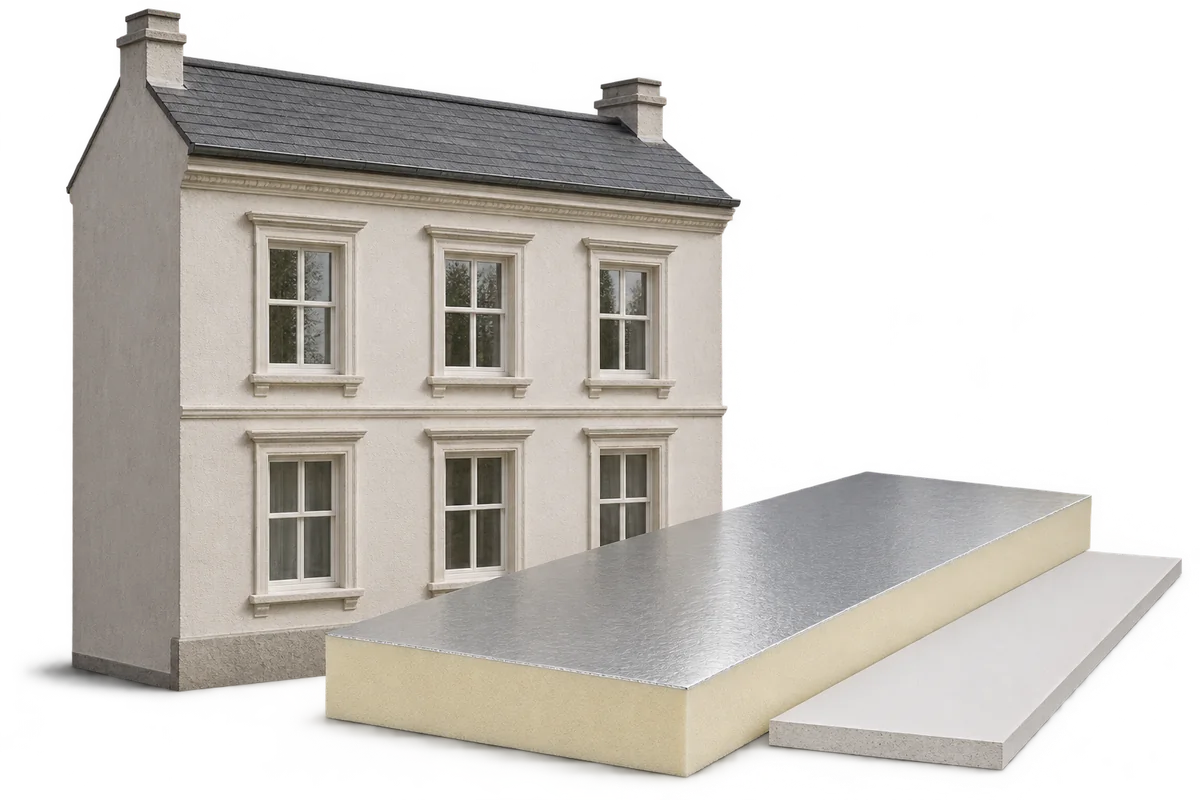
Improving a historic building's energy performance means balancing comfort with the protection of its materials, details and construction. The starting point is…
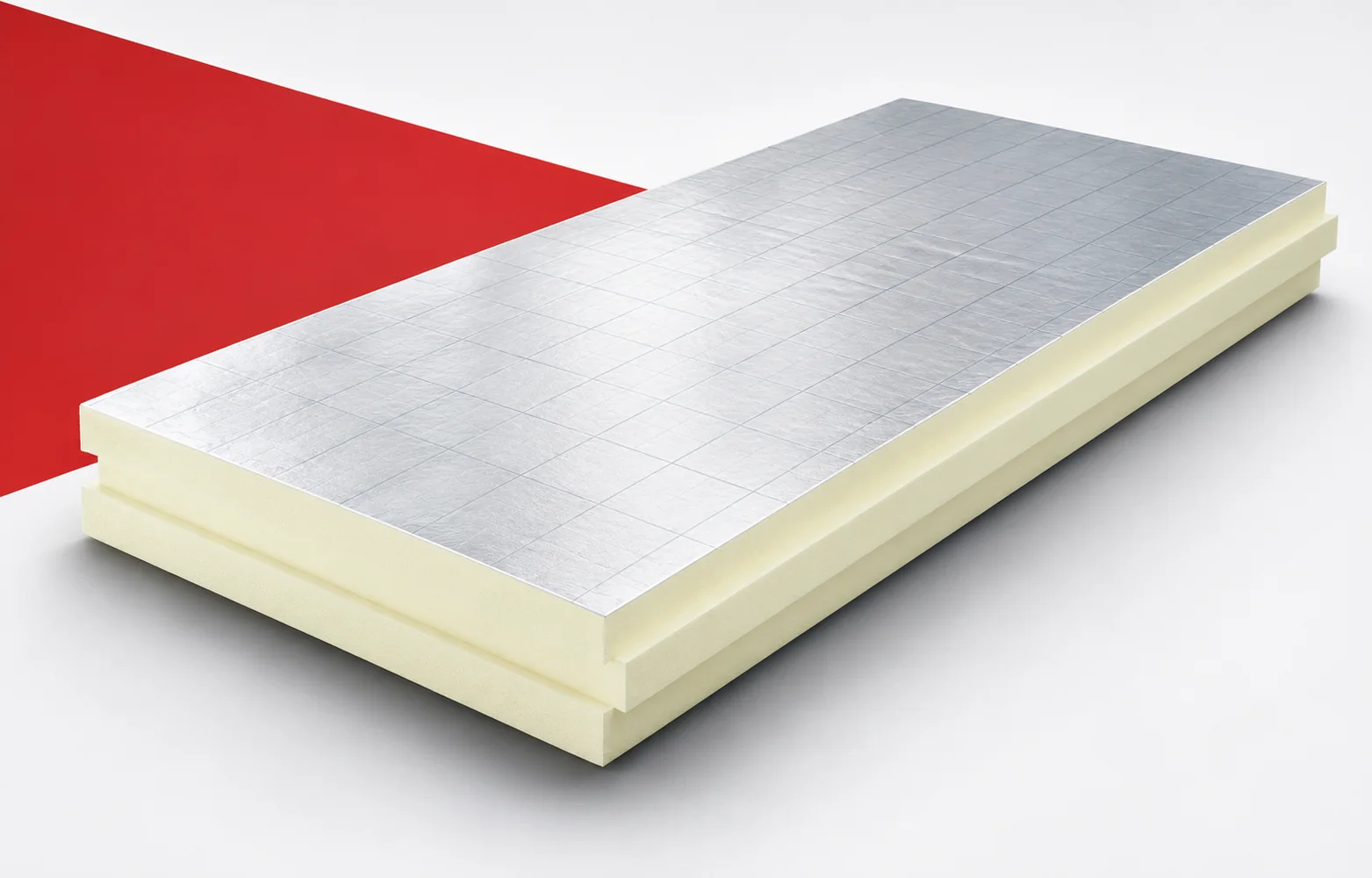
Less space for insulation does not have to mean giving up good thermal resistance. PIR boards help to solve this problem if…
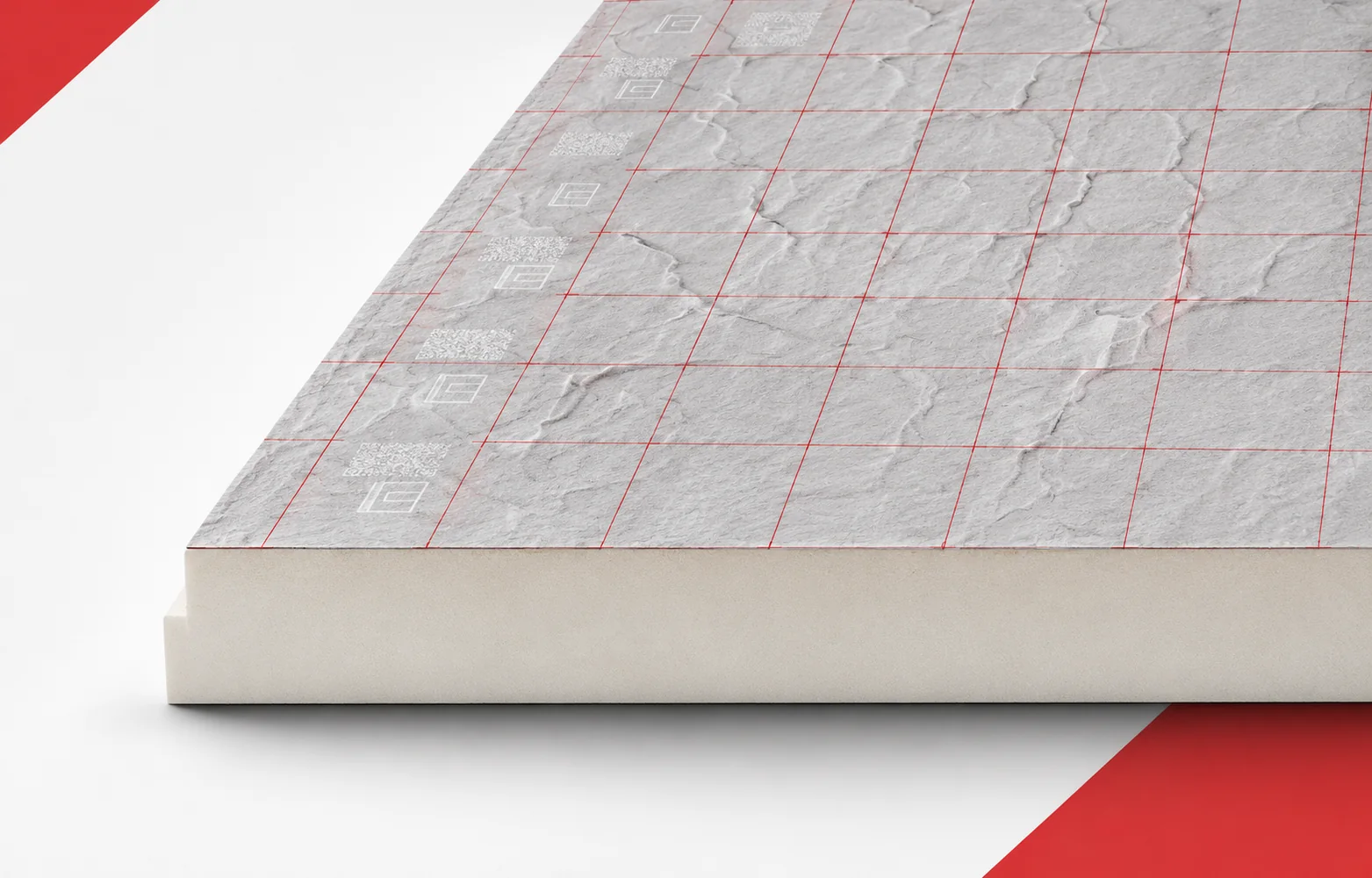
On a flat roof, thermal resistance matters, but so does the height available at parapets and outlets. Thermano Deck allows a relatively…
On a façade, the insulation thickness affects the reveals, sills and the position of details. termPIR ETX allows PIR insulation to be…