

Building envelope installation and maintenance
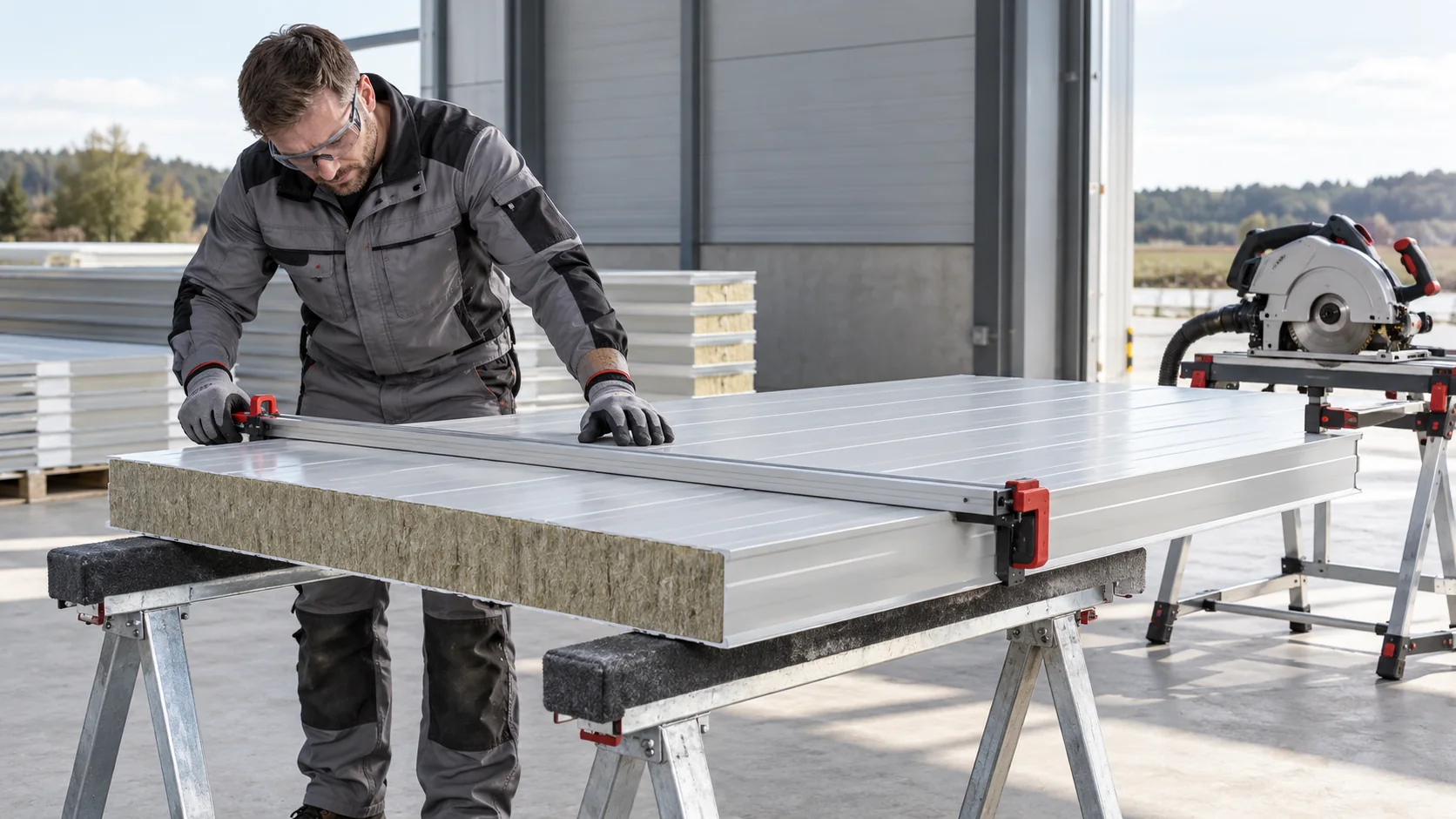
How to cut a sandwich panel and protect the exposed edge
When cutting a sandwich panel, protect the coating, keep both facings bonded to the core and leave room to seal the exposed edge. Choose a tool suited to the panel and the cut. Before adding a window, door or service penetration to an existing wall, establish what the wall does. An opening can change how the panel is supported and how loads reach the supporting structure. A large opening may need a frame to carry those loads. Where the wall has a fire resistance requirement, both the opening and its closure need a detail suited to that requirement.
In this article
Check whether the wall can accommodate the opening
A panel can be easy to cut even where an alteration would compromise the wall. Check whether the proposed change is permissible. In an existing building, locate cables, pipes and concealed parts on the far side. Access to both faces makes it easier to plan and control the work safely.
Choose a cold-cutting tool
Follow the panel manufacturer’s instructions for tools that cut without heat damage to the coating. Depending on the work, you may need a dedicated panel saw, a saw with a suitable blade or a tool for cutting the sheet facing alone. Match the tool to the core thickness and the guidance for that particular product.
Avoid an angle grinder with an abrasive disc. It heats the cut edge and scatters hot particles that can damage both the paint finish and the underlying metallic coating. Sparks pose a further risk with combustible cores. Coating damage can occur even if there are no visible scorch marks.
Support the panel and protect its surfaces
Rest the panel on stable supports and support the offcut so that its own weight cannot tear the facing away. Position the supports to suit the panel length and the direction of the cut. Check that every contact surface is clean. Even a metal shaving or a small stone beneath the facing can scratch it.
Mark out the cut from the finished detail. Allow space for flashings, installation clearance and seals as required. Shield the surrounding area from swarf. Follow the tool and material instructions when selecting eye and hand protection and any additional protection needed for dust.
Make room for offcuts and keep the work area clear
Before cutting, set aside a place for sharp sheet-metal scraps and larger pieces of panel. Keep them clear of walkways and away from the finished façade. Remove loose core material and swarf in the way specified for the material and the work. Clean the supports between cuts so debris from one opening cannot scratch the next panel. This is especially important when a run of identical openings is being cut.

Guide the cut without tearing the facings
Use the blade, cutting speed and feed appropriate to the tool and panel. A worn blade may snag the sheet and wander off the marked line. If the tool struggles, check the selection and condition of the blade before applying more force.
After cutting, examine both facings and the core. Look for separation, chipped areas and distortion around the corners. If the blade has overshot a corner or left an unintended sharp notch, check the specified detail to see what correction is needed. Assess any damage to the bond before covering the edge with trim.
Remove metal swarf before fitting the edge trim
Collect metal shavings from both faces of the panel, the surface beneath it and all joints. Stray particles can rust on the coating and leave stains. Clean without scratching the finish. Rubbing the particles across it with a stiff brush can make the damage worse.
Prepare and protect the edge as specified for the type of facing. Fit the intended closure over the exposed core. Touch-up paint on the steel protects only the treated area. To seal the entire perimeter, use the specified arrangement of flashings and seals and select the sealant to suit that detail.
Inspect the opening after the first rainfall
Once the opening is finished, check the frame fixings, the seals and the path for water to drain. On a façade, inspect the junction after wind-driven rain. In a room that is washed down, observe it during routine cleaning. Check how the detail performs under the conditions it actually faces.
Update the building records and keep photographs taken before the trim went on. A future repairer will then know where the panel ends and how the opening is supported. Taking care with the cut and finish now costs less than opening the junction again months later to deal with leaks or corrosion.
Questions and answers
Can I use an angle grinder to cut a mineral wool panel?
Use a cold-cutting tool specified in the manufacturer’s instructions. An angle grinder with an abrasive disc generates heat and sparks that can damage the protective coatings, including on a mineral wool panel.
Is painting the cut edge enough?
The required treatment depends on the location and function of the wall or roof. Inspect the facings and core, remove all swarf, then finish and seal the edge to the detail specified for that location.
7 branches. Materials closer to your project.

Free quote
Materials for your project

You may also find useful…
Sandwich panel quotations become comparable when they address the same function of a wall or roof. Thickness and core name alone cannot…
A potato-store refurbishment should begin with a plan for checking the store before loading, rather than with insulation thickness. New insulation and…
Plan a sandwich panel garage around the car and the people who will use it. Measure the car with its doors open…
Comparing the energy consumption of a cold room before and after repairing its building envelope can be unreliable if it is based…
Choose cold room panels with the delivery schedule and loading routine in mind. A room that holds chilled stock has a different…
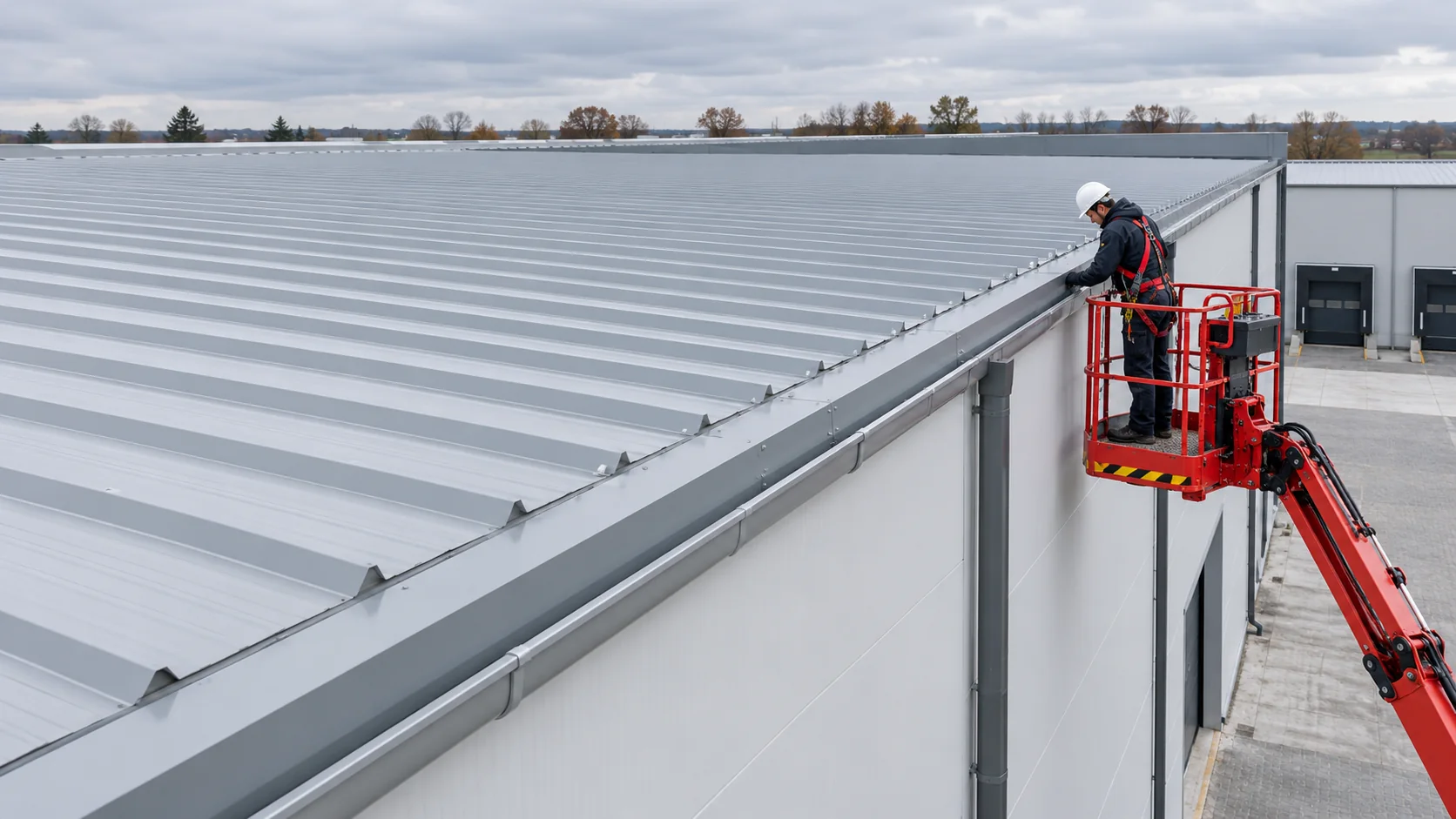
Before the roof panels arrive, check the purlin positions, bearing widths, alignment and roof pitch. Confirm the support spacing against the design…

Before solar panels are installed on an existing roof, the designer, mounting supplier and roofing contractor need a shared set of information.…
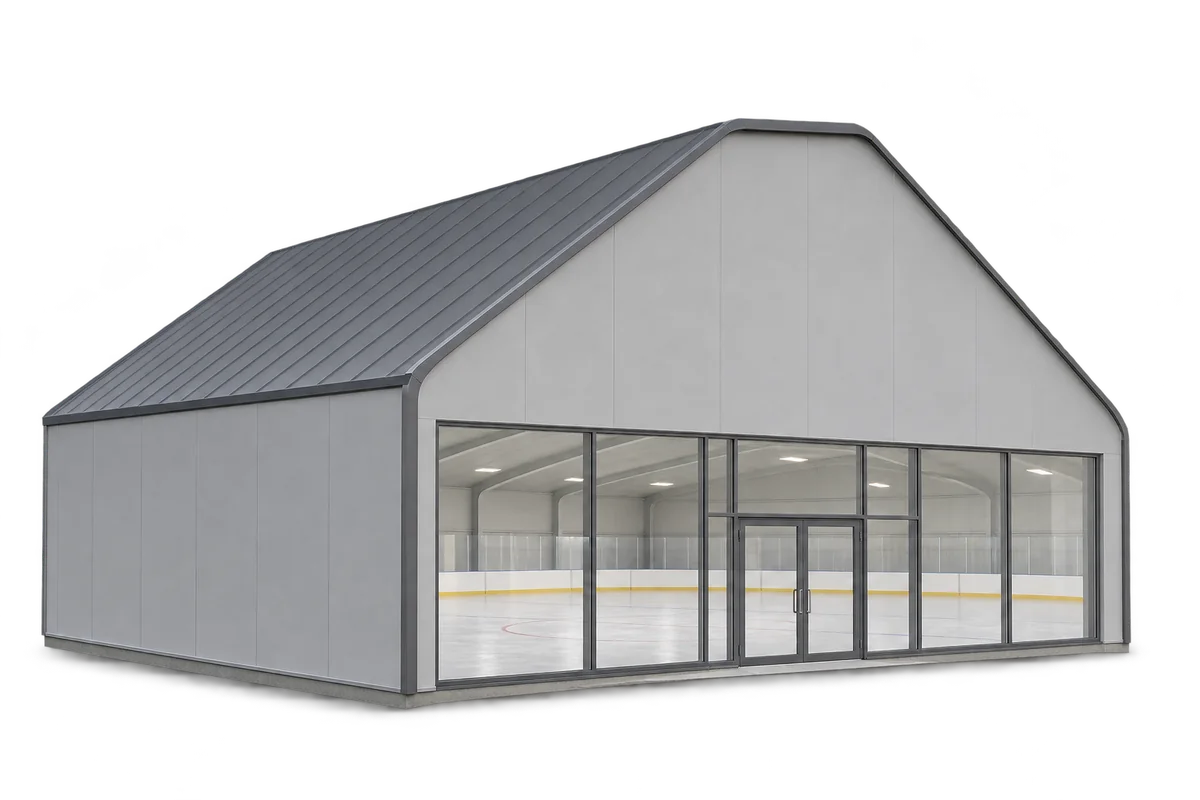
The roof of an ice rink hall is inspected differently from a typical warehouse roof covering. From below, not only the lining…