

Insulation and energy renovation
Which PIR board size should you choose: 120 × 60 cm or 120 × 240 cm?
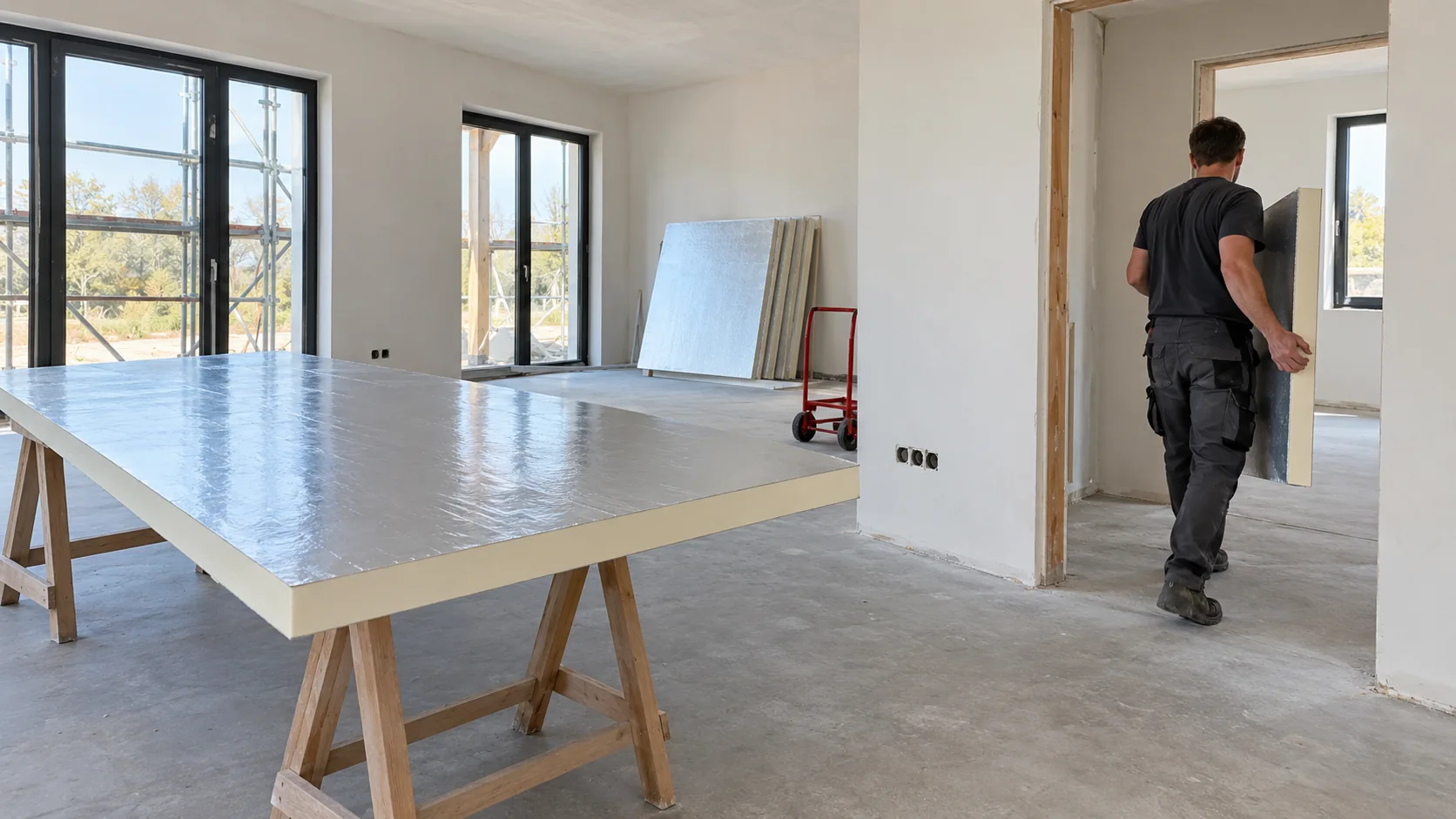
Large PIR boards cover an uninterrupted surface quickly. Smaller boards are easier to manoeuvre in a flat or around openings on a roof. Before ordering, check the route to the work area, draw a cutting plan and find out how much each board covers once its edges are joined. A 1200 × 600 mm board measures 0.72 m² overall, while a 1200 × 2400 mm board measures 2.88 m². Rebated edges can reduce the usable area. For example, one large rebated board covers 1185 × 2385 mm, about 2.83 m². The square-edged version covers the full 2.88 m².
In this article
Check the overall size and the cover dimensions
These dimensions apply to the board in the example. For the product you intend to order, check whether the quoted price is per board, pack or square metre. Board thickness also affects how many pieces fit in a pack. Two packs that look the same can cover different areas.
Check the route from delivery to installation
In a flat undergoing renovation, a stairwell, a sharp turn in a corridor or a doorway may determine what size you can use. A 2.4 m board might fit the room yet be impossible to carry up the stairs without damaging it. Before delivery, check the turns with a light batten of the same length and measure the clearance available for the board’s width.
Smaller boards are easier to carry and turn, though they introduce more joints. A large board takes fewer handling operations on an open roof slope, but a gust of wind can catch it as it is carried. Plan the handling and installation around the conditions on site so the work can be carried out safely.
Draw a cutting plan to estimate waste
Mark windows, recesses, slopes and service penetrations on the plan. Lay out the boards according to the system instructions. See whether an offcut can start the next row with the required support and the right edge profile. Some small pieces will have no suitable place in the layout.
For a simple 22 m² area, the calculation gives eight large boards if each covers approximately 2.83 m². Using that rounded figure gives 22.64 m² before cutting. The actual number can rise if openings produce offcuts you cannot reuse. A blanket 5% allowance may be too little for one layout and unnecessarily generous for another.
Follow any instructions about laying direction and which face goes uppermost or outwards. An offcut can have the right area but the wrong orientation for a particular gap. Assign larger offcuts to specific positions while you draw the layout.
Plan the joints at cut edges
Cutting a board to length removes the factory-machined profile from that edge. The resulting butt joint needs its own treatment. Follow the system detail for the gap and for continuity of the sealing layer. A workable cutting plan leaves edges that can be joined and sealed correctly.
For a multi-layer installation, set out the joints in advance in accordance with the instructions. Staggering them is usually required. On a mechanically fixed roof, board size and edge positions must also suit the specified fixing pattern.

Compare the cost of the finished installation
A smaller format may reduce waste in a tight interior while requiring more time to seal the joints. Large boards can reduce the number of joints on a plain roof slope, though getting them to the roof may take more work. Include materials, labour, sealing and transport when comparing the installed cost per square metre.
Check the sizes offered for the facing and board type you need. Façade boards, floor insulation and PIR bonded to plasterboard can come in different dimensions. Choose the suitable product first, then compare the formats available in that range.
Set aside a dry storage area
Place packs on a stable base and protect them from water and damage. Provide adequate weather protection in addition to the transport packaging. On a roof, the structure’s load capacity and the sequence of work limit how much material can be stored. Consider the weight of all the packs together, even when a single board feels light.
Open packs in the order in which each area will be insulated and protected. Keep damp boards out of areas about to be covered with waterproofing. If you order well in advance, check the permitted storage period and conditions so the boards retain their properties until installation.
Questions and answers
Can four small boards replace one large board?
Four 120 × 60 cm boards have the same overall area as one 120 × 240 cm board. Rebates may change the effective cover, and the smaller pieces introduce more joints to seal. Check the proposed arrangement for the particular board.
Can large boards be cut before carrying them inside?
Yes, if you follow the cutting instructions for the material. Each cut changes the edge profile and the position of the joints. Plan the cuts before delivery so that getting the boards inside does not leave unnecessary gaps or joints that are difficult to seal.
7 branches. Materials closer to your project.

Free quote
Materials for your project




You may also find useful…
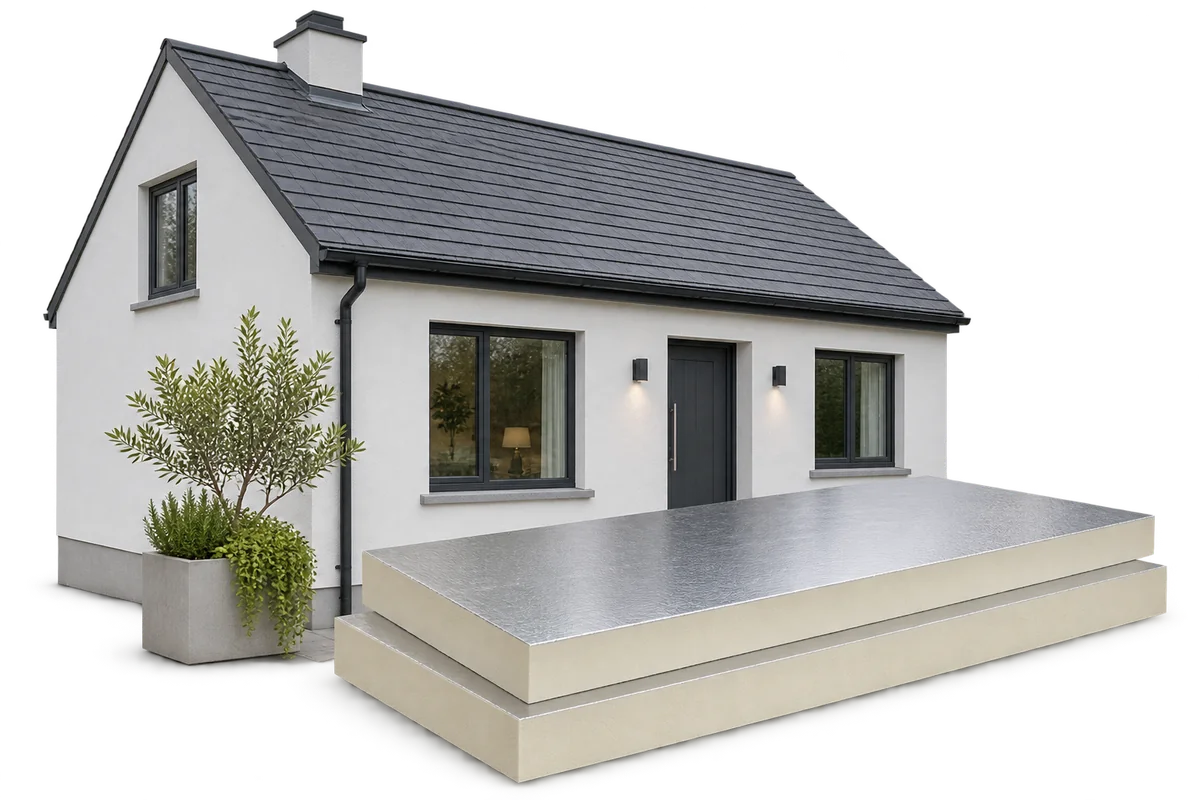
It is worth planning PIR board offcuts on a drawing of the existing roof, wall or floor before placing the order. This…
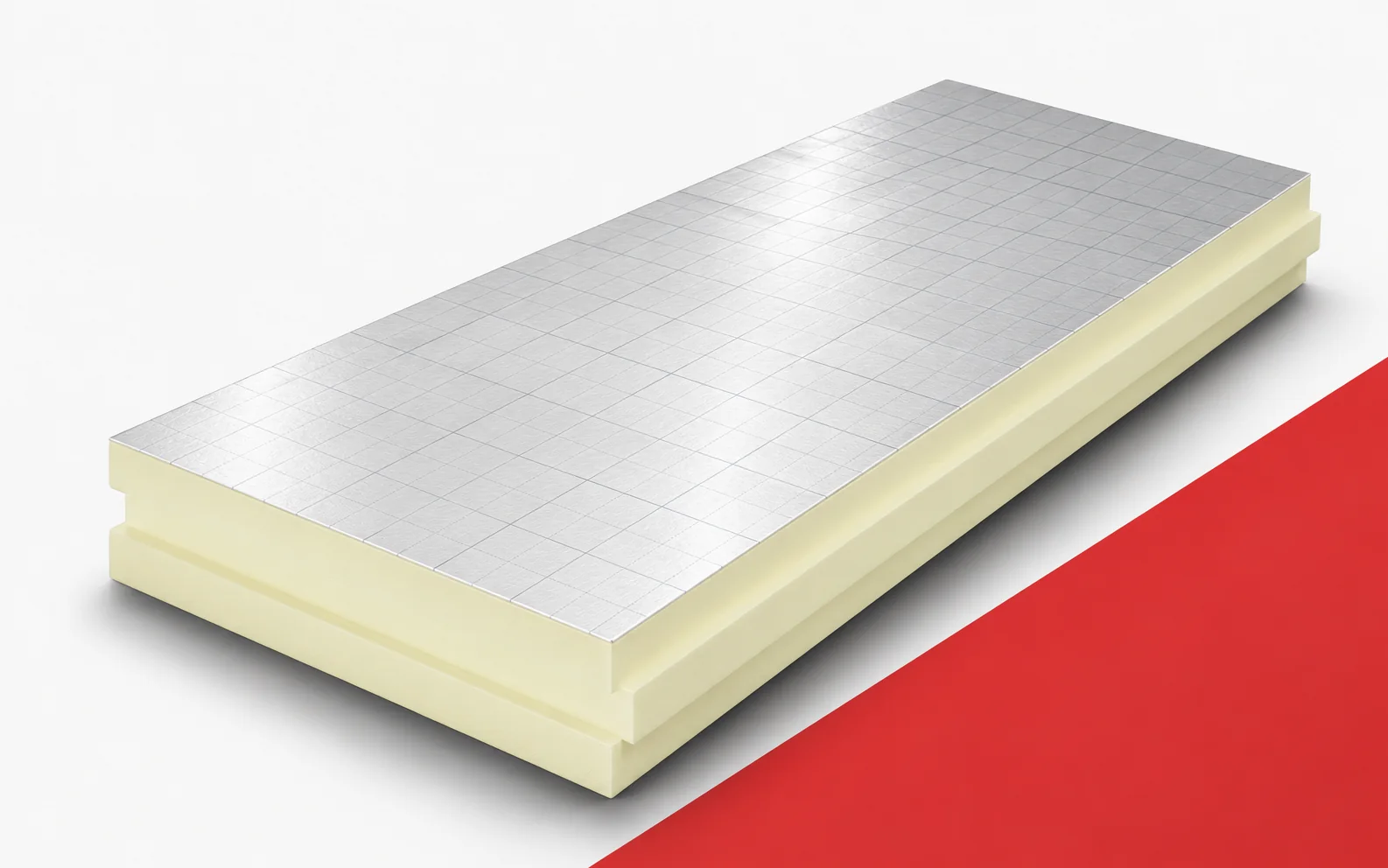
PIR and mineral wool can both effectively limit heat loss, but they offer different sets of properties. When choosing, it is worth…
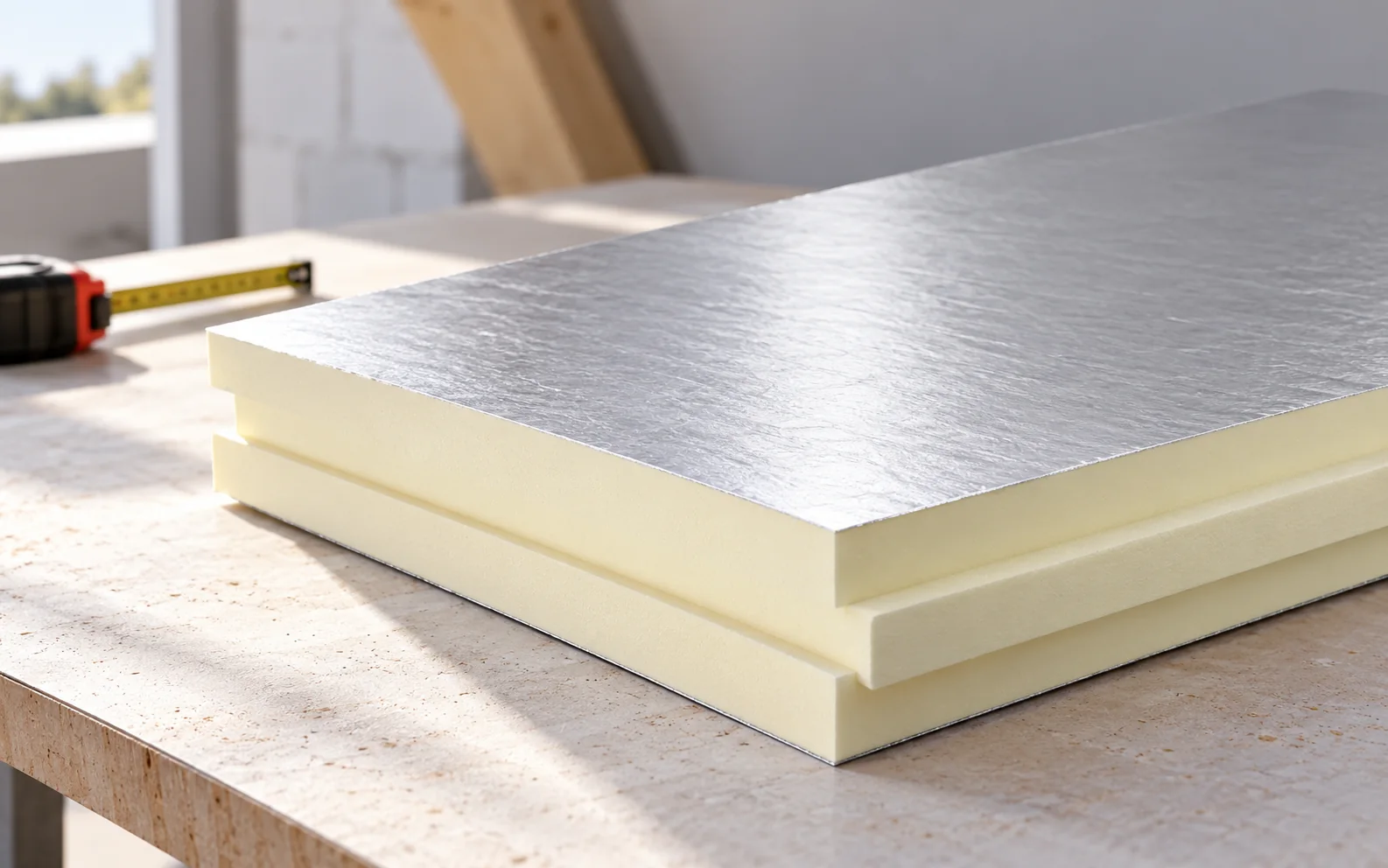
Select roof insulation for the layer arrangement, available height and loads. PIR often achieves the required thermal resistance at a smaller thickness.…
A low floor at doors or stairs makes it difficult to add thick insulation. PIR boards allow a build-up with high thermal…
Replacing a building’s walls and roof with PIR sandwich panels requires a plan for the transition between old and new enclosure. This…

Two houses built with hollow clay blocks may need different insulation. Wall thickness, mortar, ring beams and previous repairs can differ. Space…
Design a roof over an indoor pool for its actual internal environment, not for ordinary warehouse conditions. Moisture, temperature, water treatment and…
Utherm Wall LE achieves a substantial thermal resistance within a small part of the cavity wall cross-section. The effect must also be…