

Purchasing and delivery
When should you buy first-grade sandwich panels and when is clearance stock suitable?
Start with the building specification when comparing first-grade sandwich panels with clearance stock. On a prominent façade, a consistent finish may be essential. In a plant room, a small cosmetic blemish may be acceptable if the panel condition and documentation support its intended use. Second-grade panels can be discounted for very different reasons. Set the structural, thermal and fire requirements before looking for a batch, even if the steel frame has already used up much of the budget. Add any requirements for weathertightness, washability and exposure to harsh conditions. Surface appearance is only one part of the decision.
In this guide
Define the requirements every panel must meet
List the preferences you can change separately. A different shade on a rear wall, a stock length that fits the layout or a small blemish outside the visible area may be acceptable. Discuss these options before buying. It is much harder to judge a compromise once a low price has already persuaded you to take the batch.
Find out why the batch was discounted
A batch may be discounted for damaged surfaces, visual variations, unusual lengths or other deviations. Ask for a description of the actual batch, the product identification and documents covering the intended application. The clearance label alone cannot tell you whether it is equivalent to first-grade stock.
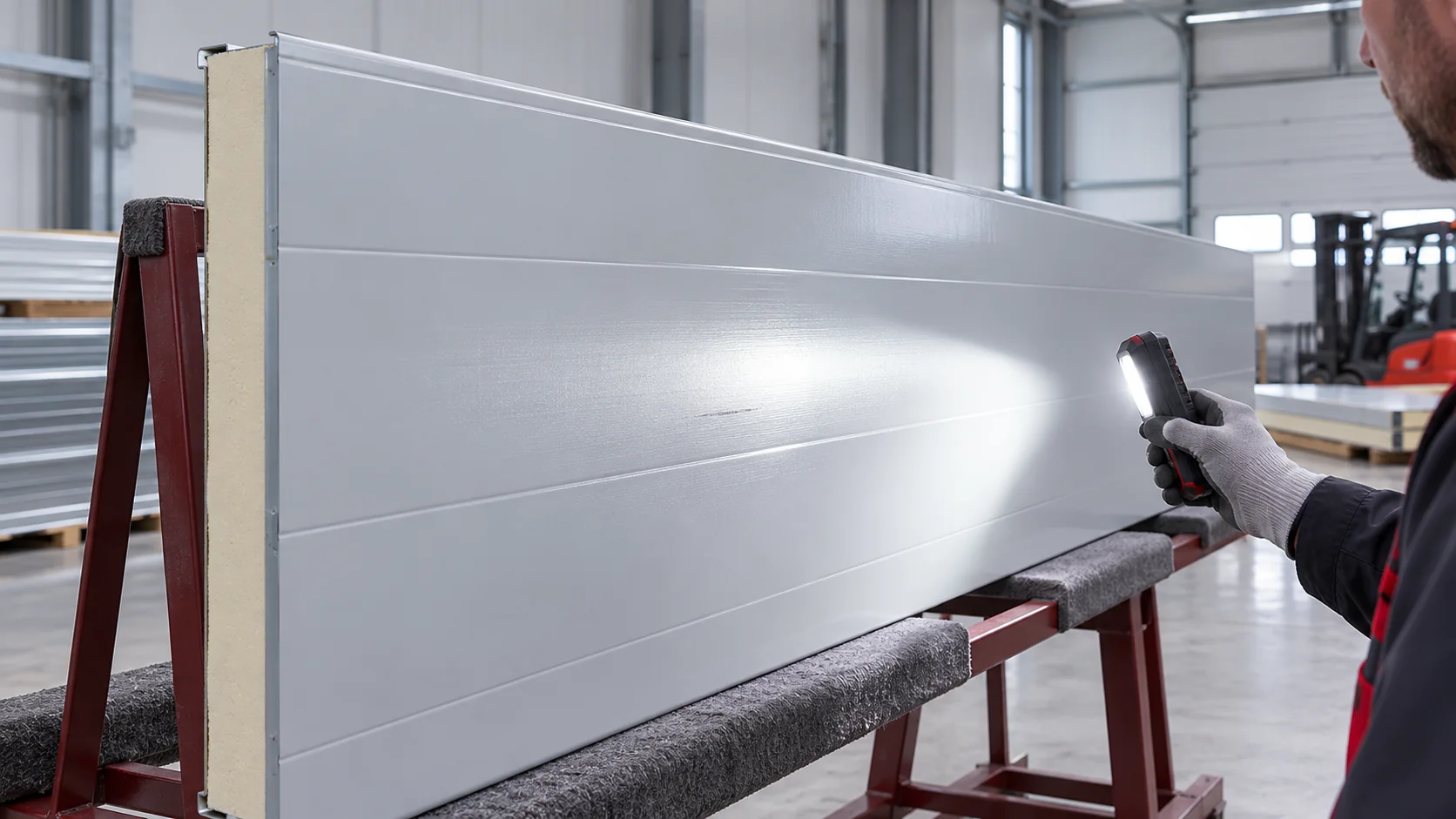
Distinguish a shallow scratch from exposed steel, a dented joint, delamination or a wet core. Each calls for a different assessment. Where damage affects a load transfer point or a sealed joint, a glance from several metres away is insufficient. Confirm suitability before signing the order.
Compare the panels on their actual properties
Use the following comparison to assess individual offers. The agreed specification and the condition of the material on delivery determine what you actually receive.
| Criterion | First-grade panels | Clearance stock |
|---|---|---|
| Appearance | Check against the agreed finish | Assess the stated deviations batch by batch |
| Dimensions | Ask whether panels can be made to the design lengths | Calculate how much of each stock length you can use |
| Documentation | Check the documents for the specific panel variant | Check product identification and what the documents cover |
| Repairs | Agree how damage found on delivery will be handled | Allow for sorting, protective treatment and rejects |
Check the terms of sale and the extent of any warranty for both options. The grade alone does not establish either.
Calculate the saving after wastage
Suppose 120 m² costs about €2,639 excluding VAT, roughly €22 per m². If 15 m² is unusable, the same purchase price spread over 105 m² comes to about €25.13 per usable square metre. Allow another €139 for repairs and the figure rises to about €26.46. These illustrative figures show how to compare costs per usable square metre.
Price the first-grade option using the same measured area and accessories. Check whether made-to-length panels reduce offcuts and labour. Clearance stock may still cost less. The size of the saving depends on what can be installed and whether repairs leave the crew waiting.

Plan where visible differences can go
If the design permits visual differences, mark each batch on the elevation drawing. A single batch across a less prominent wall may give a more consistent finish than panels mixed at random. Mark the position of any minor blemish on the installation plan. A flashing over a damaged joint at a corner does not repair the joint.
Match any touch-up to the coating supplier’s instructions. Repairs may remain visible, especially in raking light. Agree the finish on a small trial area before treating a larger surface. A mark acceptable in a service area may be conspicuous at a customer entrance.
Allow for repairs and future extensions
With an end-of-line batch, matching panels may be hard to find later. If an extension is likely, check joint compatibility and consider dividing the façade into distinct bays. Keep the panel specification as well as the colour reference. A small change in the face profile can be more obvious than a slightly different shade.
First-grade stock can justify its price where a consistent finish, exact lengths and repeat orders matter. Clearance stock can work when the documented limitations fit the project. Record the assessment and resolve uncertainty about performance before allowing the discount to decide the purchase.
Questions and answers
Do clearance panels always insulate less well?
It depends on the reason for the discount and the condition of the core and joints. Verify the thermal performance of the identified panel variant and assess any damage separately.
Do first-grade panels still need to be checked on delivery?
Yes. Check for transport and unloading damage, verify the dimensions and match the documents to the panels. Do this for every delivery.
7 branches. Materials closer to your project.

Free quote
Materials for your project

You may also find useful…
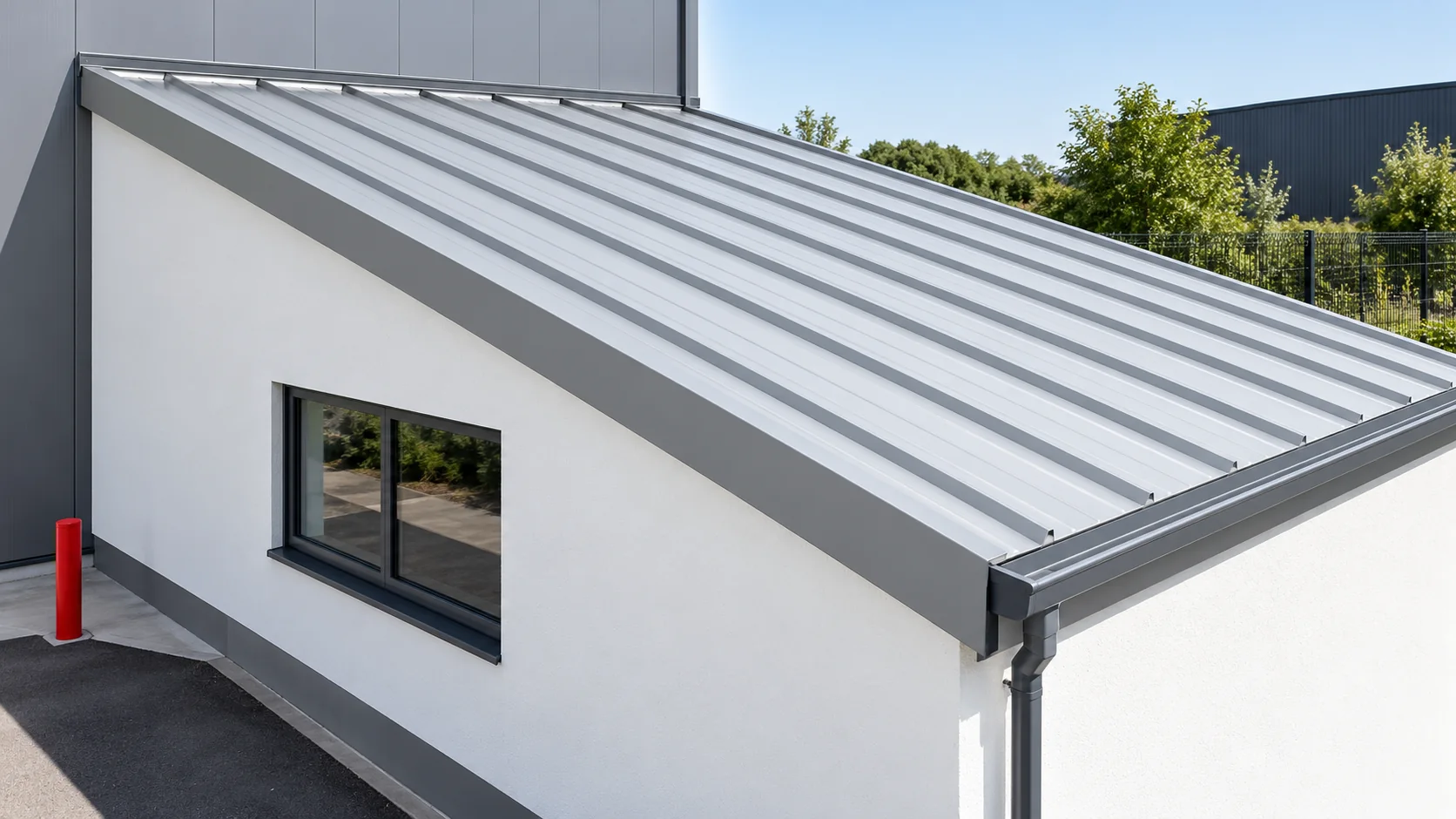
A roof that looks flat from the ground may still have enough fall to drain. For sandwich roof panels, the minimum pitch…
Comparing the energy consumption of a cold room before and after repairing its building envelope can be unreliable if it is based…
In Poland, sellers often use “płyta obornicka” as a general term for a sandwich panel. A typical panel has two facings bonded…
A sandwich panel assembly with a required fire resistance needs inspection before flashings hide its supports, fasteners and seals. Delivery of the…
Select sandwich roof panels and wall panels together so that dimensions, costs and junction details agree. Each has a different job. On…
Sandwich panels can form the envelope of many types of building, but their specification depends on the job they must do. A…
Stock lengths for sandwich roof panels vary from one depot to another and change with deliveries and reservations. Ask for the exact…
Droplets on the inner facing do not necessarily point to a leak or a defective core. Water vapour condenses when the surface…