

Structure and design
Which roof covering suits a holiday cottage?
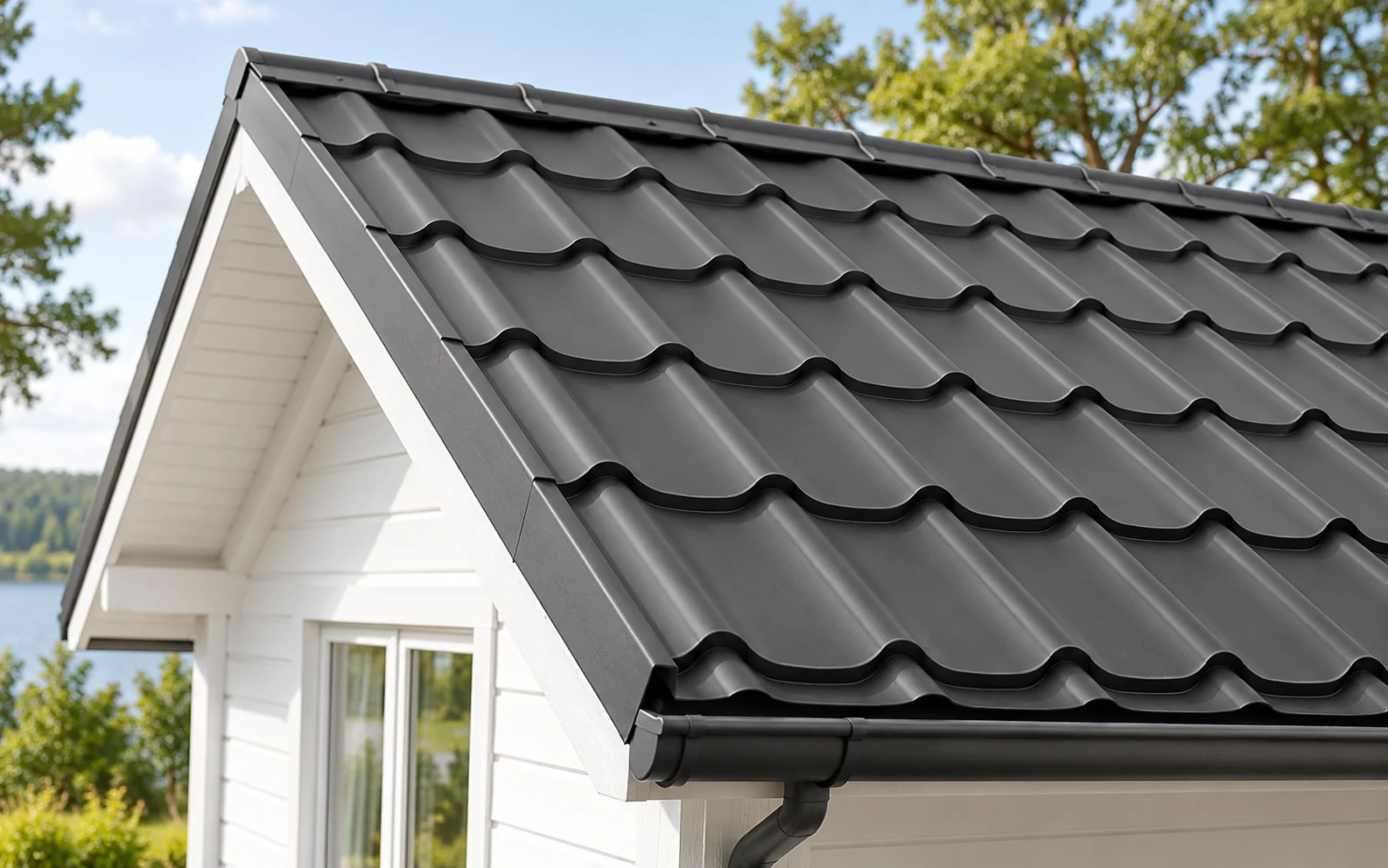
Before choosing a covering for a holiday cottage, establish when the building will be heated and how the materials will reach the site. When a cold cottage is heated for occasional visits, warm, humid indoor air can reach cold roof layers. Design ventilation and condensation control for this pattern of use. Check the roof pitch and support spacing for the covering itself. T18 or T35 trapezoidal steel or cut-to-length tile-effect sheets can suit a simple slope. Shorter modules are also worth comparing where the entrance is narrow or there is little room to store long sheets.
In this guide
How does seasonal use affect the roof?
Consider how often the cottage will be occupied and heated. Warming up a cold building for short stays can cause sharp changes in temperature and humidity. Cooking, drying clothes and the occupants themselves add water vapour. The roof design must account for these conditions.
Year-round use calls for suitable insulation and control of moisture movement through the roof. A summer cottage also needs ventilation and a way to manage condensation if it occurs. Check what will happen on the underside of the sheet even on a very small building.
When might T18 or T35 be suitable?
Trapezoidal steel suits simple roof planes and an understated design. Select the profile for the support spacing, loads and pitch. A T18 sheet may work in one arrangement, while another requires a deeper profile or closer supports. Verify the selection against the actual structure.
T35 has a different cross-section from T18. Performance also varies with steel thickness and grade. Compare the data sheets for the selected products, including the permitted pitch and required overlaps. Similar profile codes do not guarantee identical installation conditions.
What do cut-to-length sheets and modules offer?
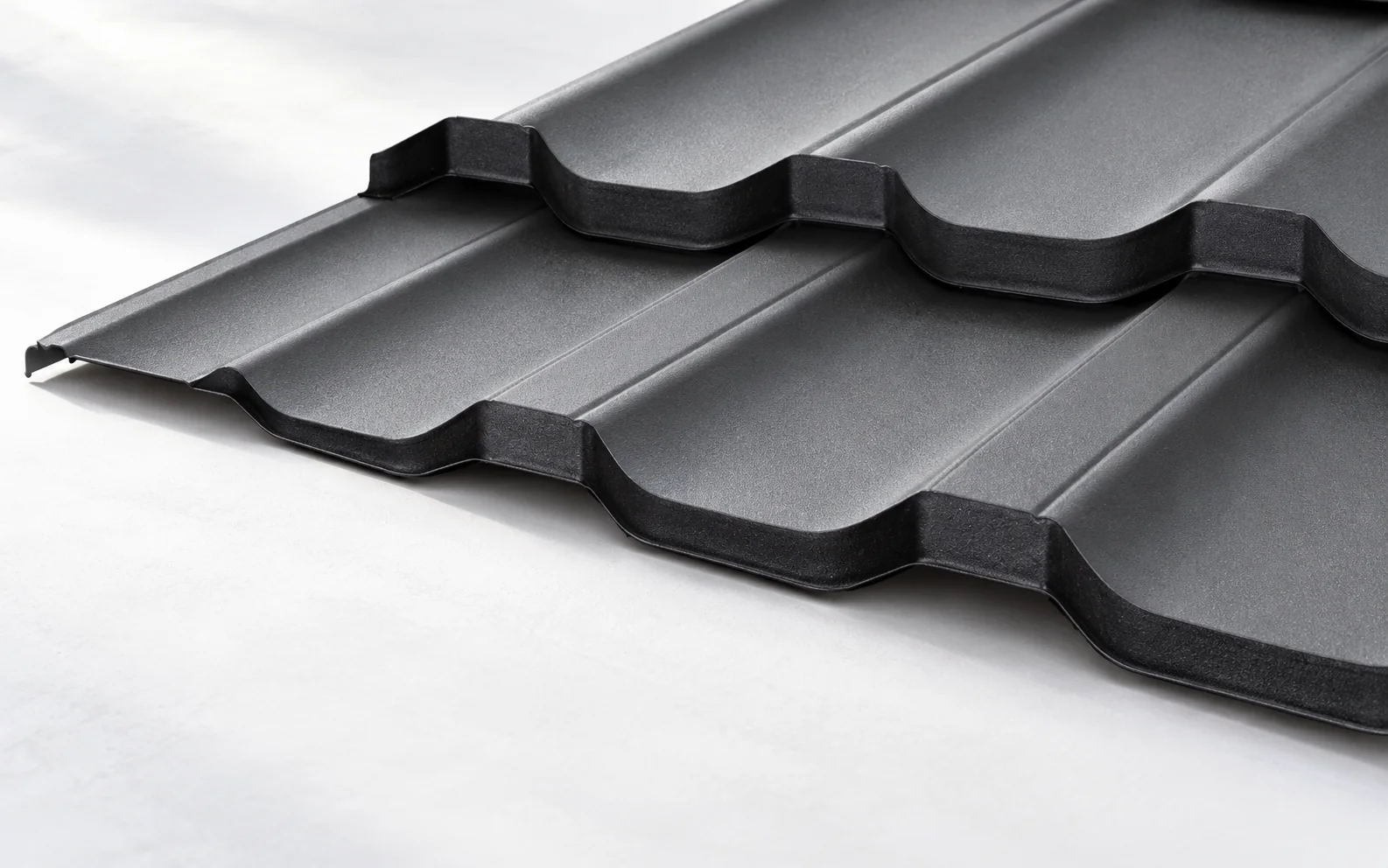
Tile-effect steel gives the roof a pattern closer to traditional tiles. Cut-to-length sheets can make efficient use of material on a simple slope. Measure the roof and plan how the sheets will be handled. A narrow drive or overhanging trees can restrict delivery of long items.
Short modules are easier to manage on a small site. They still need accurately set supports, correct alignment and suitable flashings. Allow for offcuts and compare installed prices. Base the format choice on the cutting plan, delivery conditions and the crew’s experience.
How do you check pitch and structural condition?
Compare the measured pitch with the instructions for the exact covering. At low pitches, joints and the layer beneath them become particularly important. For a nearly flat roof, check that the proposed profile is specifically suitable for those conditions before ordering.
On an existing cottage, assess the roof frame and supports. Investigate visible sagging, damp timber or damaged joints before installing lightweight steel. Account for snow, wind and any equipment to be fixed to the roof as well as the covering’s own weight.

How can you reduce condensation and overheating?
Design the roof layers to control water vapour and allow moisture to escape. Anti-condensation fleece can temporarily retain some condensate and must be able to dry out afterwards. A heated interior still requires suitable insulation, ventilation and an airtight roof detail.
PIR boards can help where there is little room for insulation. Match board type and facings to the intended assembly. Windows, shading and airflow also influence summer comfort. Consider these together when assessing a light roof colour or new insulation.
What matters when the property is often unattended?
A holiday cottage may stand empty for weeks. Make gutters, outlets and roof penetrations easy to inspect. Leaves and branches can obstruct drainage. Nearby trees affect upkeep, while exposure to moisture and other local conditions determines the appropriate protective coating.
Schedule a check after the season and after severe weather. From the ground, look first at gutters, flashings and visible damage. Arrange safe access for any inspection that requires work at height. Thin roofing components are unsuitable supports for ladders or tools.
How do you compare the total costs?
Price the substrate, protective layers, flashings and drainage alongside the covering. Include transport to the cottage, unloading and waste. If the use of the cottage will change, allow for any additional insulation. Compare complete quotations that cover all work needed to finish the roof.
Before ordering
Give the supplier a short brief stating the season of use, heating arrangements, pitch, support spacing and access conditions. This helps compare trapezoidal sheet, cut-to-length tile-effect sheet and modules. Confirm the measurements and roof build-up before ordering.
Choosing a covering for the site
Choose a roof that suits the way you use the cottage and the conditions on the plot. T18, T35 and tile-effect sheets offer different appearances and installation options. Select a covering compatible with the structure and price it with its supports and finishing details.
7 branches. Materials closer to your project.

Free quote
Materials for your project



You may also find useful…
The coating of a tile-effect metal roof determines its corrosion protection, how long its appearance lasts and how resistant its surface is.…
Concrete tiles and tile-effect steel place different loads on the same roof and call for different delivery arrangements. Compare their weight per…
Tile-effect metal roofing must be protected from water trapped between the sheets, from scratching and from deformation. The transport packaging is no…
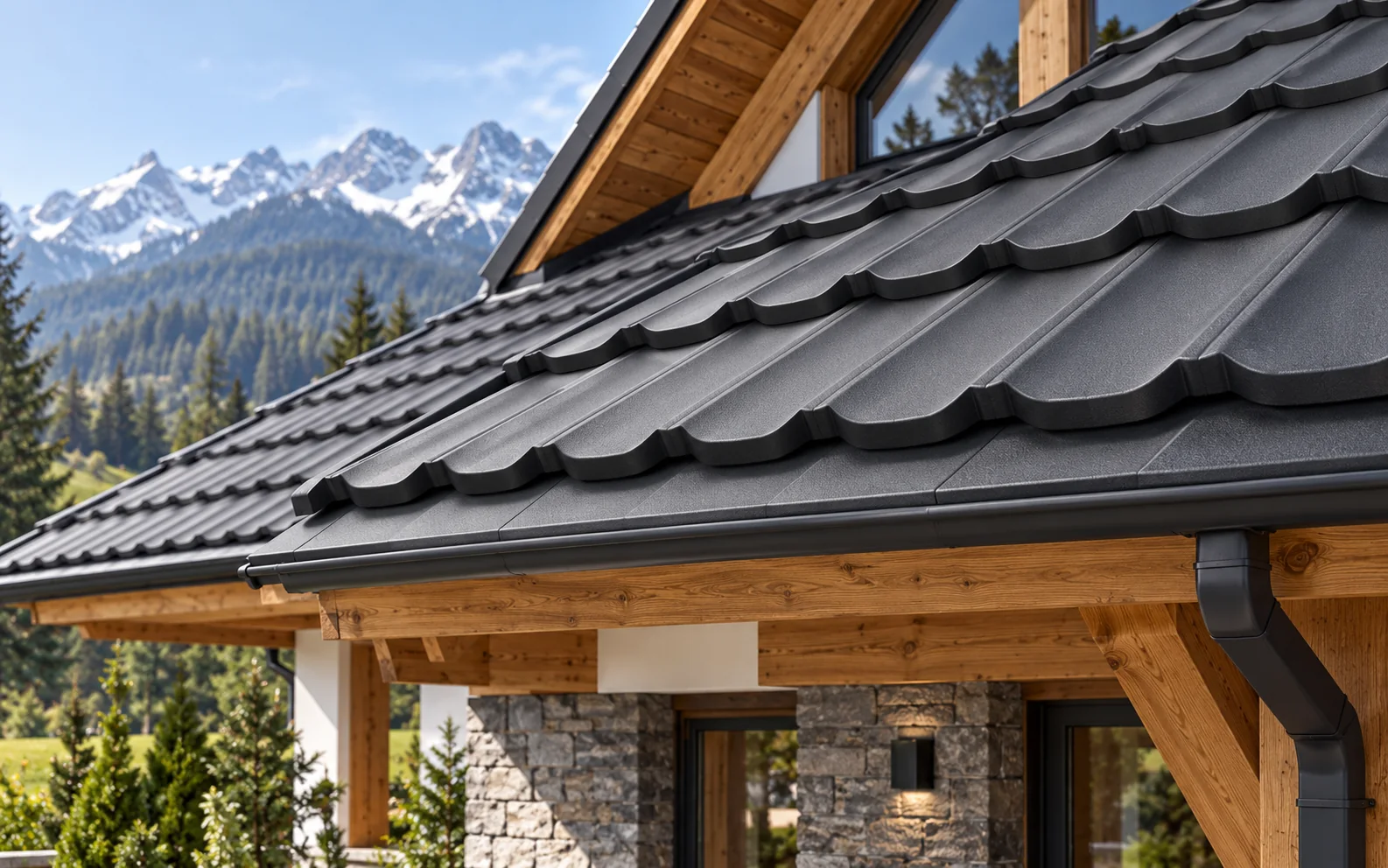
A house inspired by mountain architecture needs a roof covering that matches the proportions of the building form and the conditions of…
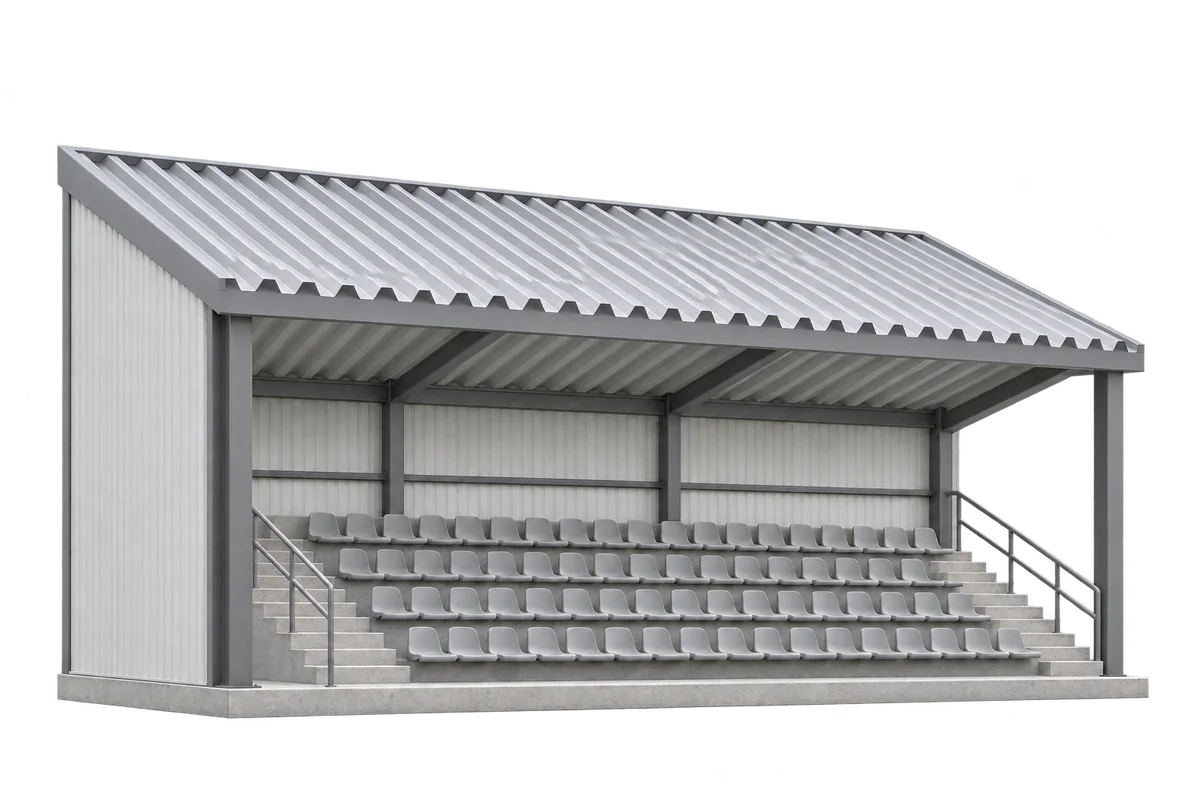
A grandstand roof shelters spectators from rain, and its underside often remains clearly visible. Trapezoidal steel sheets can perform various functions in…
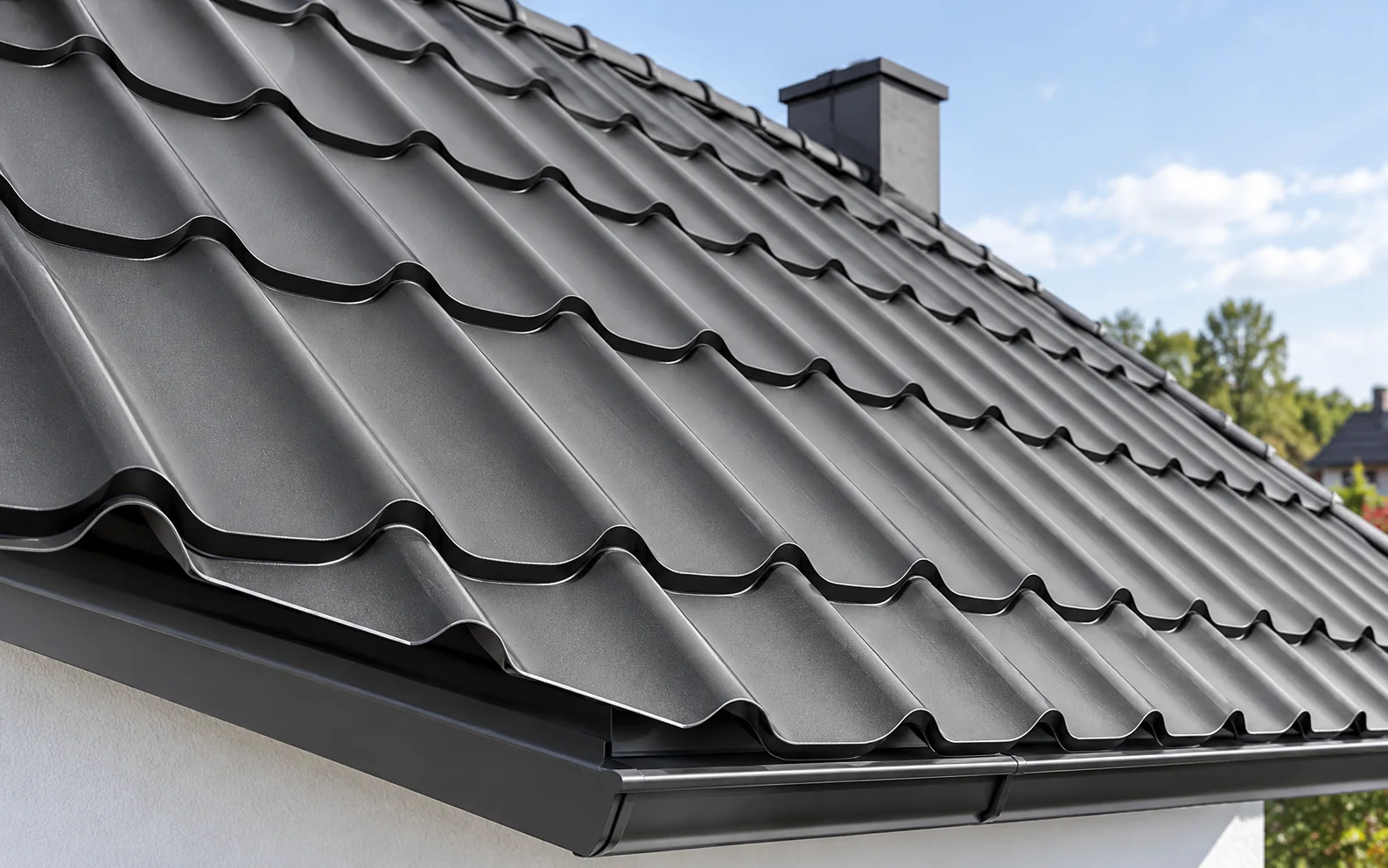
Corrosion protection begins with selecting the sheet metal to suit the environment, and later depends on transport, installation and care. Coating thickness…
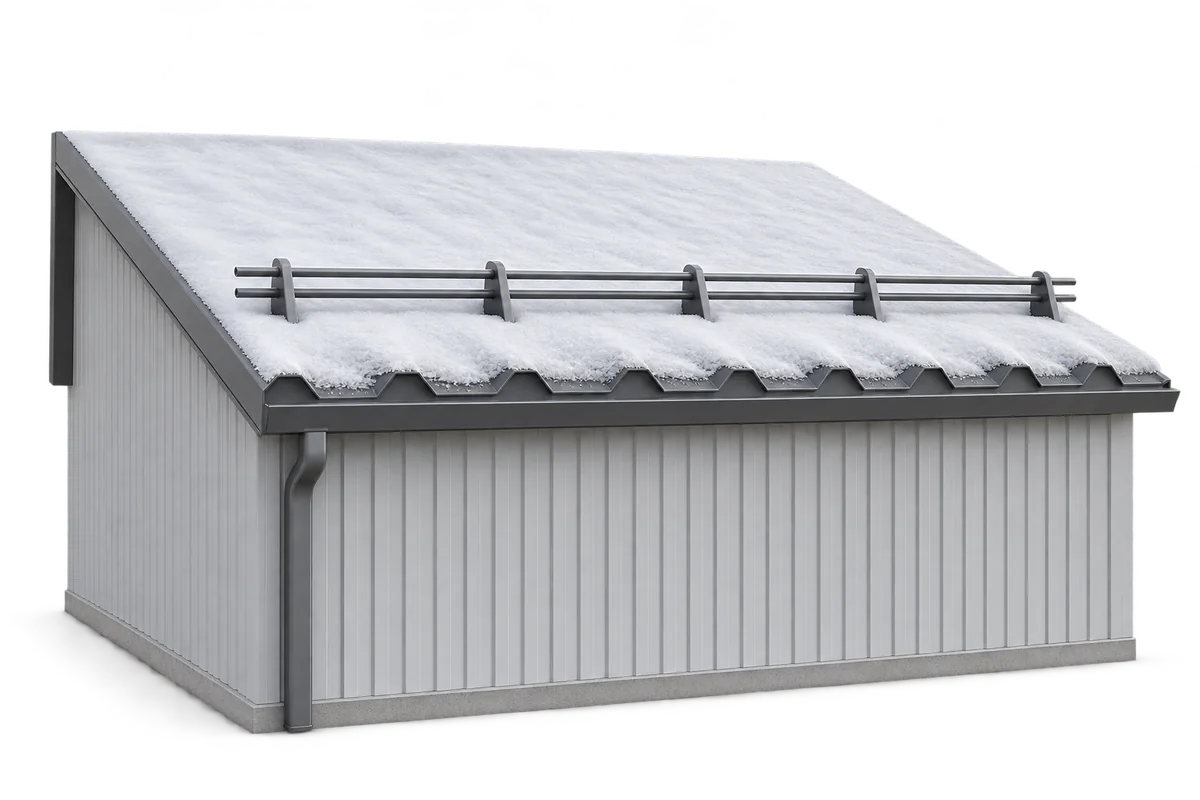
Winter roof care needs advance agreement on who observes conditions, assesses loading and organises necessary work. Snow depth alone is insufficient because…
Lightweight coverings include, among others, tile-effect metal roofing and trapezoidal steel sheet. The roof membrane alone may also have a low weight,…