

Roof coverings
When are single-course tile-effect roofing panels worth using?
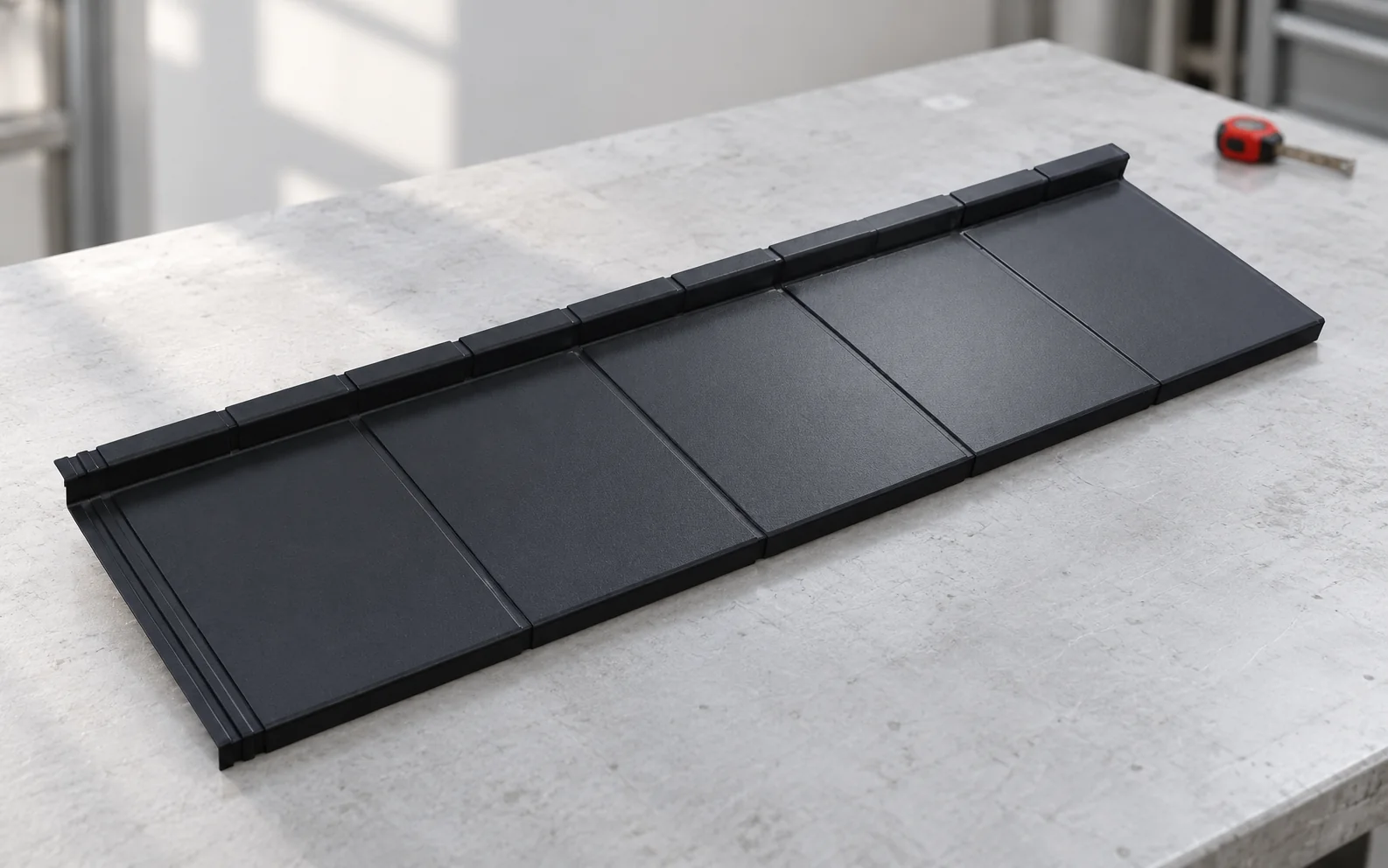
A single-course metal roofing panel covers one row of the tile pattern. Short panels are easier to deliver through a narrow entrance and to position between a dormer and a valley. Before ordering, draw each course and check how many panels fit. Part of each sheet overlaps its neighbour, so use the cover dimensions in the product datasheet. Mark the laying direction and see whether offcuts will fit elsewhere. The same drawing helps the roofer check the batten positions and estimate how many joints the installation will involve.
In this guide
What does a single course mean?
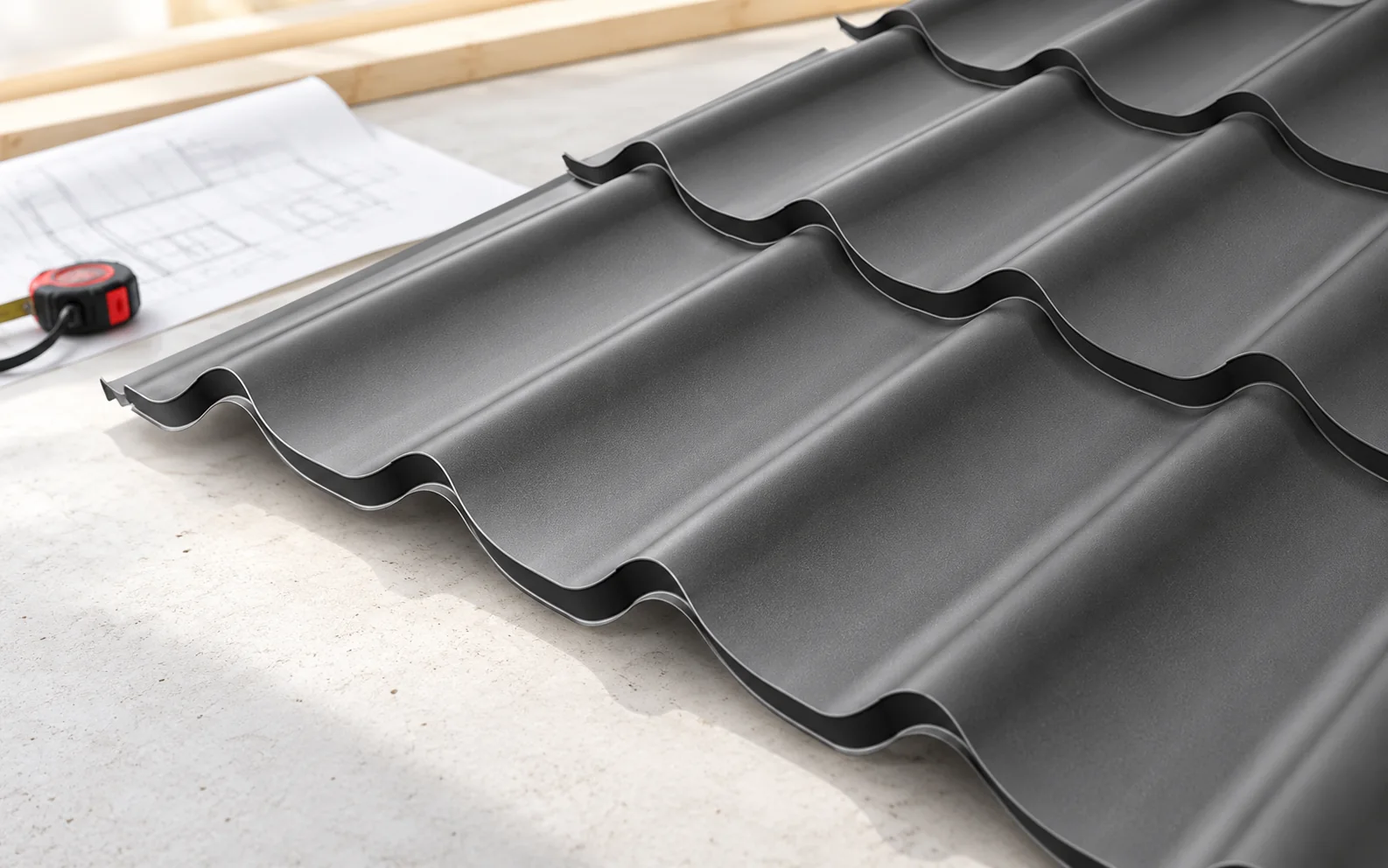
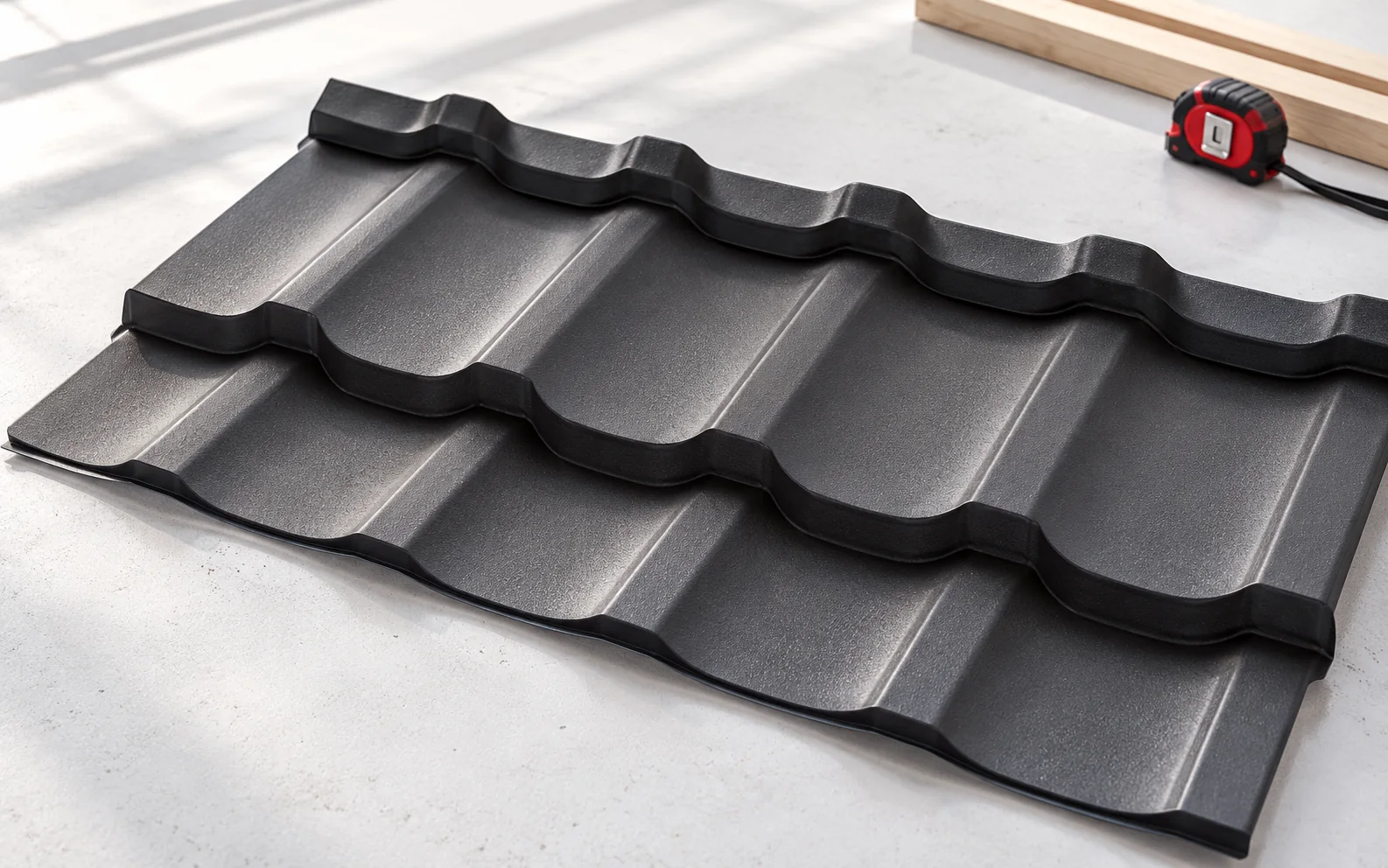
A module is one repeat of the profile corresponding to a single course of the tile pattern. A single-module sheet includes that repeat and the material needed to join it to the next panel. Its overall length therefore exceeds its effective cover length. Use the cover dimensions when calculating how much roofing to order.
Small sheets can also cover two courses, and longer sheets are available cut to length. The format describes the size of the unit, while the wave shape can vary. Before buying, look at the profile drawing and the joint detail as well as photographs of a finished roof.
Where do small panels make delivery easier?
Where access is narrow, it is easier to plan the unloading of smaller sheets. A short panel is easier to carry and less liable to bend under its own unsupported length. Follow the handling and stacking instructions to protect its edges.
Space beside the building also matters. Small panels can be handed up in batches, leaving fewer sheets stacked beside the scaffold. Protect them from rain and secure them against slipping. Transport packaging is unsuitable for prolonged outdoor storage.
Will a complex roof produce less waste?
Small panels let you allocate sheets more precisely to individual roof sections. Around dormers and hips, more panels may fit without cutting. The result depends on the pattern and laying direction. An offcut can only be used elsewhere if its profile and joining edges face the right way.
Prepare a laying plan showing cover width, overlaps and valley lines. Compare the resulting panel count with a cutting layout for longer sheets. A fixed percentage saving quoted without reference to the roof layout is a poor basis for an order.
Are small panels easier to lay?
Standard panel dimensions give the crew a reference when checking each course. A misalignment can be spotted before it spreads across the slope. The starting position and eaves line still need to be set out accurately. An error in the first course carries through to the next.
Match batten spacing to the exact model. The first spacing at the eaves may differ from the rest. Fasteners that secure the panel to the support serve a different purpose from those that stitch the joint. Follow the specified number and positions for both, even on a small sheet.

What do the extra joints mean in practice?
Small panels have more joints across a given slope than long sheets. The profiled joint is designed to shed water and keep the panels aligned. It needs clean, undistorted edges and the correct contact pressure to perform as intended.
If a joint does not fit, check panel alignment, support and compatibility before considering sealants. An arbitrary bead of silicone is no remedy for a mismatched joint. Check the minimum pitch in the product documentation. A single-course panel and a similar cut-to-length sheet may have different limits.
When does the smaller format offer little advantage?
On a long rectangular slope, sheets cut to length can reduce the number of joints and speed up coverage. If access and unloading are straightforward, small panels offer less of a handling advantage. Compare the full installed costs for that roof.
Divide the price of each panel by its effective cover area before comparing formats. Include labour, accessories and waste. Check the coating and steel thickness too, since either may explain a price difference that appears to be due to panel size.
What should you allow for when planning repairs?
A damaged short panel may be easier to replace than a long sheet. Reaching its fasteners can still require removal of adjacent panels. Check the actual joint layout before assuming that a single unit can be lifted out without disturbing the overlaps.
Keep the product and coating references and agree a small repair stock when ordering. Later batches can differ in shade, and the installed roof may change colour as it ages. Store spare panels dry and protected from rubbing against each other.
Before you order
Record both overall and cover dimensions when comparing panels. Use the latter to determine how many sheets the roof needs with all overlaps accounted for.
What to remember
A single-course format is worth considering where it simplifies handling or the cutting layout on a complex roof. Its advantages depend on site logistics and roof geometry. Give coating, minimum pitch and fastening details the same attention as for any other roof covering.
7 branches. Materials closer to your project.

Free quote
Materials for your project



You may also find useful…
A gable roof, a mono-pitch roof, a hipped roof, a multi-pitched roof and a flat roof each affect the interior and the…
A coherent roof results from proportion, colour and detail, not from a seasonal trend label. Modular tile-effect metal roofing, cut sheets and…
How a modular tile-effect metal roof looks on a finished house depends, among other things, on the wave width, the height of…
Roof defects often arise before the last sheet is laid. An uneven substrate, a damaged coating, incorrect fixings, interrupted ventilation and faulty…
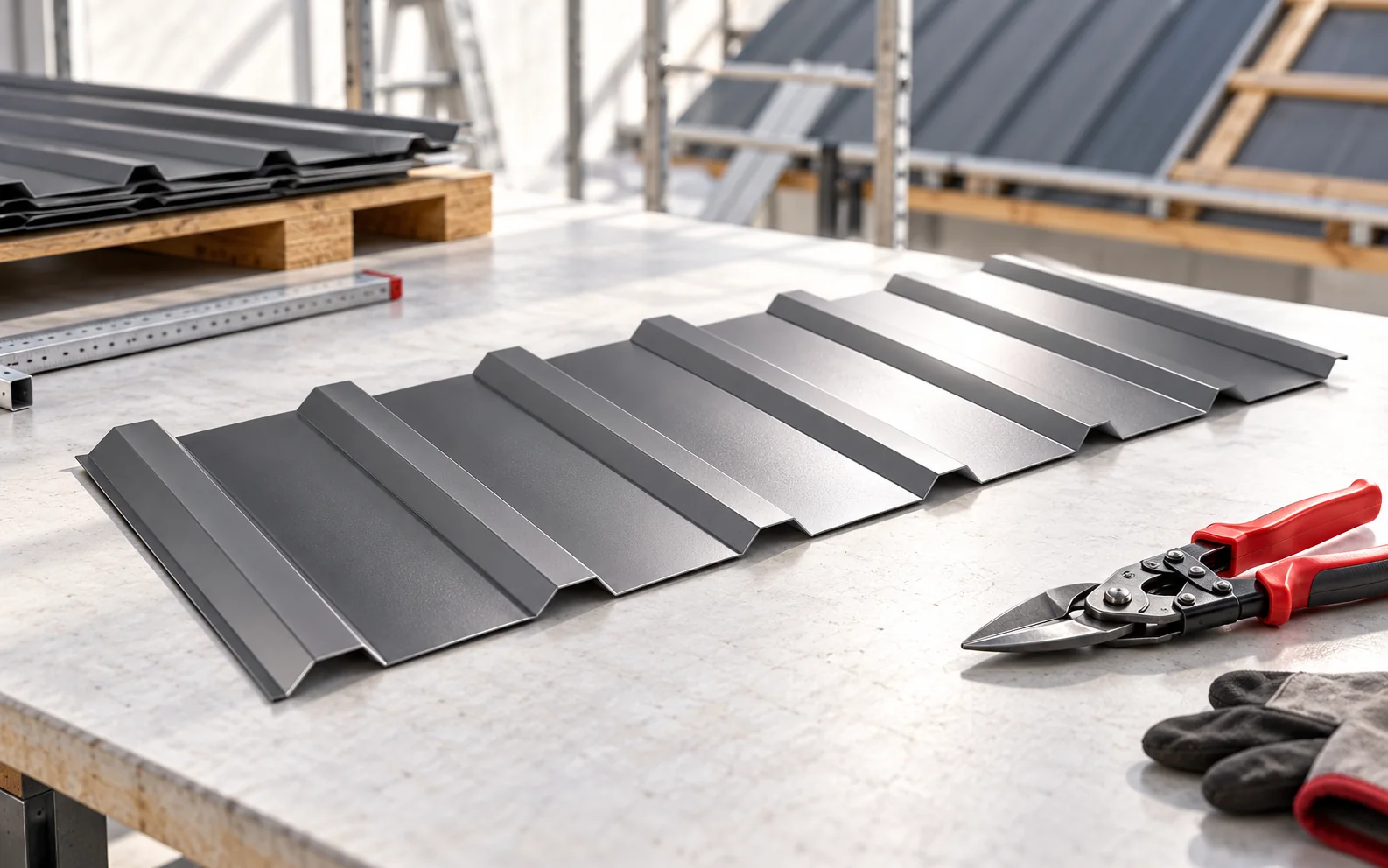
Roofing training is worthwhile when it matches the work you do every day, not just the list of products in the programme.…
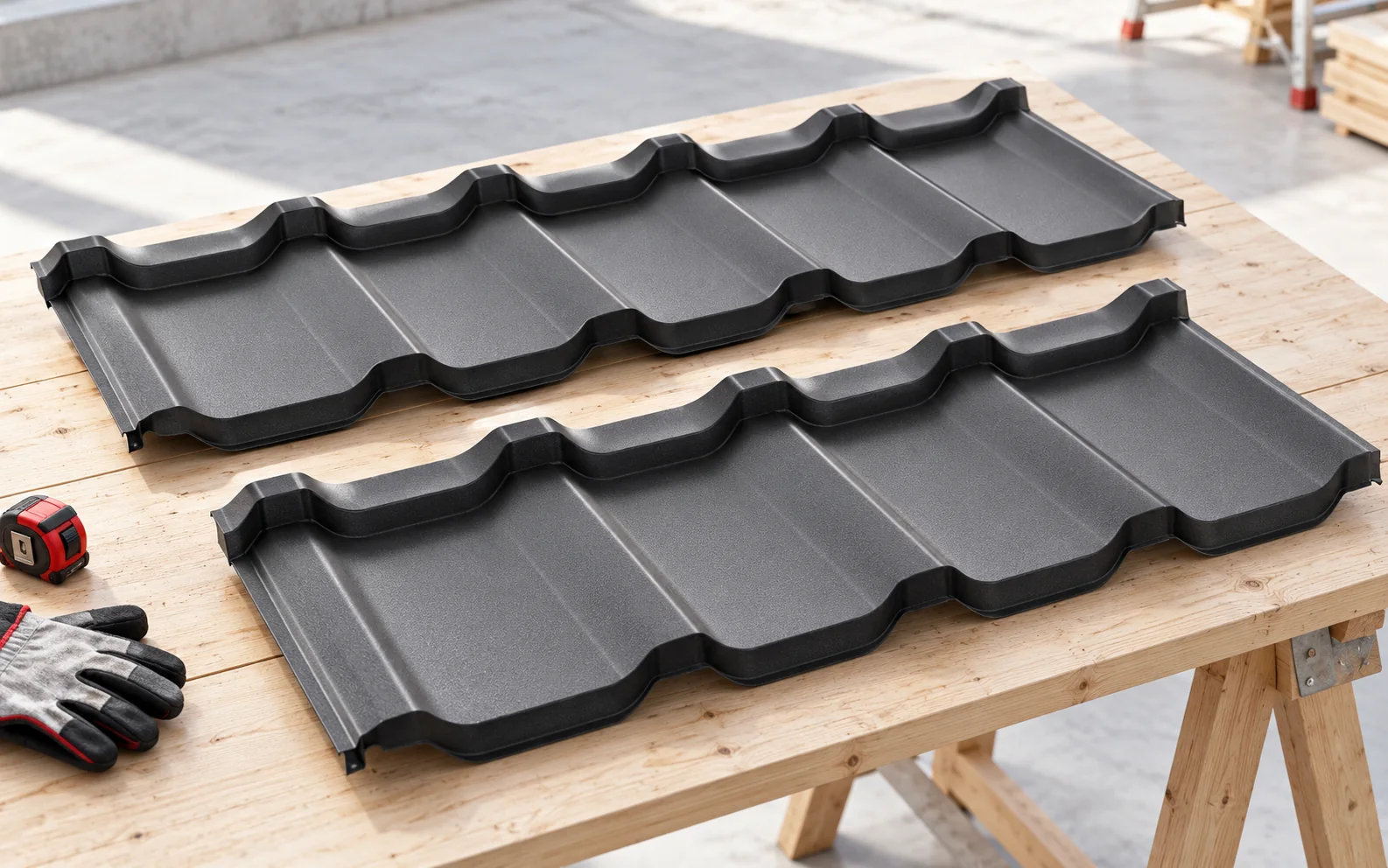
Installation of modular metal roof tiles begins with a level substructure, the correct layer sequence and a properly formed eaves zone. Only…
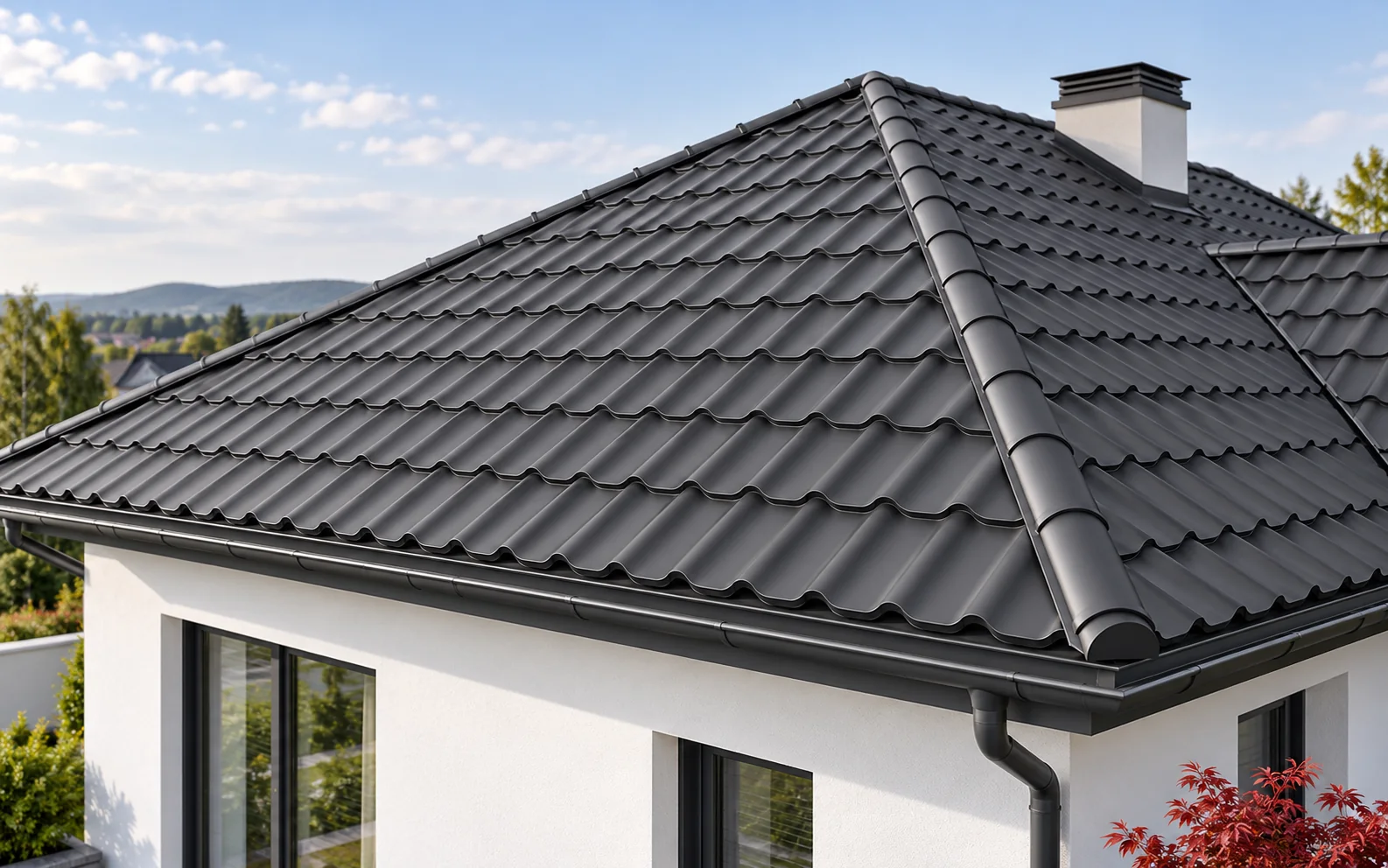
A multi-pitched roof consists of several roof slopes joined by ridges, hips and often valleys. It offers great freedom in shaping the…
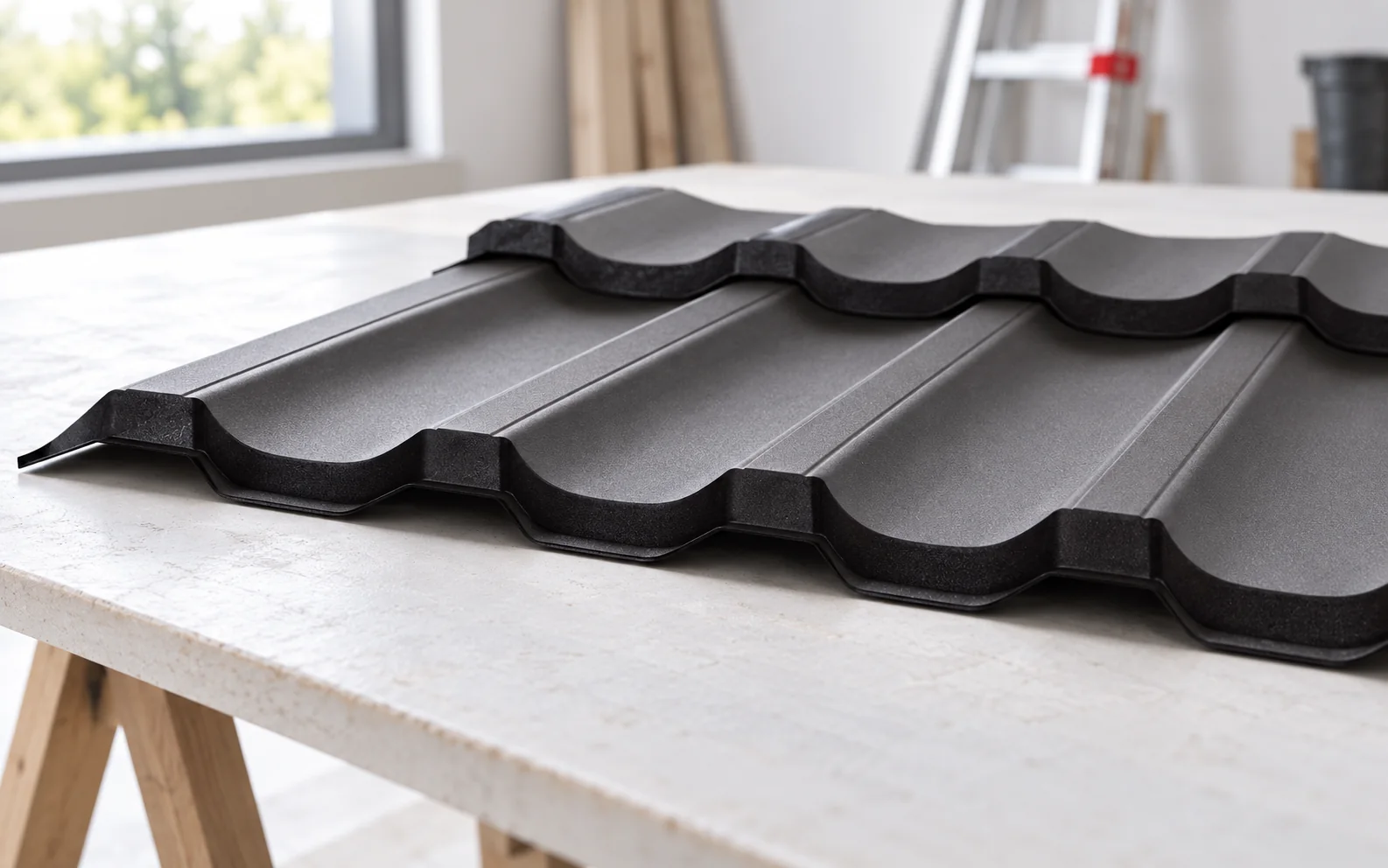
Modular tile-effect metal roofing makes transporting and handling the panels easier, but it does not relieve you of the need to prepare…