

Roof coverings
How to assess the quality of tile-effect metal roofing before you buy
Good tile-effect metal roofing has a documented material, repeatable geometry and a coating suited to the roof conditions. It cannot be assessed on colour, price or warranty length alone. It is worth checking the product data, a sample and the completeness of the system. Equally important is the ability to identify the product unambiguously on delivery. The offer should state the specific profile, format, thickness, coating and colour. It also needs the documents appropriate to the product and its application. The name of the tile-effect metal roofing without the material version leaves too many unknowns. Different variants of the same pattern may have different parameters and scope of protection. Check that the information in the offer matches the product data sheet and the delivery documentation.
In this article
Does the product have a complete and consistent designation?
The offer should state the specific profile, format, thickness, coating and colour. It also needs the documents appropriate to the product and its application. The name of the tile-effect metal roofing without the material version leaves too many unknowns. Different variants of the same pattern may have different parameters and scope of protection.
Check that the information in the offer matches the product data sheet and the delivery documentation. Marking is not in itself a reward for above-average quality, but it allows the product to be related to the declared properties. A lack of data makes comparison and later clarification of a problem more difficult. It is worth removing ambiguities before payment and production.
How can the steel core be assessed?
Thickness, steel grade and product tolerances matter. The core thickness should not be confused with the total thickness including the protective layers. A simple measurement of the finished sheet may not correspond to the declared value if it compares different quantities. Any doubt must be clarified on the basis of the proper method and documents.
Stiffness assessed by manually bending a sample is not a reliable test of the whole roof. It is influenced by the profile, the width of the piece and the way it is supported. Such checking can also damage the material. Suitability is determined by the data for the specific product and a correctly designed assembly, not by a single impression in the hands.
How can well-made geometry be recognised?
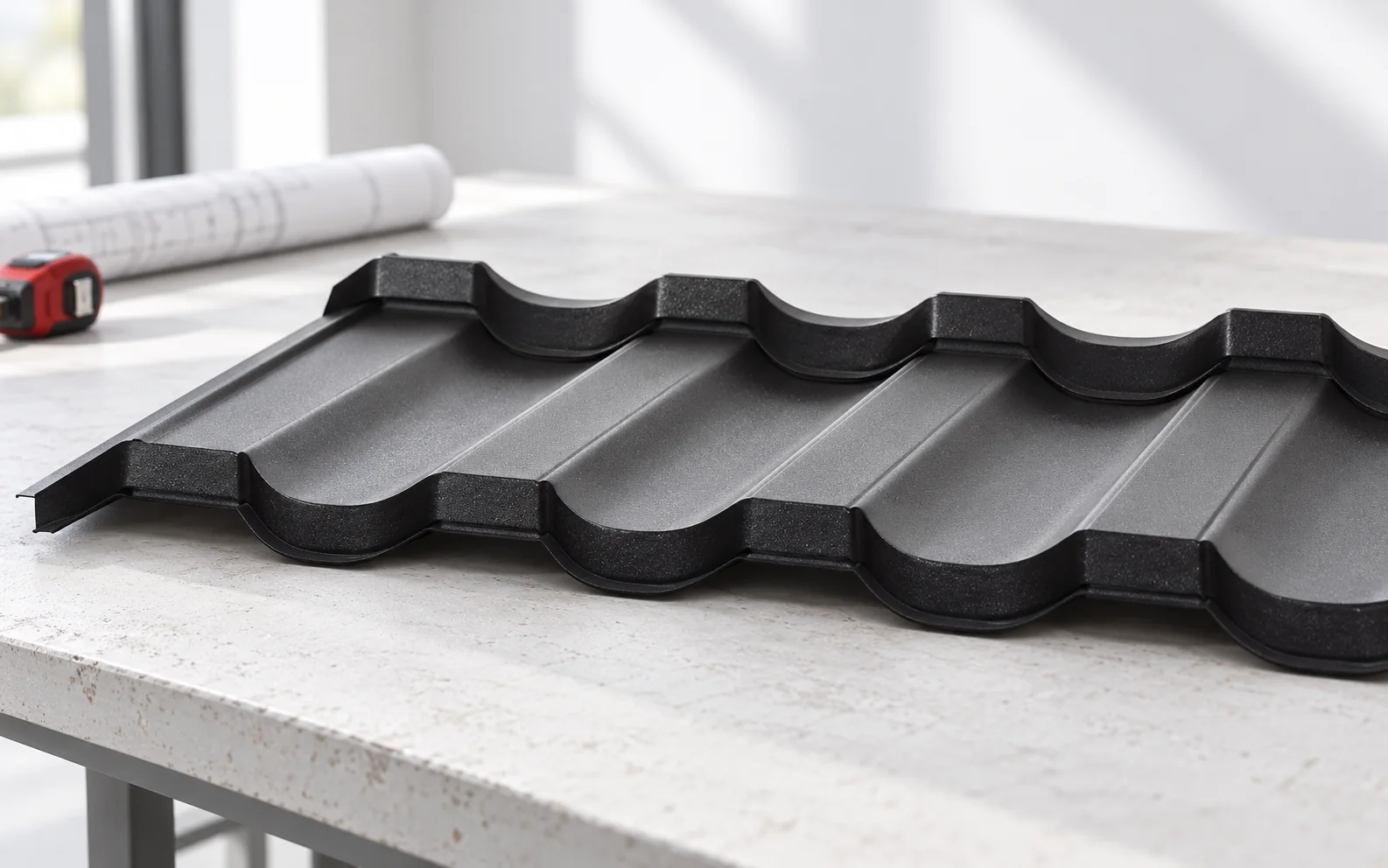
The pressings should be repeatable and the edges should match the product drawing. Correct folding of the laps is important. If a trial assembly of panels shows a mismatch, the cause must be established before installation. It may be a different variant, transport damage or a setting error, not always a fault in the profiling itself.
Do not expect every model to have an identical wave height or module. These are design features, not a simple quality scale. A lower pressing is not automatically worse. It should be checked whether the specific pattern meets the requirements of the application and whether the execution matches the declared geometry.
What needs to be known about the coating?
Record the type of metallic protection and organic layer. Check the resistance parameters and the range of environments for which the material is intended. Colour alone does not describe protection. The paint thickness, too, must be considered together with the composition and properties of the specific coating, not as the sole indicator of quality.
On the sample, assess the appearance, texture and condition of the surface. Scratches, dents and traces of improper storage require clarification. A sales sample does not replace acceptance of the entire delivery. It is worth checking the visible sheets and package markings, and documenting damage before cutting and laying begin.

Does the system include the necessary details?
Good covering requires matching flashings, fastenings and solutions at penetrations. Check the availability of elements for the eaves, ridge and edges. A clear instruction is needed that specifies how the connections are made. An attractive panel alone does not ensure tightness where the roof changes direction or meets a wall.
Pay attention to the selection of fasteners for the substrate and environmental conditions. A random screw can weaken a well-prepared assembly. Likewise, a flashing made of a different material may differ in colour or resistance. The quality assessment should cover the complete set of supplied elements, not only the largest item on the invoice.
How should the warranty be read and the price compared?
Separate the technical warranty from the aesthetic one. Check which phenomena it covers and which conditions must be met. A long declaration does not mean unlimited resistance to damage or any application. The reporting procedure and the documents needed to assess a specific case also matter.
The price should relate to the same covering area and a comparable material variant. A cheaper sheet with a larger overlap portion does not necessarily give a cheaper roof. Similarly, a surcharge for appearance is not always a surcharge for protection. Compare the full statement and the data so that you know which feature you are actually paying for.
What should be checked after delivery and before installation?
Compare the labels, quantities and lengths with the order. Assess the condition of the packaging and visible surfaces. Pay attention to the consistency of the batch, profile direction and colour. If there is a suspicion of non-conformity, clarify it before installation. After cutting and covering some elements, establishing the cause is often more difficult.
Give the team instructions on storage, cutting and surface protection. Even a good-quality product can be damaged during work. Acceptance should therefore combine inspection of the delivery with assessment of the execution. Documented material and correct installation give a much more reliable result than a choice based on a premium-quality slogan alone.
Tip before ordering
Before purchase, compare three documents: the offer, the product data sheet and the warranty terms. Check that the same profile and coating variant appear everywhere. A discrepancy in the designation is worth clarifying before ordering the entire roof slope.
What is worth remembering?
The quality of tile-effect metal roofing can be assessed through specific data and the conformity of the delivery with the documentation. The most important are the material, geometry, coating and complete installation solutions. Price and warranty help in the choice, but they should confirm these features rather than replace them.
7 branches. Materials closer to your project.

Free quote
Materials for your project
You may also find useful…
The decision depends on the extent of the damage, the condition of the structure and the cause of the problem. A single…
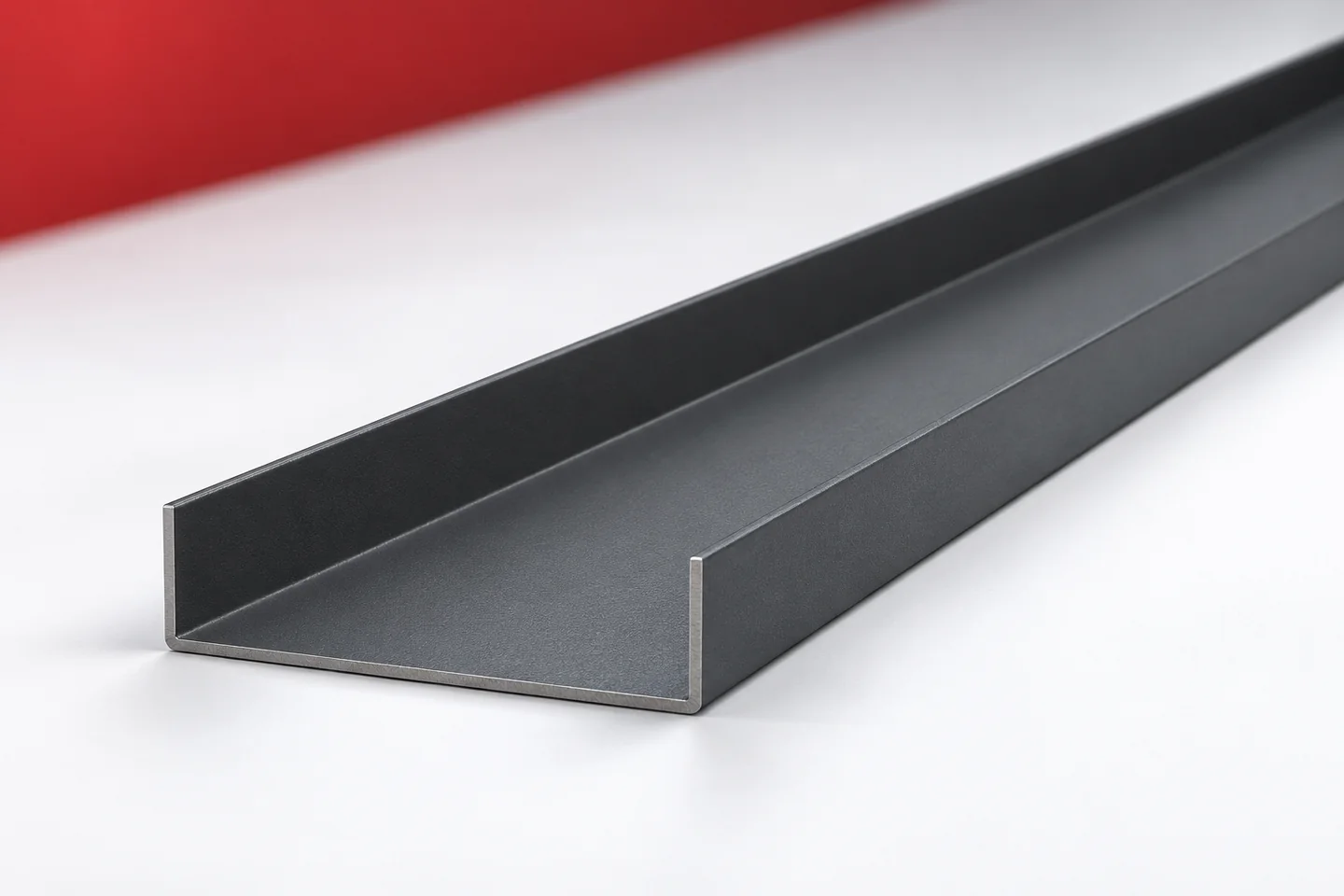
Starter profiles define where installation of a given covering or cladding begins. Some form a hook for the panel, others support the…
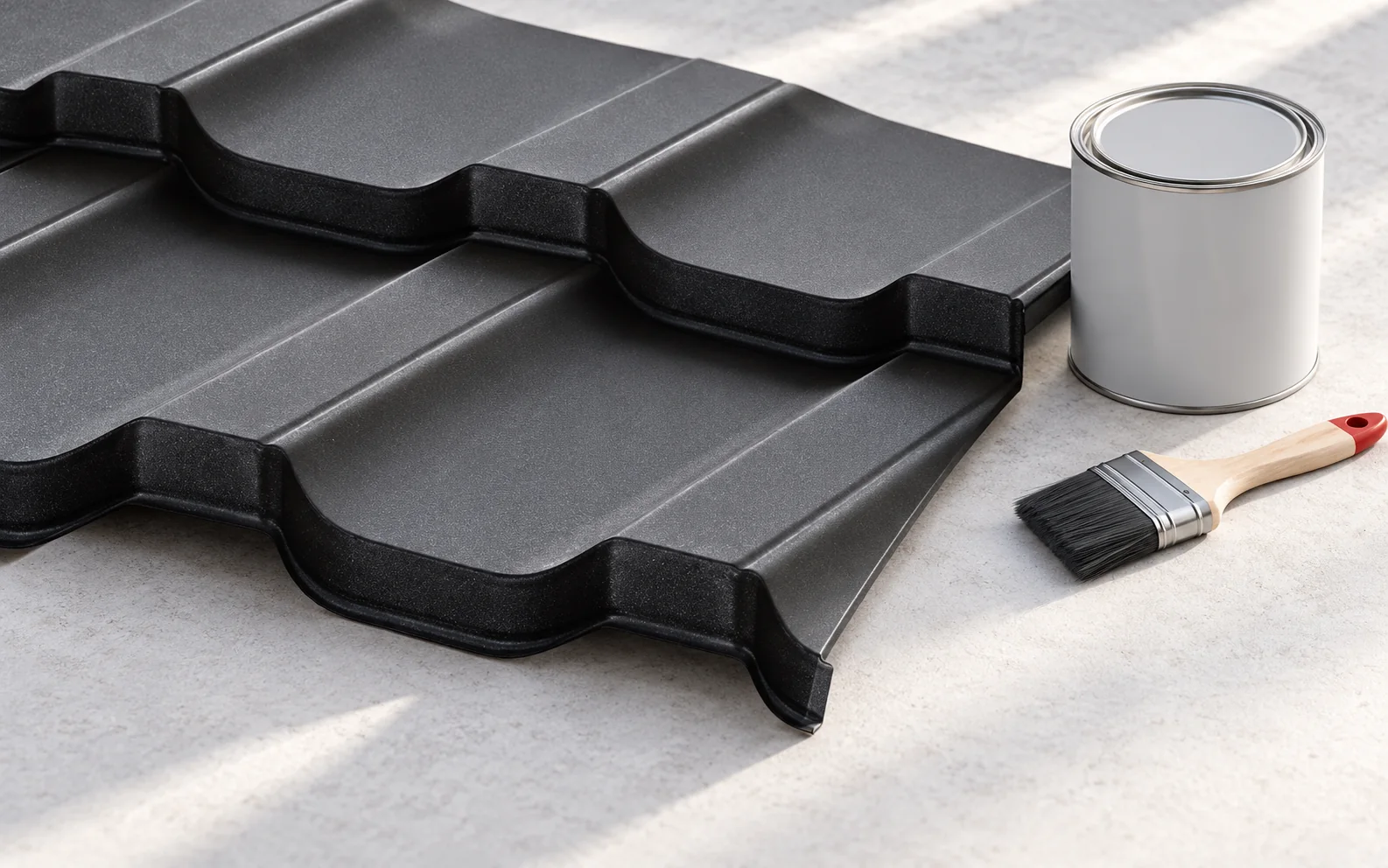
The durability of the paint depends above all on the condition and preparation of the substrate. The old coating must be identified,…
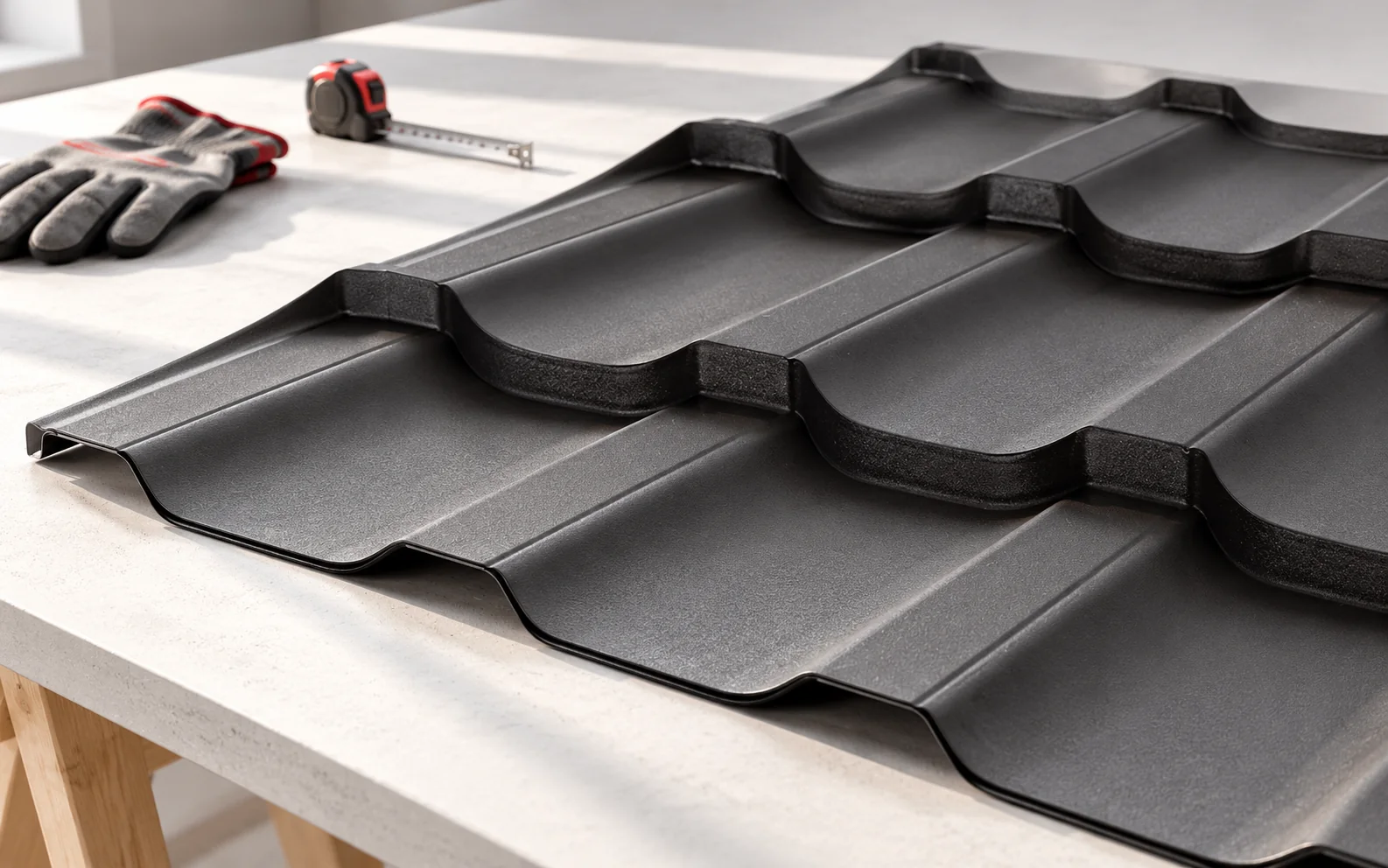
A good coating is selected to suit the building's surroundings and the way the roof is used. A slogan about new technology…
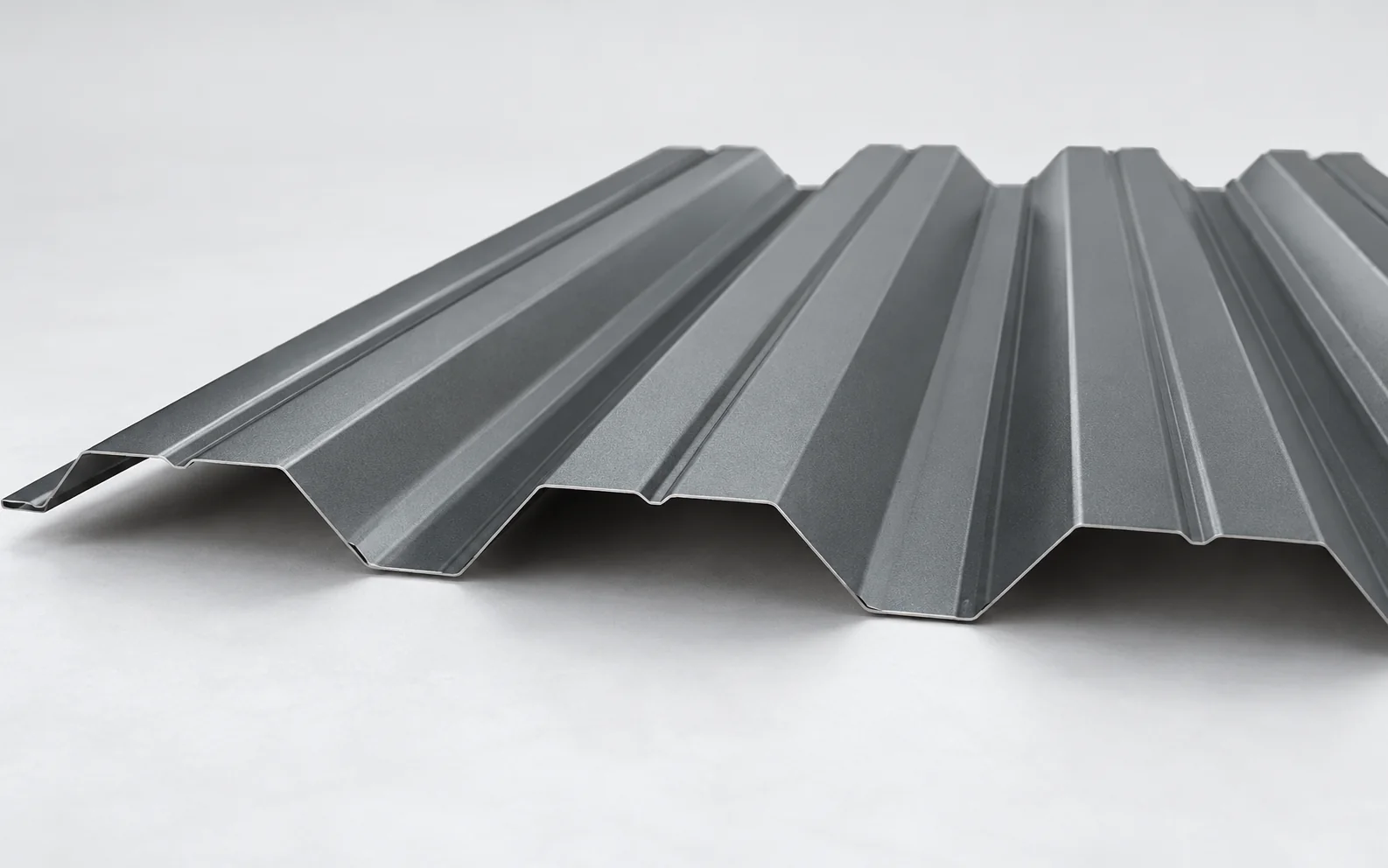
A cladding sheet closes a roof or façade and transfers its loads to the supports. A structural sheet is selected for a…
T8 sheet gives the walls of a small workshop or outbuilding a fine ribbed finish. Its service life depends partly on how…
A good roofer is best judged by comparable completed projects, familiarity with the chosen system and the way the quote is prepared.…
Bespoke flashings do not have a single universal price per metre. The cost depends on the amount of sheet metal, the cross-section,…