

PIR insulation
PIR, cellulose and wood fibre: insulation thickness and summer comfort
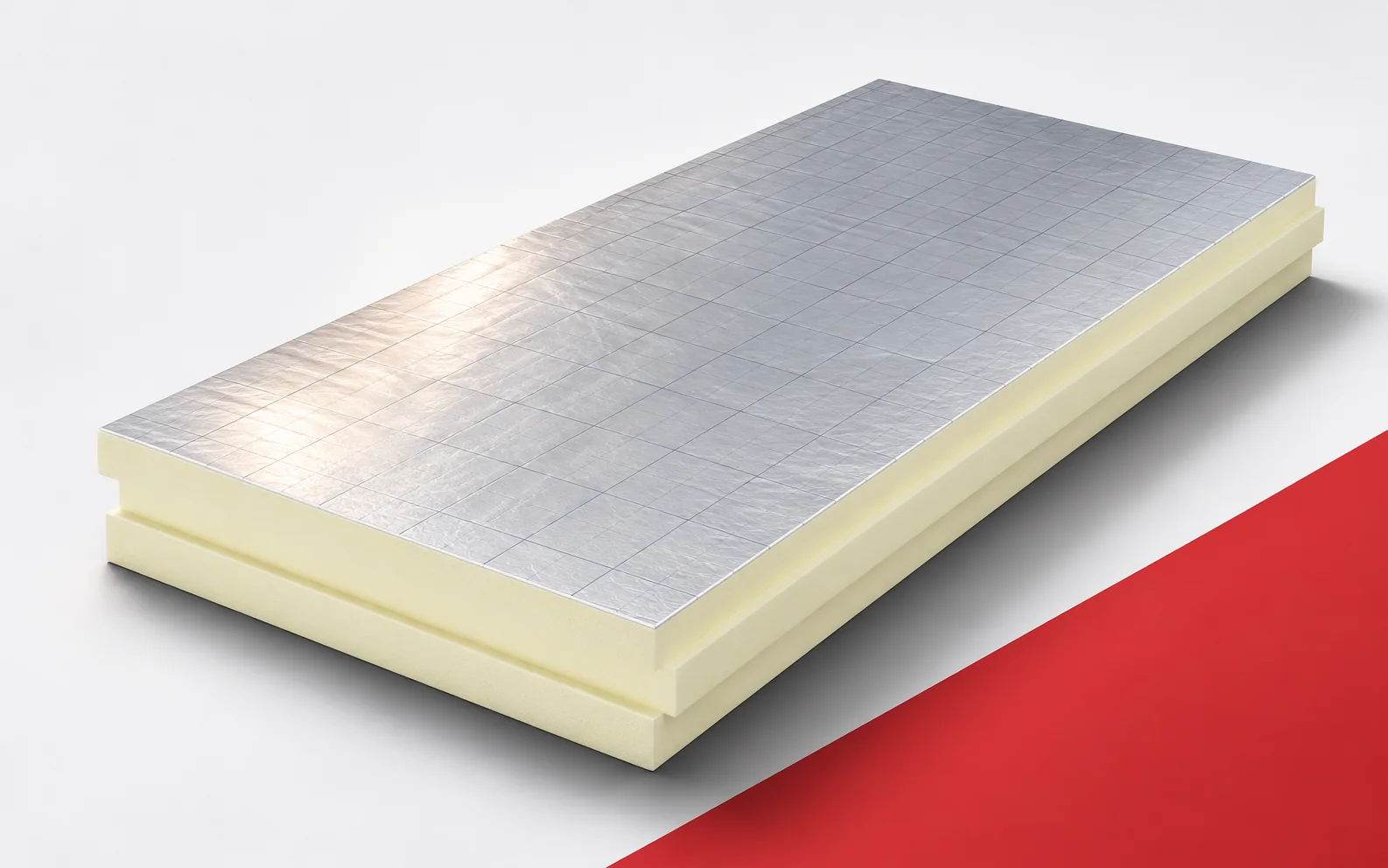
Insulation is meant to limit the flow of heat throughout the year. PIR boards help when there is no room for a thick layer. Cellulose and wood fibre have different strengths. The choice is best based on the construction of the building element and the conditions that cause the interior to overheat. PIR boards are rigid products of a defined thickness with a facing. Cellulose can be blown into prepared cavities. In a tight cross-section, what counts is the effect achieved from every centimetre. In an empty chamber between joists, what may matter more is filling the entire volume precisely. For an energy comparison, one drawing showing the boundary of the heated part of the house is useful. In an unused loft the boundary may run along the ceiling, while in a lived-in attic it runs along the roof slope.
In this article
Different forms of the material
This changes the area requiring insulation and the way it is accessed. Buying a board with a very good lambda does not justify insulating a larger area if the function of the building allows a smaller area to be insulated correctly.
What determines summer comfort
Low thermal conductivity reduces heat flow, but it does not determine the room temperature on a hot day. The heat capacity of the layers, glazing, shading and air exchange also matter. A sunlit window can heat a room even with a well-insulated roof.
Shading is worth checking before attributing the whole problem to the type of insulation. It is worth noting the time at which the temperature rises and whether the sun is then falling on the glazing. A room may receive energy through several paths at once. A high capacity of the layers may delay the response, but the stored heat must later be released. If there are no conditions for cooling the interior at night, simply replacing the insulation with a heavier one gives no basis for promising a constant temperature. This is a different problem from limiting winter losses.
Where low thickness is useful
The advantage of PIR is often a matter of space. A well-chosen polyurethane insulation provides high thermal resistance with a small thickness. The centimetre saved can allow the correct upstand to be maintained at the eaves.
This benefit must be compared with the complete thickness of the alternative solution. With the same available width, it is worth comparing the resulting resistance, not just the thickness in the catalogue. Where there is plenty of space, a thicker fibrous layer can be considered without rebuilding the details. Where space is limited, additional height may entail a change of flashings. The advantage of PIR then has not only a thermal but also a constructional dimension. Both situations should receive a separate calculation.
A shared building element and moisture flow
PIR and fibrous insulation can be combined in a designed arrangement. However, the layers must not accidentally trap moisture in the wood or sheathing. Combining a rigid board with fibres can use the advantages of both layers.
The condition is an assessment of the drying of the structure and correct airtightness from the inside. A PIR layer above existing fill can limit the flow of heat through the timber. At the same time, a new surface with a defined diffusion resistance appears in the cross-section. It is worth assessing where the moisture-sensitive sheathing is located and under what conditions it will perform. The selection should preserve the ability of the whole system to function safely. The thermal gain should not be based on leaving unknown layers in place.
Acoustics and fire protection
When choosing between PIR, cellulose and wood fibre, the name of the raw material alone is not enough. The reaction to fire is given in the document for the specific product, and fire resistance is tested for the whole partition. In a room where quiet matters, an assessment of sound is also needed.
Simply changing the material to a better lambda does not prove an improvement in acoustic comfort. Noise and temperature affect comfort independently of each other. If residents complain about both phenomena, the refurbishment should identify a separate scope for improving each of them. It is then possible to leave the functioning fibrous fill in place and consider an additional thermal layer elsewhere. Such a variant requires checking the cross-section, but it allows avoiding a choice of material according to one feature at the expense of the other needs.
Selection for the task, not for the slogan
A reliable comparison starts with the effect to be achieved. First, the available height, the expected insulation performance and the way the rooms are used must be established. A lower heating cost does not automatically mean a lower temperature during a heatwave.
The annual benefit must be assessed separately from a short period of strong solar radiation. The energy benefit can be assessed through the change in losses of the specific building element and the operating conditions of the heating. Summer comfort, in turn, requires an analysis of gains and the possibility of removing them. Combining these assessments into one slogan blurs the difference between winter and summer. An honest comparison may point to PIR where thickness is limited and to fibrous insulation where its form suits the construction well. There is no need to choose a single winner for all locations.
An example that structures the comparison
A calculation example shows the difference between mass and specific heat alone. Assuming a density of 160 kg/m³, a specific heat of 2100 J/(kg·K) and a thickness of 40 mm, the layer has an areal heat capacity of about 13.44 kJ/(m²·K). For an area of 20 m² this gives about 268.8 kJ/K. This describes the assumed layer, not the room temperature or a guaranteed delay in warming. Assessing summer performance still requires the whole cross-section and a balance of heat gains and removal. Polyurethane boards come in various designs, so a comparison with fibres requires specifying the core and facing. Polyurethane insulation in a factory-made board is not the same process as spraying. The term polyurethane foam alone does not describe the parameters of a finished roof. Polyurethane insulation should be described by the form of the material and where it is used.
7 branches. Materials closer to your project.

Free quote
Materials for your project

You may also find useful…
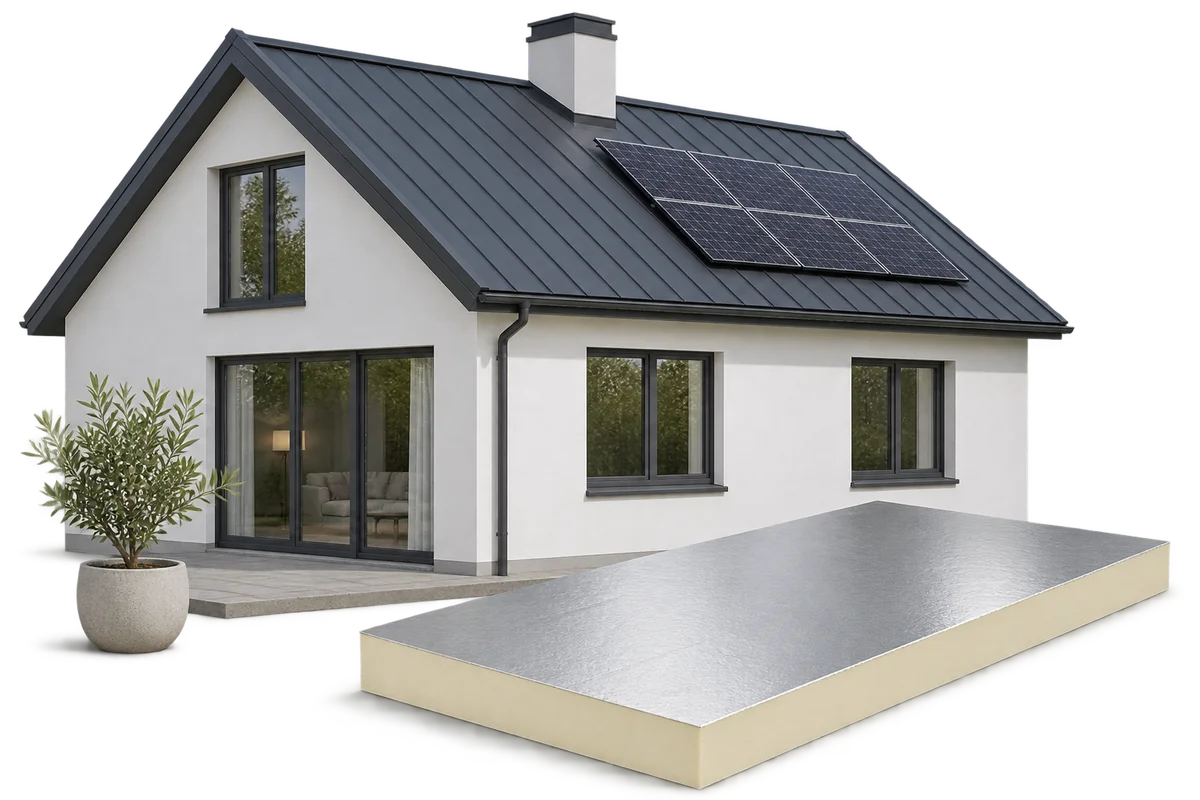
The bill of materials for an energy-efficient house should link every delivery item to the building envelope component and detail shown in…
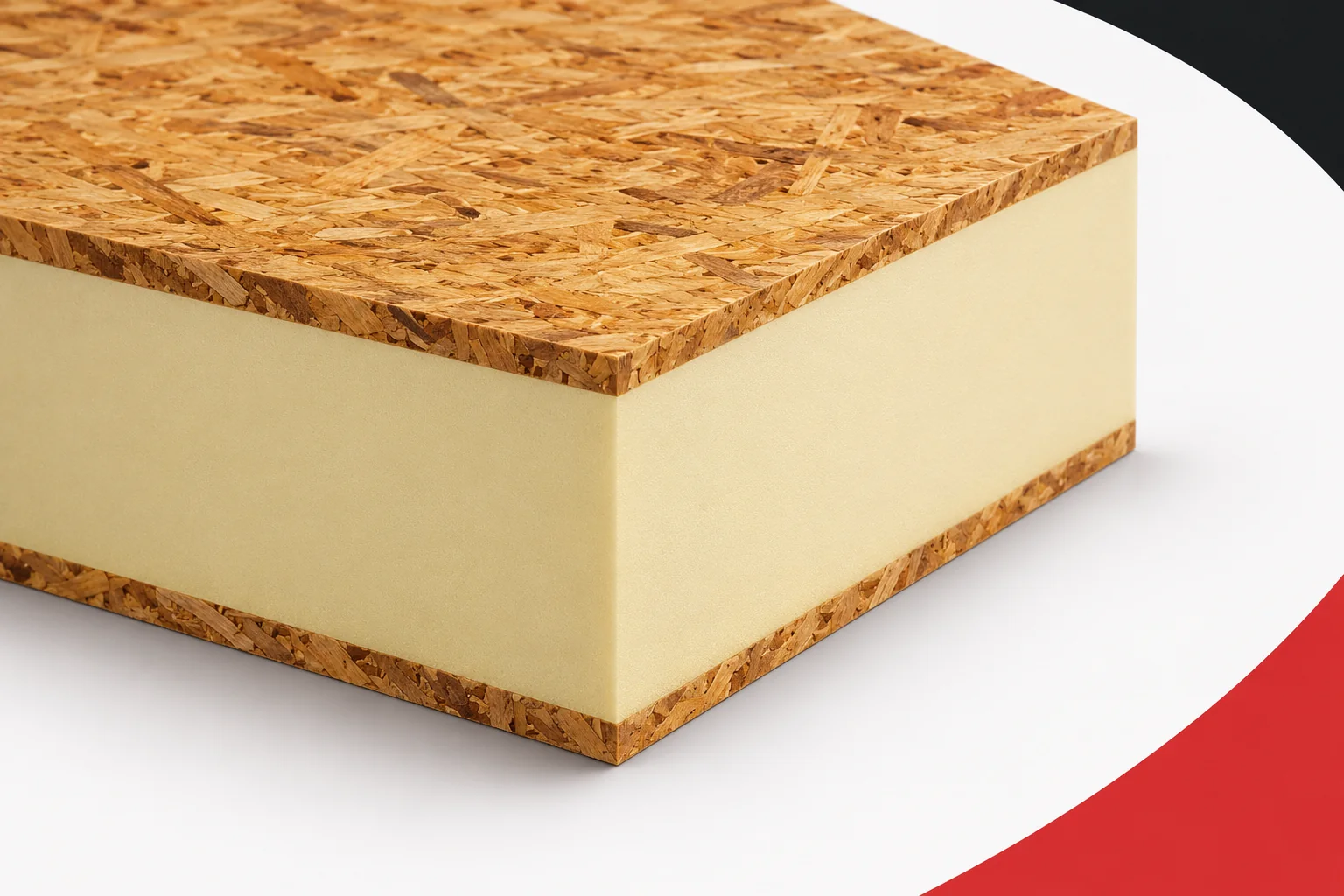
In a small house, a few centimetres of wall thickness can change the layout of the interior. SIP panels with a polyurethane…
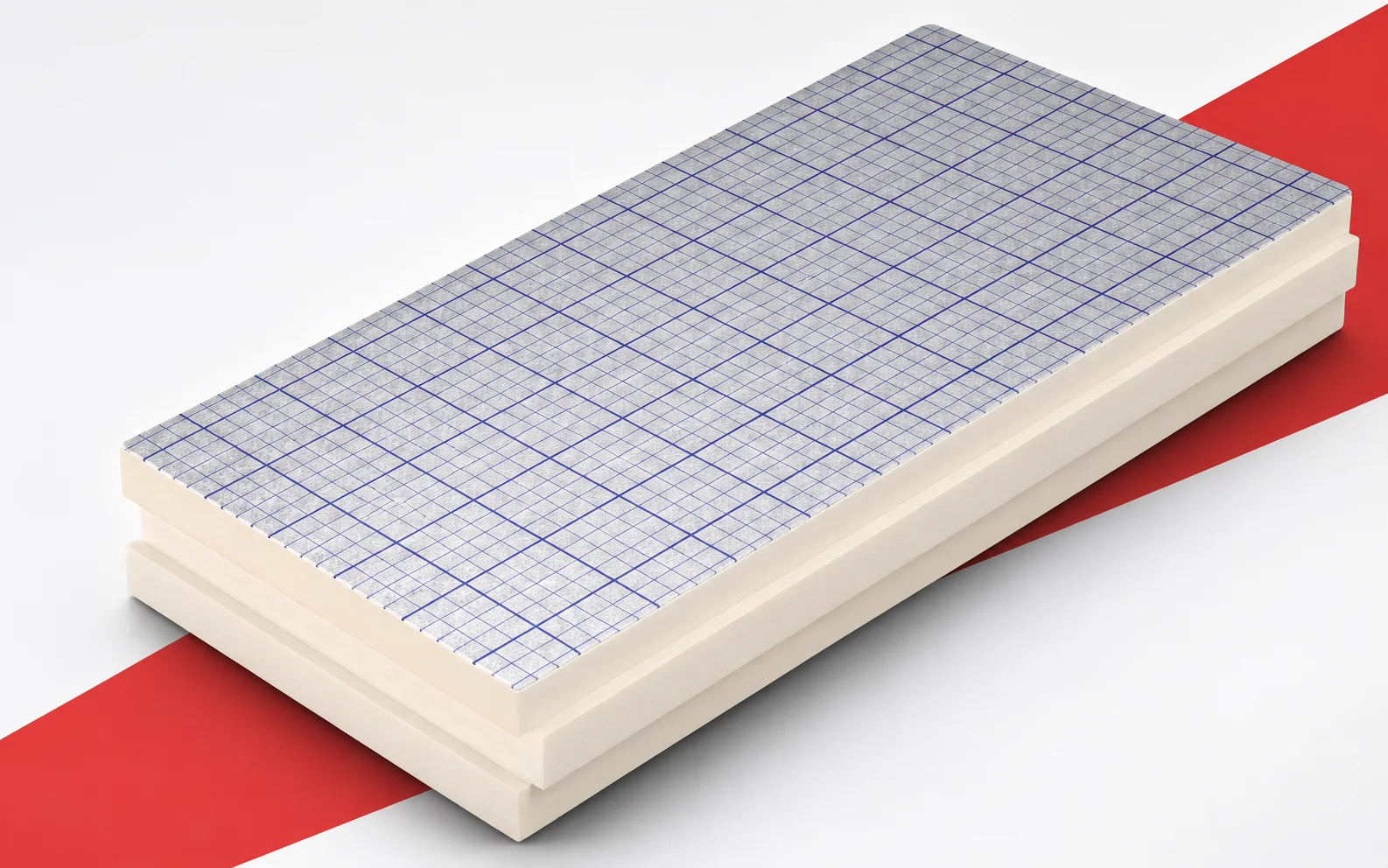
On a flat roof, swissporPIR Alu can reduce the height of the regular thermal insulation layer. However, the reserve must also be…
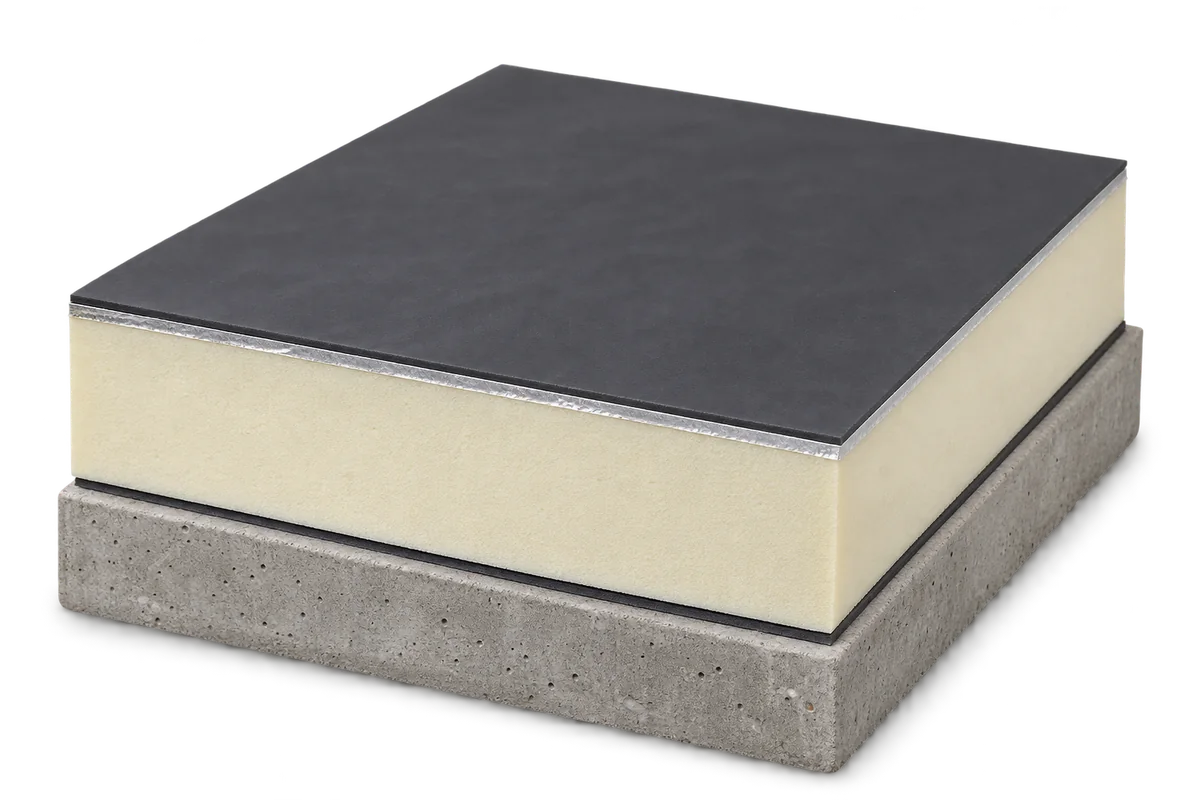
A flat-roof section should explain layer order, functions and connections at edges and openings. A list saying “concrete, PIR, membrane” is not…
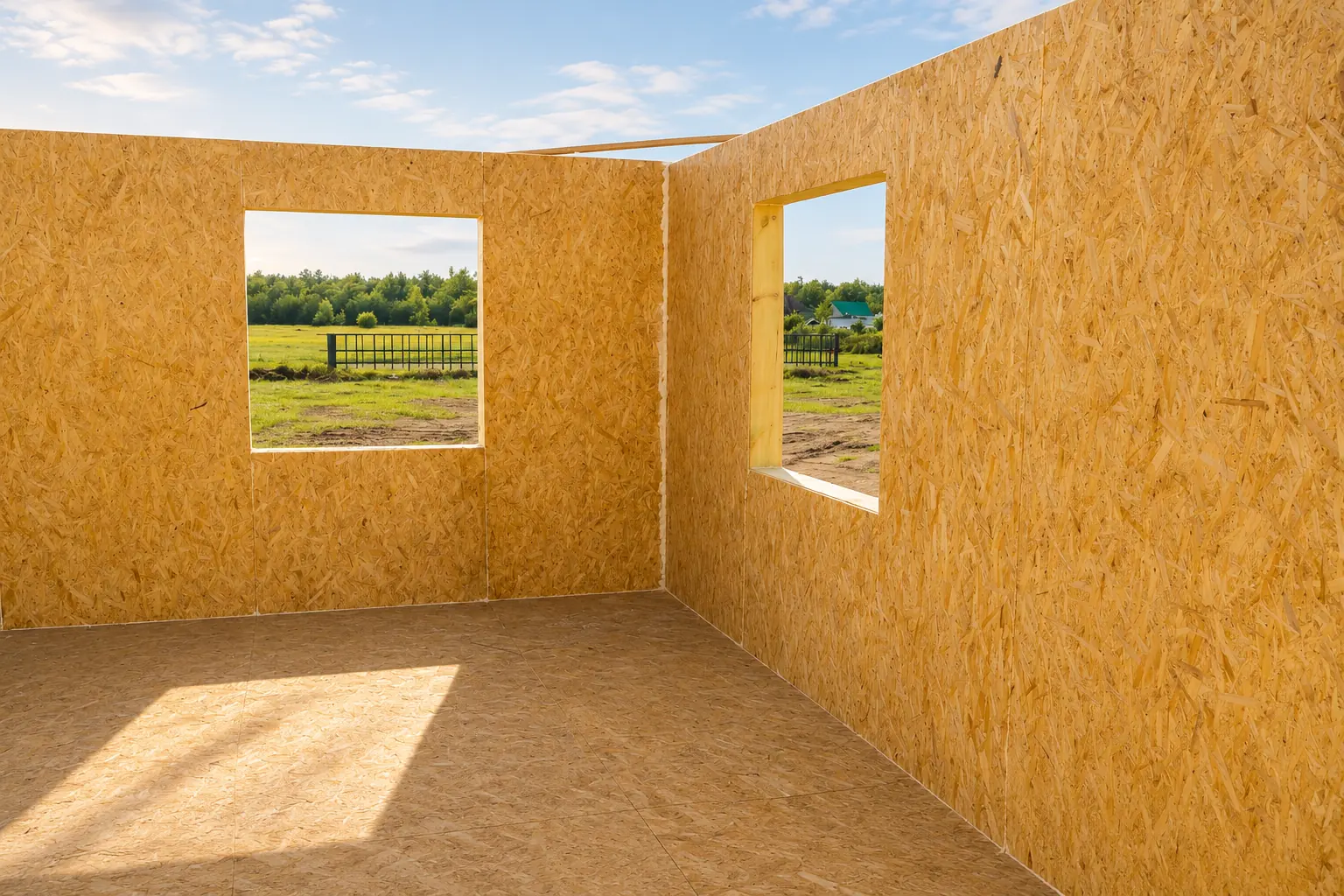
SIP panels make it easier to build an airtight building envelope, provided their joints are correctly executed. Limiting incidental air leakage helps…
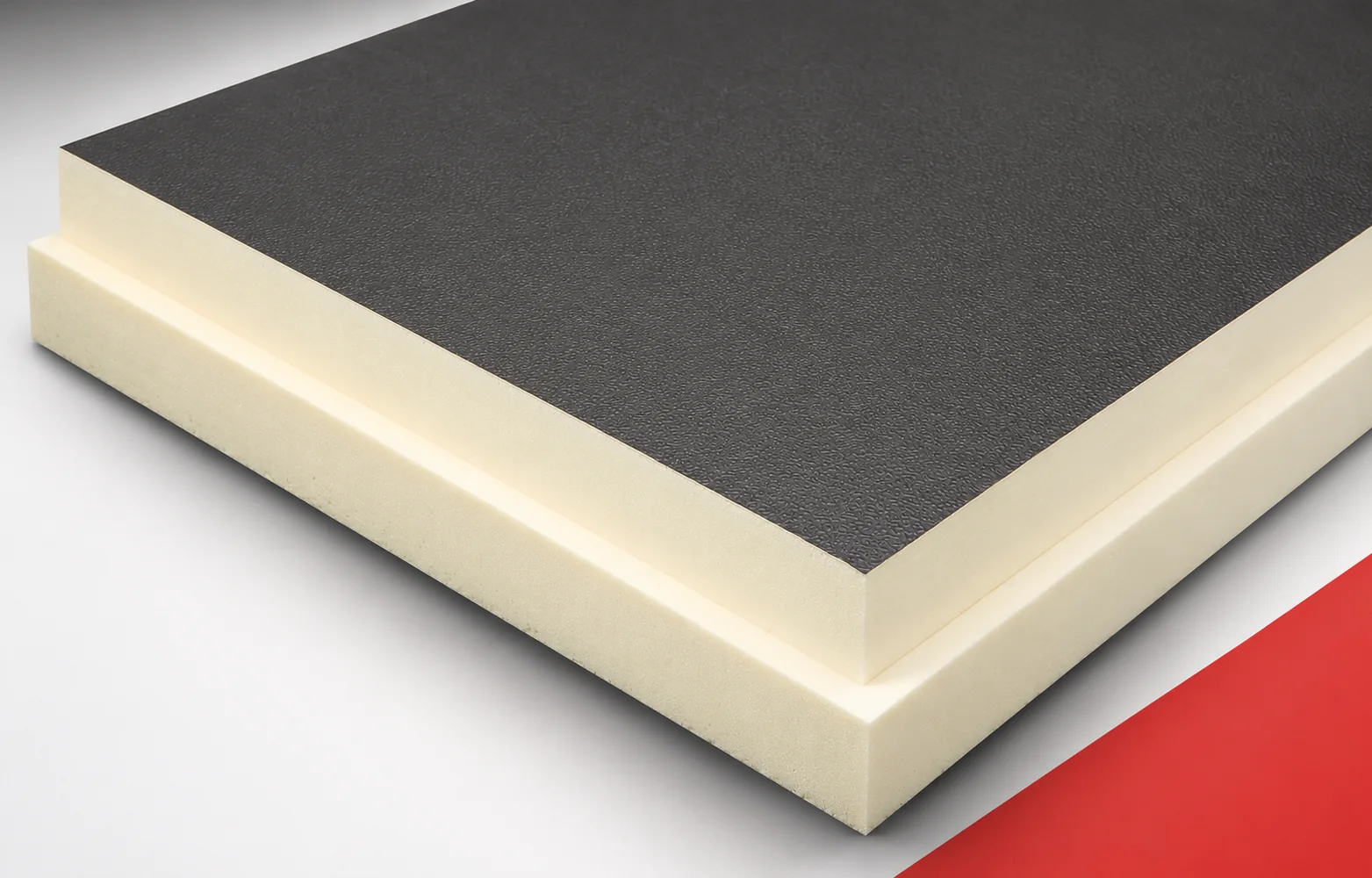
An installation on an insulated roof needs durable support. The client is concerned about interrupting the thermal layer and proposes leaving the…

After ALU TG has been laid, the regular field looks tight. At the perimeter, however, cut pieces without the full factory profile…
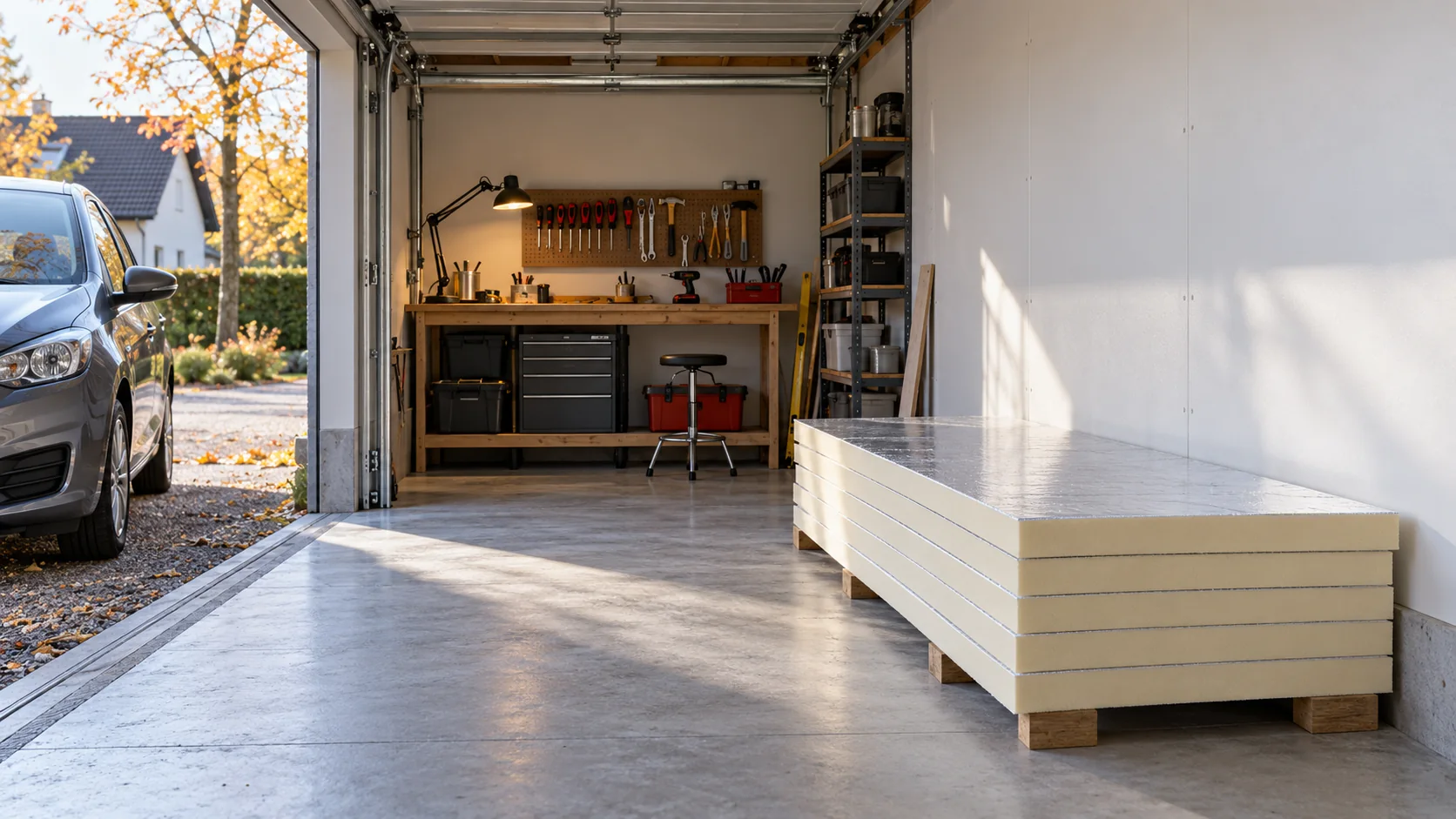
Start with when the building will be heated and what temperature it needs to reach. A garage housing a wet car has…