

PIR insulation
EFIGREEN ALU+ and PIR board thickness: what difference does thermal conductivity make?
The designer has a thin ALU+ layer and a thicker variant from the same family to compare. At first glance they differ only in thickness. In the stated range, however, lambda also changes. The comparison should therefore use two appropriate data points, not one parameter copied across the whole catalogue. The starting point is the insulation of a roof slope divided by numerous service penetrations. Here the particular constraint is the proportion of short offcuts around obstacles. The design should make it possible to combine the correct thermal parameter with a sensible board layout, not merely to fit in another sheet. The area requiring attention is the narrow field between two service bases.
In this article
Constraint first, thickness second
A cutting plan drawing tailored to the specific ALU+ or XL format will be necessary, since the view of the flat field alone does not show all the heights. When purchasing EFIGREEN ALU+, it is worth agreeing this part first, before the thickness becomes an assumption for the remaining works.
The right product and the scope of its data
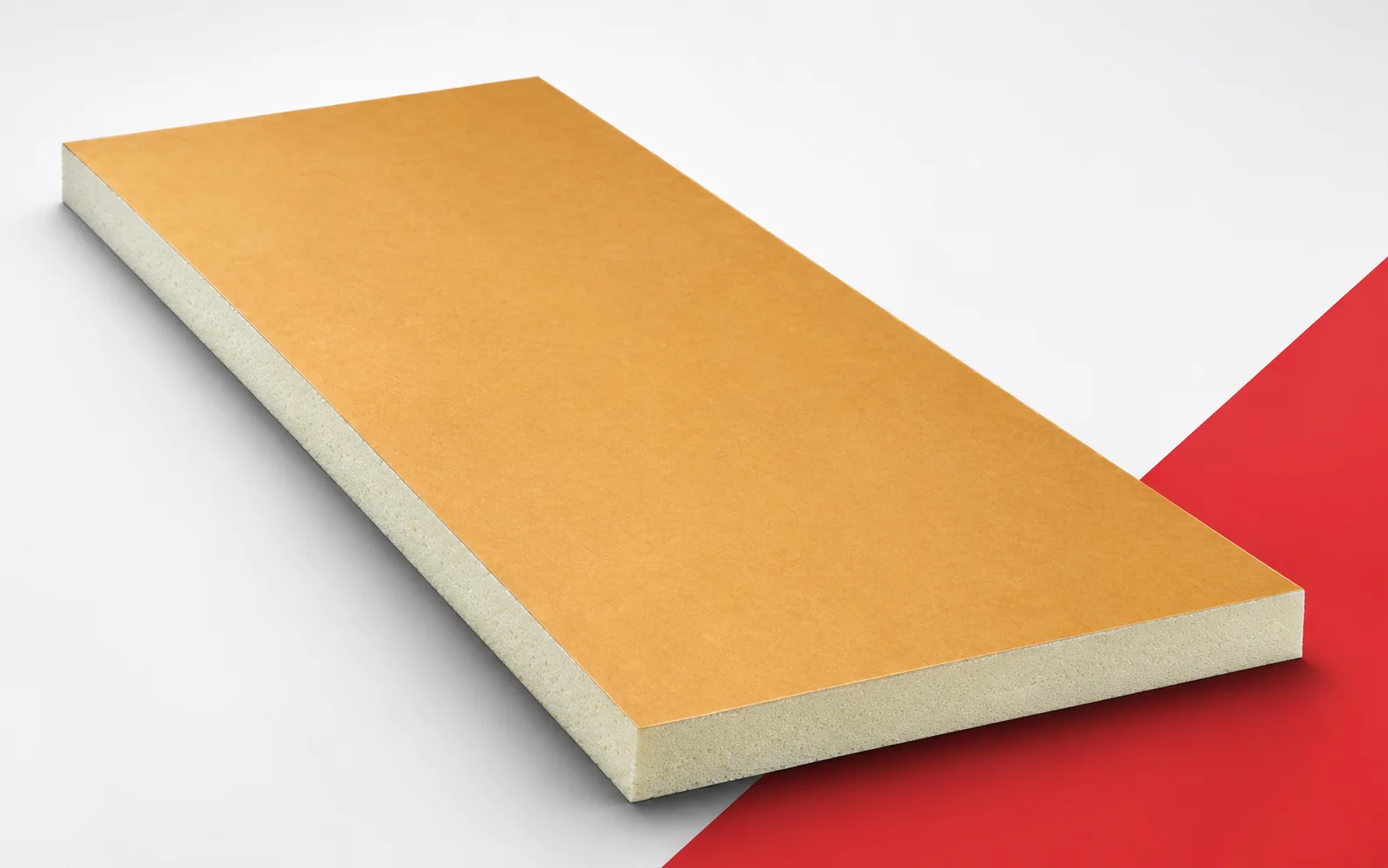
The PIR core set in a composite kraft–aluminium–PE facing is the construction of EFIGREEN ALU+. For thicknesses of 30–35 mm lambda is 0,023 W/(m·K), and within the stated range of 40–160 mm it is 0,022 W/(m·K). The data sheet gives CS(10/Y)200. The Polish page describes the reaction to fire as NPD, that is a property without declaration. The basic format is 600 × 600 mm, while ALU+ XL comes in other dimensions depending on the variant. PIR SOPREMA boards should here be assessed for the scope that is the insulation of a roof slope divided by numerous installation penetrations. When checking an order, the term polyurethane boards does not replace the full name EFIGREEN ALU+. In EFIGREEN ALU+ polyurethane foam of the PIR type forms the core, and the properties of the complete board also include its facings.
What the figures show in this case
For an initial comparison of EFIGREEN ALU+, let us assume by convention that the resistance of the layer alone is R=4,00 m²K/W. The simple product R × λ at a lambda of 0,022 W/(m·K) gives a thickness of about 88,0 mm. If a lambda of 0,036 were assumed for comparison, the result would be 144,0 mm. That second lambda is only an assumption of the example, not a description of the whole group of competing materials. The result shows the possible difference in space for the same resistance. The commercial variant must be selected from the EFIGREEN ALU+ documentation. The difference in millimetres alone does not remove the limitation that is the share of short offcuts around obstacles.
In the example concerning EFIGREEN ALU+, the figures describe only the indicated part of the task. Their use makes sense together with a measurement that covers the width of the strip and the lengths available for laying full sheets. The property relevant to the comparison is the dependence of lambda on the selected thickness. In this arrangement, sheet consumption must still be recalculated after the openings have been positioned. Only then does the cutting plan for the specific ALU+ or XL format allow the result to be related to the actual section. The energy calculation should retain the same scope also when comparing with another thickness of EFIGREEN ALU+.
Two directions for improvement
The first direction is laying the basic 600 × 600 mm format. The second is using a suitably selected XL variant. The scope of both measures depends on how important the narrow field between two service bases is. In the EFIGREEN ALU+ variant, the cost of the entire surface should not be increased before the local constraint has been investigated. The pitfall would be to assign to the thin variant the lambda intended for the thicker board, even if the result for the main field looks favourable. The comparison is complete only when the measurement for the selected format, with waste shown separately, also covers the differences caused by changing the variant.
A connection that must preserve the effect
The design should clearly define the simple edge requiring precise fitting of offcuts. In the description of EFIGREEN ALU+, it is worth separating its geometry from the airtightness of the other layers. The product surface is a composite of kraft paper, aluminium and PE film, but its presence does not automatically resolve the entire detail. A record of the full variant name, thickness and delivery format is needed for checking. The next stage will be the agreed covering with the intended method of fixing, so the error should not be passed on to the installer of the next layer. It is worth noting at acceptance how the narrow field between two service bases was executed and why this particular method was chosen.
The cost of achieving the same function
The EFIGREEN ALU+ quotation should relate to the completed task, not to a single favourable parameter. The calculation should include the measurement for the selected format with waste shown separately. A separate cost may arise because a stable substrate is needed under the small pieces at the penetrations. It is also worth pricing the work at the detail described as the narrow field between two service bases. The differences should be explained by the specialist preparing the cutting plan and the delivery schedule, so that the saving does not result from removing a necessary layer. Polyurethane insulation compared in this way corresponds to the real effect that the insulation of a roof slope divided by numerous service penetrations is intended to achieve.
The condition for a justified decision
The selection can be regarded as orderly when it has been possible to combine the correct thermal parameter with a sensible board layout. For EFIGREEN ALU+, this means combining the material data with the solution for the perimeter and the other layers. The document to keep is the cutting plan for the specific ALU+ or XL format. It should be accompanied by a record of the full variant name, thickness and delivery format, so that a later renovation does not begin with guessing the product. There is no need to add a promise of a quick payback without a building balance. If the proportion of short offcuts around obstacles changes, it is necessary to return to the comparison instead of copying the earlier thickness. Polyurethane insulation has a specific purpose here: to combine the correct thermal parameter with a sensible board layout.
7 branches. Materials closer to your project.

Free quote
Materials for your project
You may also find useful…
The properties of swissporPIR Alu must be preserved along the entire route from delivery to the closing of the layers. The condition…
The same PIR thickness appears in two quotes, but one board has an aluminium facing and the other a mineral fleece. The…
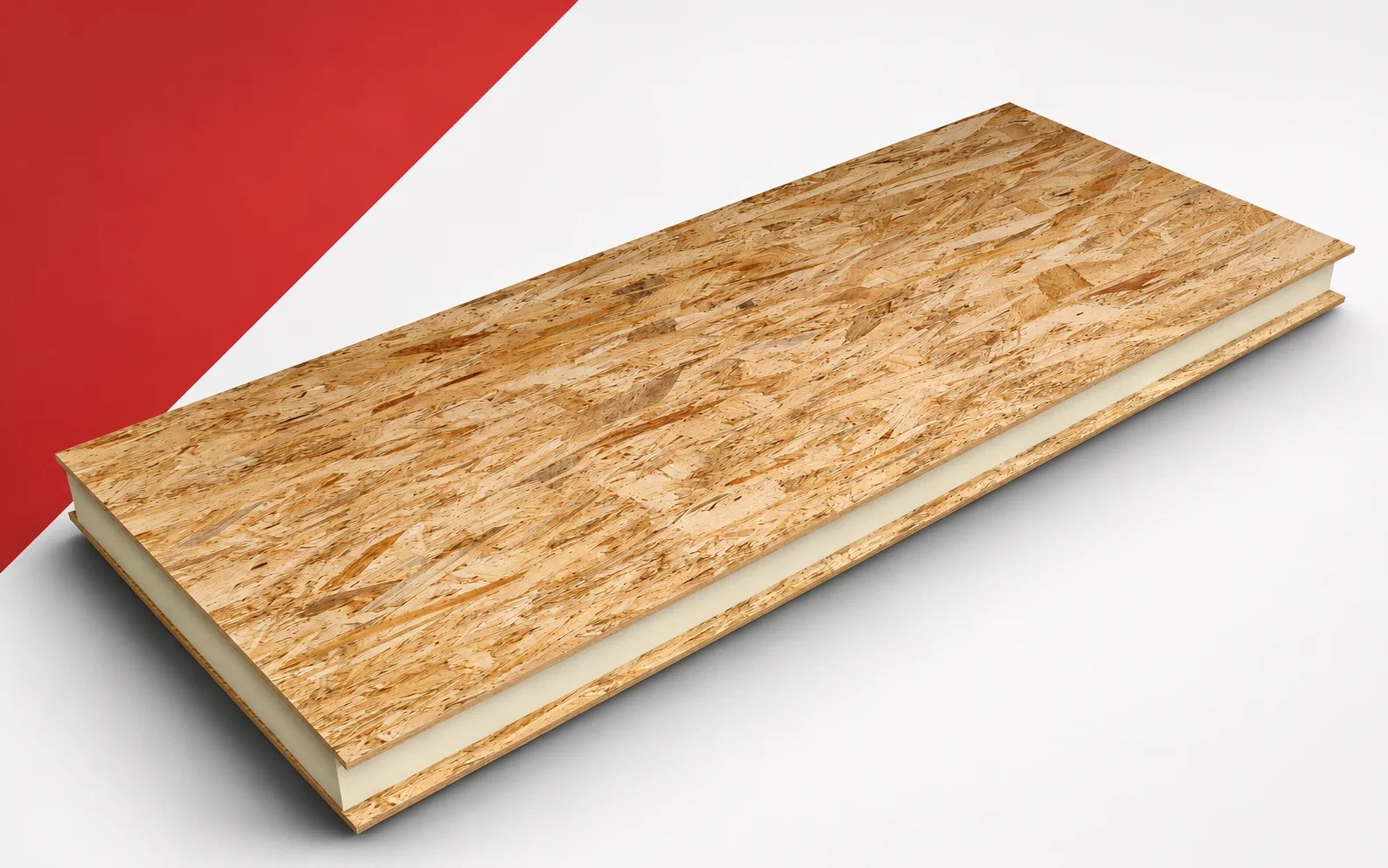
The IDELCO α-therm SIP and a plain PIR board improve thermal performance in different ways. The panel contains facings that participate in…
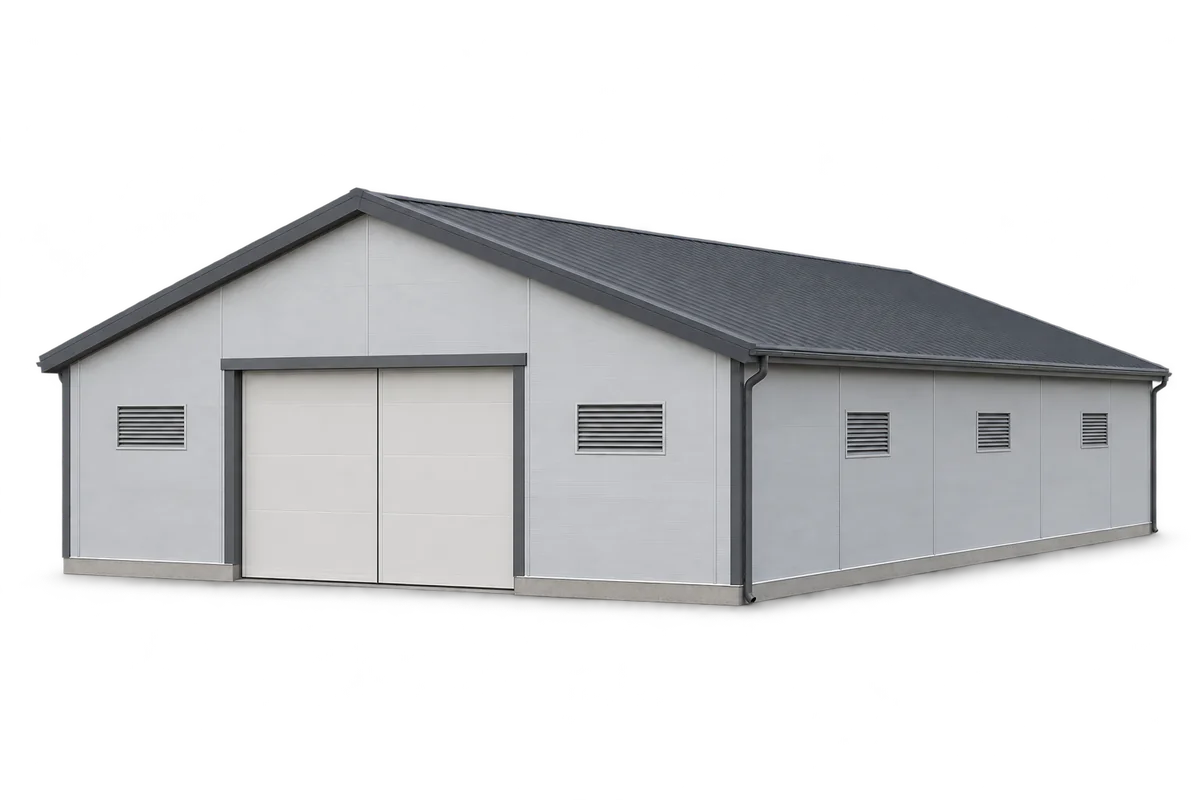
Comparing offers for the enclosure of a pig house requires a common schedule of walls, ceiling, claddings and details, as well as…
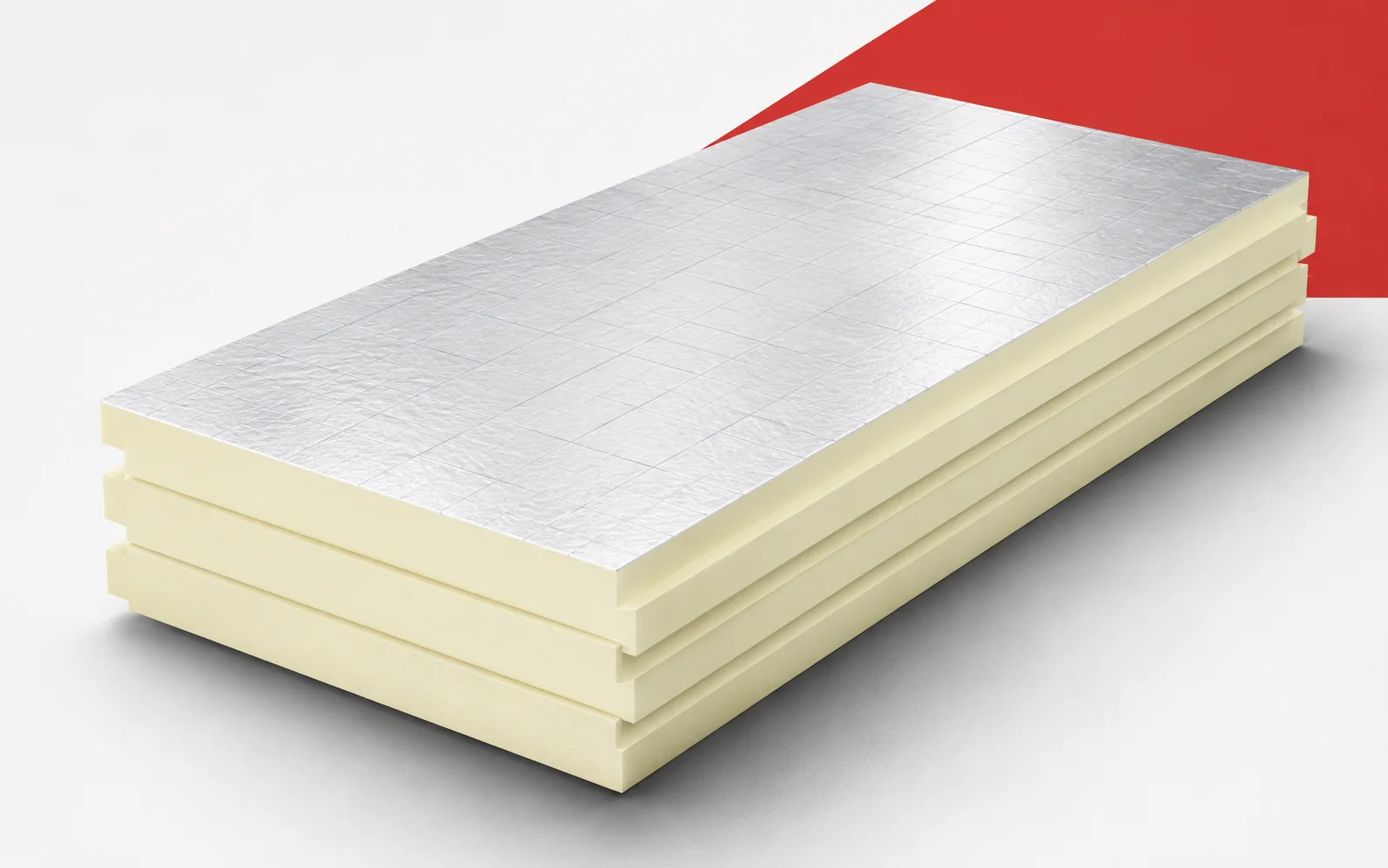
The price per square metre of a board does not yet tell us what effect we will achieve in the building. It…
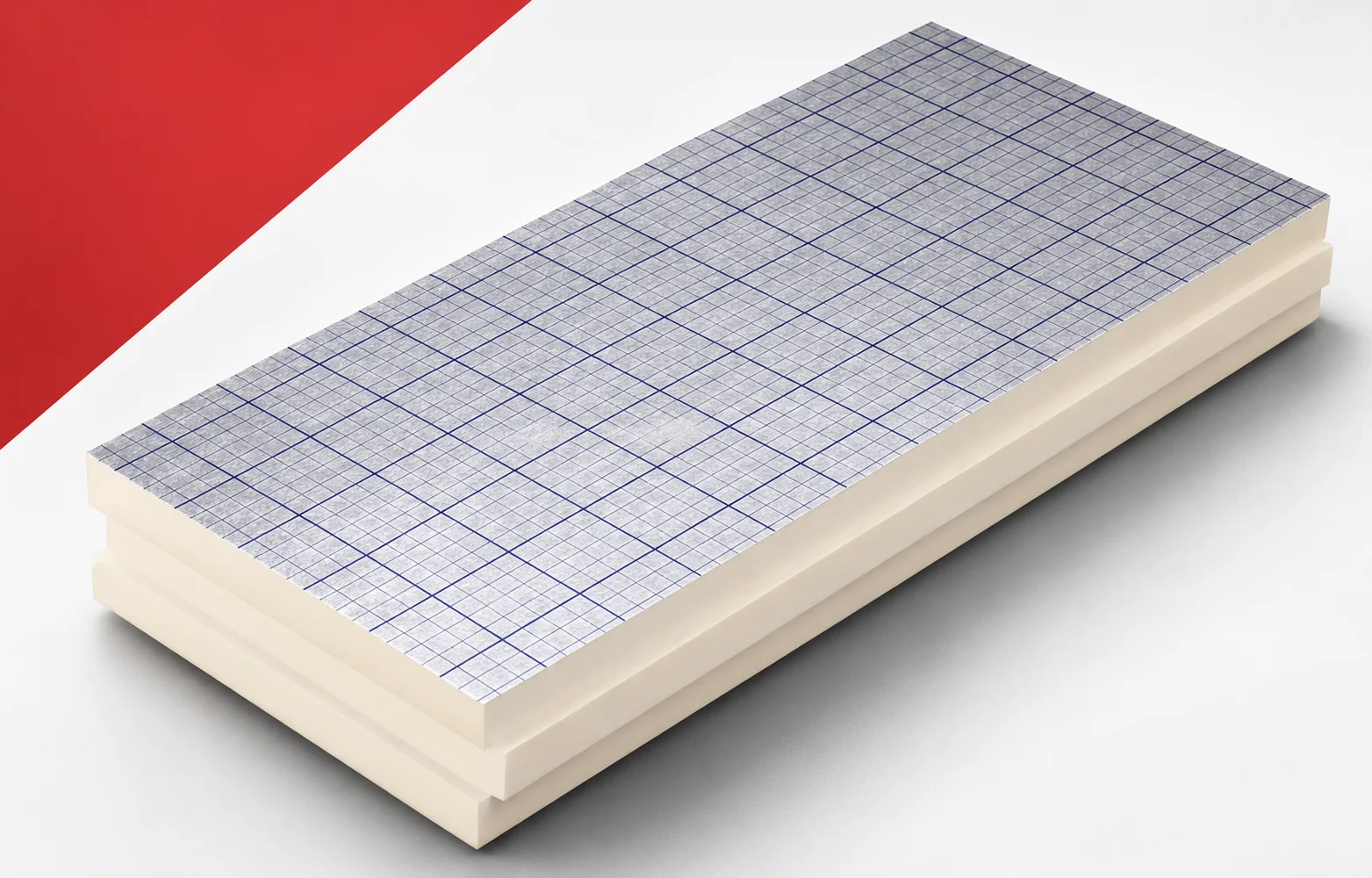
swissporPIR Alu can help achieve the required thermal resistance within a limited construction thickness. The benefit is particularly evident where every centimetre…
It helps to separate a year-round timber house project into three outcomes: a delivered structure, a weather-protected building and a home ready…
Selecting roof insulation requires reconciling several characteristics. Thermano Roof combines a PIR core with enhanced mechanical properties. When assessing the benefits, however,…