

PIR insulation
Kingspan Therma TR27: matching the roof insulation facing to the build-up
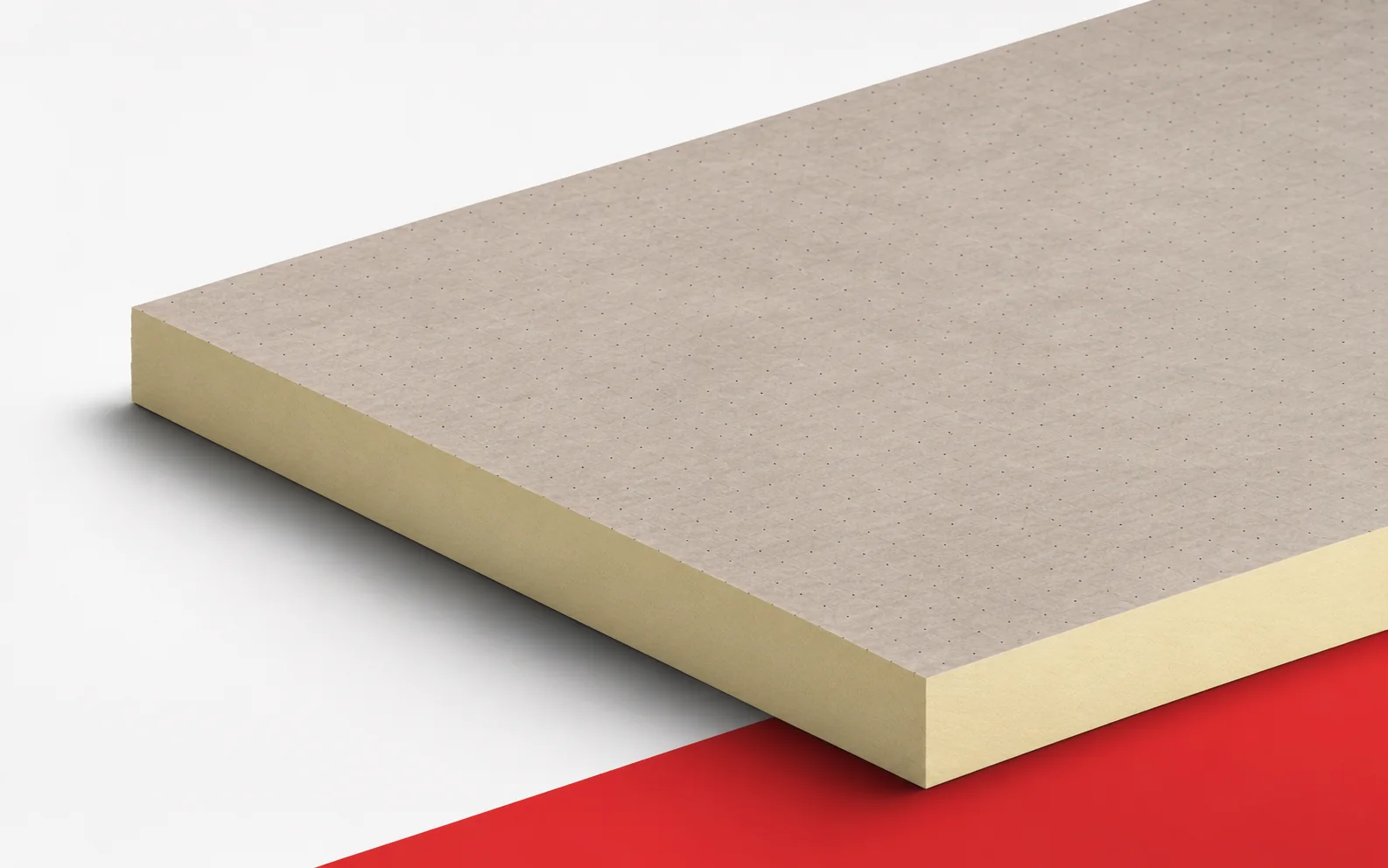
Therma TR27 shows why a single lambda value cannot be attributed to all PIR boards. Choosing the thickness must go hand in hand with reading the correct parameters and the intended covering. Only then does a comparison of the required roof height make technical sense. Kingspan Therma TR27 is a PIR board with glass-fibre facings on both sides. The catalogue describes suitable flat-roof and terrace build-ups, with mechanical fixing, bonding or ballasting according to the system documentation. PIR boards are best assessed through a specific spatial problem, so consider combining Therma TR27 with the first layer of the chosen covering on a flat roof. The TR27 facing must be combined with the waterproofing in the manner specified for the given roof system, because space savings must be assessed together with the detail geometry.
In this article
Where a small thickness brings benefit
A change of lambda alone is not enough, because a board with a fleece is not interchangeable with every PIR variant in any bonded build-up. The solution should allow the properties of the facing to be used without disregarding the requirements of the specific roof assembly. As a starting point for comparing variants, record the type of substrate, the membrane variant and the documentation of how all layers are joined.
Parameters and reference point
The lambda value for Therma TR27 is not constant and varies with board thickness, so a single coefficient cannot be applied to all variants. The catalogue gives, for a thickness of 100 mm, a lambda of 0.027 W/(m·K) and a thermal resistance RD of 3.70 m²K/W, while for 120 mm it states 0.026 and 4.60 respectively. When comparing polyurethane boards, TR27 in thicknesses of 100 and 120 mm should therefore be taken into account, as they have different declared lambda values.
After changing the TR27 thickness, its lambda and declared thermal resistance must be read again so that the comparison relates to the same thermal effect. The result must be read with care, since a calculation with one lambda for both variants would distort the difference in their resistance. The calculation is meant to help verify the thermal effect on the basis of the correct data rather than the number of centimetres alone. In the energy summary, show RD 3.70 for 100 mm and RD 4.60 m²K/W for 120 mm in the variant comparison, so that it is clear what exactly changed between the solutions.
When comparing TR27 of 100 and 120 mm, a lambda of 0.027 should not be attributed to both boards. For the thicker variant the catalogue states 0.026. The difference in resistance therefore results from two changes at once. For the comparison it is convenient to take the declared RD of 3.70 and 4.60 m²K/W. Such data help to assess the space needed on the roof, but they are still not a ready U-value for the whole assembly.
Continuity of the layer at joints
Therma TR27 is available as standard in a 1200 × 600 mm format. The catalogue lists either square or tongued-and-grooved edges; the geometry and coverage must be confirmed for a specific order. The joint between 1200 × 600 mm boards near the corner and the termination of the roof flashing should be checked, because continuous polyurethane insulation also requires correct terminations.
The TR27 edge must be matched to the field layout and the support of perimeter elements, because losses at joints must be assessed together with the main insulation field. A good joint does not arise automatically, since a cut piece may lose the factory profile on the side that was to form the planned connection. The element layout should allow the last rows to be measured out before cutting the pieces needed at the perimeter of the roof slope. On the detail drawing show the actual variant of the sides, the coverage area and how the new cut edges are closed; this record will make later inspection of the work easier.
Service conditions of the assembly
The glass-fibre facing in Therma TR27 is intended to work with the layers of the adopted roofing system. This does not mean, however, that any adhesive can be used or that substrate preparation can be omitted. When assessing the durability of the thermal effect, the area intended for bonding the covering to the TR27 glass-fibre facing should be taken into account.
The bonding surface must be prepared in accordance with the requirements of the specific material assembly if the insulation is to perform under the conditions assumed in the design. Polyurethane foam does not replace protective layers: approval for a specific bonded system is not approval for any compound with a similar name. The specified protections are intended to allow the joint to be made in accordance with the documentation of the correct board and waterproofing assembly. Before covering, assess the cleanliness and condition of the surface, the application requirements and how the finished joint will be checked, because later repair may require opening up the completed assembly.
Limits of the data sheet
Therma TR27 has a declared compressive strength of at least 120 kPa at 10% deformation and a fire reaction class of E. The assessment of loads and fire requirements for the entire roof assembly is carried out separately. A thickness limitation does not exempt from checking other requirements, so the local pressure at the service access point to equipment installed above the TR27 boards should be analysed.
Pressures in the service zone must be assessed together with the protection and support of the TR27 layer, even when the choice of board was determined mainly by its low lambda. A separate assessment is needed because the declared 120 kPa at 10% deformation does not mean that every point load is permitted. Only the complete set of data will allow support and protection to be designed at the place that will be used differently from the middle of the field. Alongside the thermal results, include the service movement area, the support area and the classification conditions of the entire covering; this way the comparison will not omit the service conditions.
Comparison of total input
When comparing the price of Therma TR27, an agreed thermal resistance and coverage scope should be adopted. The calculation must also include the fixing, auxiliary layers and execution of details. For polyurethane board insulation, the effect and scope of works should be calculated; the quotation should include TR27 both in the bonded solution and in the alternative method of fixing the covering.
The cost of the TR27 system must be compared at the same thermal resistance and scope of the completed roof, so that the cost refers to one comparable result. The price of the material is only part of the decision, because a different fixing method can change material consumption and surface preparation. The final comparison is to allow the actual cost of the system to be assessed instead of comparing only the insulation packaging. Ask for the board thickness, the type of joint, the auxiliary layers and the scope of flashings priced by the contractor, so that any additional charge has a stated technical justification.
7 branches. Materials closer to your project.

Free quote
Materials for your project
You may also find useful…
For a building element with IKO ALU, two thicknesses of the same board are analysed. It is worth checking straight away whether…
swissporPIR Alu can help achieve the required thermal resistance within a limited construction thickness. The benefit is particularly evident where every centimetre…
In a floor with underfloor heating, the client is comparing two thicknesses of KR ALU. The aim is to reduce the flow…
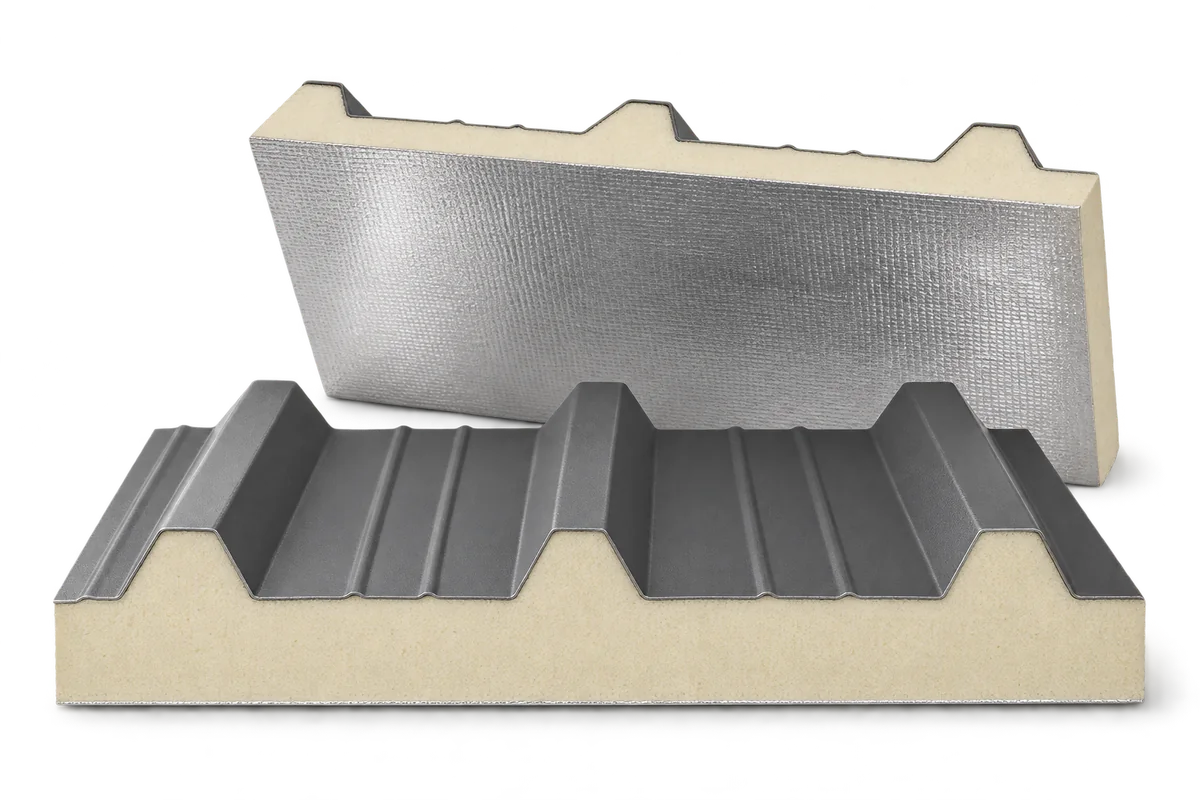
Replacing a building’s walls and roof with PIR sandwich panels requires a plan for the transition between old and new enclosure. This…
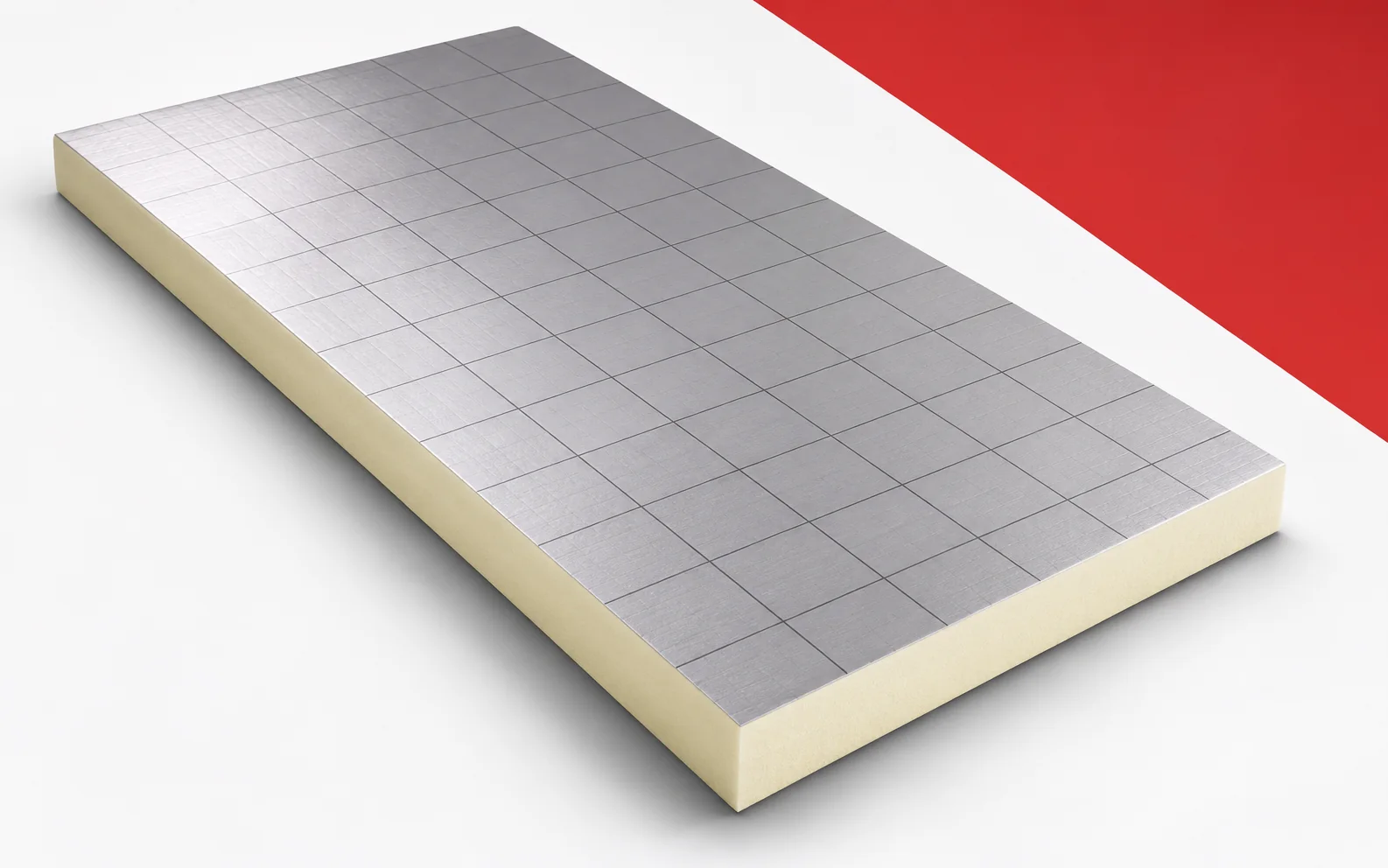
Thinner insulation can make it easier to maintain the parapet height and proper drainage. Eurothane Silver has a low declared thermal conductivity.…
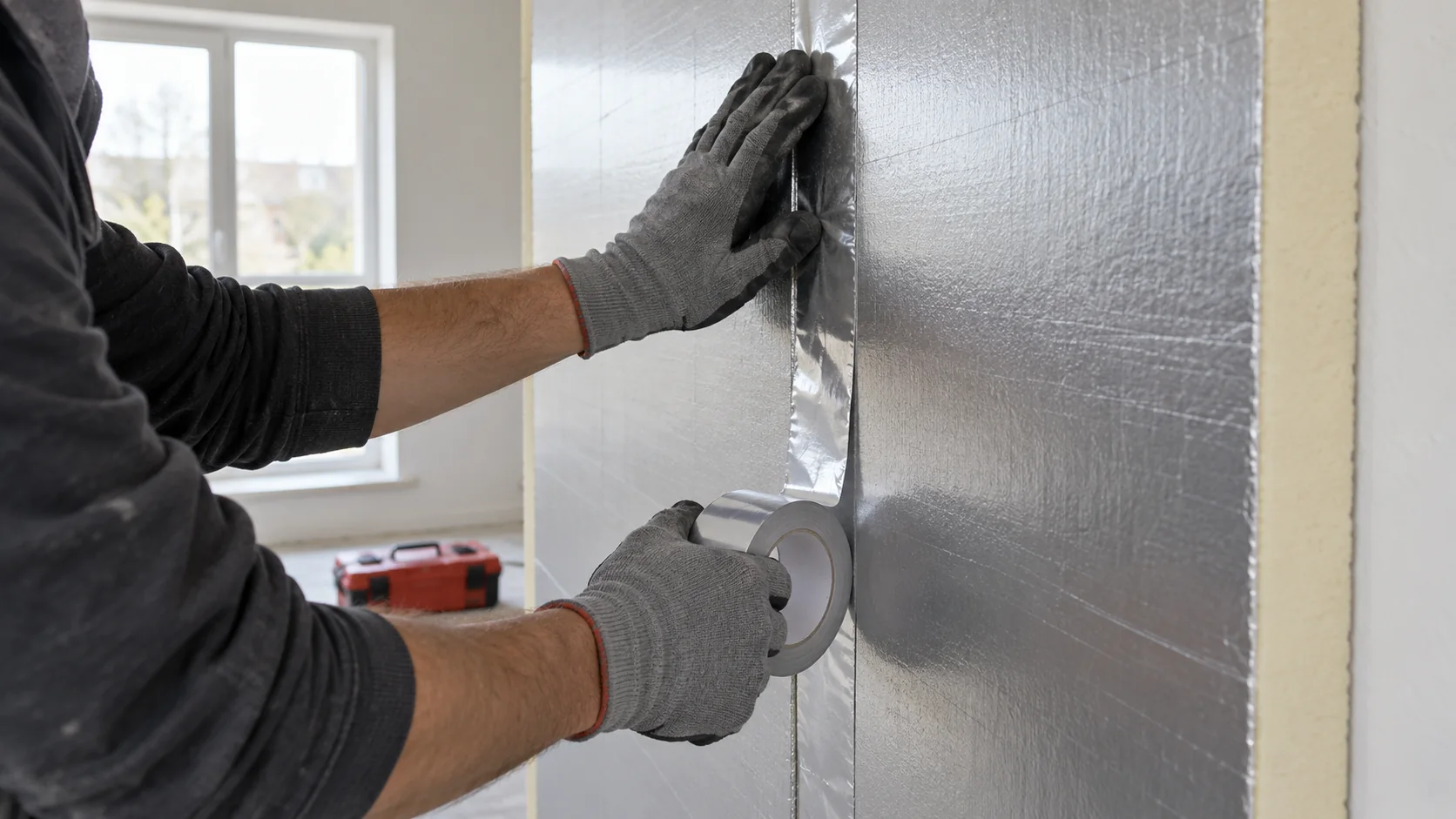
An aluminium facing on a PIR board can greatly restrict water vapour diffusion. The performance of the finished wall depends on how…
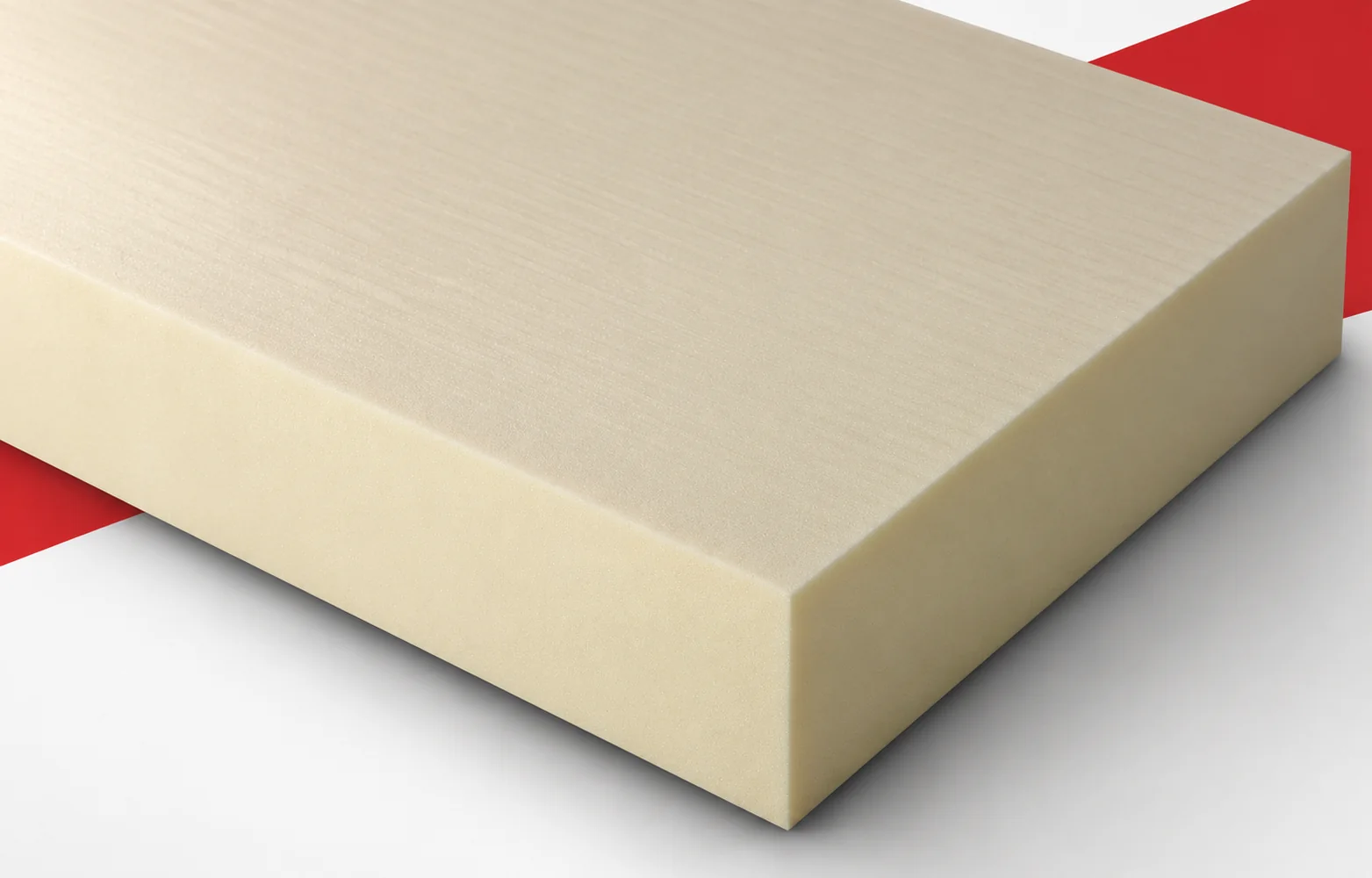
The roof is to receive new falls and better thermal insulation. A BauderPIR T design should combine both tasks in a single…
A covered terrace involves two structures: shelter above its users and the surface they walk on. If a heated room lies below,…