

Polystyrene and insulation
Does thicker insulation always cut heating bills?
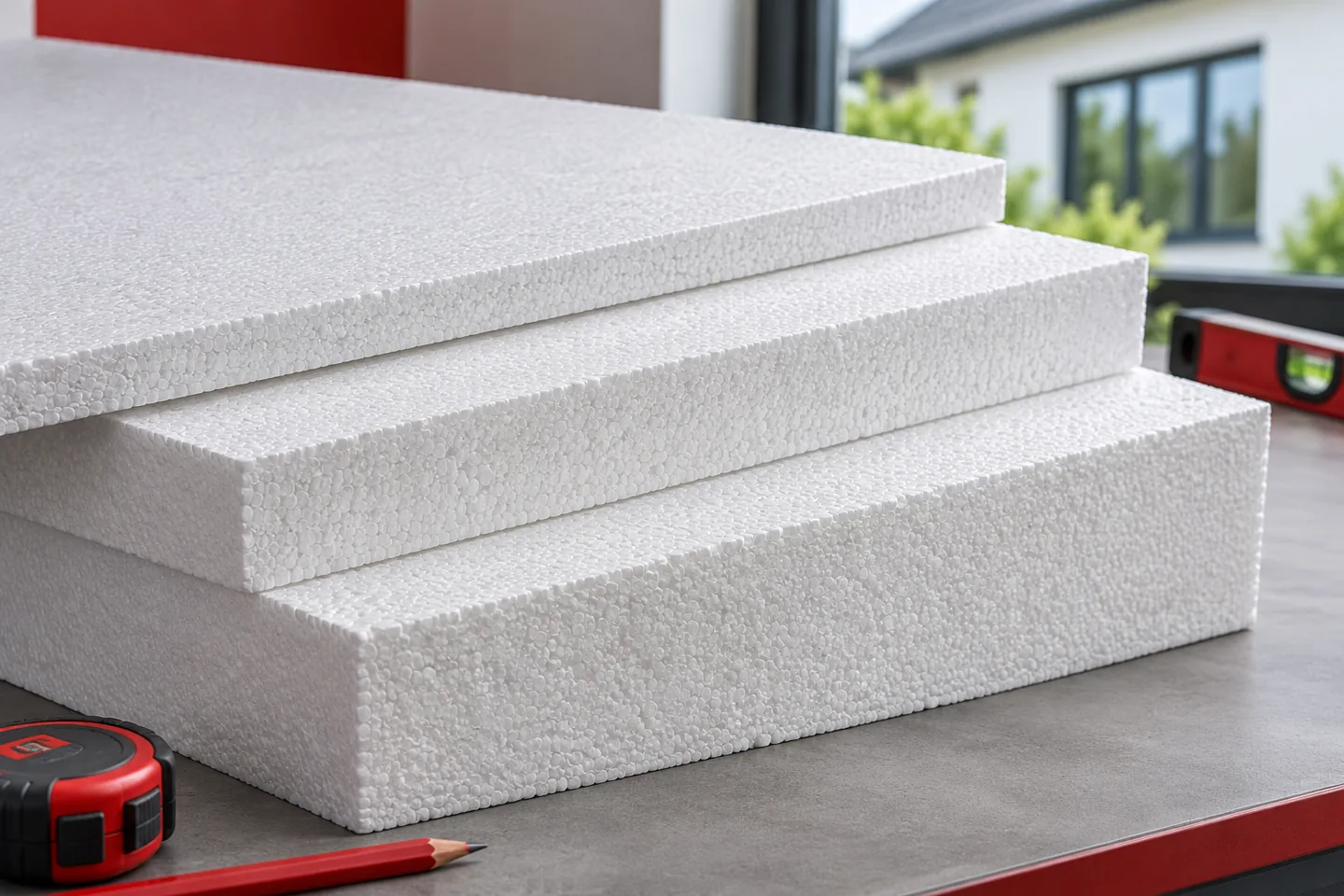
A thicker layer of polystyrene reduces heat transfer through a correctly constructed building element. Each additional centimetre, however, brings a progressively smaller gain. The heating bill also depends on the windows, ventilation, services and the behaviour of the occupants. A sensible choice of thickness requires comparing the whole renovation, not just the price of an extra pack. With a constant lambda, the thermal resistance of EPS rises in proportion to thickness. A 10 cm layer with a lambda of 0.040 has a resistance of 2.50 m²·K/W, while 20 cm gives 5.00. Doubling the thickness does indeed double the resistance of that layer. The whole wall, however, also has the resistance of the masonry, renders and surfaces, so its overall result changes differently.
In this article
What does each additional centimetre achieve?
The heat flux depends on the reciprocal of the total resistance. When there is already a great deal of insulation, a further portion of material reduces the U-value less than the first centimetres. This does not mean that thicker insulation is pointless. It only means that the gain must be calculated and set against the cost and the intended standard of the house.
What does a simple wall example look like?
Assume that all layers other than EPS and the surface resistances together give 1.00 m²·K/W. With 10 cm of EPS with a lambda of 0.040, the total resistance is 3.50, so U is approximately 0.286 W/(m²·K). With 20 cm we obtain U of approximately 0.167. With 30 cm the result falls to approximately 0.118 W/(m²·K).
The first increase of 10 cm lowers U by approximately 0.119, and the next by approximately 0.049 W/(m²·K). This is an illustration of the relationship under fixed assumptions. It is not a design, nor confirmation that the requirements for a particular house are met. A real calculation takes account of the properties of the masonry, corrections and junctions between building elements.
Why does a lower U-value not produce an equally large fall in the bill?
Wall insulation reduces losses through the walls. It does not directly change losses through old windows, a leaky roof or intensive air exchange. In a poorly insulated house the measure may be pronounced, but its share of the overall balance must be assessed. It is not possible honestly to attribute a fixed percentage of savings to each additional layer.
The bill is also affected by the heat source. Gas, electricity and district heating are billed differently. Some costs are fixed. After renovation, occupants may also raise the temperature, taking advantage of improved comfort. A smaller monetary saving then does not necessarily mean that the insulation performs worse than calculated.
When are details more important than additional thickness?
If the insulation stops at the ring beam, plinth or reveal, the local heat flow may remain high. A thicker board in the middle of the façade will not automatically resolve such a thermal bridge. Before changing the thickness, it is therefore worth checking the continuity of the layer and its connection with the roof, floor and windows and doors. A plan for the whole building envelope is needed.
Air tightness and protection against water also matter. EPS boards are not a ready-made seal for all junctions. Draughts through an improperly executed detail require the cause to be eliminated. Moisture, in turn, can worsen the operating conditions of the building element. Additional centimetres will not replace repairing a leak.
Before renovation, an inspection and a thermal imaging survey carried out under suitable conditions can be helpful. The temperature distribution image must, however, be interpreted taking account of the weather, moisture and the method of heating. The colour alone in the image does not give the lambda of the material.
How should the cost of greater thickness be assessed?
The cost of renovation includes scaffolding, substrate preparation, labour, the reinforcing layer and the finish. Some of these expenses remain similar at different thicknesses. Saving a few centimetres of material during a full renovation therefore does not always pay off. Adding insulation later may require repeating many costly works.
On the other hand, thickness affects fixings, window sills, flashings and the available space. Compare two complete options with an identical scope of works. Take account of the durability of the details and the risk of clashes. An exact payback period requires data on the building and the price of energy. A single general figure from an advertisement will not replace that calculation.
How do you choose a sensible option?
First establish the required thermal performance and the technical constraints. Then check how much the basic option costs and how much the additional thickness or lower lambda costs. Ensure both solutions are correctly installed. Comparing thick but poorly executed insulation with thinner and careful work will not allow the effect of the material itself to be assessed.
Various grades and thicknesses of EPS are offered by, among others, Swisspor, Arbet, Austrotherm and Styropmin. A manufacturer’s name does not define a single lambda or a single range of applications.
In practice, a good decision is the option that meets the design assumptions, maintains the continuity of the insulation and fits within a sensible budget for the whole investment. It is worth leaving a margin for difficult details. These often determine comfort at the window and a dry corner surface more than the last centimetre on a large, even wall.
7 branches. Materials closer to your project.

Free quote
Materials for your project


You may also find useful…
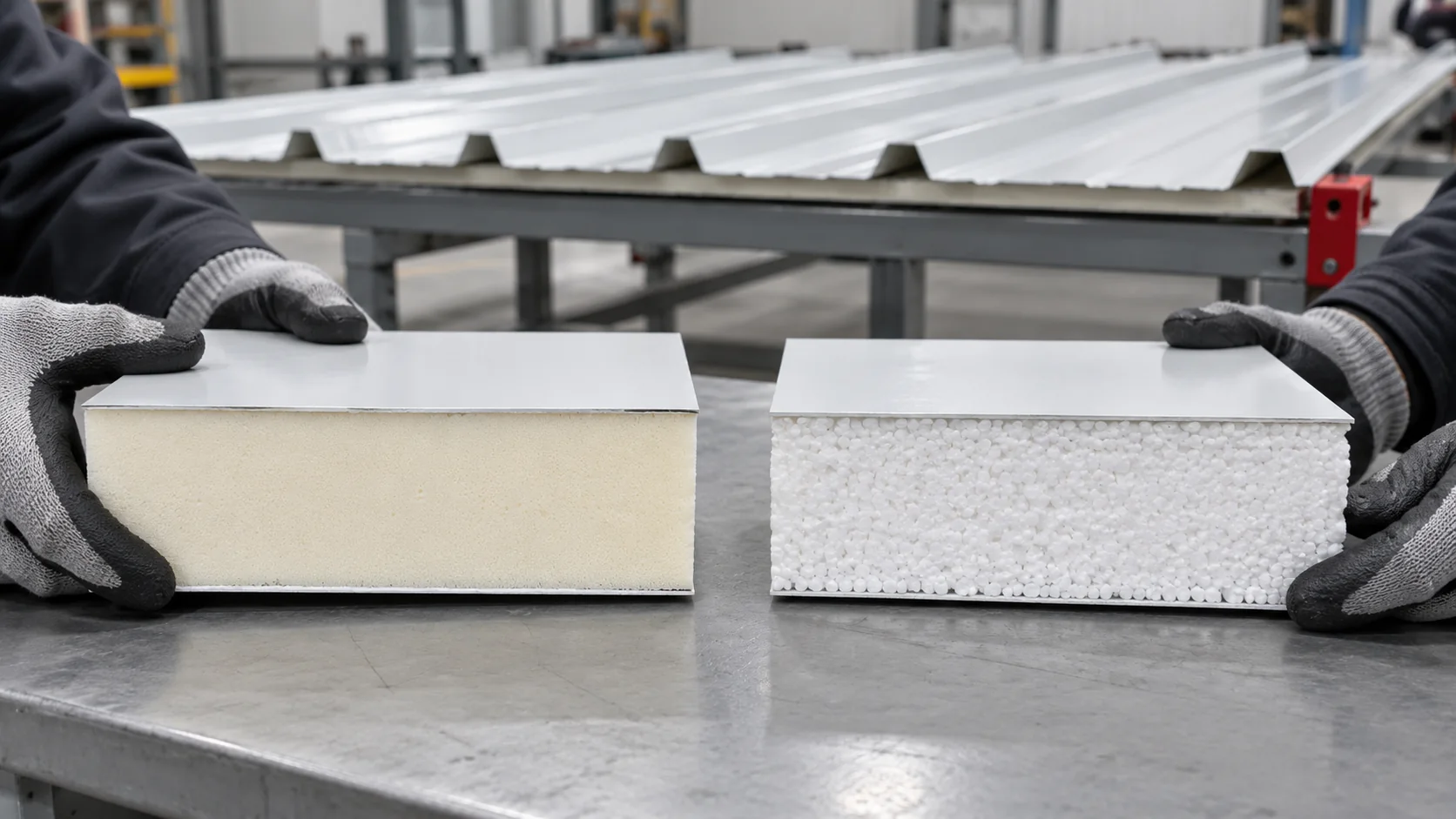
When replacing a roof, compare complete roof panels with two facings and a profile designed for roofing. The PIR or EPS core…
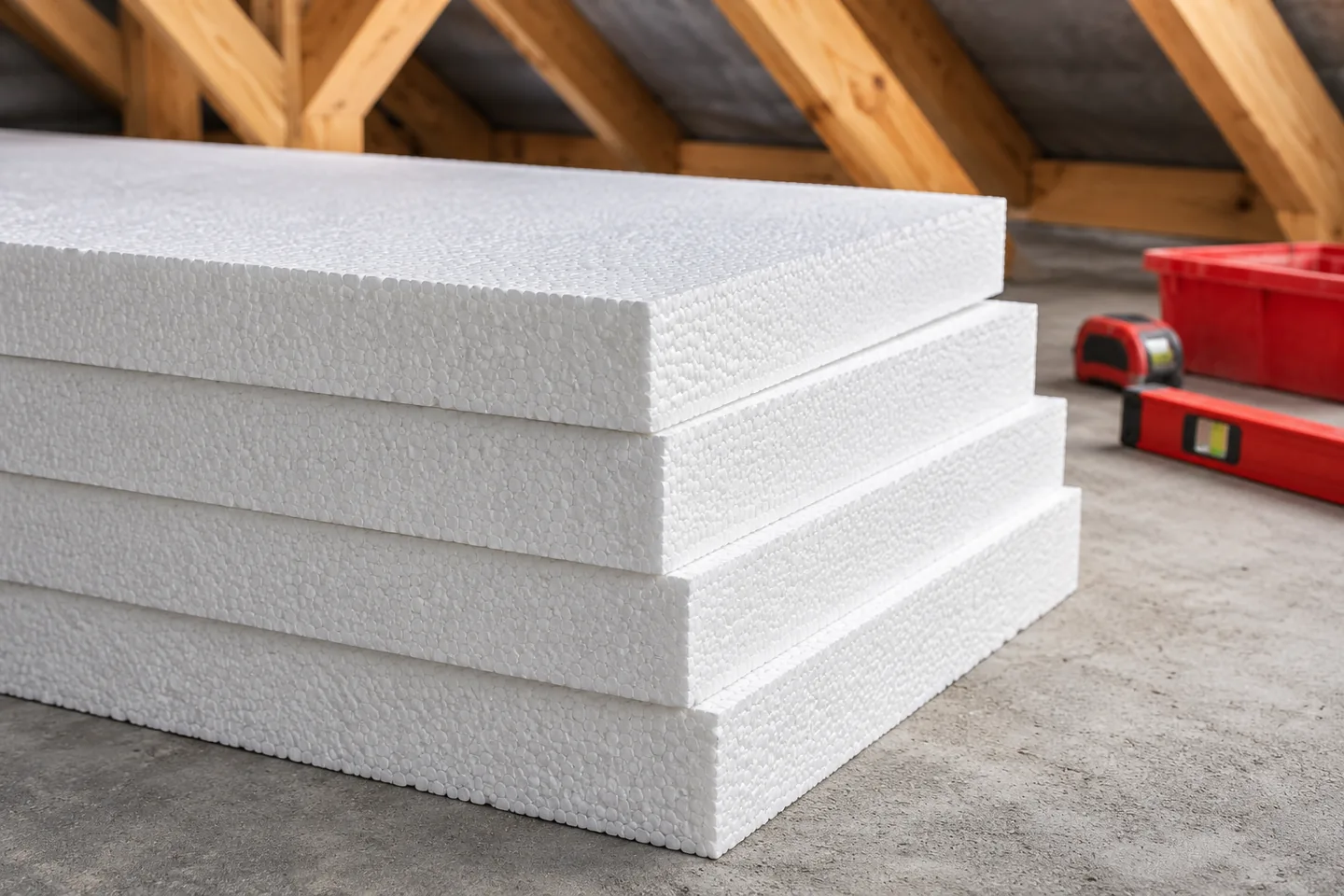
When the loft remains unheated, insulating the ceiling can make more sense than insulating the roof slopes. In that case it protects…
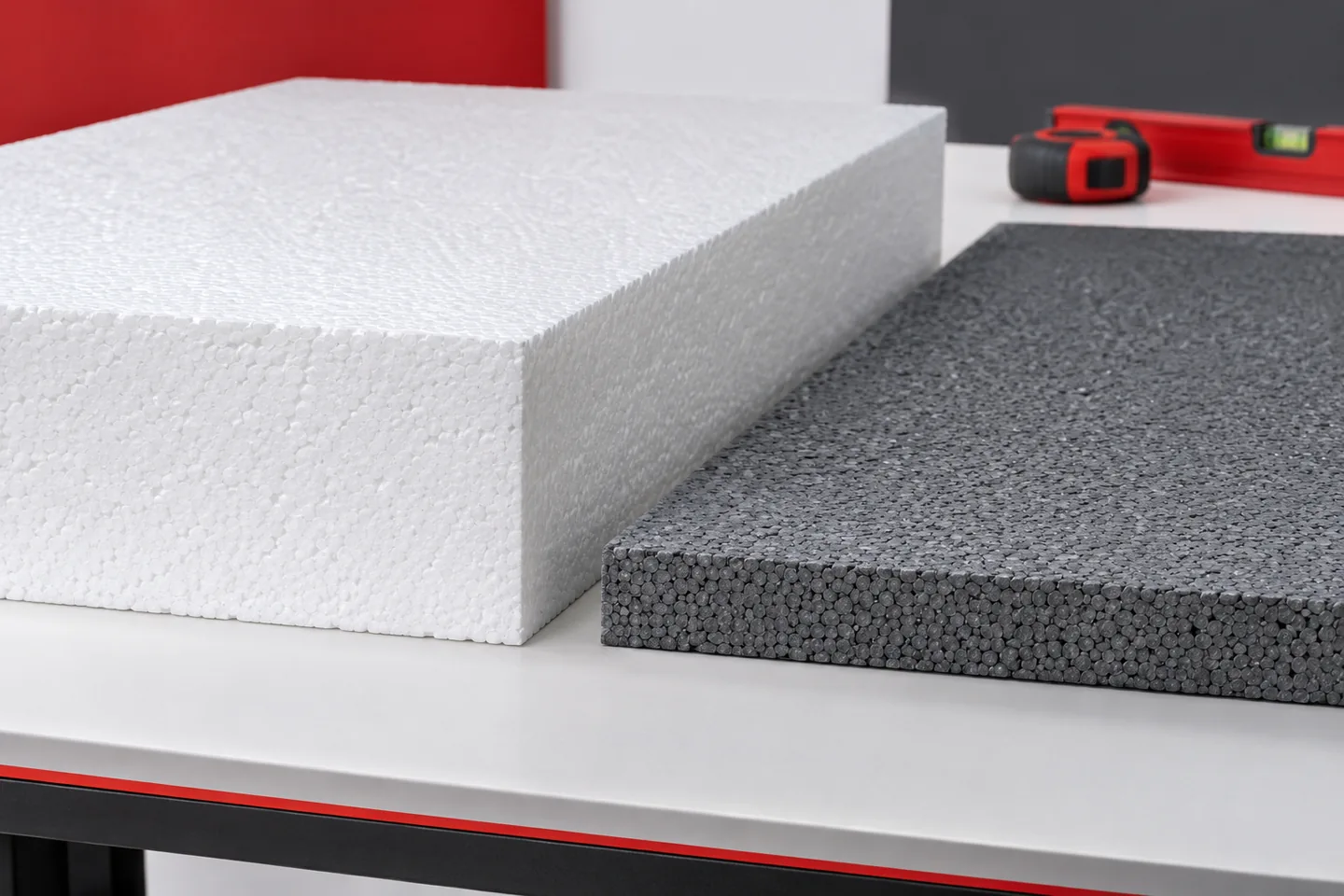
White and graphite EPS can be used for similar applications, but by definition they do not have the same parameters. Graphite usually…
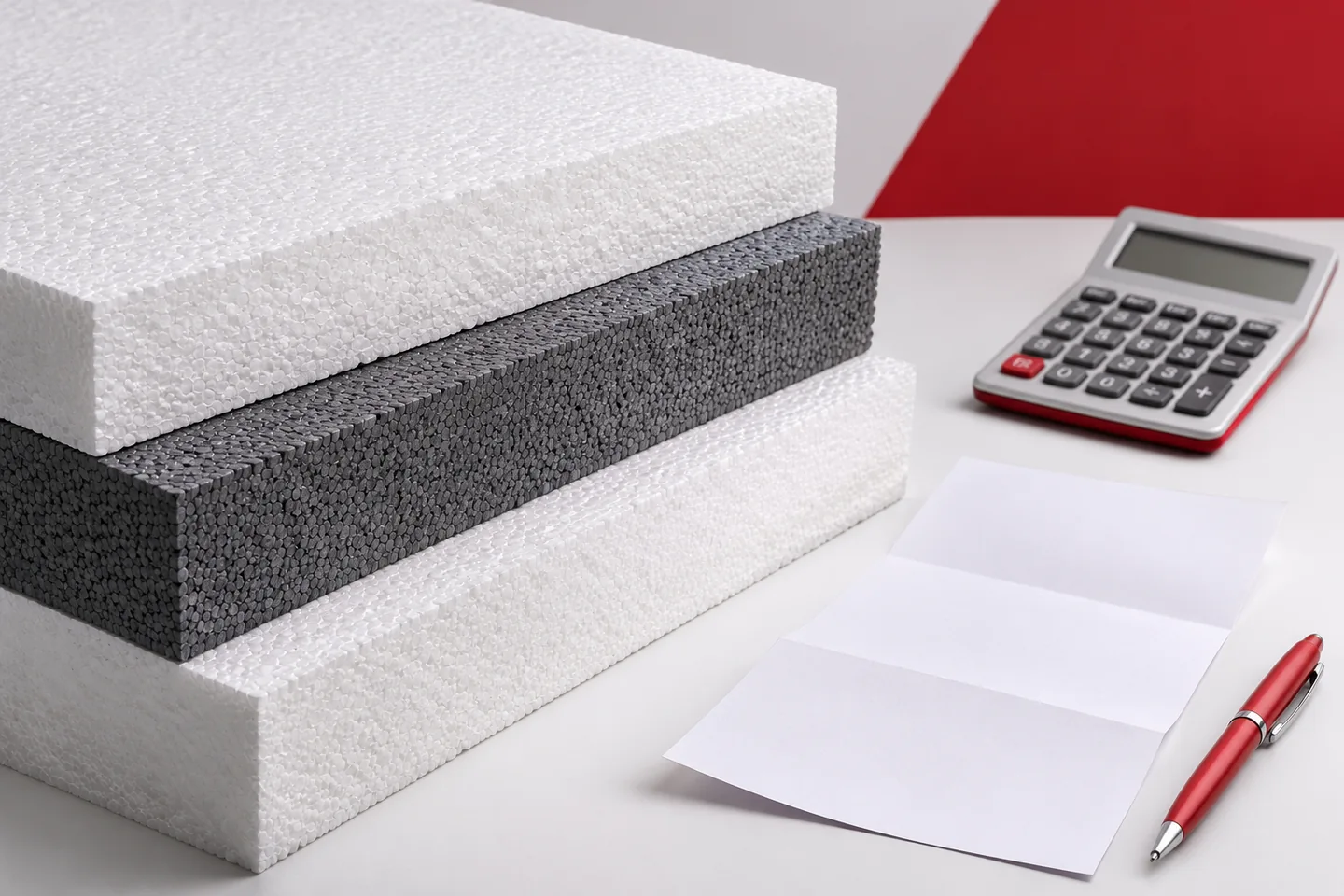
EPS price comparisons make sense only at similar thermal performance and for compatible applications. A cheaper cubic metre may require a thicker…
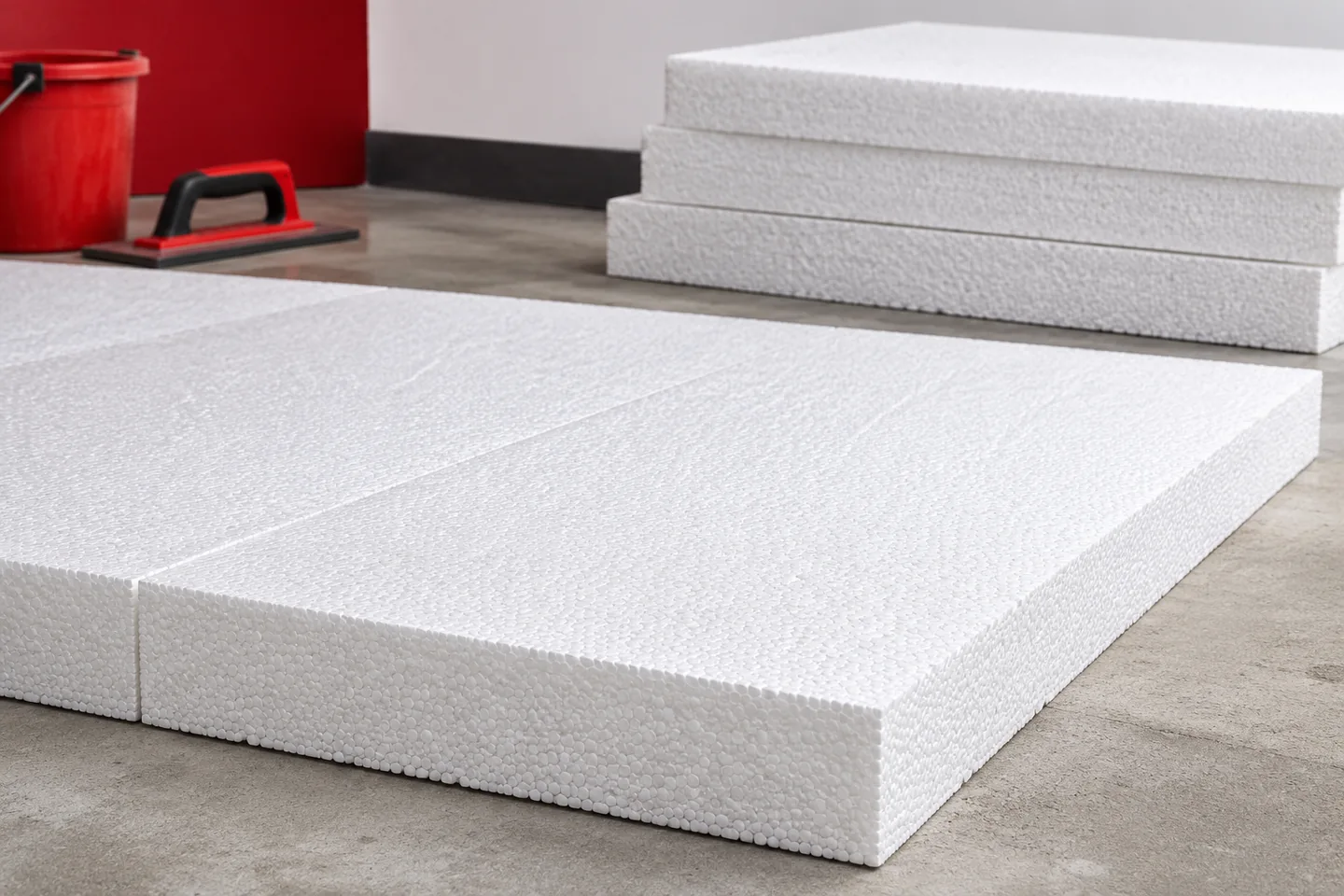
A ground-bearing floor requires continuous thermal insulation, correct protection against water and stable support for the screed. The edges at the walls…
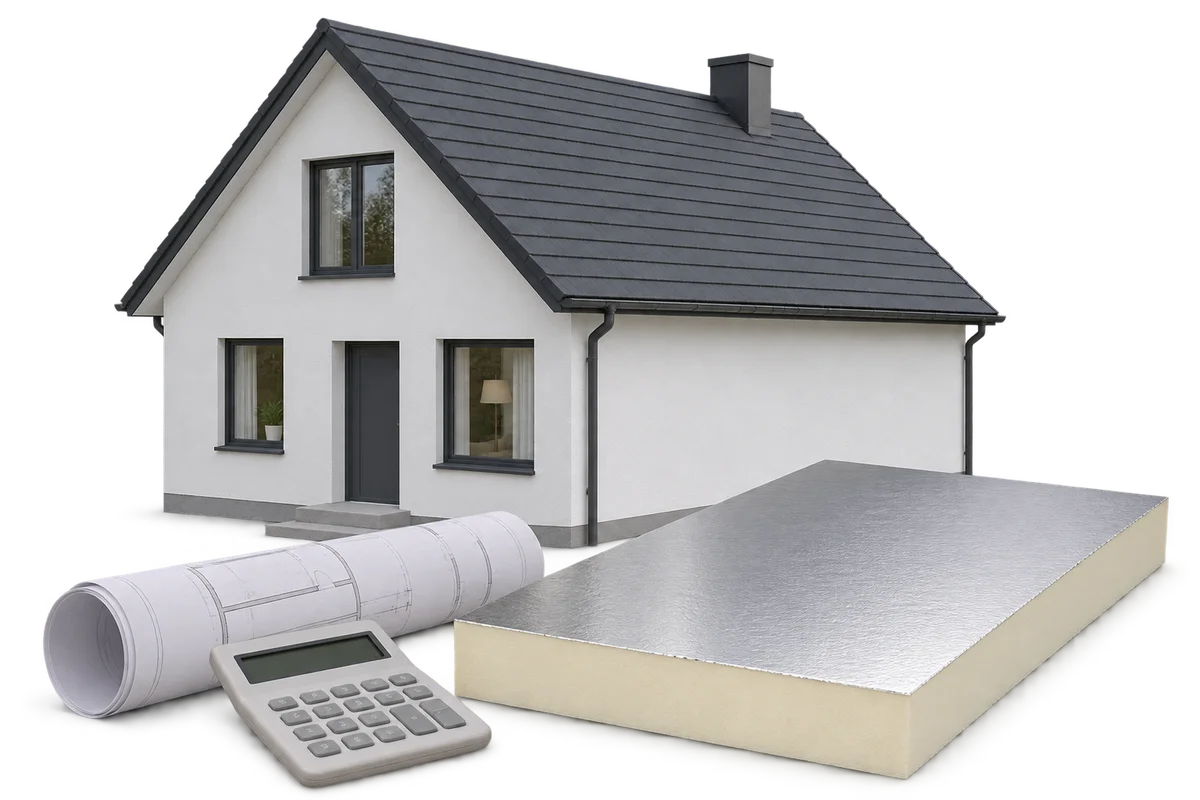
The cost of insulating a home includes materials, preparation, installation and finishing the junctions. The price per square metre of board tells…
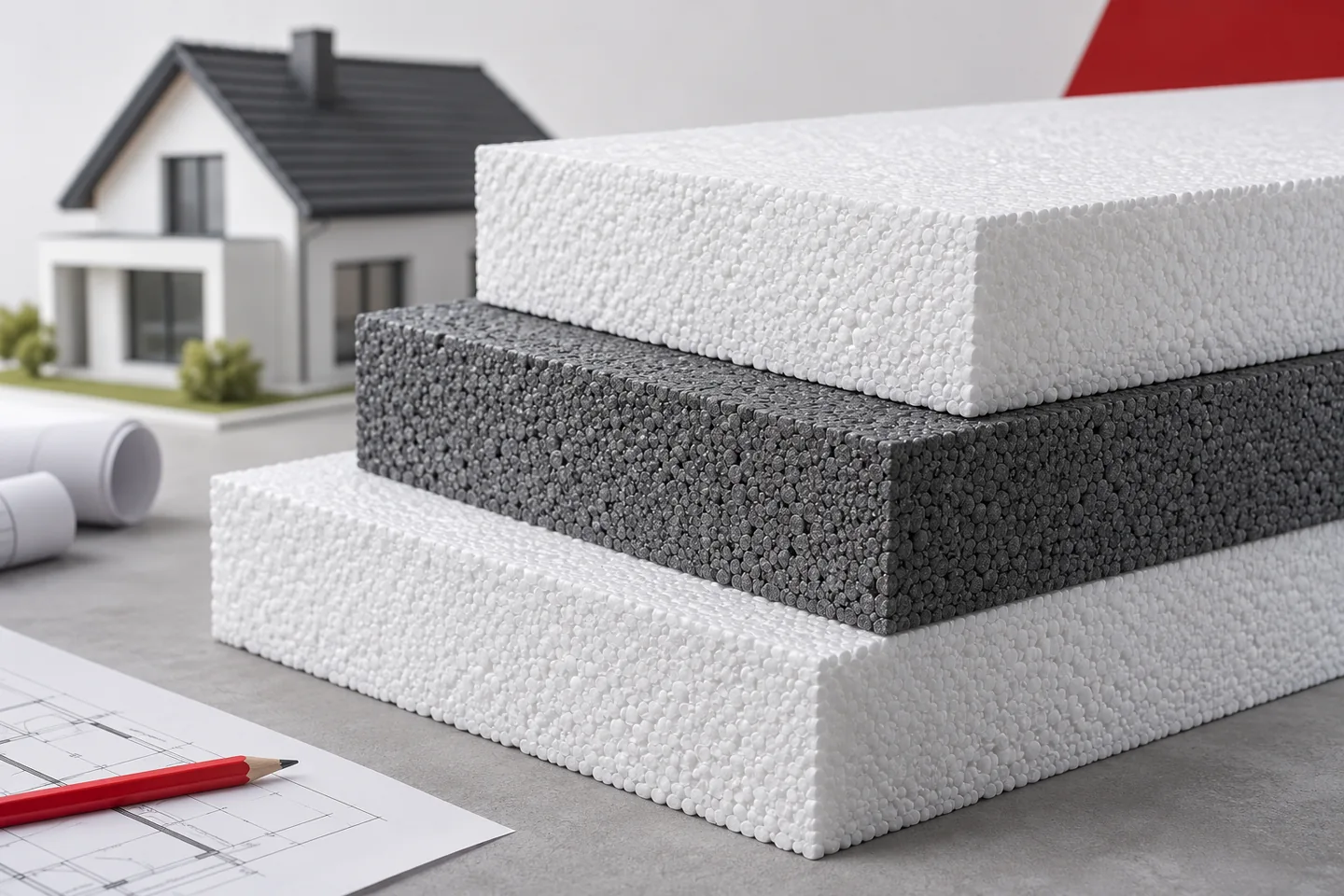
Polystyrene is selected to suit its location in the building. On the façade, conformity with the ETICS system matters; beneath the floor…
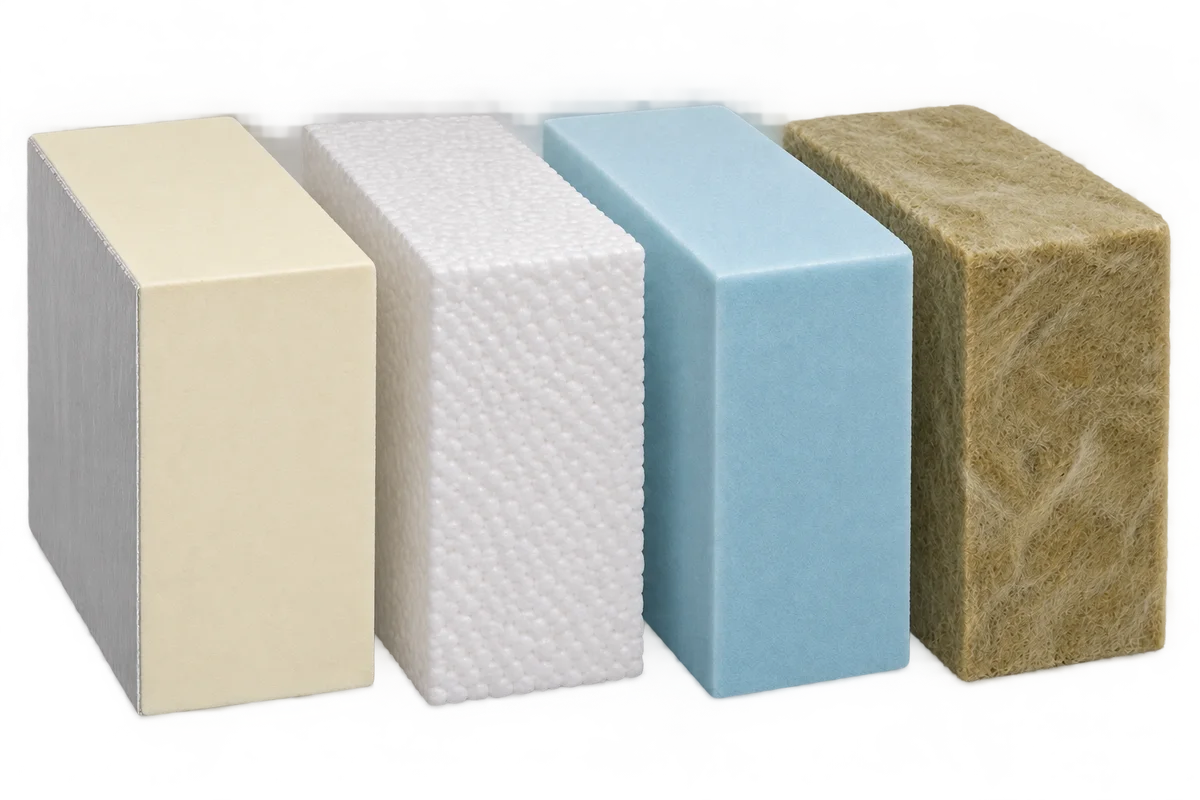
Different insulation materials can work together in one building element when each solves a specific problem. PIR can keep the build-up thin,…