

EPS and insulation
White or graphite EPS: when is a thinner board worthwhile?
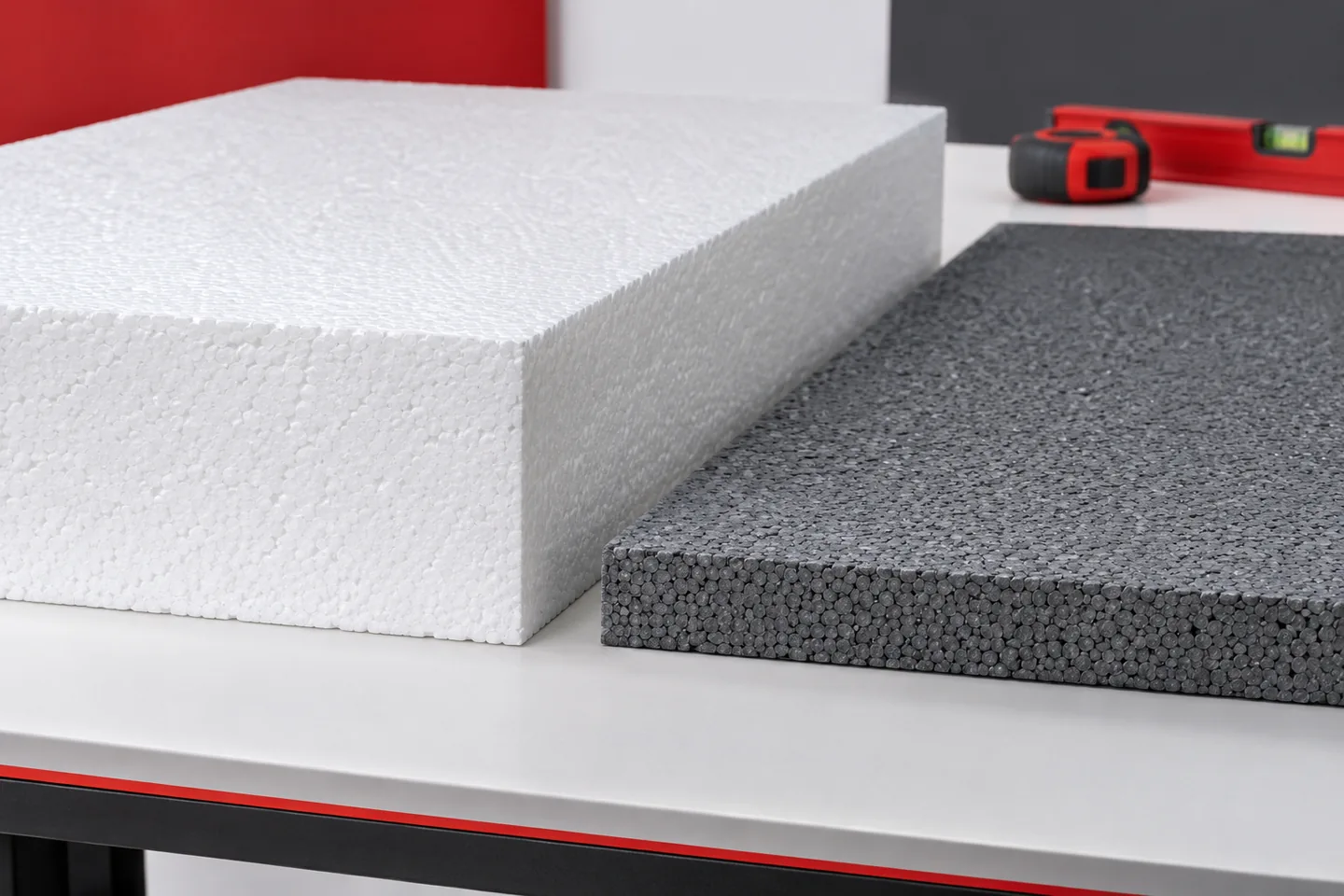
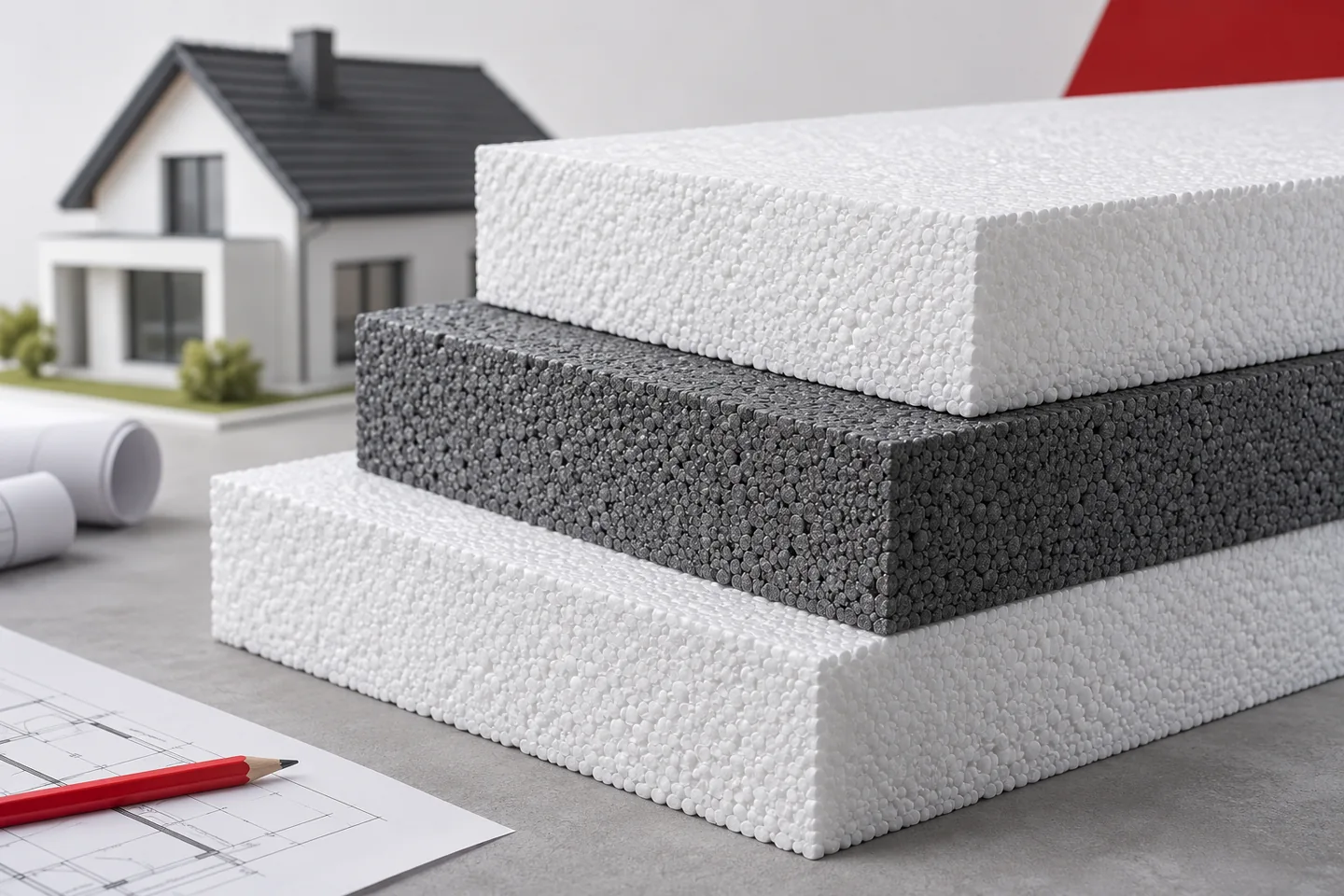
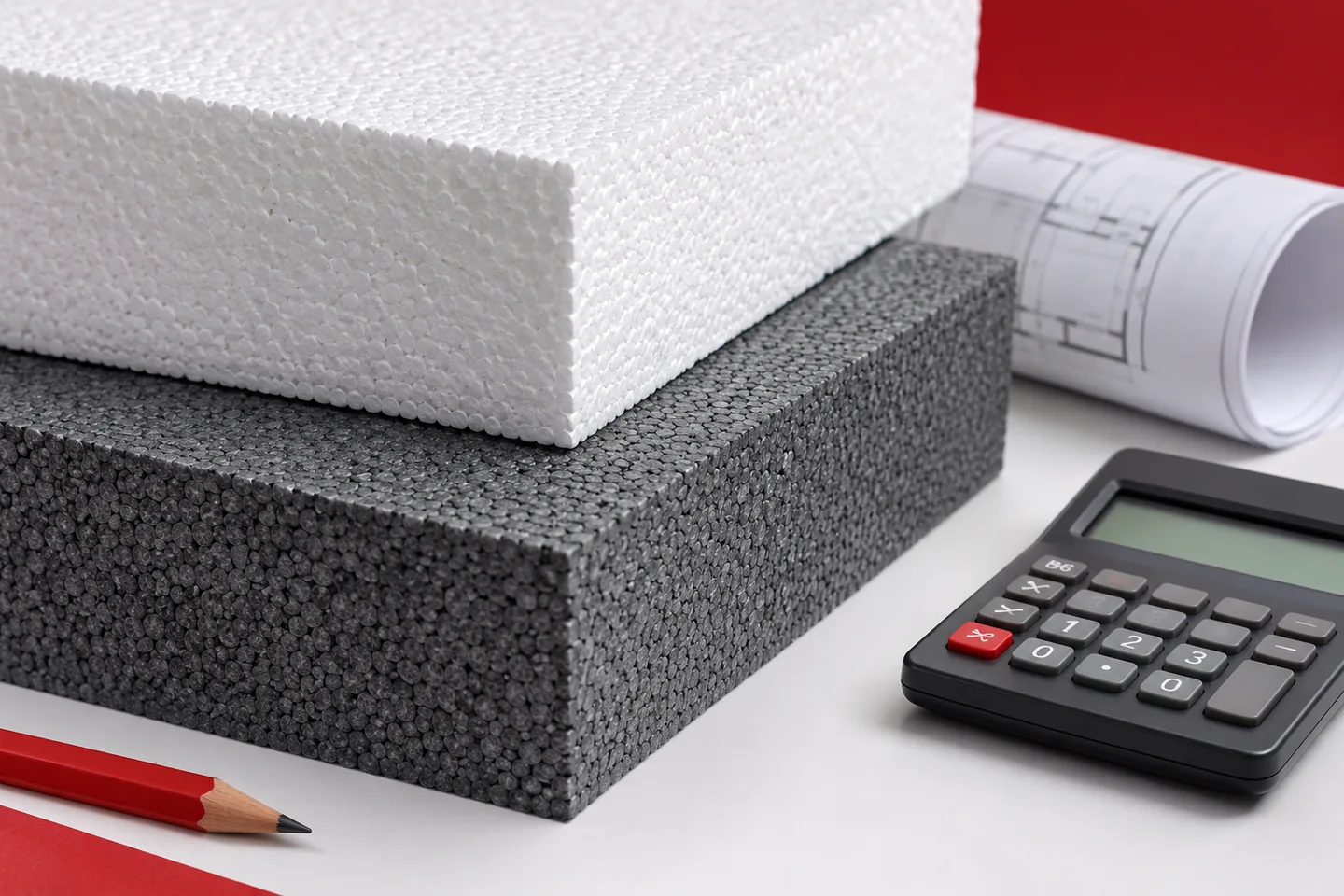
White and graphite EPS can be used for similar applications, but by definition they do not have the same parameters. Graphite usually allows the insulation thickness to be reduced while maintaining the same thermal resistance. This benefit is particularly valuable at window reveals and under a small roof overhang. However, the board documentation, the cost of the whole system and the installation conditions must be checked. EPS has a structure of expanded granules. In graphite grades, suitable additives limit heat transfer by radiation within the material. That is why graphite boards with a lambda of 0.031 W/(m·K) are found, as well as other values. For white boards the choice is equally varied. Colour is not a complete specification.
In this article
What does the graphite additive change?
Two boards of a similar shade may have different strength, geometry and range of applications. Nor can it be assumed that every graphite board is suitable under a floor slab or in contact with the ground. First establish the place of installation. Only then compare the specific declarations and the thicknesses corresponding to the required thermal resistance.
How do you convert the thickness of one board to another?
For a single homogeneous layer, the resistance is R = d/λ. Let us take white EPS 20 cm thick with a lambda of 0.040 W/(m·K). Its calculated resistance is 5.00 m²·K/W. To obtain the same result from a material with a lambda of 0.031, 15.5 cm is needed. This is a comparison of two specific lambdas, not a fixed rule for all white and grey boards.
The commercial thickness is chosen to match the available range and the design. Adopting 16 cm in this example gives a small reserve of resistance for the insulation alone. It does not mean that the whole wall automatically complies with the requirements. The masonry, the other layers, the required corrections and the junction details must also be taken into account.
Where does thinner insulation give the greatest benefit?
A difference of a few centimetres matters with a short roof overhang, a narrow balcony or limited space between the building and the plot boundary. A thinner system can also make it easier to fit window sills and flashings. In a renovation it is worth measuring these places before choosing the material. The wall area alone will not show all the difficulties.
Window reveals require particular attention. The narrow strip of insulation at the window frame should not be a random offcut from the façade. Its thickness, the extent to which it covers the frame and its connection to the sealing require a proper detail. A better lambda helps in a small space, but it does not remove the thermal bridge created by an incorrect junction.
Why must graphite be protected during works?
A dark surface heats up more strongly in the sun. During installation this can lead to deformation of the boards and stresses in the fresh adhesive bond. That is why the manufacturer specifies how the boards are to be stored, how the scaffolding is to be covered and the permissible working conditions. The air temperature read in the shade does not describe the temperature of a heated board.
The schedule should allow for work on sheltered walls and for the adhesive curing time. Subsequent stages should not be accelerated at the expense of the required pauses. It is also worth protecting the packs from damage and not leaving exposed EPS uncovered for a long time. White EPS also requires correct storage and protection from the weather.
How do you compare price without misleading abbreviations?
The price per cubic metre is not enough when the boards being compared have a different lambda and thickness. For a given resistance, calculate the cost of one square metre of the layer. Then add the differences in fixings, flashings, window sills and the organisation of the works. Ultimately one pays for the finished insulation, not just for the volume of EPS.
At the same thickness, graphite will usually increase the resistance of the insulation. At the same resistance, it will allow it to be made thinner. These are two different purchasing options. Do not mix them in one comparison. A better lambda also does not give a specific percentage saving on the bill without an analysis of the other losses and of how the house is heated.
When changing the thickness, check the length of the fixings and how the window sill is seated. The space saved is only of value if it does not worsen the tightness of the junction or the drainage of water.
When should you stay with white EPS?
White EPS is a sensible choice when the design permits the required thickness and the difference in the cost of the whole system favours it. More important than colour are compatibility with the system, the correct parameters and careful installation. On a floor or roof, the required resistance to loads must not be sacrificed merely to buy the lowest lambda.
White and graphite boards are offered by, among others, Arbet, Styropmin, Knauf Therm and Austrotherm. It is worth comparing grades intended for the same purpose, not the manufacturers’ general names.
Before deciding, prepare two complete options. Record the thickness, the calculated resistance, the mechanical properties, the scope of additional works and the price. Then you can easily judge whether the extra payment buys the space you need, greater thermal protection, or merely a parameter that you will not use in the given building element.
7 branches. Materials closer to your project.

Free quote
Materials for your project


You may also find useful…
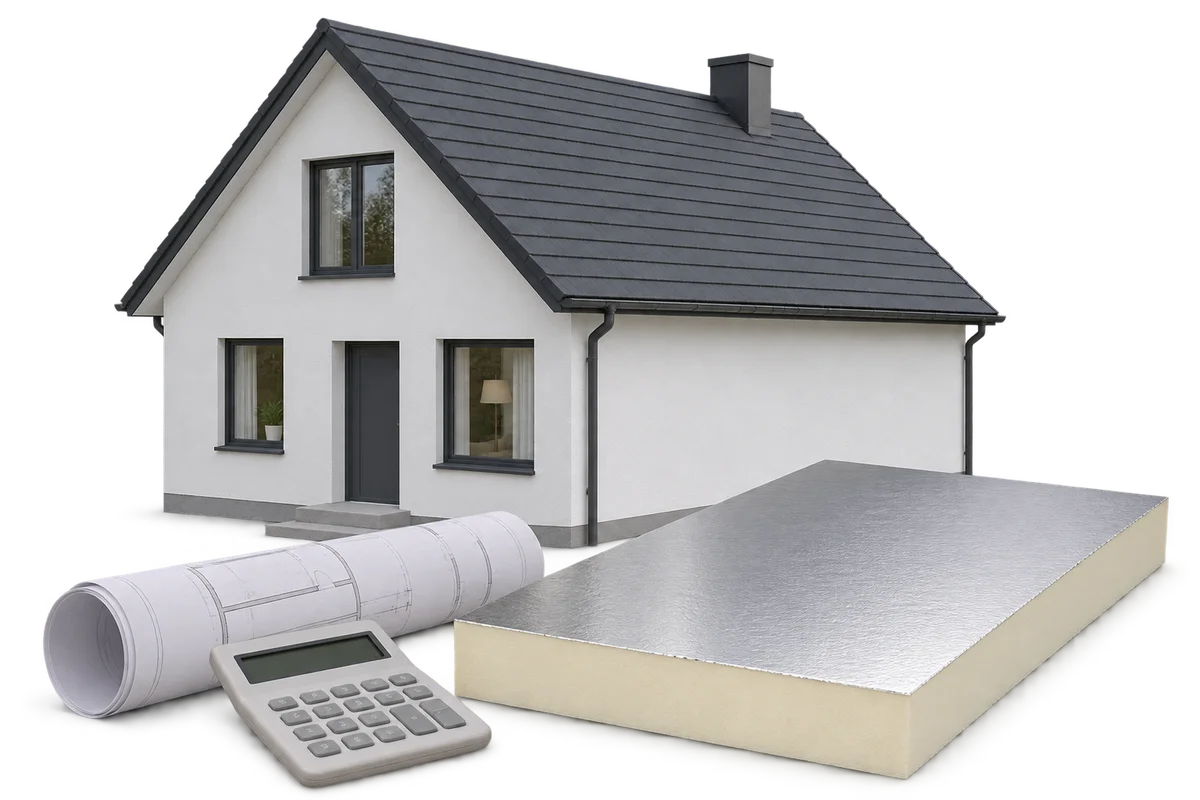
The cost of insulating a home includes materials, preparation, installation and finishing the junctions. The price per square metre of board tells…
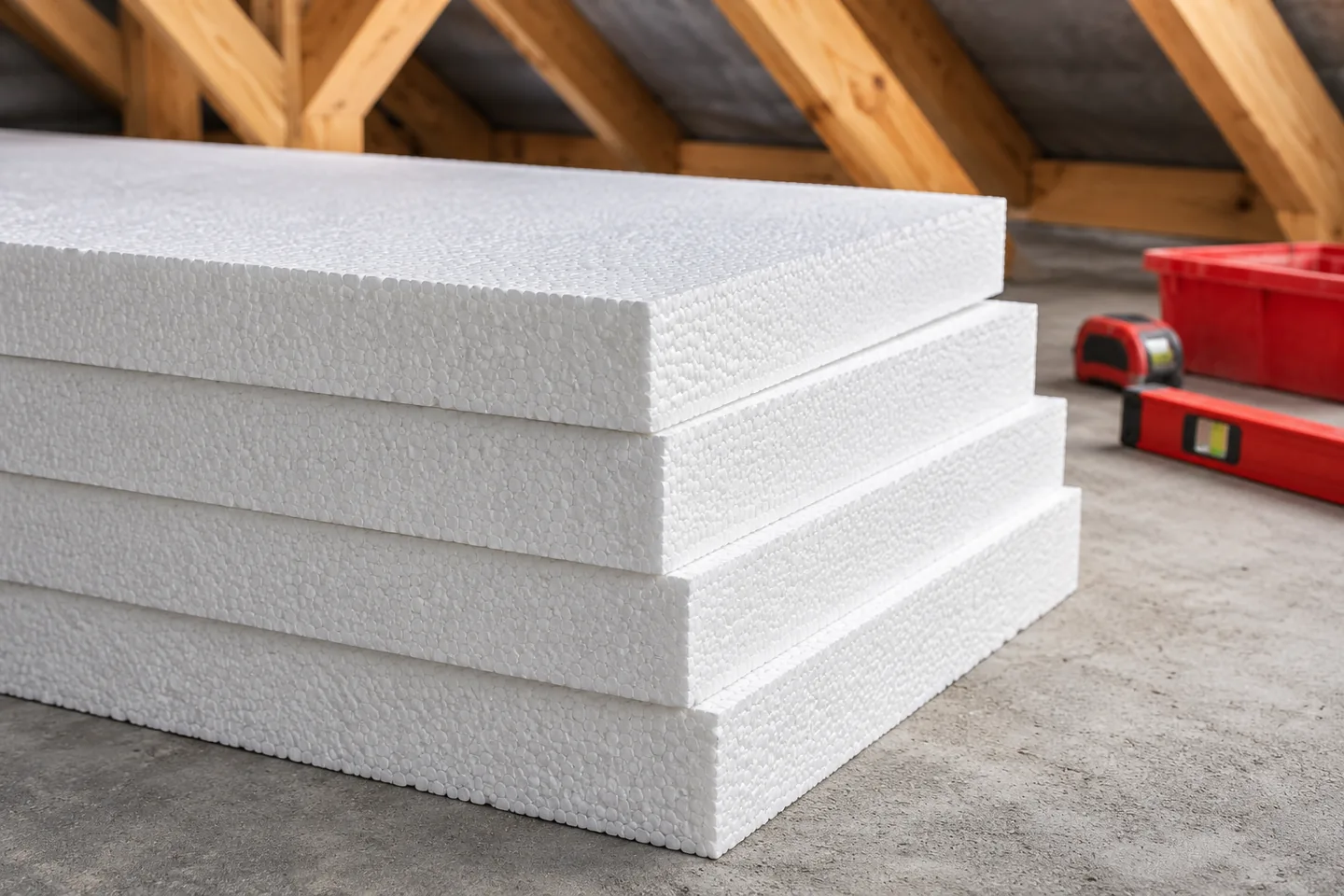
When the loft remains unheated, insulating the ceiling can make more sense than insulating the roof slopes. In that case it protects…
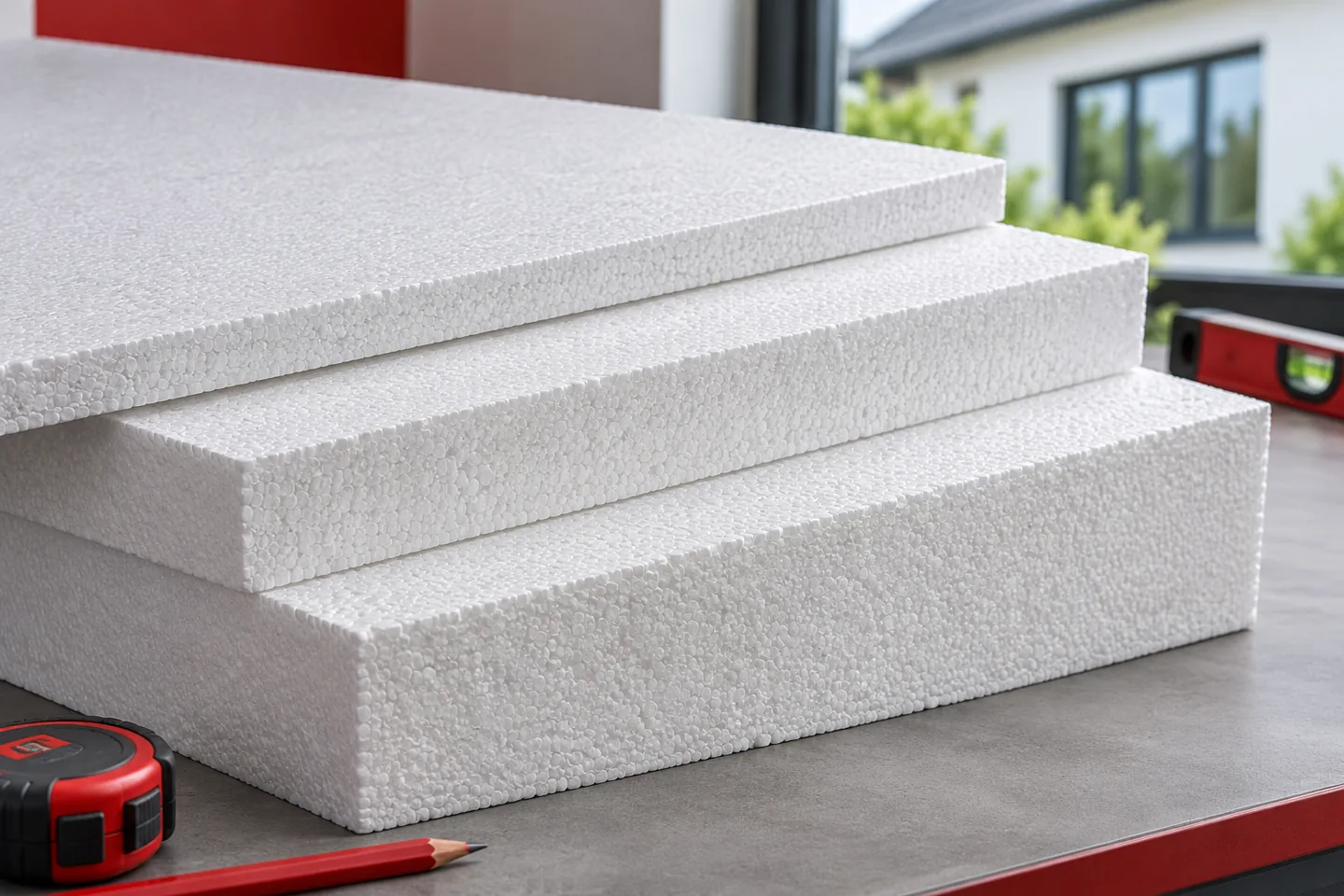
A thicker layer of polystyrene reduces heat transfer through a correctly constructed building element. Each additional centimetre, however, brings a progressively smaller…
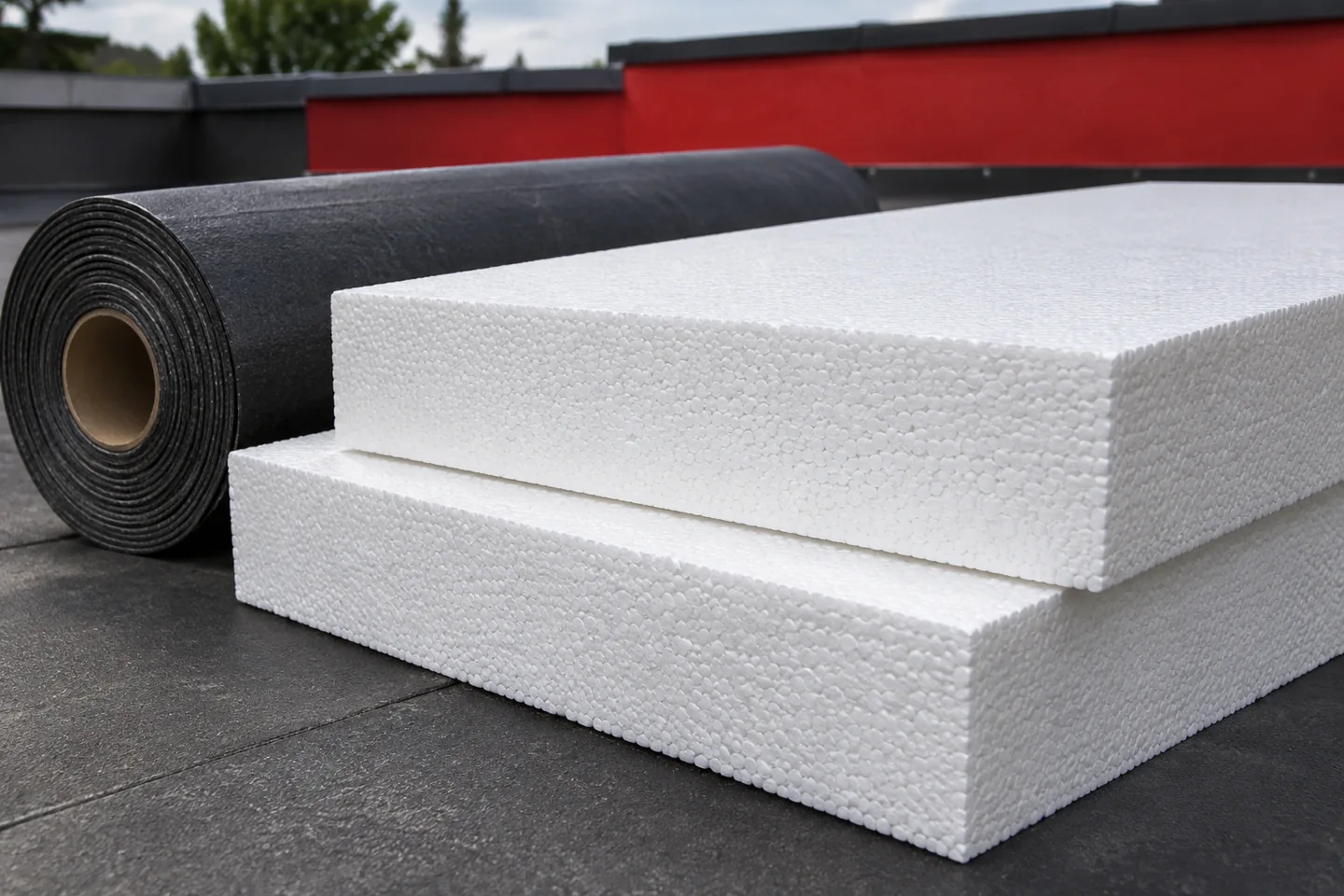
Expanded polystyrene is used on flat roofs, but it requires the right grade and a complete layer build-up. The boards must suit…
A ground-bearing floor requires continuous thermal insulation, correct protection against water and stable support for the screed. The edges at the walls…
Polystyrene is selected to suit its location in the building. On the façade, conformity with the ETICS system matters; beneath the floor…
Changing conductivity from 0.040 to 0.031 W/(m·K) increases the thermal resistance of EPS at the same thickness. It may also permit thinner…
Insulation has a different job in each part of a house. PIR is useful where thickness is limited. EPS comes in grades…