

Polystyrene and insulation
How thick should EPS wall insulation be?
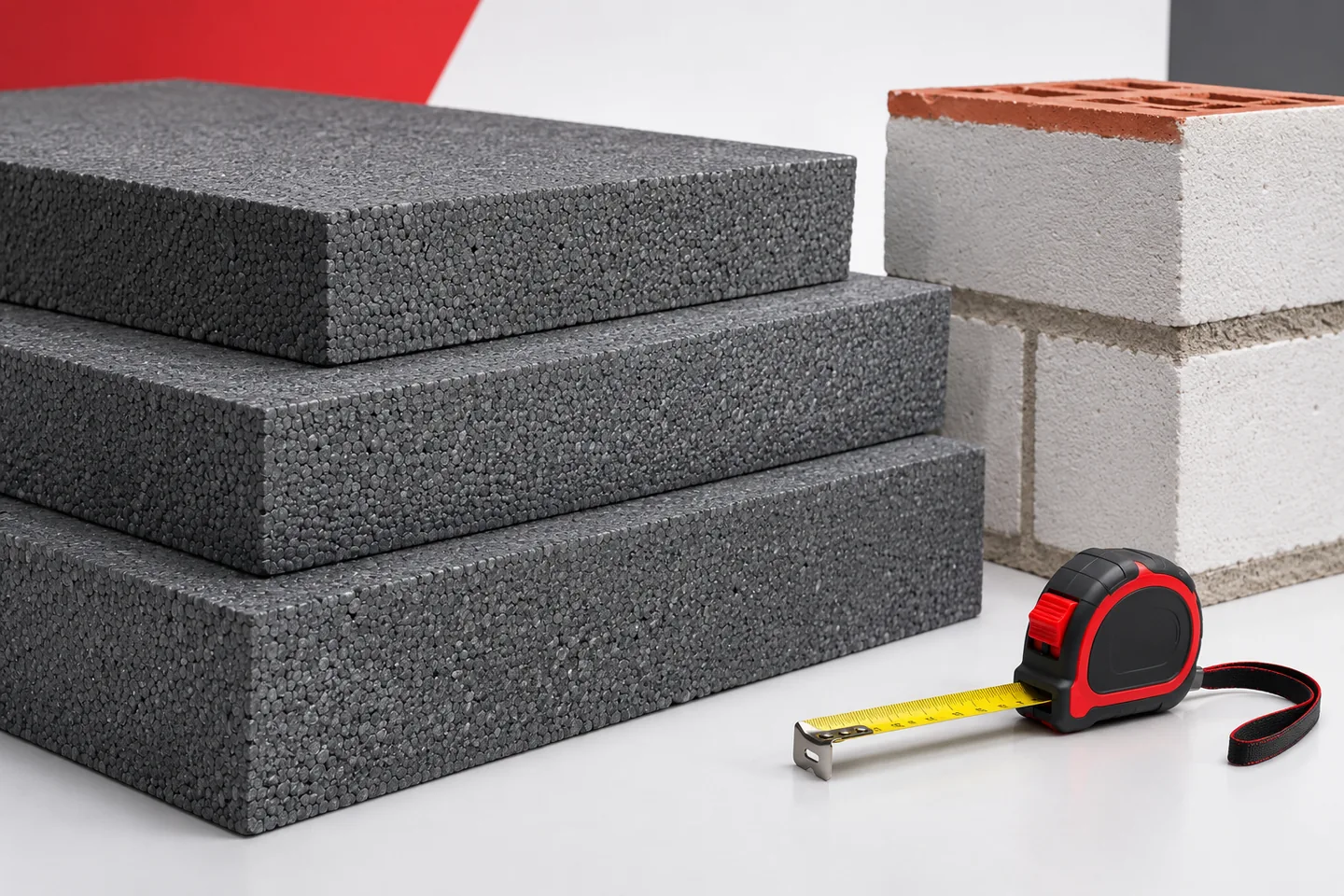
The question of how much polystyrene is needed has two parts. First, the thickness required to achieve proper thermal protection must be determined. Then the area, volume and number of packs are calculated. It is worth separating these stages. A universal recommendation such as “20 cm everywhere” ignores the type of masonry, the lambda of the boards, the façade details and the actual material losses. Insulation is selected to suit the wall, not in isolation from it. The thicknesses and properties of the existing layers are needed, along with the intended thermal result. In an old house it is worth first checking what the wall is made of. Render can conceal various materials, and documentation from years ago does not always correspond to what was actually built.
In this article
How do you determine the required thickness?
The resistance of an EPS layer is calculated from the thickness in metres and the lambda value. The other layers and the relevant corrections are then included in the calculation of the building component. The Uc value describes the result of such an analysis. The information “15 cm polystyrene” alone does not make it possible to state whether the wall will be sufficiently protected against heat losses.
Can a lower lambda replace additional centimetres?
A lower lambda gives greater resistance at the same thickness. For example, 18 cm of board with a lambda of 0.031 has a calculated resistance of about 5.81 m²·K/W. To obtain a similar resistance with EPS with a lambda of 0.040, about 23.2 cm is needed. The example shows the influence of the material, but it is not a ready-made specification for a particular wall.
The choice may depend on the length of the eaves, the window sills and the width of passages. It is worth checking whether increasing the thickness would force changes to gutters and services. Sometimes a more expensive board with a better lambda simplifies this work. In another house the additional centimetres fit without any problem, and the cost comparison looks different.
How do you calculate the façade area?
Start with the dimensions of the walls and gables. Separate rectangular areas from triangular ones and from unusual elements. Window and door openings are deducted according to the adopted quantity-surveying method, but the reveals must also be taken into account. A schedule based only on the perimeter of the house and its height can therefore give a significantly inaccurate result.
Calculate the plinth and the sections requiring a different type of board separately. Pay attention to recesses, bay windows, loggia walls and the strips near the roof. In the quantity survey it is worth recording which area covers only the wall surface and which also includes the reveals. Such a description prevents double counting or omitting part of the work.
How do you go from square metres to packs?
The volume is obtained by multiplying the area by the thickness in metres. For 180 m² of wall and 20 cm of insulation, this gives 36 m³, still without an allowance. However, the number of packs is calculated from the actual contents of the packaging. Not every pack contains 0.30 m³. The quantity of boards depends on the thickness, the format and the way they are packed.
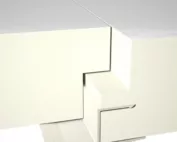
For tongued-and-grooved boards, check the coverage area. The tongue-and-groove joint may cause a difference between the external and the usable dimension. Information from the manufacturer’s table is more reliable than multiplying dimensions taken from a random offer. Order each thickness as a separate item so that thin boards for reveals do not get mixed up with the material for the walls.
After conversion, record the quantities in both m² and m³. This makes it easier to spot a mistake between an offer based on volume and one based on area. The delivery documents should also show the thickness of each item clearly.
How much material should be left for cutting?
The allowance should follow from the geometry of the façade and the cutting plan. A simple wall with few openings produces different losses from a façade with bay windows and numerous recesses. There is no single percentage that will be right in every house. Some larger offcuts can be used if their shape and position are consistent with the installation rules.
It is not worth limiting the allowance by filling the entire façade with small pieces. Especially at window corners, properly cut boards are needed. Before purchase, agree with the contractor on the layout of the starting rows and how offcuts will be used. This reduces waste without worsening the quality of the insulation.
What should a purchase schedule include?
A good list includes the façade, reveals, plinth and other special locations separately. For each item, record the type of application, thickness, lambda, system requirements and quantity. Add the format and the type of edge. This allows you to compare offers for the same scope, rather than random totals of packs with different properties.
Façade polystyrene is offered by, among others, Austrotherm, Knauf Therm, Styropmin and Termo Organika. Parameters and packaging differ between products, even within a single company.
The final stage is checking the delivery. Compare the labels with the order and count the packs. Keep information about the batch, and photograph any damage before installation. A well-calculated quantity only helps once exactly the type and thickness assumed in the design arrive on site.
7 branches. Materials closer to your project.

Free quote
Materials for your project
You may also find useful…
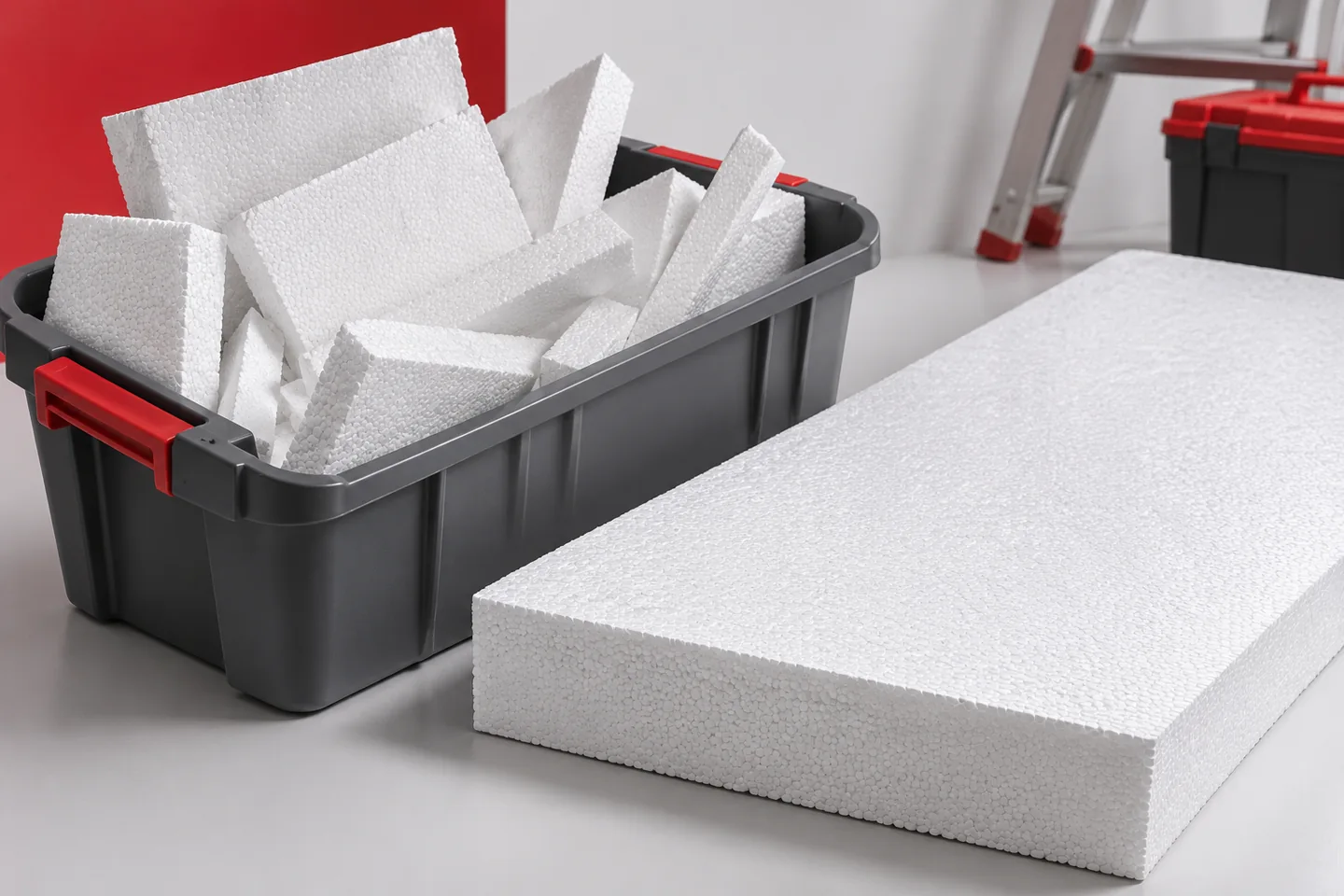
EPS can be recycled, but the route by which the waste is managed depends on its origin and purity. Offcuts from installation…
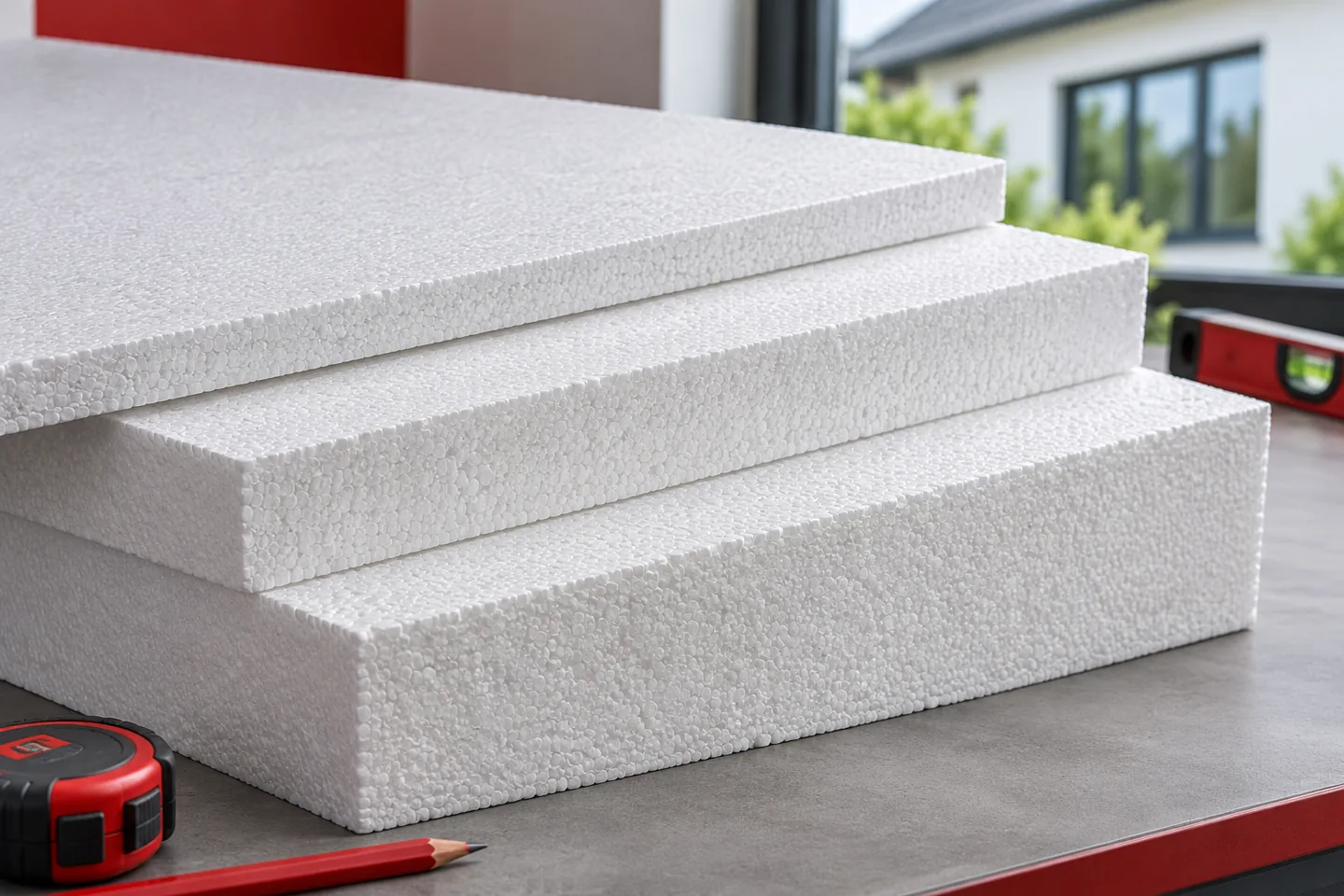
A thicker layer of polystyrene reduces heat transfer through a correctly constructed building element. Each additional centimetre, however, brings a progressively smaller…
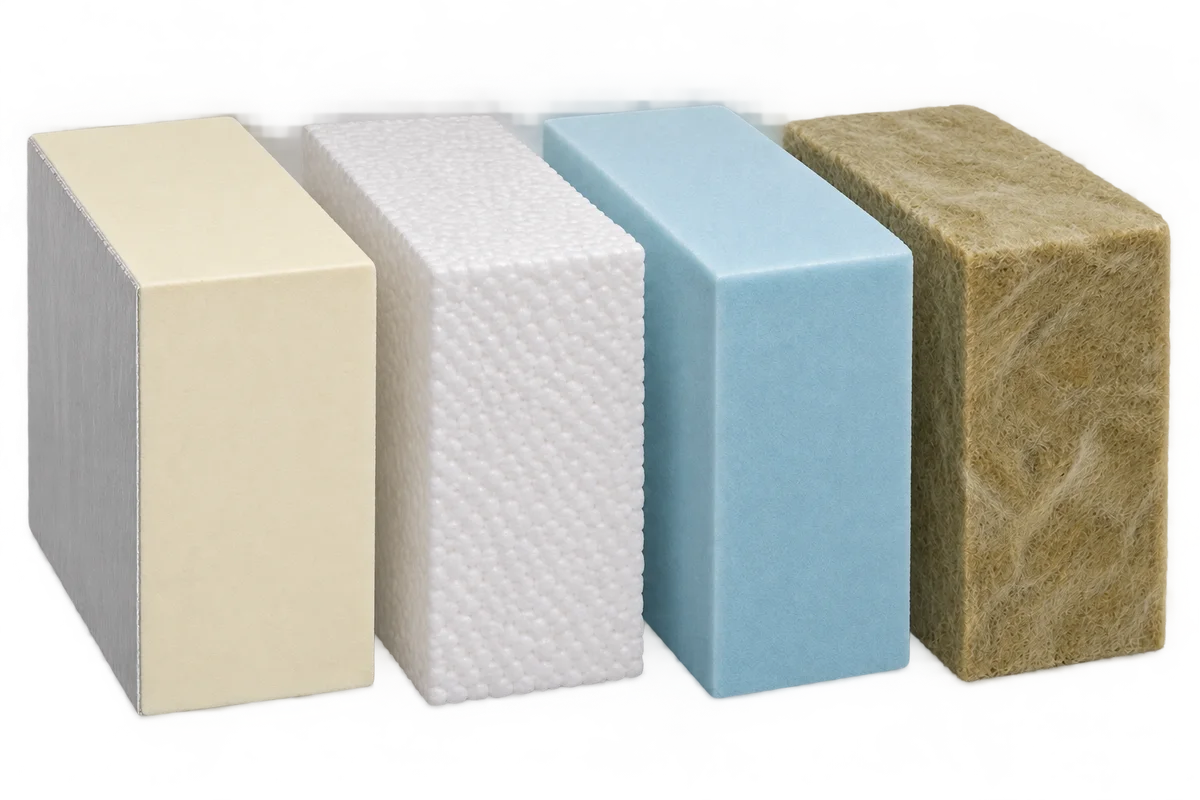
Different insulation materials can work together in one building element when each solves a specific problem. PIR can keep the build-up thin,…
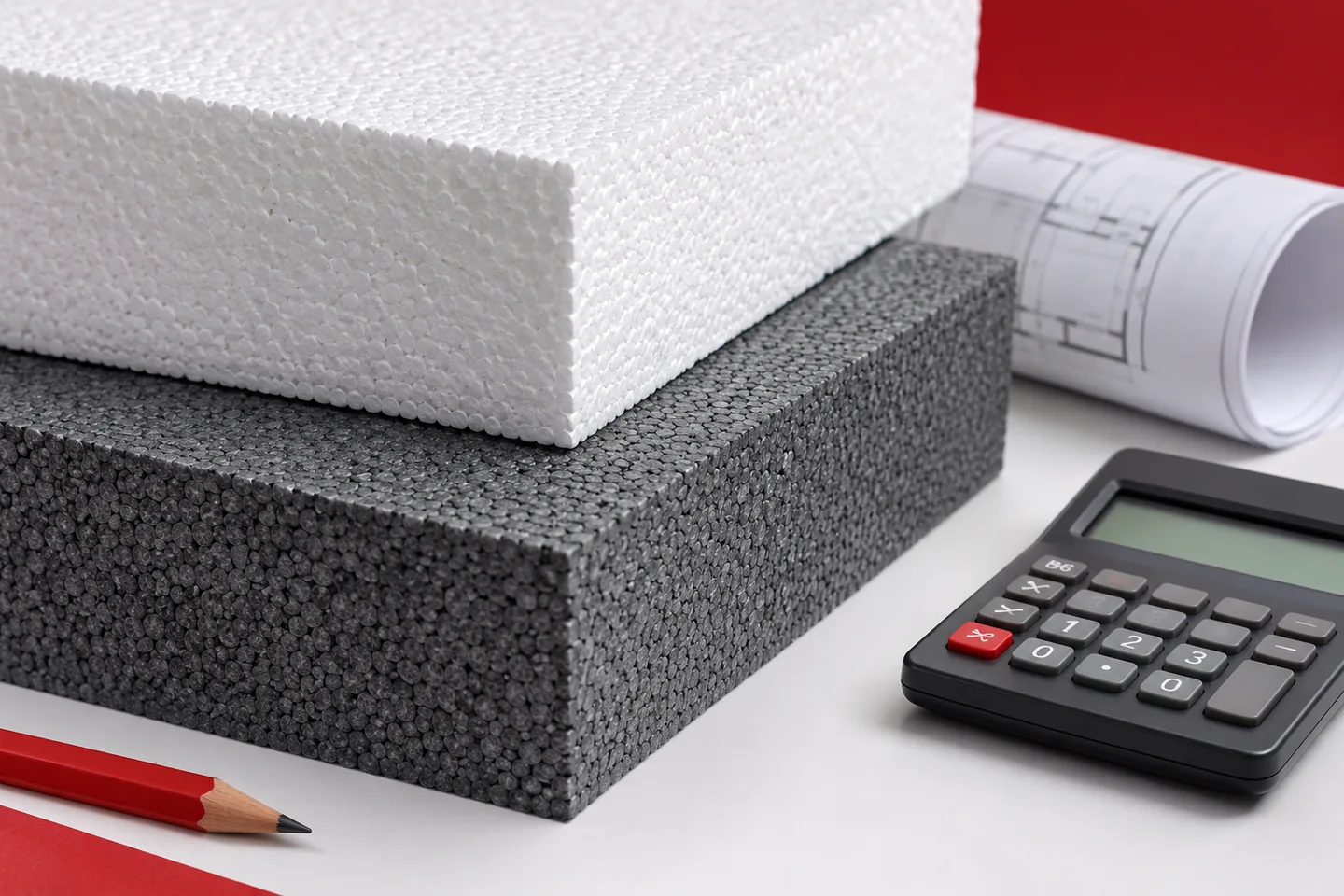
Changing conductivity from 0.040 to 0.031 W/(m·K) increases the thermal resistance of EPS at the same thickness. It may also permit thinner…
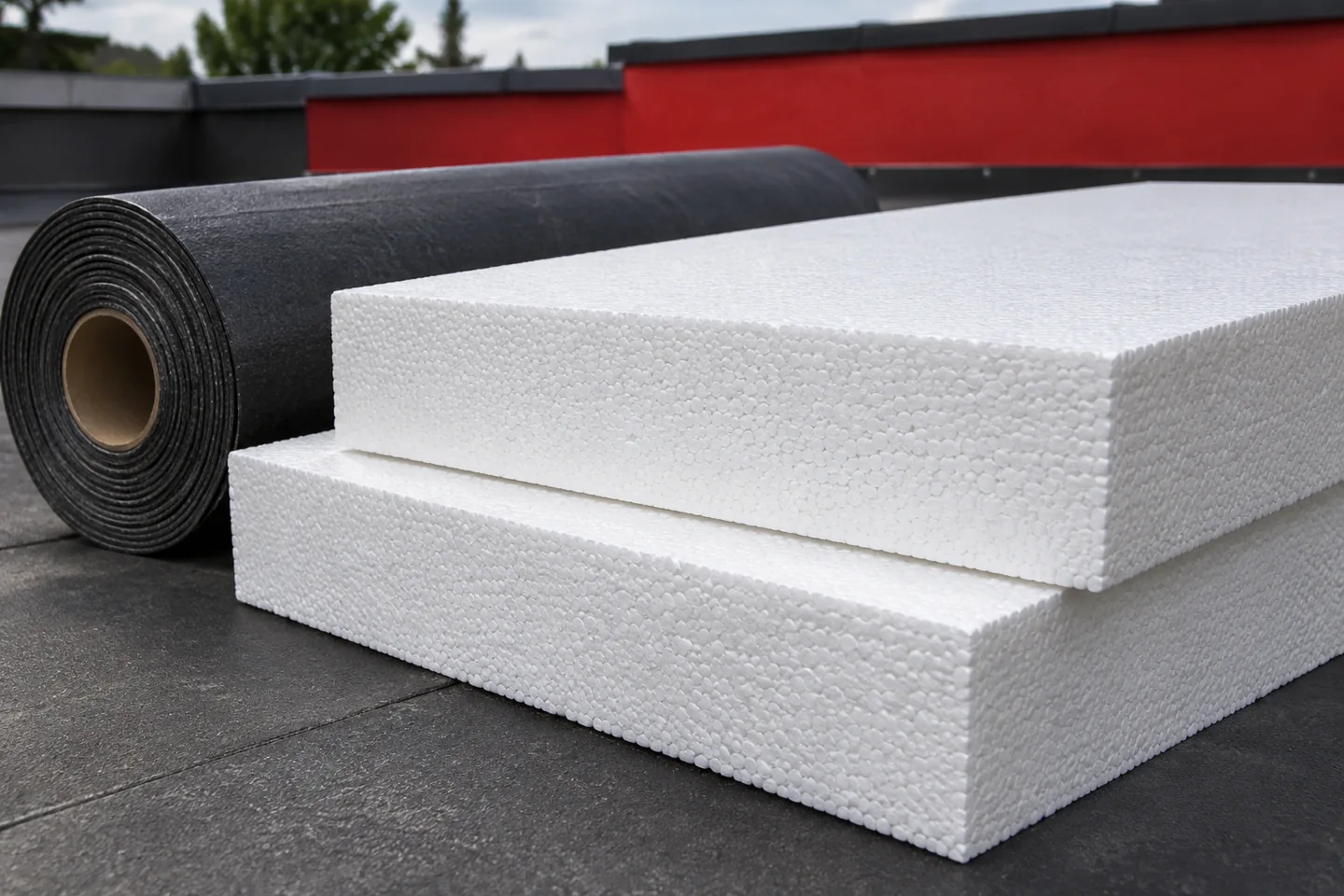
Expanded polystyrene is used on flat roofs, but it requires the right grade and a complete layer build-up. The boards must suit…
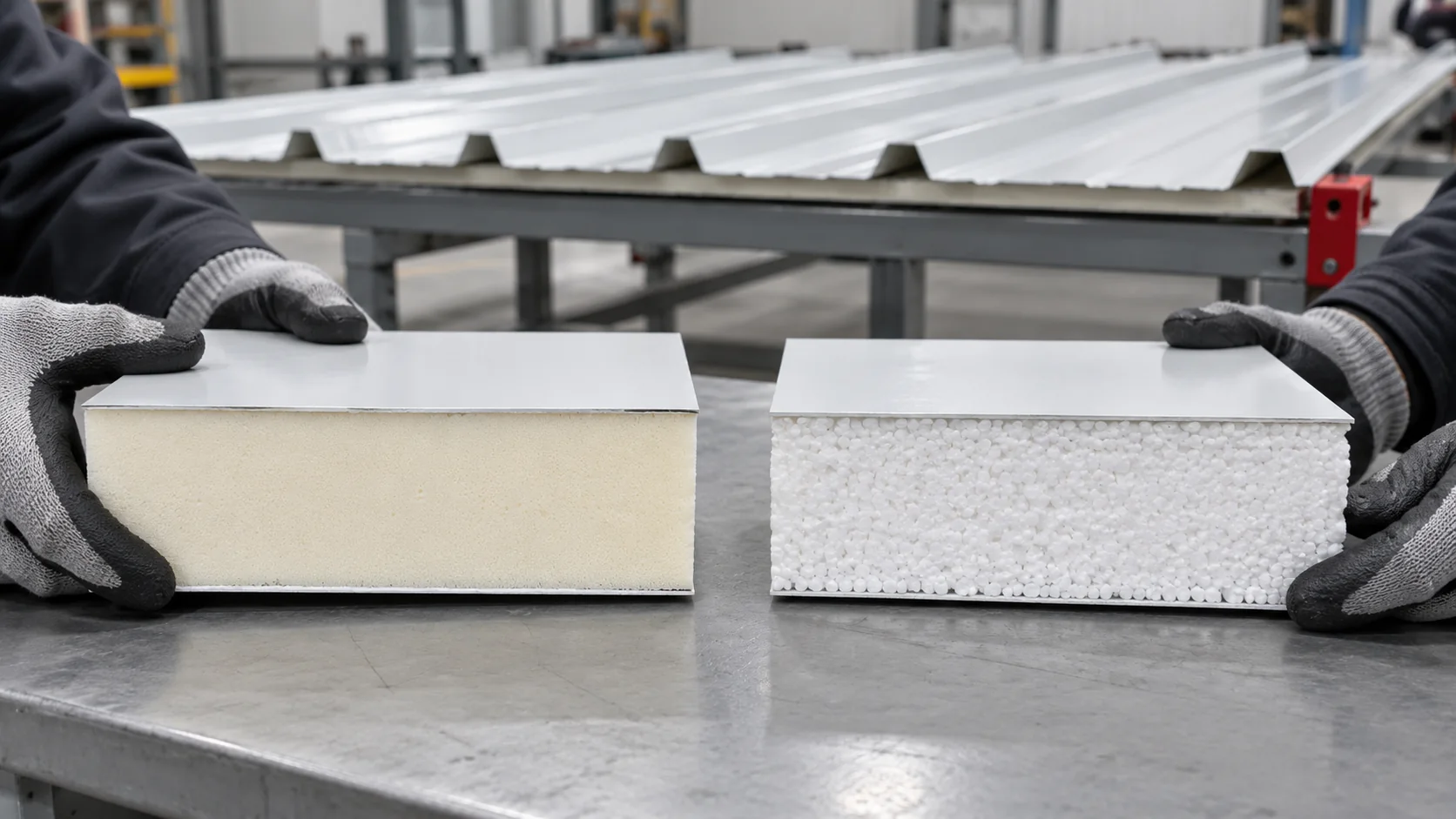
When replacing a roof, compare complete roof panels with two facings and a profile designed for roofing. The PIR or EPS core…
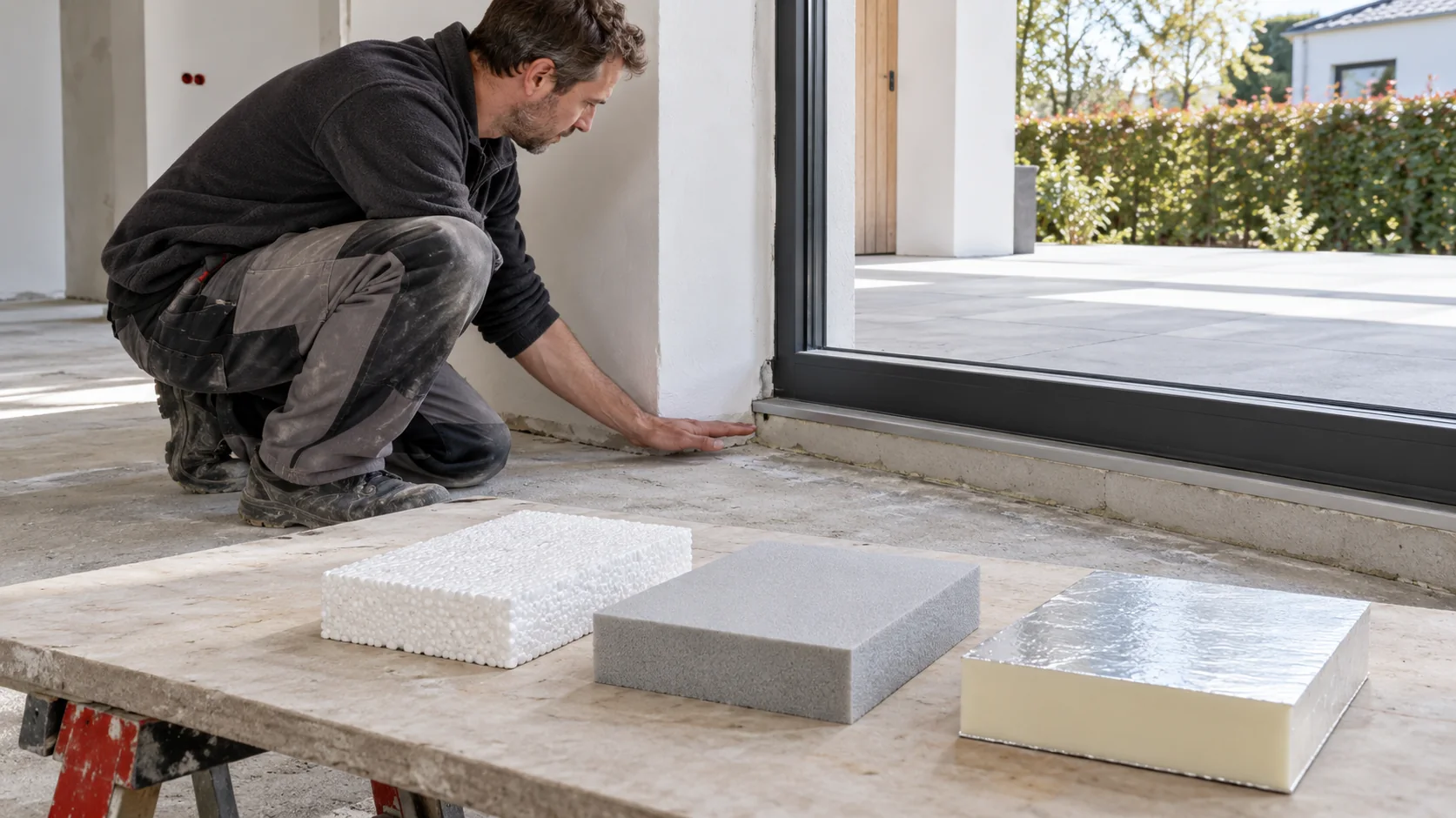
No single insulation material is best throughout a house. On a façade the render system matters, in a floor the loading, and…
Yes, a well-insulated house can overheat in summer. Polystyrene slows the flow of heat, but it does not remove the energy entering…