

EPS and insulation
Is EPS insulation suitable for a flat roof?
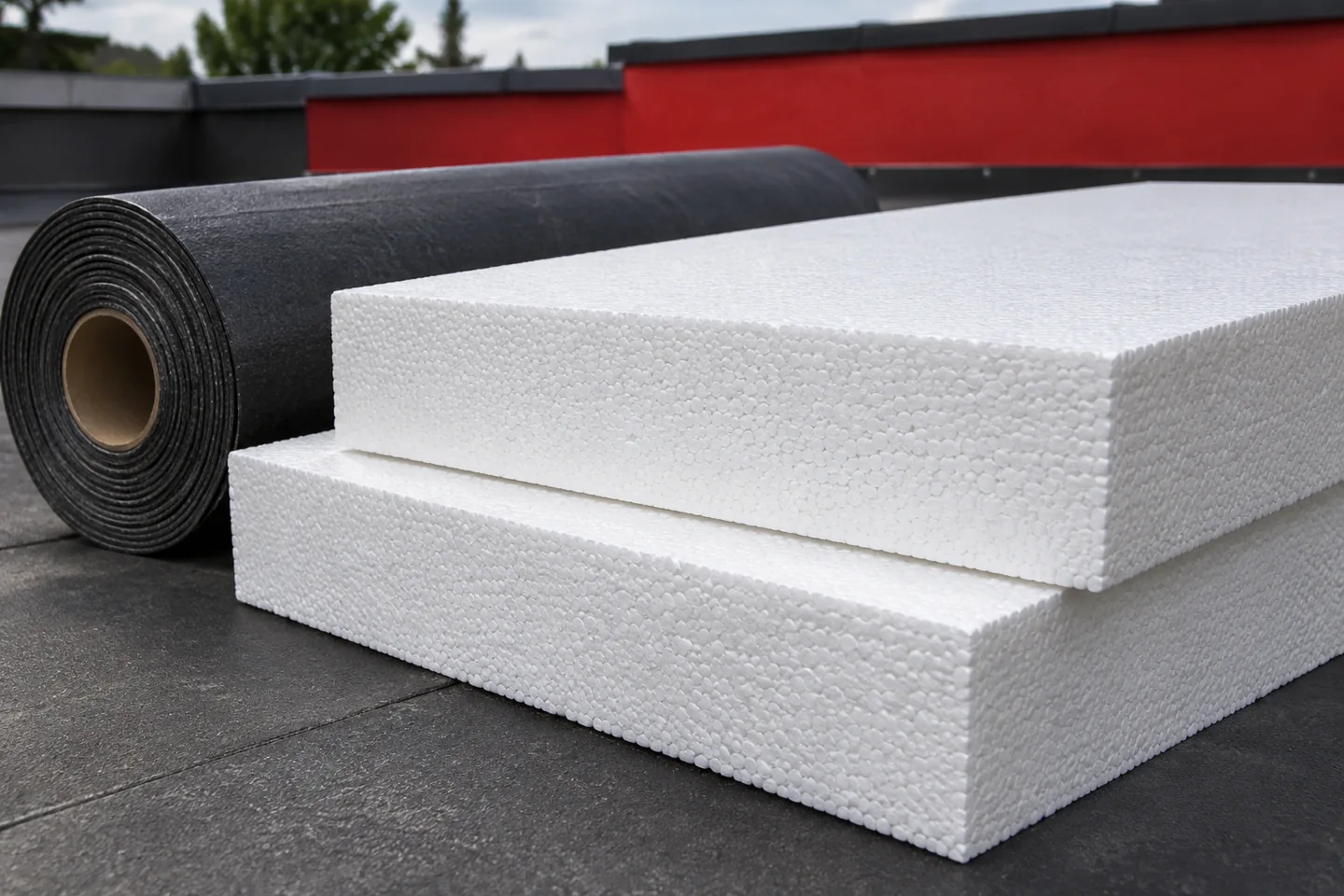
Expanded polystyrene is used on flat roofs, but it requires the right grade and a complete layer build-up. The boards must suit the loads, and the waterproofing, fixing and drainage must work together with the substrate. Choosing EPS does not come down to lambda alone. Moisture, localised pressure, roof servicing and the fire classification of the roof covering also matter. In a traditional flat roof the thermal insulation sits beneath the waterproofing. It can be laid on a suitably prepared substrate, and the layers are selected in accordance with the design. EPS is available as flat boards, tapered elements and boards with a bituminous felt facing. Each of these forms has a specific function and method of fixing.
In this article
In what build-up does EPS work on a roof?
An inverted roof has a different layer sequence, and the thermal insulation is exposed to water differently. Ordinary roof EPS should not simply be carried over to it. There are EPS grades with documentation covering such applications, but the specific build-up must be verified. The name “roof-floor” alone is not a sufficient basis for such a change.
What loads must be taken into account?
The insulation is subjected to the weights of the layers, equipment and people carrying out work. A photovoltaic installation or air-conditioning unit can increase pressures at selected points. For this reason it is not enough to calculate the average weight of the whole roof. The bearing areas and load-distributing elements must be checked, as well as the load-bearing capacity of the structure below.
CS(10) is a test parameter at 10% deformation. Permissible long-term performance requires a separate assessment. Deflection or localised indentation can impair drainage and put stress on the covering. Service walkways should allow access without damaging the insulation. It must not be assumed that every EPS roof can be walked on anywhere.
How to choose lambda and thickness?
The thickness results from the requirements for the whole roof and the lambda adopted. A lower thermal conductivity value helps where the height at the parapet or outlet is limited. It does not, however, remove the need for proper detailing. Too low a height of the waterproofing upstand may force a change of detail, even if the calculated thermal resistance is good.
In a tapered roof the thickness may vary across the surface. The thinnest points must be taken into account, along with the correct method of calculating the component. A simple average of two heights is not always sufficient. It is worth knowing the position of the outlets, the lengths of the falls and the constraints at thresholds and skylights already at the design stage.
Can expanded polystyrene form a fall?
Yes, cut EPS elements are used to direct water to outlets or edges. The wedges are designed for a specific roof plan. They should be marked and have a laying plan, because turning an element the wrong way can create ponding. The fall is therefore not a decorative slope but part of the drainage system.
It is worth checking the continuity of drainage also at equipment and parapet corners. The insulation should not close the water path or create local thresholds. In a refurbishment the actual deflections and unevenness of the old substrate must be taken into account. A design prepared without surveying the existing roof may fail to reproduce its actual geometry.
What determines tightness and safety?
The waterproofing is selected taking into account contact with EPS. Not every membrane or substance can lie directly on polystyrene. Sometimes a separating layer is needed. Work involving heat requires a technology intended for the whole covering. Exposed polystyrene must not be treated as a substrate resistant to flame.
The reaction-to-fire class of the board does not by itself describe the fire resistance of the roof. The classification for external fire exposure also relates to a specific roof covering. The complete layers, the substrate and the fixing details must be checked. Replacing one element with a seemingly similar one may go beyond the scope of the documentation.
When is an EPS solution justified?
EPS can be a good choice when its properties match the design and the build-up is correctly executed. The low weight of the material makes transport onto the roof easier, but light packs must be protected from the wind. Work organisation should allow successive areas to be protected quickly against rain. It is not worth exposing a larger area than can be safely closed.
EPS materials for roofs are offered by, among others, Swisspor, Styropmin, Termo Organika and Knauf Therm. Individual boards differ in parameters and permitted application.
Before buying, compare the insulation, covering, fixings and detailing as one set. Also ensure that the outlets and service penetrations can be inspected during use. Efficient water drainage and rapid repair of minor damage are just as important for the durability of the roof as the initial choice of a good board.
7 branches. Materials closer to your project.

Free quote
Materials for your project
You may also find useful…
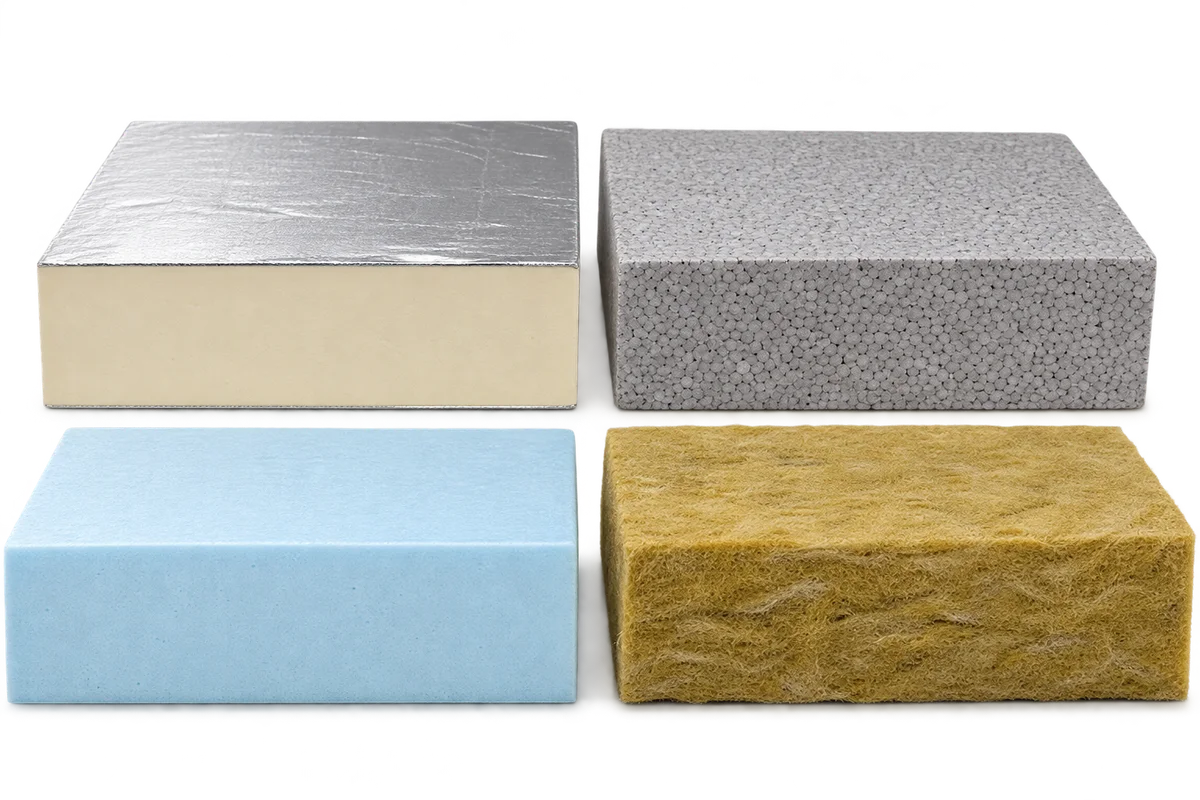
Insulation has a different job in each part of a house. PIR is useful where thickness is limited. EPS comes in grades…
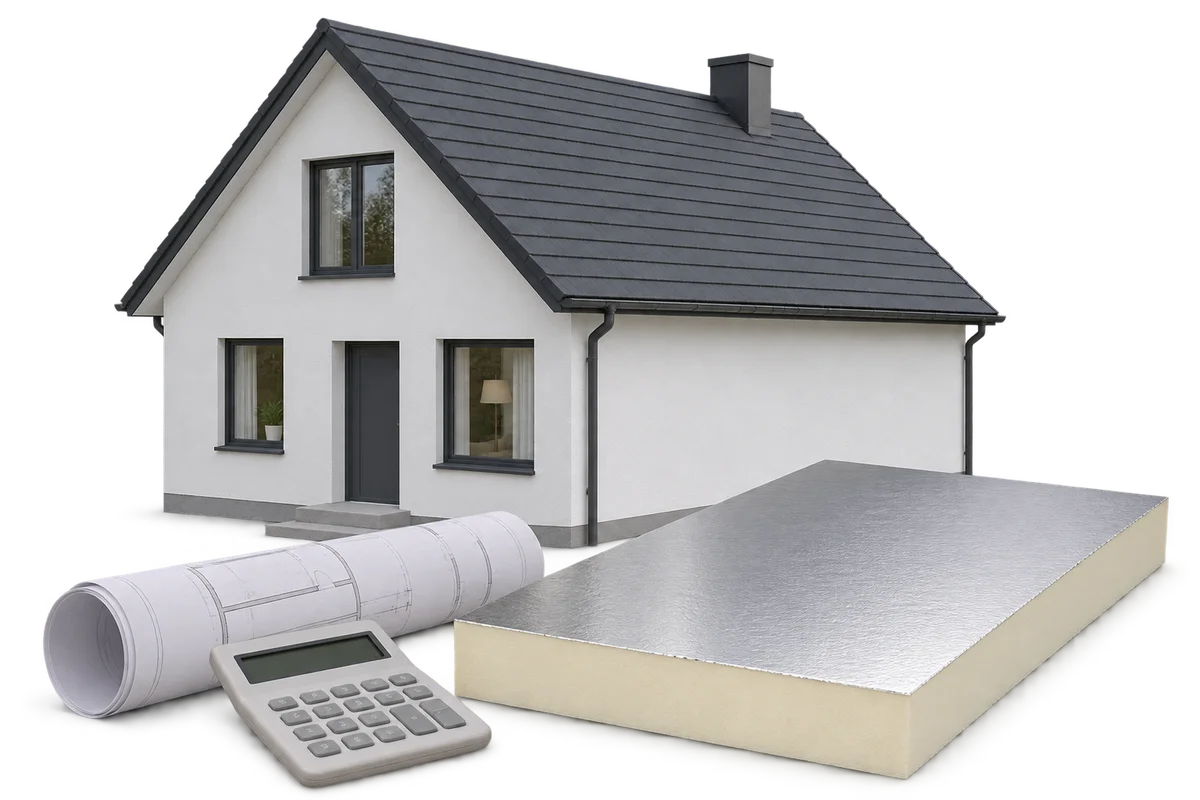
The cost of insulating a home includes materials, preparation, installation and finishing the junctions. The price per square metre of board tells…
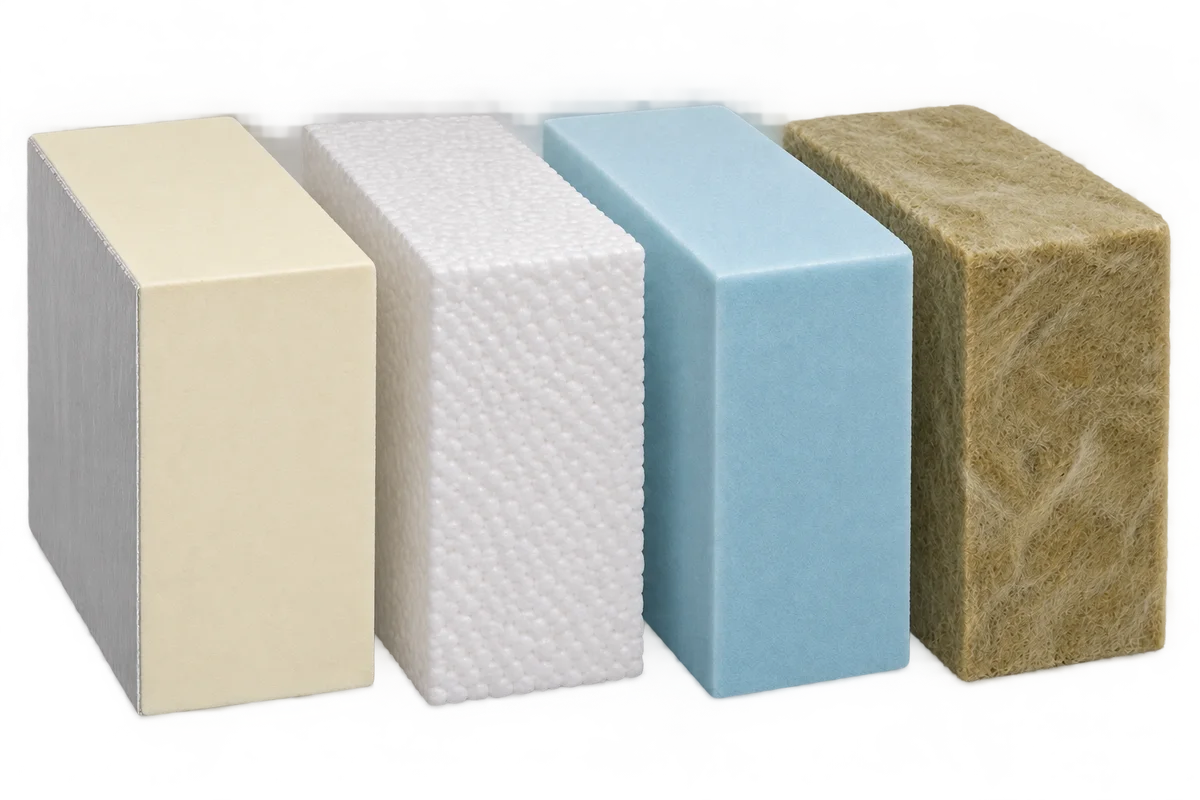
Different insulation materials can work together in one building element when each solves a specific problem. PIR can keep the build-up thin,…
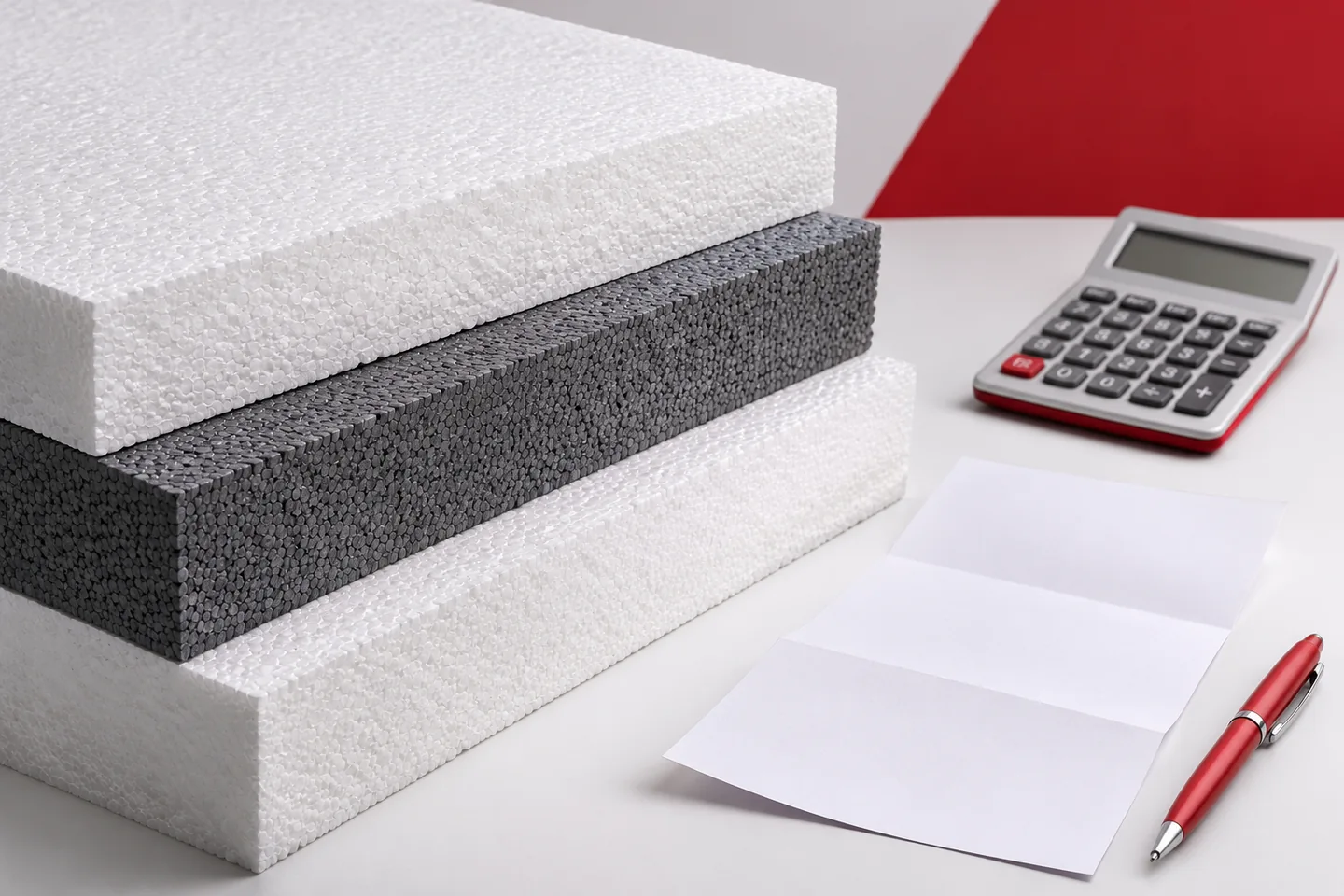
EPS price comparisons make sense only at similar thermal performance and for compatible applications. A cheaper cubic metre may require a thicker…
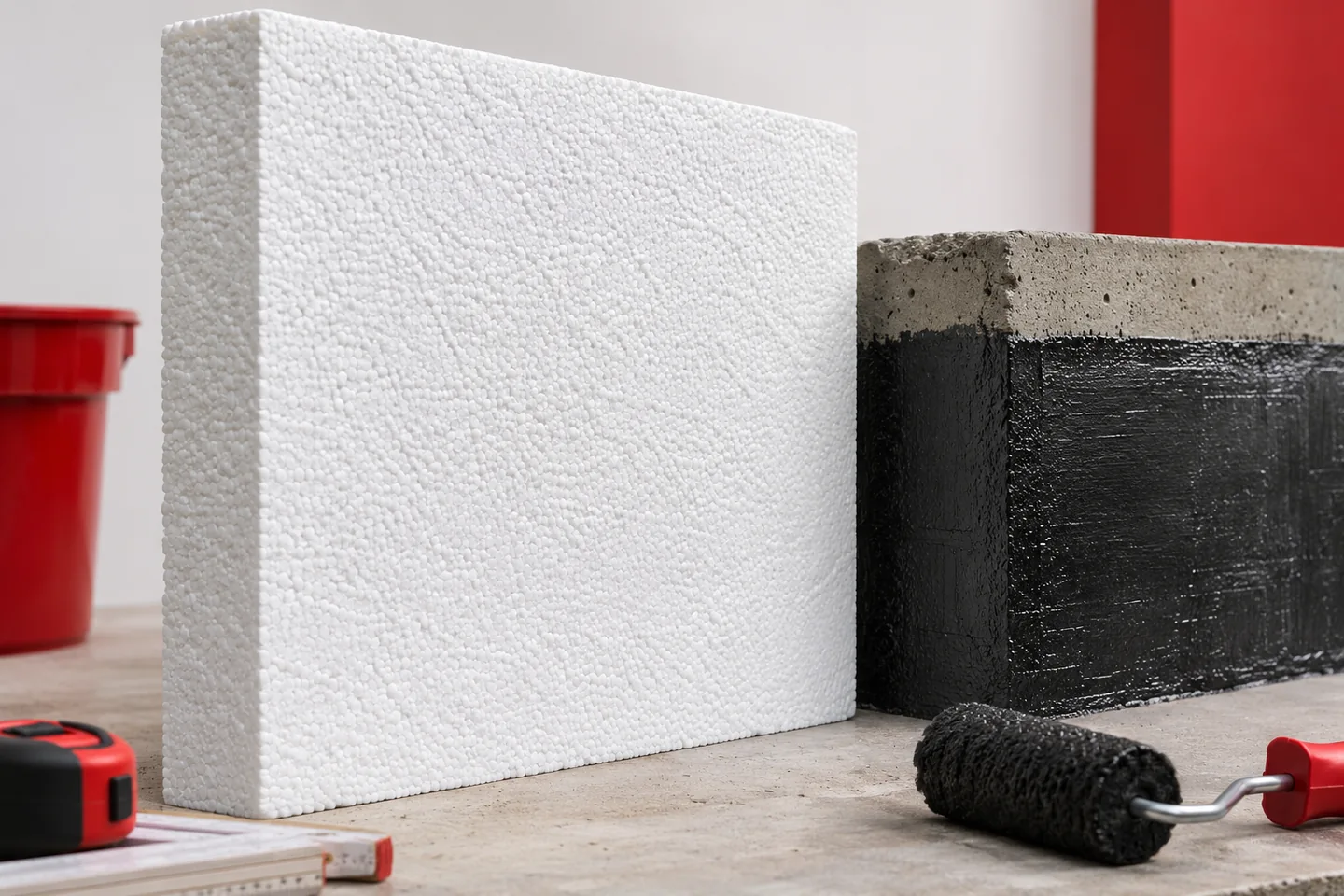
A house without a basement also needs well-planned foundation insulation. The most important thing is to connect the wall insulation with the…
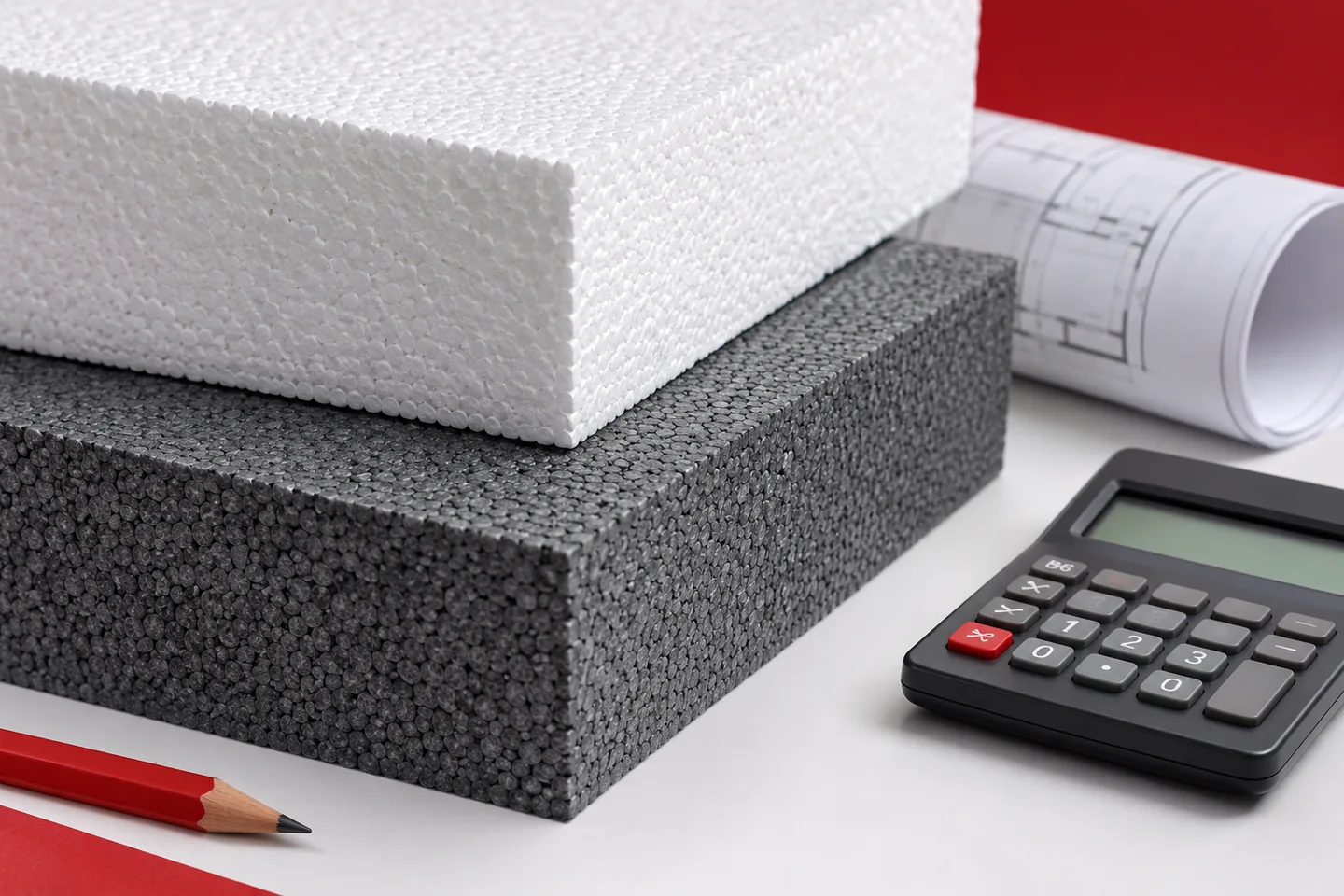
Changing conductivity from 0.040 to 0.031 W/(m·K) increases the thermal resistance of EPS at the same thickness. It may also permit thinner…
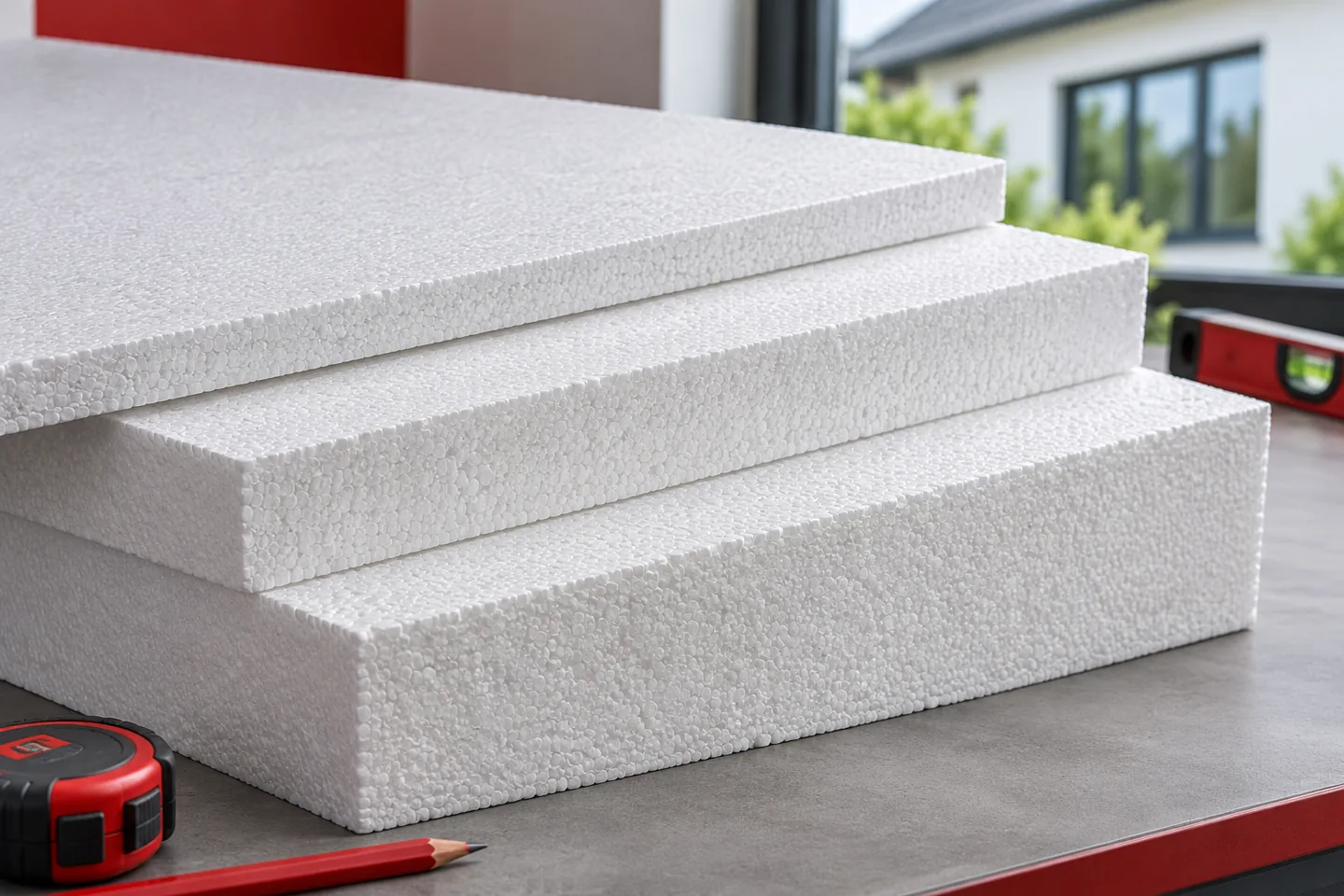
A thicker layer of polystyrene reduces heat transfer through a correctly constructed building element. Each additional centimetre, however, brings a progressively smaller…
Polystyrene alone is not a sufficient explanation for damp and mould in a house. The source of the water, the ventilation and…