

EPS and insulation
What changes when EPS conductivity falls from 0.040 to 0.031?
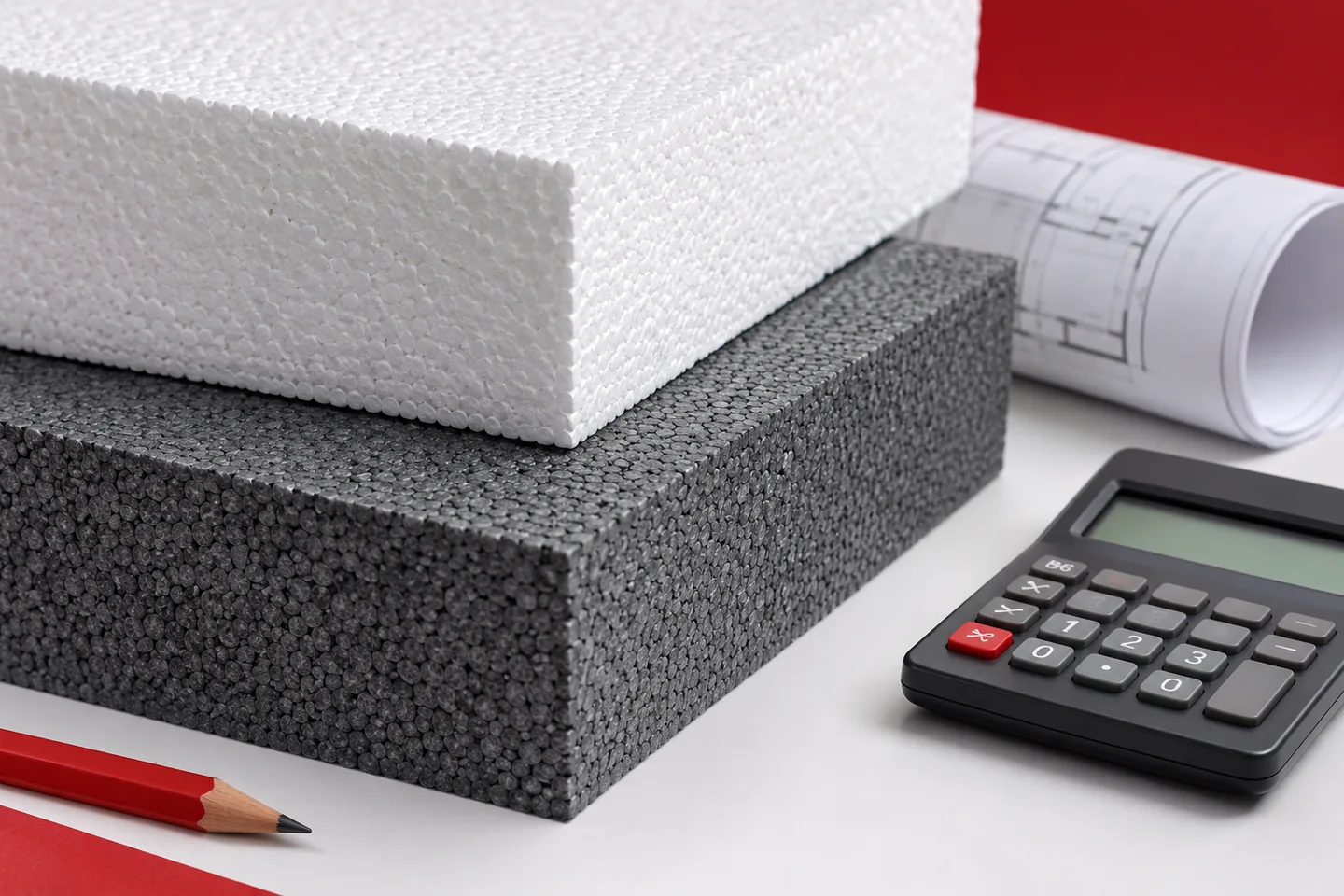
Changing conductivity from 0.040 to 0.031 W/(m·K) increases the thermal resistance of EPS at the same thickness. It may also permit thinner insulation for a similar result, but heating bills do not fall by the same percentage. Separate the material property, layer resistance and whole-building heat loss in calculations. Thermal conductivity λ describes a material property. The lower it is, the harder heat passes through an equally thick layer. Its unit is W/(m·K). EPS labels usually give declared conductivity λD, allowing comparison under specified reference conditions. It is neither indoor temperature nor a measure of the home’s energy use.
In this article
What exactly does conductivity describe?
Conductivity cannot tell you how many degrees cooler a room will be in summer. Design calculations may need values reflecting actual service conditions. The label alone therefore cannot replace assessment of the whole building element.
How much does an equally thick layer gain?
For 20 cm EPS at 0.040, calculated thermal resistance is 0.20/0.040 = 5.00 m²·K/W. At 0.031 and unchanged thickness, it is approximately 6.45 m²·K/W. Resistance rises by around 29%. This correctly describes the insulation layer alone under the assumed parameters.
Meanwhile, conductivity falls by 22.5%. These different percentages are not an error. Resistance is thickness multiplied by the reciprocal of conductivity. When a supplier quotes a percentage improvement, ask whether it refers to conductivity, layer resistance or energy use. Each describes something different.
How does the wall’s U-value change?
Assume, for illustration, that masonry, other layers and surface resistances total 1.00 m²·K/W. Adding the stated 20 cm EPS at 0.040 gives total resistance of 6.00 and U of approximately 0.167 W/(m²·K). At 0.031, resistance becomes about 7.45 and U falls to approximately 0.134 W/(m²·K).
In this simplified example, U falls by around 19.5%. Corrections and thermal bridges at details are excluded. It nevertheless shows why the material’s percentage improvement does not transfer directly to the wall. Actual masonry may have a very different resistance, and fixings can affect the corrected Uc value.
Can the thickness be reduced instead?
You can compare thicknesses offering equal resistance. Starting from 20 cm EPS at 0.040, the equivalent is 15.5 cm at 0.031. The formula is simple: multiply the old thickness by the ratio of new to old conductivity. The result applies only to the insulation layer.
In practice, select an available thickness and recheck the design. A thinner build-up can help at a window or eaves. It must not weaken the plinth, interrupt insulation at the foundation or introduce a board lacking required mechanical properties. Any material change must remain compatible with the system and complete element.
Why will heating bills not fall by 22.5%?
A house also loses heat through its roof, windows, floor, thermal bridges and air exchange. Lowering the conductivity of wall EPS changes only part of that balance. If walls accounted for a small share of losses, the overall effect will also be limited. Solar gains, heat from occupants and heating efficiency matter too.
Cost also depends on tariffs, indoor temperatures and weather. A fair comparison keeps these conditions similar. Do not promise a particular annual saving from two figures on a pack. Comparing options can, however, use heat-loss calculations made with the same assumptions.
Seasonal comparisons need weather data and heating duration. Simply comparing bills from two different winters cannot establish renovation effectiveness. Comparing consumption adjusted for outdoor conditions and maintained indoor temperature is more useful.
How can this difference guide purchasing?
Choose the objective first: retain thickness and improve performance, or retain resistance and gain space. Then compare the finished layer’s cost per square metre. Also check façade TR, floor load resistance and water absorption in damp zones. Conductivity does not settle those requirements.
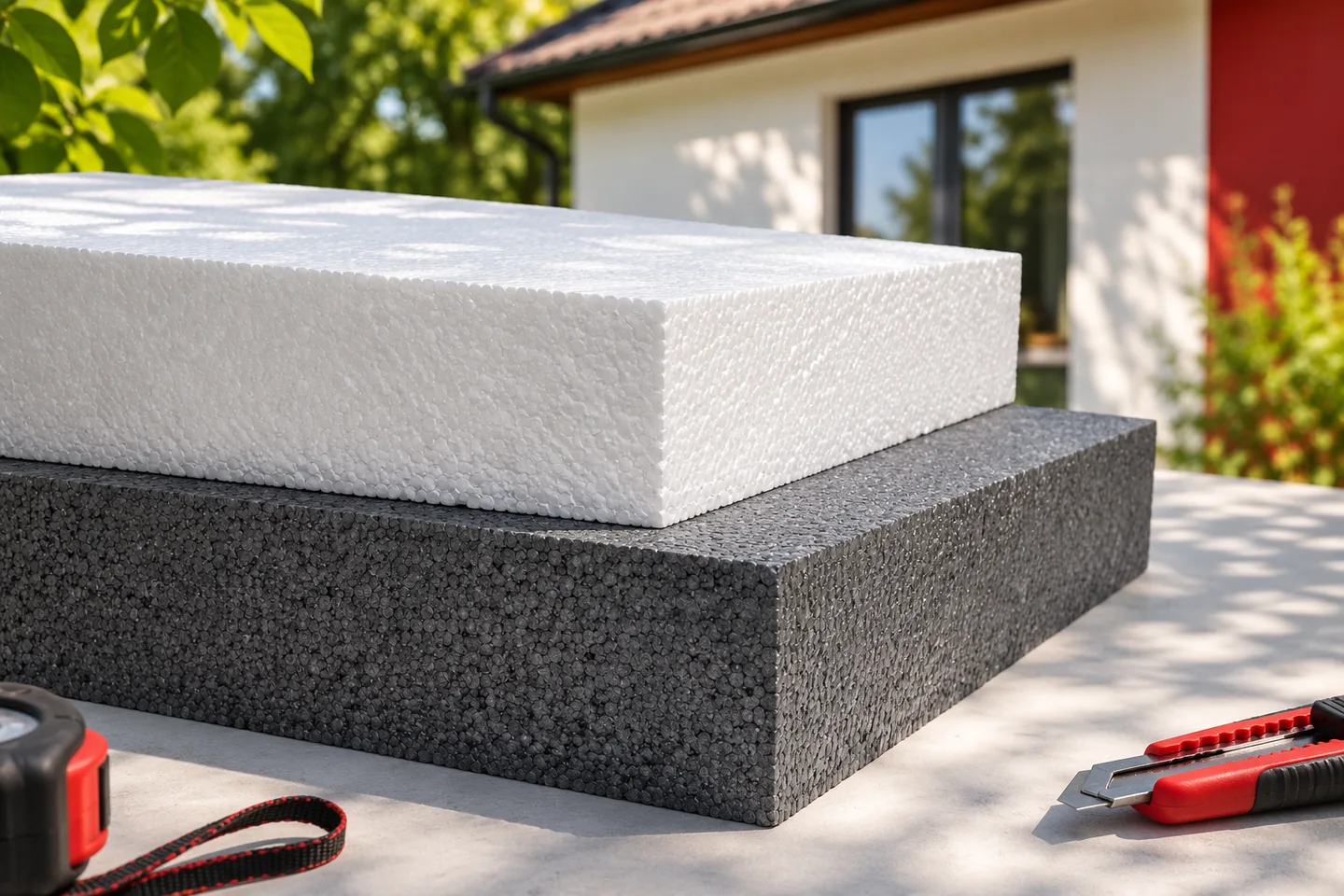
Manufacturers of EPS boards with different conductivity values include Swisspor, Termo Organika, Arbet and Yetico. Read the specific variant’s data from its documentation.
A well-prepared offer gives thickness, conductivity, quantity and the properties required for the location. A lower λ then becomes a measurable advantage, without vague promises of a warmer home or percentages that cannot be related to actual consumption.
7 branches. Materials closer to your project.

Free quote
Materials for your project
You may also find useful…
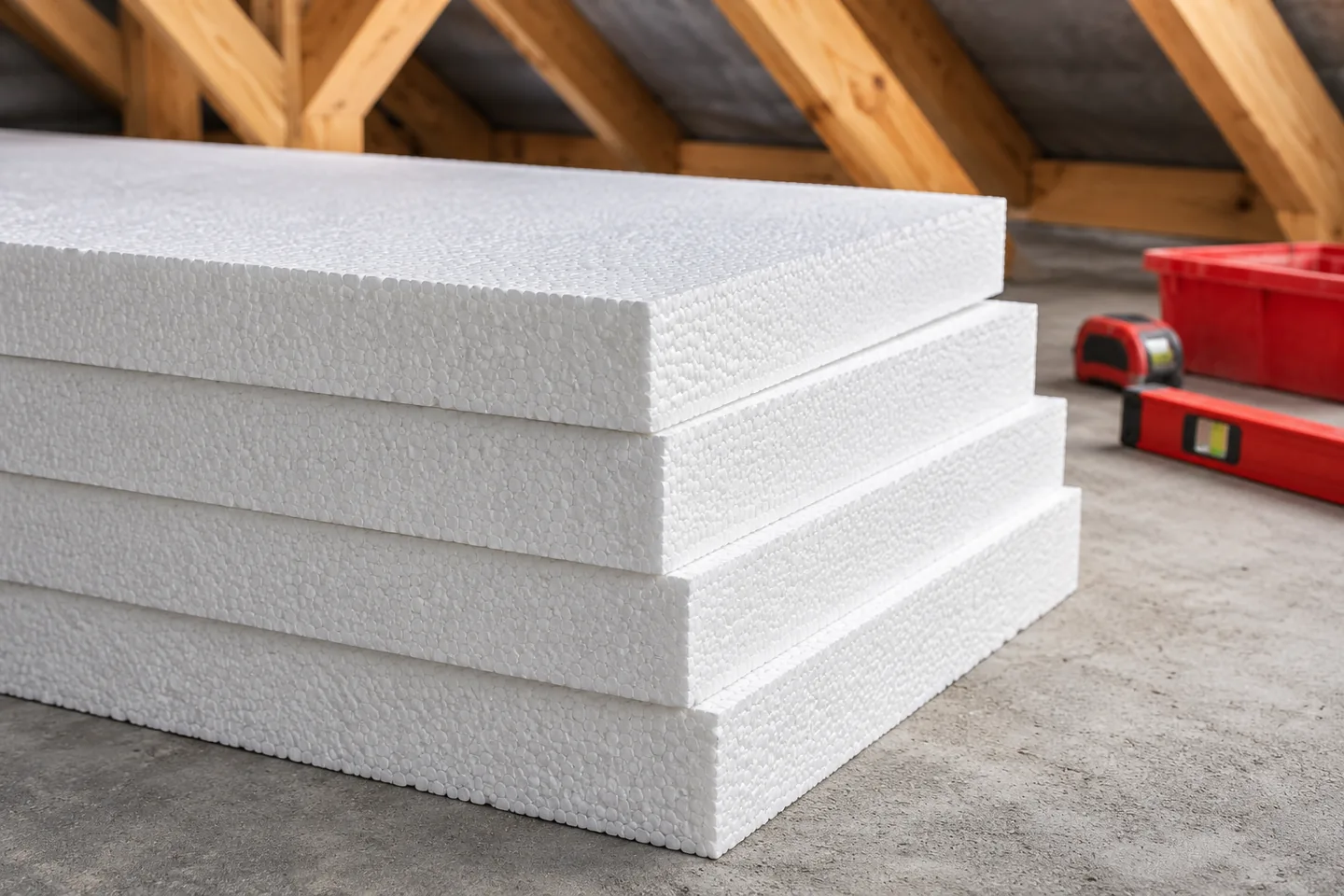
When the loft remains unheated, insulating the ceiling can make more sense than insulating the roof slopes. In that case it protects…
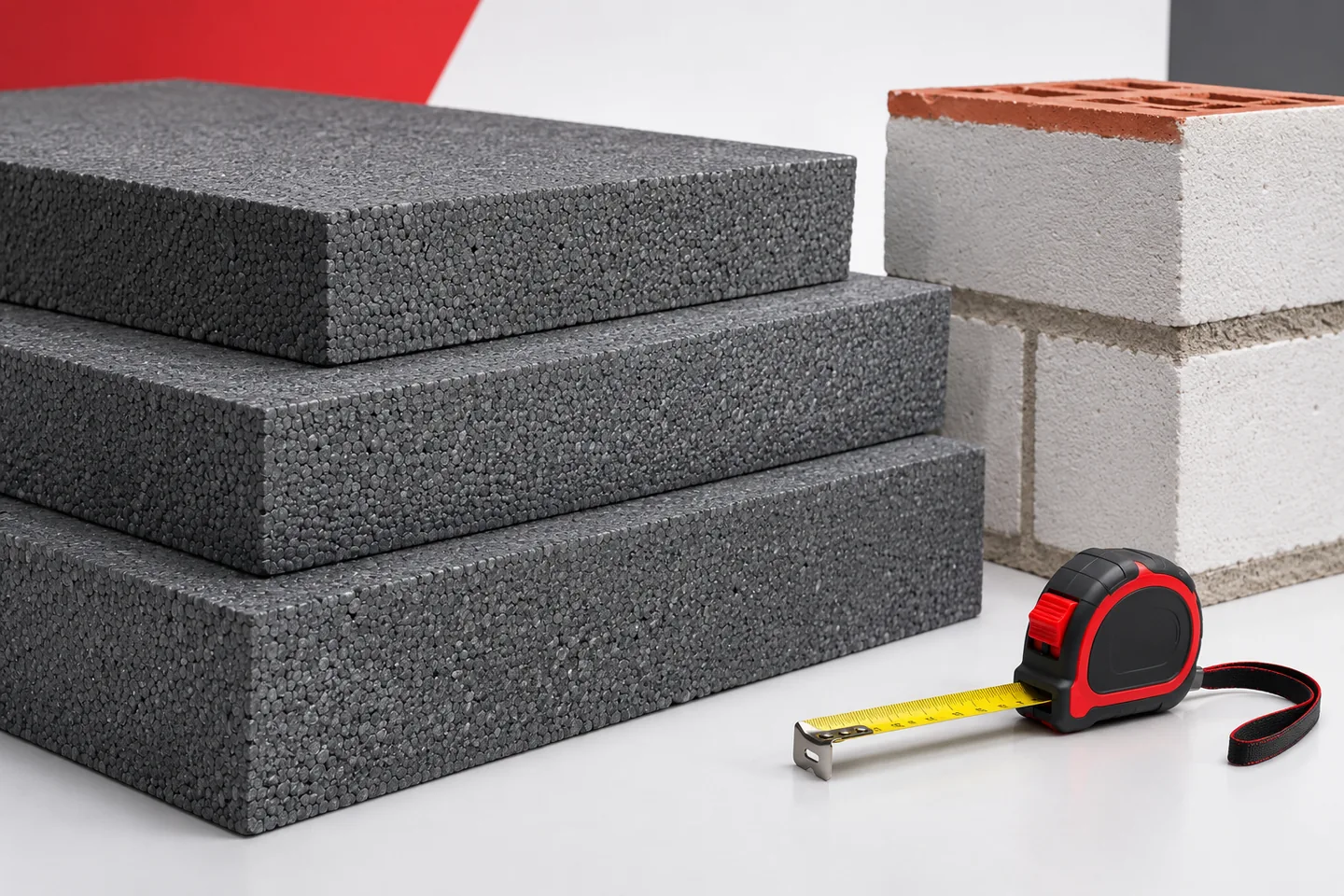
The question of how much polystyrene is needed has two parts. First, the thickness required to achieve proper thermal protection must be…
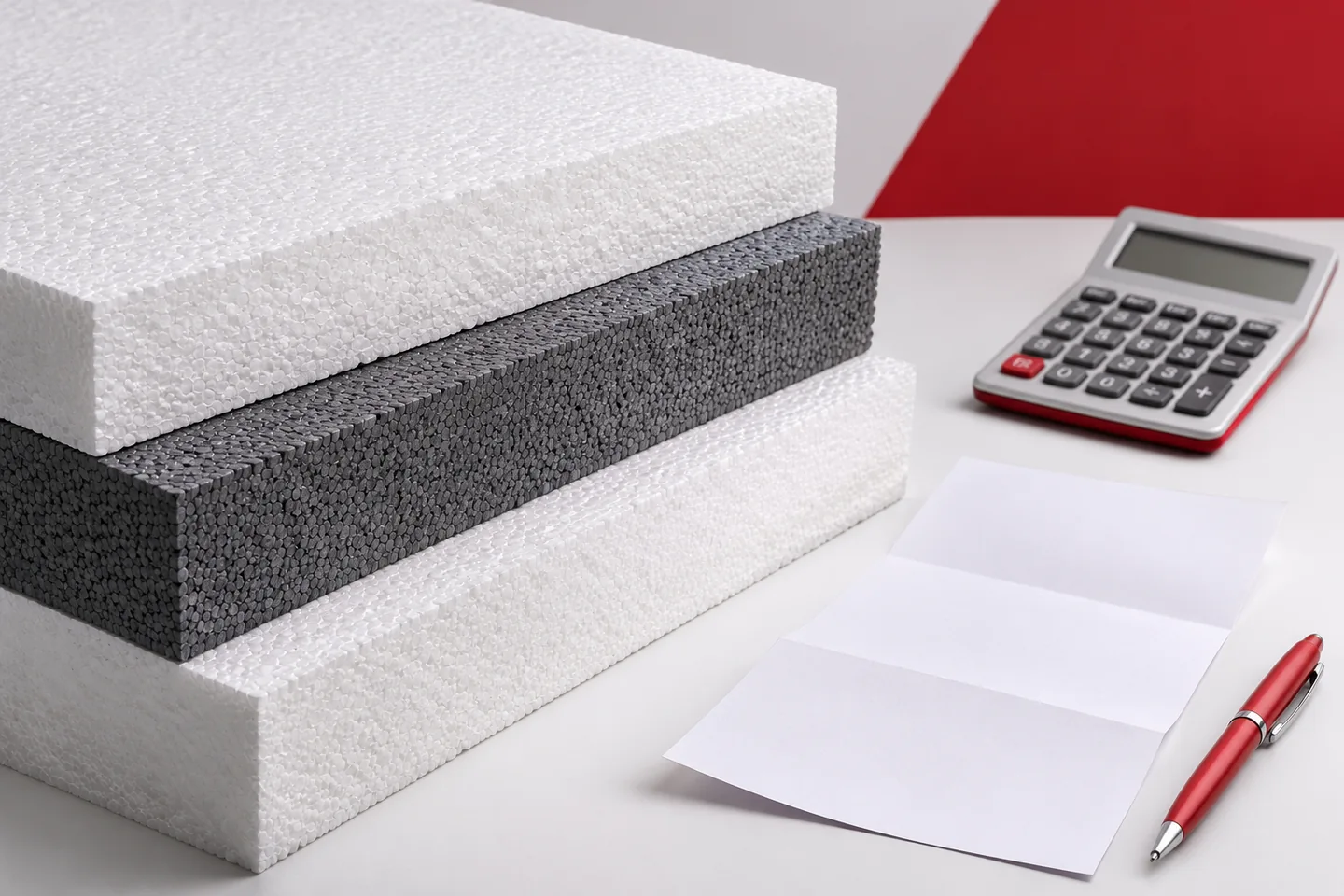
EPS price comparisons make sense only at similar thermal performance and for compatible applications. A cheaper cubic metre may require a thicker…
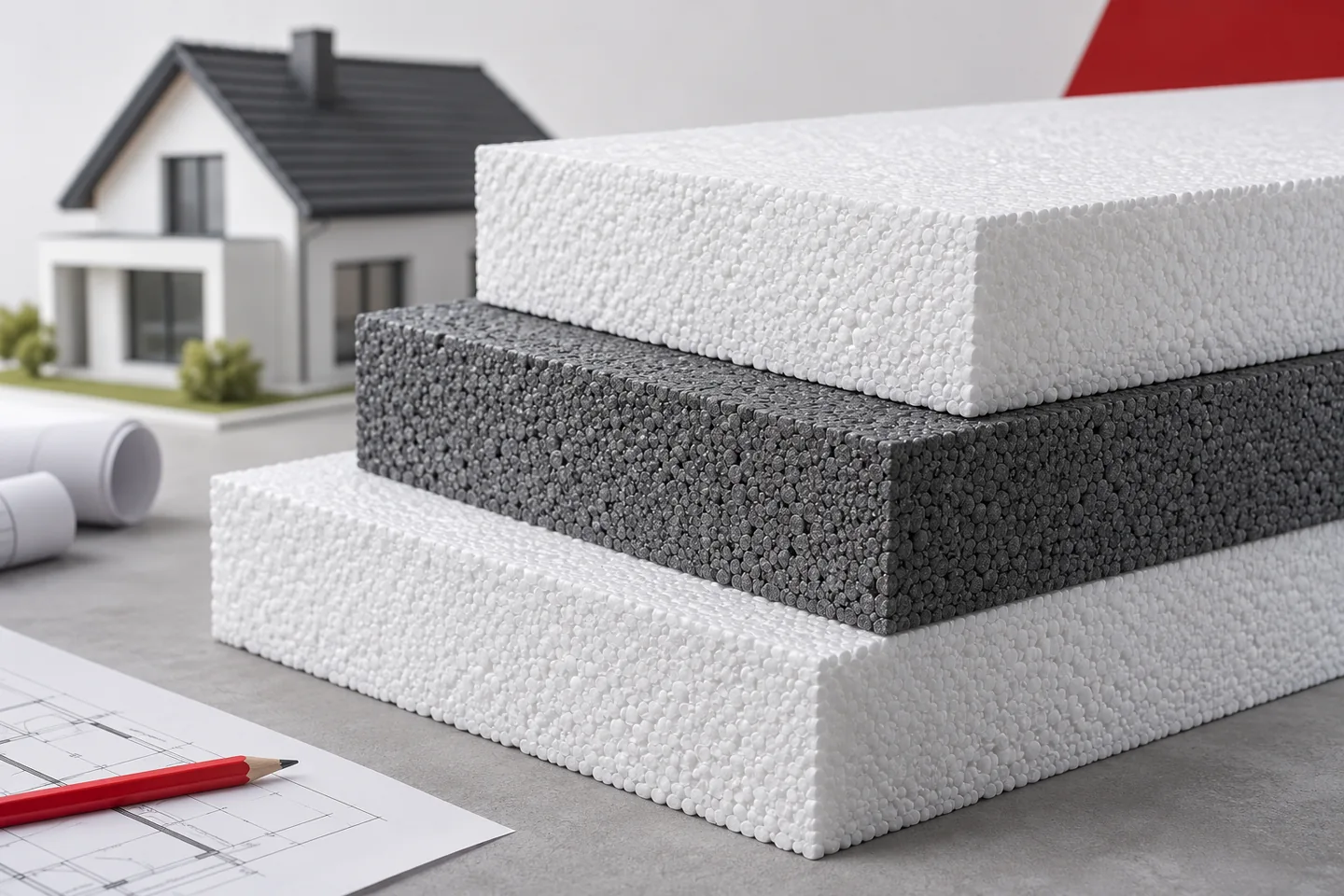
Polystyrene is selected to suit its location in the building. On the façade, conformity with the ETICS system matters; beneath the floor…
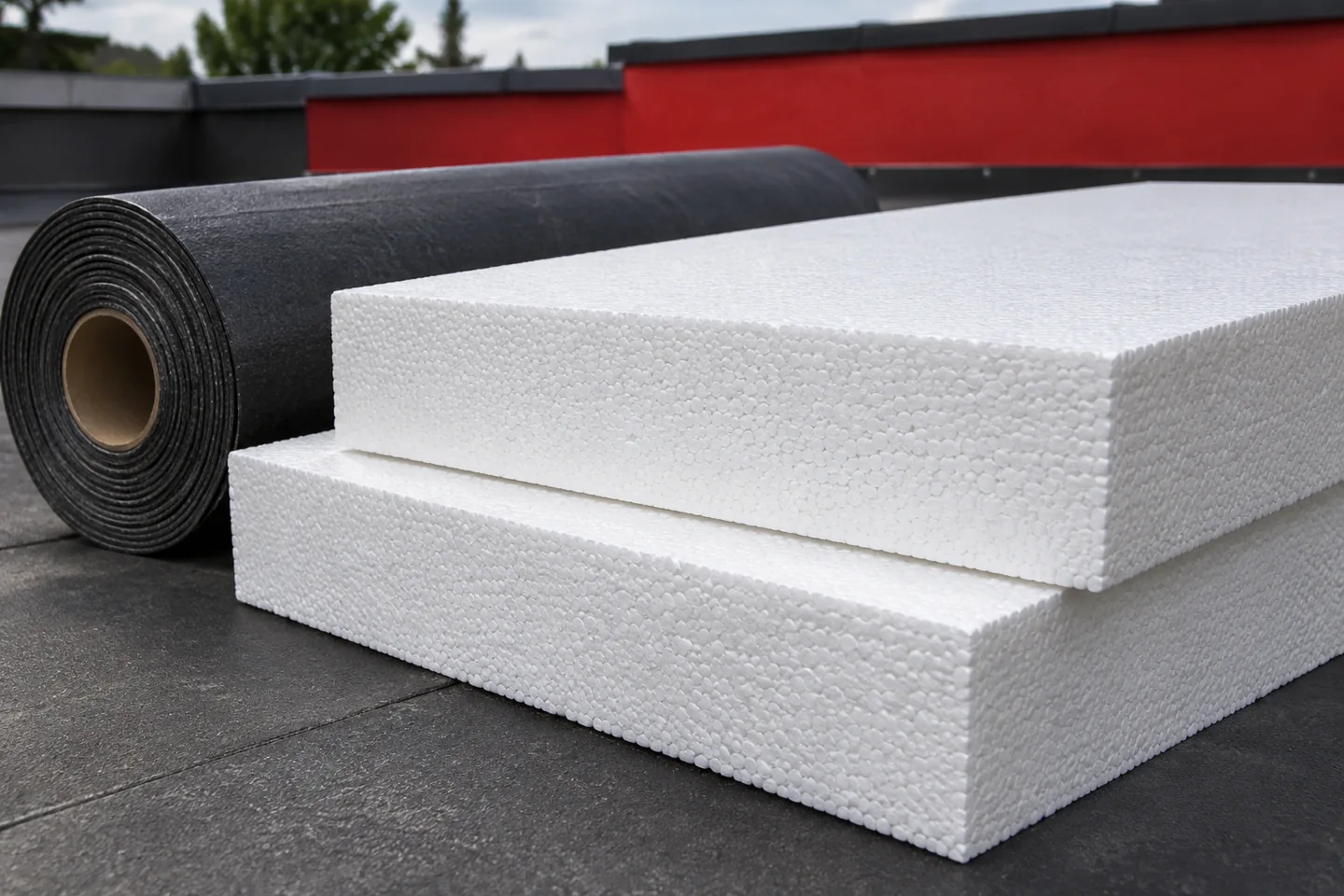
Expanded polystyrene is used on flat roofs, but it requires the right grade and a complete layer build-up. The boards must suit…
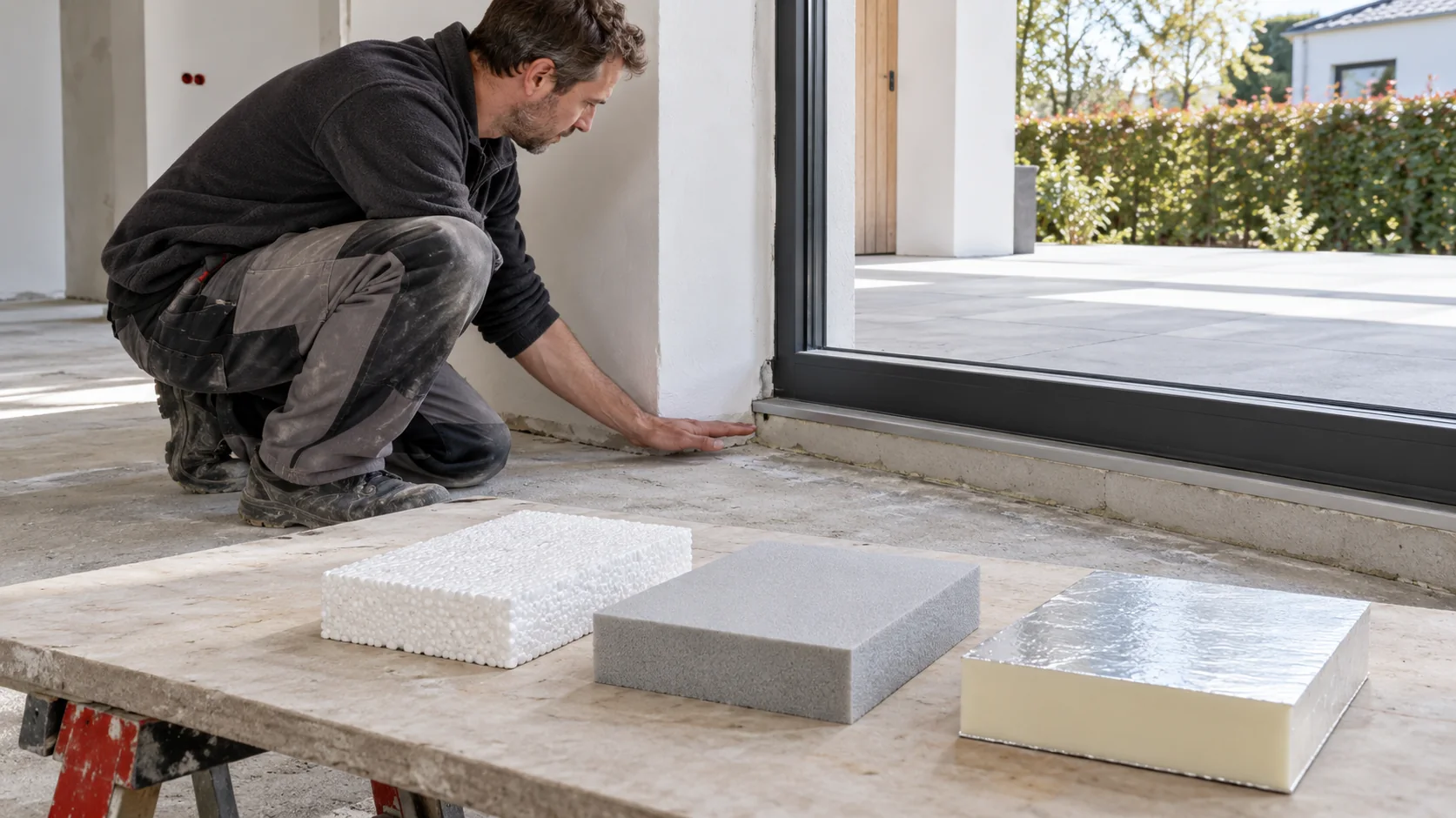
No single insulation material is best throughout a house. On a façade the render system matters, in a floor the loading, and…
A thicker layer of polystyrene reduces heat transfer through a correctly constructed building element. Each additional centimetre, however, brings a progressively smaller…
Yes, a well-insulated house can overheat in summer. Polystyrene slows the flow of heat, but it does not remove the energy entering…