

Roof coverings
Roof coverings compared: how materials differ in practice
Roof coverings differ in weight, format, method of joining and required pitch. Tile-effect metal roofing, trapezoidal steel sheet, roof tiles, shingles and membrane suit different conditions. A roof sandwich panel adds a layer of insulation to the covering. To choose a material, you have to compare the complete roof, not just the appearance of its outer surface. The covering shelters the building from precipitation, but does not always on its own provide all the necessary functions. Beneath it there may be underlay, ventilation, insulation and structure. The roof must carry loads and control the flow of heat and moisture. For this reason, comparing two materials requires the same scope. The price of sheet metal on battens and the price of a complete insulated panel do not describe equivalent assemblies.
In this article
What do we call the covering, and what the whole roof?
The covering shelters the building from precipitation, but does not always on its own provide all the necessary functions. Beneath it there may be underlay, ventilation, insulation and structure. The roof must carry loads and control the flow of heat and moisture.
For this reason, comparing two materials requires the same scope. The price of sheet metal on battens and the price of a complete insulated panel do not describe equivalent assemblies. First the function of the building and the composition of the building envelope are established. Only then can cost, weight and installation be reliably compared.
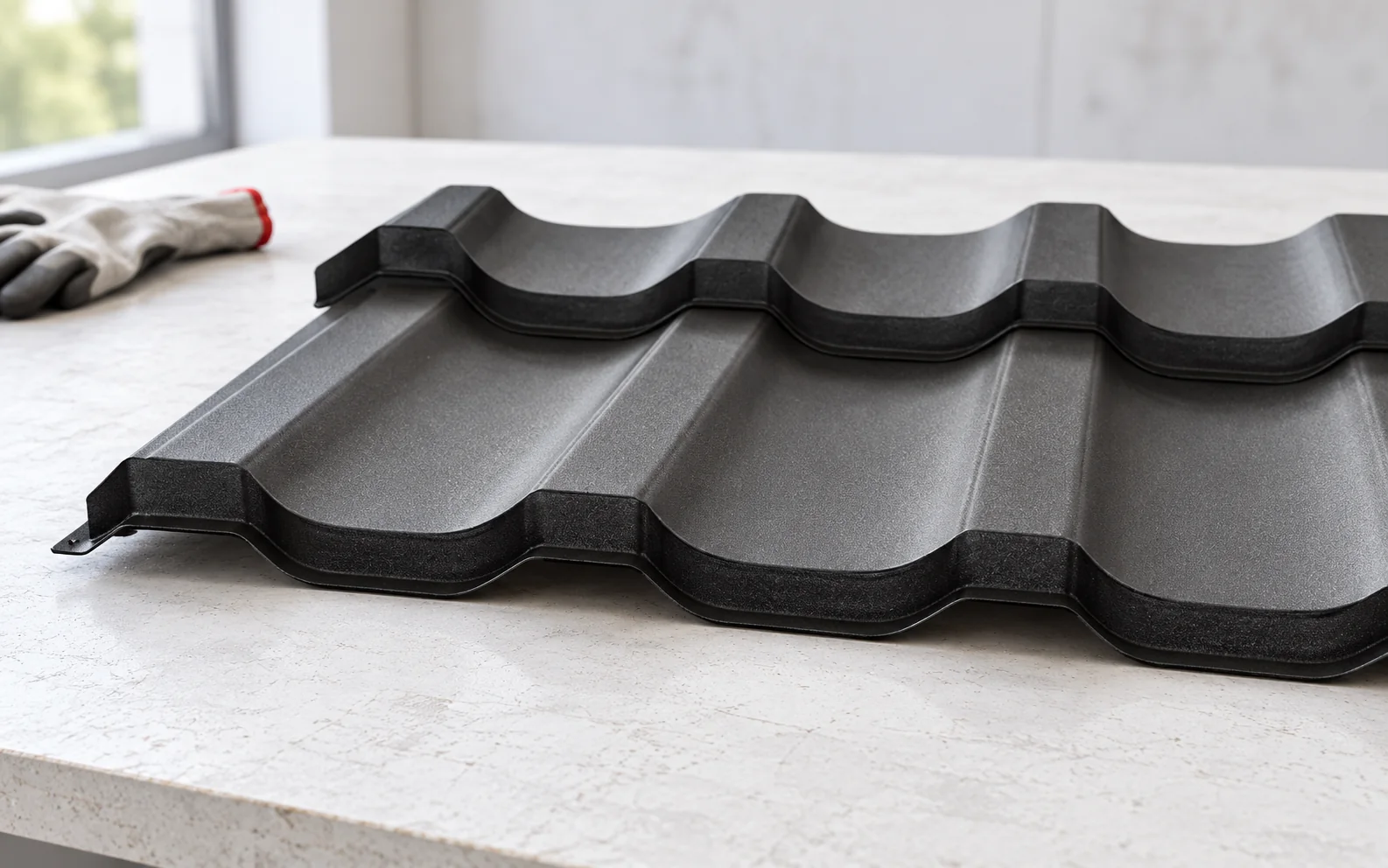
How does cut-to-length tile-effect metal roofing differ from modular?
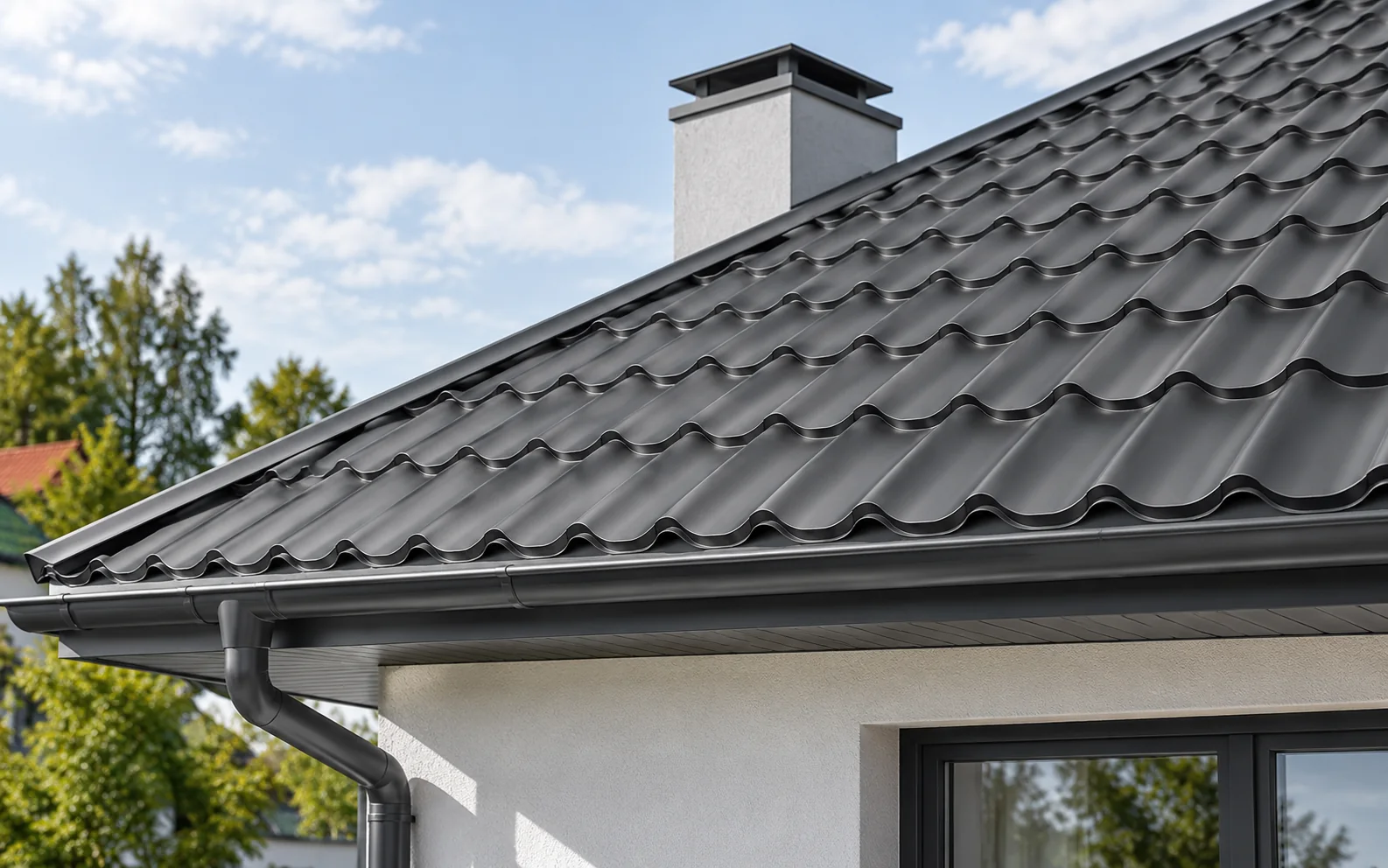
Both have pressings that give the surface the rhythm of roof tiles. The cut-to-length variant allows sheet lengths to be matched to the roof slope. On a simple roof it can reduce the number of transverse joints. It requires precise measurement and appropriate handling of longer elements.
The modules are smaller and convenient to transport onto the roof slope. They can make work easier on a complex plan and for local repair. They still require cutting and compliance with the joining instructions. Cost is compared by effective area, because overlaps reduce coverage relative to the full outline of the element.
Where is trapezoidal steel sheet used?
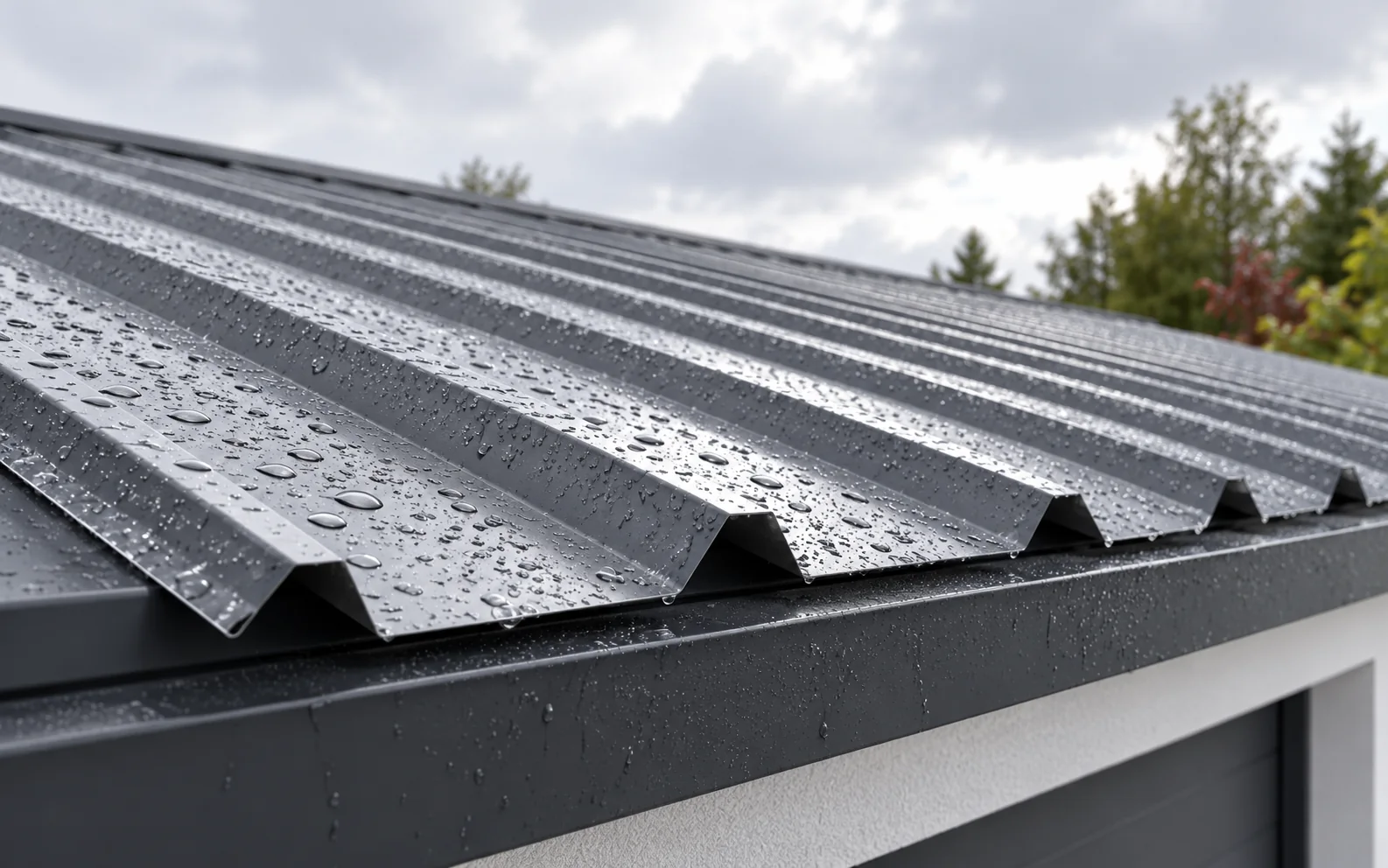
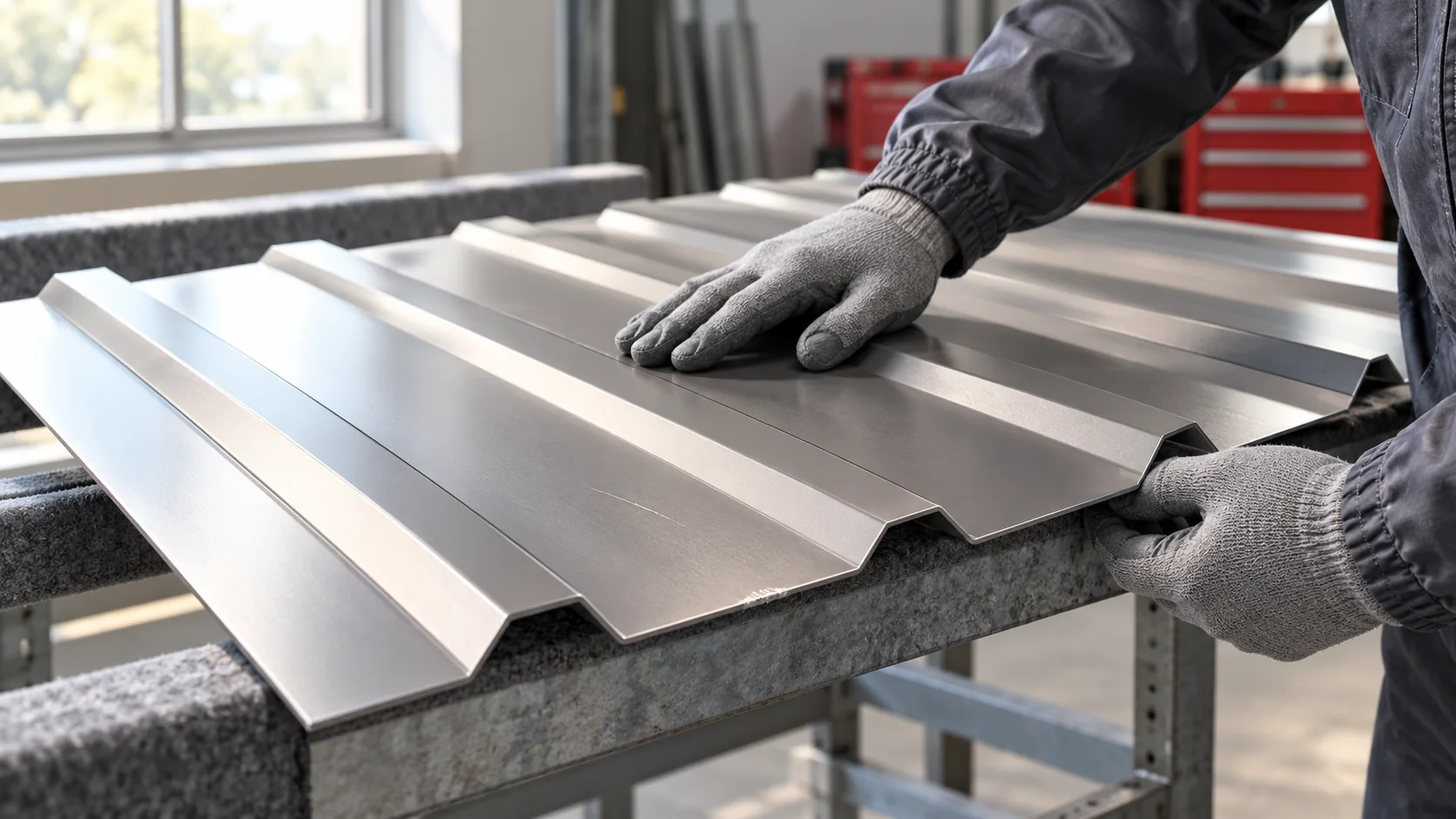
T18 and T35 have parallel pressings and are considered, among other things, for garages, agricultural buildings and simple volumes. The actual range of application depends on the specific section and parameters. A higher profile does not by itself provide a ready answer on the permissible support spacing.
Structural trapezoidal steel sheets form a separate group. They can form the load-bearing layer of the roof beneath insulation and waterproofing. Such trapezoidal sheet does not have to be the visible external covering. Selection uses calculations and tables for the relevant load and support arrangement.
What distinguishes a roof sandwich panel?
The panel consists of facings and an insulating core that work together as one element. It allows the roof envelope to be built efficiently on a suitable structure. Selection covers thermal performance, load-bearing capacity, coatings and fire properties. Requirements for pitch and for longitudinal joints must also be checked.
A PIR core can provide favourable thermal performance at a smaller thickness. Under other conditions a mineral wool core or another solution may be needed. One should not choose solely on the basis of the insulation name. A wall panel does not replace a roof panel, even if both have the same thickness.

What characterises roof tiles and shingles?
Ceramic and concrete roof tiles form a covering from many small elements. Their weight and method of fixing require the structure to be matched. They give a different appearance and a different way of resolving details than a large sheet. The range of pitches and the layers beneath the covering depend on the specific system.
Bituminous shingles are laid on a prepared substrate in accordance with the instructions. The small format helps with complex shapes, but does not remove the requirements for ventilation and tightness. Their weight cannot be compared with sheet metal while ignoring the required substrate. The complete layer assembly counts.
What is used on roofs with a very low pitch?
On such roofs, waterproofing systems made of roofing felt or membranes are often chosen. They must form a continuous, tight surface with correct details at outlets and parapets. Water should be drained by designed falls. The term flat roof does not mean the absence of slope.
Beneath the waterproofing there may be PIR, EPS, mineral wool or another material selected for the assembly. The compatibility of layers, pressures and the method of fixing must be checked. Ordinary overlapping covering is not automatically suitable for a nearly horizontal roof slope. The minimum pitch is not determined on the basis of the material name alone.
How can the choice be narrowed to two sensible options?
Reject solutions that are incompatible with the pitch, structure and purpose of the building. Then compare the complete layers, installation cost, logistics and service. Take acoustics and interior comfort into account if there will be usable rooms beneath the roof. Sheet metal alone is not thermal insulation.
Ask for a schedule of flashings, fasteners and accessories for each option. Check the warranty and maintenance conditions. The best covering is one that matches the design and the execution possibilities. A ranking of materials without information about the building can lead to a misguided purchase.
Tip before ordering
When comparing weight and price, draw the section of both roofs from outside to inside. Add the substrate, insulation, fixings and lining. This way you will not compare a single sheet with a complete building envelope.
What is worth remembering?
The type of covering is chosen after the requirements of the whole roof have been established. Sheet metal offers several different possibilities, from tile-effect metal roofing to sandwich panels and structural profiles. Their roles must be distinguished, and cost and properties assessed together with the layers that are necessary in the given building.
7 branches. Materials closer to your project.

Free quote
Materials for your project



You may also find useful…
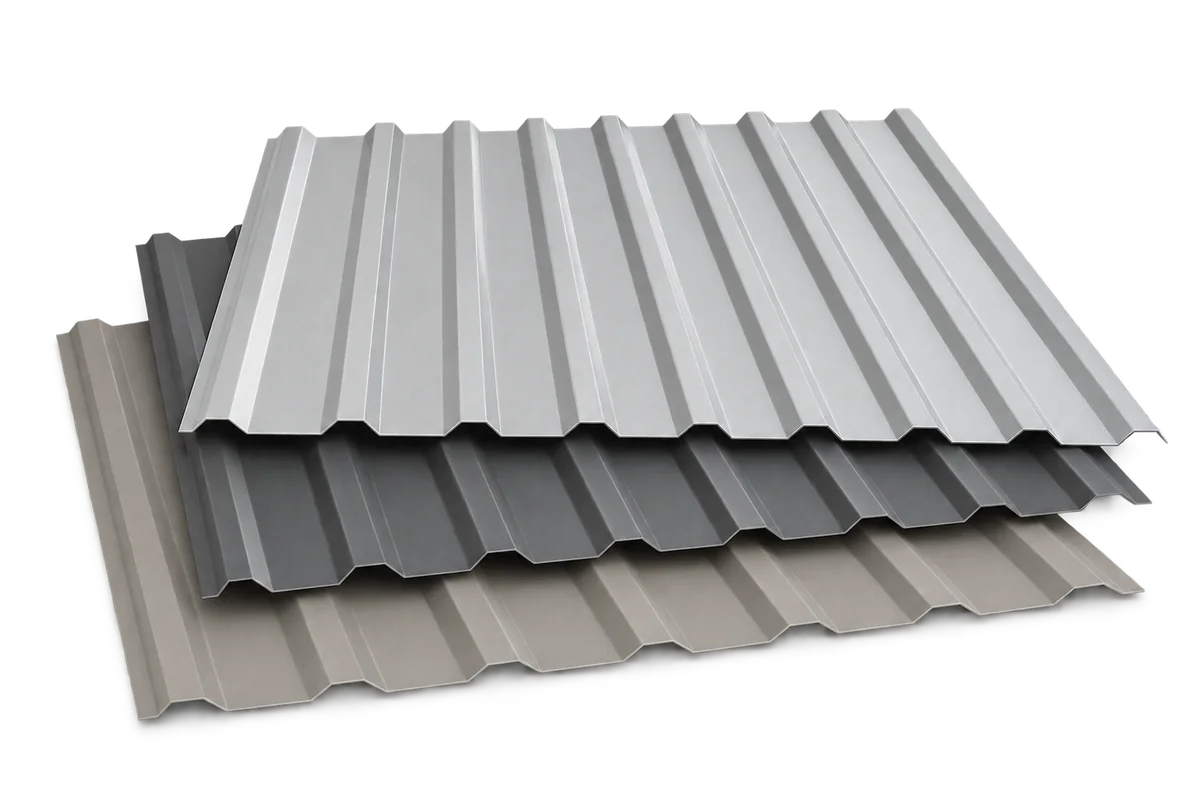
Receiving trapezoidal steel cladding should establish that the sheets match the ordered use, dimensions and finish. Similar colour and profile names are…
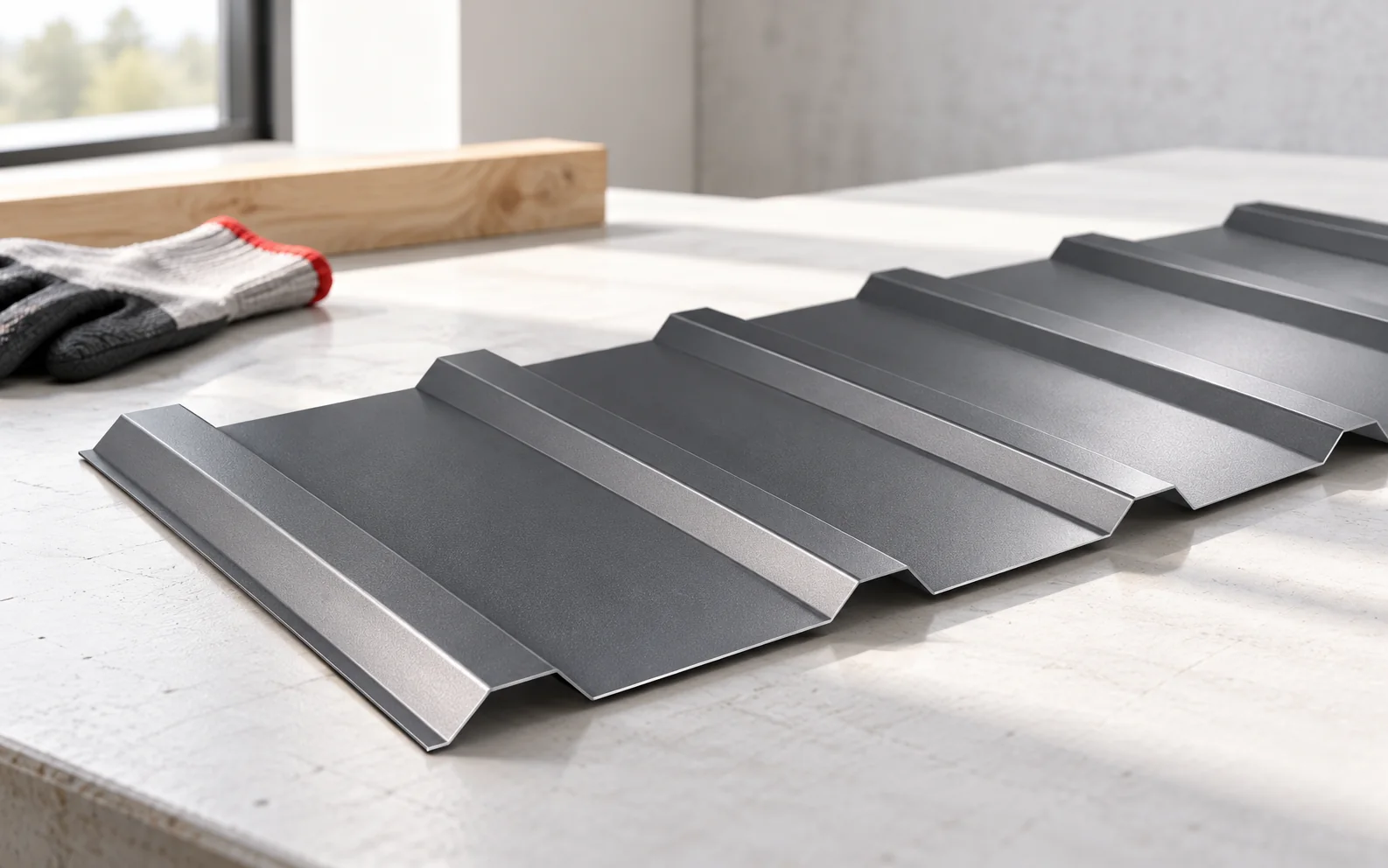
The metal soffit is a finishing element that conceals the underside of the eaves and gives the roof a neat appearance. Its…
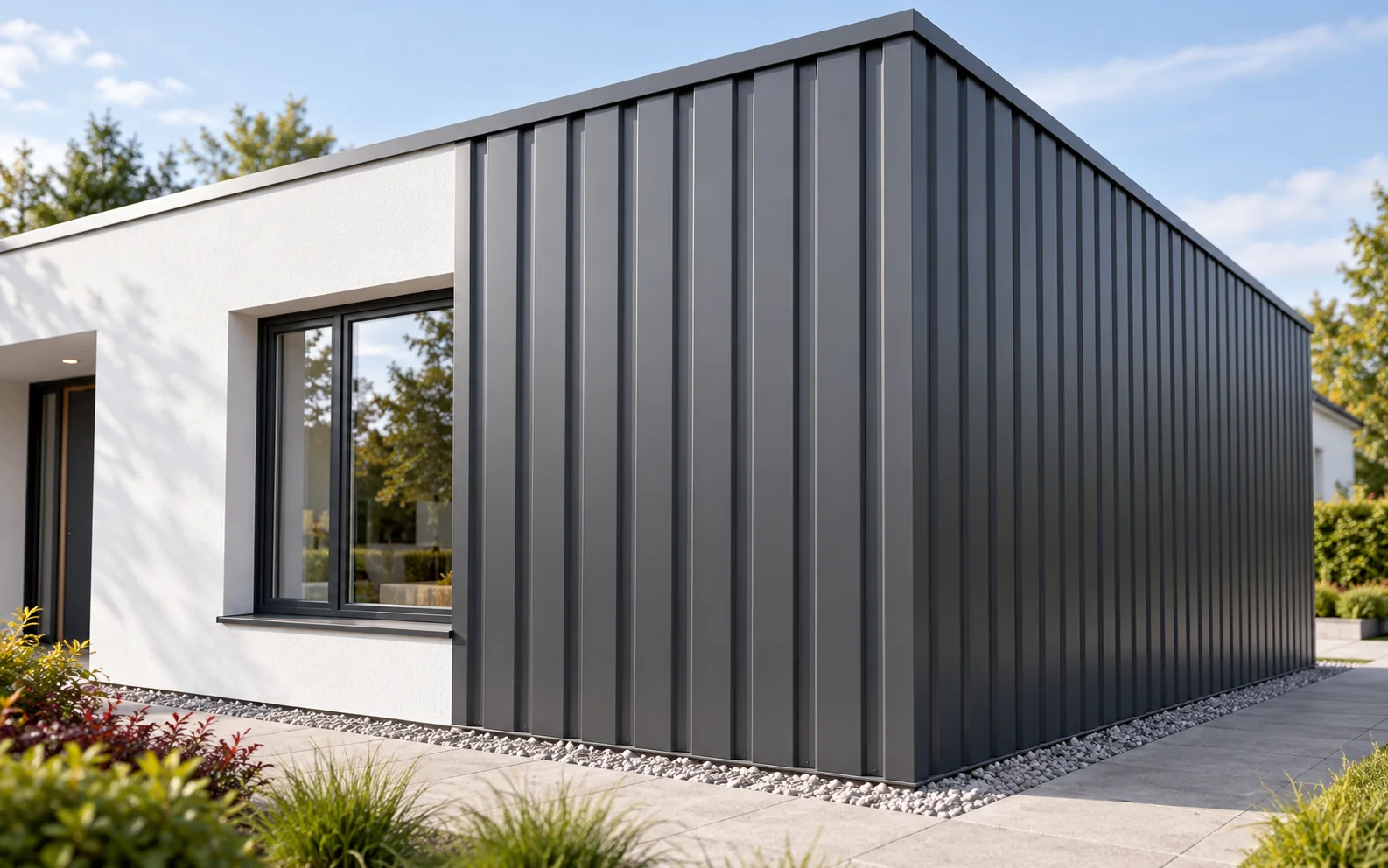
Trapezoidal steel cladding for a façade must suit the substructure, the wind load and the way water is drained. T18 gives a…
Once the asbestos sheets have been removed, the roof needs a new covering, but the choice between trapezoidal steel sheet, tile-effect metal…
To assess a trapezoidal steel roof, look at the condition of the coating, cut edges, fixings and flashings. Faded colour may be…
Second-quality trapezoidal steel sheets can be discounted for very different reasons. Before comparing prices, find out why the particular sheets were downgraded.…
A cost estimate for a hipped roof should list the areas of the roof slopes, the lengths of the edges, the flashings…
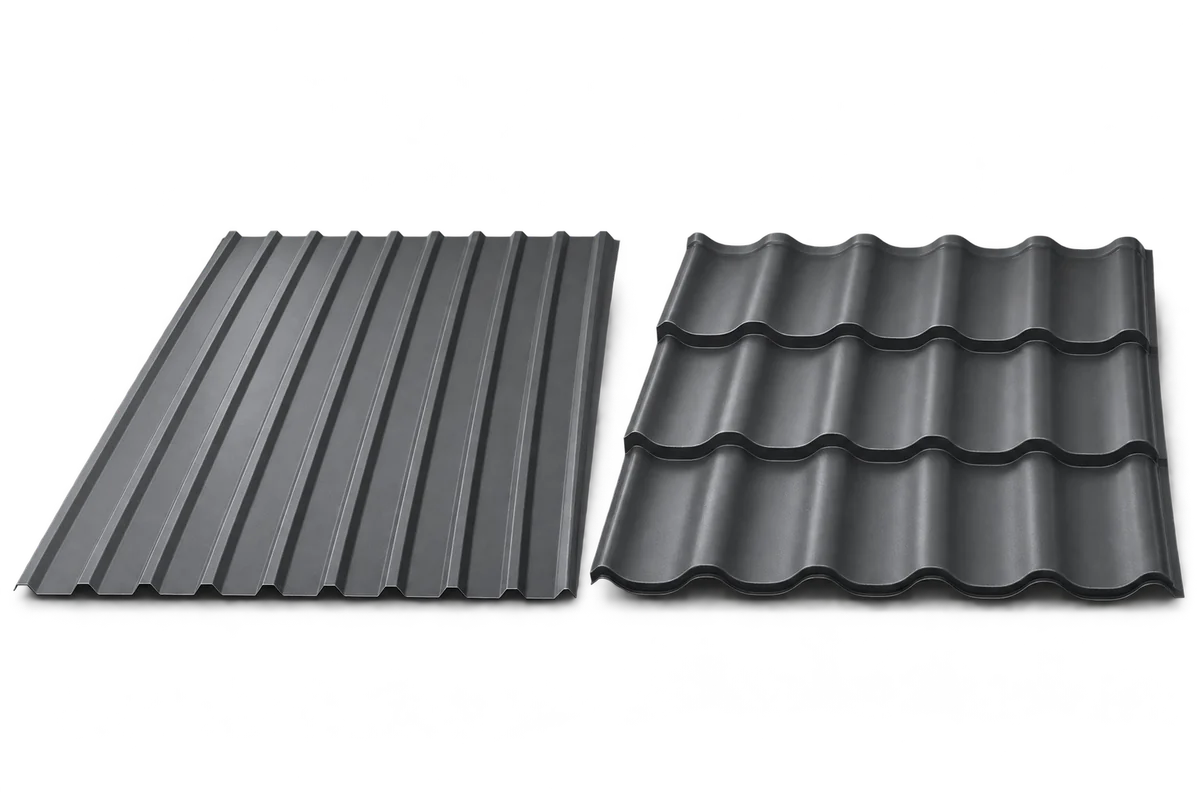
Compare tile-effect and trapezoidal steel roofing on a drawing of the actual roof. Long sheets can reduce the number of end laps…