

Installation and details
Square or half-round gutters? How to match the shape to the roof?
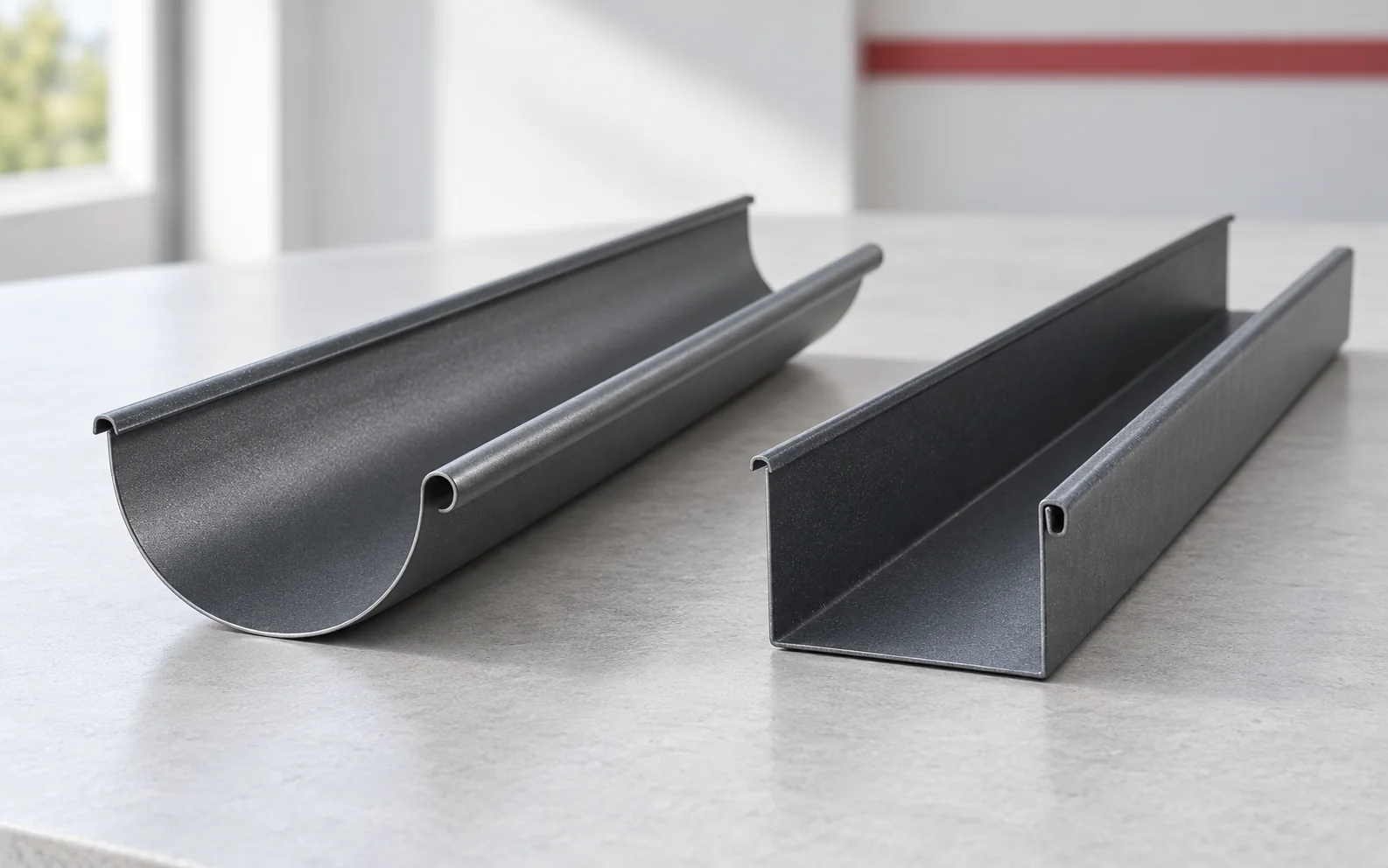
Square or half-round gutters? The choice of shape is not just a matter of the eaves’ appearance, but above all of efficient water drainage. Before comparing profiles, determine the roof area assigned to each outlet, taking into account the shape of the roof slopes and the places where water flows intensively. The length of the building alone is not enough to determine the required size. Also check whether downpipes can be routed, because windows, doors and façade details restrict their position. A half-round gutter gives a gentle eaves line and combines well with a traditional tile-effect metal roofing pattern, whereas an angular cross-section emphasises the horizontal roof line more strongly and can harmonise with a plain façade. The final choice depends on the performance of the entire system, the available components, the manufacturer’s installation recommendations and ease of maintenance.
In this article
Where to start when selecting gutters?
First determine the roof area assigned to each outlet. The shape of the roof slope and the places where water flows more intensively are important. A gutter at a short eaves can collect water from a large section of roof. The length of the building alone is not enough to determine the required size.
Also check the possibility of routing downpipes. Windows, doors and façade details restrict their position. An outlet at the end of a long section operates in a different layout than an outlet in the middle. Performance should be assessed using tables or the tool specific to the selected system.
When is a half-round profile suitable?
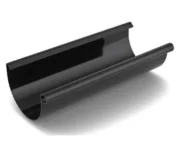
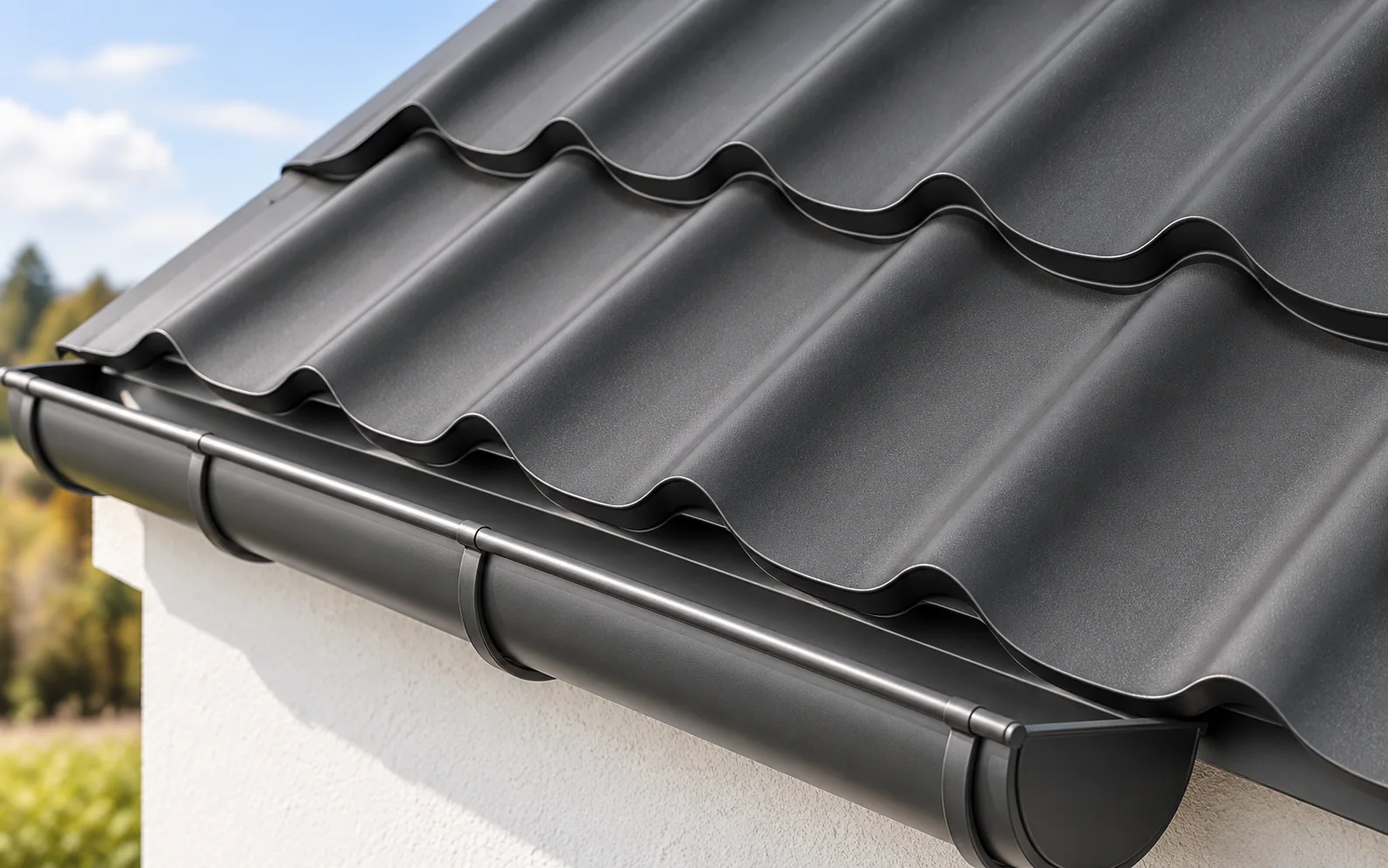
A half-round gutter provides a well-known, gentle eaves line. It integrates easily with roofs featuring a traditional tile-effect metal roofing pattern. It can also look appropriate on a simple contemporary form. The effect depends on colour, size and the way the roof edge is finished.
The availability of components required for the specific layout is important. Check corners, connectors, end caps and transitions at unusual sections. Do not assume that parts with a similar diameter will fit between systems. The edge profile, seals and snap-fit method may differ.
What does a square gutter change?
The angular cross-section emphasises the horizontal roof line more strongly. It can harmonise with a plain façade and geometric joinery. Some solutions have a cover that further tidies the appearance of the eaves. However, access for cleaning and the installation method specified for the complete set must be maintained.
Not every square gutter is a hidden system. Exposed installation, installation with a cover and installation concealed within the eaves construction are different solutions. They differ in details and in the consequences of possible overflow. One variant should not be selected on the basis of instructions for another.
Will a larger gutter always solve the problem?
The flow is also restricted by the outlet, downpipe and further installation. A large gutter cross-section will not help if the outlet is blocked or too small for the adopted layout. The entire water path must be checked, including the point of discharge at ground level.
Roof valleys and long roof slopes from which water reaches a single point are also significant. A separate detail may be required at such a point. Do not assess the system only on the basis of gentle rainfall. The design should account for the design rainfall conditions for the building.

Why is the installation instruction decisive?
The recommended slope and the spacing of brackets depend on the system. Some solutions with a cover specify a different setting than their exposed versions. Therefore, general advice to install every gutter identically may be wrong. The exact variant must be determined before execution.
Connections must allow for thermal movement. Excessive rigid fixing of a long section can deform the gutter or damage the seal. Support at outlets and corners is equally important. Adding an excessive amount of arbitrary sealant does not replace a proper connector.
How do colour and material affect the appearance?
The gutter can be matched in colour to the covering or to the façade. The first choice emphasises the roof, the second helps to reduce the visibility of pipes on the wall. Samples should be viewed together. The coating of the gutter and the tile-effect metal roofing may have a different gloss despite a similar colour designation.
The material and surface protection are also selected to suit the environment. Resistance, warranty conditions and compatibility of components are important. Mixing arbitrary metals can create unfavourable corrosive conditions. The entire set should be intended for joint operation, including the fasteners.
What will be convenient during maintenance?
Every gutter requires the ability to remove leaves and inspect outlets. With covers, check how they open. Protection against contamination does not eliminate the need for inspections. It may retain leaves on the surface, where they will still impede water collection.
Consider how the contractor will reach the gutter in a few years. Access from a suitable platform or scaffolding is safer than improvising at the roof edge. An aesthetic choice should not hinder basic maintenance of the system. This applies particularly to high and sheltered eaves.
Tip before ordering
Ask for a sketch showing the area assigned to each downpipe. If the number of outlets changes between offers, also compare the cost of further water discharge, not only the price of the gutters.
What is worth remembering?
Choose the gutter shape after checking performance and the eaves detail. Half-round and square systems can both work correctly if they are well matched and accessible for cleaning. Only within these limits do appearance and price decide.
7 branches. Materials closer to your project.

Free quote
Materials for your project




You may also find useful…
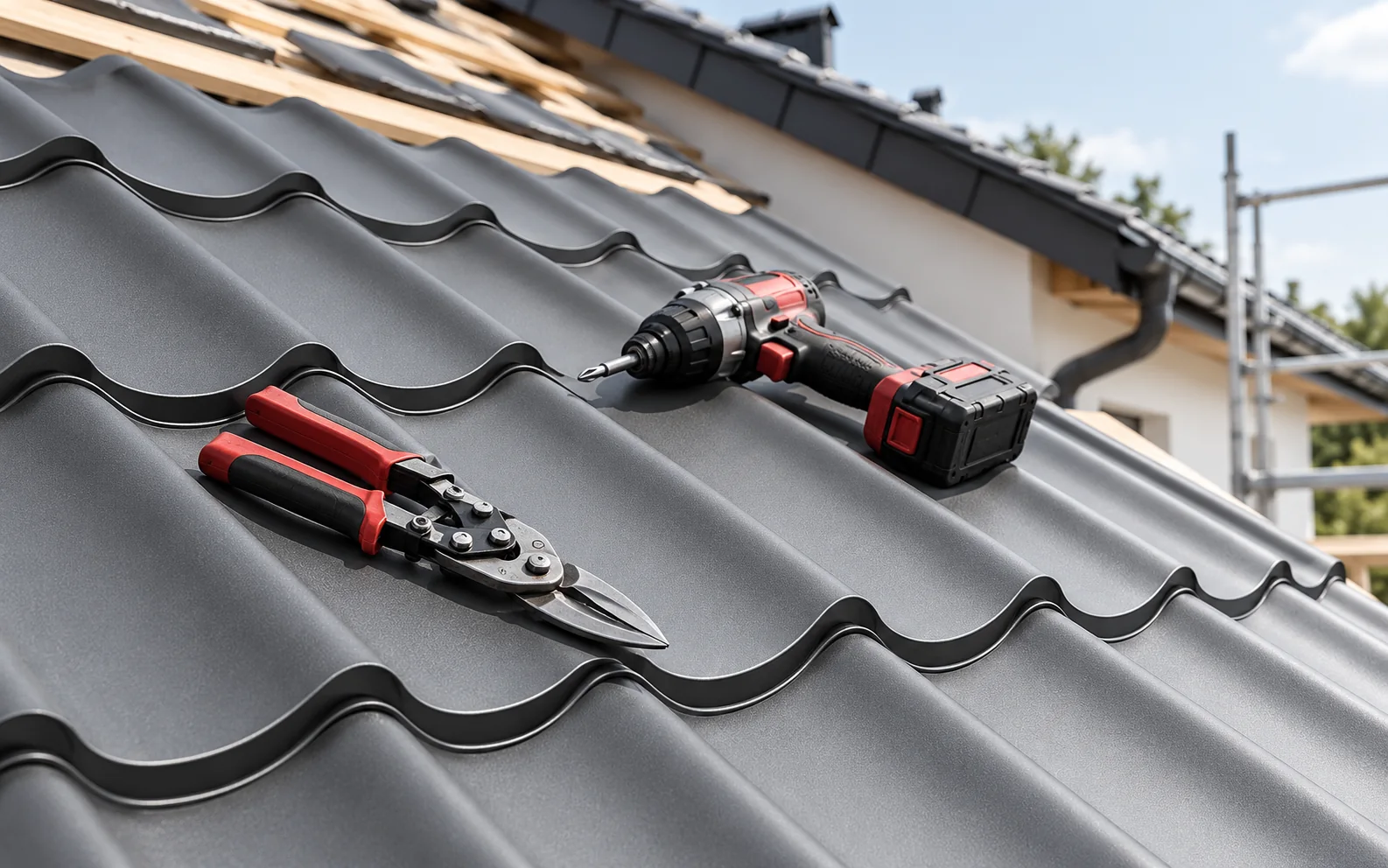
Before choosing a roofer, ask to see a completed job with the same covering and a similar detail, such as a valley…
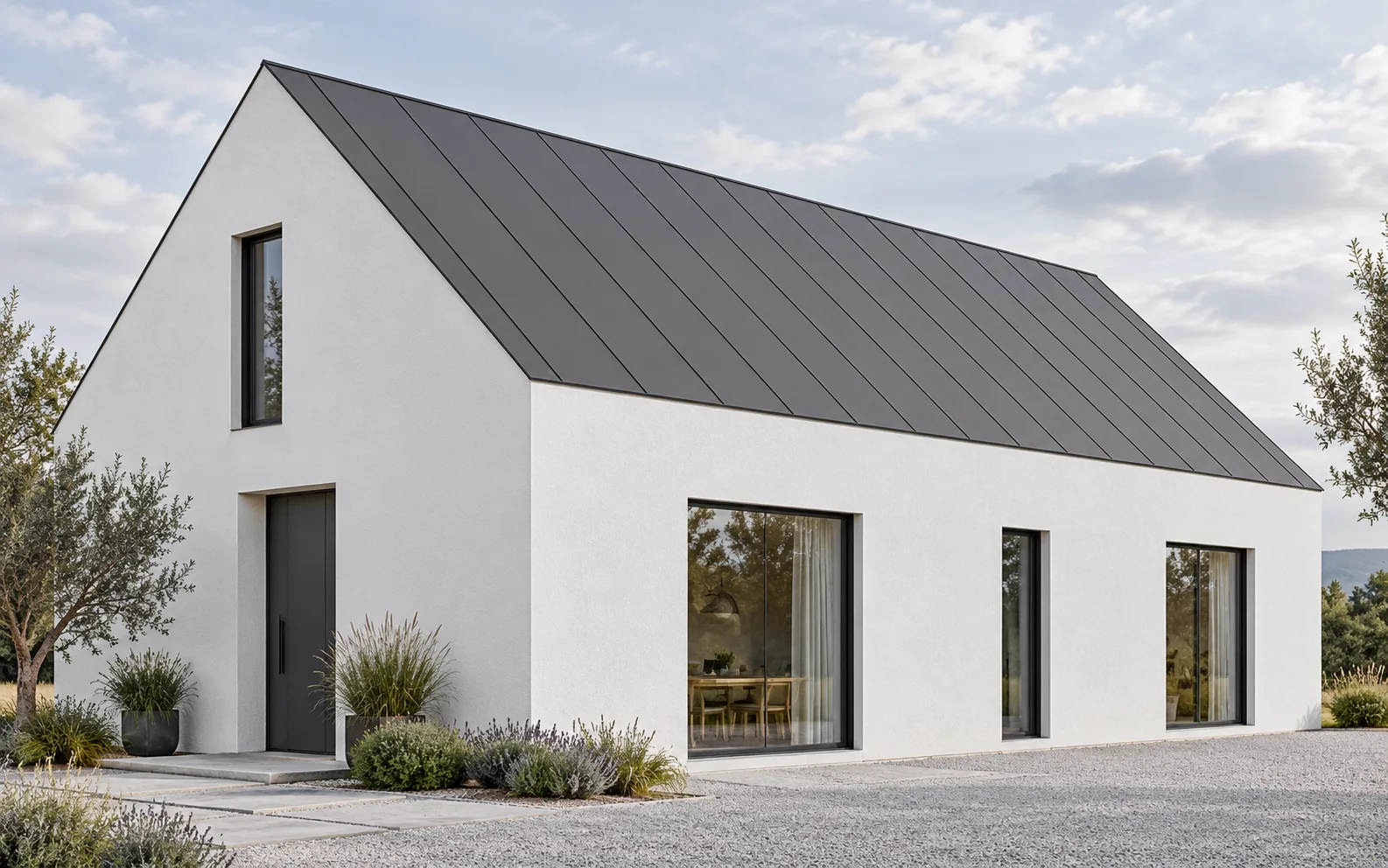
A roof without eaves creates a compact volume but places greater demands on the detail at the wall. Drainage, insulation and any…
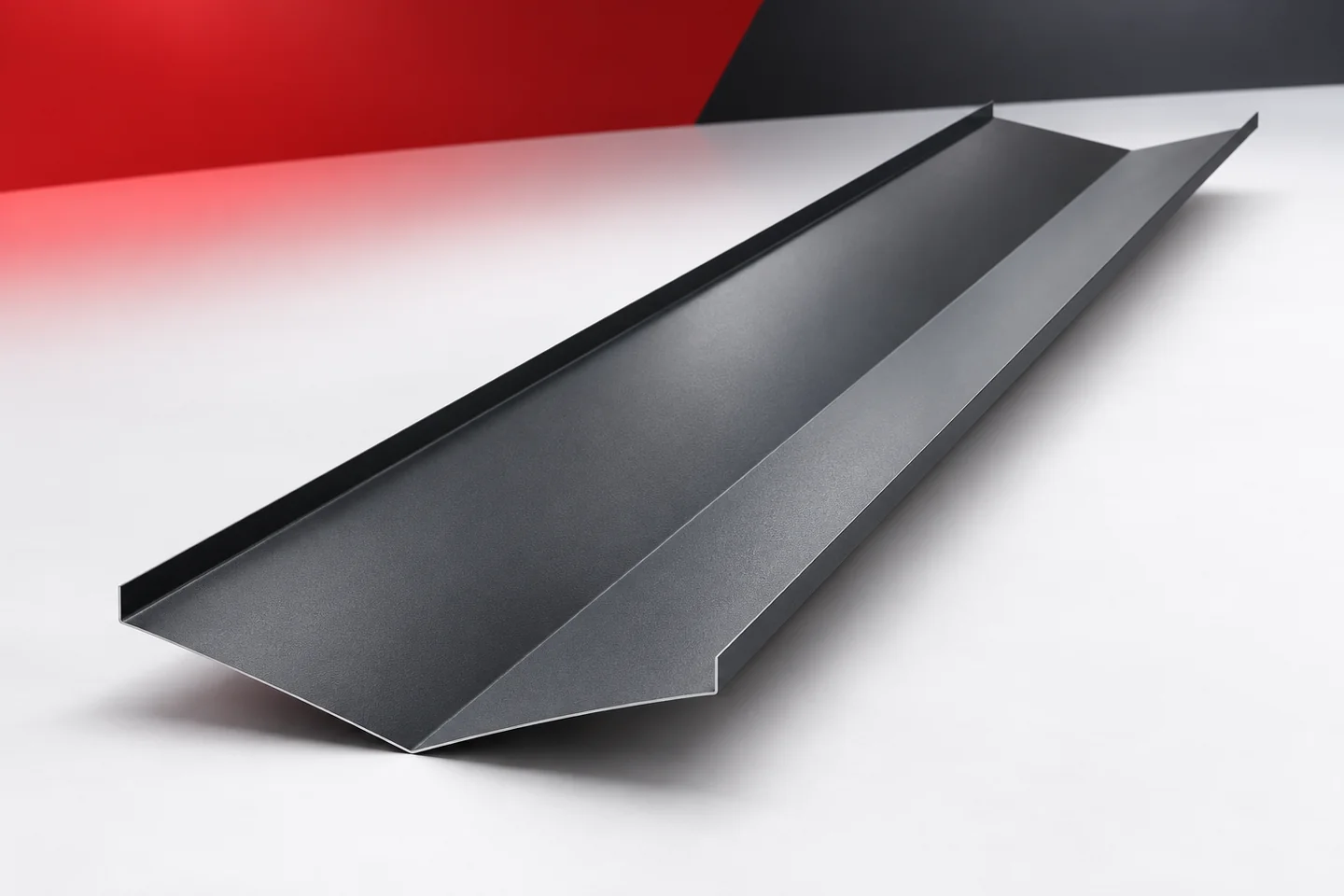
The roof valley collects water from the converging roof slopes. Its flashing must match the roof geometry and ensure an unobstructed drainage…
Vacuuming can effectively remove leaves, but it does not confirm that the entire drainage system is clear. Before winter, the connections, brackets,…

An autumn inspection should prepare the roof for prolonged moisture, wind and snow. First, check the drainage of water, loose components and…
The gutter apron collects water in the eaves zone and shields the vulnerable end of the roof slope, so its shape must…
Preparing a roof for winter covers three areas: drainage, the safety of components and moisture control beneath the covering. The response to…

If the façade of a historic apartment building must stay as it is, insulating from the inside can make a flat more…