

PIR insulation
termPIR MAX 19 AL: when does a thermal conductivity of 0.019 allow a thinner board?
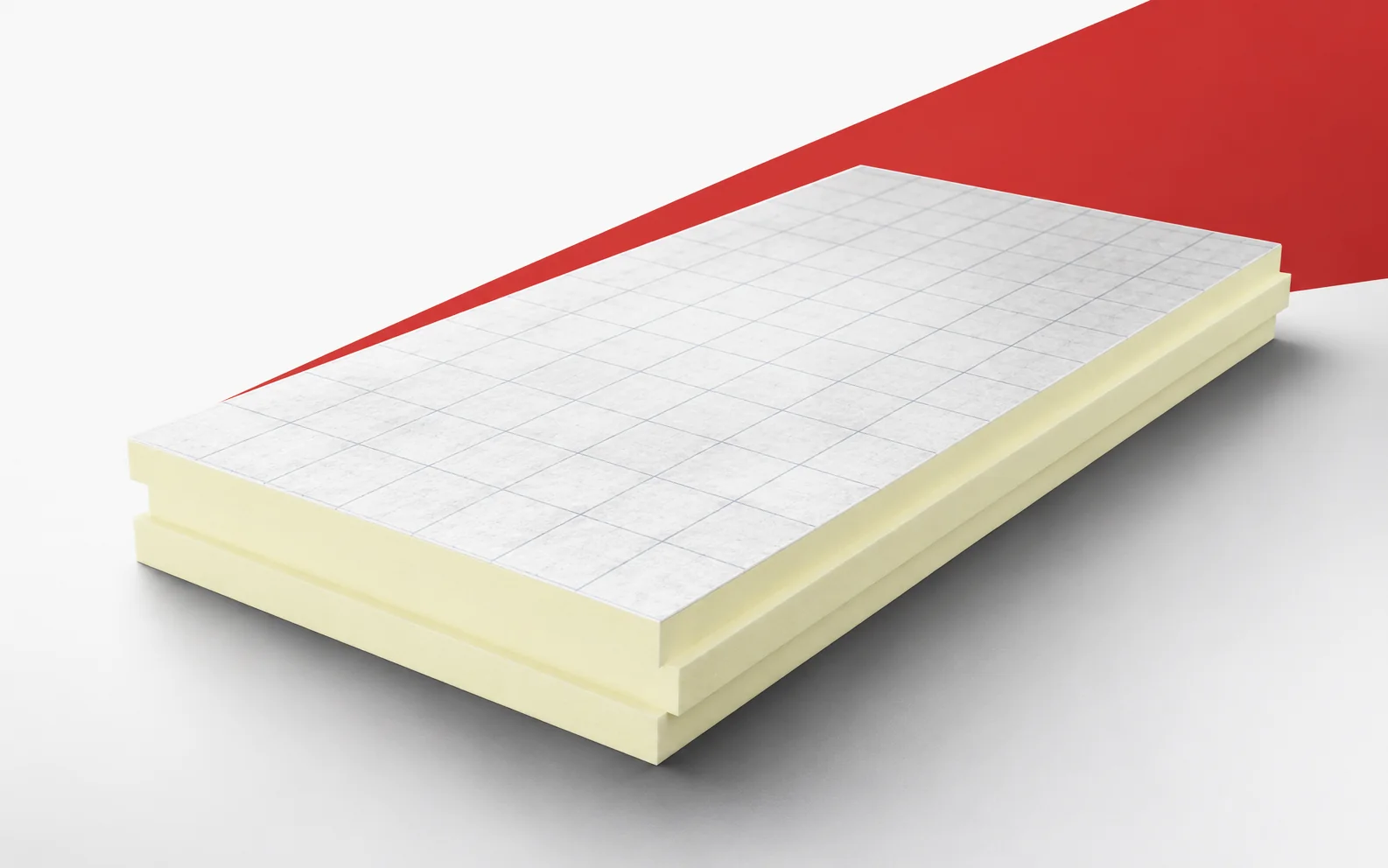
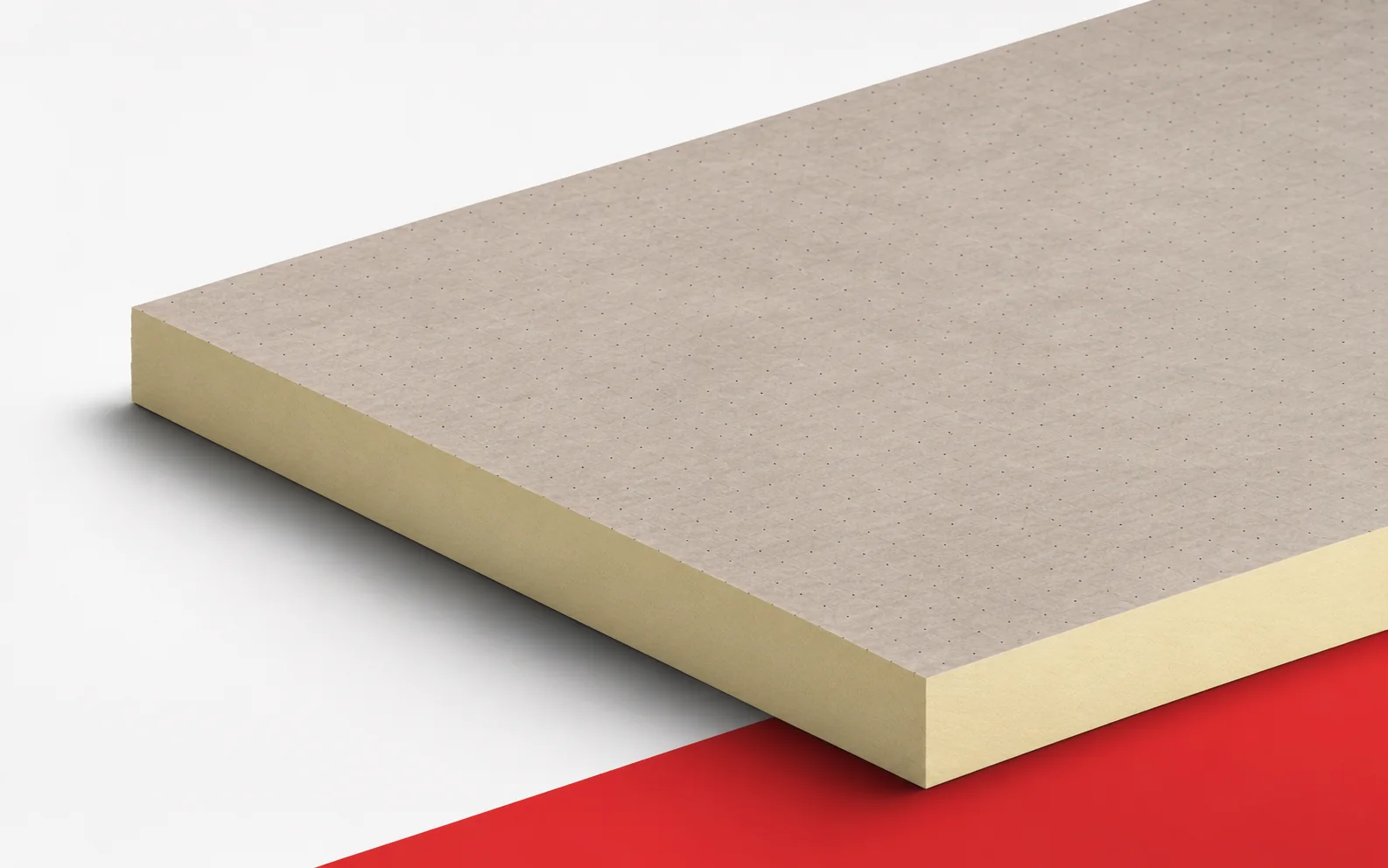
A very low lambda is most useful where there is no room for the layers. termPIR MAX 19 AL has a declared 0.019 W/(m·K). How much thickness can actually be saved, however, depends on the required thermal resistance and the properties of the reference material. termPIR MAX 19 AL is a board made of rigid PIR foam, protected on both sides by a gas-tight laminate of aluminium, paper and polyethylene. Its principal distinguishing feature is its level of thermal conductivity. PIR boards are worth assessing through a specific spatial problem, so consider the place where little space remains for insulation beneath existing finishing. The cross-section at the existing finishing must be checked before exploiting the advantage of the low lambda, because space savings must be assessed together with the geometry of the detail.
In this article
Board construction and the insulation task
A change in lambda alone is not enough, because a very low lambda does not remove constraints relating to the substrate and adjacent layers. The solution should allow the thickness advantage to be exploited where it genuinely simplifies the detail. As a starting point for comparing variants, record the available cross-section height and the scope of work needed to increase it.
Thermal resistance versus available thickness
For termPIR MAX 19 AL, the declared lambda is 0.019 W/(m·K) across thicknesses from 80 to 220 mm. If the required thermal resistance stays the same, a lower lambda allows a thinner insulation layer to be used.
When comparing polyurethane boards, include the layers compared at the assumed resistance of 5.0 m²K/W in the calculation example. The calculated thickness of termPIR MAX 19 AL must be matched to the variant available in the actual delivery so that the comparison relates to the same thermal effect. The result must be read with caution, since the product of R and lambda gives a theoretical thickness that need not be available in the delivery. The calculation is intended to help select the nearest suitable thickness without promising a U-value based on the foam alone. In the energy summary, show the result of the layer calculation and the re-checking of the whole building element after product selection, so that it is clear what exactly changed between the solutions.
For a 100 mm layer, a simple calculation with a lambda of 0.019 gives R of approximately 5.26 m²K/W. This is a useful starting point for a tight cross-section, but not a promise of a specific heating bill. termPIR MAX 19 AL makes most spatial sense where a thicker alternative requires additional work. In freely available space, the same argument may carry less weight. The assessment of the premium should therefore begin with the specific constructional constraint.
Where the advantage can be lost
The FIT, LAP and TAG variants belong to the termPIR MAX 19 AL family. A straight edge corresponds to the FIT version, a shiplap to LAP, and a tongue-and-groove to TAG.
Check the board joint with the rebate where the substrate shows a slight unevenness, because continuous polyurethane insulation also requires correct terminations. Profiled edges must be fitted without forcing the boards over an uneven substrate, because losses at the joints must be assessed together with the main insulation field. A good connection does not arise automatically, since the TAG profile alone neither levels the structure nor closes every inaccurate joint. The layout of the elements should allow a flat support to be prepared before assessing the tightness of the installed insulation. In the detail drawing, show the condition of the edge, the support beneath the joint and the actual width of any gap; this record will facilitate later inspection of the work.
Protecting the insulation against water and leakage
termPIR MAX 19 AL must be protected during storage and installation. The gas-tight laminate reduces vapour flow through the surface, but it does not automatically seal the joints.
When assessing the durability of the thermal effect, include the point where services exit at the perimeter of the layer with the gas-tight facing. The perimeter of the laminate must be connected to the intended sealing of the wall or service penetration if the insulation is to perform under the conditions assumed in the design. Polyurethane foam does not replace protective layers: even a very good thermal parameter does not compensate for an open air-flow path. The intended protections should allow the critical perimeter to be sealed without relying solely on the metallised surface of the board. Before covering, assess the continuity of the sealing and the protection of the material during the interval between work stages, because later repair may require opening the finished building element.
Strength and fire properties
The declaration for termPIR MAX 19 AL states CS(10/Y)100 and fire reaction class E. Parameters of another board with a similar facing must not be substituted for these values.
A thickness reduction does not exempt you from checking other requirements, so examine the CS(10/Y)100 declaration belonging to termPIR MAX 19 AL, not to a similar board. The CS100 declaration must be checked independently of the benefit arising from the lambda of 0.019, even when the board was chosen mainly for its low lambda. A separate assessment is needed because better thermal insulation does not automatically mean greater load resistance. Only the complete set of data will allow the service requirements to be checked independently of the expected reduction in thickness. Alongside the thermal results, place the conformity of CS and class E with the documentation for exactly the ordered product; this ensures that the comparison does not omit the service conditions.
Cost comparison for the same effect
The termPIR MAX 19 AL formats include 600 × 1200 and 1200 × 2400 mm, with a coverage correction for the groove. When comparing offers, the thermal effect must be balanced first.
Polyurethane board insulation should have a calculated effect and scope of work; include the cost difference between thinner insulation and rebuilding the surrounding elements. The two cost variants should provide the same thermal effect and the same service function, so that the cost relates to one comparable result. The material price is only part of the decision, since a more expensive square metre of board can only be justified by a specific benefit in the overall task. The final summary should allow the material price to be separated from the cost of changes to geometry, fixing and finishing. Request two complete calculations including the cutting plan and the consequences of the adopted layer height, so that any premium has a stated technical justification.
7 branches. Materials closer to your project.

Free quote
Materials for your project
You may also find useful…
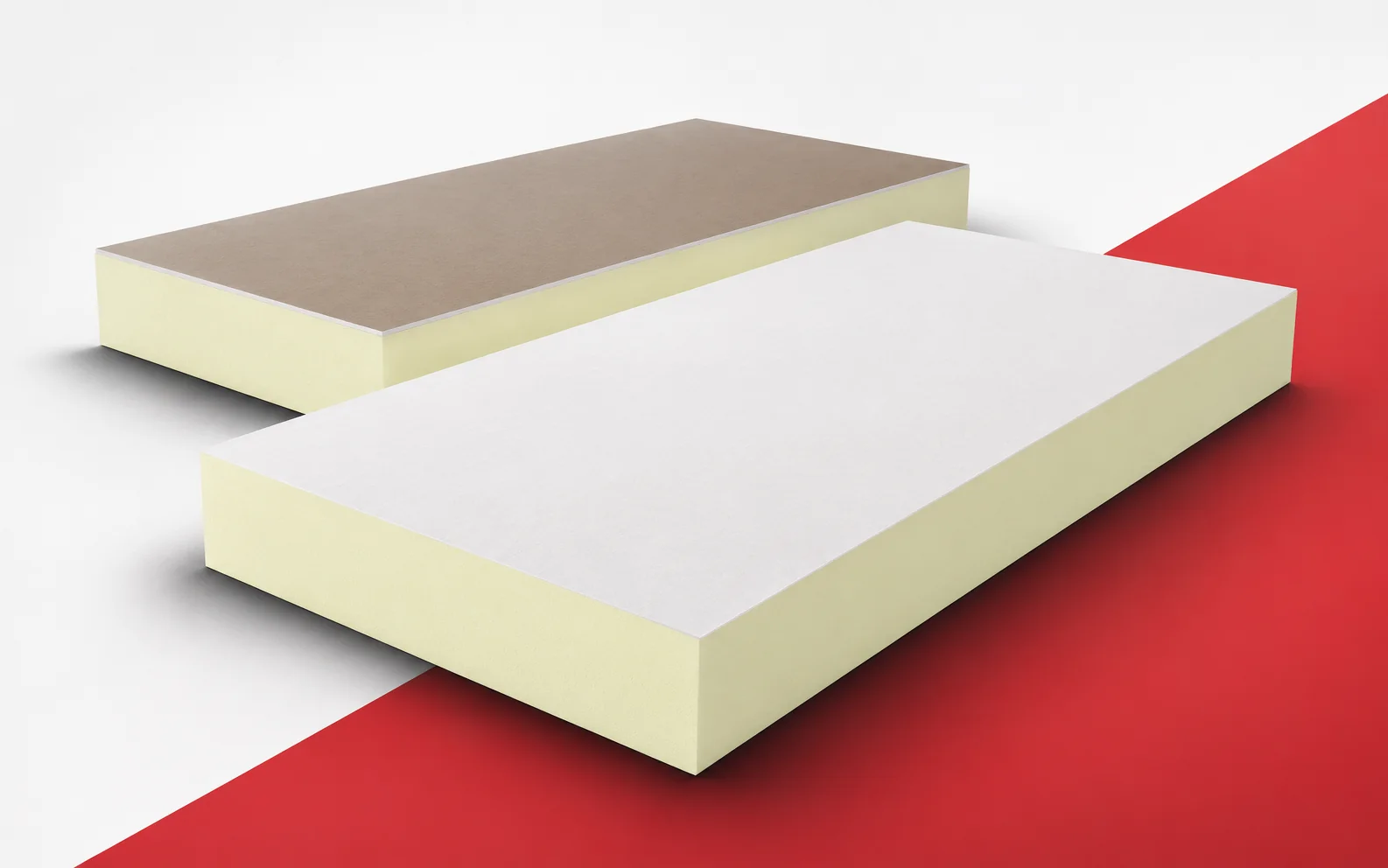
In a small room, the thickness of the insulation directly affects the usable space. termPIR AL GK combines insulation with a finishing…
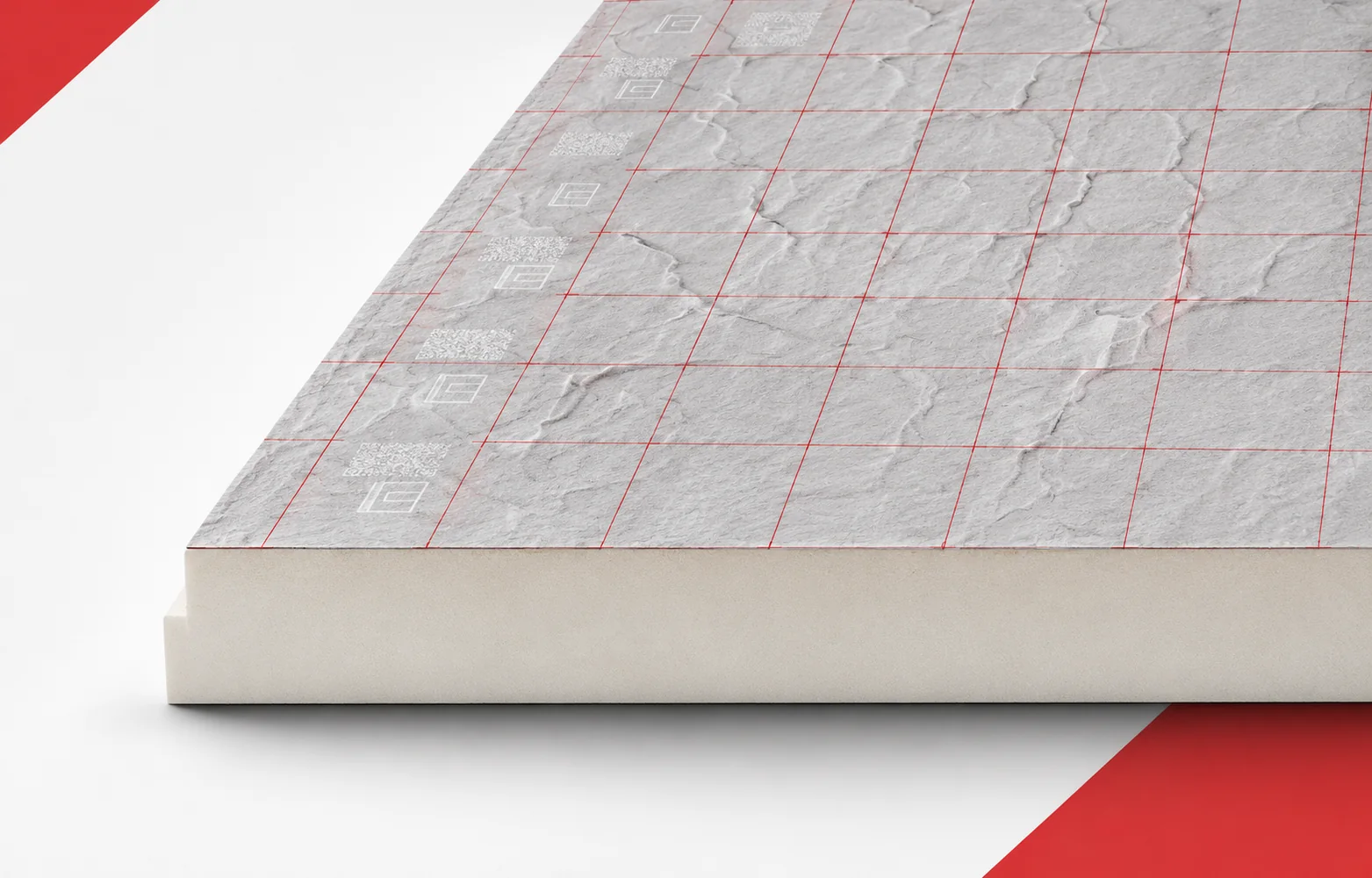
On a flat roof, thermal resistance matters, but so does the height available at parapets and outlets. Thermano Deck allows a relatively…
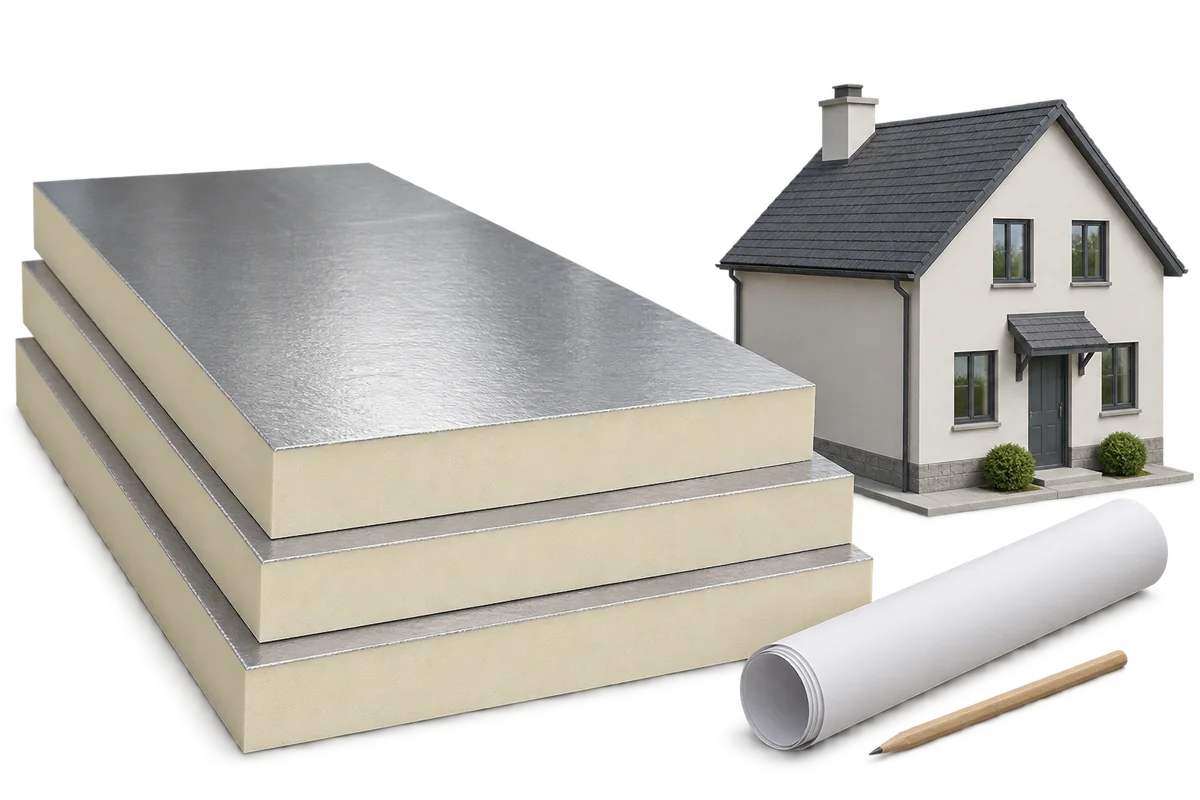
An energy retrofit works best when the roof, wall and floor insulation is planned together with windows, heating and ventilation. PIR can…
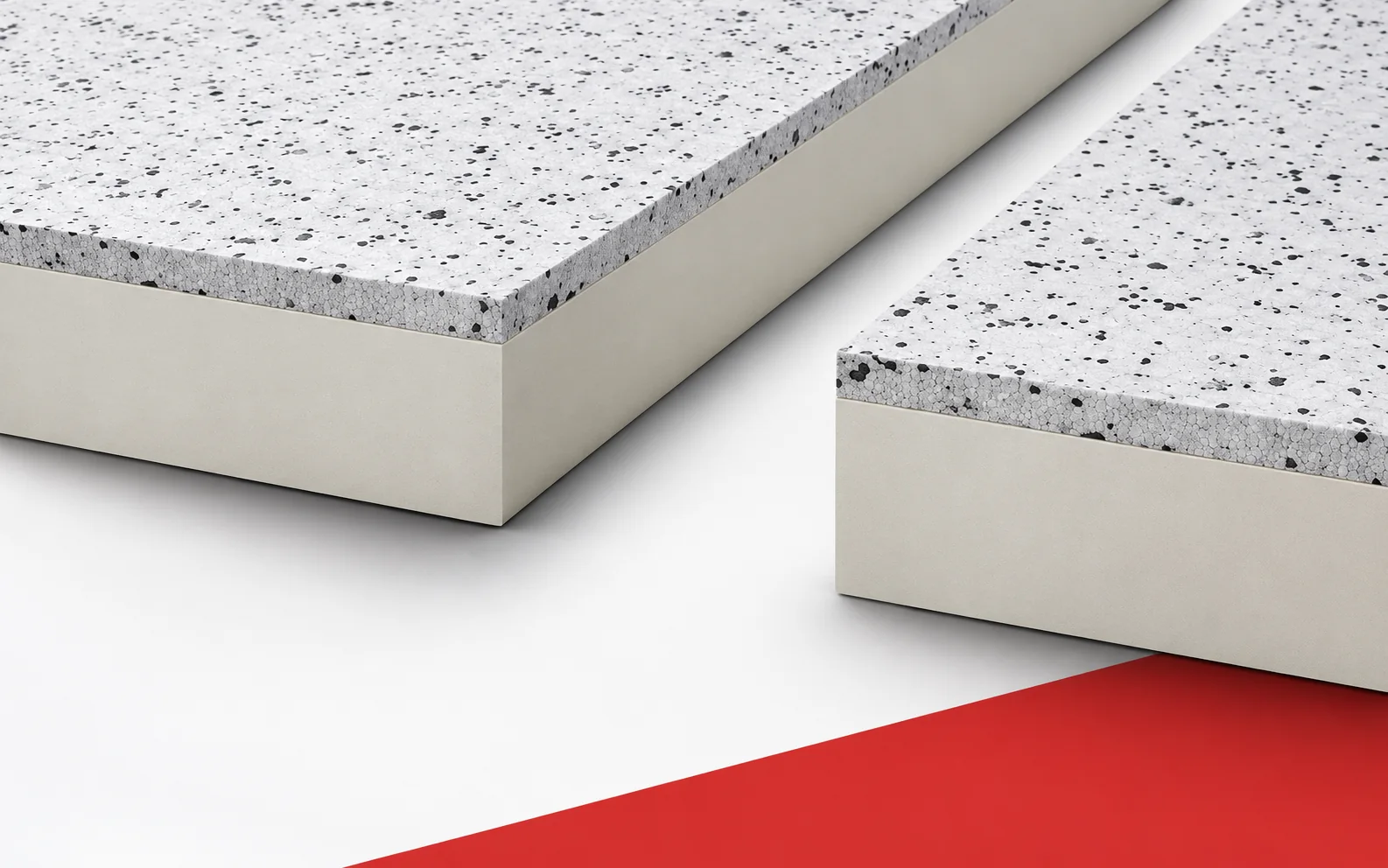
Thermano ETICS combines the low thermal conductivity of PIR with an outer layer of EPS. This solution is intended to help in…
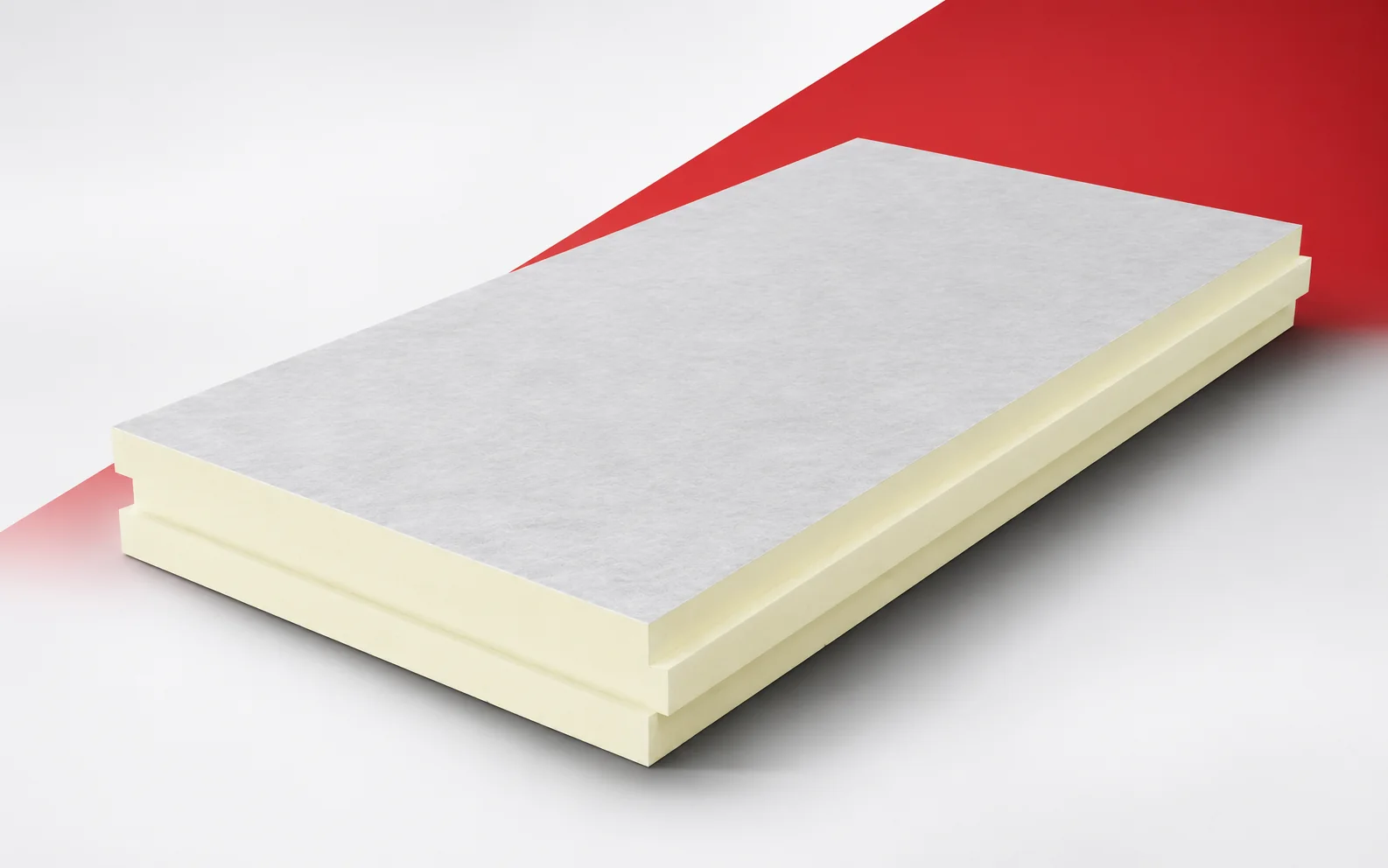
In an efficient roof, the insulation must work together with the layers that protect it. termPIR WS uses a glass fleece facing.…
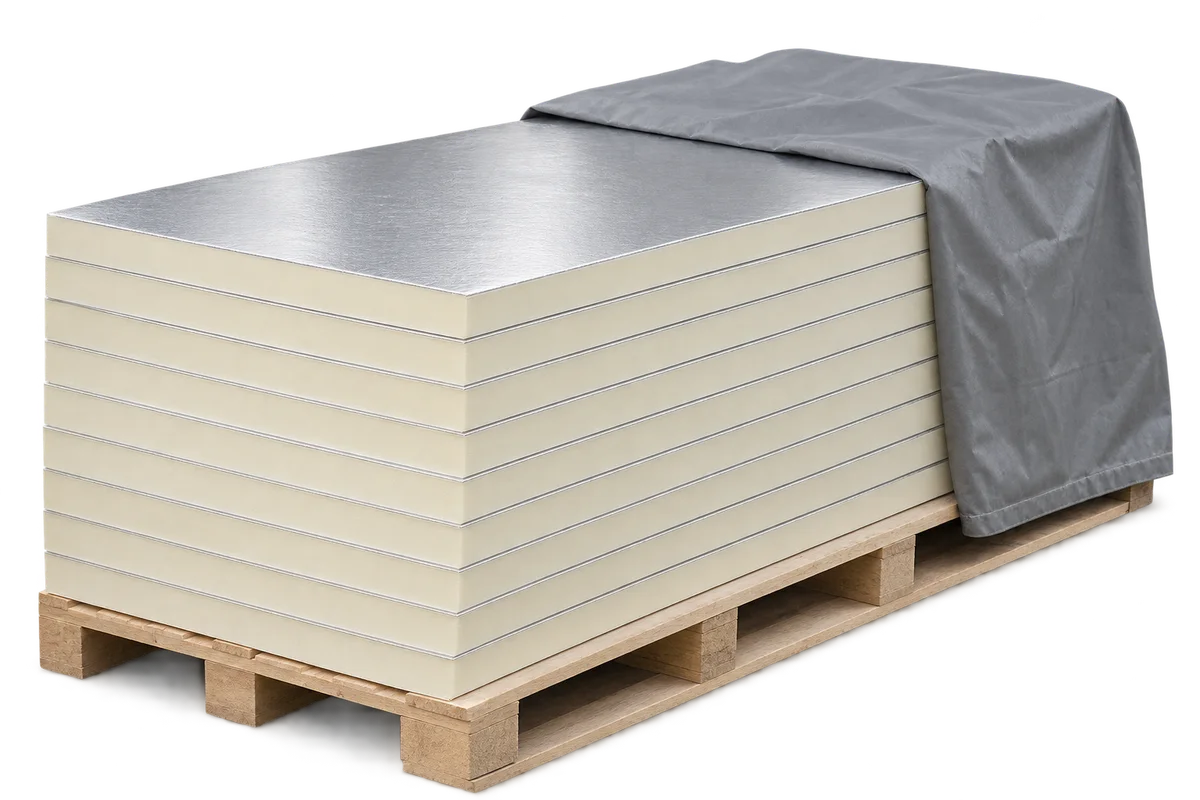
The life of insulation depends on the product, its service conditions and how the installer forms the junctions. Before adding insulation, repair…
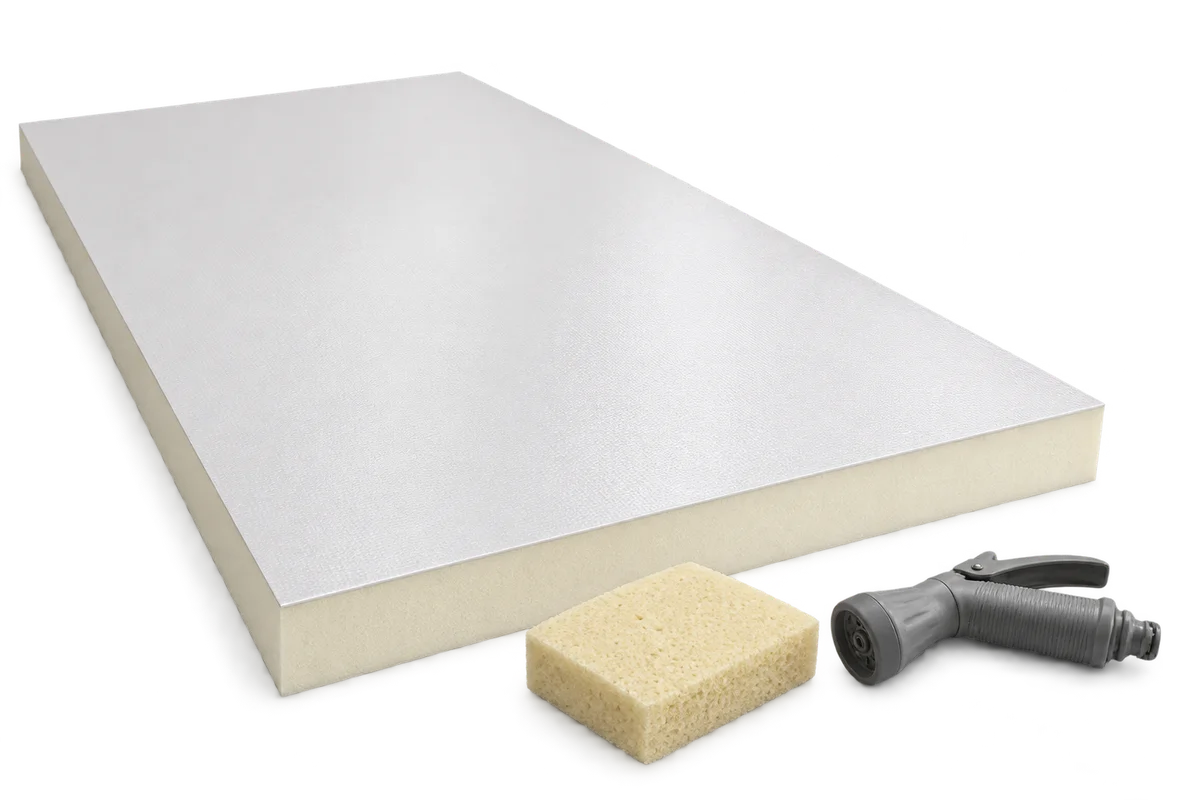
Ceilings in livestock buildings are exposed to moisture, dirt and repeated cleaning. Choose the washing method for the actual facing, the condition…
Therma TR27 shows why a single lambda value cannot be attributed to all PIR boards. Choosing the thickness must go hand in…