

Costs and planning
When does a low-cost 40 mm wall panel actually reduce building costs?
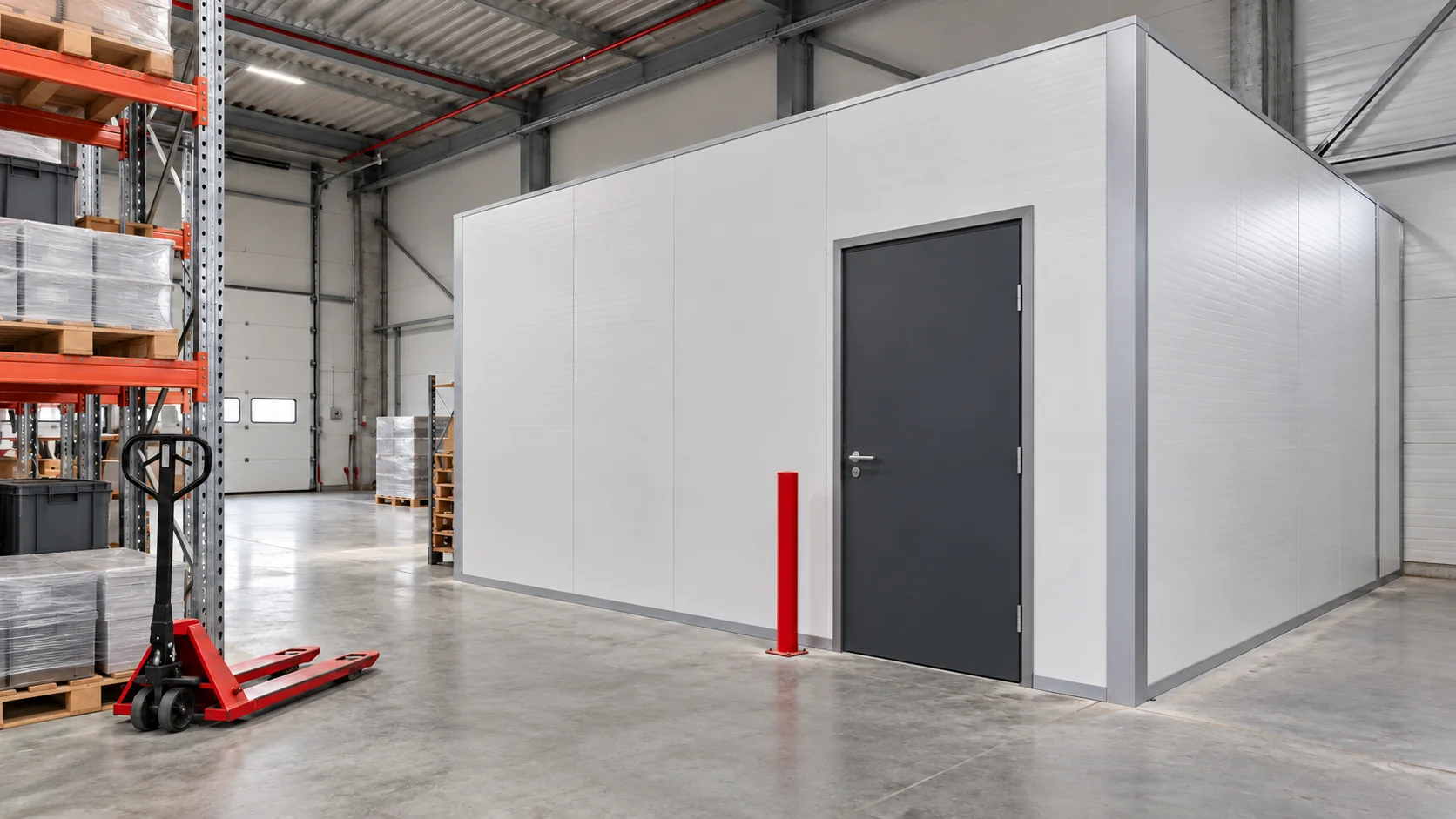
A low price for a 40 mm wall panel is useful only if the panel suits the wall you need to build. Before comparing square metre rates, establish the indoor temperature, wall dimensions and performance requirements. Then work out how much material you must buy and what it will cost to install it. An unheated service area, an internal partition and the outside wall of a heated workshop have different thermal, moisture and fire requirements. The 40 mm dimension tells you the thickness. Check the product documents and the design of the complete wall to decide whether it is suitable.
In this guide
Define what the wall must do
Consider the building’s use over the next few years. If heating and permanent workstations are already planned, the cheapest enclosure today may complicate the conversion. Replacing walls later means removing flashings, moving services and interrupting operations. Make the decision now if the future use is known.
Find out what the quoted rate buys
Ask for the core type, facing thicknesses, profile, coatings and system designation. Check whether the price is for first-grade stock, seconds or the end of a batch. ‘40 mm wall panel’ tells you none of this. Verify whether the rate is per square metre, linear metre or individual panel.
For a ‘from’ price, ask which quantities, lengths or colours qualify. Do not apply it to the entire order before receiving an itemised quote. A dated price tied to an identified batch is a useful comparison; an advertising headline alone is not.
Work through a €17.13/m² example
For illustration only, take a net rate of approximately €17.13/m². For 100 m², the material comes to about €1,712.73 net, or €2,106.66 gross if VAT is assumed to be 23%. The unit rate is rounded. This example is neither a current offer nor a statement that the assumed tax rate applies to every order.
If only 88 m² of the 100 m² purchased can be installed, divide the material cost by 88. The result is about €19.46 net per square metre of finished wall, before accessories, freight or labour. Compare this usable-area figure with the price per square metre purchased.
Identify costs driven by the layout
Openings, narrow wall bays and mismatched lengths mean more cutting and finishing. Measure trims along the edges and junctions instead of treating them as a percentage of the panel price. A single uninterrupted wall can take less work than a small room with several doors and the same surface area.
Include fixings matched to the structure, seals and preparation of the supports. A thinner panel may save little if it needs an extra subframe. Do not judge the permissible rail spacing by appearance. Check the specific product’s load tables and the design before ordering.

Consider everyday wear on the wall
Pallets, equipment and doors can strike the walls of a small store. Plan impact protection and clear routes rather than relying on thin metal facings to withstand every knock. Choose the coating for the environment, cleaning method and humidity. The price of the core says nothing about surface durability.
Keep the plinth and corners accessible for inspection. Joints need particular attention where temperature and humidity differ on opposite sides. Greater thickness will not fix a badly sealed junction, and a good junction cannot supply missing insulation. Check both.
Identify exactly where the saving comes from
Compare at least two options: the 40 mm batch and a product specified for the building’s intended long-term use. Keep building dimensions and scope identical. Record whether the difference comes from the panel price, less waste, simpler delivery or dropping a required property. Giving up required performance is not a saving.
If the thin panel meets the brief, there need be no extra spend. Keep the specification and installation details for future extensions. Include coating damage and fixings in maintenance inspections. A low-cost wall must remain useful after construction, not merely make the first estimate look attractive.
Frequently asked questions
Is a 40 mm panel suitable for a heated room?
Thickness alone cannot settle this. Check the specific product, design temperature, project requirements and all components of the wall.
Does the price per square metre include screws and flashings?
Only if the quote expressly includes them. Check each line’s unit and quantity, as well as freight and what the unloading charge covers.
7 branches. Materials closer to your project.

Free quote
Materials for your project
You may also find useful…
The cost of an industrial building includes the work needed to run the business inside it. Alongside the frame and cladding, allow…
If you plan to work on a roof in Poland, first describe exactly what will change. Replacing the covering, altering the structure…
Start a roof renovation by identifying the cause of the problem and the condition of the structure. Replacing the sheets alone may…
Preparing an investment covers the plot, the design, the correct procedure and the documents needed to start work. The scope depends on…
Flat-roof insulation selection starts with the position of the waterproofing. In a conventional warm roof it protects the insulation from above; in…
To compare tile-effect steel roofing prices, convert the panel price into a price per square metre of installed cover. You need the…
A metal roof can offer environmental benefits, but these do not follow from the recyclability of steel alone. Production, the quantity of…
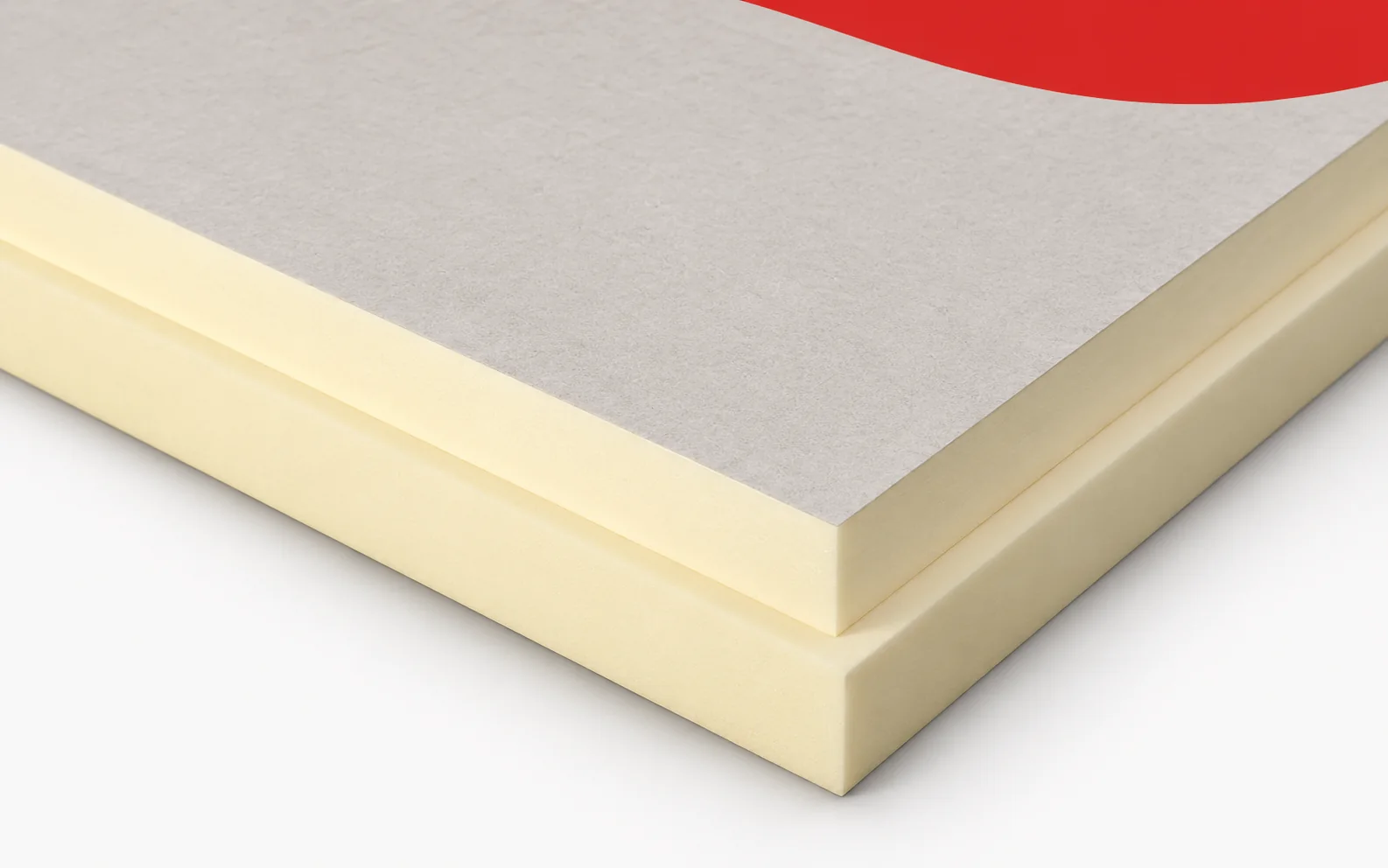
The same PIR thickness appears in two quotes, but one board has an aluminium facing and the other a mineral fleece. The…