

Mineral wool sandwich panels
Will mineral wool sandwich panels make an industrial hall quieter?
A mineral wool core can help control noise, but the first question is where the sound is causing trouble. If workers struggle to hear one another in the hall, the answer may be to quieten a machine, fit an enclosure or reduce reverberation. If the noise reaches a neighbouring office or escapes outdoors, trace how it travels through walls, openings and the structure. Both problems can occur together. A standard panel with solid steel facings and an acoustic panel with a perforated facing serve different purposes. Choose the panel to suit the noise source and the way the whole enclosure is built.
In this article
Identify where the noise causes problems
Record when the noise occurs, how long it lasts and which machine produces it. A steady fan noise calls for a different assessment from the low hum of a compressor or a series of impacts. A decibel reading alone tells you too little to choose a panel: you also need to know the frequencies involved and how the reading was taken.
Rw describes the tested element, not the finished hall
The weighted sound reduction index Rw lets you compare elements tested under specified conditions. The spectrum adaptation terms C and Ctr help relate the rating to different types of noise. You may also encounter the indices RA1 and RA2. Compare like with like: the largest number in one column is of little use alongside a different index in another.
One 100 mm acoustic wall panel with a mineral wool core and a perforated facing has declared ratings of Rw = 31 dB, RA1 = 29 dB and RA2 = 27 dB. These figures refer to that particular panel configuration. They do not apply to every mineral wool panel or predict a reduction of exactly 31 dB in the office next door.
A solid steel facing limits sound absorption
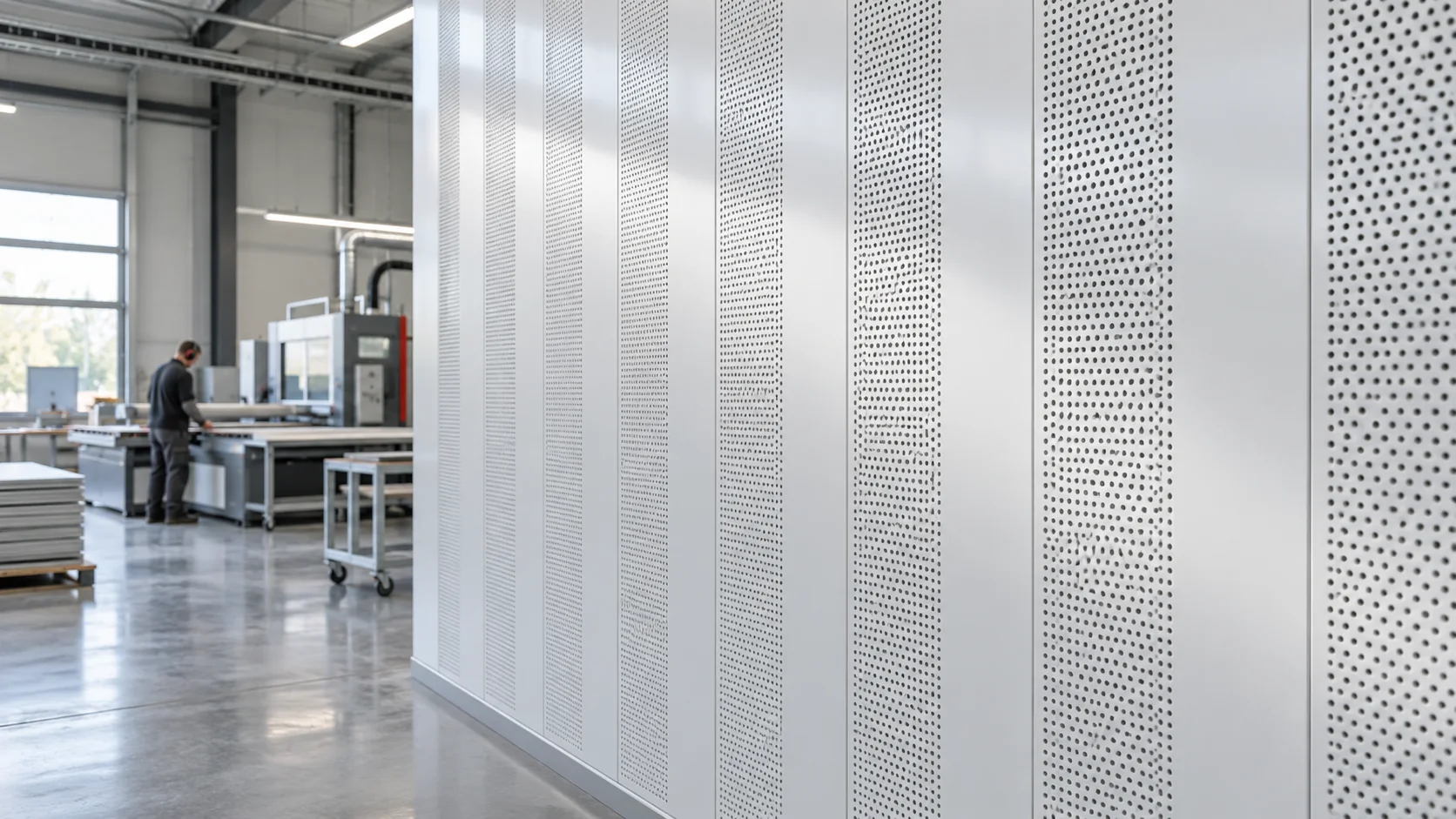
Sound insulation and sound absorption serve different purposes. A steel surface can reflect sound back into the hall even when mineral wool sits directly behind it. A standard panel with solid facings is therefore no universal remedy for reverberation.
The same 100 mm perforated acoustic panel has a declared weighted sound absorption coefficient of αw = 0.65. The value belongs to the assembly tested. Do not assign it to a solid-faced panel or assume that every perforated panel achieves it. When choosing a product, check its absorption across the relevant frequencies and the conditions for which it is intended.
Why you cannot simply subtract Rw from a noise reading
The sound level on the other side depends on the wall area, the acoustics of the receiving room and any paths that bypass the wall. Subtracting a panel’s laboratory rating from a sound level measured beside the machine will not tell you how loud the office will be. To meet a particular office noise target, assess the rooms and sources together. The findings may point to better door seals, a different enclosure, extra absorption or noise control at the machine itself.

Openings can compromise an otherwise effective wall
Doors, loading bays, ventilation grilles and unsealed joints provide routes for sound. A good panel rating tells you little about a wall with a large door standing open. Check door and window seals and the routes taken by ducts before planning to replace the entire façade.
Sound can also travel through adjoining walls, floors or the supporting frame. If a machine transmits vibration into the frame, simply increasing the panel thickness does not address that path. More complex cases call for measurements and an acoustic design that covers all significant transmission paths.
Choose a perforated facing to suit the working environment
Perforations let sound reach the absorbing layers, but they also affect cleaning and expose the assembly to its surroundings. In a dusty or wet hall, or one that needs frequent intensive washing, check that the manufacturer specifies the panel for those conditions.
Do not drill holes in a standard panel as a makeshift acoustic treatment. This changes the product without demonstrating any acoustic benefit and may compromise the protection of its core. Choose a factory-made acoustic panel with stated performance or a separately designed absorber.
Check the result at the workplace
Set a noise target before committing to work, then compare measurements before and after under similar operating conditions. Different numbers of machines running, or doors left open for one measurement but closed for the other, can distort the comparison. Workers noticing a quieter hall is valuable feedback; where a requirement must be demonstrated, you still need a measurement.
Allow for access to clean and replace components when estimating costs. A suitable acoustic treatment should still work after years of service. Identify the main noise problem first, then decide between panels, seals and additional absorption. That sequence helps avoid paying for alterations that leave the dominant noise source untouched.
Questions and answers
Does a thicker core guarantee a higher Rw rating?
No. The rating depends on the complete panel and its behaviour at different frequencies. Check the test results for the thickness and configuration under consideration; do not assume a proportional increase.
Can a perforated panel replace machine vibration isolation?
No. Absorbing airborne sound and limiting vibration transmitted through the structure are different tasks. Both may be necessary, with a separate solution chosen for each.
7 branches. Materials closer to your project.

Free quote
Materials for your project
You may also find useful…
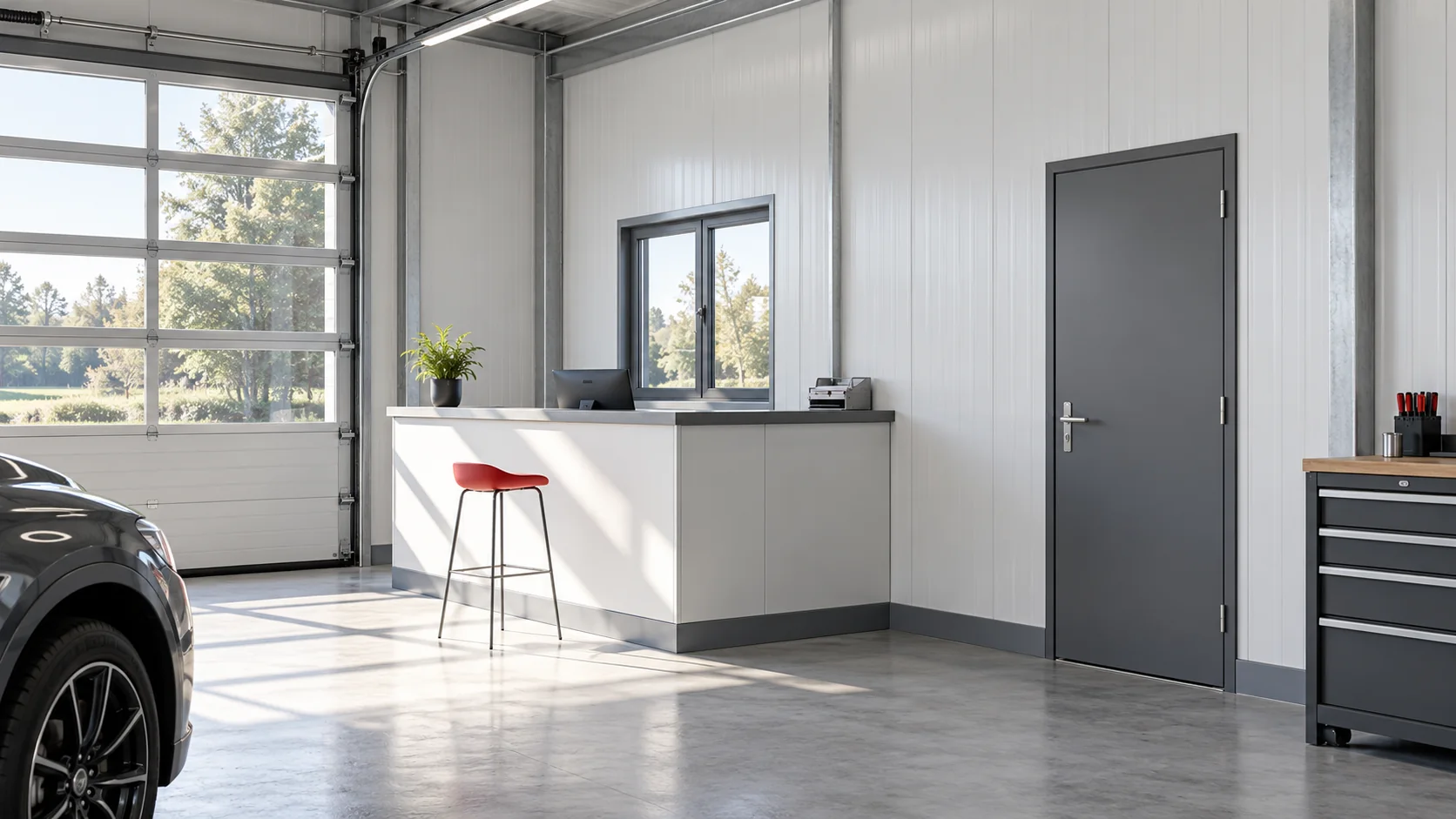
Many mineral wool wall panel ranges include a 100 mm option. Panels of this thickness can serve different buildings, provided their performance…
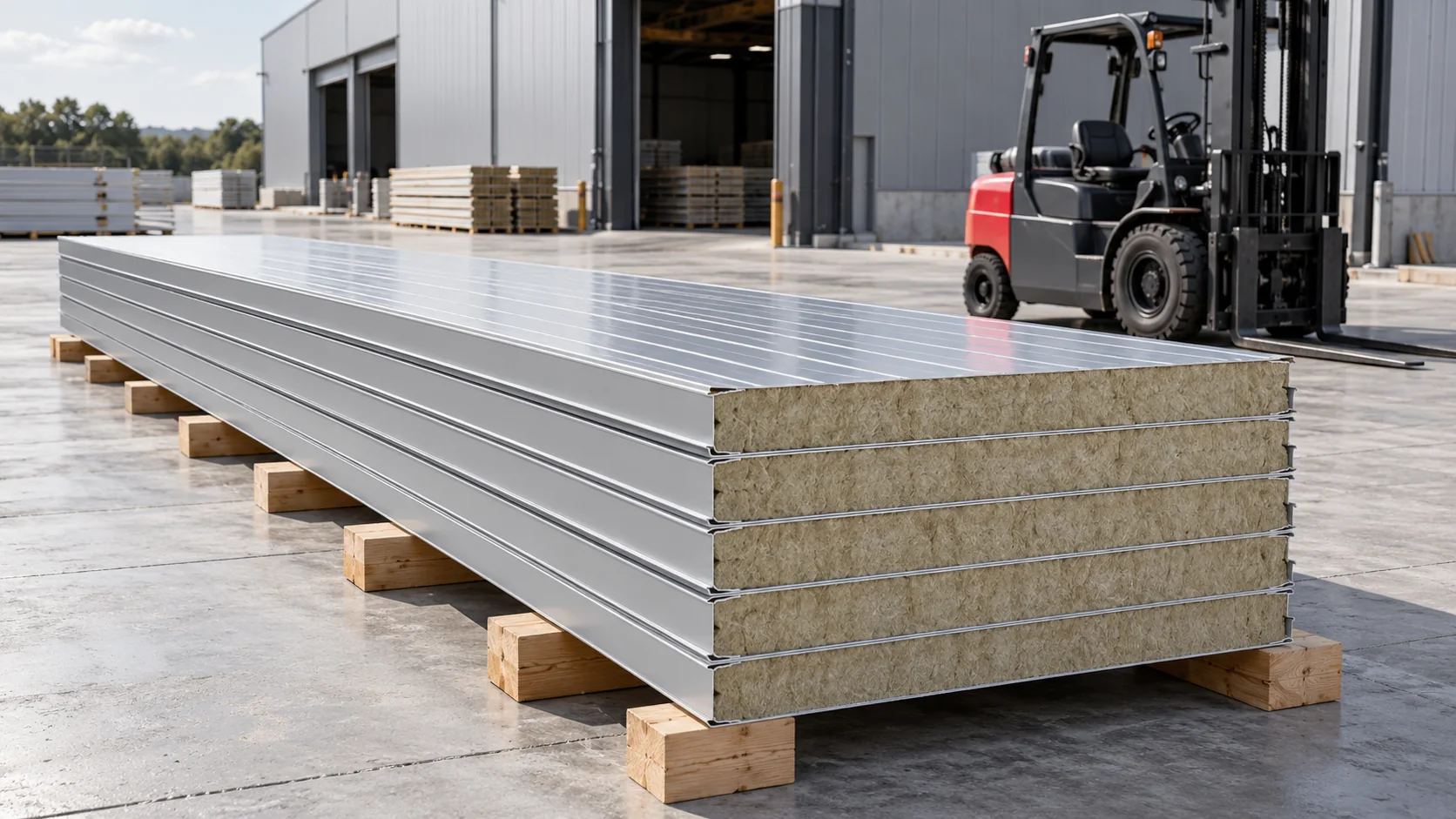
Weight per square metre helps compare panels, but the site team needs the weight of the whole unit. This depends on length,…
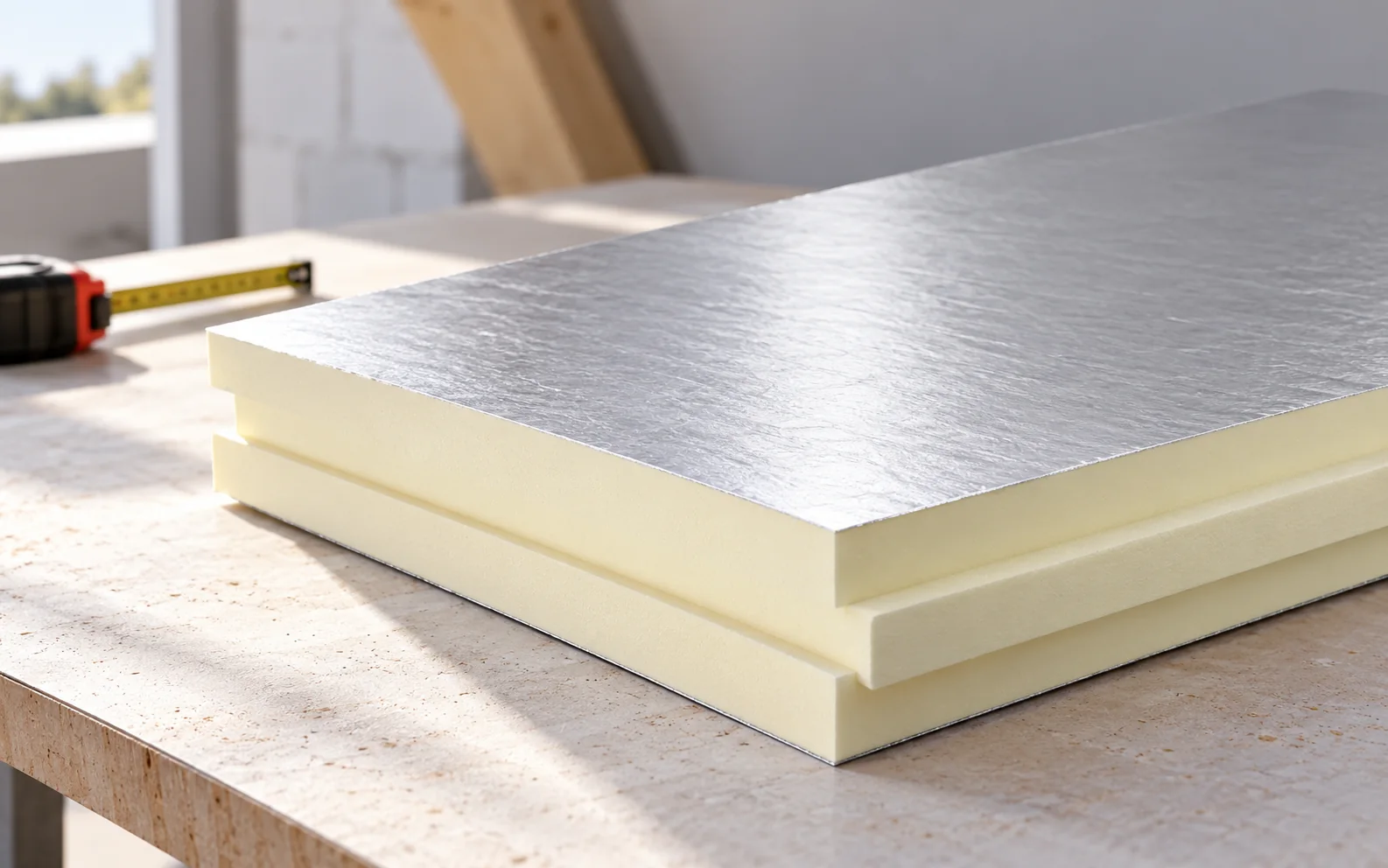
Select roof insulation for the layer arrangement, available height and loads. PIR often achieves the required thermal resistance at a smaller thickness.…
A fibreglass lining on the underside of a farm building roof can make the interior easier to clean if the material suits…
A sandwich panel spans between supports. The frame must suit the type of panel and its orientation. For mineral wool walls, the…
A mineral wool sandwich panel can help a wall meet its fire and thermal requirements. In everyday use, the panel’s weight, the…

Start with the panel price per square metre, then work out the cost of the finished wall. Thickness, facings, coating, panel lengths…
Mineral wool and a finished sandwich panel have separate fire classifications. The panel also contains facings, coatings and adhesive. Check both the…