

Choosing sandwich panels
What does the Polish term ‘płyta obornicka’ mean and how does the panel work?
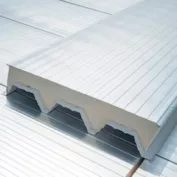
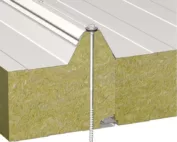
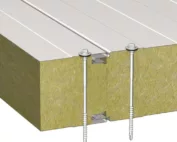
The Polish term ‘płyta obornicka’ is a common name for a sandwich panel. A typical panel has two steel facings bonded to an insulating core, so a single prefabricated component provides both the finished cladding surface and insulation. The facings carry tension and compression, while the core keeps them apart and helps transfer loads between them. This allows the panel to span between its designed supports. The name alone tells you little about its load capacity, thermal performance or fire classification. To establish what it can do in a particular building, identify the panel, the supporting frame, the fixings and the joint details.
In this article
How the panel layers work together
Damage to the bond can have more serious consequences than a scratch in the coating. Do not peel away a facing and substitute another insulation material for the core. The declared properties of a factory-made panel apply to its specified construction, including the bond between its layers.
How the core affects panel properties
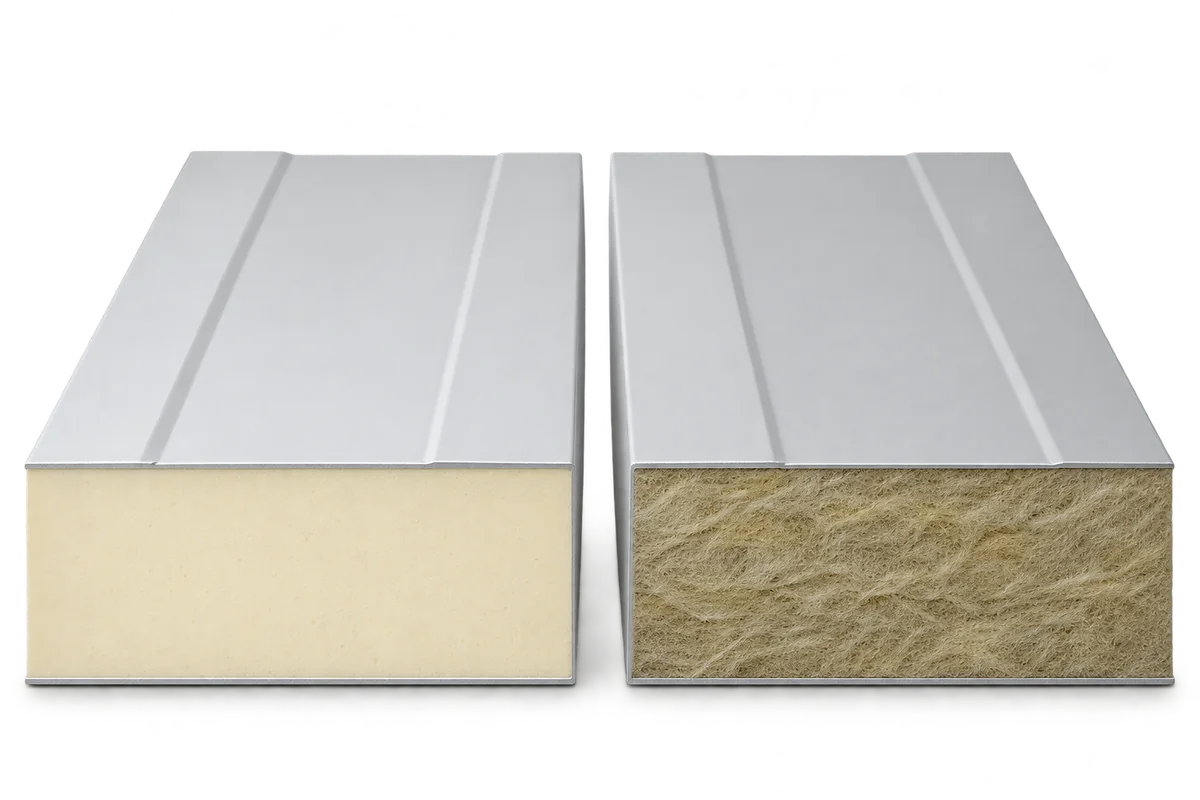
Available core materials include PIR, PUR, expanded polystyrene (EPS) and mineral wool. Their structure affects the performance of the finished panels. Compare thermal insulation, fire performance, weight, load capacity and permitted applications using the specification for each product. None of those properties is defined by the colloquial name.
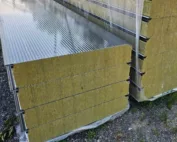
A cut edge cannot reveal every specification. Two panels with similar-looking foam may have different core formulations or facings. Check that the documentation identifies the exact product, particularly when buying used panels or replacing part of an existing wall or roof.
Different roles for wall and roof panels
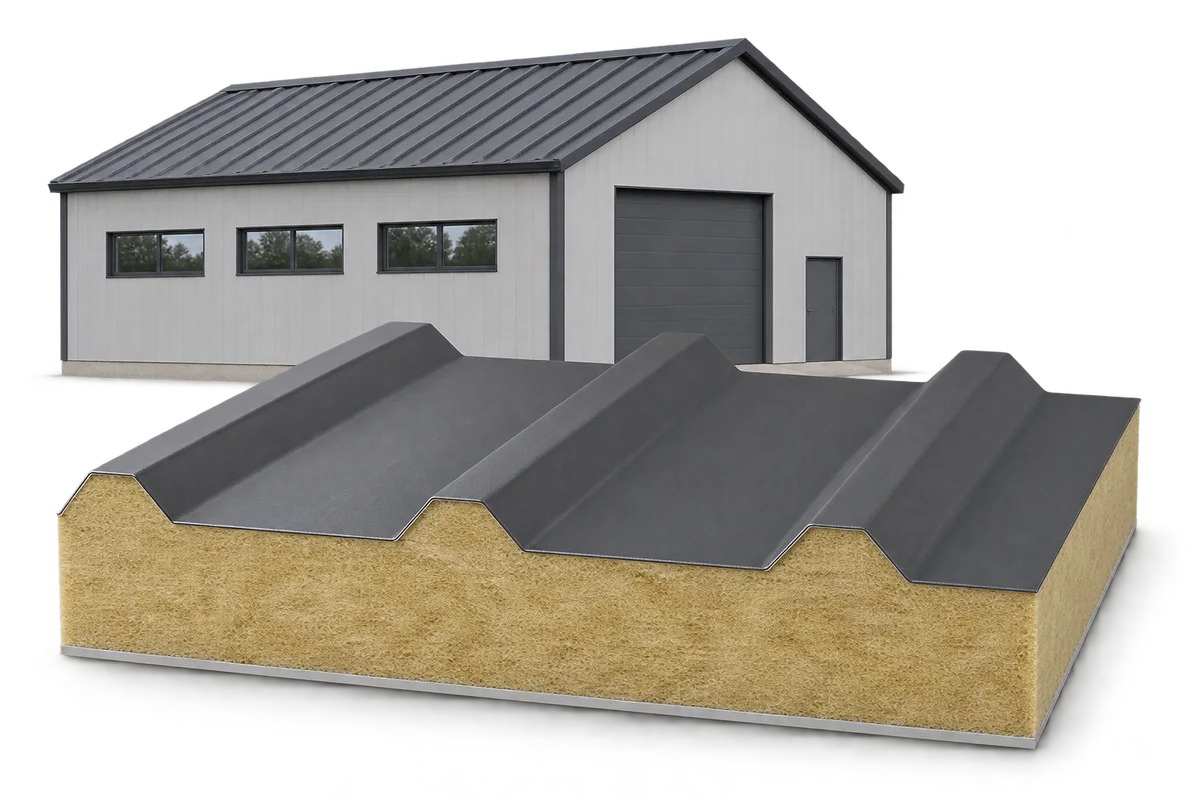
A wall panel may form external cladding or an internal partition, depending on its intended use. A roof panel has a profile, joints and support requirements suited to a sloping roof. Selection must take account of snow loads, drainage and the requirements for the roof covering.
Matching dimensions do not make the two types interchangeable. An insulation board without steel facings is a different product again. It provides one layer in a larger assembly. When requesting a quote, state whether you need a wall panel, a roof panel or an insulation board.
What supports the building envelope?
Panels need suitable supports and fixings. They do not take the place of foundations, columns and the rest of the primary structure. Permissible spans depend on the particular panel, its facings, the design loads and the support arrangement. There is no single span that applies to every sandwich panel.
Equipment needs its own load path. A heavy shelving unit or machine must not be fixed directly to a thin facing without a designed attachment. Providing independent supports for services during construction makes it easier to change the room later without weakening the cladding.

Choosing a panel for the way the building is used
Sandwich panels are used in industrial buildings, warehouses, garages, pavilions and plant rooms. Even buildings with the same use on paper can differ in heating, humidity, cleaning routines and fire requirements. Base panel selection on the conditions the cladding will actually face.
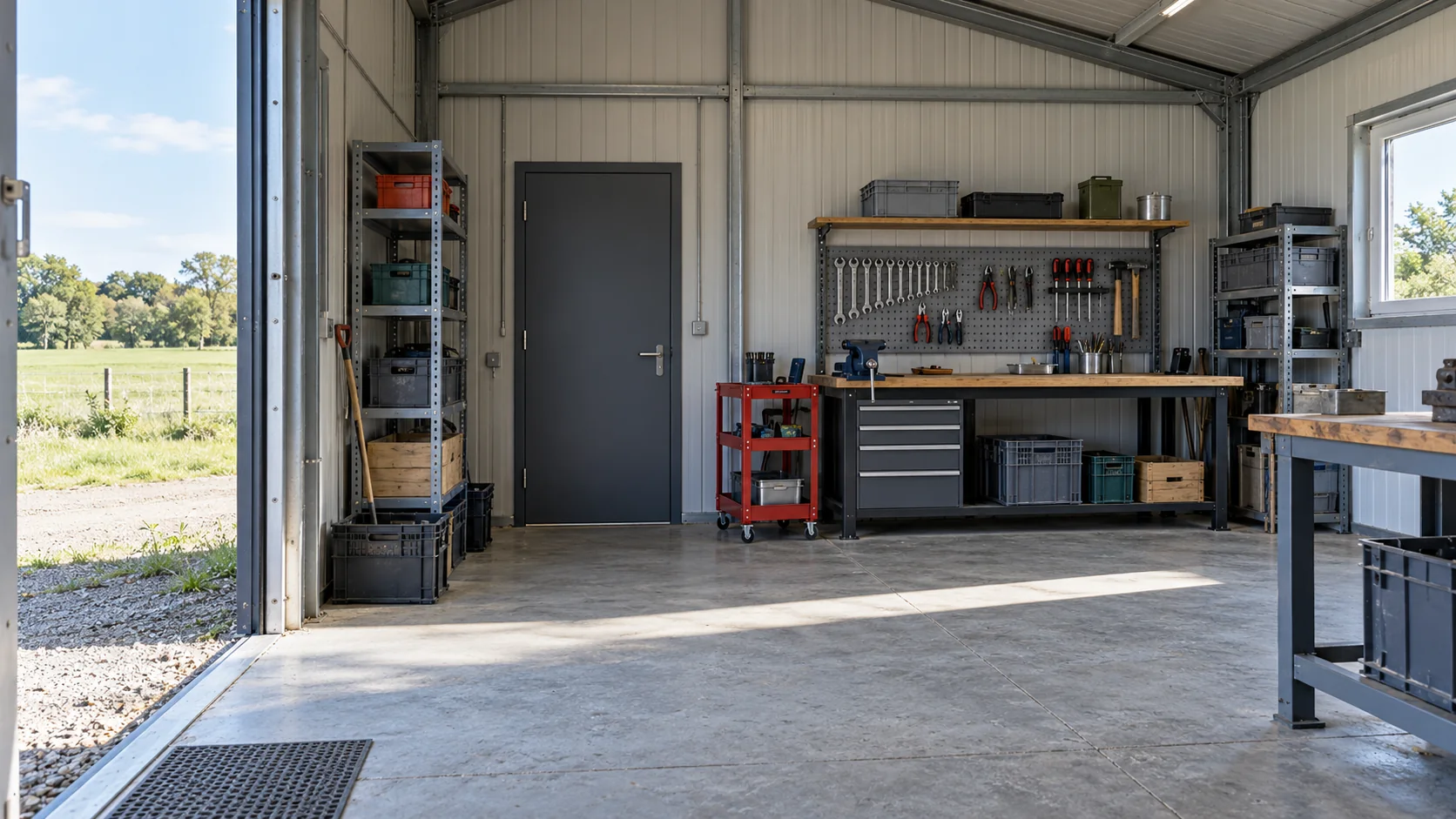
Consider a garage being converted into a workshop. The change may affect temperature, moisture production, noise and how services are fixed. Check ventilation, coatings, doors and penetrations as well as insulation thickness. Existing sandwich panel walls alone cannot establish whether the space is suitable for the new activity.
Keeping joints weatherproof and airtight
Although the panel surfaces are factory finished, the building envelope contains many junctions. Panel joints, flashings, the wall base and service penetrations help keep out water and control air leakage. Defects at these points often become apparent once the building is in use.
Select each junction detail for the panel system and its function. One filler cannot be assumed suitable for every gap. Where fire performance is specified, joints must conform to the documented assembly. In rooms subject to washdown, finishes must withstand cleaning and the edges must be accessible enough to clean effectively.
Maintaining prefabricated cladding
Inspect the finished facings, clean them using a method suited to the coating and repair damage. Attend to small defects before water reaches the core or corrosion spreads. In areas exposed to vehicle movements, independent impact guards can protect the wall.
Keep product data and photographs of junctions before they are covered. These records help you check whether a new panel will fit during an extension and how to remove the old one. Prefabricated panels speed up construction of the envelope. Its performance in use depends on how the complete system is detailed, documented and maintained.
Frequently asked questions
Is a sandwich panel a ready-made load-bearing wall?
Do not assume so. A typical sandwich panel acts as cladding spanning between supports. The design must define its structural role and how it is fixed.
Can any panel be moved to another building later?
Reuse requires product identification and checks on condition, dimensions and suitability for the new design. Removal can damage joints or affect the panel’s properties.
7 branches. Materials closer to your project.

Free quote
Materials for your project




You may also find useful…
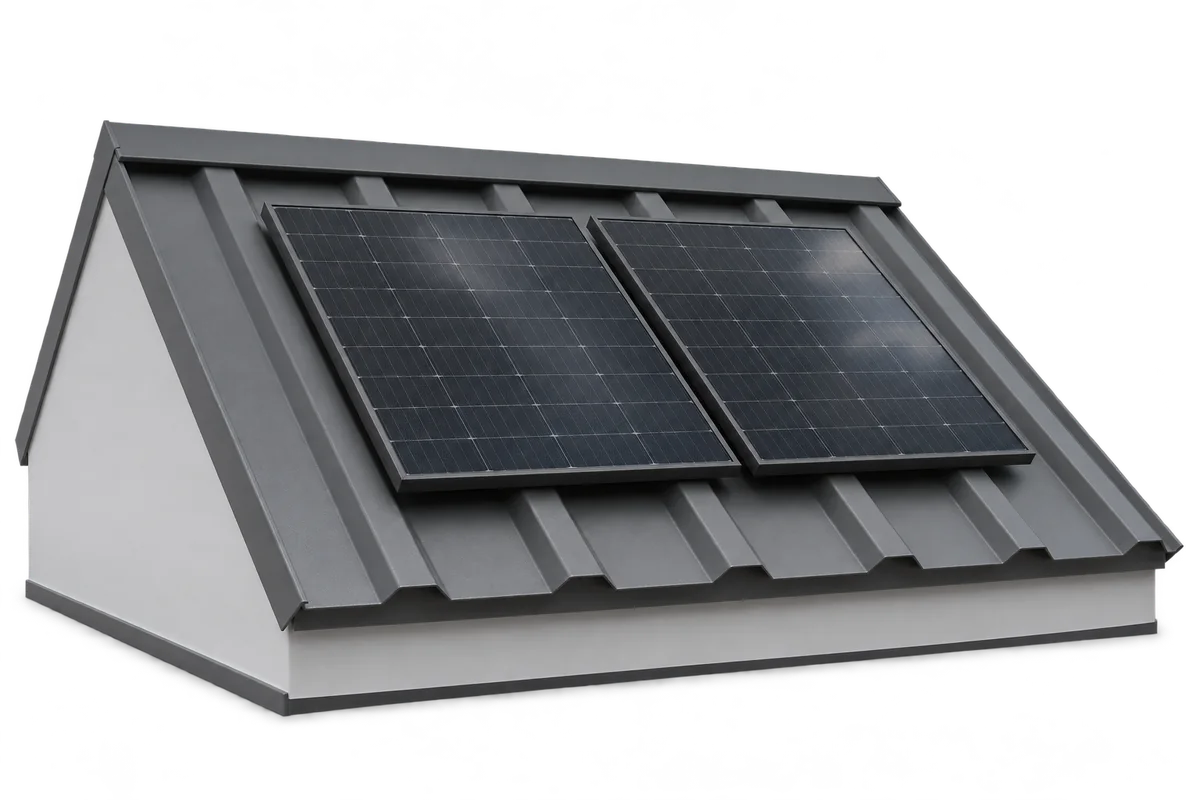
Mounting photovoltaics on tile-effect metal, trapezoidal sheet or sandwich panels requires clear responsibilities for both roof and installation. A rail that fits…
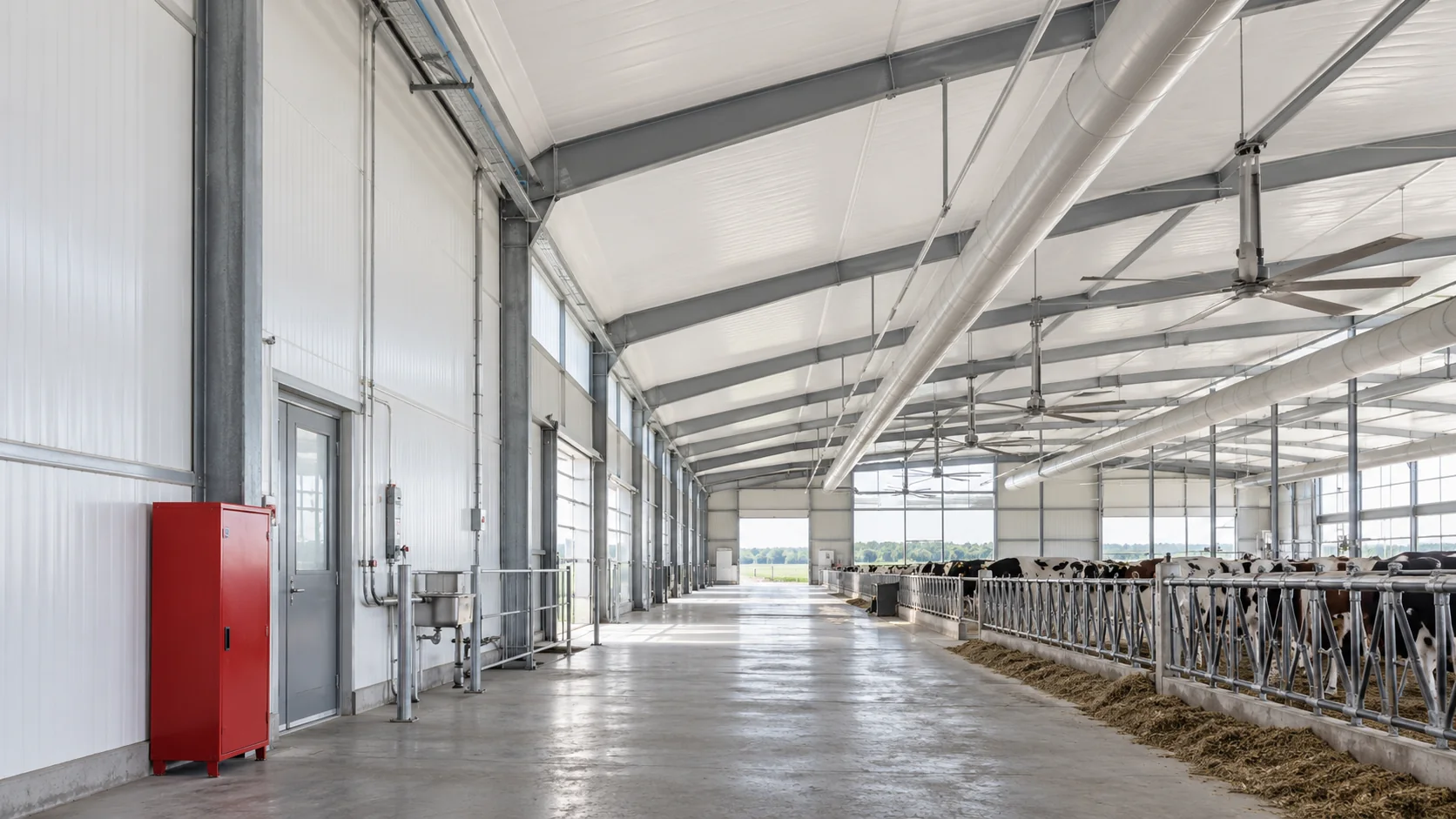
Choose roof and wall panels for a livestock building according to the housing system, animal numbers, heating, ventilation and cleaning routine. These…
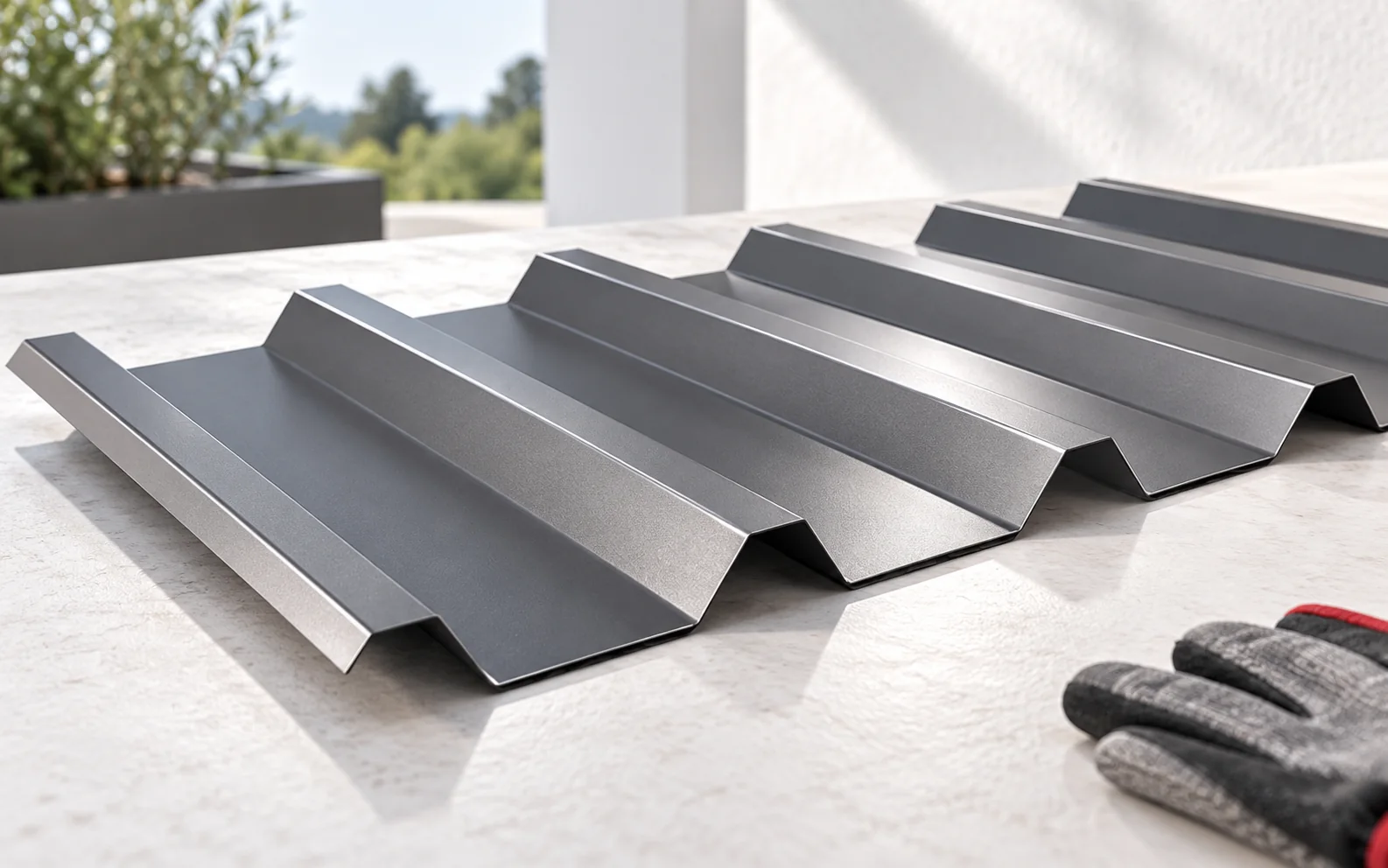
A roof over a terrace should shelter it from rain and sun without depriving the house of light. Before choosing the covering,…
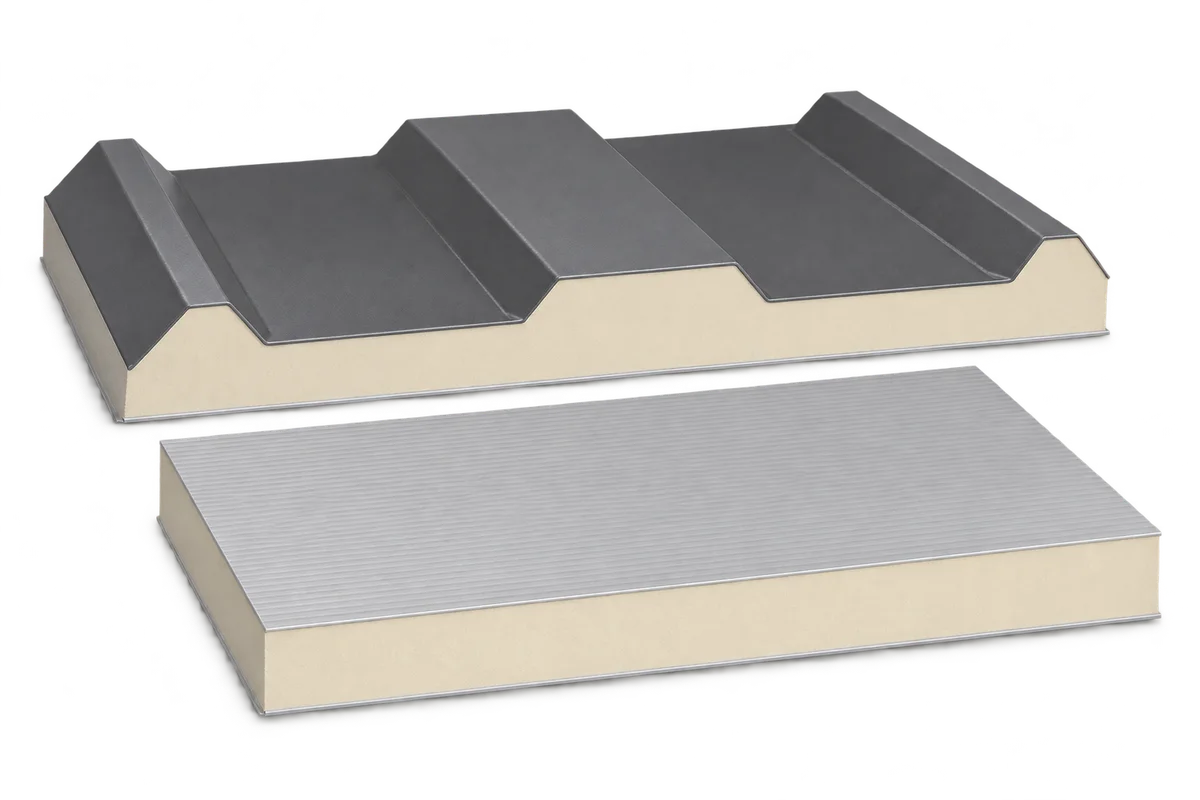
A sandwich panel combines facings with an insulating core and allows a wall or roof enclosure to be erected efficiently. However, the…
Sandwich panel quotations become comparable when they address the same function of a wall or roof. Thickness and core name alone cannot…
R, E and I describe different functions of a building element during fire exposure: load-bearing capacity, integrity and insulation. The accompanying number…
Before anyone steps onto a sandwich panel roof, establish how the roof is supported, what condition it is in and what loads…
A rate per square metre for installing sandwich panels means little until you know which jobs it covers. One contractor may quote…