

Renovation and maintenance
How to remove moss and green growth from tile-effect metal roofing
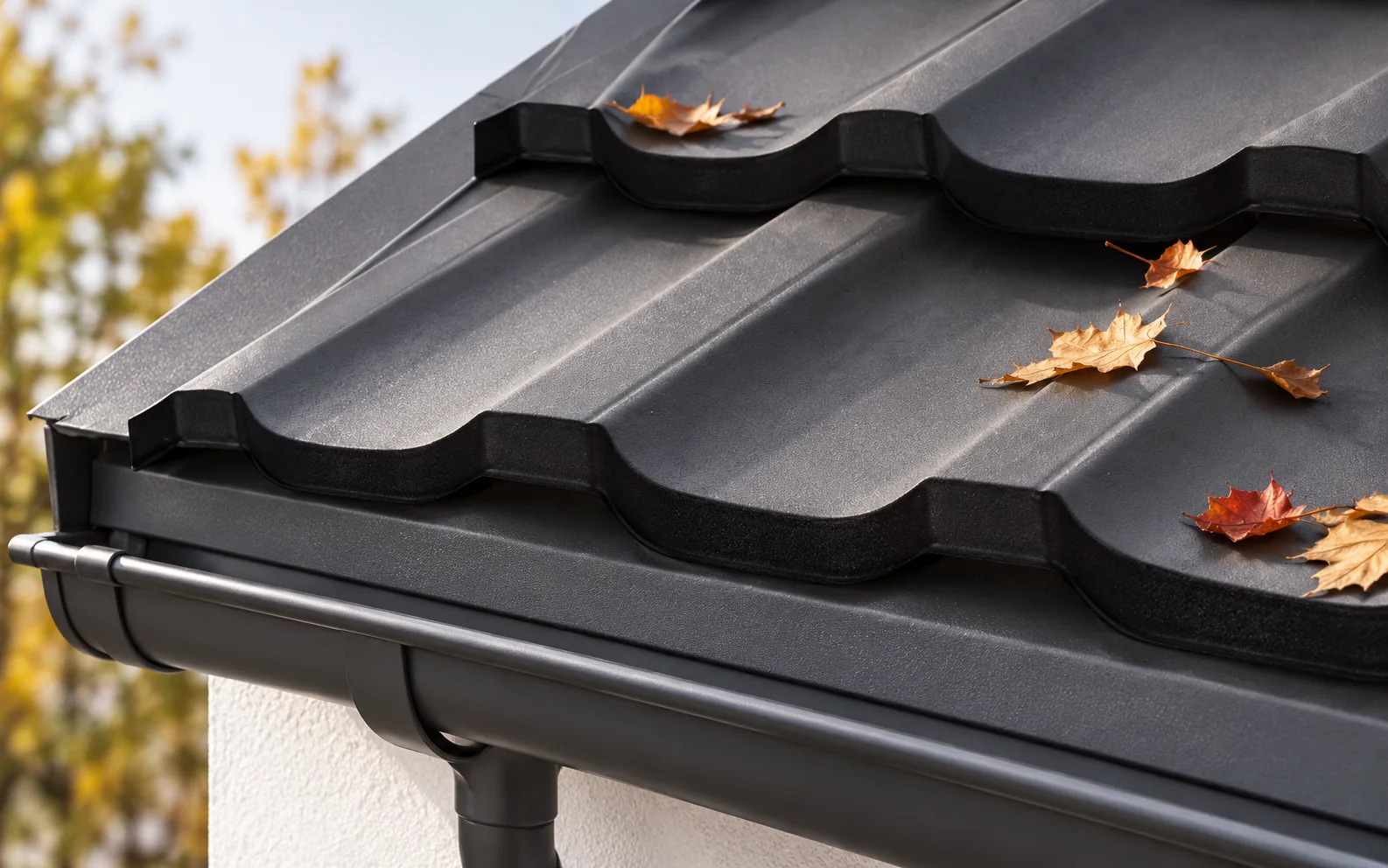
Green growth on the sheet metal must first be identified and then removed using a method that is safe for the coating. Scrubbing with a wire brush and the haphazard use of strong chemicals can cause more damage than the soiling itself. After washing, it is worth finding the places where moisture, leaves and shade persist. Pollen, algae and other contaminants can settle on the roof. Moss forms a thicker, more three-dimensional layer that retains water and fine debris. Identifying the problem helps in choosing the cleaning method. Not every change in colour requires a biocide. It is worth first examining a small area after gentle washing. If the discolouration remains, it is necessary to assess whether it relates to the growth or to the coating itself.
In this article
Does every green trace mean moss?
Pollen, algae and other contaminants can settle on the roof. Moss forms a more three-dimensional layer that retains water and fine debris. Identifying the problem helps in choosing the cleaning method. Not every change in colour requires a biocide.
It is worth first examining a small area after gentle washing. If the discolouration remains, it is necessary to assess whether it relates to the growth or to the coating itself. Matted or damaged lacquer will not regain its factory condition through stronger scrubbing. It may instead lose a further part of its protective layer.
Why does growth appear in selected places?
More often, the problem affects shaded surfaces and places that dry more slowly. Leaves trapped behind the chimney or at the gutter form a damp layer. Branches close to the roof increase the amount of debris. Soiling running down from higher elements also matters.
The growth itself does not prove that the building’s insulation is defective. Conditions on the outer surface may result from the surroundings. If, however, there are also stains from inside or permanently wet wood, a separate assessment of the roof is needed. Cleaning the roof slope does not solve the problem of damp layers.
How to prepare the roof for cleaning?
Start with the coating documentation. Check the approved agents, water temperature and washing restrictions. If data are missing, the choice of preparation must be agreed with the roofing supplier. Describing a product as universal does not mean it is compatible with every lacquer on sheet metal.
The work should be carried out by a team with safe access to the wet roof slope. The surroundings must be protected and the method of draining dirty water established. It is worth inspecting the gutters before washing so that detached growth does not block an already partially obstructed outlet.
How to remove growth without scratching the sheet metal?
Loose residues are removed gently, without prising up the laps. Soft tools and a product suitable for the coating are used on the surface. The contact time and concentration follow the product instructions. Leaving a stronger solution on for longer does not necessarily improve the result.
Metal scrapers and wire brushes should not be used. On profiled sheet metal, the edge of a pressing is easily damaged. In the case of pressure washing, the parameters are selected for the specific system. The jet is not directed under the sheets, flashings or into open joints.

Are home-made mixtures a good idea?
Vinegar, chlorine-based products, solvents and other strong preparations may react with the coating or the metal. They should not be applied to the roof merely because they work on paving stones. Compatibility with the gutters and façade elements below is equally important.
Do not mix cleaning agents. If a preparation for removing biological growth is needed, it must be intended for such use and compatible with the covering. Its label also sets out the rules for protecting the environment. After the required time, the surface is cleaned and rinsed according to the recommendations.
What to check after washing?
Only clean and dry sheet metal shows the true condition of the lacquer. Inspect the places where the growth lay, as well as the edges of the sheets. Small scratches and corrosion spots may require spot repair. The entire roof slope should not be painted merely because it was previously soiled.
Next, check the gutters, roof valleys and outlets. Moss residues must not remain in the downpipe. It is also worth checking whether accumulated debris has deformed the joints. If water stands in a given place despite cleaning, the cause of its retention must be determined.
How to limit the return of growth?
Regular removal of leaves and inspection of shaded places bring the greatest benefit. Branches rubbing against the sheet metal should be moved away in a manner safe for the tree and the building. Efficient drainage shortens the time moisture remains. However, it cannot be promised that growth will never return.
Do not fit random strips of another metal in the hope of permanent protection. Water running off an incompatible material may worsen the corrosion conditions of the covering. Any additional elements should be approved for contact with the specific sheet metal. Recording the date of cleaning helps in choosing the future maintenance frequency.
Tip before ordering
Choose a small area in a less visible place and carry out a trial of the entire process: preparation, cleaning, rinsing and drying. Only a dry surface allows any discolouration to be assessed.
What is worth remembering?
Growth is removed by a method suited to the coating, not by the force of the tool. After washing, care must be taken to ensure water drainage and to remove accumulated debris. This method of care makes it possible to improve the appearance of tile-effect metal roofing without unnecessary risk to its protective layer.
7 branches. Materials closer to your project.

Free quote
Materials for your project
You may also find useful…
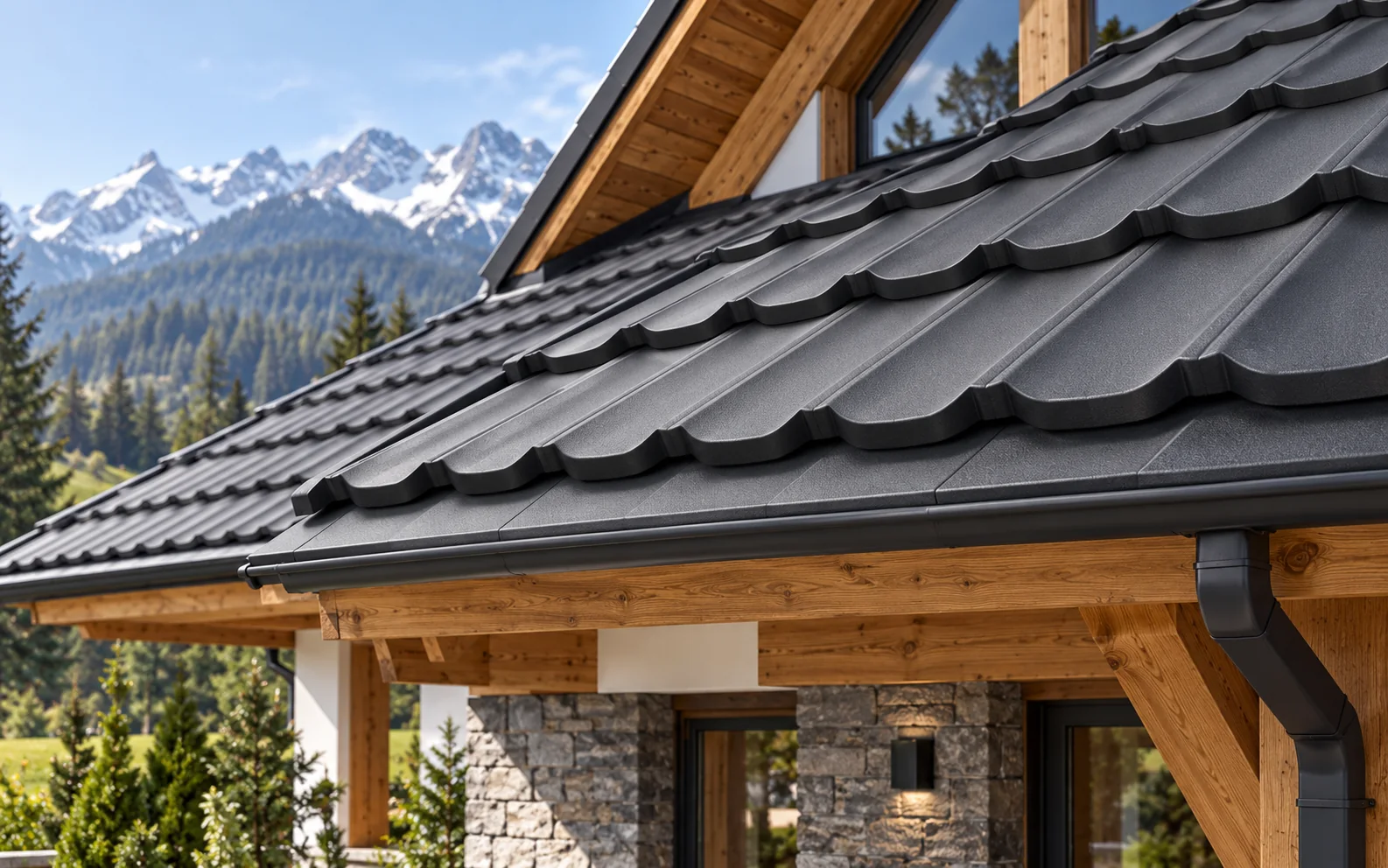
A house inspired by mountain architecture needs a roof covering that matches the proportions of the building form and the conditions of…
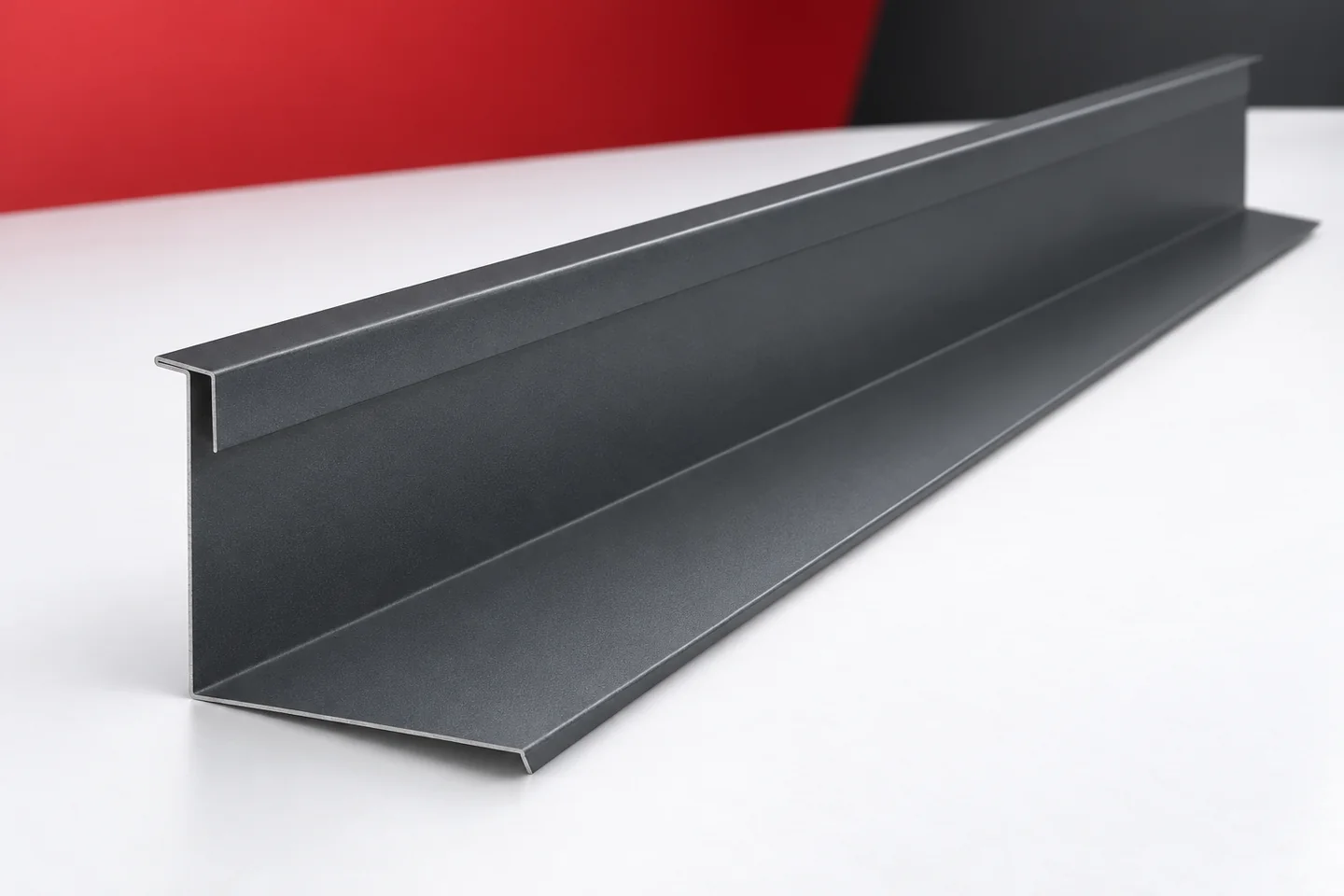
Chimney flashings are ordered for a specific roof penetration. The dimensions of the chimney, the pitch of the roof slope, the profile…
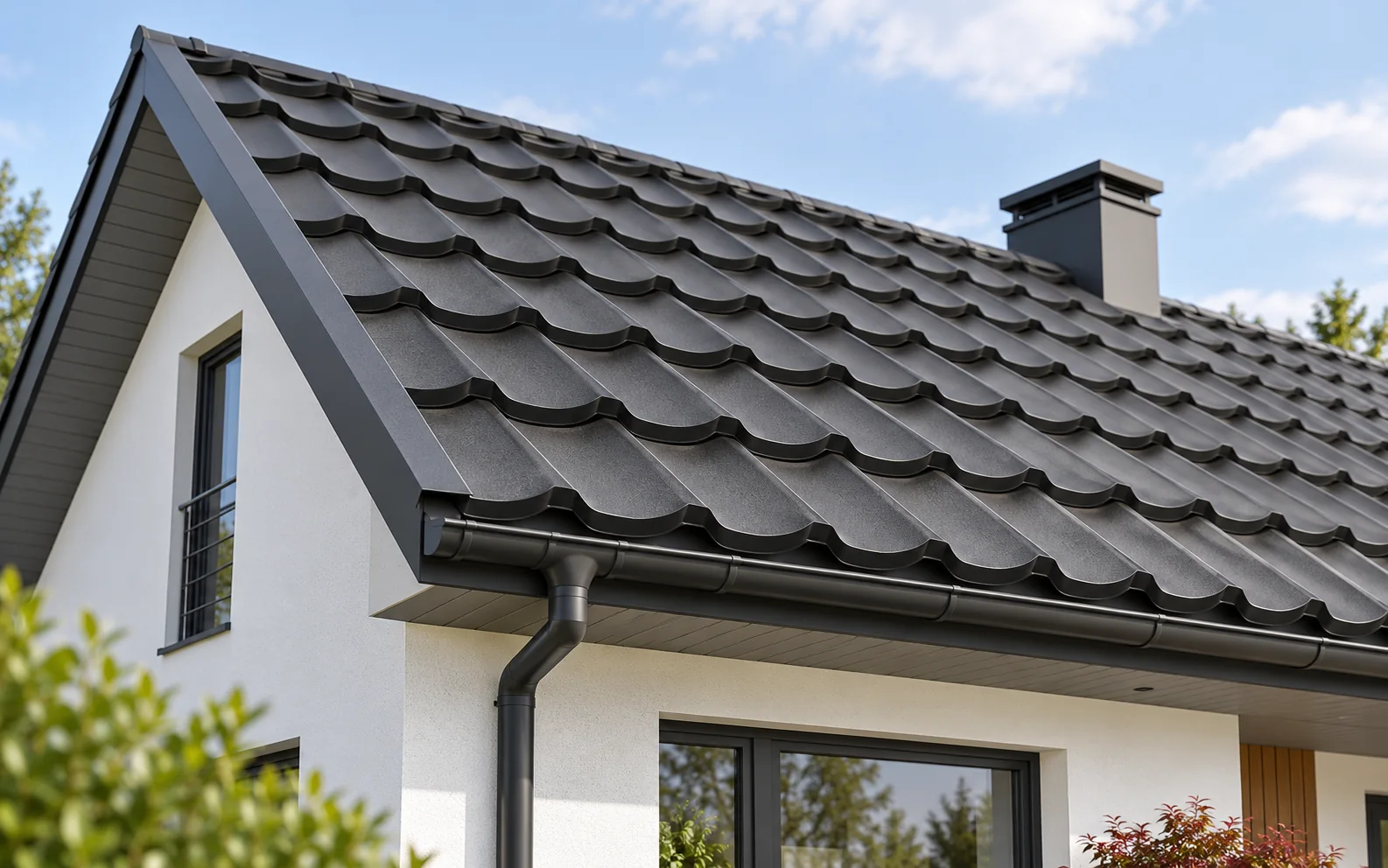
A gable roof, a mono-pitch roof, a hipped roof, a multi-pitched roof and a flat roof each affect the interior and the…
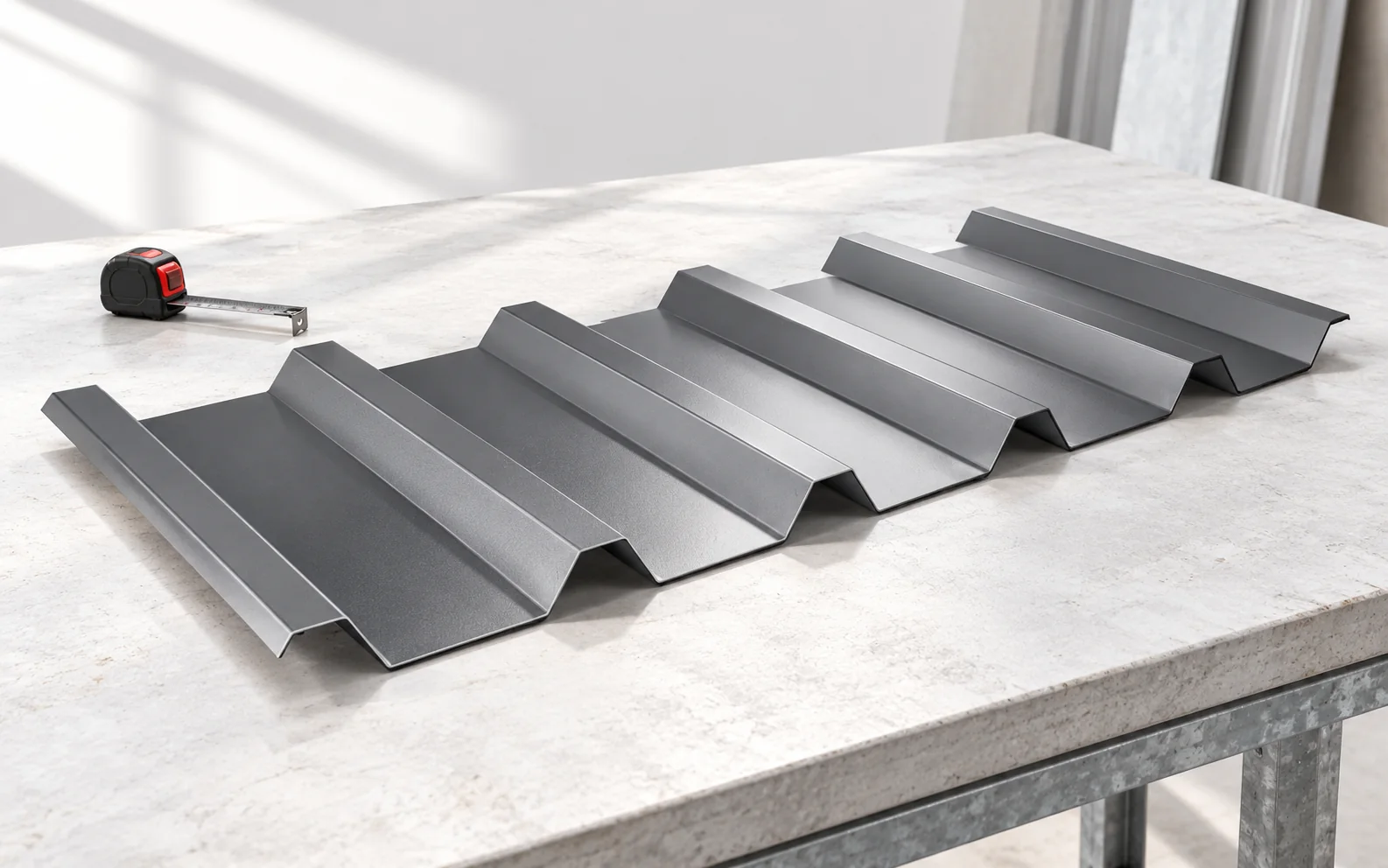
Tile-effect metal roofing and trapezoidal steel sheet can both protect a roof well, but they suit different expectations and roof layouts. The…
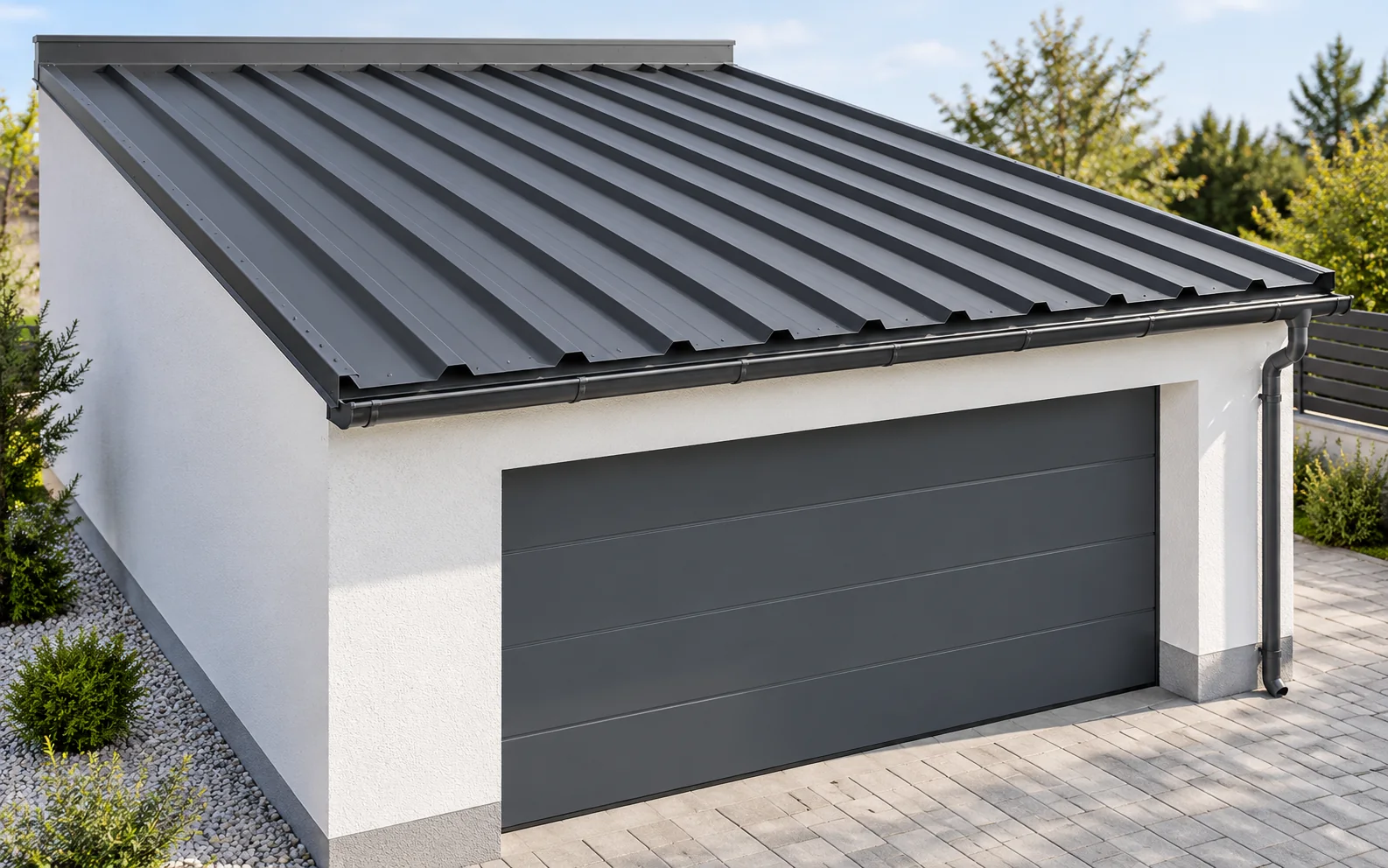
Single-skin trapezoidal steel sheet can suit an unheated garage if its load capacity matches the support spacing and the roof design allows…
Colour is the last visible part of a picket's protection. Beneath it lies a layer system that helps protect the steel. That…
The structure of a hipped roof must take account of four roof slopes, the hips and the path by which loads are…
A sensible roof budget does not have to mean choosing the most expensive material. Savings come from a simple design, a good…