
Prices and purchasing
Where can you save on a roof without compromising quality?
A sensible roof budget does not have to mean choosing the most expensive material. Savings come from a simple design, a good cutting layout and a comparison of the full scope of the offers. What is risky, however, is omitting the required layers, fixings or substrate preparation. A cheap sheet is not cheap if it later requires dismantling and repairs to the interior. A complete roof comprises the covering, flashings, fixings, the layers beneath the metal sheet and drainage. Transport and labour are additional. Two offers with a similar sheet price can produce a different final bill. The differences often stem from items that are not visible in the first line of the estimate. Also check the unit of sale. A gross square metre and a square metre of coverage do not mean the same amount of usable area.
In this article
Why is the price per square metre of sheet metal not enough?
A complete roof comprises the covering, flashings, fixings, the layers beneath the metal sheet and drainage. Transport and labour are additional. Two offers with a similar sheet price can produce a different final bill. The differences often stem from items that are not visible in the first line of the estimate.
Also check the unit of sale. A gross square metre and a square metre of coverage do not mean the same amount of usable area. With modules, the effective coverage of the panel matters. The price should be converted to the specific roof with overlaps and cutting layout, and then the missing system components added.
Where does saving begin already in the design?
Regular roof slopes and a smaller number of roof valleys can reduce offcuts and the time needed for detailing. It is worth coordinating the chimney, windows and services so as not to create unnecessary clashes. It is not always necessary to change the entire building form. Sometimes it is enough to sort out the position of a few elements in advance.
Well-selected sheet lengths help to limit waste. On a complicated roof a module may be advantageous, while on a simple roof a sheet cut to size may be better. The result must be confirmed by the cutting layout. A fixed percentage allowance for every roof does not replace such planning.
When can a cheaper material variant be sensible?
If it meets the requirements for pitch, load-bearing capacity, environment and expected appearance, it does not have to be an inferior choice. A simple T18 or T35 may suit the function of a utility building better than a more decorative covering. What matters is that the comparison concerns actual parameters, not just the name.
One should not pay extra for a property the project does not need simply because it sounds impressive. At the same time, one must not dispense with the required coating in a demanding environment. The selection should follow from the service conditions. A cheap surface poorly matched to the environment can increase the scope of later maintenance.
Why is it not worth cutting costs on fixings?
Screws and the substrate transfer forces from the covering. Their selection depends on the structure, material thicknesses and loads. Reducing the number of fasteners without checking the design can worsen wind resistance. A random substitute may also have unsuitable corrosion protection or a unsuitable seal.
Saving on repairing purlins or rafters works in a similar way. A new sheet does not automatically strengthen a damaged support. Covering up the problem makes later assessment more difficult and may force dismantling of the finished roof slope. During renovation it is worth leaving a reserve for defects revealed once the structure is exposed.

What does correctly selected insulation achieve?
Its thickness and arrangement affect heat losses and roof details. PIR can reduce the required thickness for a given resistance, but it is not always the cheapest option. EPS, XPS and mineral wool have different properties and ranges of application. The comparison should concern an equivalent building component.
Saving by leaving gaps or omitting the sealing layer worsens the effect of a good material. It is worth spending money on careful execution of joints. This also applies to sandwich panels, where a correct joint is part of how the entire enclosure works. A parameter in the panel data sheet does not describe a badly assembled corner.
How should a installation offer be assessed?
Ask for the scope of preparation, weather protection and acceptance of stages. Establish who removes waste and who is responsible for protecting the coating. The price should include safe work at height. Omitting these activities is not a neutral saving, because it affects risk and quality.
It is also worth establishing how changes and additional repairs are documented. The tradesperson should report an unsuitable substrate before installation. The lowest rate is sometimes illusory if it does not include flashings or later grows through undescribed extras. A comparable estimate protects against such misunderstanding.
How should costs after completion of construction be considered?
A roof requires inspections, cleaning and possible repairs. Access to the chimney, drain or equipment is worth planning from the outset. Difficult servicing can increase later expenses. Likewise, a lack of profile documentation makes it difficult to select a component for a local replacement.
It is not necessary to assume a fictitious service life in order to assess cost-effectiveness. It is enough to compare the warranty conditions, maintenance and scope of protection. A saving is good when it removes unnecessary cost without taking away the functions the roof needs. This applies both to the material and to the manner of execution.
A tip before ordering
Ask two bidders to quote according to a single list of items. Specify the coverage area, flashings, fixings, insulation and labour. The price difference can then be linked to a specific scope instead of guessing what is missing.
What is worth remembering?
On a roof, savings can be made through good planning and matching the product to needs. It is not worth reducing cost at the expense of the required fixings, tightness or substrate repair. A reliable quote for the entire system helps to choose an economical solution also after installation is complete.
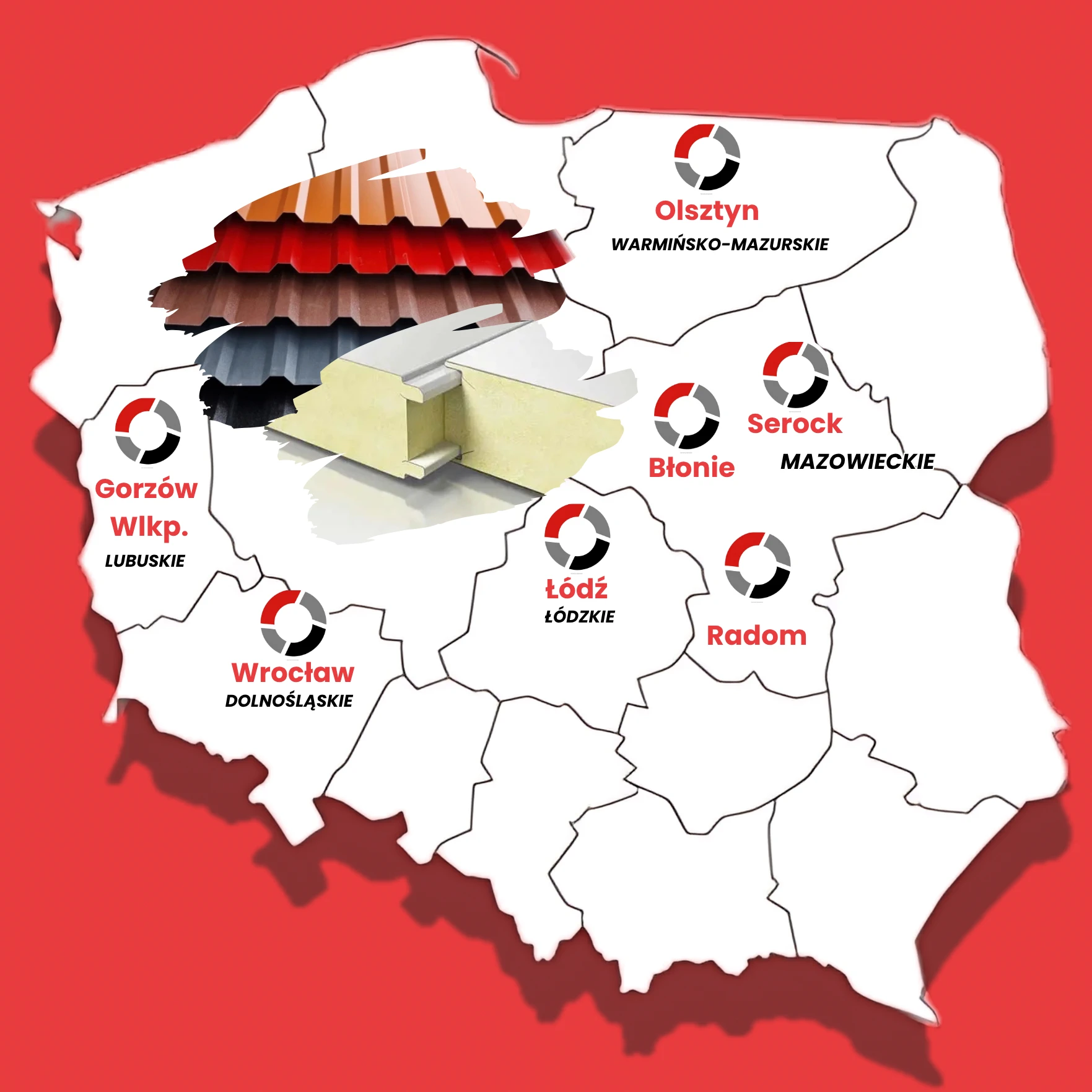
7 branches. Materials closer to your project.
Free quote
Materials for your project


You may also find useful…
The effect of a proposed solar installation on a roof warranty needs to be clarified for the actual covering and mounting arrangement.…
In Poland, the procedure for roof work depends primarily on what will change in the building. Replacing worn sheets, altering a timber…
SIP panels allow several tasks to be combined in a single prefabricated component. A rigid insulating core sits between two facings. Such…
The price of one square metre of a solar roof does not answer the question of profitability. That figure may include both…
A well-chosen profile should provide the required load-bearing capacity and stiffness with sensible use of material. The aim is not to find…
The cost of a roof depends on the area of its slopes, the sheet layout and the work needed to finish the…
Receiving flashings requires more than counting packages. Shapes, lengths, material and surface condition must be checked. A mistake noticed before installation is…
A roof with 200 m² of sloping surface can require more than 200 m² of trapezoidal steel sheet. The quantity depends on…