

Construction and design
Using modular metal roof tiles to create a small-scale pattern
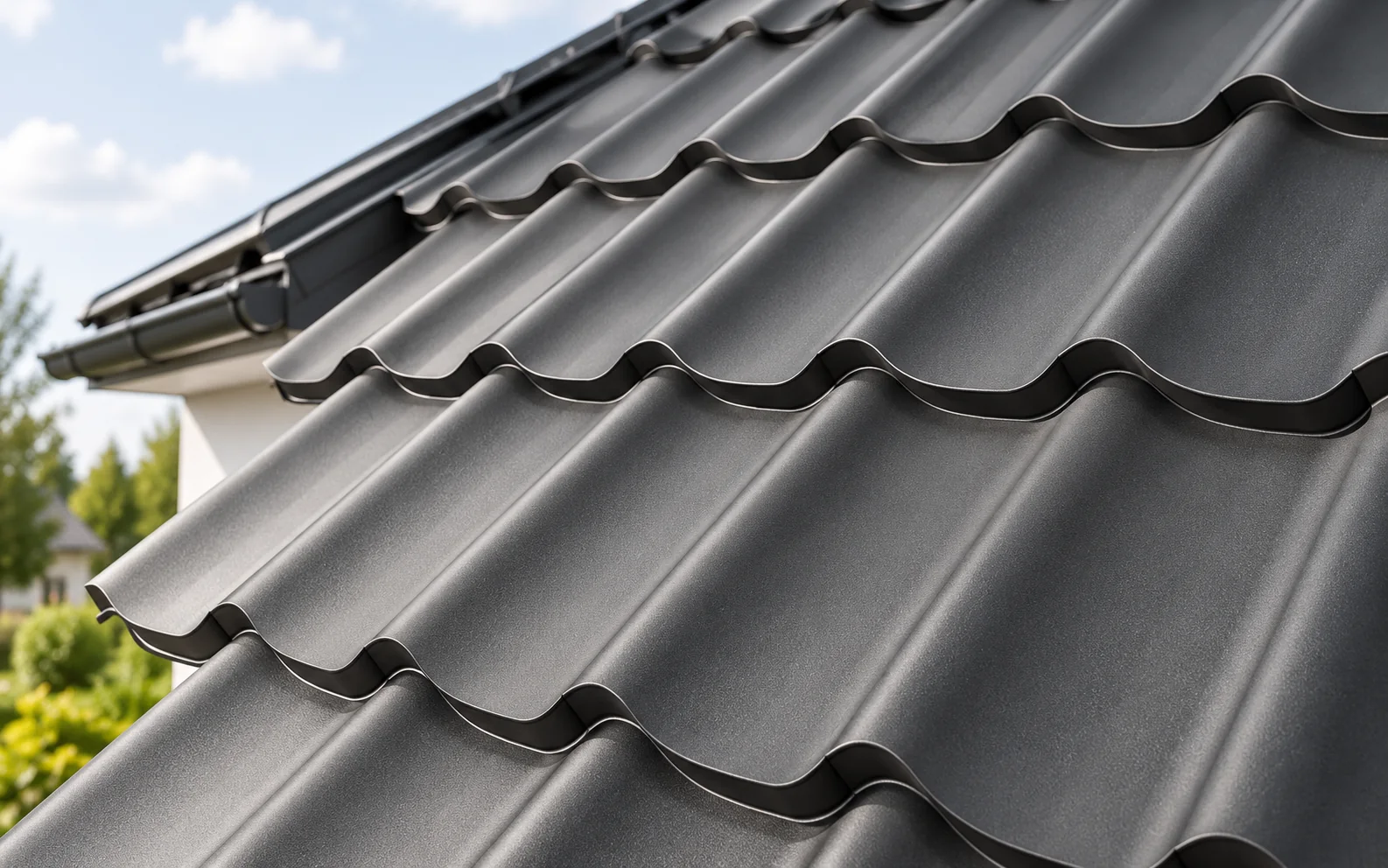
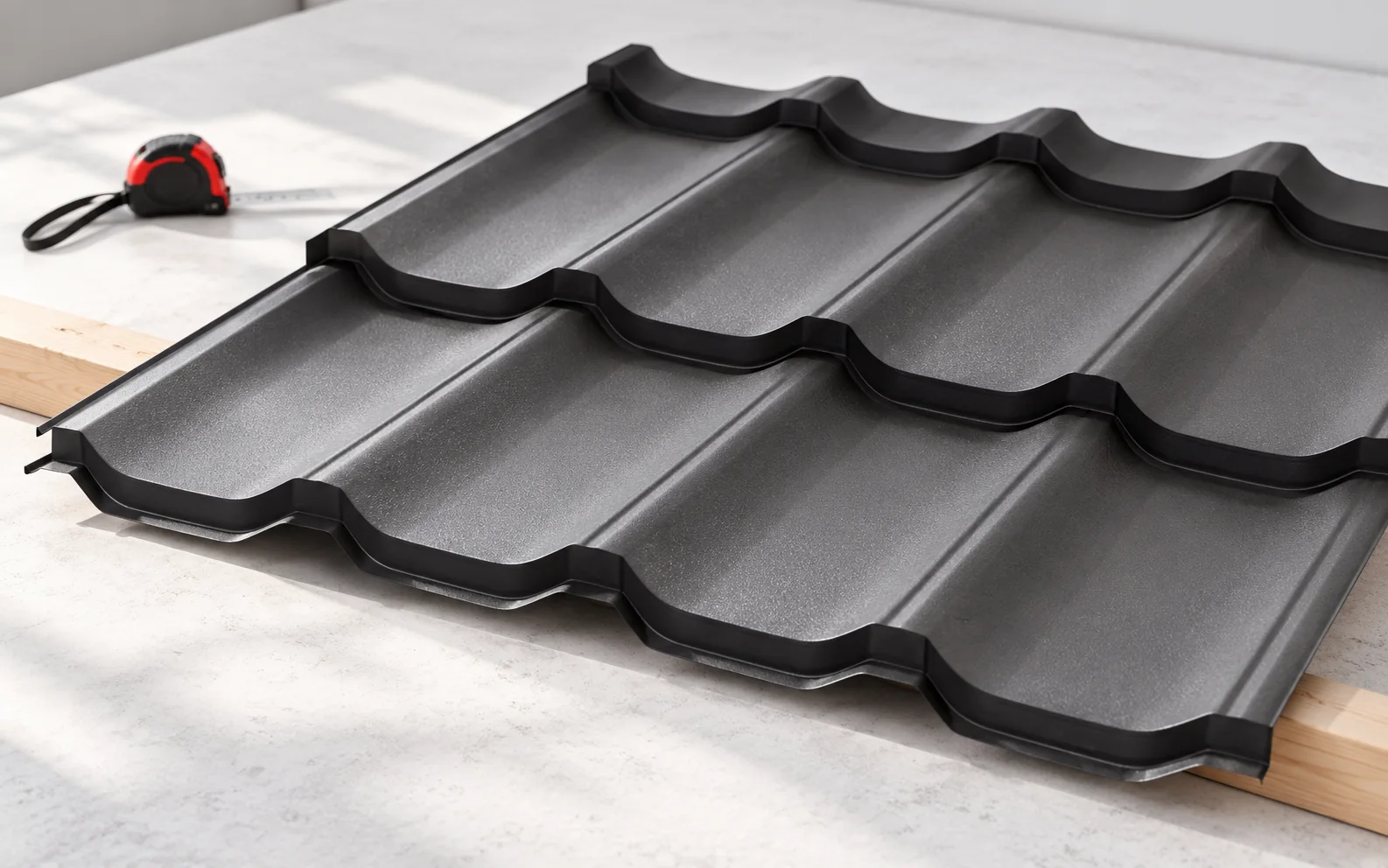
The fine roof pattern depends on the geometry of the pressings, not just on the sheet size. Modular tile-effect metal roofing can divide a roof slope into regular fields and suit houses with traditional proportions well. It is worth distinguishing appearance from the commercial format, however. A small panel does not always produce a visually delicate pattern. The appearance is influenced by the length of the repeating module, the height of the pressing and the shape of its surface. Narrow shadows and frequent divisions can produce a different effect from large, flat fields. Comparing the dimensions of the whole panel alone is not enough. A view of the specific profile over a larger roof area is needed. Coverings modelled on shingles and classic tile-effect metal roofing have different patterns.
In this article
What actually creates the covering pattern?
The appearance is influenced by the length of the repeating module, the height of the pressing and the shape of its surface. Narrow shadows and frequent divisions can produce a different effect from large, flat fields. Comparing the dimensions of the whole panel alone is not enough. A view of the specific profile over a larger roof area is needed.
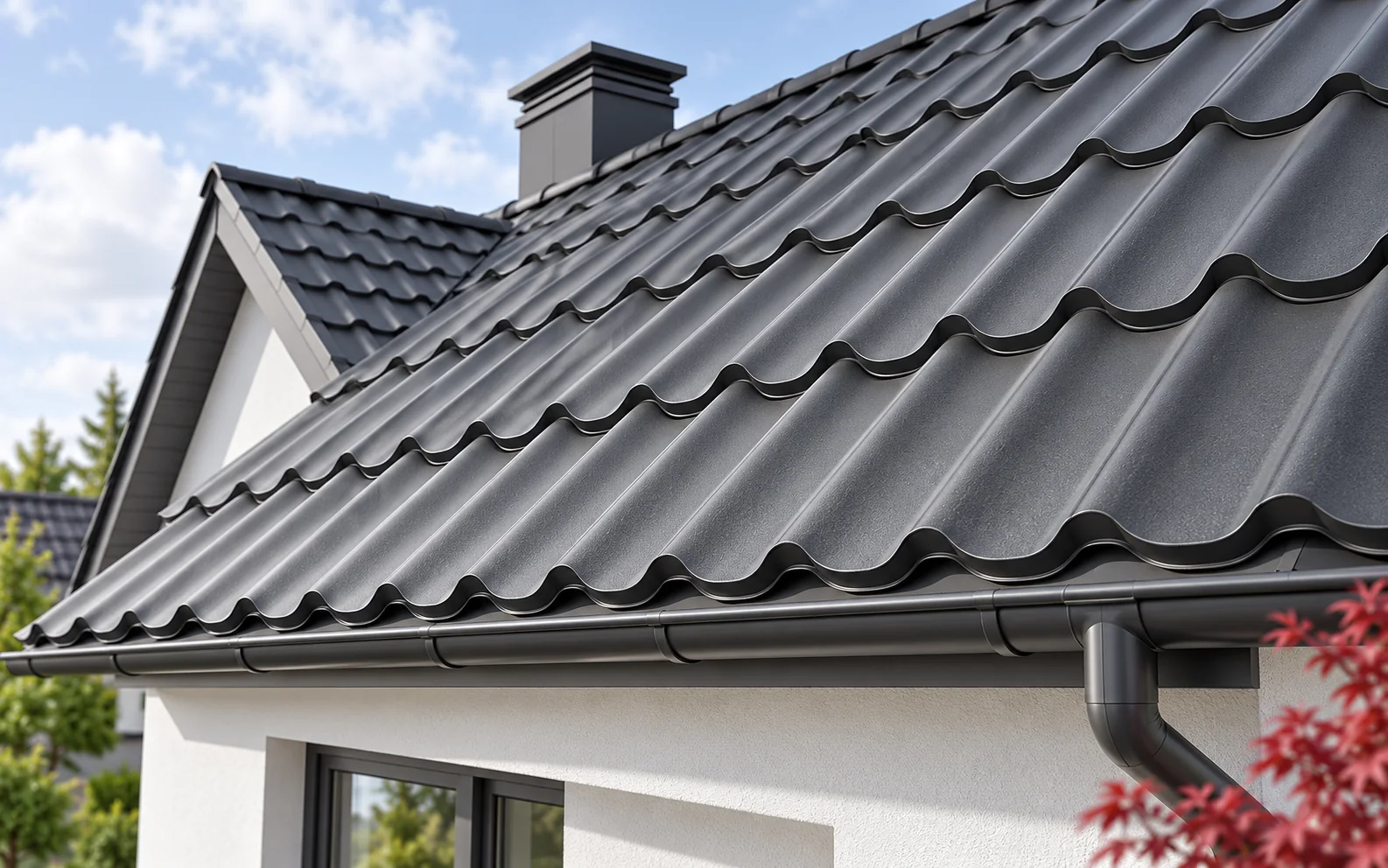
Coverings modelled on shingles and classic tile-effect metal roofing have different patterns. They should not be equated merely because both are metal. Modular tile-effect metal roofing can build a fine rhythm, but it retains its own form. The choice should be a conscious aesthetic decision, without promising the identical appearance of another material.
Does a small sheet always look more delicate?
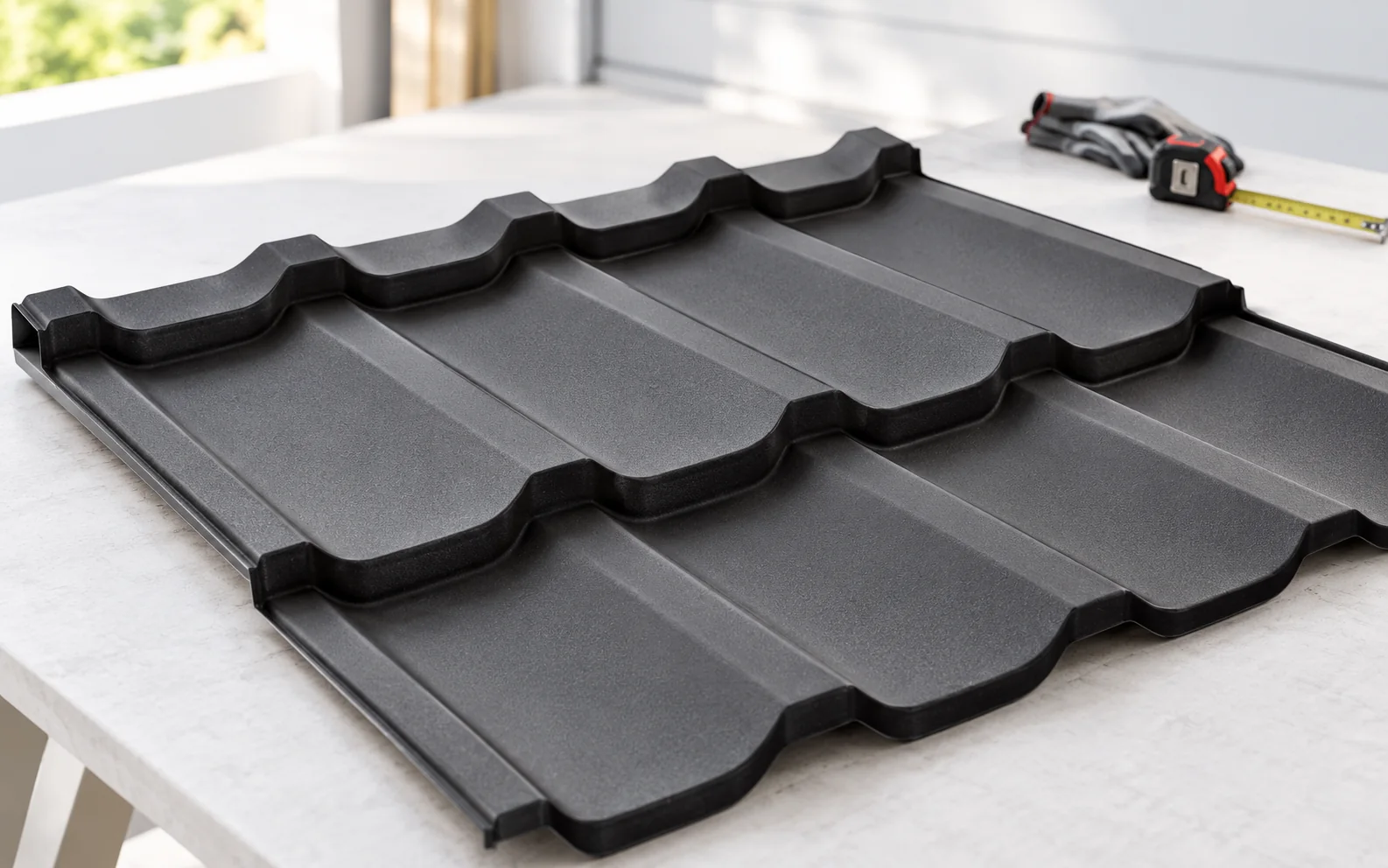
The panel format determines the size of the element carried and installed by the roofer. One sheet may contain one or several repeating modules. Once laid, the pattern of the entire roof slope determines the impression. The sheet boundary itself need not be the main line visible from street level.
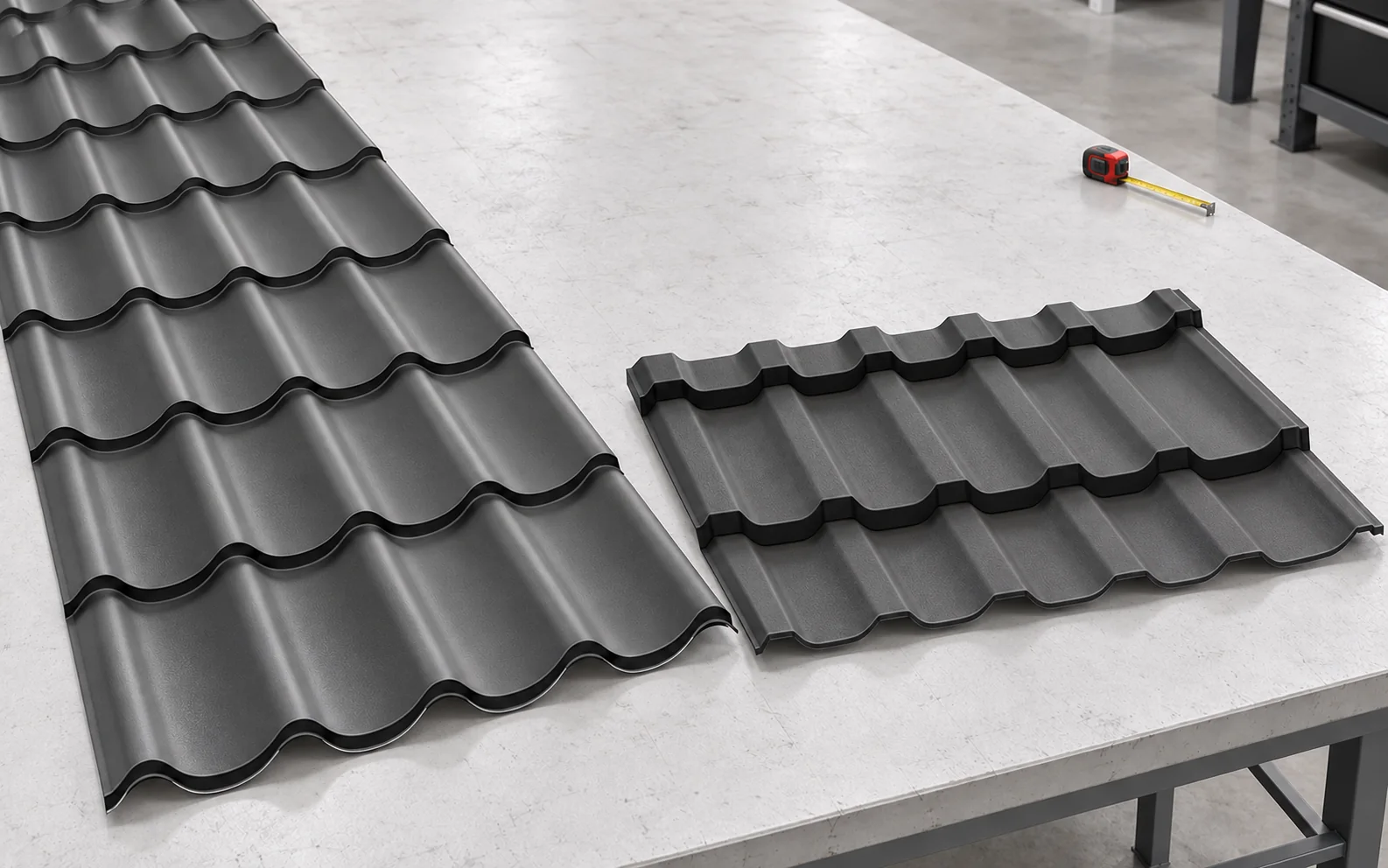
Therefore, a two-module panel does not automatically mean a pattern twice as large. It may repeat the same geometry in two rows. When comparing, pay attention to the cross-section and photographs of the finished roof. It is worth separating the transport benefits of a small format from what the building user will actually see.
Which building form suits a regular fine division?
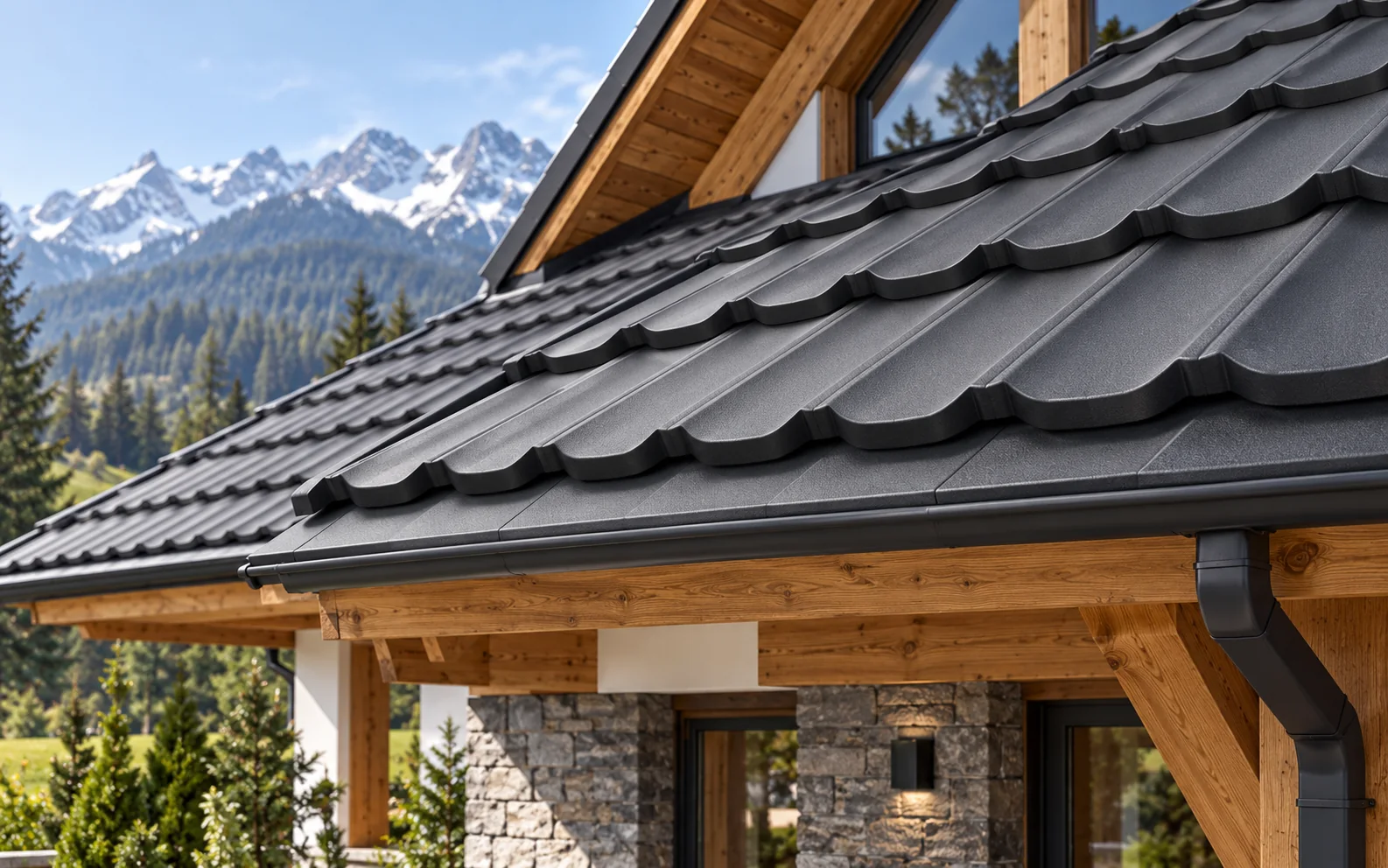
A distinct rhythm can work well with a traditional building form, dormers and timber detailing. On a small house, large pressings can be more dominant. This is not a rigid rule, however. The final effect depends on the roof pitch, its visible area and the proportion of the eaves to the walls.
On a modern house, a fine pattern can be a deliberate accent, but it is worth limiting competing divisions on the façade. Too many rhythms can visually weigh down a building. A good starting point is one coherent palette and a few repeated materials. The roof should remain part of the overall composition.
How do colour and light change the perception of the pattern?
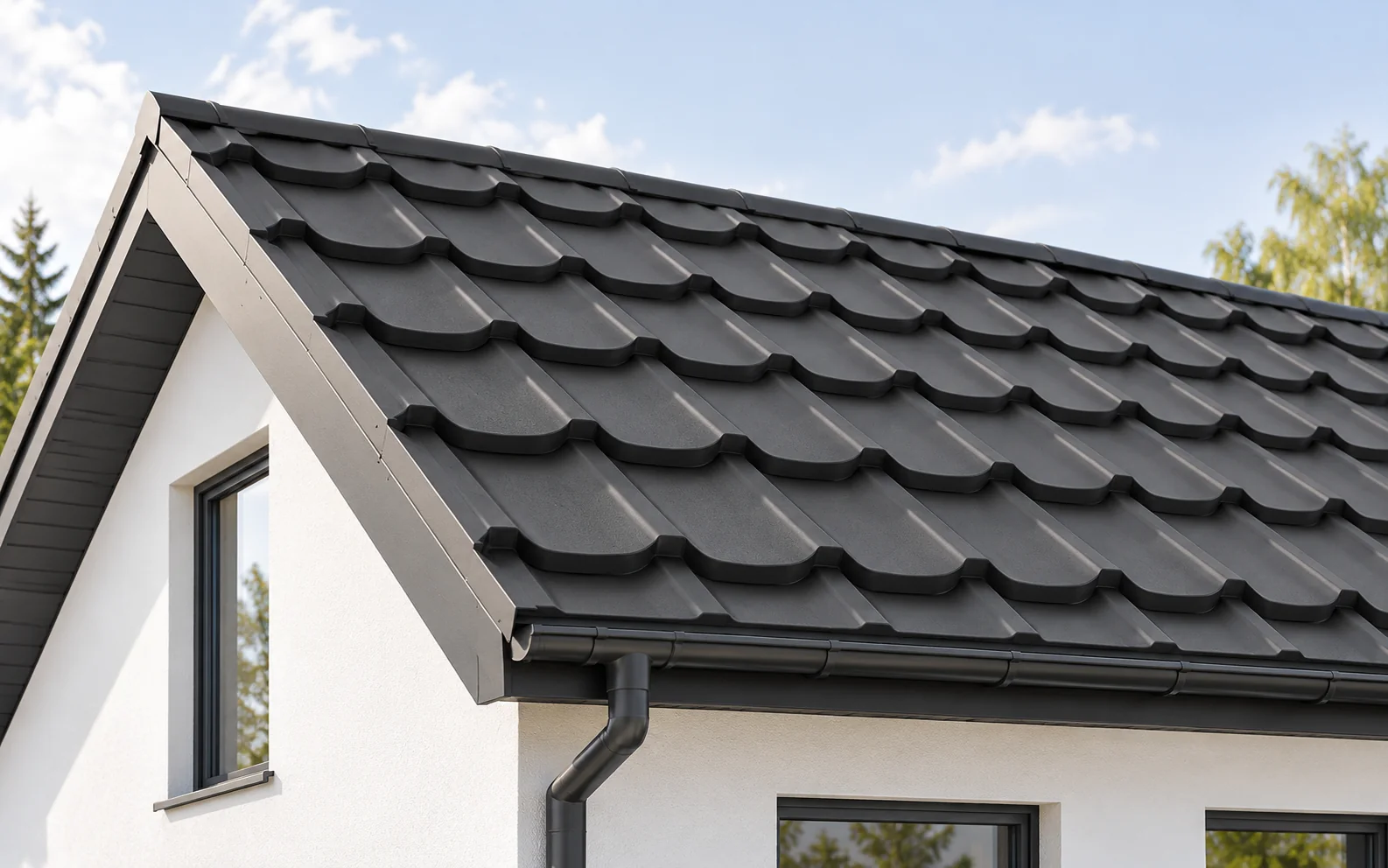
Dark graphite emphasises the shadows between the pressings. Light surfaces may show reflections and fine irregularities differently. Matt and gloss finishes also change the way light is reflected. The same profile viewed in the morning and at midday can look distinctly different, even though the colour is unchanged.
It is worth positioning the sample at an angle close to that of the planned roof slope. Viewing it flat on a table does not show the full effect. Also check it from a greater distance, next to the façade material. A fine structure visible up close may disappear in the view of the whole house, while the main pressings remain dominant.

What determines the continuity of the pattern on the roof?
The module lines should be laid in accordance with the instructions and the geometry of the roof slope. An error in the first rows can disturb the rhythm at the eaves and edges. A level substrate and ongoing checking of alignment are needed. A growing deviation should not be corrected by randomly stretching or compressing the laps.
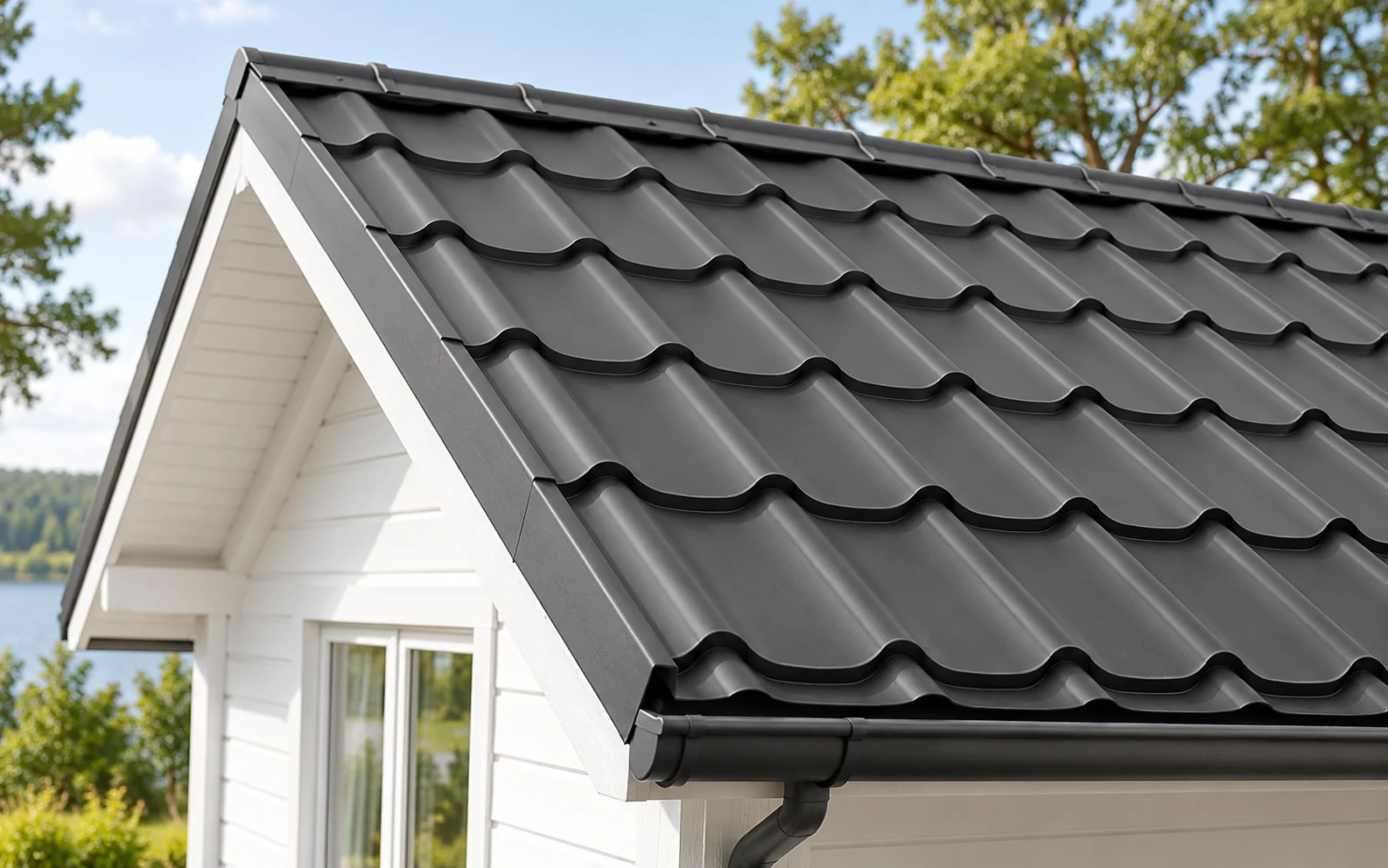
At corners, valleys and dormers the pattern is interrupted. The way the ends are finished and the widths of the flashings should be established in advance. An excessively wide random strip can dominate the fine pattern of the roof slope. A good detail is both aesthetic and correct in terms of water drainage and ventilation.
How does the format affect waste and installation?
Smaller panels can make it easier to carry and to plan the material on a complex roof. This does not mean there will be no offcuts. Whether a cut-off piece can be used depends on the direction of the profile and the laps. Not every piece can be turned around and installed on the other side of the roof slope.
Before ordering, prepare a cutting plan including the flashings. Compare the cost of the area actually covered, not just the price of one small panel. A larger number of elements also means a specific number of joints and installation operations. The assessment should relate to the specific geometry of the house and the selected system.
How can aesthetics be reconciled with technical requirements?
First check the permissible pitch and support arrangement for the selected model. Then choose the thickness, coating and accessories for the building’s conditions. A pattern modelled on a traditional covering does not give the sheet the properties of wood. Nor does it by itself provide thermal insulation or quiet during rainfall.
Comfort depends on the entire building envelope, and durability on the material and installation. Also check access to later servicing and the possibility of identifying the panel when reordering. A well-planned roof retains a consistent appearance because the details, accessories and maintenance have been considered together with its decorative pattern.
Tip before ordering
Ask for a photograph of a larger section of roof in the chosen profile, taken from ground level. Compare it with the sample. This makes it possible to distinguish texture visible only up close from the rhythm that will determine the appearance of the house.
What is worth remembering?
The fine pattern of tile-effect metal roofing results from geometry and light-shadow effects, while the modular format primarily organises installation. Both features should be assessed separately. A consistent effect comes from matching the pattern to the building form and carefully running the divisions and flashings across the entire roof slope.
7 branches. Materials closer to your project.

Free quote
Materials for your project





You may also find useful…
A pitched roof lends itself to a simple material layout and clear water drainage. It can be covered with cut-to-size tile-effect metal…
Cut-to-size tile-effect metal roofing makes good use of a simple roof slope, while small modules make transport and work on a complicated…
A coherent roof results from proportion, colour and detail, not from a seasonal trend label. Modular tile-effect metal roofing, cut sheets and…
A house inspired by mountain architecture needs a roof covering that matches the proportions of the building form and the conditions of…
Before choosing a covering for a holiday cottage, establish when the building will be heated and how the materials will reach the…
Modular tile-effect metal roofing combines a tile profile with a smaller, repeatable panel format. It can make transport and the organisation of…
A single-module and a two-module panel are best compared on the plan of the same roof, entering for each variant the number…
Roofing training is worthwhile when it matches the work you do every day, not just the list of products in the programme.…