

Fibre cement roof coverings
Can fibre cement roofing sheets be reused?
When a carport is demolished or a farm building is converted, the question arises of giving the roofing a second life. Fibre cement sheets may look undamaged, but the surface alone does not determine whether they are suitable for reinstallation. The composition must be confirmed, the product identified and its condition assessed. Asbestos-free fibre cement can only be considered as a material for recovery once any confusion with old asbestos cement has been ruled out. The word “eternit” is sometimes used for various types of covering. It is neither proof that the material contains asbestos nor proof that it does not. The wave shape and grey colour are not enough either. Start with the purchase documents, markings and information on the date and origin of the product.
In this article
Identification comes first
If the composition remains uncertain, do not suggest trial cutting or breaking. Fibre cement sheets with confirmed documentation are assessed by a different route than a suspect old covering. Any doubts must be clarified with a suitably qualified specialist. A wish to reduce waste does not justify risky handling of an unknown material.
Look at the history, not just the appearance
Information about age is not enough. Previous overloading, repairs, the method of fixing and the conditions of the building all matter. A sheet with minor damage around the holes may look fine from a few metres away. Likewise, an element that has been loaded incorrectly need not immediately show a large crack. Asbestos-free fibre cement recovered after a failure requires particular caution. It is worth knowing the reason for dismantling. A change of investment plan is a different situation from dismantling a roof after a storm. The inspection should cover edges, corners, areas around holes and points of contact with supports, not only the side visible from outside.
Dismantling can change the condition of the sheets
A material that is suitable for work on the roof may be damaged by incorrect unscrewing or handling. Access, protection for work at height and the method of lowering the elements must be taken into account. One should not walk directly on the covering. Fibre cement sheets should be lifted and set down in accordance with the rules for the product, without jerking the corners. After removal, a reassessment is needed. In a practical recovery plan it is worth allowing for the fact that some sheets will be lost at this stage. Assuming that the entire old roof can be used without losses is usually not a good starting point for ordering a new one.
The new roof must match the old formats
A recovered sheet retains its profile, length and existing holes. The new substructure must meet the requirements of the system, not merely make it possible to screw the sheet down. Further holes should not be drilled without checking how this will affect the fixing layout. Fibre cement sheets of different types may have similar waves but different side laps and ends. Equally important is the availability of compatible fittings. If the correct connection at the ridge and edges cannot be confirmed, recovery of the material does not yet create a complete covering. Savings on the sheets may be absorbed by difficult, bespoke details.
Do not simply carry documents over
The declaration for the original product describes the material in a specific condition and application. It is not an assessment of every used sheet after dismantling. Likewise, a guarantee may not cover reinstallation or a change of location of use. Asbestos-free fibre cement from recovery must be priced together with this limitation. The person making the decision should know who assessed the condition of the elements and what conditions of the new application were assumed. In a facility with significant technical requirements, appropriate design documentation is needed. The mere fact that the material was previously on a roof does not prove its suitability in the new structure.
Factor in the work required for recovery
In the balance, include inspection, careful dismantling, transport, storage and adaptation to the new roof slope. Replacement or selection of fixings and seals is added. Fibre cement sheets should not be stored in a random stack while awaiting a decision. If reuse requires many cuts and additional handling, the benefit may diminish. On the other hand, a compatible, well-preserved set of known origin offers more possibilities than a collection of individual sheets. The calculation is worth doing before demolition, when the sequence of work and the method of protecting the material can still be planned.
Distinguish reuse from recycling
Reinstallation preserves the function of the whole sheet. Recycling means processing the material, and the availability of such a route must be confirmed locally. The two concepts must not be presented as interchangeable, nor should it be promised that any waste will be accepted by any facility. Fibre cement sheets that are damaged, contaminated or of uncertain composition require proper identification and management. Separate procedures apply to waste containing asbestos. Sensible material management also means refusing to reuse an element whose condition cannot be reliably assessed. Such a decision may prevent another renovation.
Before planning a roof from recovered material, gather the sheets’ documents and commission an assessment of their condition. Only when material, structure and accessories are compatible is there a basis for discussing reuse.
7 branches. Materials closer to your project.

Free quote
Materials for your project
You may also find useful…
The roof colour shapes the appearance of the whole building, but choosing a coating does not end with the shade. Fibre-cement boards…
A small garden shelter does not need a complicated form, but it does need a properly designed roof. Fibre-cement sheets can give…
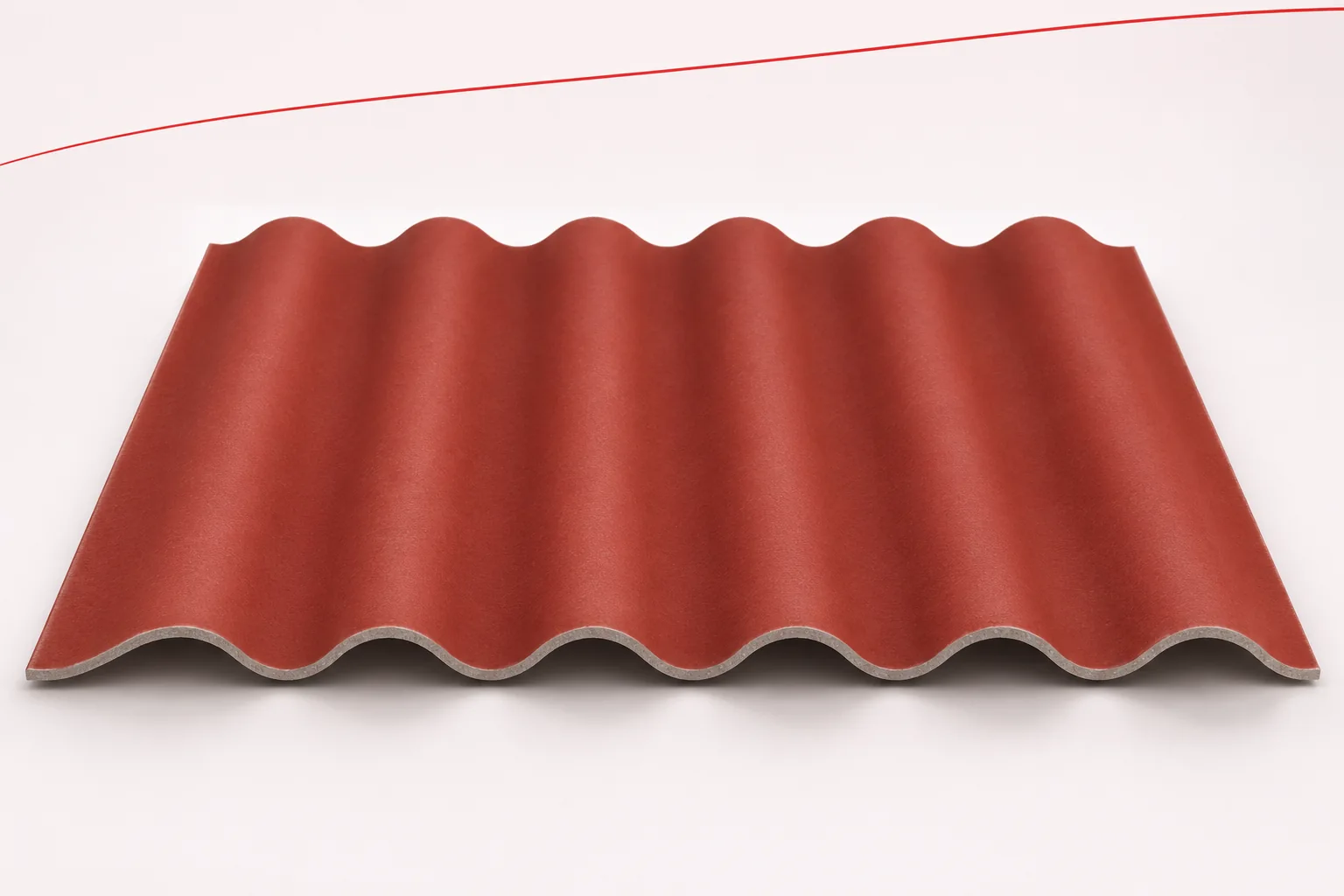
Fibre cement, steel and plastic can all be produced in a similar corrugated profile. That does not make them interchangeable, however. Fibre…
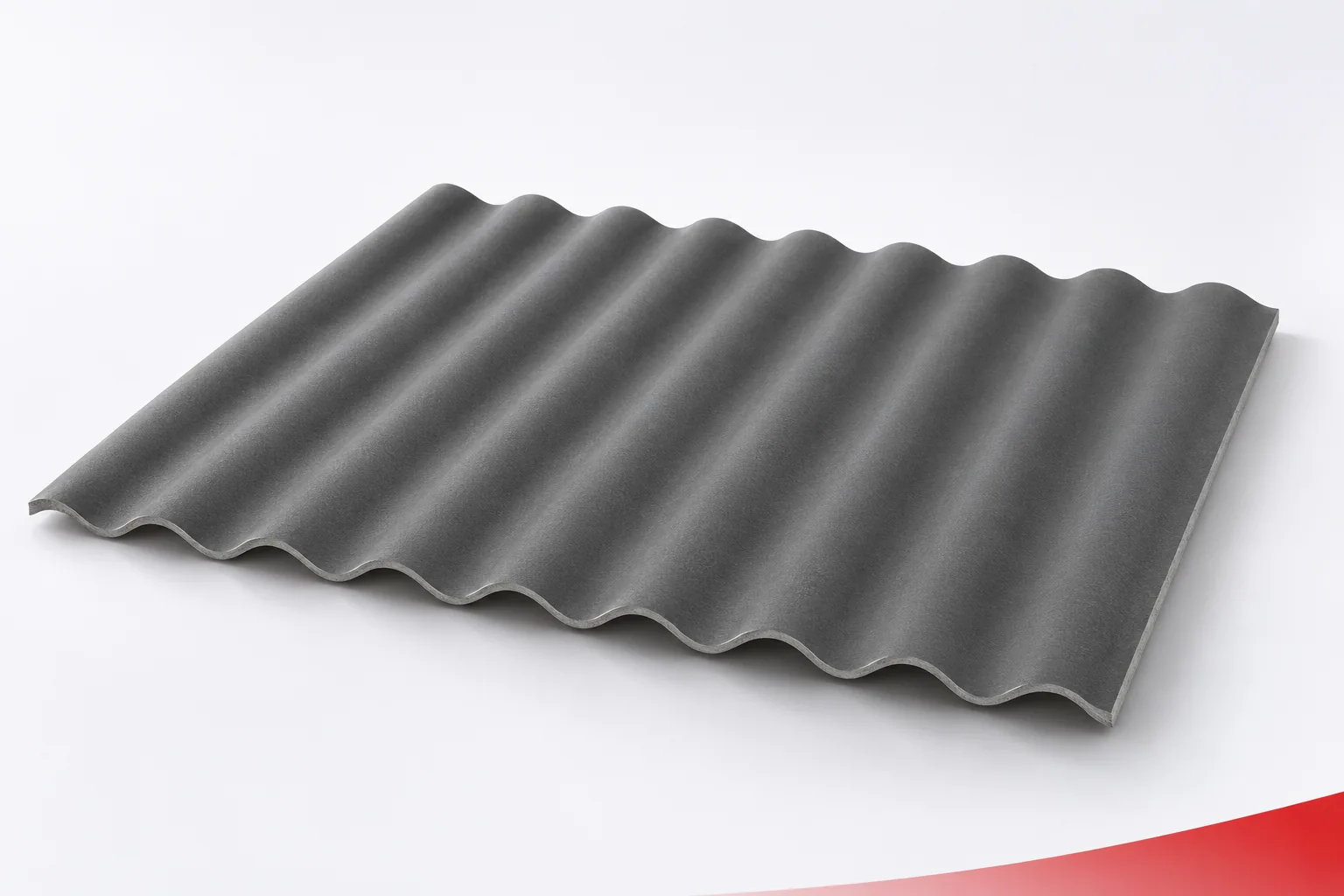
The long service life of a roof covering also depends on places that are barely visible from the ground. The ridge detail,…
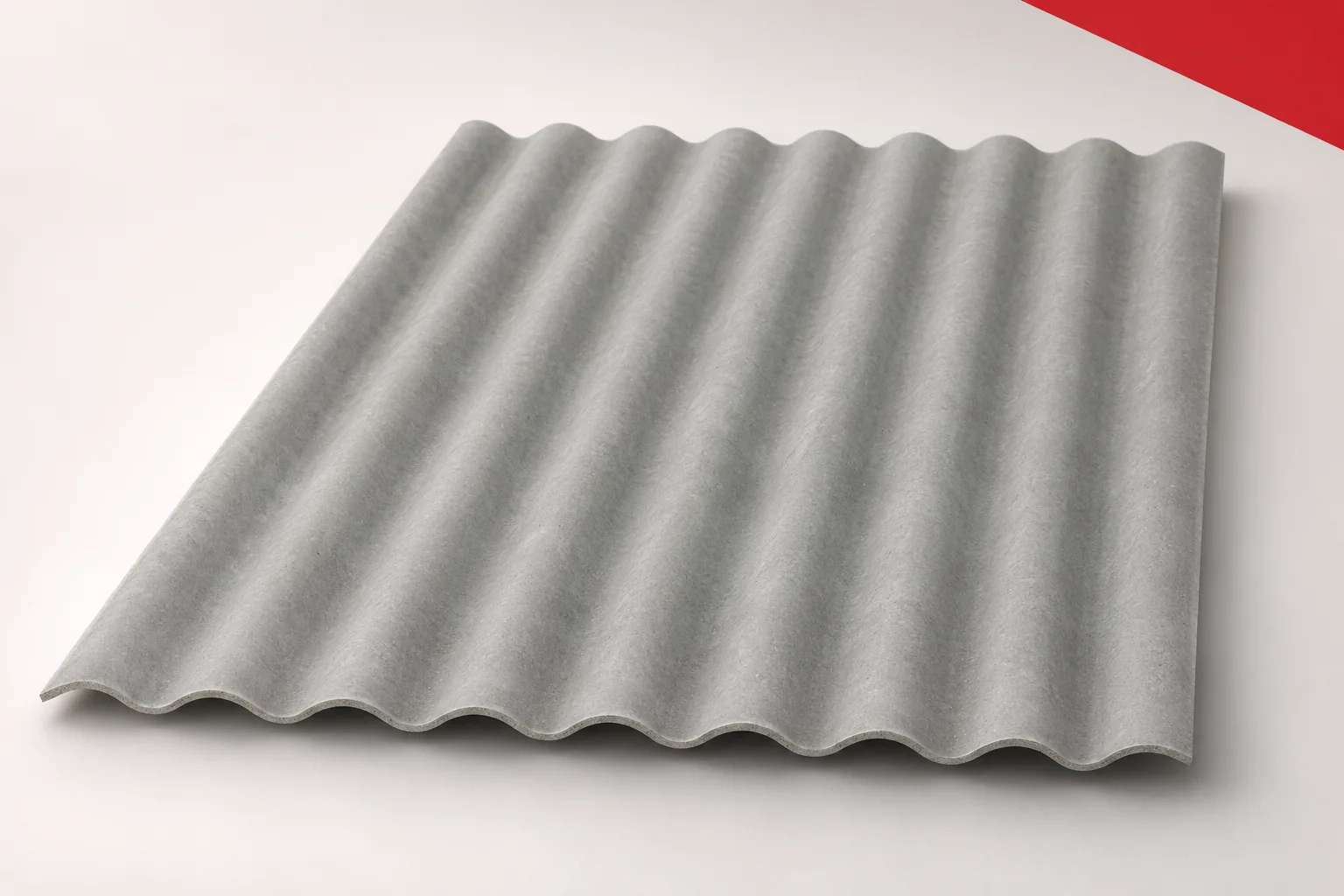
Fibre-cement slates should be assessed over the entire service life of the roof. What matters is its weathertightness, the possibility of repair…
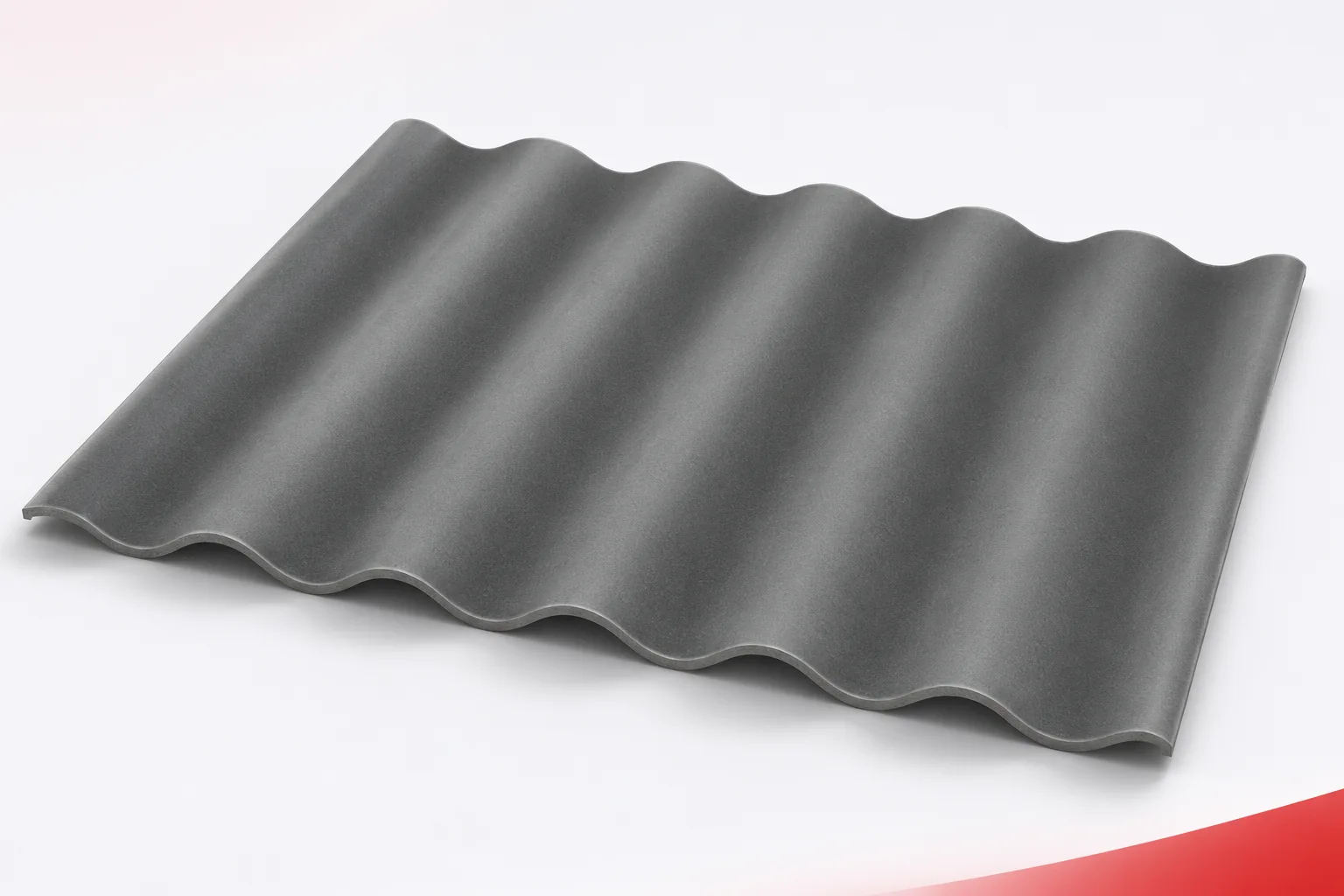
Roof maintenance should not begin with a breakdown. Fibre cement sheets need checks on the joints, the drainage and the places where…
An environmental declaration helps you understand a product's impact, but it requires careful reading. It is not a school grade, nor a…
The grey corrugated sheet has a distinct wave pattern and a calm, mineral appearance. It does not have to imitate a roof…