

Polystyrene and insulation
Choosing EPS insulation for a house, from the foundations to the roof
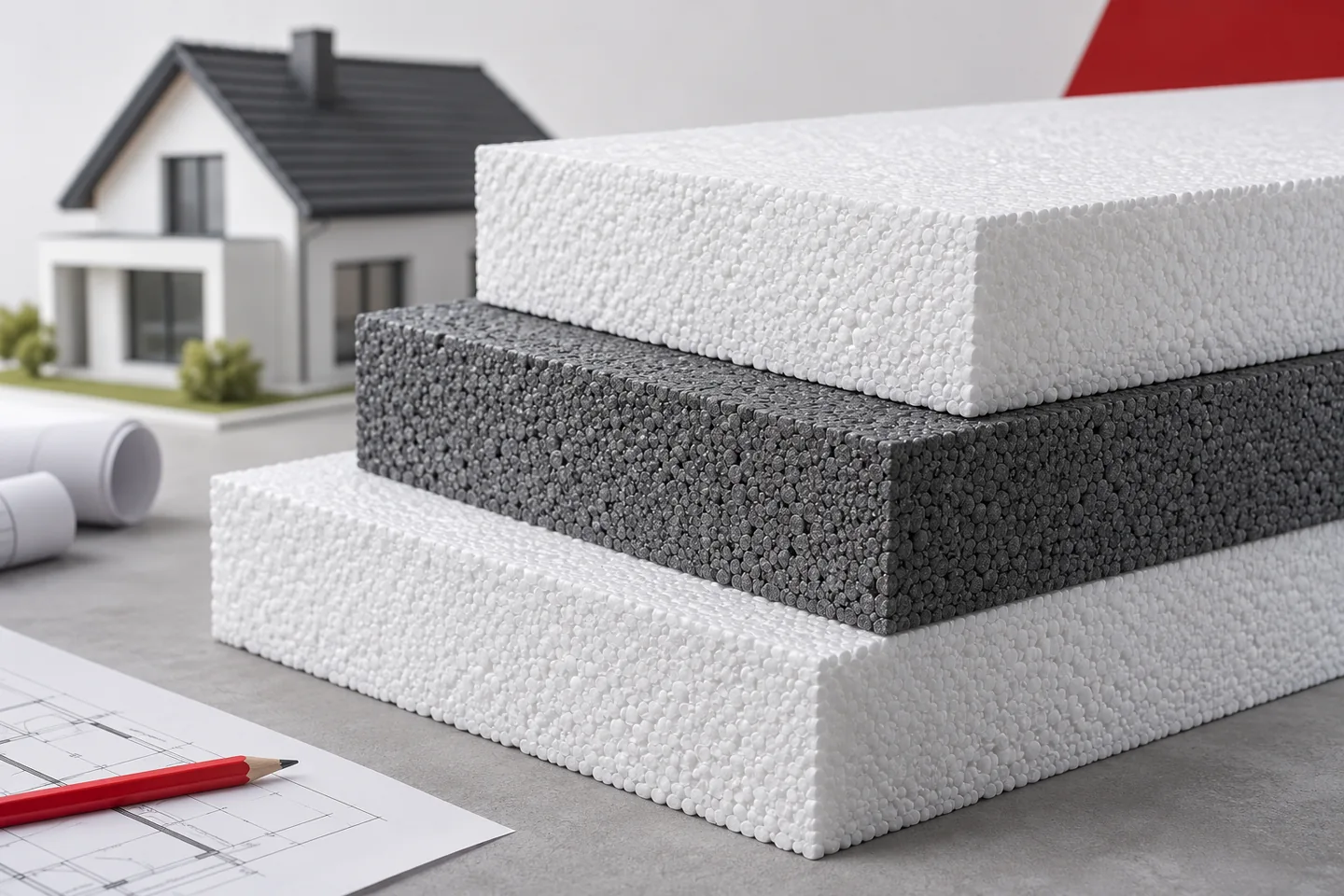
Polystyrene is selected to suit its location in the building. On the façade, conformity with the ETICS system matters; beneath the floor slab, behaviour under load matters too; and at the foundations, resistance to water. A roof additionally requires verification of the entire layer build-up. A good decision starts with the design and the documents for the specific board, not with its colour or thickness alone. First establish where the boundary of the heated part of the house runs. In a building with a cold loft, the insulation can be laid across the ceiling. If the loft is to be habitable, the roof slopes and the associated details require insulation. The same applies to the basement. A heated basement needs a different thermal protection arrangement from a utility space beneath a heated ground floor.
In this article
Where should you start when choosing insulation?
On plans and sections, it is worth marking all insulation layers. Joining them at the plinth, windows and eaves is as important as the thickness at the middle of the wall. With such a map, it is easier to divide the order into the appropriate EPS grades. There is no need to look for a single board that will perform without any reservations in every location.
Which parameters should you check on the label?
The declared lambda describes heat conduction through the material. A lower value allows the same resistance to be achieved with a smaller thickness. The resistance of a layer is calculated using the formula R = d/λ, where the thickness d is given in metres. The U-value, and after taking account of the required corrections the Uc-value, relates to the entire building element. It is not a property of the pack of polystyrene itself.
Depending on the application, TR, CS(10), water absorption and dimensional stability are also required. Density may be supporting information, but it does not replace these data. The number 100 in the designation EPS 100 does not mean a density of 100 kg/m³. Always compare the description in the offer with the declaration of performance for the product.
In the design, it is also worth marking special locations such as a heavy kitchen island, the threshold of a terrace door or the support for roof equipment. These may require a local solution different from the rest of the building element.
Which EPS is used on the façade?
In a rendered façade, the polystyrene is part of the ETICS system. The boards work together with the mortar or adhesive, the fixings specified in the design, the reinforcing layer, the primer and the render. Their selection should fall within the system documentation. A random combination of components makes it difficult to assess adhesion, durability and the behaviour of the façade during a fire.
The important value is TR, i.e. tensile strength perpendicular to the surface. The geometry of the boards and their condition on delivery should also be checked. Graphite EPS requires protection against excessive heating during work. A better lambda alone will not remedy a poorly prepared substrate, open joints or errors around windows.
What changes with contact with the ground?
A foundation wall works under different conditions from a dry façade. The material may come into contact with moisture, and after backfilling it is loaded by the ground. A grade with documented suitability for such a location is needed. Water absorption WL(T) describes the result of a specific test. It does not mean complete resistance to any quantity of water and any pressure.
Thermal insulation does not replace the waterproofing of the wall. An adhesive compatible with the EPS and the sealing layer must also be selected. A board approved for damp ground is not necessarily suitable beneath a structural foundation slab. There, loads, long-term deformation and water conditions are assessed separately.
What should be checked beneath the floor and on the roof?
Beneath the screed, the polystyrene carries loads through a layer that distributes the pressure. CS(10) specifies the stress at a deformation of 10%, not the permissible service pressure. Creep, board support and point loads matter. Acoustic EPS additionally serves to reduce footfall noise. It is not selected by hardness alone.
On roofs there are roof boards, slope wedges and boards with a bitumen felt facing. Selection covers pressure, wind suction, moisture, temperature and the classification of the entire roof covering. Ordinary EPS should not automatically be transferred to an inverted roof. Such an application requires a product and build-up specifically intended for it.
How do you turn a design into a good order?
For each part of the house, note the board type, thickness, thermal conductivity (lambda) and the required mechanical or moisture-related properties. Add the area in square metres and specify the edge profile. The nominal dimensions of a board with profiled edges may differ from its effective coverage. Use the relevant manufacturer’s table to work out how many packs to order.
Well-known polystyrene manufacturers include Termo Organika, Austrotherm, Swisspor and Yetico. Each of these companies offers various board grades, so any comparison should concern the properties of a specific product.
On delivery, keep the labels and batch documents. Inspect the corners, flatness and any signs of moisture on the packaging. Only after this check should the material be divided between façade, foundations, floors and roof. This is a simple way to ensure that a good board does not end up in the wrong place.
7 branches. Materials closer to your project.

Free quote
Materials for your project
You may also find useful…
A schedule of the layers of a building envelope with PIR boards and a second insulating material makes sense only if each…
A house without a basement also needs well-planned foundation insulation. The most important thing is to connect the wall insulation with the…
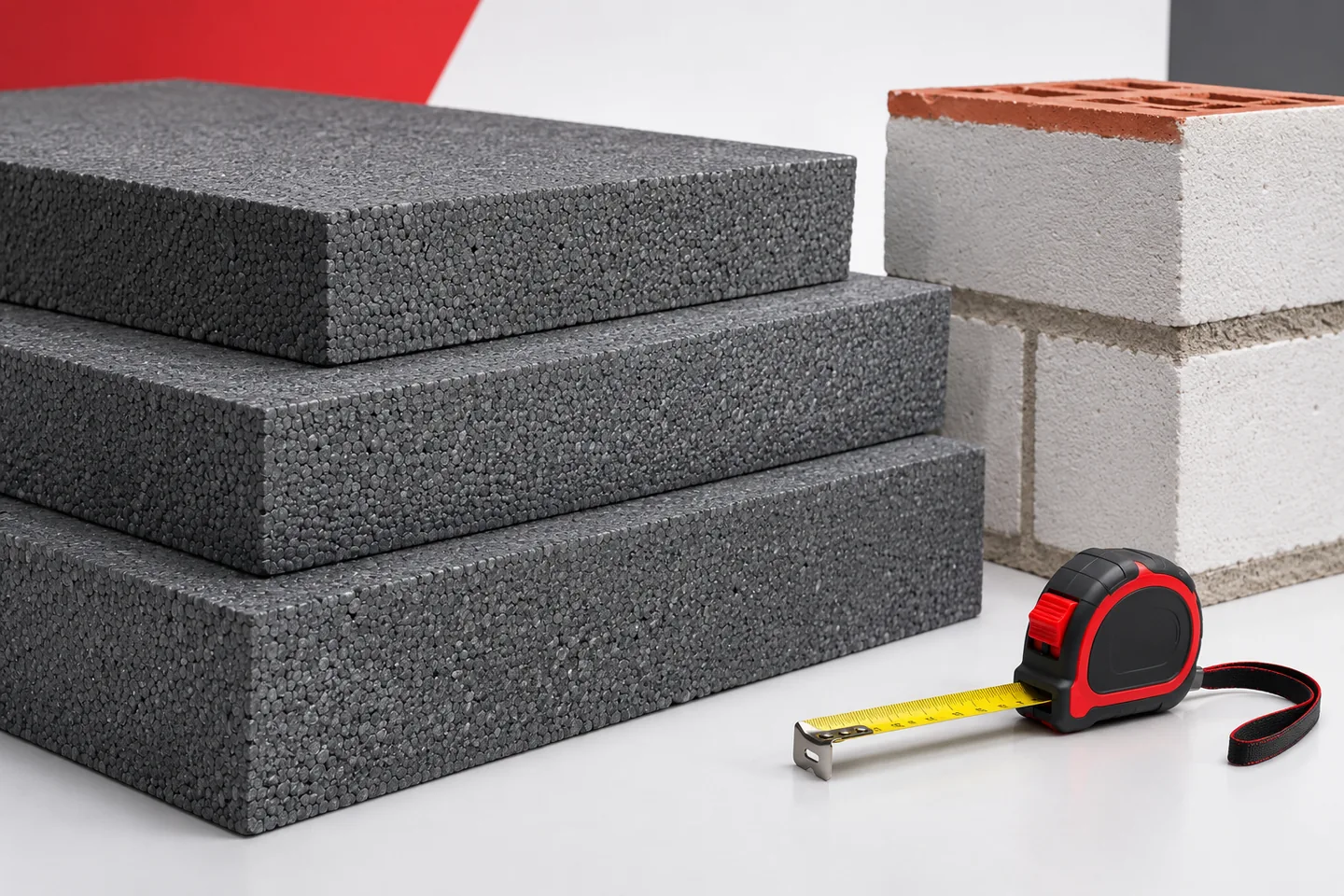
The question of how much polystyrene is needed has two parts. First, the thickness required to achieve proper thermal protection must be…
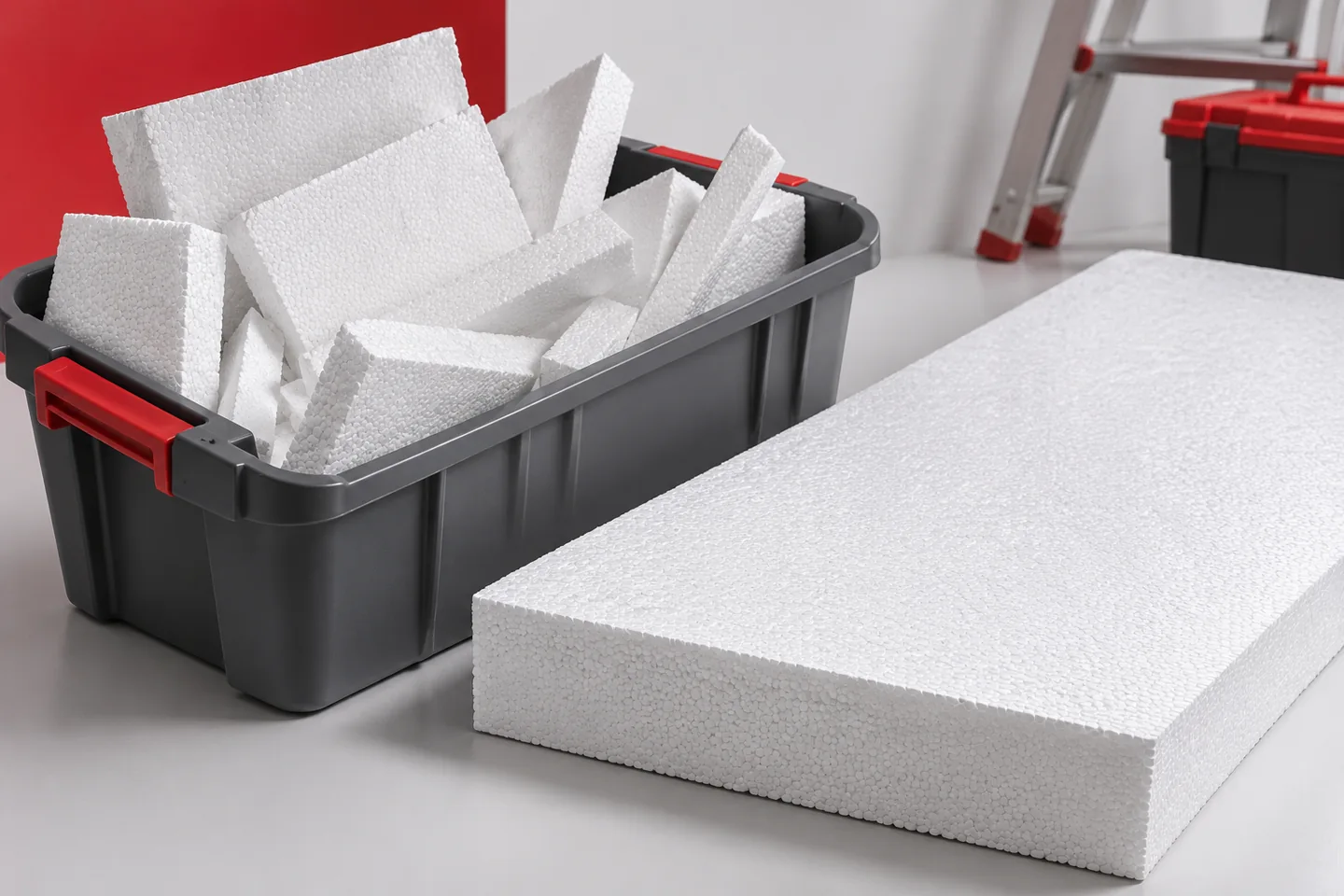
EPS can be recycled, but the route by which the waste is managed depends on its origin and purity. Offcuts from installation…
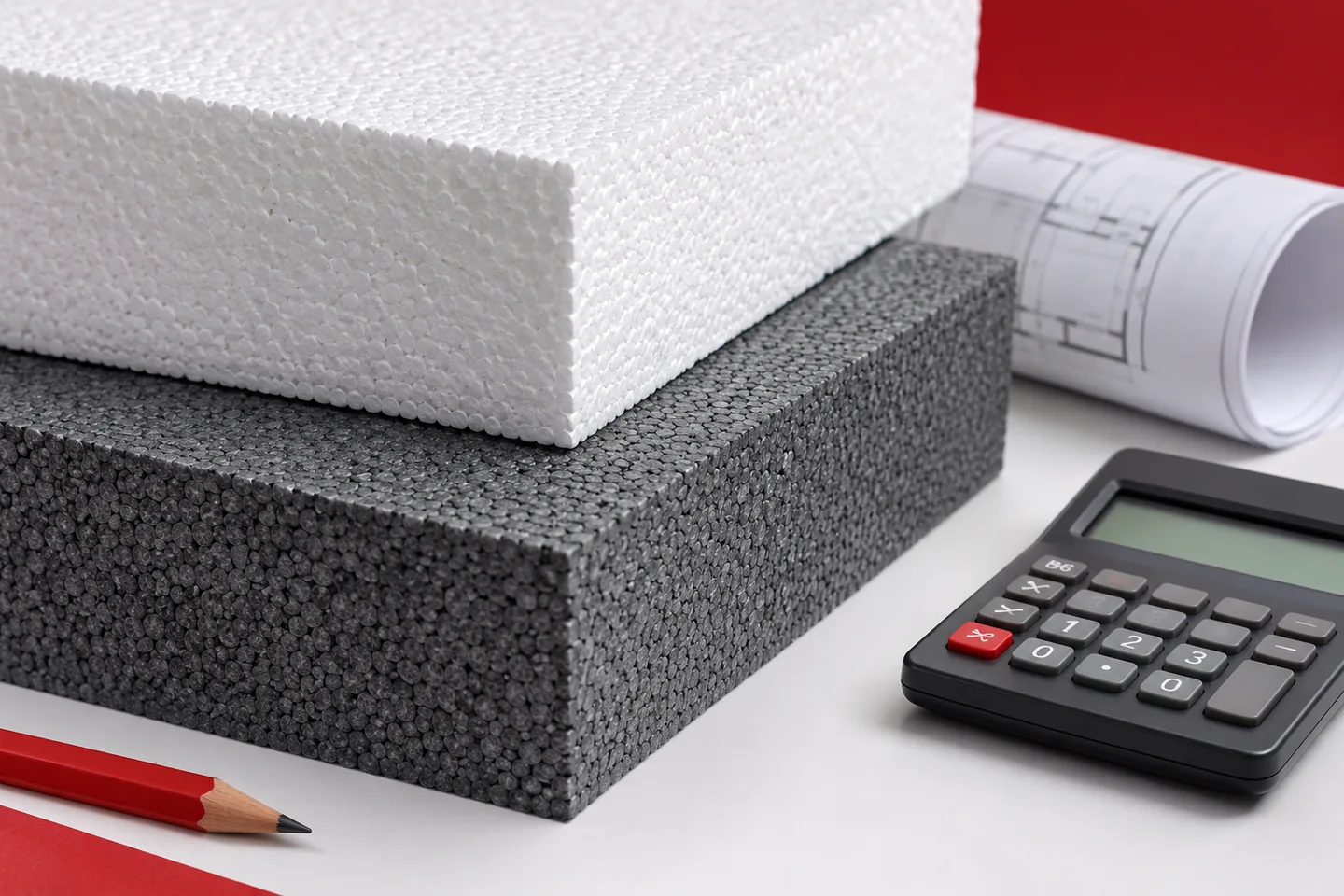
Changing conductivity from 0.040 to 0.031 W/(m·K) increases the thermal resistance of EPS at the same thickness. It may also permit thinner…
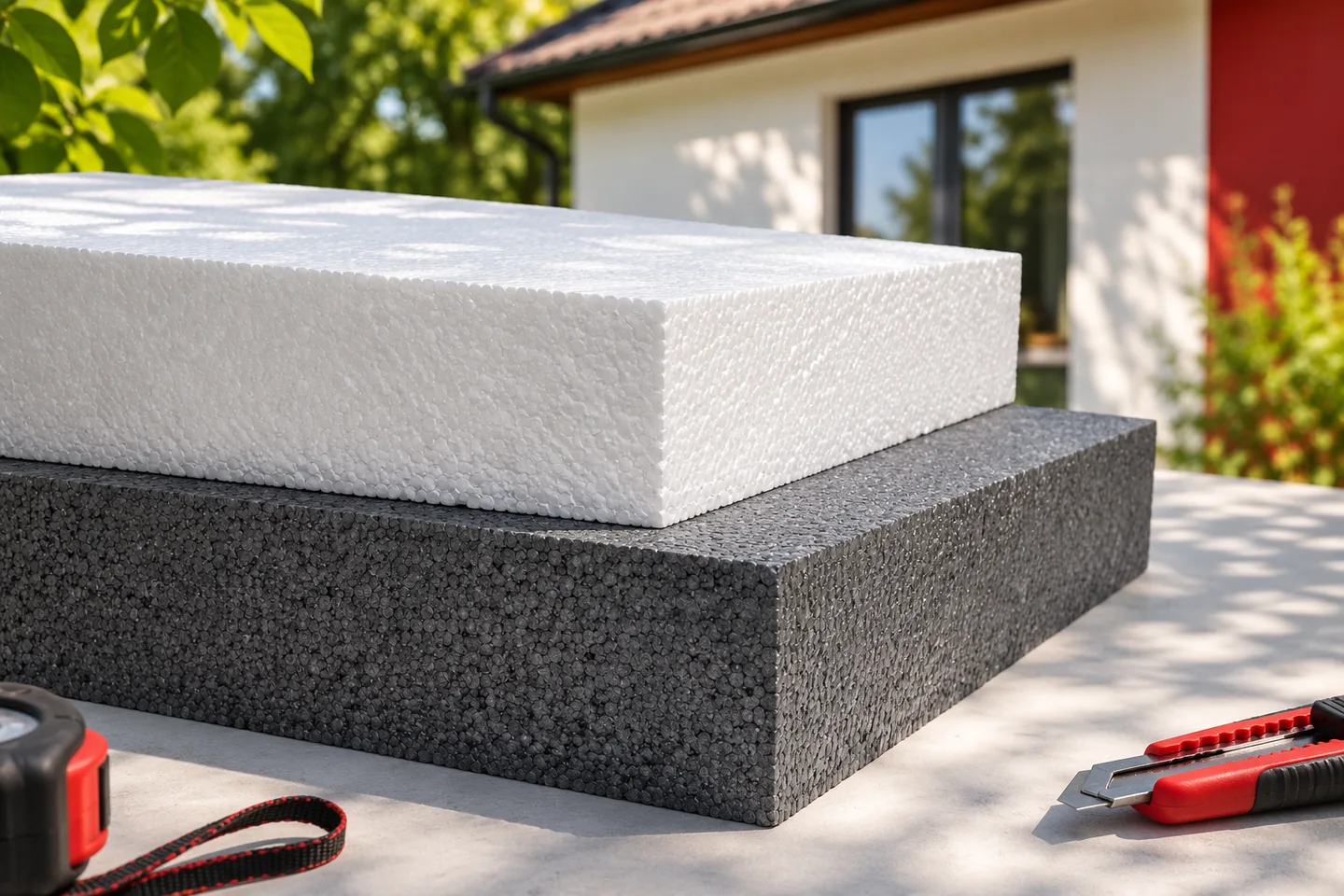
Yes, a well-insulated house can overheat in summer. Polystyrene slows the flow of heat, but it does not remove the energy entering…
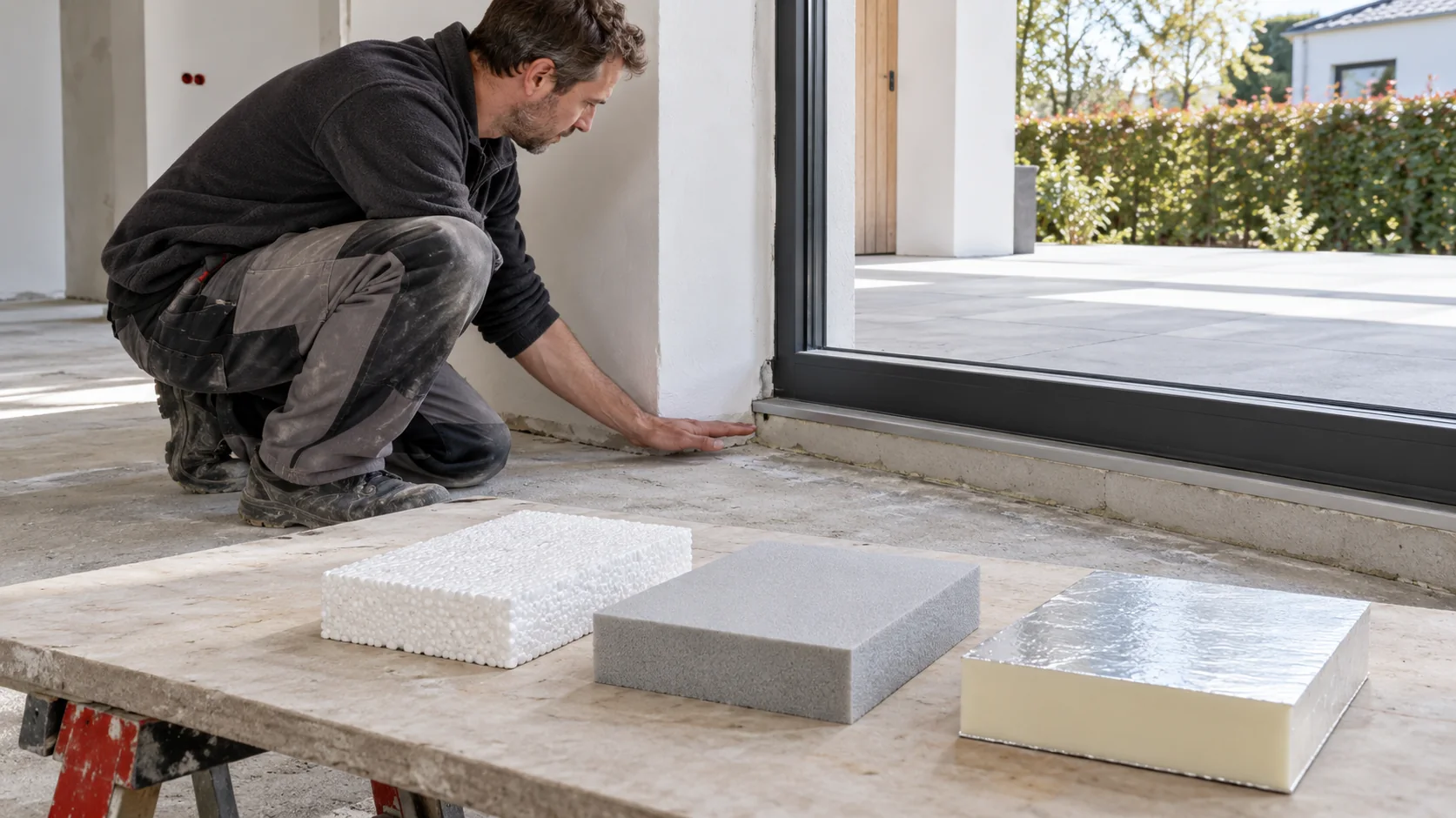
No single insulation material is best throughout a house. On a façade the render system matters, in a floor the loading, and…
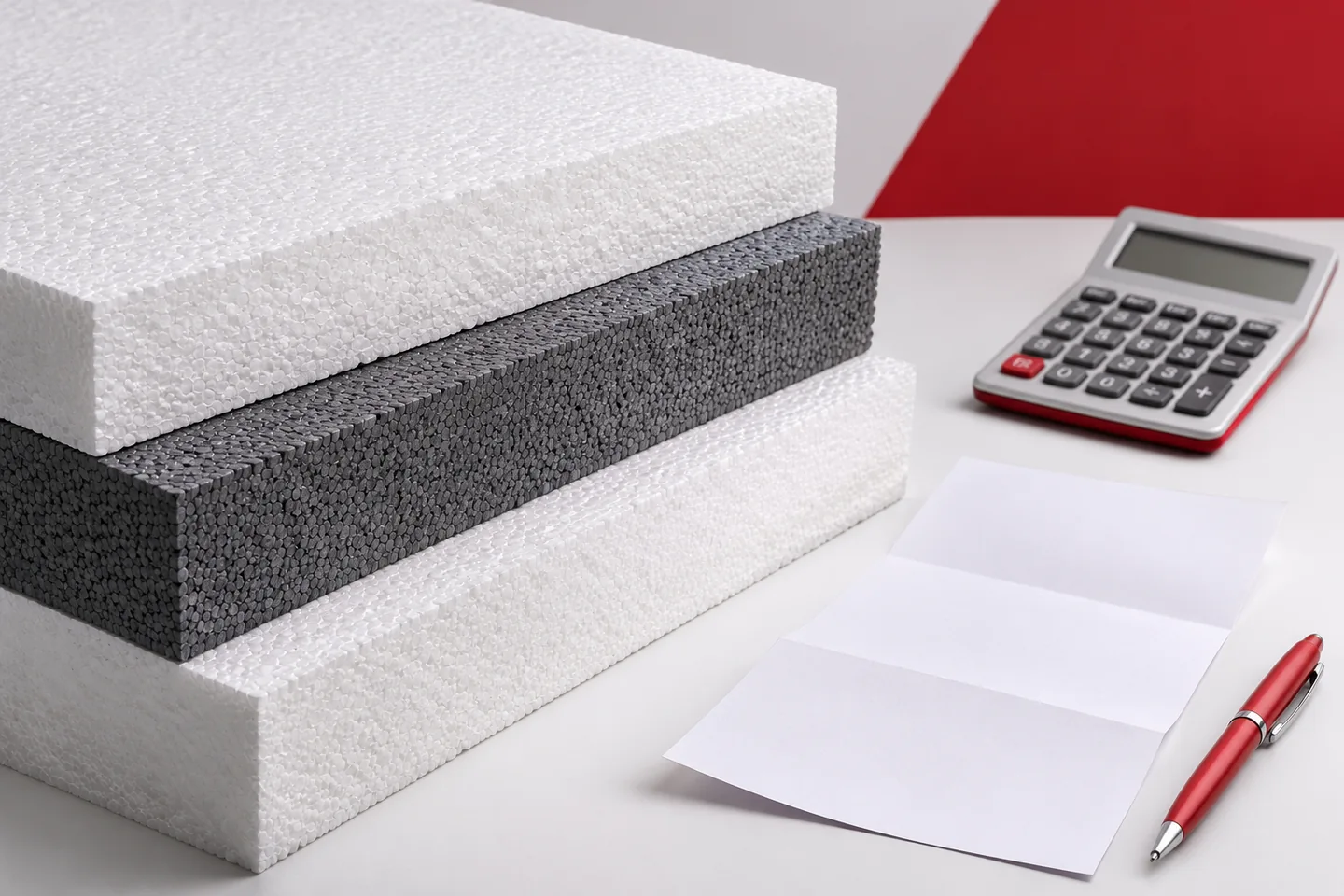
EPS price comparisons make sense only at similar thermal performance and for compatible applications. A cheaper cubic metre may require a thicker…